Personalized E-Commerce Demand Generation for Meal Delivery

Amanda Hewett


Still Hungry - E-Commerce Demand Generation
An E-Commerce Demand Generation System for a New Generation of Older Adults
The meal-delivery category has spent decades speaking about older adults without speaking to them.
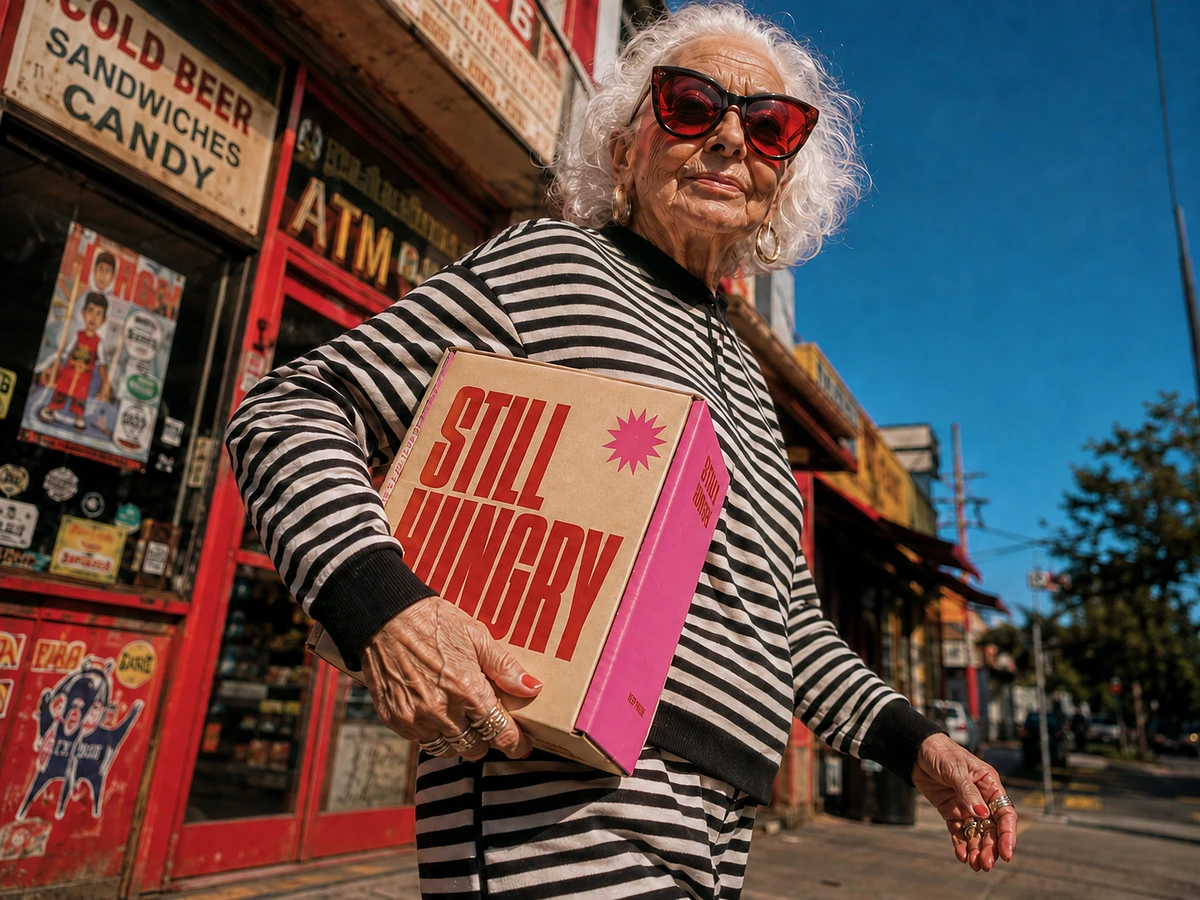
Still Hungry reimagines the experience around independence, personality and an appetite for more—combining chef-made meals, accessible packaging and documentary storytelling in one demand-generation system.
Life still has flavor.
Designed Around a Life Already in Motion
Independence rarely disappears all at once. It becomes harder to protect through small moments—the grocery trip that takes more energy, packaging that fights back, or a meal that requires more preparation than the day allows.
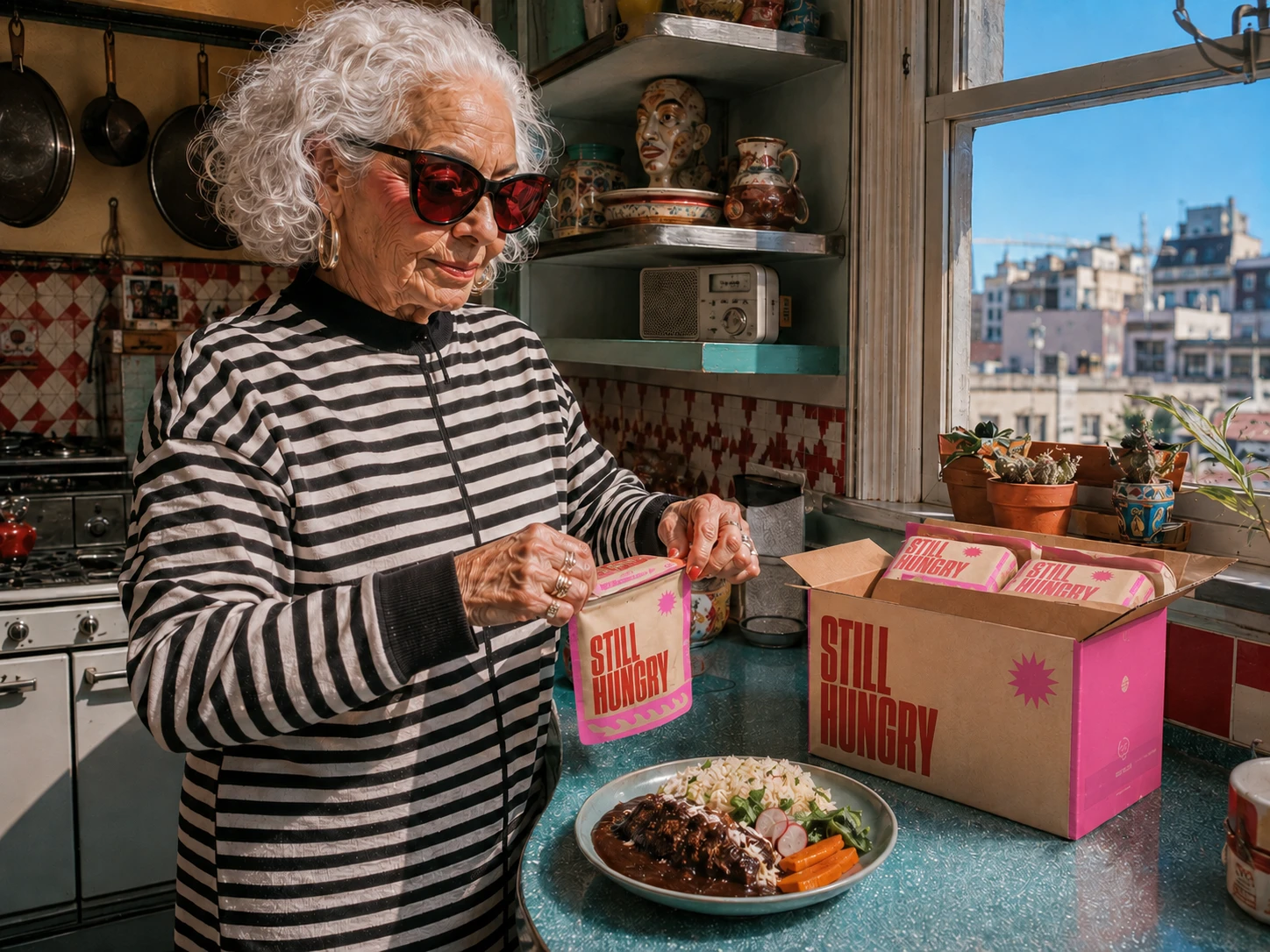
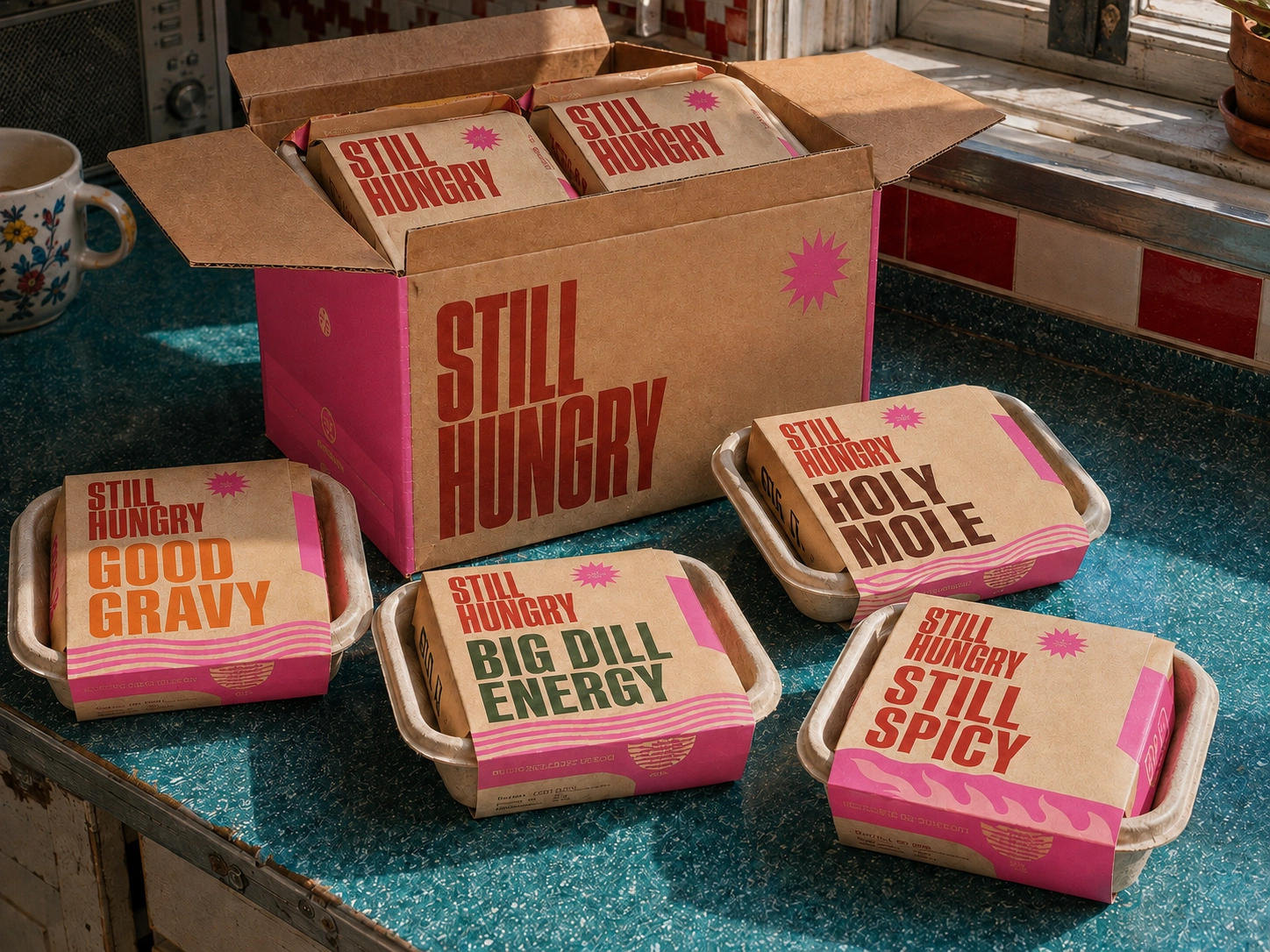
Still Hungry was designed around those moments. Chef-made meals, easy-open packaging and flexible delivery remove friction without removing choice, helping people spend less energy managing dinner and more energy living on their own terms.
Nutrition Without the Clinical Language
The category often organizes food around everything a person must avoid. Our research suggested that while nutritional needs matter, people still choose meals through appetite, familiarity and curiosity.
Still Hungry brings essential information forward through large type, high contrast and consistent placement—then lets personality lead. Each meal feels distinct and desirable, turning dietary confidence into something people can understand without making it the entire brand experience.
We Were Never Designing for “Seniors”
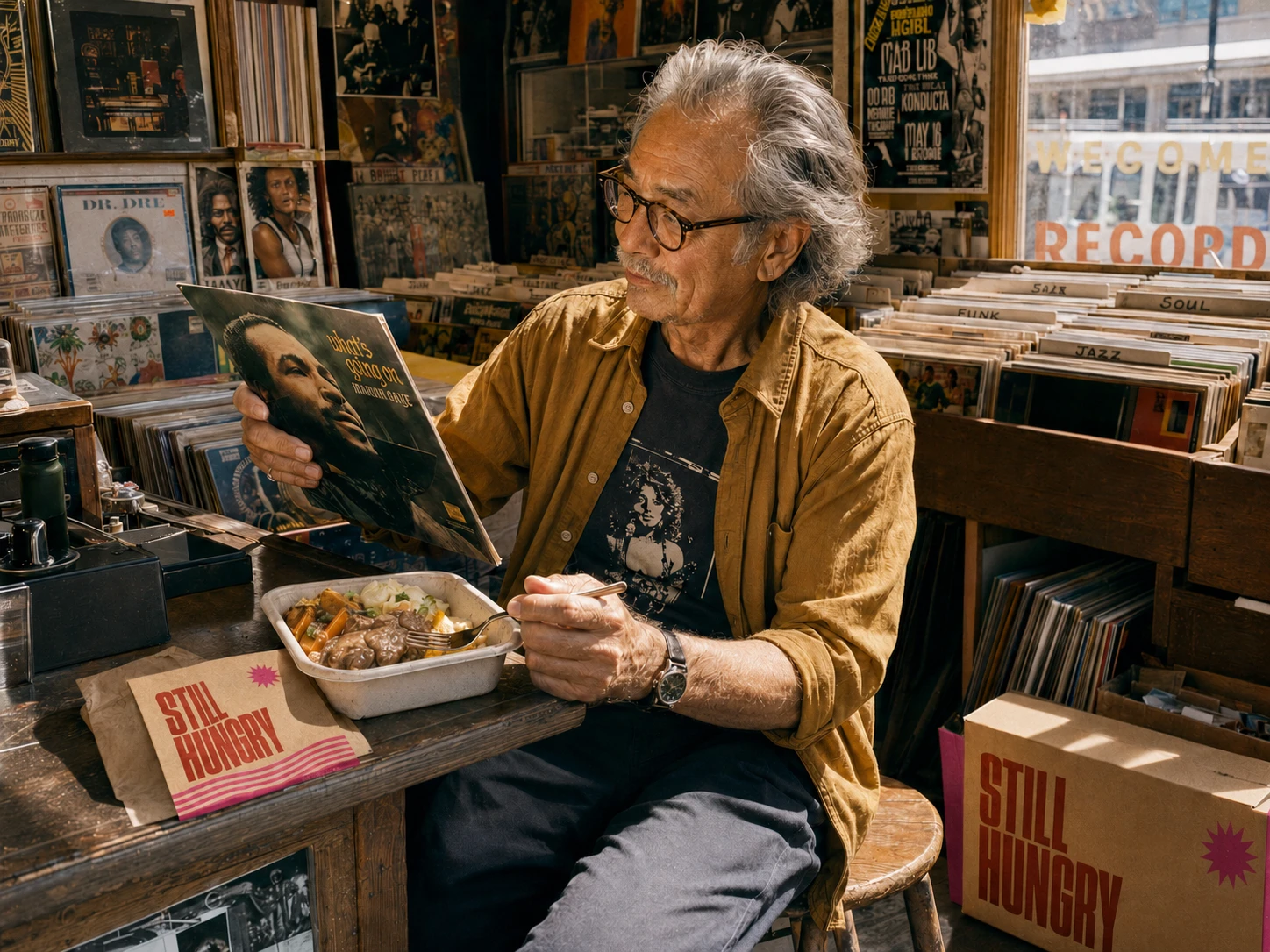
Age alone revealed very little about how someone wanted to eat. The more meaningful differences appeared in their routines, energy, health needs, cultural tastes and willingness to try something new.
So we stopped treating older adults as one audience. Still Hungry was built around distinct appetites and existing lives—giving each person control over what arrives, how often it comes and how adventurous dinner feels.
Appetite Was the Better Segmentation
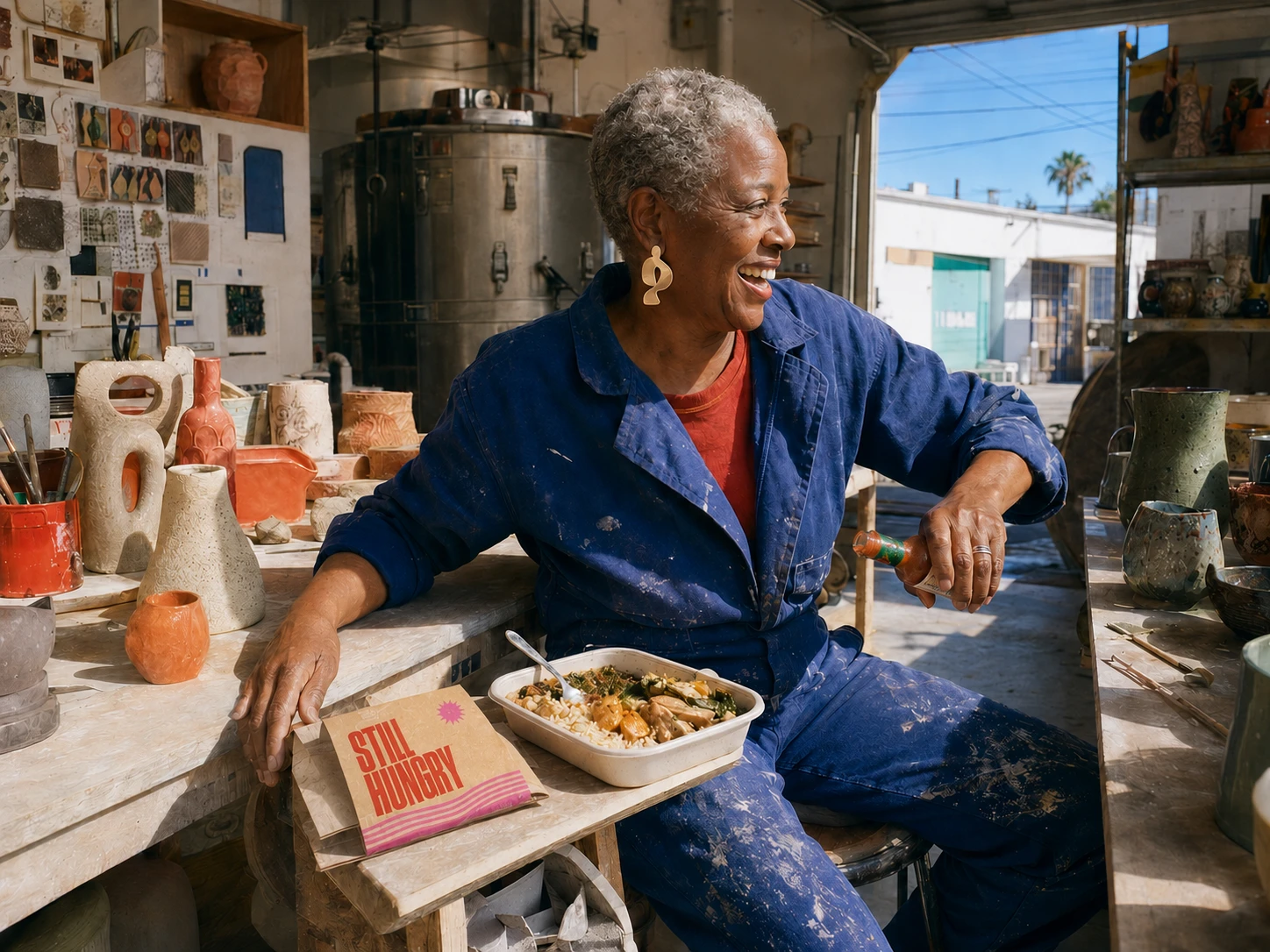
Research revealed four recurring relationships with food: people seeking the comfort of familiar meals, those managing changing nutritional needs, adventurous eaters who still wanted discovery, and busy independents who simply wanted dinner to require less effort.
These behaviors became the foundation of the experience. Instead of assigning customers a plan based on age, Still Hungry learns what they love, what they avoid and how much variety they want—then builds every box around them.
Built for Confidence, Not Assistance
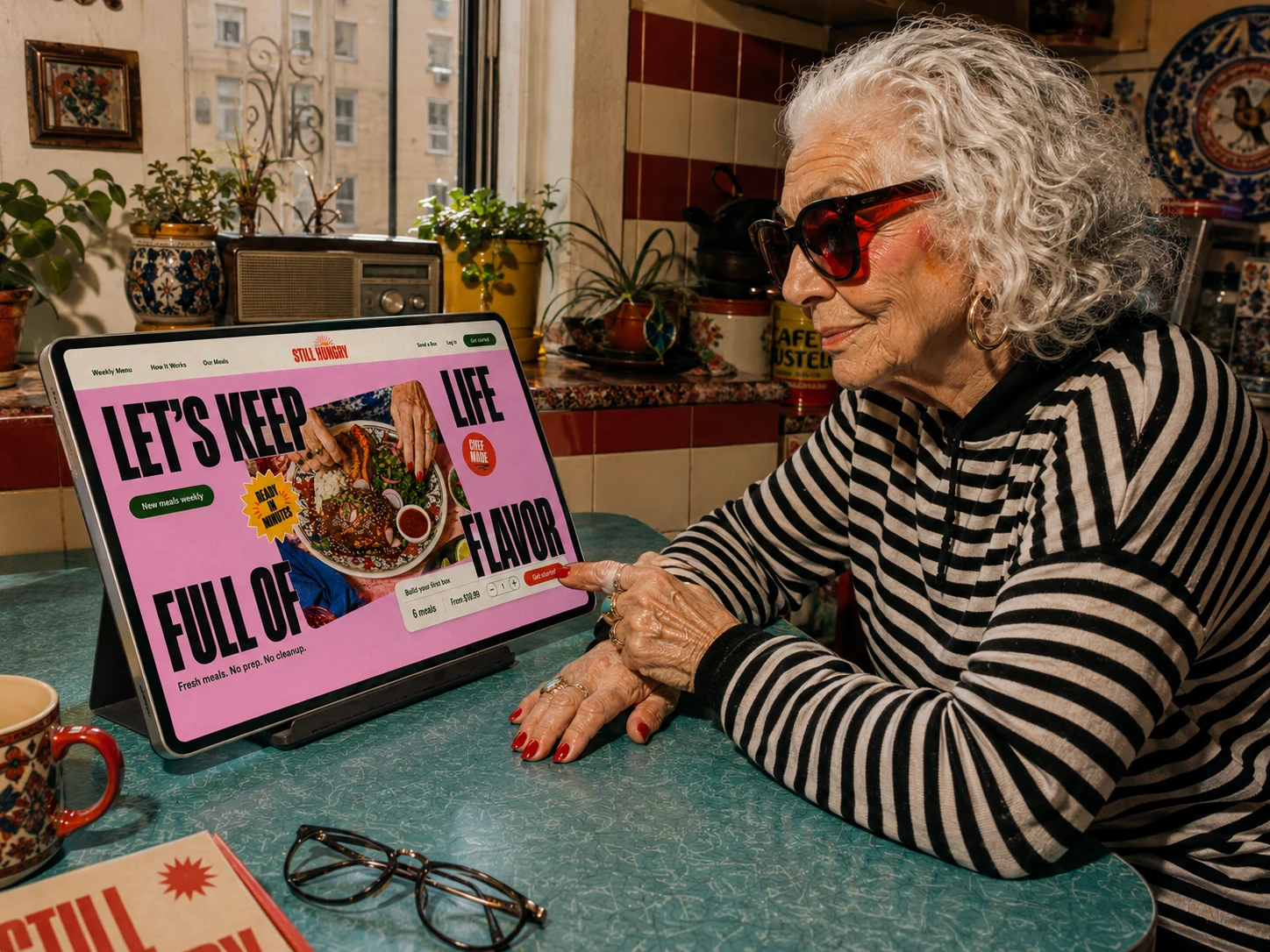
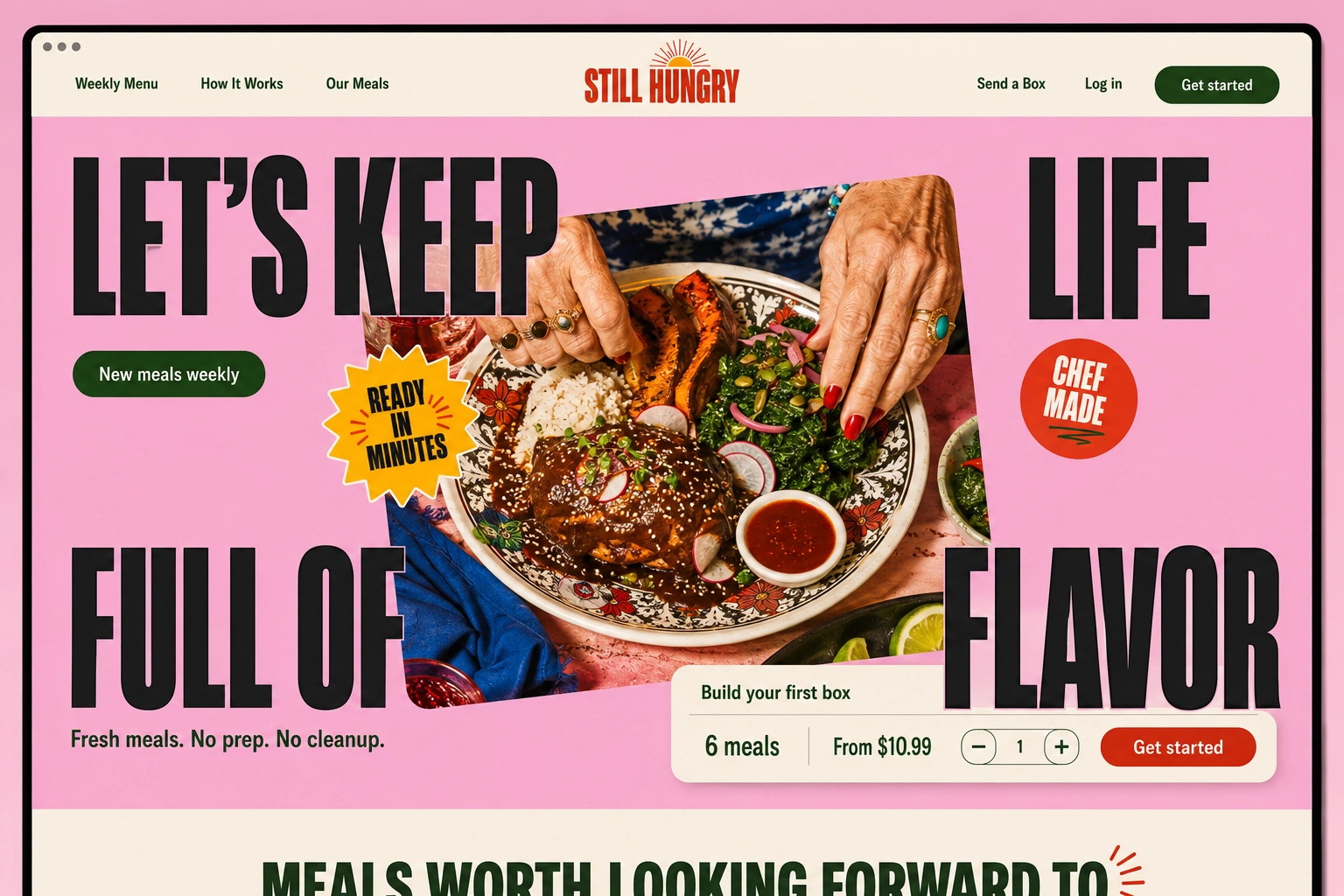
The experience needed to feel as expressive as the brand while remaining effortless to navigate. Large typography, high contrast, clear actions and generous touch targets make every decision easier without making the interface feel simplified.
Customers can explore meals, understand nutritional details and build a flexible box at their own pace—creating an experience that supports independence rather than assuming a need for help.
Choice Without the Cognitive Load
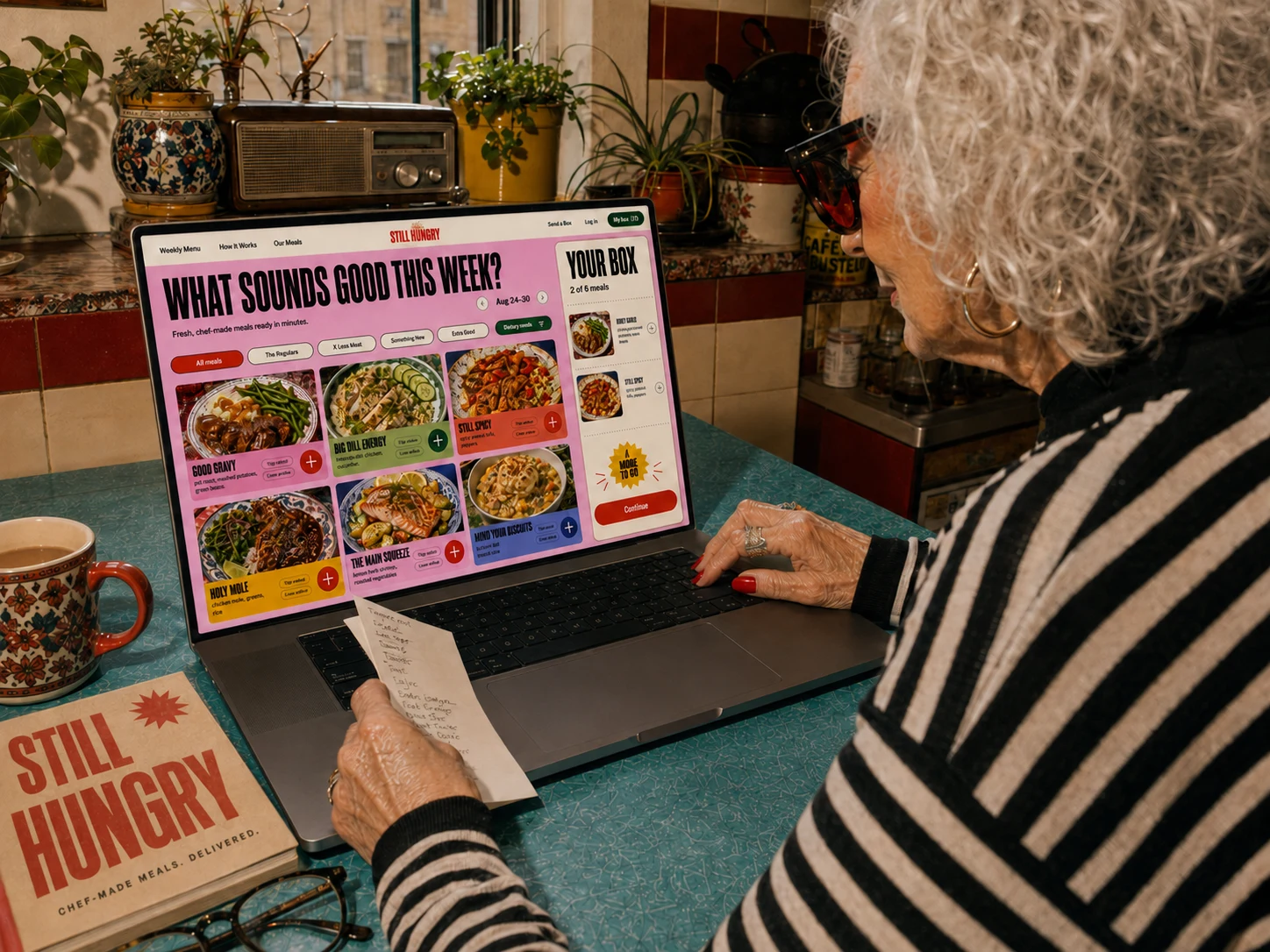
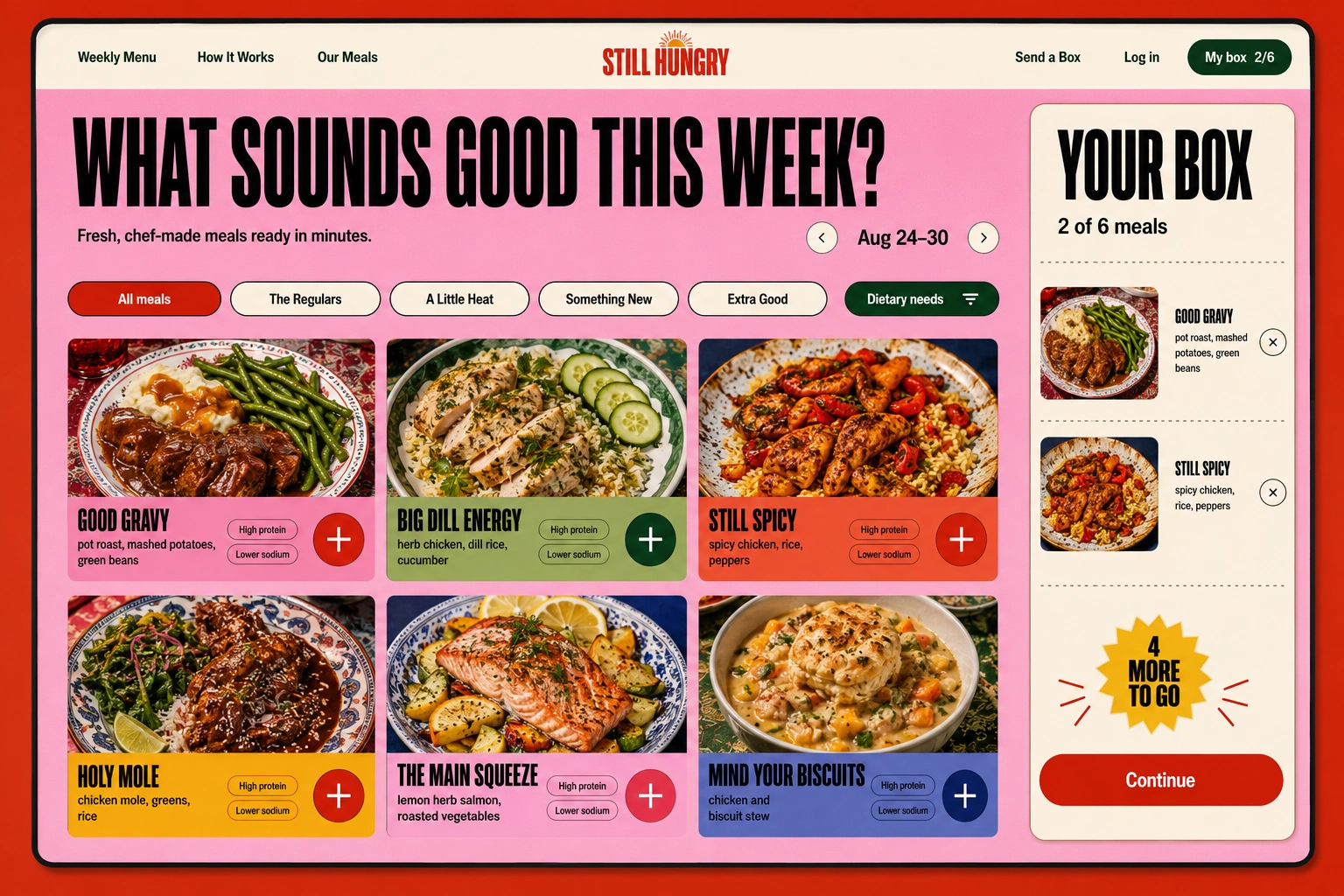
A large weekly menu only works when customers can quickly understand the differences. Still Hungry organizes meals by appetite, dietary needs and familiar flavor cues, using vivid photography and plain language to make comparison effortless.
Selections remain visible as the box fills, while clear progress and flexible filters keep customers oriented. The result delivers meaningful variety without turning dinner into another complicated decision.
The First Box Should Feel Personal
The journey does not end at checkout. Each delivery translates a customer’s Appetite Profile into a box that feels chosen for them—balancing familiar favorites with just enough discovery.
Clear meal names, easy-open sleeves and a simple printed menu make unpacking intuitive and enjoyable. From the first box, Still Hungry turns routine fulfillment into anticipation for what comes next.
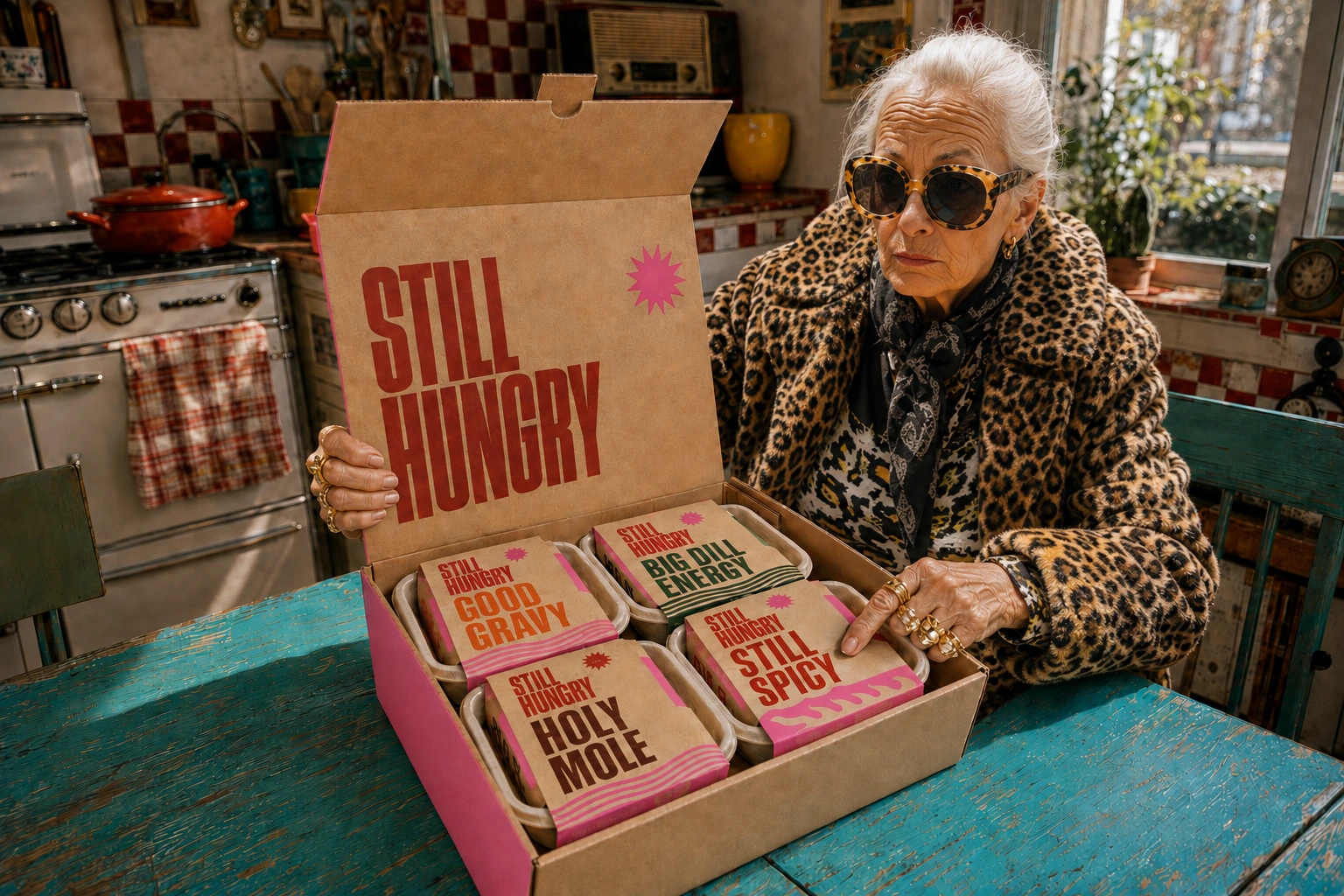
Accessibility Should Be Felt, Not Announced
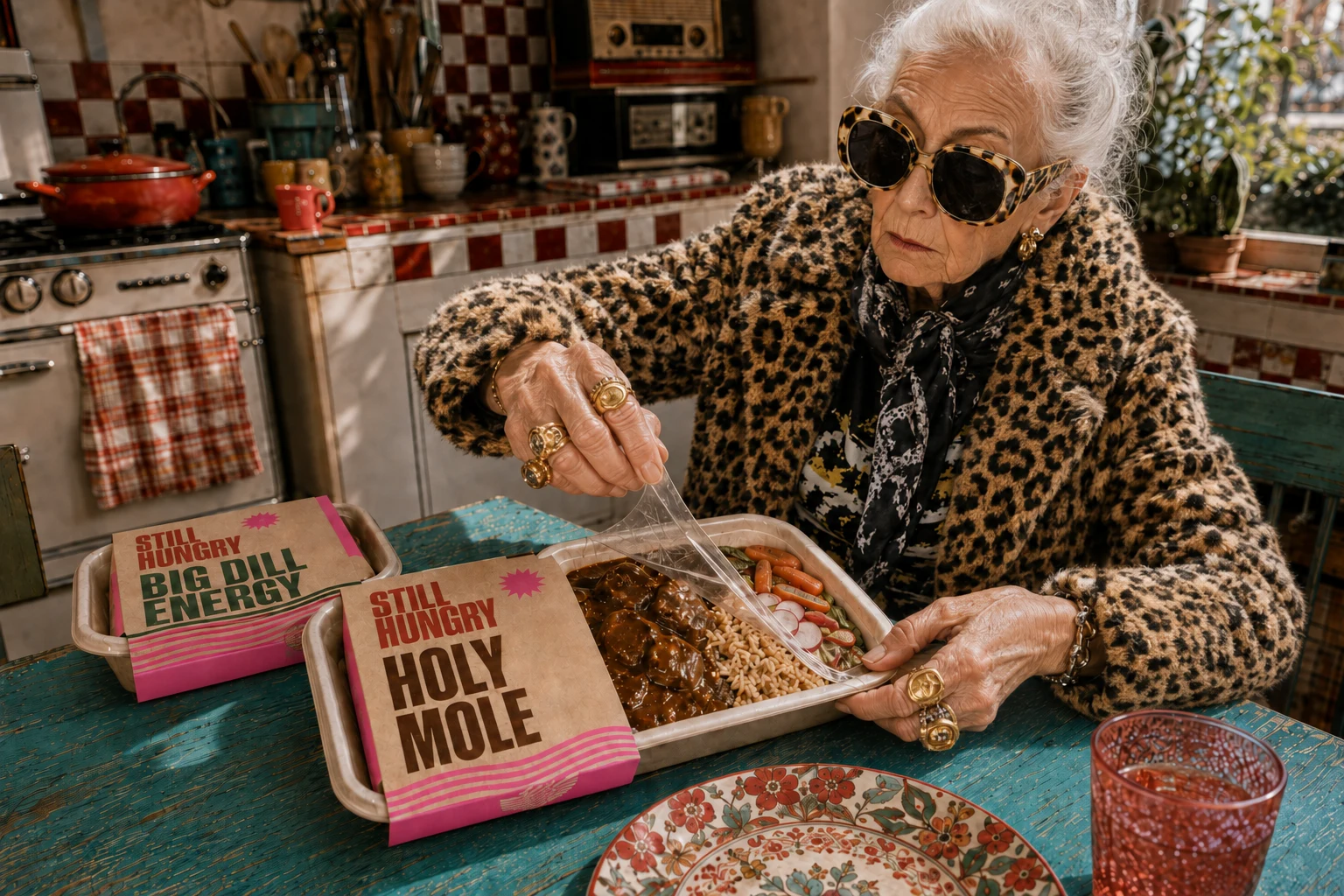
Every interaction was designed to reduce friction—from oversized pull tabs and high-contrast labels to meal names that are easy to recognize at a glance.
These details never ask customers to identify with a limitation. They simply make dinner easier to open, understand and enjoy—proving that inclusive design works best when it feels like good design.
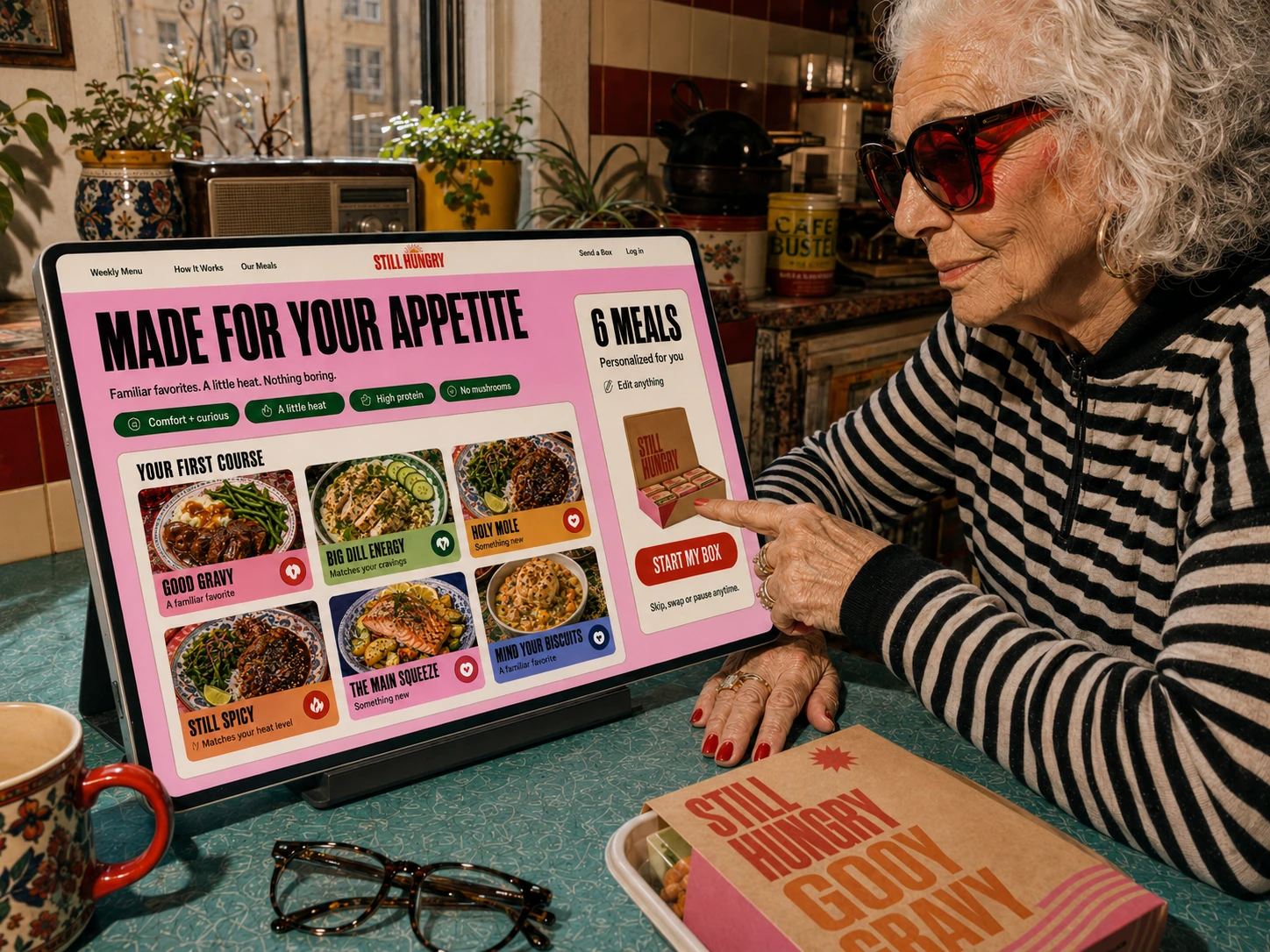
Personalization That Still Leaves Room for Choice
The Appetite Profile turns preferences into a starting point—not a prescription. Familiar favorites, nutritional needs, disliked ingredients and appetite for discovery shape an initial six-meal box, with a clear reason behind every recommendation.
Customers can keep, swap or remove anything before checkout. The experience reduces the work of choosing without taking control away, making personalization feel useful rather than restrictive.
Support Without Taking Over
Subscriptions were designed to remain flexible after checkout. Customers can edit meals, change delivery dates, skip a week or pause entirely without searching through account settings or contacting support.
Gifting follows the same principle. Family members can send a box while inviting the recipient to choose their own meals—offering practical support without removing the independence that Still Hungry was built to protect.

One Question Became the Campaign
The Still Hungry List begins with a simple prompt: What are you still hungry for? Each answer becomes a documentary portrait, short film, written profile, social cutdown and limited-edition meal sleeve.
Rose’s answer—“I’m still hungry for trouble”—introduces the brand through personality rather than product claims. The system creates an ongoing source of distinctive campaign content while giving customers a reason to see themselves in the brand.
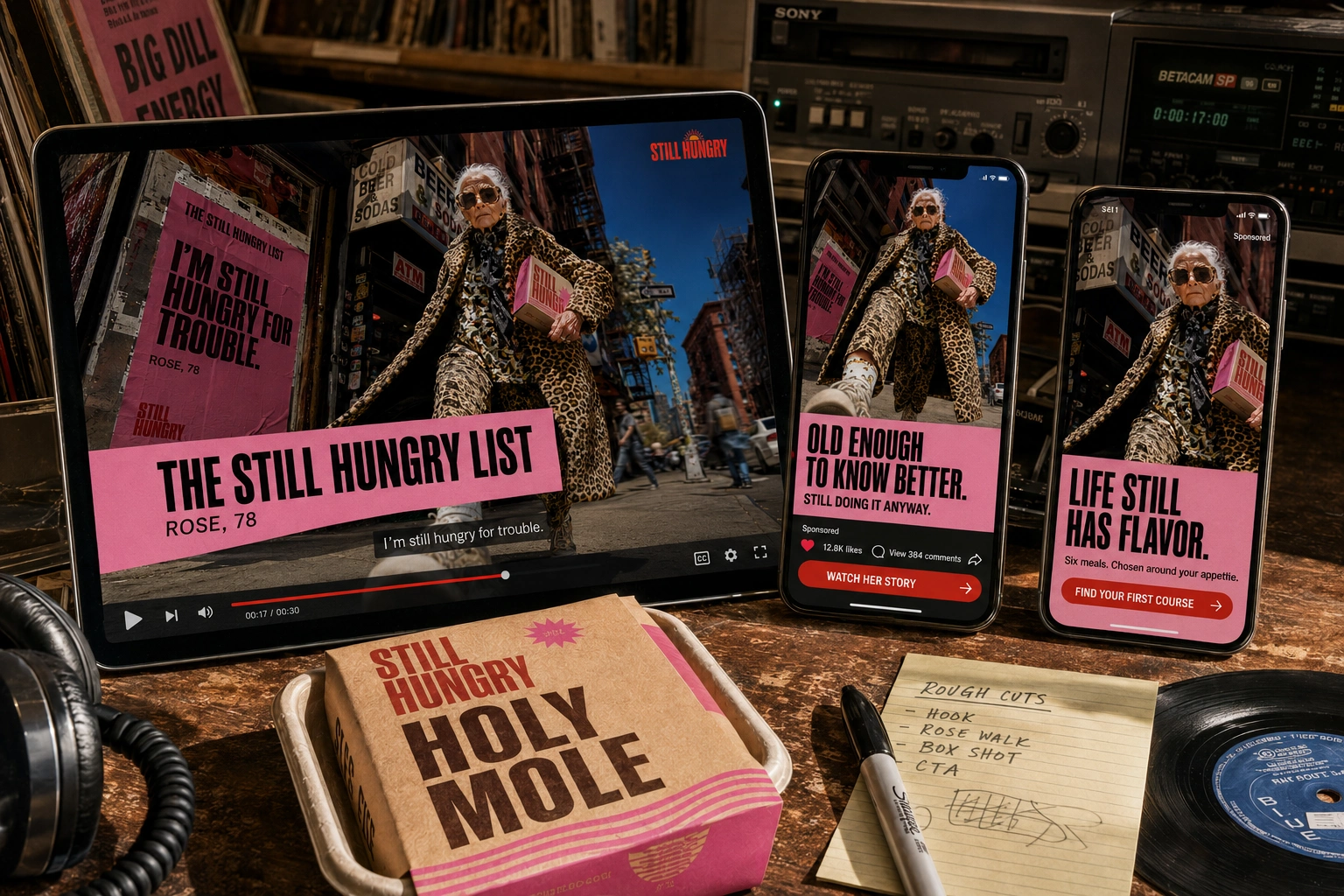
One Story, Built to Travel
Each documentary profile was designed as a modular creative system. A 30-second hero film introduces the person, short vertical cuts create discovery, and product-led variations connect their story to the first-box experience.
The creative changes by funnel stage without changing its point of view. Rose remains the reason to stop, watch and remember—while clearer meal imagery and calls to action give interested viewers a natural path from attention to purchase.
Retention Built Around Relevance
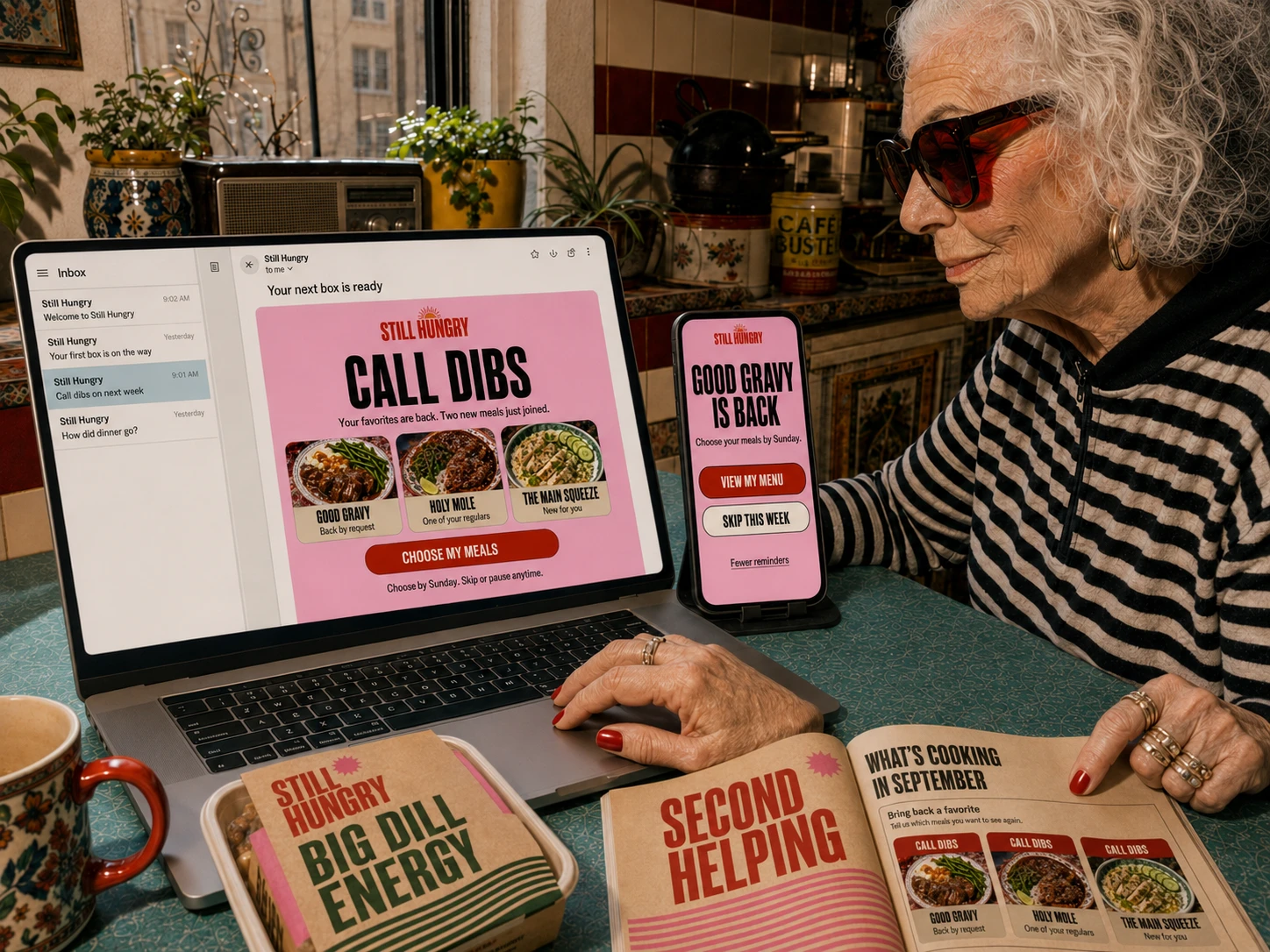
The journey continues after delivery with communication shaped by each customer’s habits. Welcome emails build confidence, weekly reminders surface returning favorites, and post-meal feedback improves what gets recommended next.
Customers control both their meals and how often the brand reaches them. By replacing discount-heavy messages with timely, useful reasons to return, Still Hungry builds retention through familiarity, discovery and trust.
Advocacy Became the Next Acquisition Channel
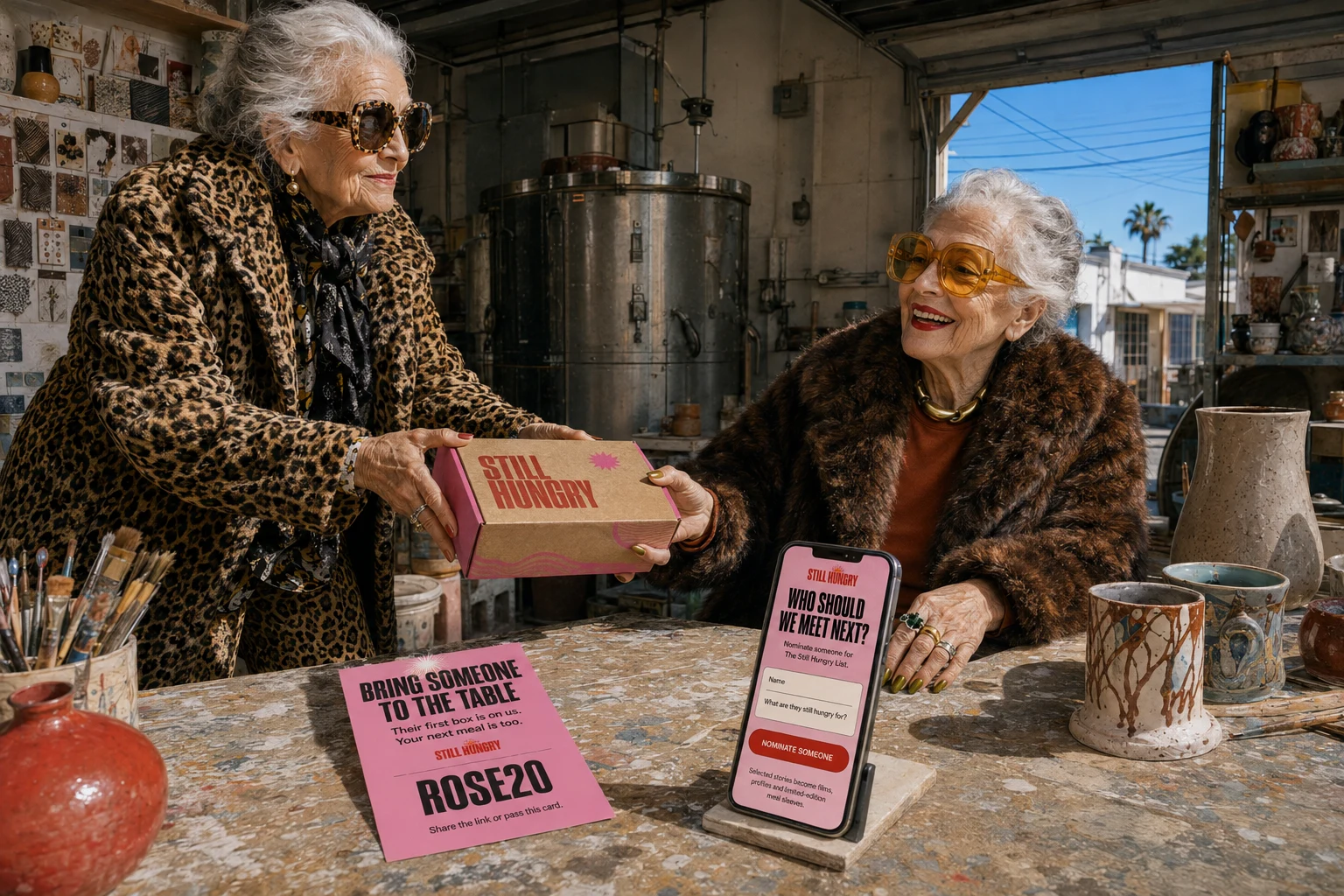
The referral system makes sharing feel personal. Customers can pass along a box or referral card, giving someone new an easy first experience while earning a meal credit toward their own plan.
Advocacy extends beyond purchase. Customers can nominate someone for The Still Hungry List, turning the community into a source of future stories, campaign subjects and limited-edition packaging. Each new customer can become both an advocate and the beginning of the next story.
Growth Measured in More Than Meals
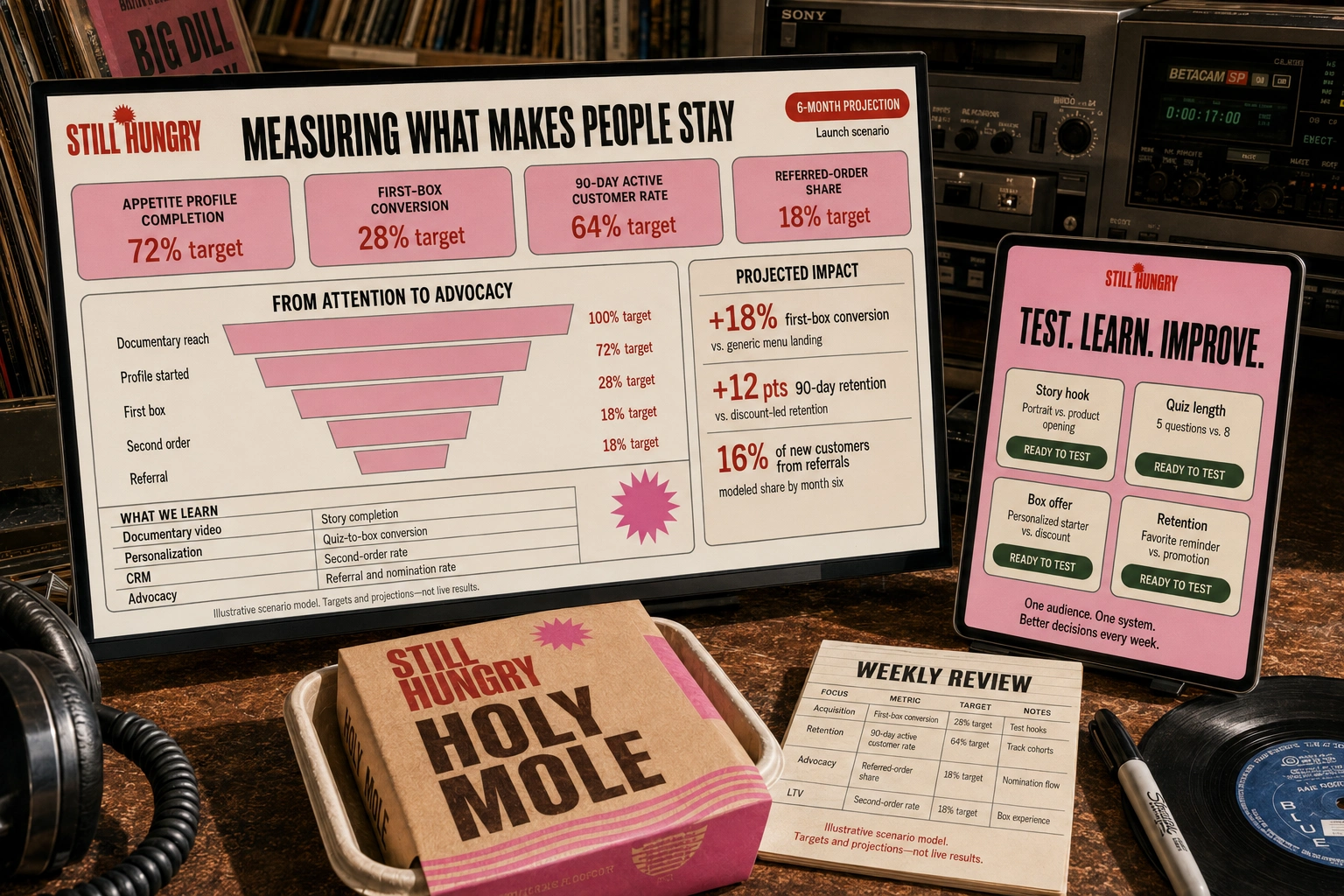
Still Hungry was designed to turn a deeply human insight into a measurable growth system. Every touchpoint—from the Appetite Profile and personalized storefront to gifting, storytelling and referrals—helps the brand learn what people want while giving customers greater choice and control.
The projected framework connects those experiences to clear commercial outcomes: stronger first-box conversion, longer retention and more customers arriving through trusted recommendations. Because the real opportunity is not simply delivering more meals. It is building a brand people choose, remember and bring to someone else’s table.
Life still has flavor. Stay hungry.
Like this project
Posted Sep 27, 2026
Created a demand-generation system for Still Hungry to personalize the meal delivery experience.