Map-First Real Estate Marketplace — Architecture to Production

Abdul Moiz


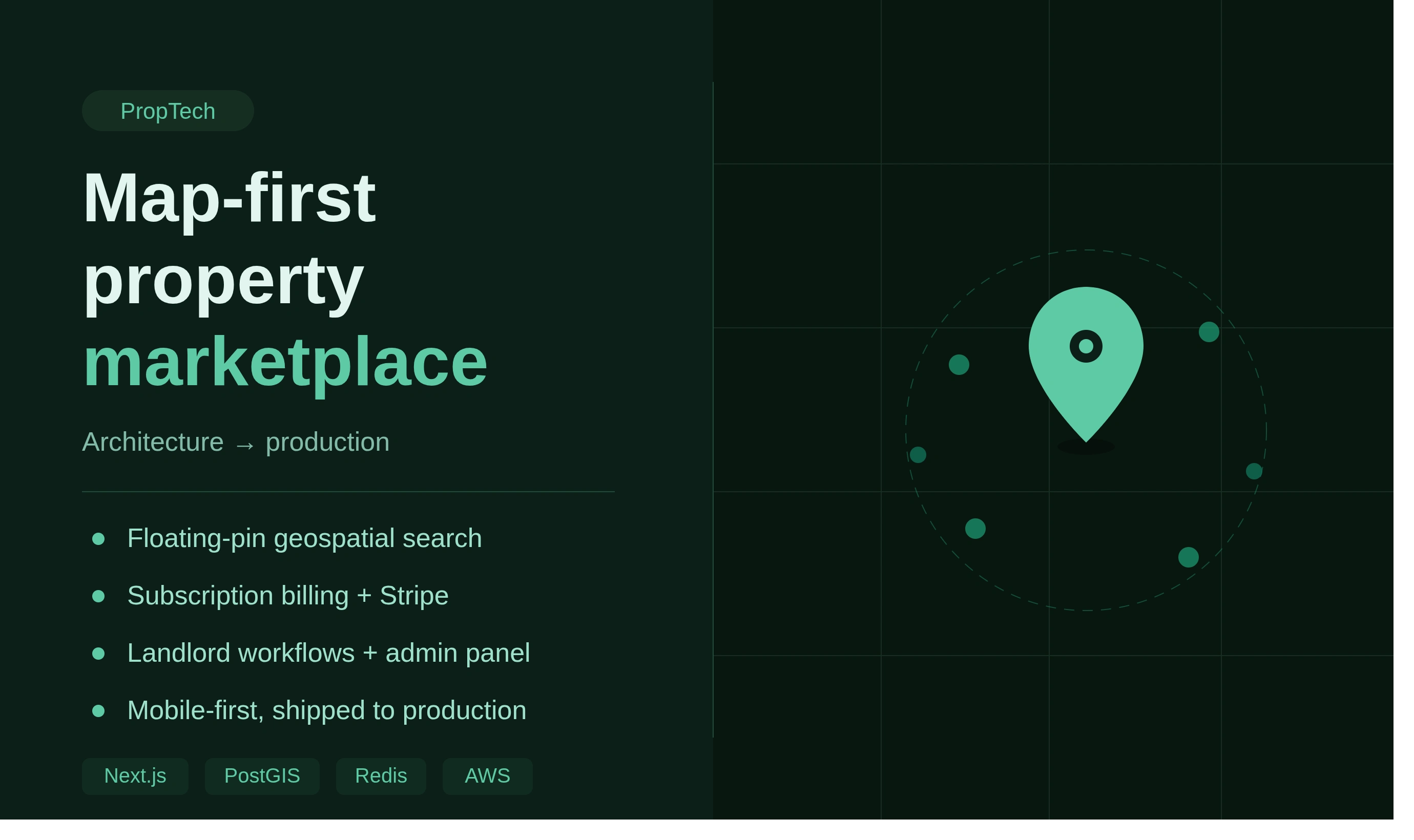
Map-First Property Marketplace
The brief: Build a property marketplace where finding a rental starts with a location, not an endless list of stale properties.
Seekers drop a pin on the map. Nearby rentals appear instantly. Landlords publish directly. No broker layer in between.
What I built
For seekers, the experience is deliberately simple:
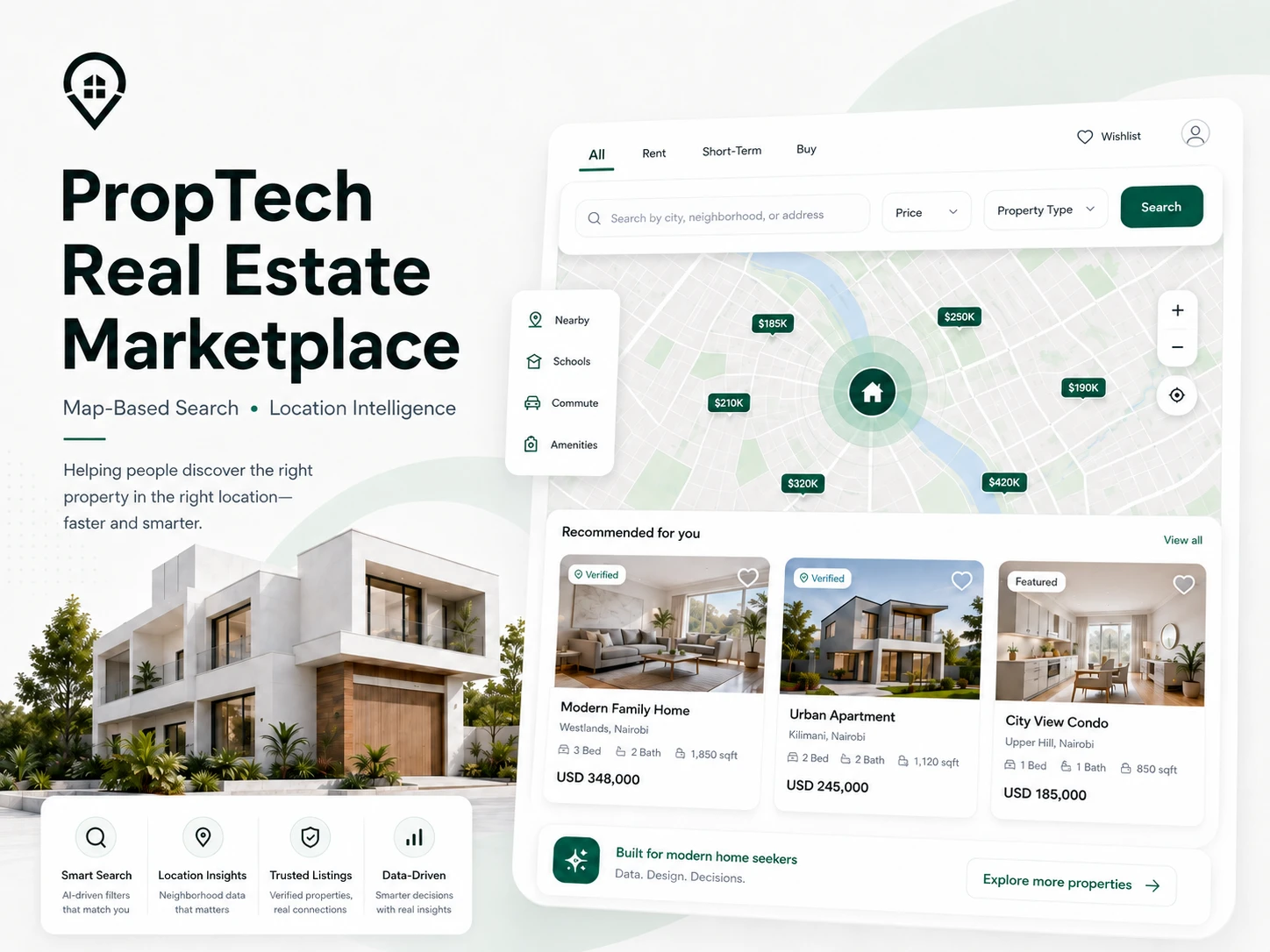
Drop a pin on any street → instantly discover nearby properties → filter by price, category, and availability → open a verified listing → request a callback or viewing directly from the landlord.
Each property includes the details that actually matter during the decision process, including verified information and landlord responsiveness.
For landlords, I built the complete publishing and monetization workflow: property creation, pricing, subscription plans, contact access, tour scheduling, and payments, all managed through the platform.
I owned the product technically end to end, including:
System architecture and backend APIs
Geospatial property search with PostgreSQL/PostGIS
Interactive map and pin-based discovery
Seeker and landlord workflows
Subscription and payment infrastructure
Redis-backed performance optimization
Production deployment and infrastructure
The interesting engineering problem: maps
The map experience was central to the product, but the obvious choices came with trade-offs.
Google Maps was ruled out because of cost.
Mapbox offered the polished consumer-grade experience we wanted, but its geocoding coverage was inconsistent across some of the African regions app was targeting.
OpenStreetMap had much stronger local geographic coverage and no licensing cost, but using its default interface would have made the product feel far less polished.
So I combined the strengths of both.
Mapbox GL handles map rendering and interaction. OpenStreetMap powers geocoding and location search.
That gave a smooth, responsive map experience while maintaining reliable local address and location coverage at a fraction of the cost.
The harder part was making the two systems behave like one: keeping map movement, pin drops, location search, property queries, clustering, and filters synchronized without degrading the user experience.
The result is a property discovery experience built around a simple idea:
Don’t make users search through hundreds of listings. Let them point to where they want to live and show them what is available there.
Stack: Next.js, React, TypeScript, Node.js, PostgreSQL + PostGIS, Mapbox GL, OpenStreetMap, Redis, Stripe, GCP, Docker, Nginx
Like this project
Posted Jul 5, 2026
Built a map-first PropTech marketplace that lets renters discover nearby properties by location while giving landlords listing, subscription, scheduling, and payment workflows in one platform.