Postmortem: incident log + postmortem writer in Bolt

Ali Sabir


Small engineering teams usually keep incidents in a Slack thread and write the postmortem a week later from memory. Postmortem keeps both in one place: log the incident while it is happening, and the write-up is already done when it is over.
What it does
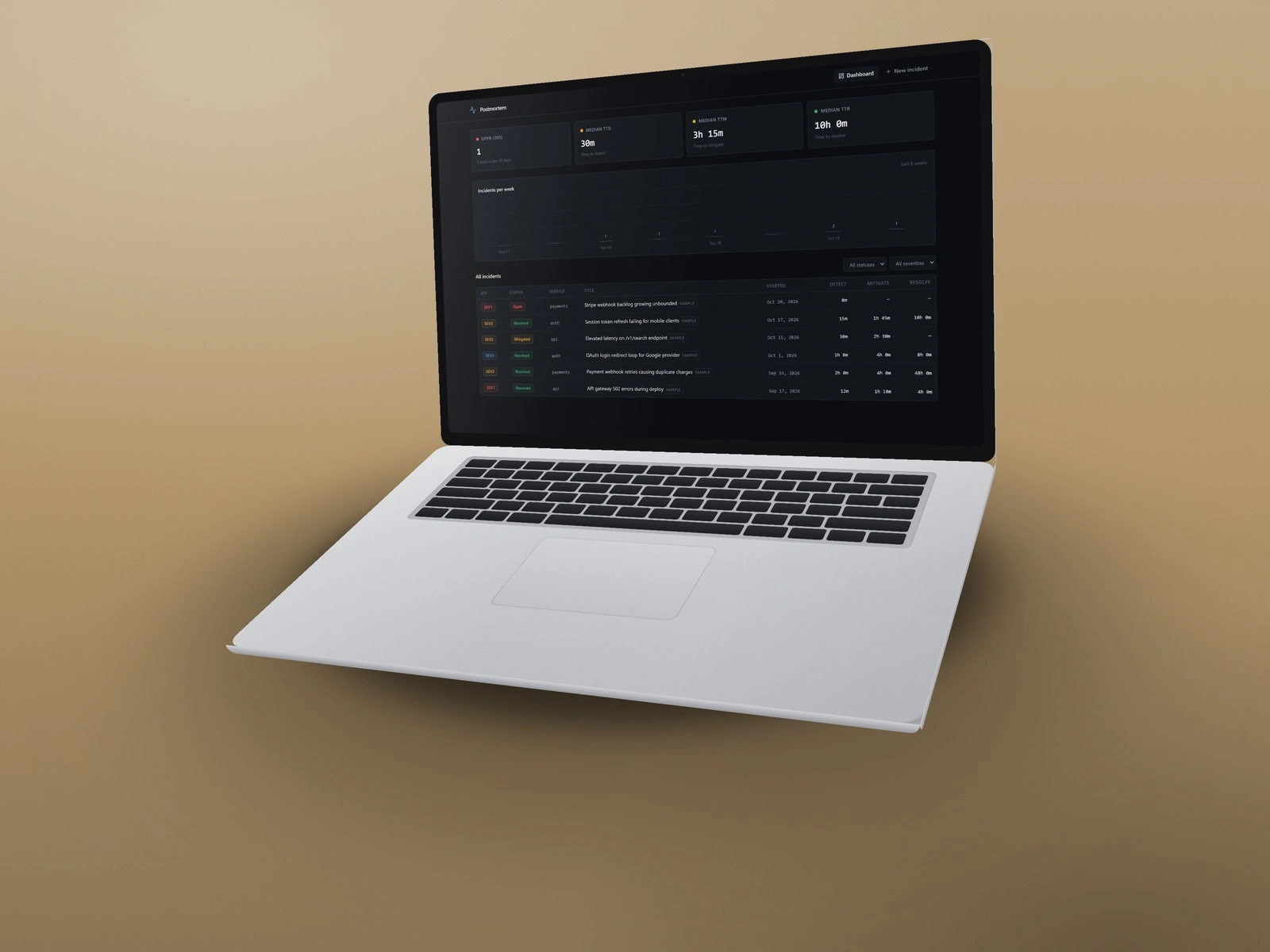
Dashboard with open incidents, median time to detect, mitigate and resolve over the last 30 days, and incidents per week for the last 8 weeks.
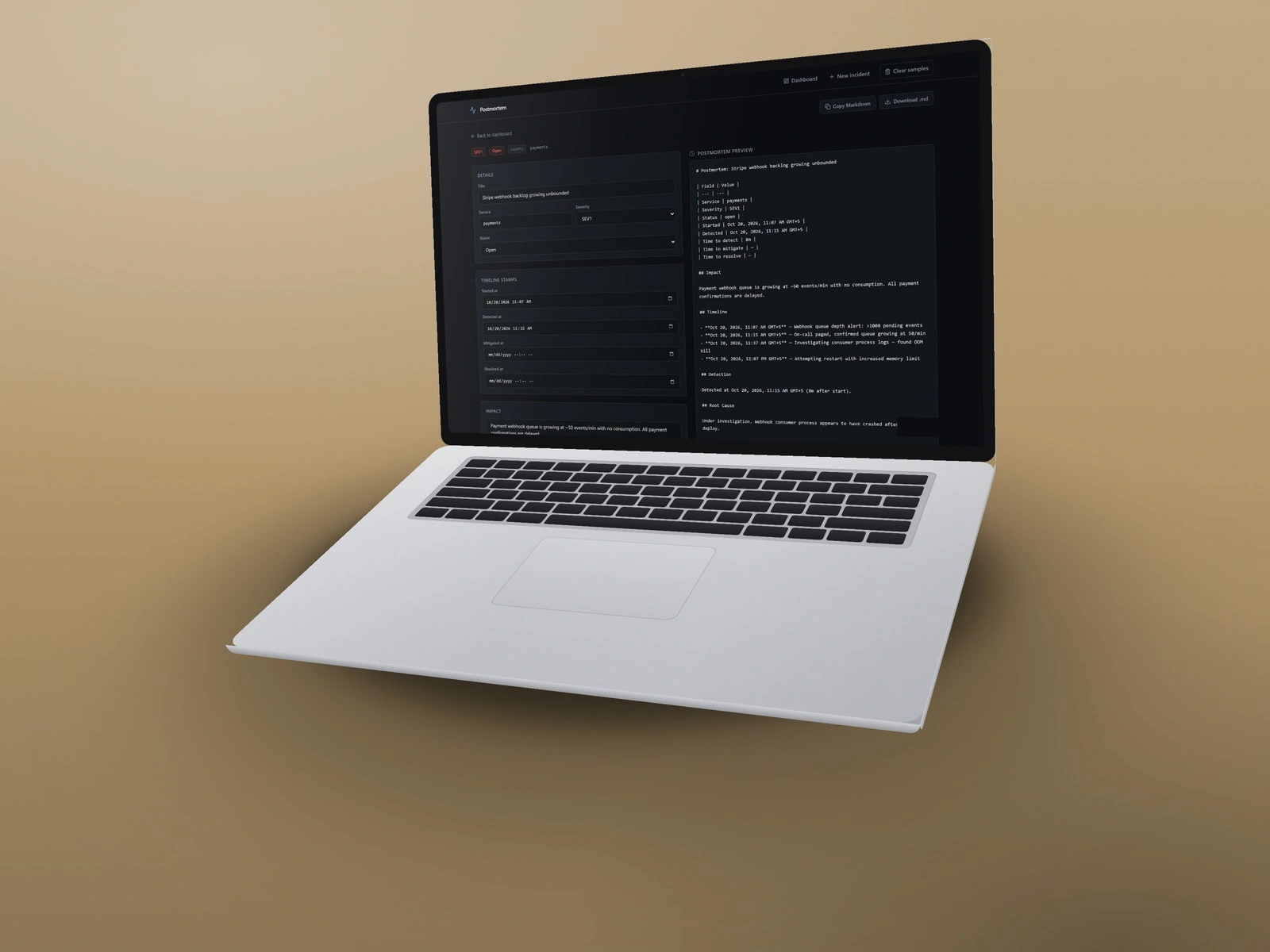
Each incident has a timeline, five-whys root cause, action items with owners and due dates, and timestamp validation so detected can never come before started.
The postmortem renders live from the data as Markdown: summary, impact, timeline, detection, root cause chain, action items. Copy it or download it as a dated .md file.
Local-first: everything stays in the browser, no account, no backend.
How it was built
One prompt in Bolt, written as a spec: data model, derived fields, four routes, design tokens and validation rules. Bolt built it in one pass with no TypeScript errors.
Vite + React + TypeScript + Tailwind, react-router, a plain SVG chart, and pure helpers for time and markdown so they can be unit-tested.
Design: dark operational theme, tabular numerals, monospace timestamps, 1px borders, no gradients.
The sample incidents in the images are tagged SAMPLE inside the app. They show the layout; they are not real outages.
Live: https://postmortem-incident-w8tg.bolt.host
Like this project
Posted Oct 22, 2026
Local-first incident tracker with live Markdown postmortems, time-to-resolve stats and action items. Built in Bolt from one spec prompt and published live.