Built with Framer
FlowContent AI SaaS Website Development

Tarik Eamin


FlowContent - AI Powered Content Management & Automation Website
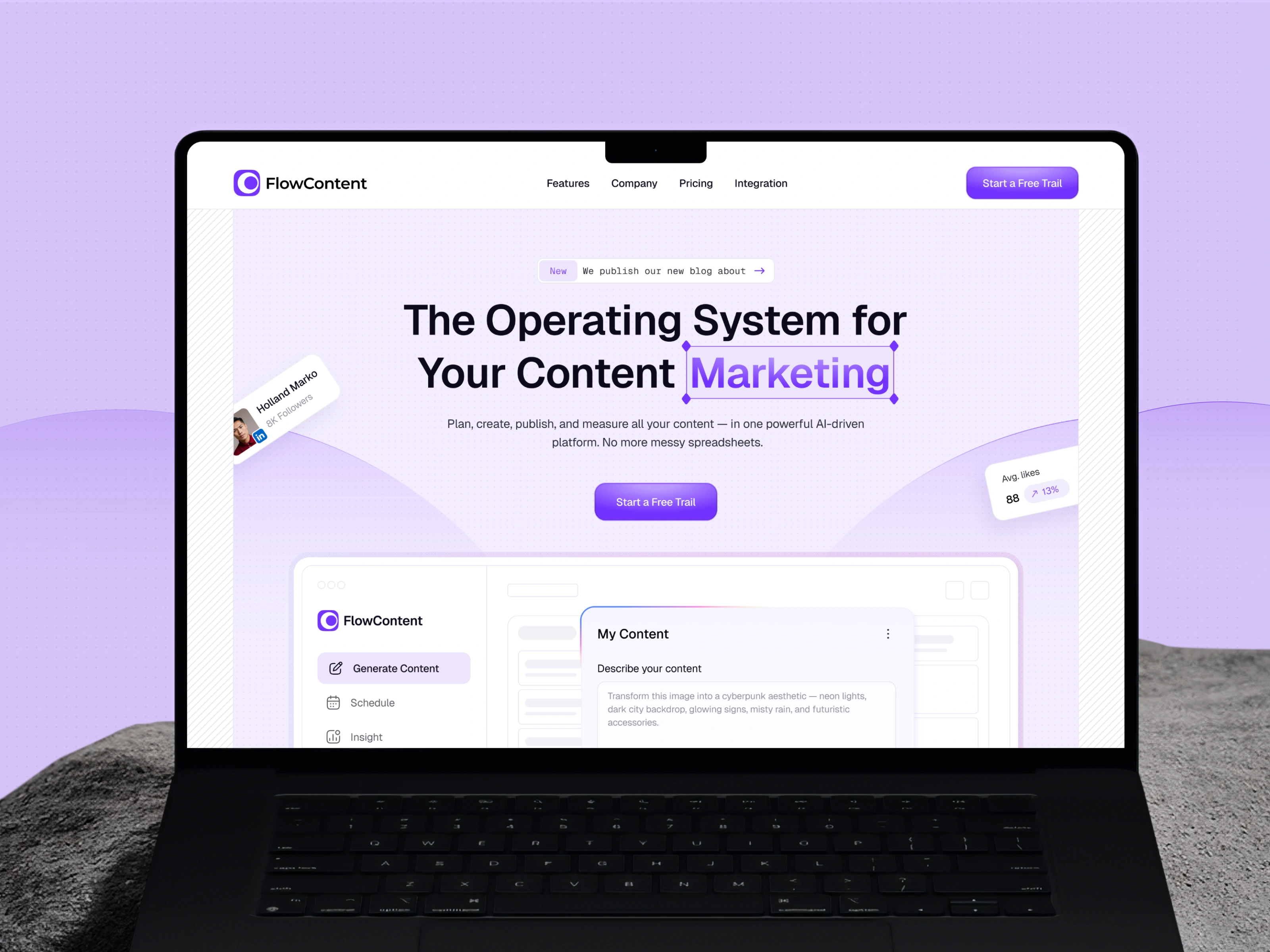
FlowContent Hero Section
Building an AI SaaS product is not only a technology challenge, but it is also a communication challenge. The more advanced a product becomes, the harder it can be for new users to immediately understand its value.
FlowContent was created for AI powered content management and automation platforms that need to explain complex workflows in a simple and convincing way. Instead of presenting AI features as a technical checklist, the experience focuses on the problem, recognize the solution, and build confidence in the product. It gives SaaS teams a strategic website foundation that helps turn complex technology into a clear product story.
The Problem
AI products are entering a market where technical capability is no longer the only differentiator. As more companies introduce AI-powered solutions, the challenge has shifted. It shifted from building intelligent technology to helping users quickly understand why that technology matters.
Research around SaaS buying behavior shows that users rarely evaluate products based only on features. They need clear context, understandable value propositions, and confidence that a solution fits their workflow before committing time or resources. When a product website focuses heavily on technical capabilities without connecting them to user outcomes, visitors often struggle to understand the real benefit.
This challenge is even greater for AI platforms because the technology itself can feel unfamiliar. Terms like automation, intelligent workflows, machine learning, and AI agents may describe what the product does. But they don't always explain how the product improves someone’s daily work.
Common challenges include:
Feature Complexity Creating Decision Friction
AI products often have multiple capabilities, integrations, and workflows. Without a clear information hierarchy, users may spend more time trying to understand the product than recognizing its value.
Technology Focused Messaging Instead of Outcome Focused Communication
Many AI websites explain what the system can do but fail to clearly communicate how it helps users save time, improve efficiency, or solve specific problems.
Lack of Trust During a High Consideration Cecision
SaaS adoption requires confidence. Users need to understand the product, its workflow, and its impact before they are willing to start a trial, request a demo, or introduce it into their process.
Limited Scalability of Traditional Marketing Pages
AI products evolve quickly, new features, integrations, and use cases appear frequently, requiring website structures that can grow without constant redesign.
For FlowContent, the challenge was not simply creating a visually appealing SaaS website. The real challenge was designing a product communication system that could translate complex AI capabilities into a clear, trustworthy, and conversion-focused experience.
The Goal
The goal behind FlowContent was to create a website system that helps AI companies communicate with clarity while remaining flexible enough for future growth. The focus was to create an experience where users can quickly understand the product, explore its capabilities, and confidently move toward action. We focused primarily on three principles, such as, clarity, trust and scalability.
Target Users & Use Cases
FlowContent is designed for teams creating products where AI, automation, and content workflows are central to the user experience.
Primary Users
AI SaaS companies building:
Content automation platforms
AI productivity tools
Workflow management software
Knowledge management systems
Enterprise automation solutions
Secondary Users
The template is also useful for:
Startup founders launching an AI product
Product teams improving their marketing website
Agencies creating SaaS websites for clients
Developers building AI-powered applications
Common Use Cases
You can use FlowContent to launch a new SaaS product, redesign an existing website, introduce new AI features, or create a scalable marketing foundation.
Strategy & UX Thinking
The biggest UX challenge with AI products is not showing what the technology can do. It is helping users understand why they need it. FlowContent was structured around a simple idea: users should understand the value before they evaluate the features.
The experience follows a natural decision journey. It first creates awareness around the problem, then introduces the product approach, explains the workflow, and finally provides the information needed to take action.
This structure reduces cognitive overload because users are not forced to process technical details immediately. Instead, they gradually build an understanding of the product and its benefits.
The page architecture was intentionally designed to support:
Faster product understanding
Stronger trust-building
Clearer conversion paths
Easier content expansion
Design System & Component Logic
As an AI product evolves, new features are introduced, positioning changes, and new pages are required to explain different use cases. Building every page as a one-off design creates unnecessary complexity and makes future updates slower.
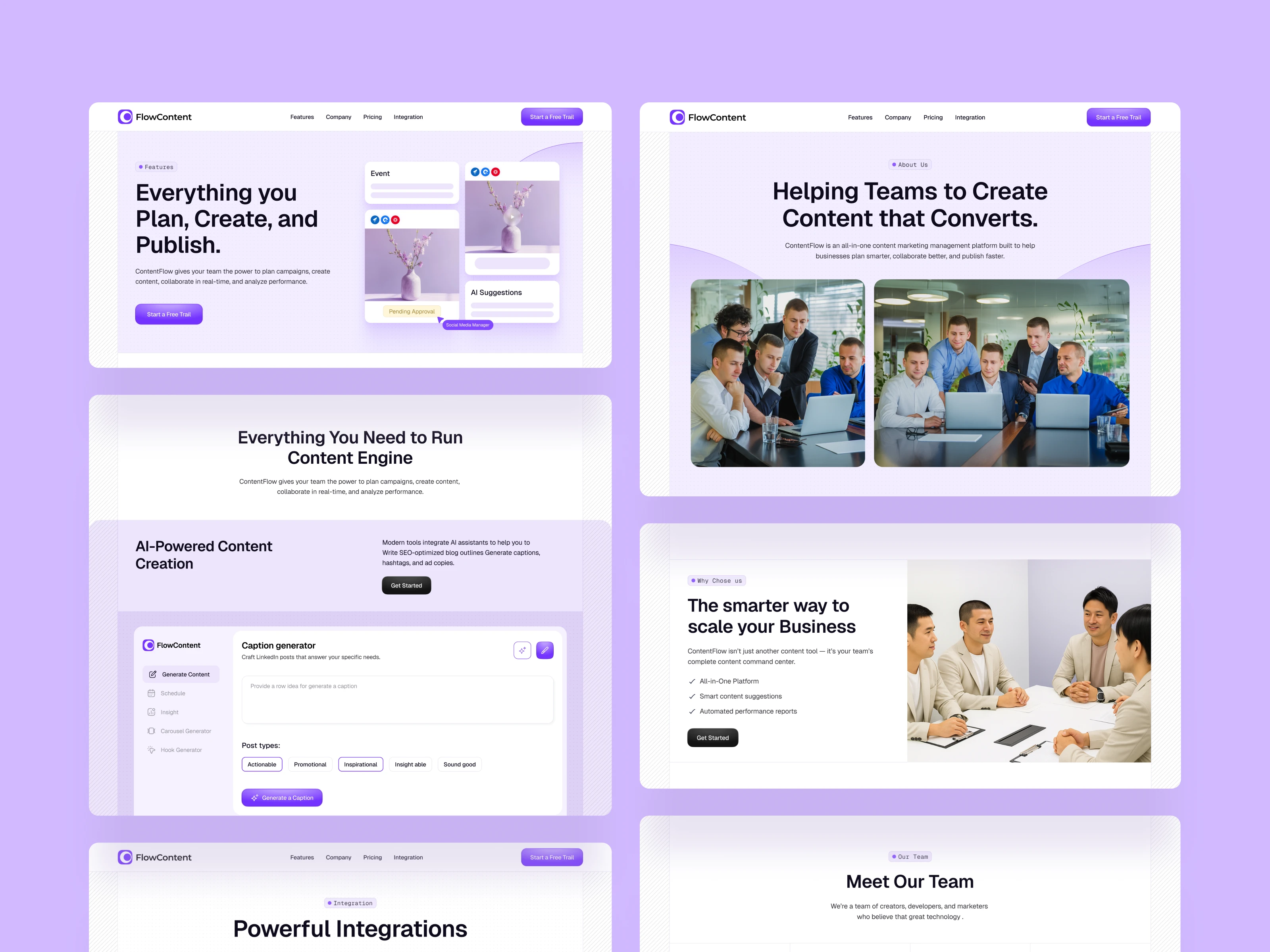
FlowContent Inner pages
FlowContent was designed around a modular component system that gives teams the flexibility to expand their website without losing consistency. Instead of treating each section as an independent visual block, the system creates reusable patterns where content, structure, and user flow remain connected.
The goal was not only to create a polished first version but to create a design system that continues to provide value as your product grows.
Development & Technical Execution
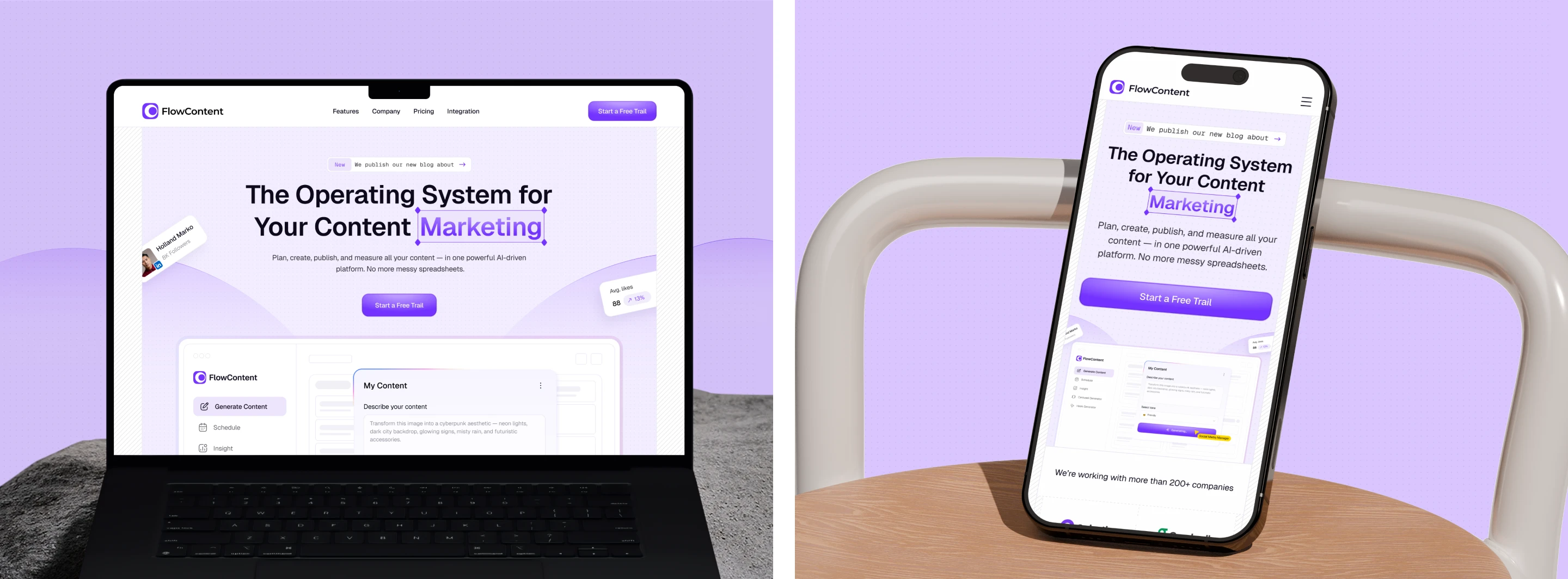
FlowContent - Curated for every device to run seamlessly
FlowContent was developed with both Framer and Webflow environments in mind, ensuring the experience remains practical for different teams and workflows. Each platform has its own strengths, so the implementation approach focuses on maintaining the core UX principles while adapting technical decisions where necessary.
The development process prioritizes clean structure, responsive behavior, and maintainability. The website is designed to perform consistently across different screen sizes while keeping interactions purposeful rather than adding unnecessary complexity.
For SaaS teams, this means you can customize content, update sections, and expand the website without depending on complicated technical changes. The structure supports marketing teams who need control while still maintaining the quality expected from a professionally developed product website.
Rather than focusing only on visual similarity between platforms, the implementation focuses on preserving the user experience, performance, and long-term usability of the website.
SEO, Performance & Best Practices
FlowContent was built with a content-first approach where information hierarchy plays an important role. Clear page structures help visitors understand the product while also creating a stronger foundation for search engines to interpret the content.
The layout follows practical SEO principles by organizing information logically, and maintaining clear heading relationships. Performance was also considered throughout the experience. Modern SaaS websites often rely on animations and rich interactions, but unnecessary complexity can negatively impact loading speed and usability. FlowContent focuses on purposeful interactions that enhance understanding while maintaining a lightweight experience.
The result is a website foundation that supports both immediate conversion goals and long-term growth.
Challenges & Trade-offs
The main challenge was balancing technical depth with simplicity. AI products often have many features, workflows, and possibilities. However, showing everything immediately can create confusion rather than confidence. The solution was to prioritize understanding over information volume.
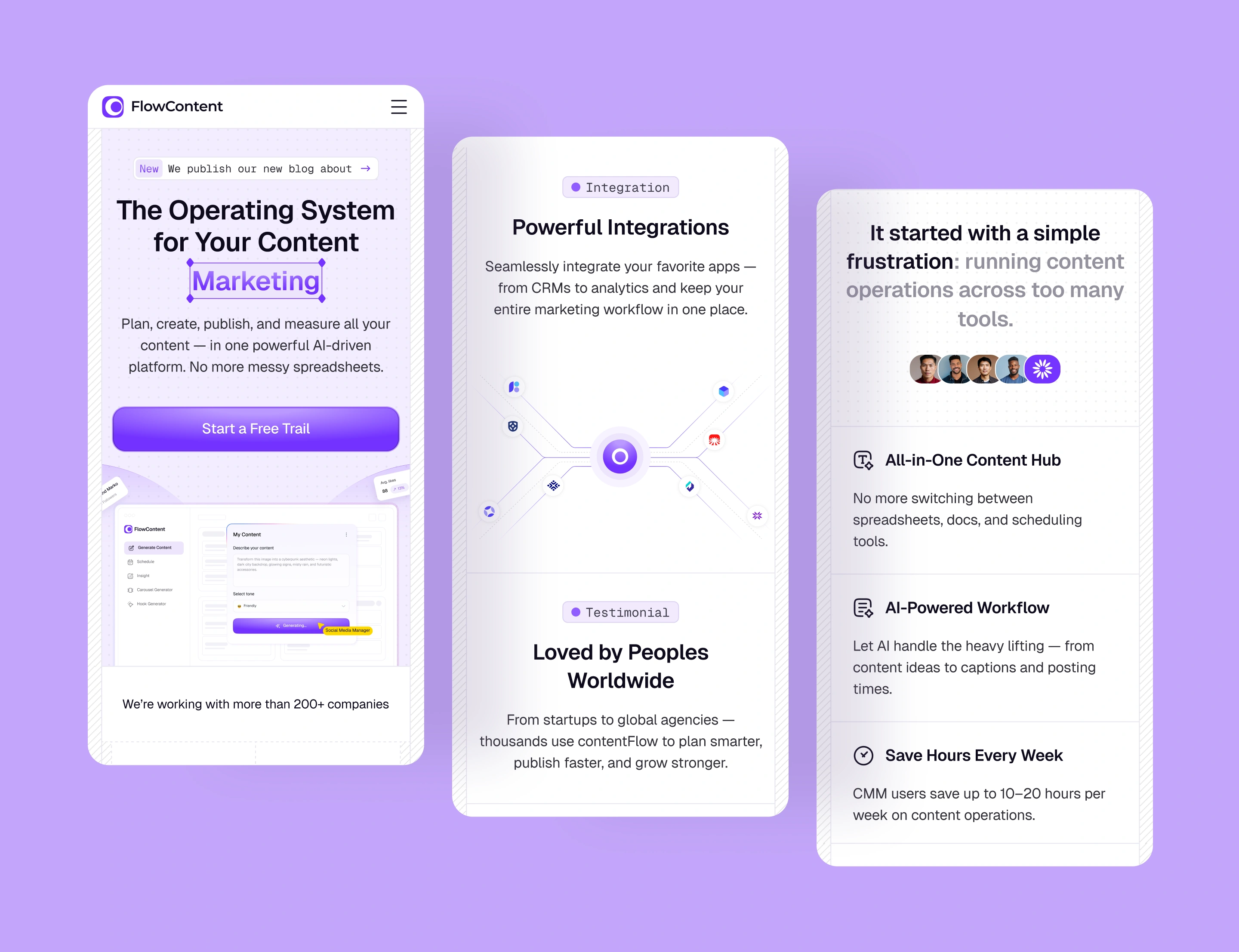
FlowContent Mobile Responsive screens
FlowContent introduces complexity gradually, allowing users to first understand the value of the product before exploring deeper capabilities. This creates a better experience for both technical and non-technical audiences.
What Makes FlowContent Different?
FlowContent is built for teams that want to present AI products with clarity, structure, and confidence. By combining strategic UX thinking, scalable design systems, and platform-aware development, the template helps transform complex technology into an understandable product experience. It is a framework for communicating AI products in a way that supports user trust, product adoption, and business growth.
Like this project
Posted Jul 10, 2026
FlowContent is designed for AI-powered content management and automation platforms that need to explain complex workflows simply and convincingly.