MyWATTii - Enterprise Energy & Certificate Platform

Ahtasham Khan Niazi


Project Overview & Role
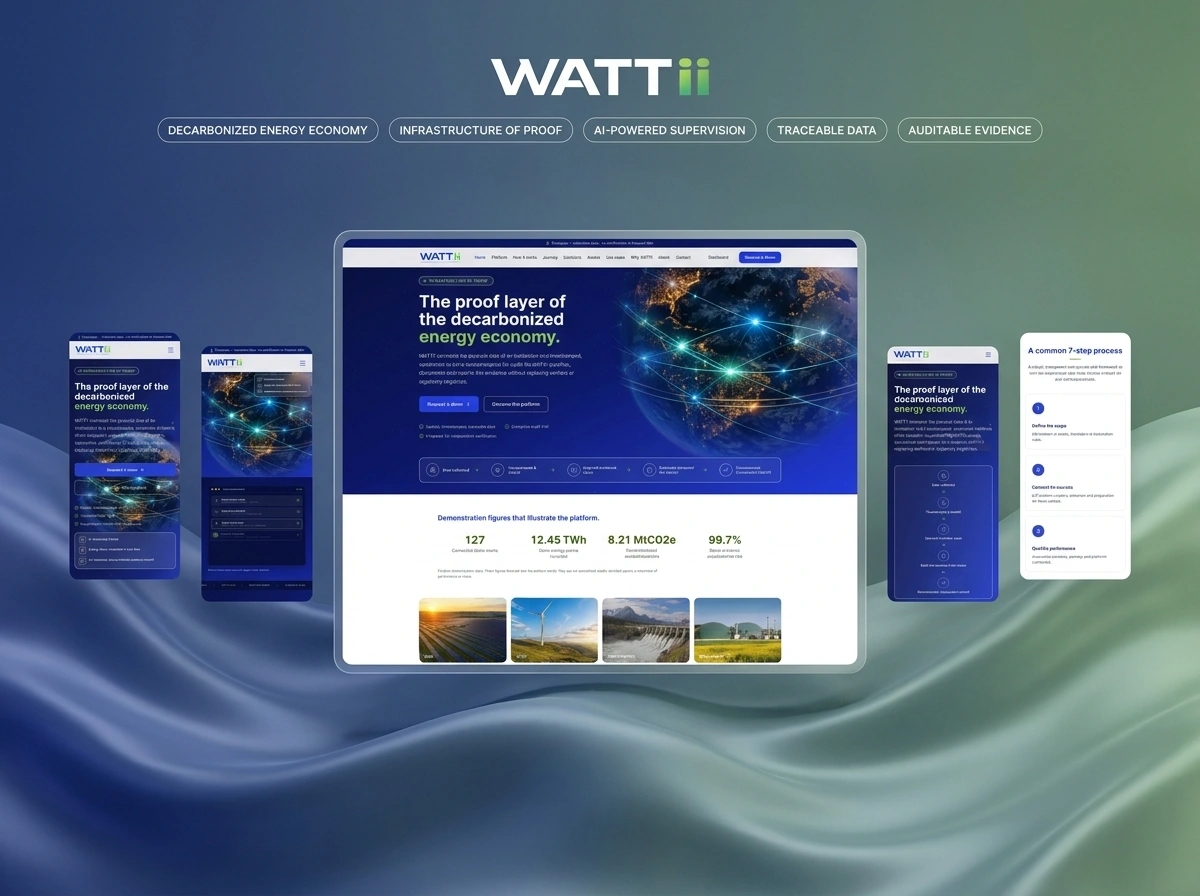
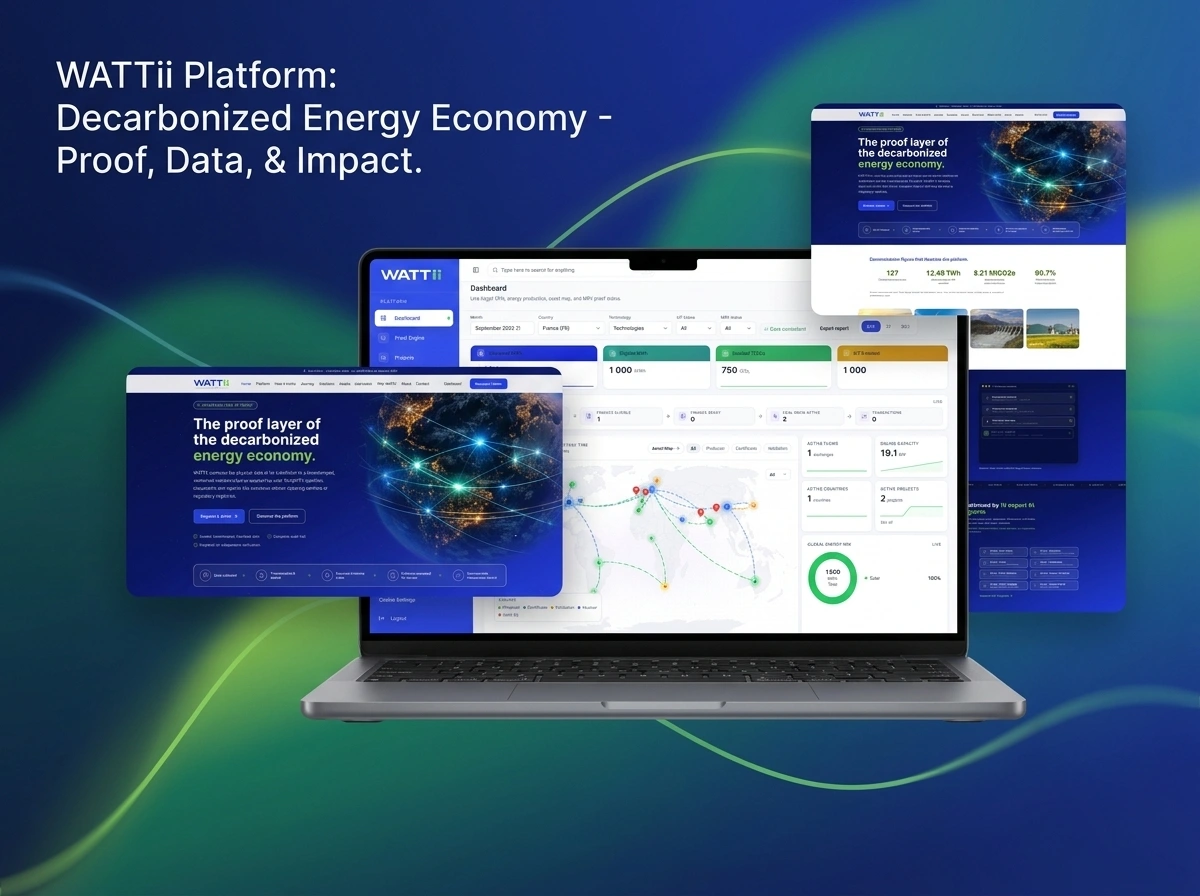
WATTii (and its consumer-facing companion, MyWATTii) is a large-scale energy-evidence platform designed to power the decarbonized energy economy with verifiable proof, real-time data, and regulatory-grade documentation. It serves energy producers, grid operators, certification bodies, and end consumers across the full lifecycle of green energy claims.
As a Senior Product Designer, I led the end-to-end design of the platform's core experience. My work spanned defining the information architecture for complex multi-entity dashboards, designing transactional flows for certificate issuance and trading, building scalable component systems in Figma, and collaborating closely with engineers and domain experts to align product decisions with both technical constraints and regulatory requirements.
This was not a typical SaaS product. Every design decision had to account for data integrity, compliance traceability, and multi-stakeholder trustl, making the work as much about information governance as it was about interface design.
About the Product
WATTii connects the physical side of the energy transition - production sites, smart meters, grid infrastructure, with the trust layer required by regulators, markets, and consumers. It captures real-time generation and consumption data, links it to verified certificates (such as Guarantees of Origin), and makes the entire chain auditable and legally defensible.
MyWATTii, the consumer-facing layer, translates this complex backend into a clear, trustworthy experience - allowing households and businesses to understand where their energy comes from, verify its origin, and see the environmental impact of their choices.
The platform is built for the European energy market and must comply with strict regulatory frameworks, including national transpositions of EU energy directives. This means every feature, every data flow, and every UI decision is shaped by compliance, traceability, and cross-entity governance.
Responsibilities & Contributions
Led product design across two interconnected platforms (WATTii and MyWATTii), ensuring consistency in interaction patterns, data display, and branding across B2B and B2C interfaces.
Designed the full certificate lifecycle experience - from issuance request through validation, approval, trading, and retirement - working within strict regulatory and data-integrity constraints.
Architected the information structure for multi-entity dashboards (producers, operators, certifiers, consumers), defining how each role accesses, views, and interacts with shared and private data.
Built and maintained the design system in Figma, creating reusable components for dashboards, data tables, forms, charts, and compliance-specific UI patterns.
Collaborated directly with backend and frontend engineers to align design decisions with GraphQL schemas, real-time data pipelines, and modular architecture.
Translated regulatory requirements (BP13 methodology, EU energy directives) into clear, enforceable interface behaviors - ensuring that what users could do in the UI matched what was legally permitted.
Managed stakeholder communication across design, engineering, product, and domain-expert teams — often navigating competing priorities between usability, compliance, and technical feasibility.
Tech Stack & Tools
Product & Design
Figma (design system, prototyping, component libraries), Miro/FigJam (workshops, flows, journey mapping), Notion (specs, documentation, decision logs), Jira/Linear (sprint planning, backlog management), Maze/Hotjar (usability testing, heatmaps).
Frontend
React, Next.js, TypeScript, Tailwind CSS, Radix UI, GraphQL/Apollo Client, Framer Motion/GSAP, Recharts, i18next.
Backend & Data
Node.js, Express, Apollo Server/GraphQL, TypeORM, PostgreSQL, Redis/BullMQ, MQTT, AWS S3, Docker.
Infrastructure & Delivery
Docker Compose, Terraform/AWS, CI/release gates, Lefthook.
Quality & Compliance Controls
Jest, A11y/SEO/content assert scripts, Host allowlist & legal checks, BP13 methodology fixtures/verification scripts.
Key Features & Areas of Contribution
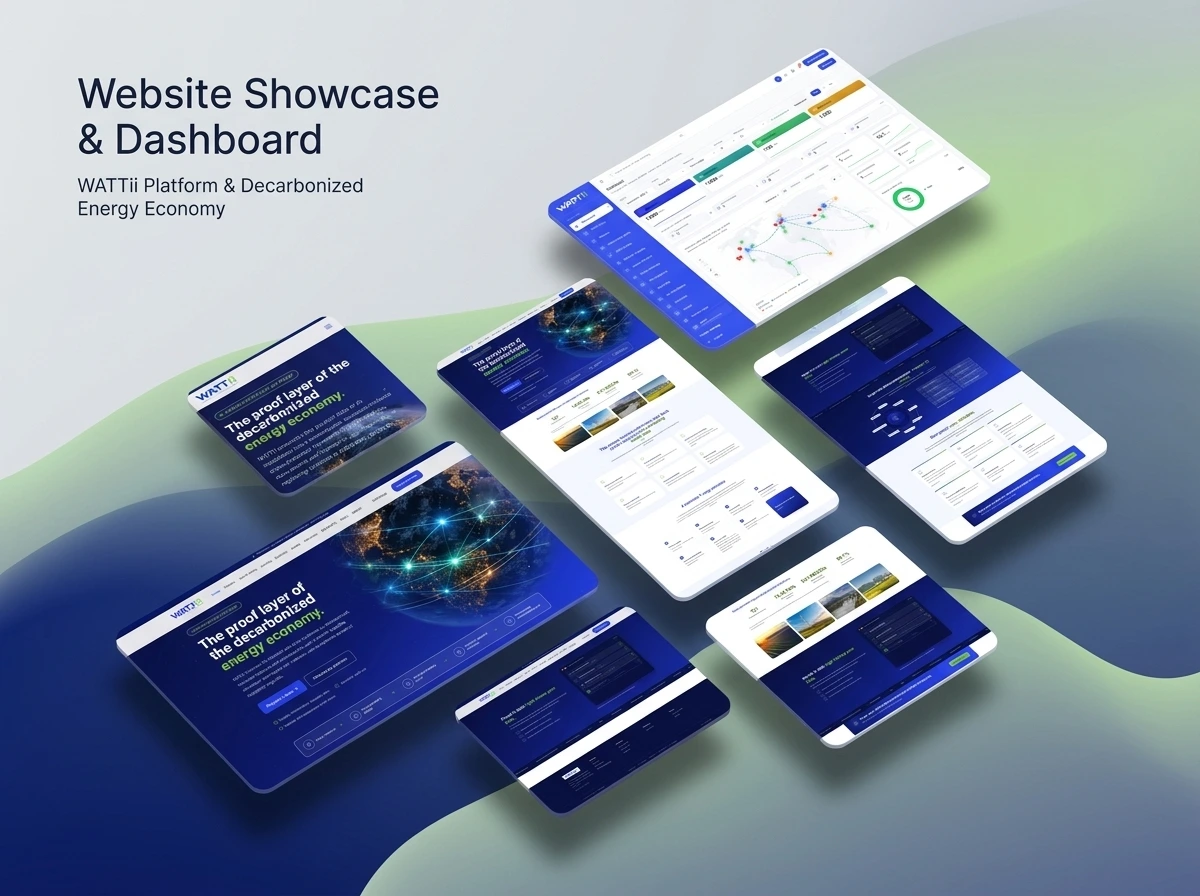
Multi-entity energy dashboards with real-time data visualization, filterable tables, and role-based views for producers, operators, and certifiers.
Certificate lifecycle flows - from issuance request to validation, trading, and retirement - with audit trails, status tracking, and compliance-locked steps.
MyWATTii consumer portal - a public-facing experience allowing households and businesses to verify the origin and environmental impact of their energy.
Interactive map and geospatial data views for tracking production sites, grid connections, and regional energy distribution.
Claims management engine - enabling organizations to create, approve, and publish verified sustainability claims tied to real production data.
Scalable design system for data-heavy, compliance-driven interfaces - including tables, forms, charts, modals, and multi-step flows.
Internationalized (i18n) content framework with support for multiple languages, regional formats, and locale-specific legal copy.
Content governance system - managing legal pages, cookie consent, and dynamic content blocks with strict version control and approval workflows.
Onboarding and guided setup flows for enterprise clients, including multi-step registration, configuration wizards, and in-app walkthroughs.
Reporting and export tools for compliance officers and auditors, with configurable templates, audit logs, and downloadable evidence packs.
Key Design & Product Decisions
Evidence-first, not claim-first presentation
Rather than letting users make marketing claims and then attaching proof, the platform was designed so that claims could only be generated from verified production and certificate data. This meant the UI had to surface evidence first and make claim creation a downstream action - reversing the typical content-first pattern and ensuring that nothing published could outrun the underlying data.
Strict separation of methodology objects
The platform enforces a strict separation between methodology definitions (what qualifies as valid evidence), methodology instances (a specific audit or verification event), and the data objects they produce (certificates, reports). In the UI, this meant designing clear, non-overlapping views for each object type, with navigation and labeling that prevented users from confusing one with another - critical in an environment where a misplaced action could invalidate a legal record.
Human control over sensitive steps
While much of the data pipeline is automated (meter readings, certificate generation, compliance checks), we deliberately introduced human checkpoints at key moments - such as claim approval, certificate retirement, and methodology review. The design challenge was making these friction points feel intentional and trustworthy rather than obstructive, using clear status indicators, contextual guidance, and approval workflows that respected the gravity of each action.
Claims and content governance as product architecture
Legal and marketing claims in the energy space carry regulatory weight. We treated every piece of user-facing content - from dashboard labels to public claims - as a governed object with version history, approval chains, and audit logs. The design system included content governance patterns (locked fields, approval stamps, revision diffs) that made compliance visible and enforceable at the UI level, not just in the backend.
Enterprise navigation for complex offerings
WATTii serves multiple user types (producers, grid operators, certifiers, consumers) with overlapping but distinct data access needs. Rather than building separate apps, we designed a unified navigation system with role-based views, contextual sidebars, and progressive disclosure - allowing each user type to see exactly what they needed without being overwhelmed by the full platform complexity.
Scalability for future growth
The design system and information architecture were built with the expectation that new energy types, new regulatory frameworks, and new market participants would be added over time. Every component, every layout, and every data model was designed to be extensible - so that adding a new certificate type or a new country’s regulations wouldn’t require a redesign, just a configuration update.
Outcome & Learnings
WATTii reinforced a core conviction: that product design in regulated, high-trust domains is fundamentally different from typical SaaS design. Every interaction had to be defensible, every data point traceable, and every flow auditable. The work required constant negotiation between usability and compliance - and taught me that the best design solutions in this space are the ones that make compliance invisible to the user while remaining airtight under regulatory scrutiny.
The project also deepened my understanding of how design systems scale in complex environments. A component that works for a single dashboard doesn’t necessarily work when multiplied across five user roles, three languages, and two regulatory regimes. Building for that kind of scale requires a level of abstraction and discipline that goes well beyond visual consistency - it requires thinking in systems, not screens.
Like this project
Posted Oct 2, 2026
Architected the Website & multi-role dashboards and compliance-locked workflows for WATTii, bridging real-time energy data with rigorous regulatory frameworks.