ERP System Design for Fashion & Apparel

Anna Podrez


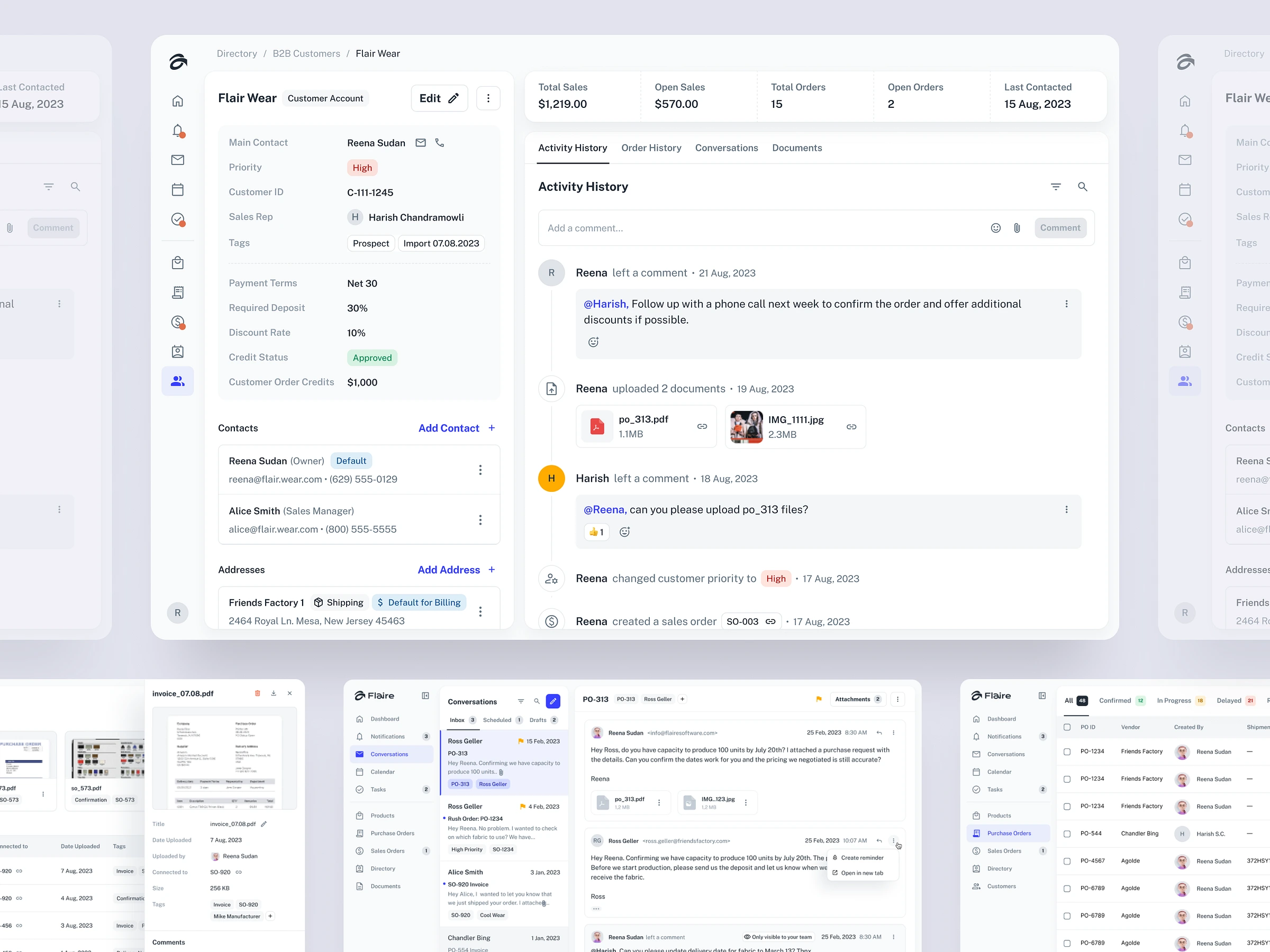
The product is an ERP system designed to manage processes across the fashion and apparel manufacturing industries. The platform enables brands and wholesalers to centralize data, manage inventory, optimize supply chains, and enhance customer engagement.
Industry: Fashion, SaaS Web Application, B2B
Project Type: Product Design
Timeline: 21 Months
Contribution: Research, Design Review, Prototypes, UX/UI, MUI & Minimal UI Design System
🤔 Problem: A lack of a single source of truth, fragmented data, operational inefficiencies, inventory management challenges, limited analytical capabilities, and poor coordination across departments and sales channels.
🎯 Task: Develop an intuitive and efficient UX/UI for the ERP system. The design must establish a single source of truth, enable real-time inventory management, and enhance both customer satisfaction and overall operational efficiency.
1. Research & Estimating
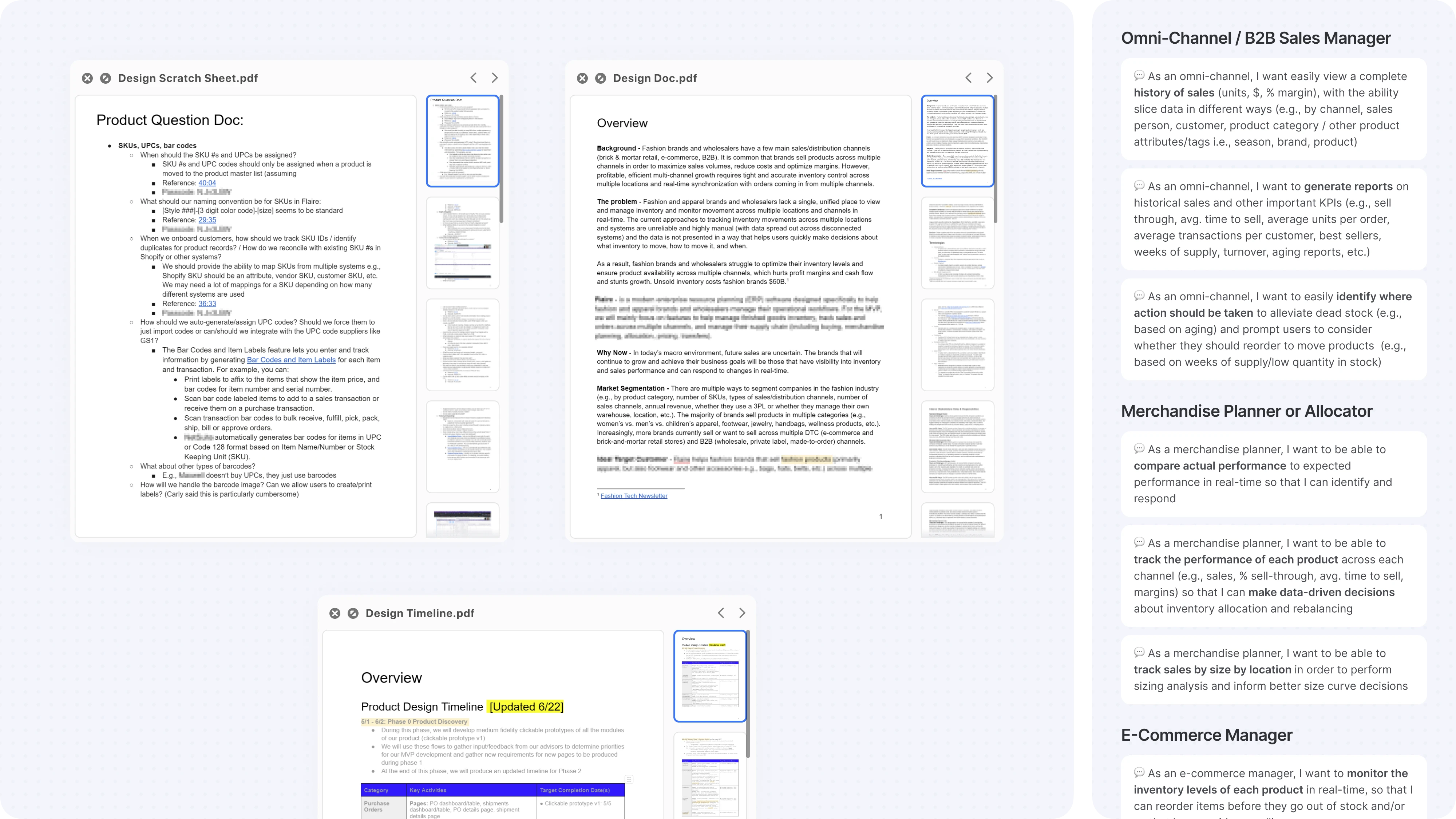
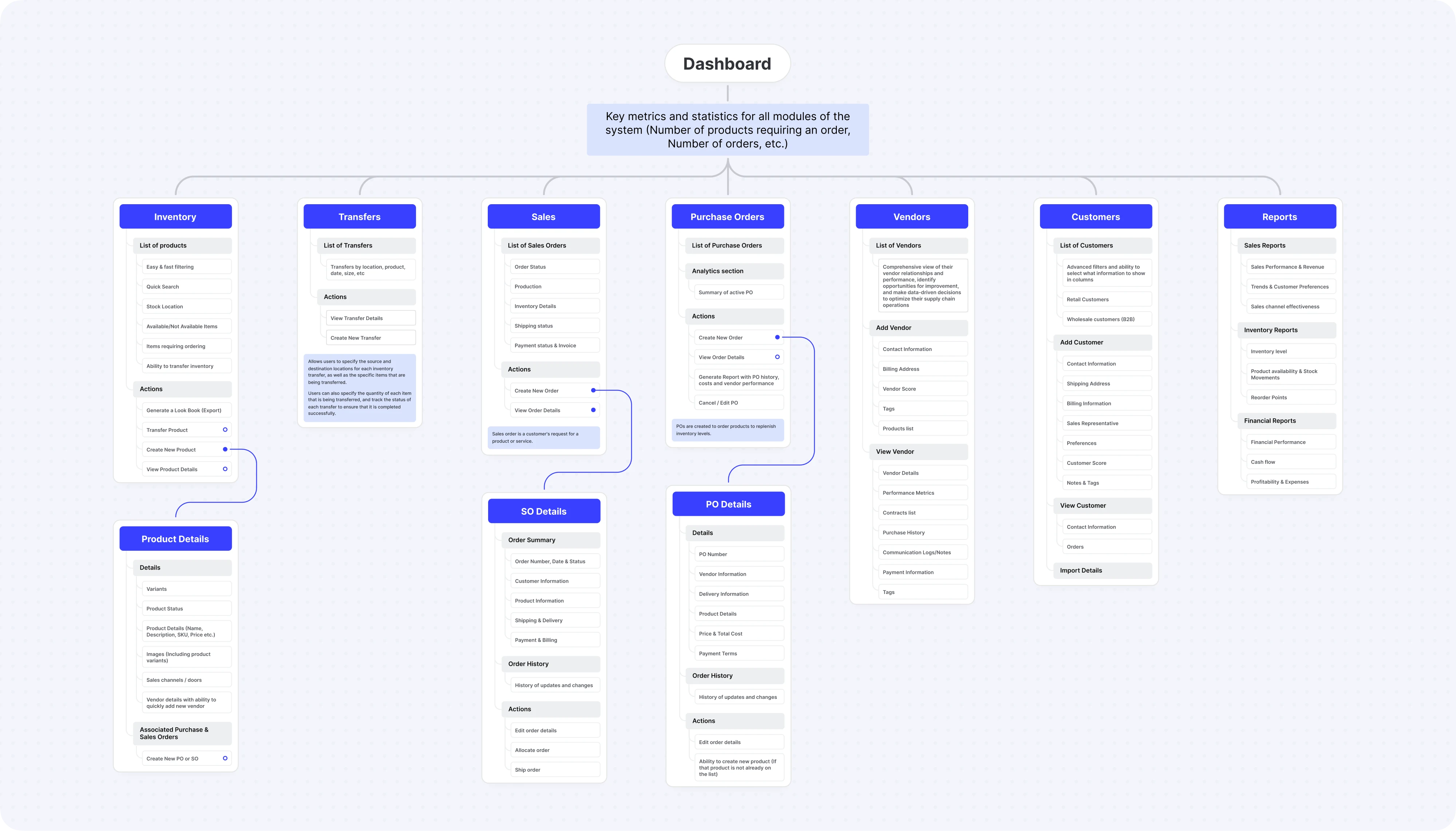
The project’s initial phase involved a scope assessment and a comprehensive analysis of the provided documentation. The client provided several documents detailing core processes, user roles, and user stories, which served as the foundation for defining the system's architecture, operational logic, and design requirements. All gathered insights were organized within Figma, supplemented by a sitemap outlining the primary requirements for each module.
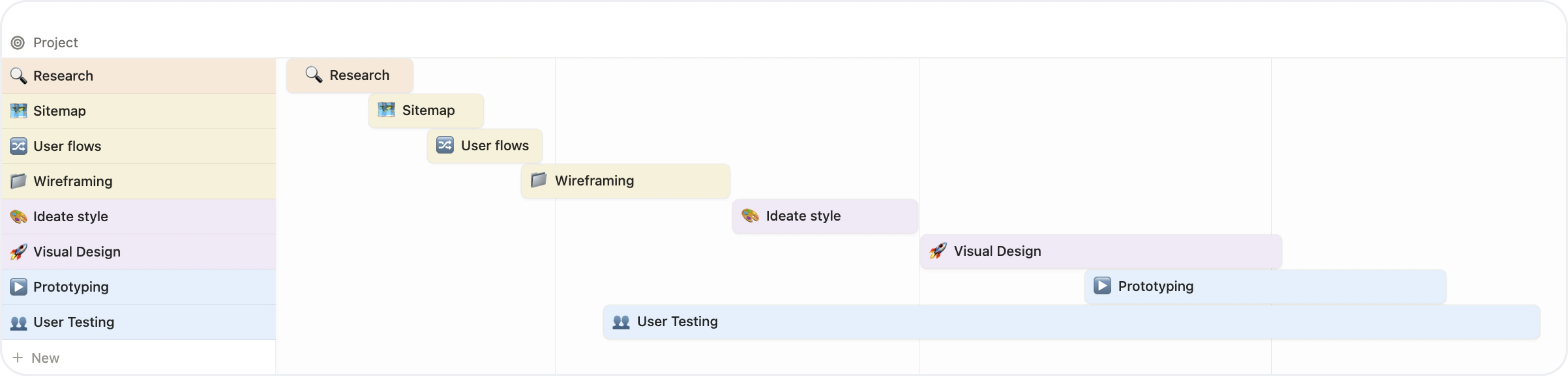
Based on the gathered insights, we defined the project scope and established a timeline to monitor progress.
2. Wireframing
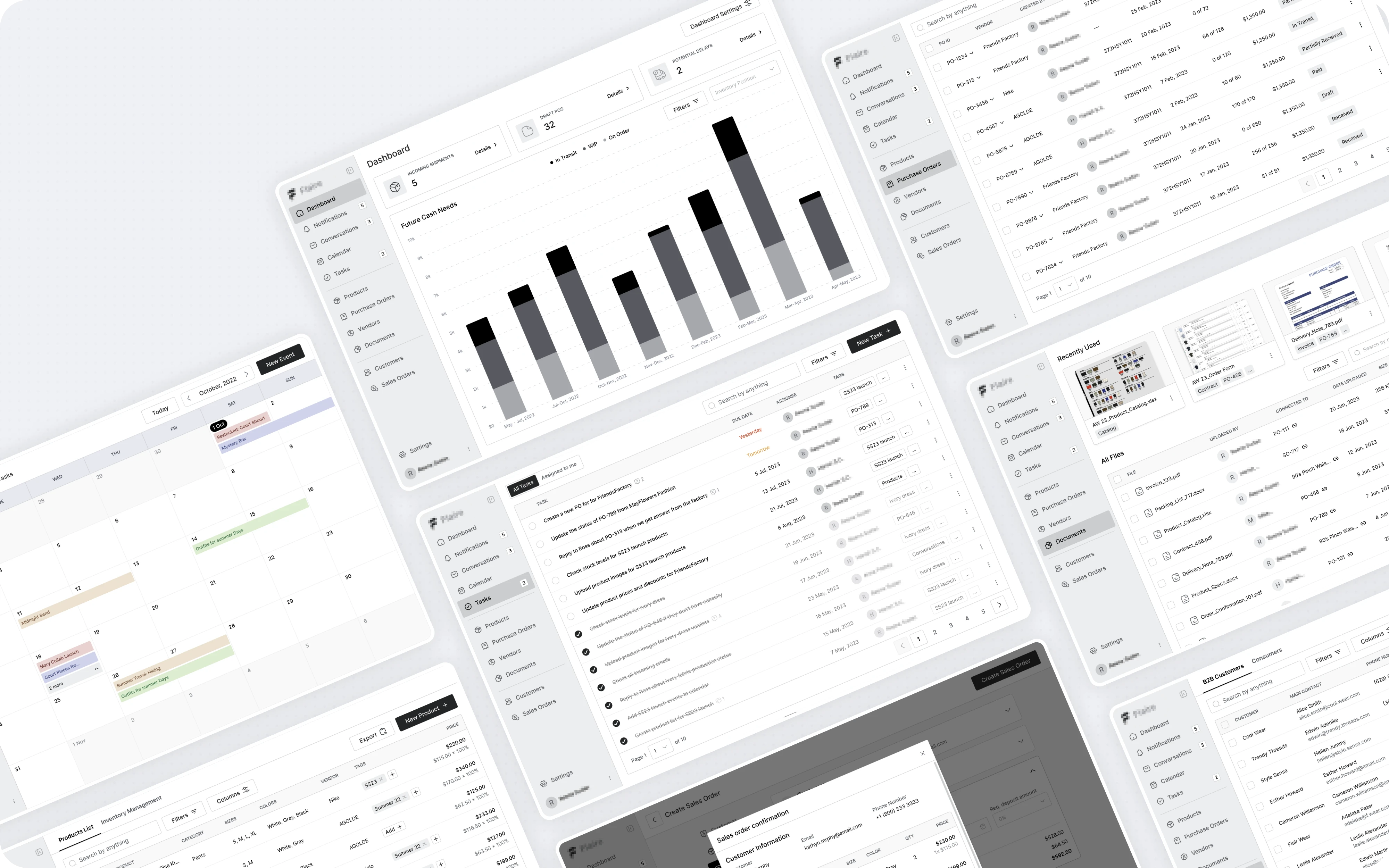
Once the architecture and core requirements were finalized, we transitioned to wireframing. This phase marked the immediate start of platform testing and hypothesis validation with prospective users. To gather feedback, detailed clickable prototypes were built in Figma, enabling the client to conduct efficient demo sessions.
3. UI Design
Following the approval of the wireframes, we transitioned to UI concept development. In collaboration with the engineering team, we selected the MUI design system and the Minimal UI kit, a decision driven by our successful history with the library and its streamlined component architecture. Green and purple were initially considered as accent colors but were ultimately rejected as they lacked a modern feel and were overused by competitors. The final design direction features a light gray background, white cards with subtle drop shadows, and high-contrast blue for interactive elements:
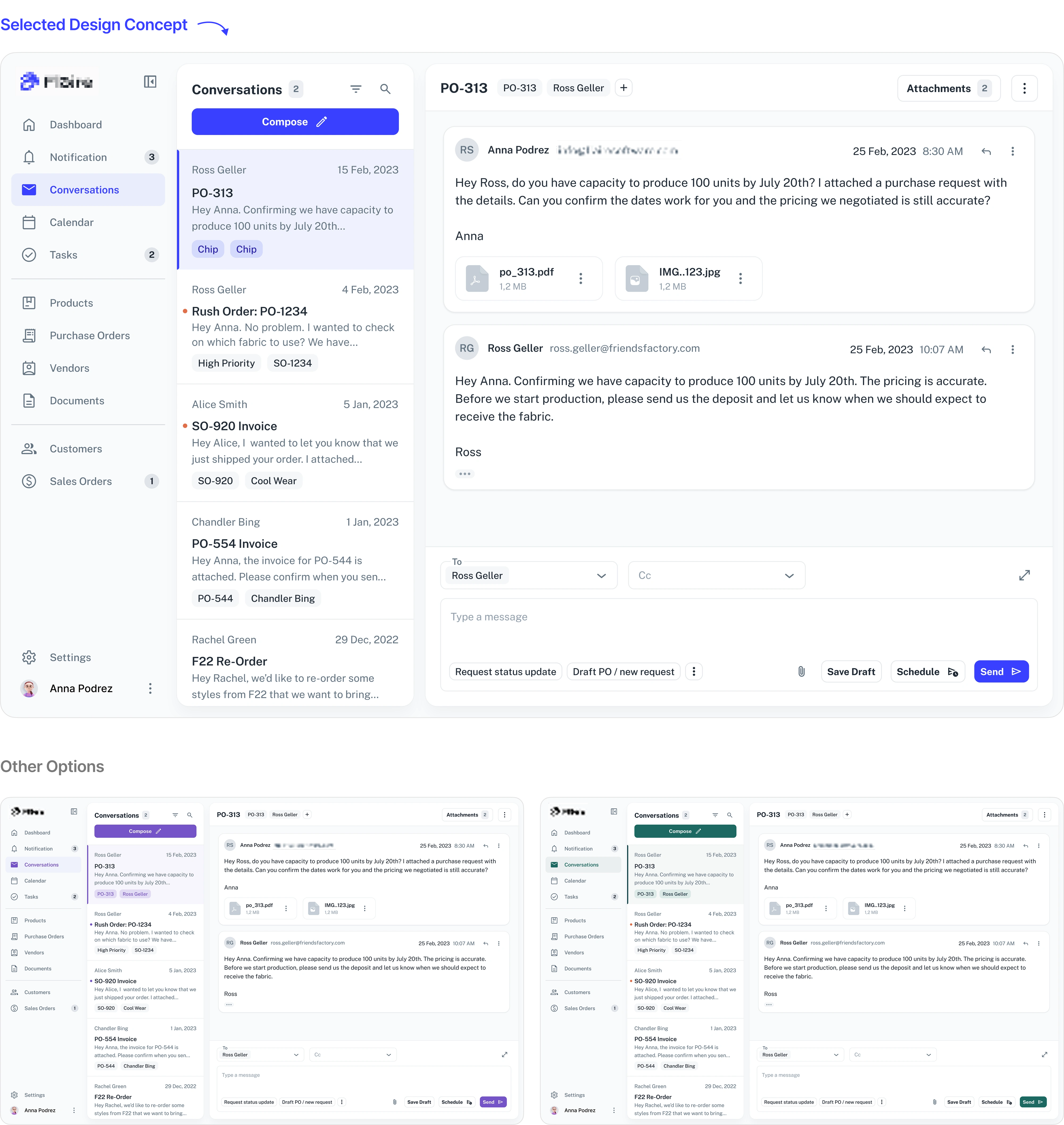
With the visual style finalized, we transitioned to high-fidelity mockups, building upon the initial wireframes and Minimal UI components. The core modules of the final design included:
Onboarding
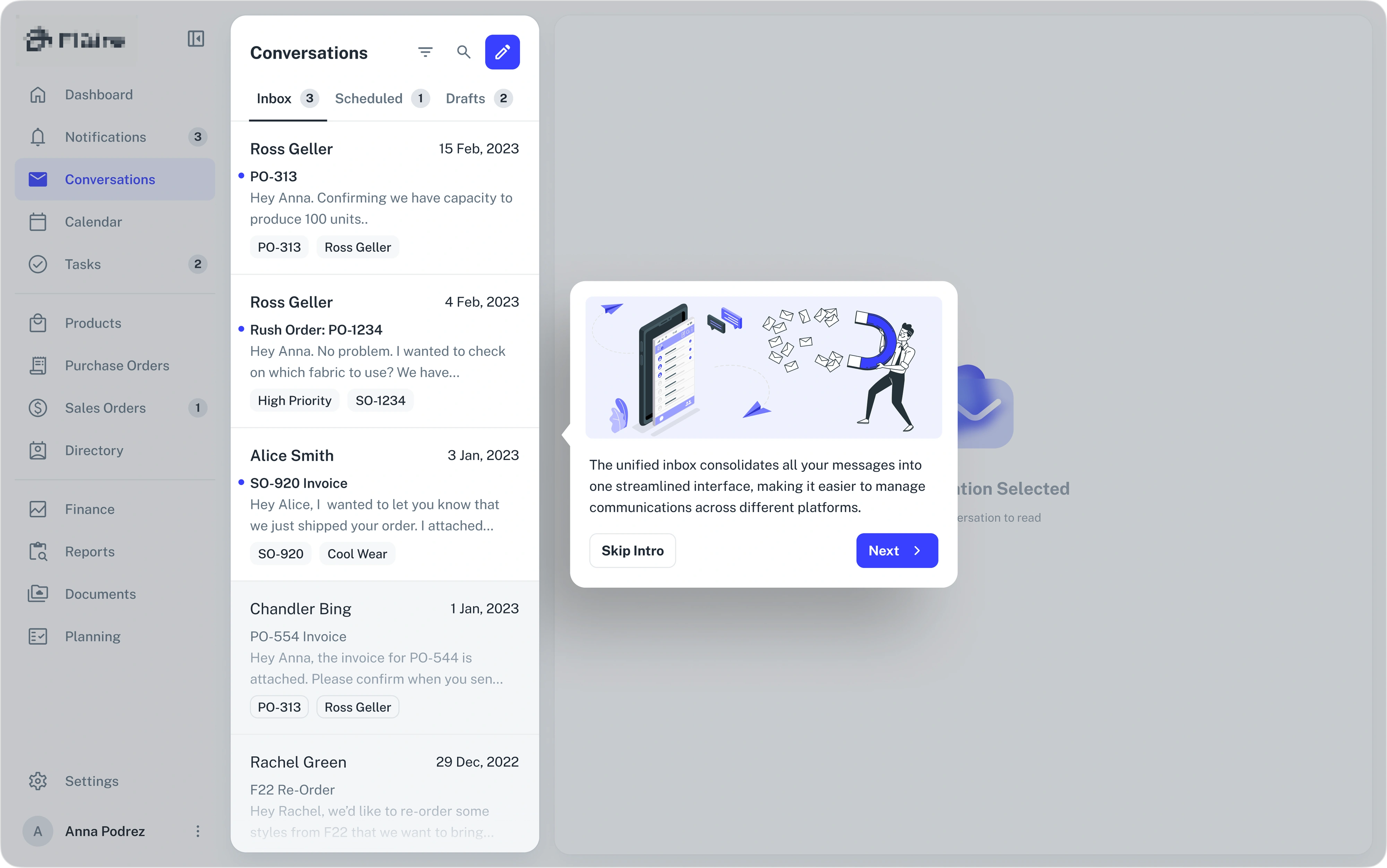
Onboarding facilitates seamless user adoption, helping new users quickly master the platform. To eliminate confusion, guided instructions were integrated throughout key sections.
Dashboard
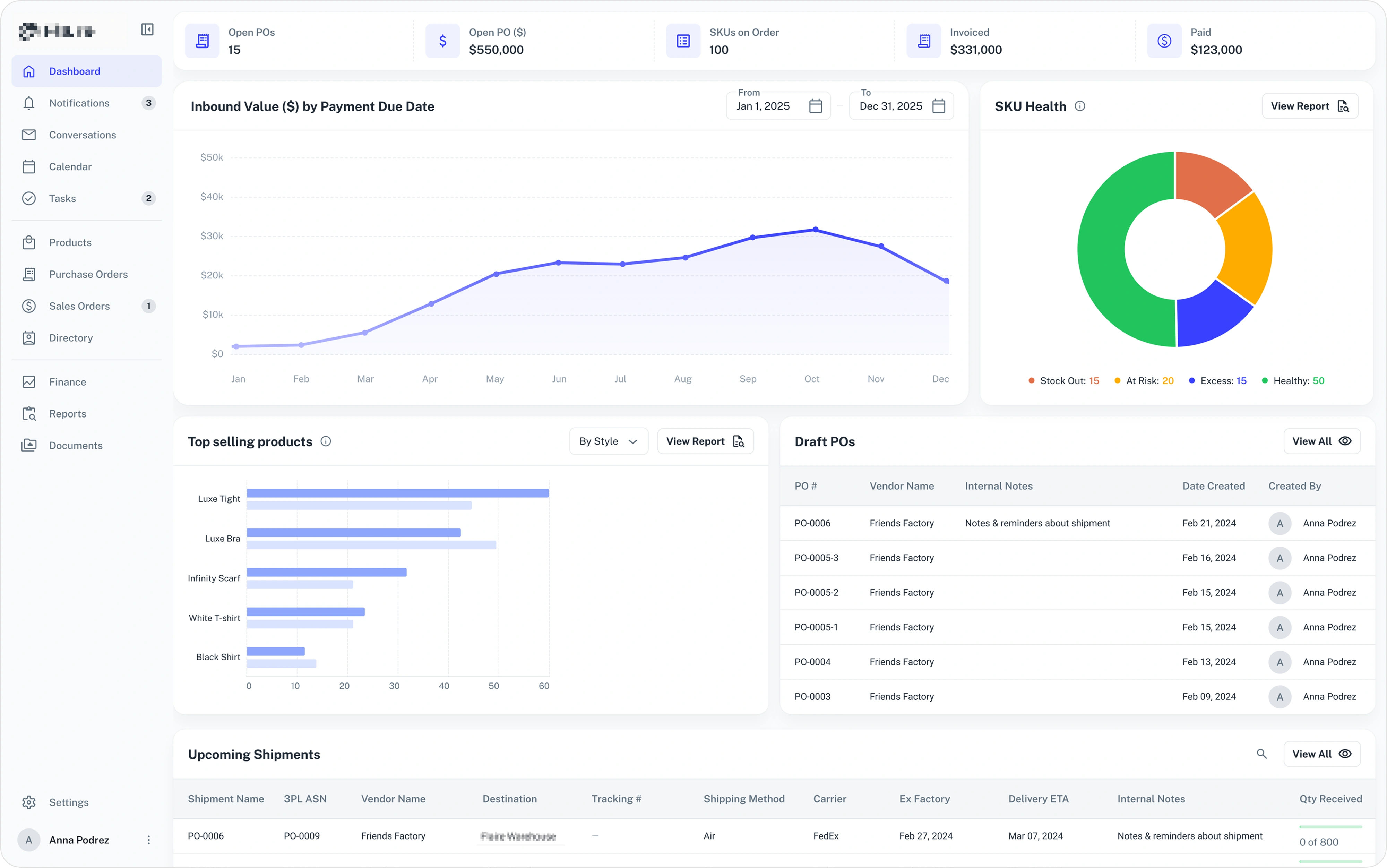
The dashboard tracks key procurement and sales metrics alongside SKU analytics, including order volumes, SKU health, and top-selling items. These granular insights provide managers with real-time operational visibility.
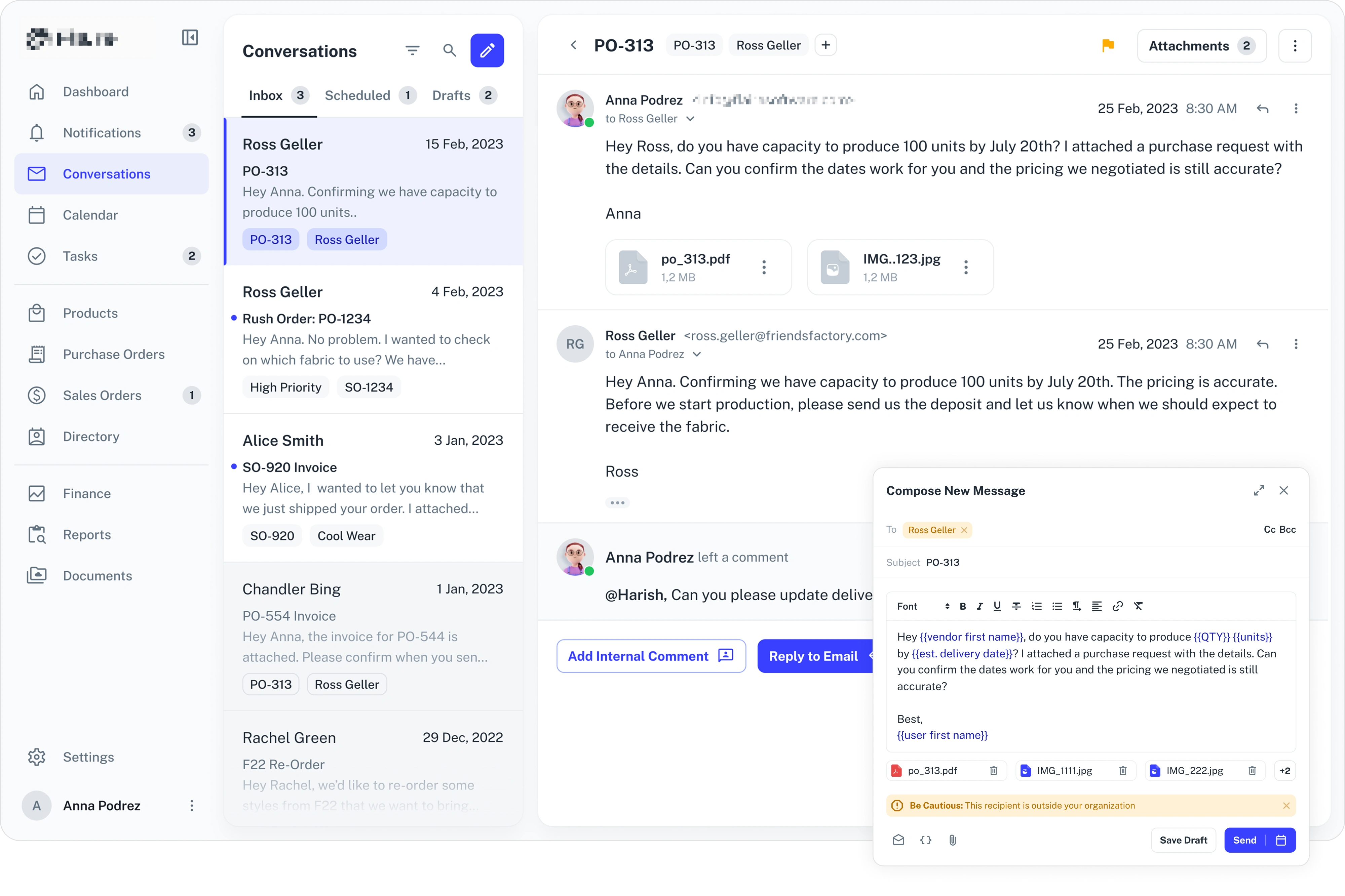
Conversations
The Unified Inbox centralizes all electronic correspondence with external partners, including suppliers, manufacturers, and vendors, into a single interface. It also automatically categorizes conversations based on their associated orders for streamlined tracking.
Products
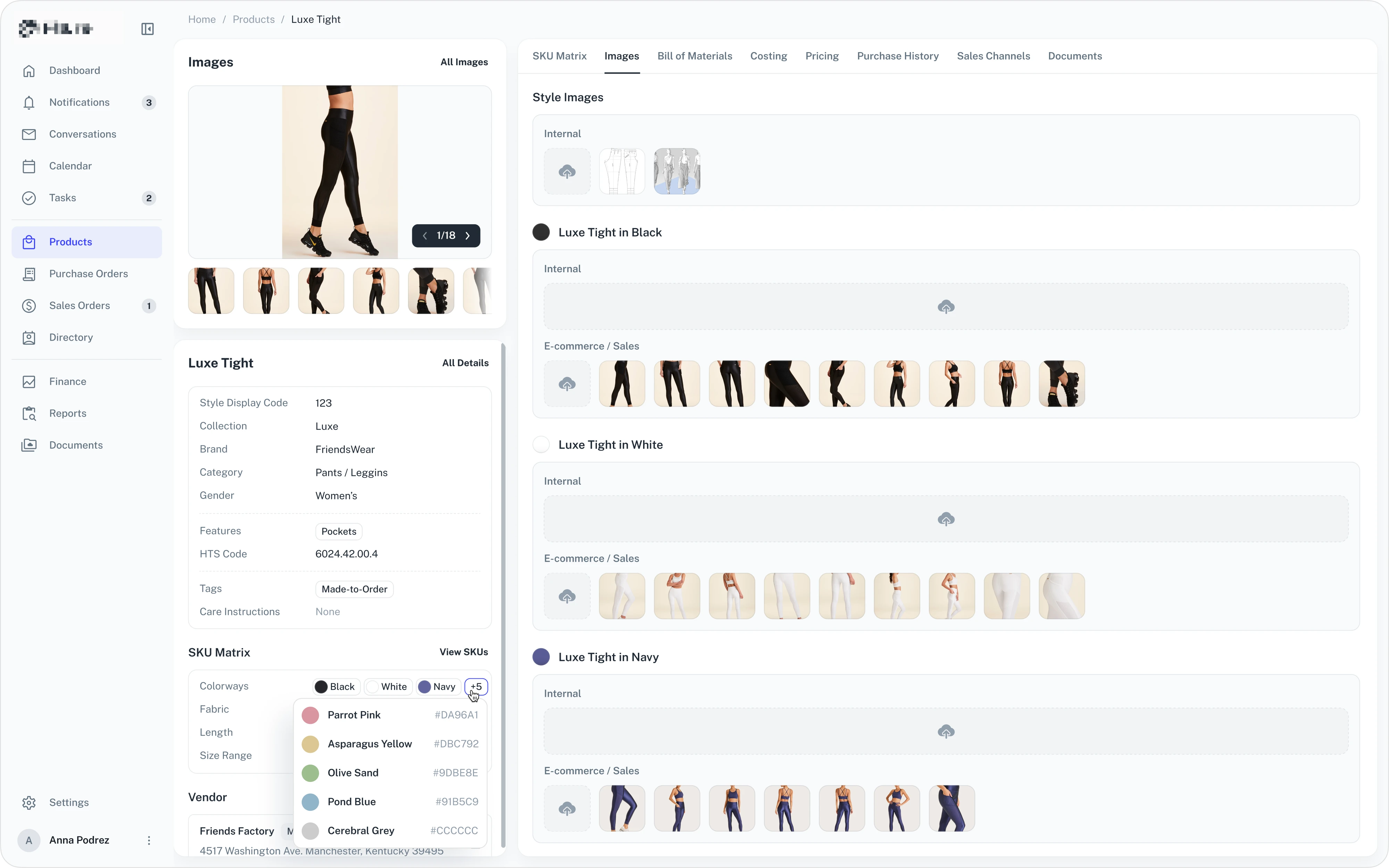
The Product module provides centralized inventory management, enabling users to oversee their catalogs efficiently. Key features include:
- Customizable product hierarchies with seamless variant and style synchronization with Shopify.
- Intuitive, customizable tables that provide granular product data and allow users to personalize their workspace.
- Flexible configuration options within individual product cards.
Orders & Shipments
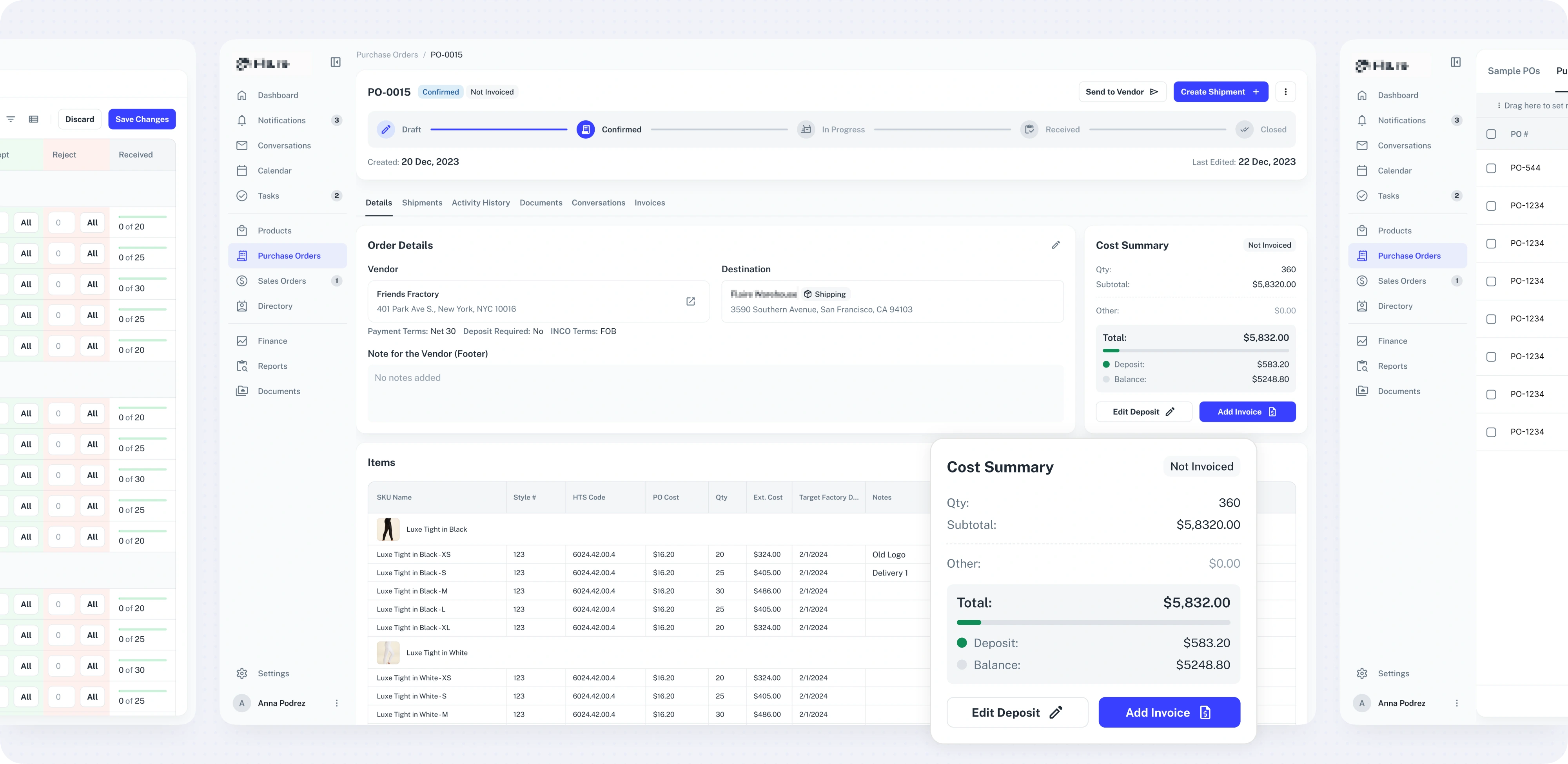
The Order Management module provides centralized oversight of orders and statuses, streamlining the tracking of incoming and outgoing shipments. Key features include:
Order creation and modification.
Customer and supplier data management.
Shipment status tracking.
Additionally, the module generates reports to evaluate logistical performance and fulfillment efficiency.
Directory
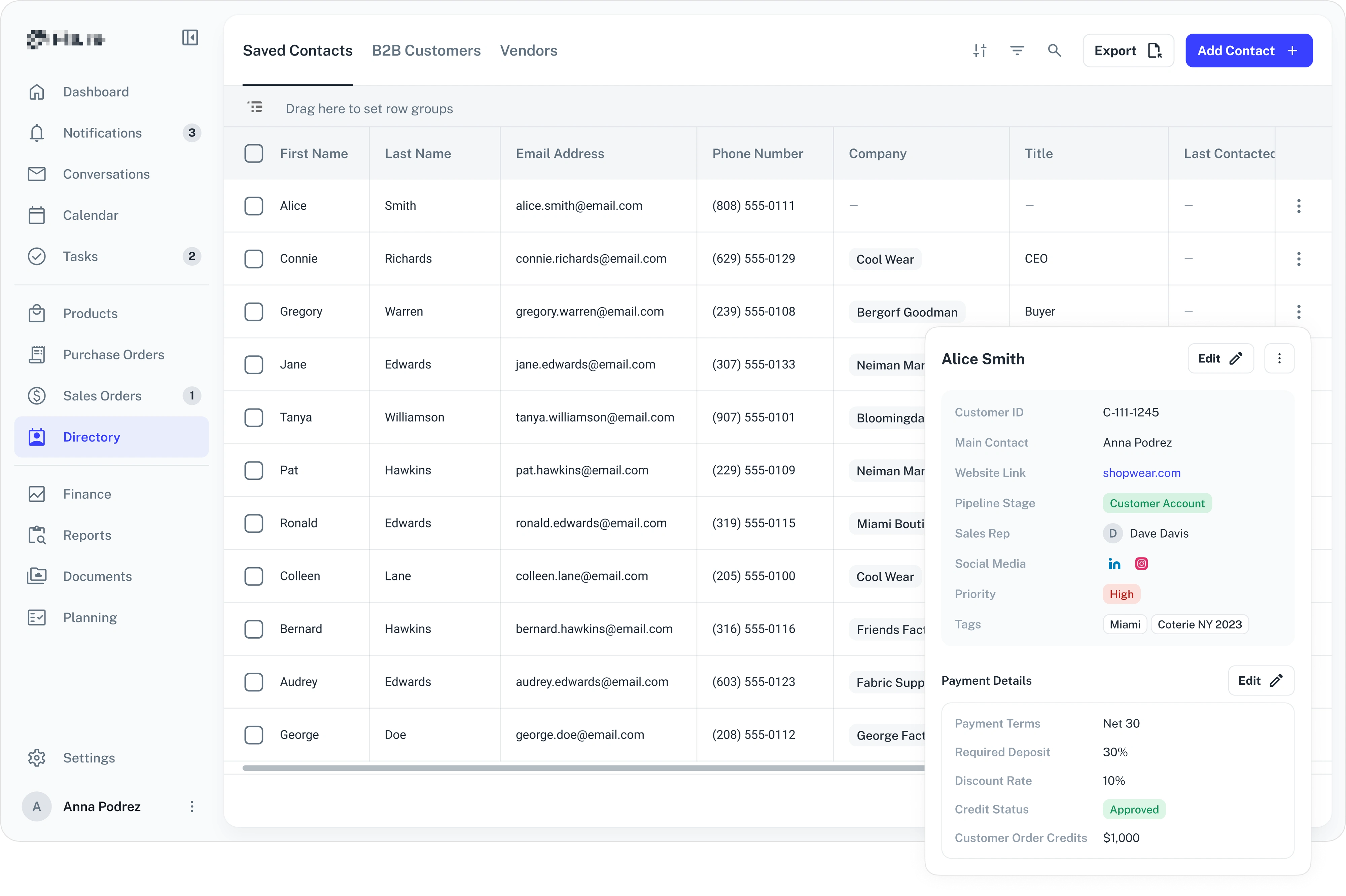
The Directory module enables the seamless addition, modification, and retrieval of customer and supplier contacts. Integrated filtering and categorization ensure rapid access and streamlined data analysis.
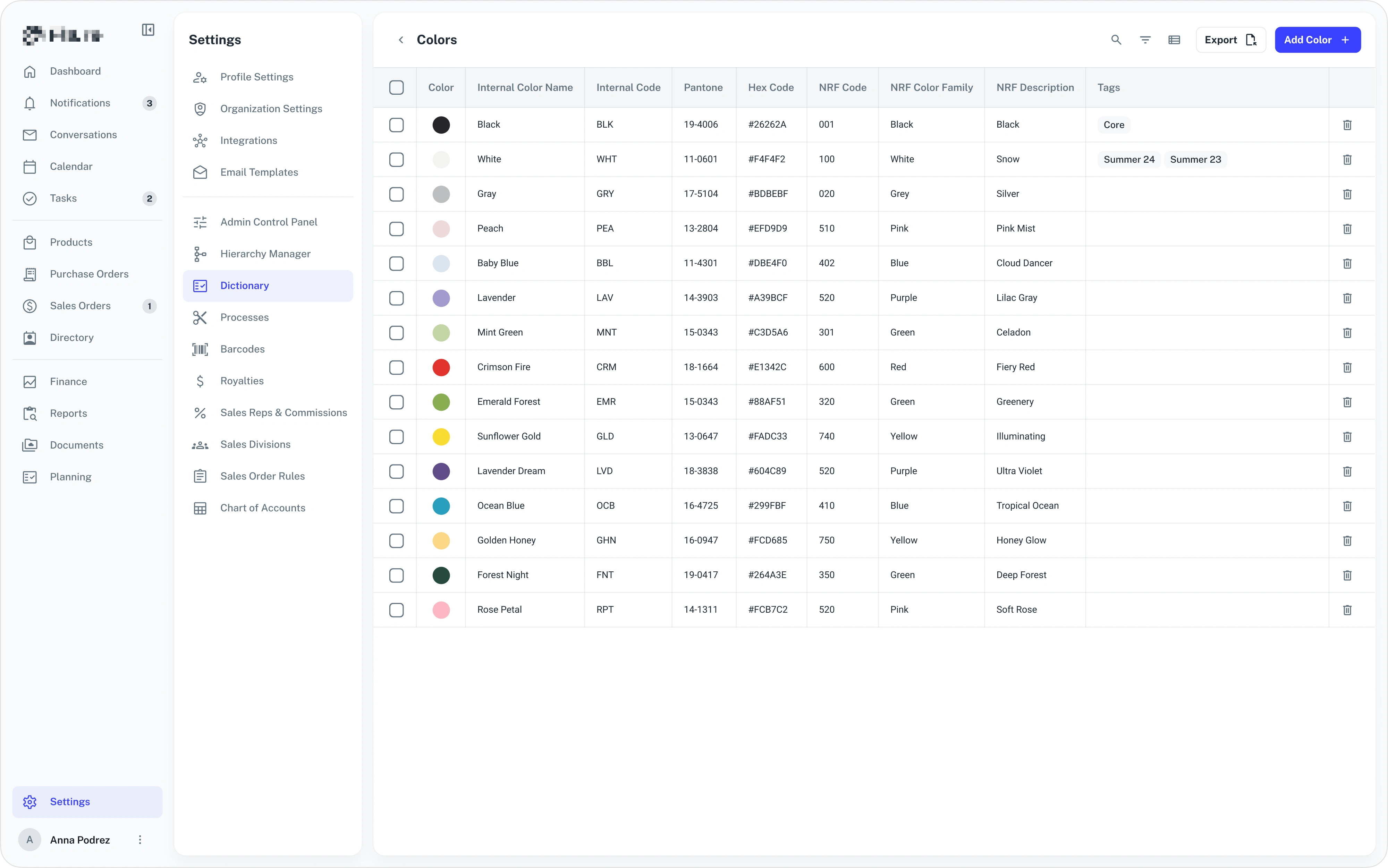
Settings
This module facilitates the seamless adaptation of the system to specific business objectives. It centralizes the management of corporate settings, integrations, and databases, while offering extensive customization for data visualization. Recognizing that no two organizations operate identically, the platform empowers users to independently toggle features to suit their unique workflows.
4. Prepare for Development
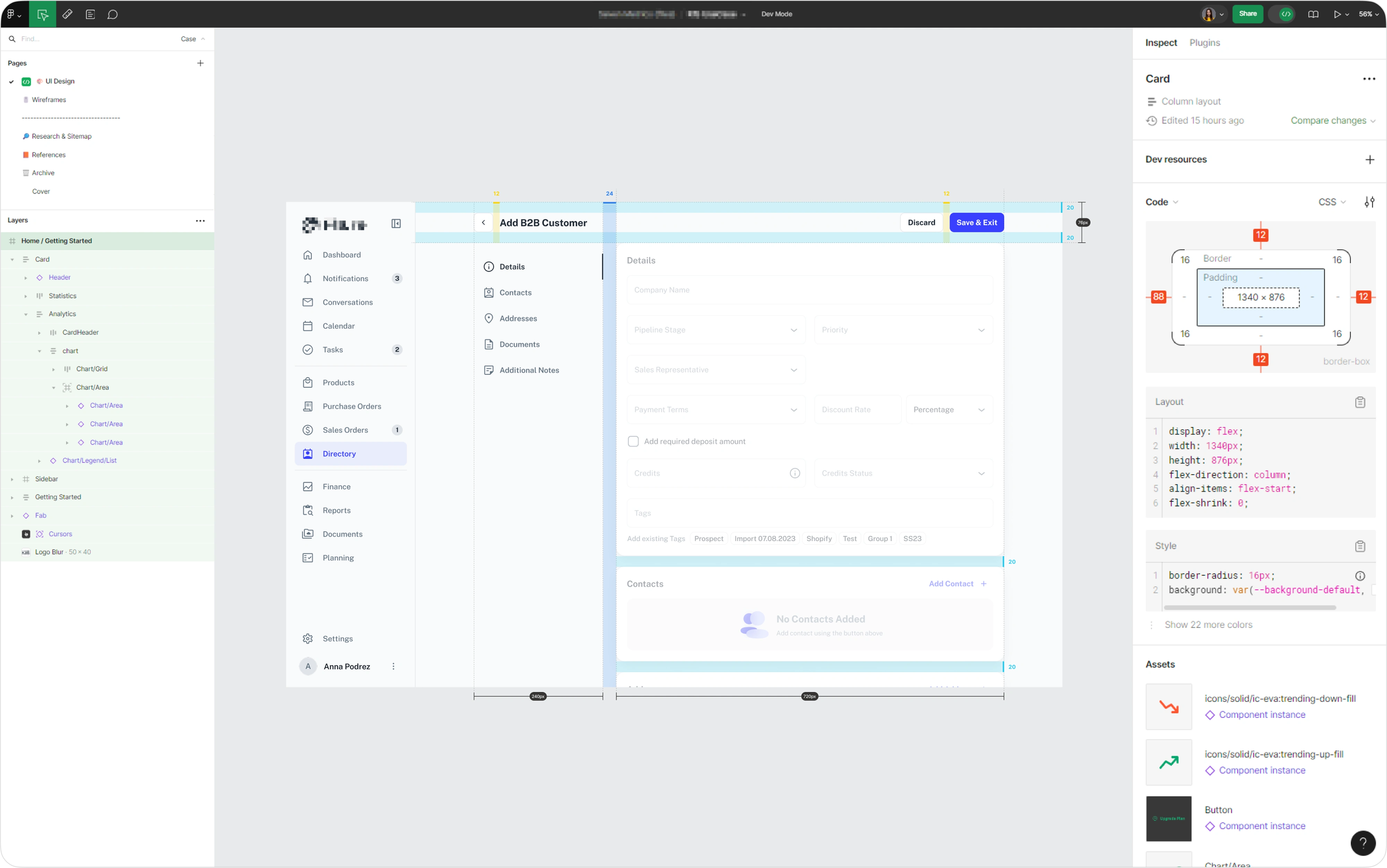
Despite the use of a standardized design system, all screens undergo a final audit prior to developer handoff. This ensures strict compliance with MUI documentation, eliminates the use of custom elements, and guarantees that all layouts are optimized for seamless inspection within Figma’s Dev Mode.
Detailed developer specifications were documented throughout the design process. As individual features were implemented, rigorous design reviews were conducted to ensure the front-end execution maintained full fidelity to the approved designs.
5. Communication
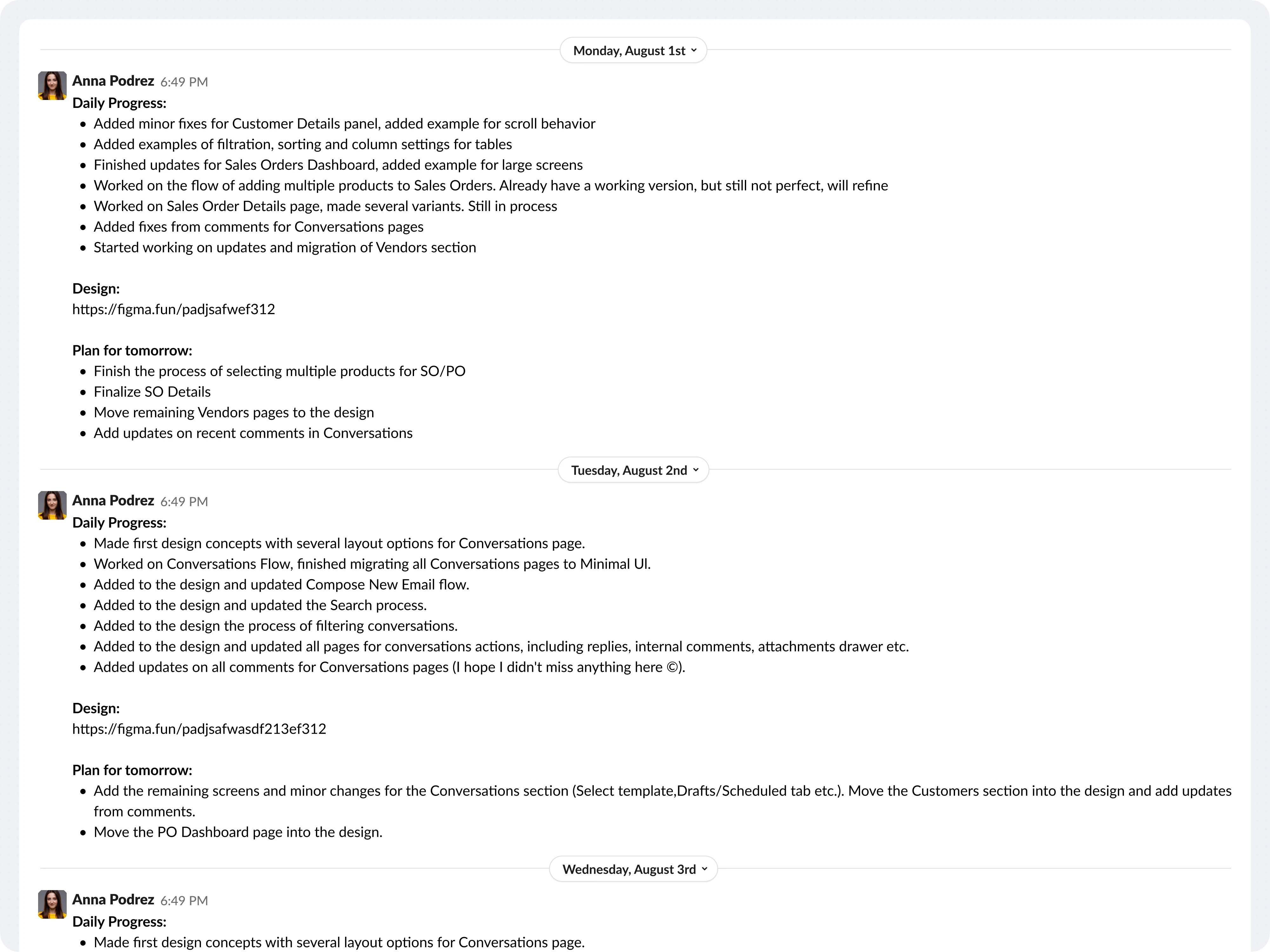
We implemented a task management system to track progress and time spent on each task. At the conclusion of each workday, comprehensive status reports were delivered, featuring detailed descriptions and direct links to the Figma mockups.
6. Results
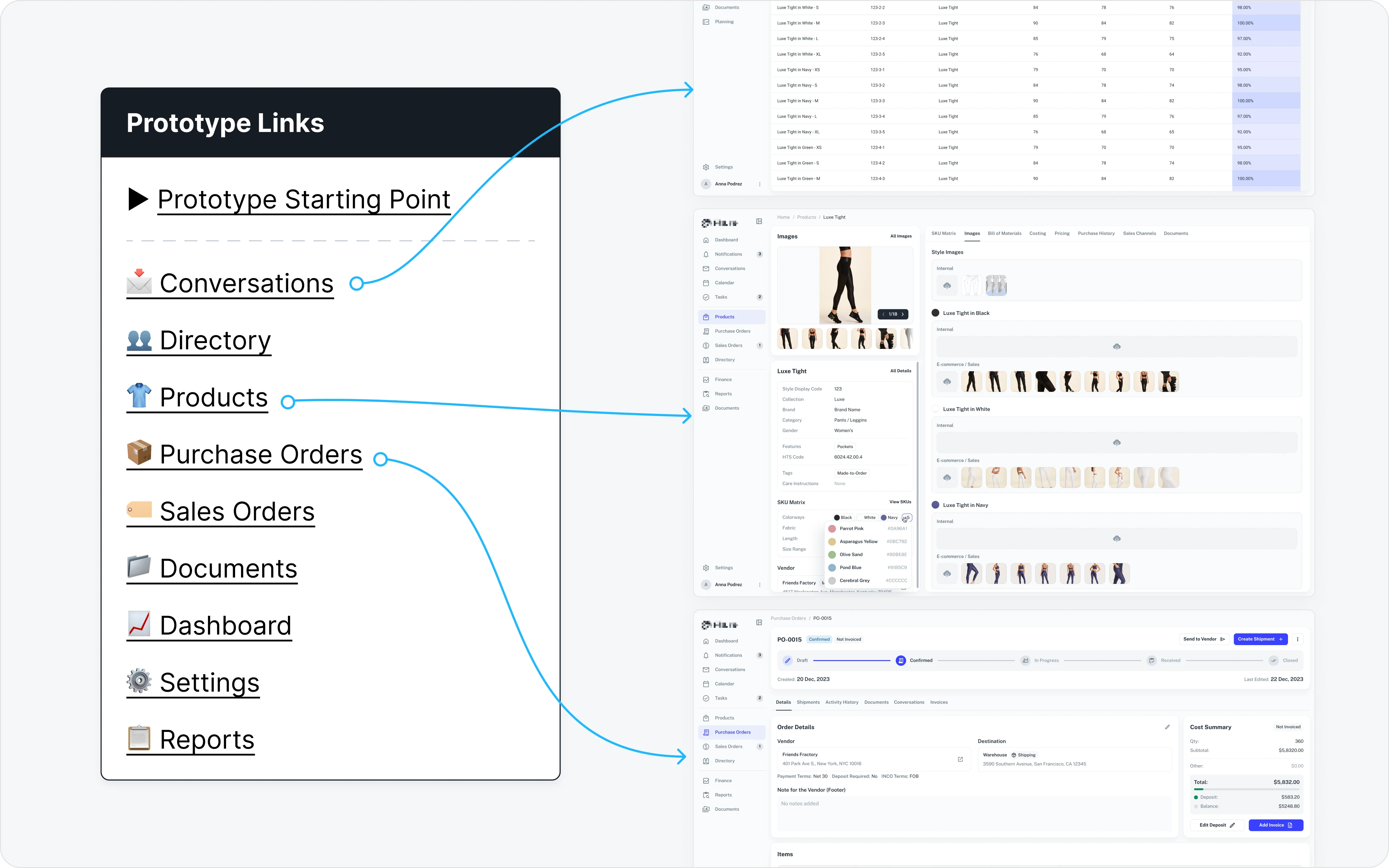
In just nine months, the project evolved from a concept into a fully functional product. Meticulous refinement of every user scenario and module ensured long-term scalability and an intuitive experience from the first interaction. The design prioritizes a clean interface, usability, and a seamless logical flow across the entire platform. Additionally, a comprehensive prototype comprising over 300 clickable pages was developed to cover all nine system modules. Operating like a live product, it facilitated stakeholder demonstrations and workflow
Ultimately, the platform received high praise from the client and prospective users alike, who noted its intuitive navigation, ease of use, and specialized alignment with the unique requirements of the fashion industry. Following the successful MVP launch, the partnership was extended to support the platform's ongoing evolution and iterative enhancement.
7. Scope of Work
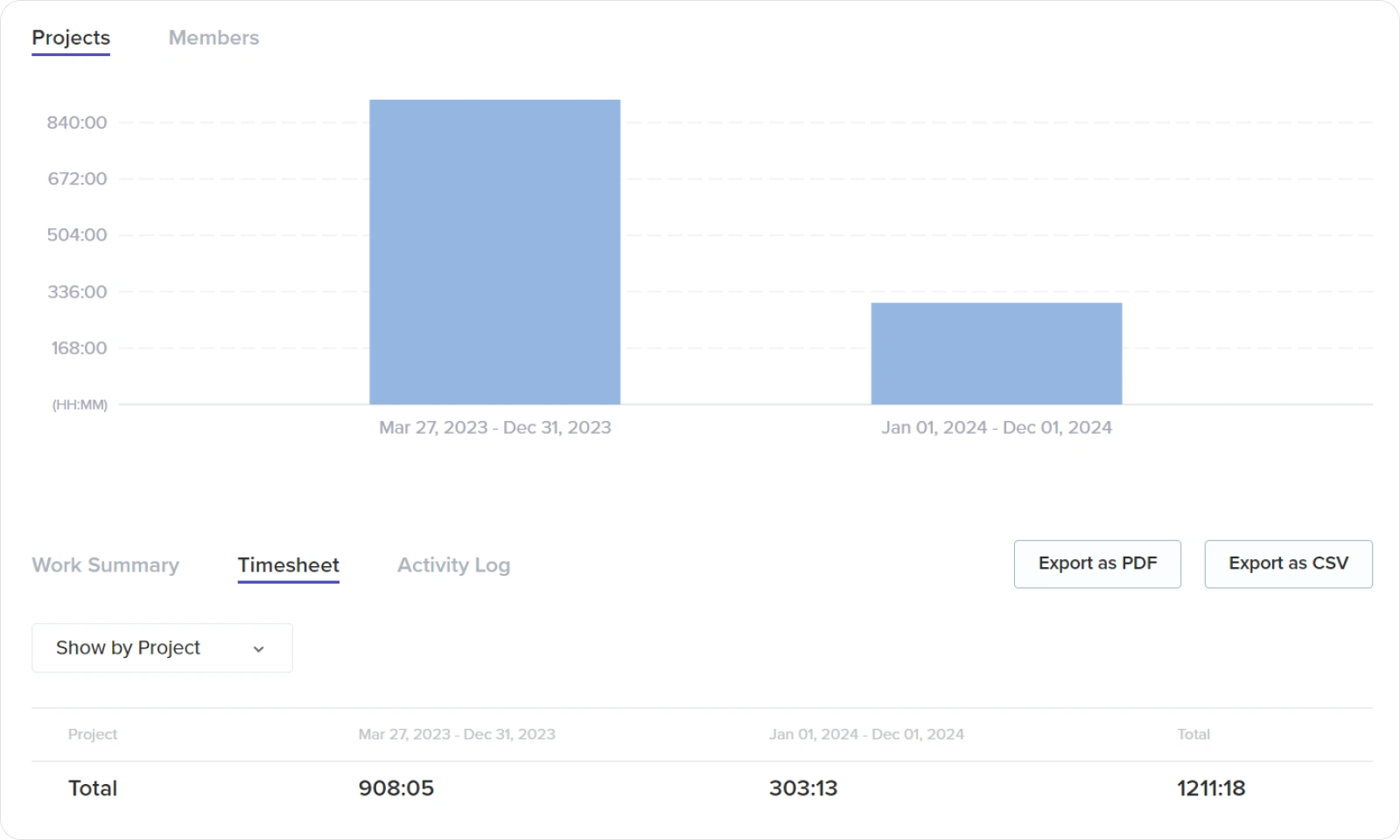
Following the successful completion of the core MVP scope, we continued refining the product, expanding functionality, and evolving additional modules based on growing business needs. What began as a 0→1 MVP initiative ultimately developed into a long-term product design partnership spanning 1 year and 9 months, focused on continuous platform growth, operational depth, and scalable feature expansion. Over the full course of the project, the total design scope amounted to 1,211 hours of product design, research, prototyping, and iterative system development.
If you have an idea for a product or need help designing a complex web application, feel free to contact us. We will review your request and provide a project estimate.
Thank you for reading🙏
Like this project
Posted May 20, 2026
Designed an ERP system for fashion industry improving data centralization and inventory management.
Likes
4
Views
78
Timeline
Dec 20, 2022 - Jan 20, 2025