Server-Side Tracking Implementation for Enhanced Analytics

Denish Kukadiya


How Server-Side Tracking & Conversion APIs Fixed Data Loss and Improved Attribution
A Real-World Look at Building Privacy-First, Scalable Analytics
As privacy regulations tightened and browsers began restricting third-party tracking, one thing became clear: traditional browser-based analytics was no longer reliable.
Like many growing businesses, this company relied heavily on GA4, Meta Ads, and Google Ads to drive revenue. But over time, problems started to appear:
Conversion numbers didn’t match across platforms
Ad platforms showed fewer conversions than GA4
Campaign optimization became inconsistent
ROAS began to fluctuate without clear reasons
The issue wasn’t the marketing strategy—it was the data itself.
The Challenge: Broken Attribution & Data Loss
Browser pixels were being blocked by:
Ad blockers
iOS privacy updates
Cookie restrictions
As a result, critical events like purchases, leads, and checkouts were no longer being captured consistently. Ad platforms lacked reliable signals, making optimization harder and decisions riskier.
The goal was clear:
Restore conversion accuracy without breaking the existing setup—and stay privacy compliant.
The Solution: Server-Side Tracking + Conversion API Integration
Instead of replacing the current analytics stack, we enhanced it.
A server-side tracking architecture was designed using Google Tag Manager Server-Side, allowing events to be routed securely through a server environment rather than relying only on the browser.
At the same time, Conversion APIs were implemented for key advertising platforms, ensuring conversions were sent directly from the server with higher reliability.
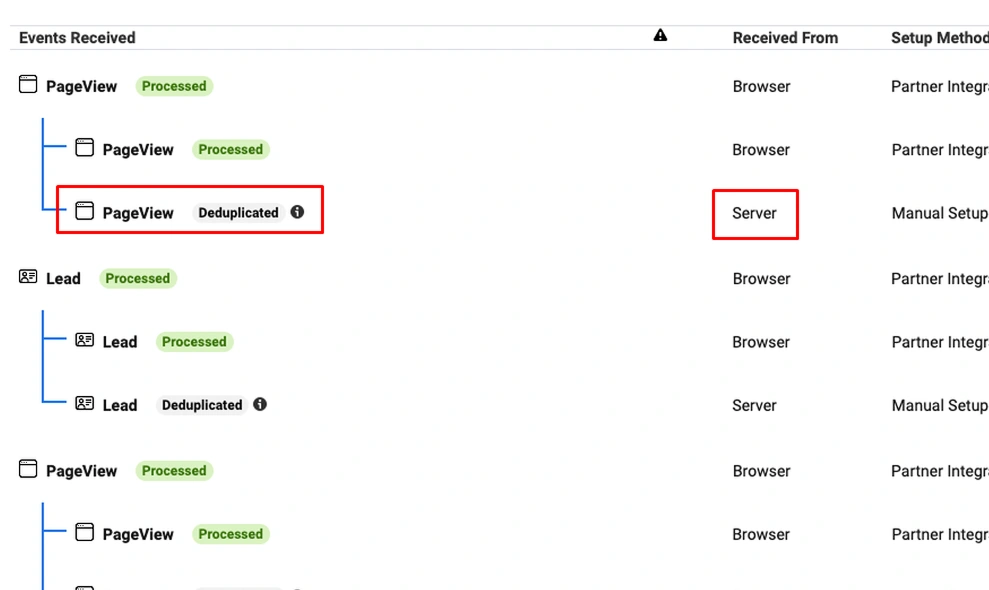
This hybrid approach allowed browser and server events to work together—validated, deduplicated, and optimized.
How Server-Side Tracking Changed the Data Flow
Previously, events depended entirely on browser pixels.
After implementation:
User actions were sent from the server
Events were validated before reaching ad platforms
Data quality and consistency improved across tools
Privacy controls and consent signals were respected
Server-side tracking became a stable data pipeline connecting the website, GA4, and advertising platforms.
Conversion API Implementation
Conversion APIs were integrated for:
Meta (Facebook)
Google Ads (Enhanced Conversions)
TikTok (where applicable)
This allowed ad platforms to:
Receive higher-quality conversion signals
Improve event match rates
Optimize campaigns with greater confidence
Browser and server events were carefully deduplicated to avoid double counting.
What Was Implemented
Tracking Architecture
Google Tag Manager Server-Side setup
GA4 server-side event tracking
Secure, scalable infrastructure
Event Mapping & Validation
Purchase, lead, signup, add-to-cart, checkout
Browser and server event reconciliation
Meta Events Manager & GA4 DebugView validation
Privacy & Compliance
GDPR-aware configuration
Consent mode compatibility
Secure data transmission
Reporting & Insights
Conversion accuracy analysis
Attribution gap identification
Ongoing optimization recommendations
The Results
After implementation, the impact was clear.
Typical improvements included:
10–30% increase in tracked conversion accuracy
Higher event match quality in Meta Ads
Reduced discrepancies between GA4 and ad platforms
More stable campaign performance
Stronger confidence in reporting and decision-making
With cleaner data, ad platforms optimized more effectively—and marketing decisions became data-driven again.
Why This Matters
Server-side tracking and Conversion APIs aren’t just technical upgrades—they’re a foundation for modern growth.
For businesses investing in paid media, accurate data directly affects:
ROAS
Budget allocation
Scaling decisions
This setup ensures analytics remains reliable—even as privacy rules continue to evolve.
Final Takeaway
Server-side tracking is no longer optional for growth-focused teams.
It’s the difference between guessing performance and knowing what truly works.
If your analytics data feels inconsistent, underreported, or unreliable, server-side tracking is the competitive edge your marketing stack needs.
Like this project
Posted Jan 6, 2026
Build scalable server-side tracking system that reduce data loss, improve conversion accuracy, and enable marketing decisions through GA4 and Conversion API.