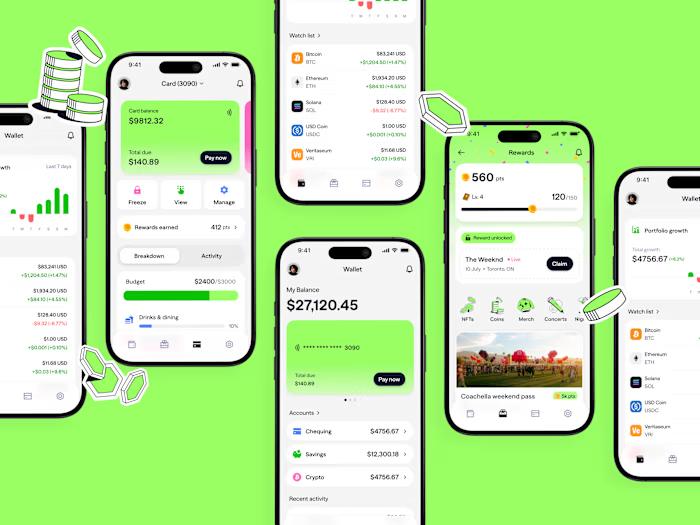
Fintech Compliance Services | B2B UI/UX | Collective

Pixel One Design


Collective ($82M raised) is a FinTech platform that handles business formation, accounting, bookkeeping, taxes, and compliance for freelancers, consultants, and solopreneurs. Members save an average of $10,000 in taxes annually.
They were launching a new LLC product alongside their core S-Corp business. Every new customer required hours of manual work from the operations team to get onboarded. Documents needed verification, forms needed checking, information needed extraction and validation. The operations team became the bottleneck, blocking growth.
Most B2B SaaS companies hit this wall eventually, where manual onboarding works at 50 customers but breaks at 500. Collective needed a design experience that eliminated human intervention and they needed it fast.
Designing self-serve onboarding for compliance software means accounting for the fact that the average founder created their formation documents once, saved them somewhere random, and completely forgot about them until Collective asked for them three years later. The stakes were high. Collective could only scale as fast as their operations team could process documents.
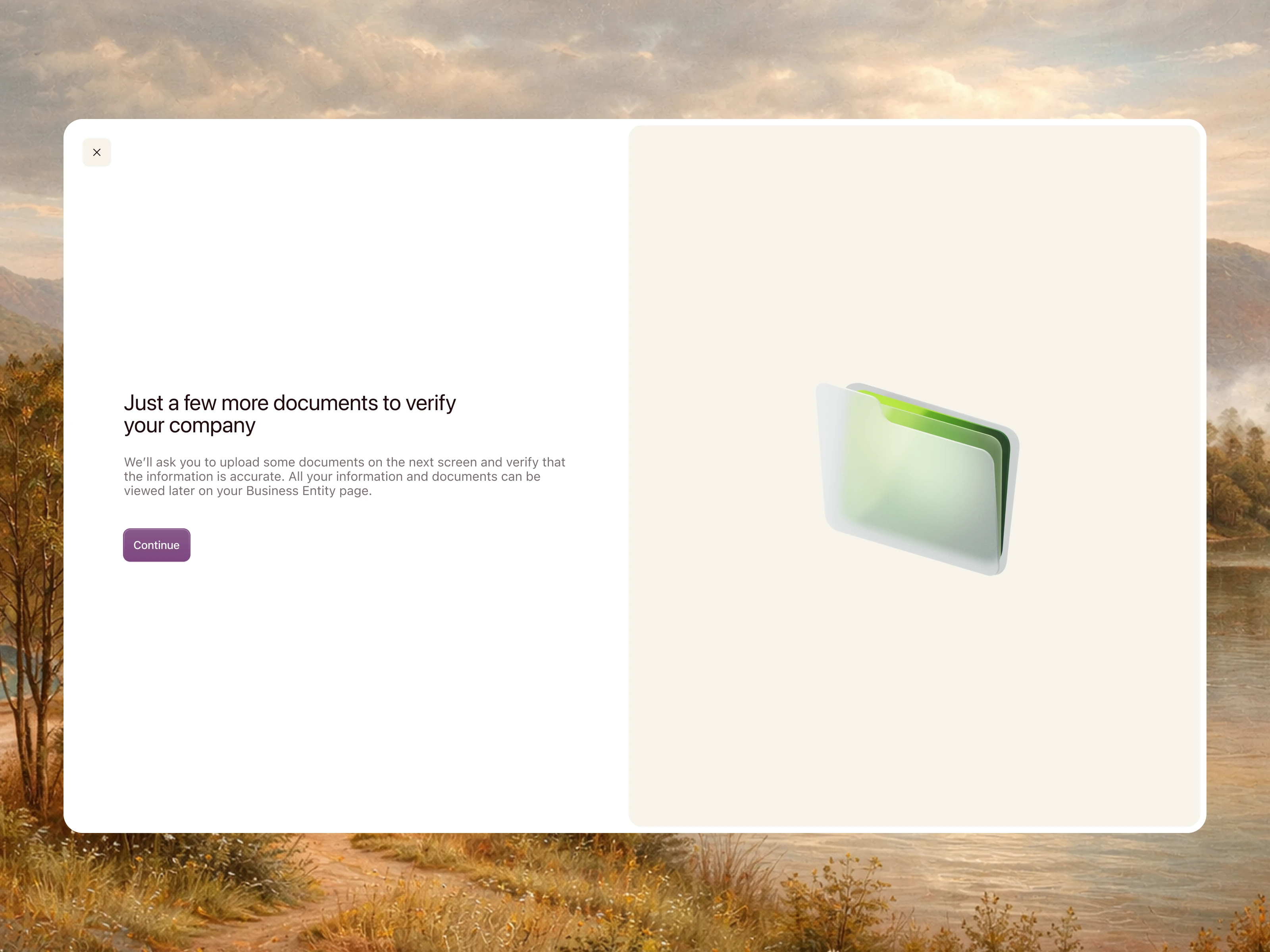
We started with welcome screens. The design choice was to set expectations before users hit any upload screens, because drop-off was happening before the actual onboarding even began.
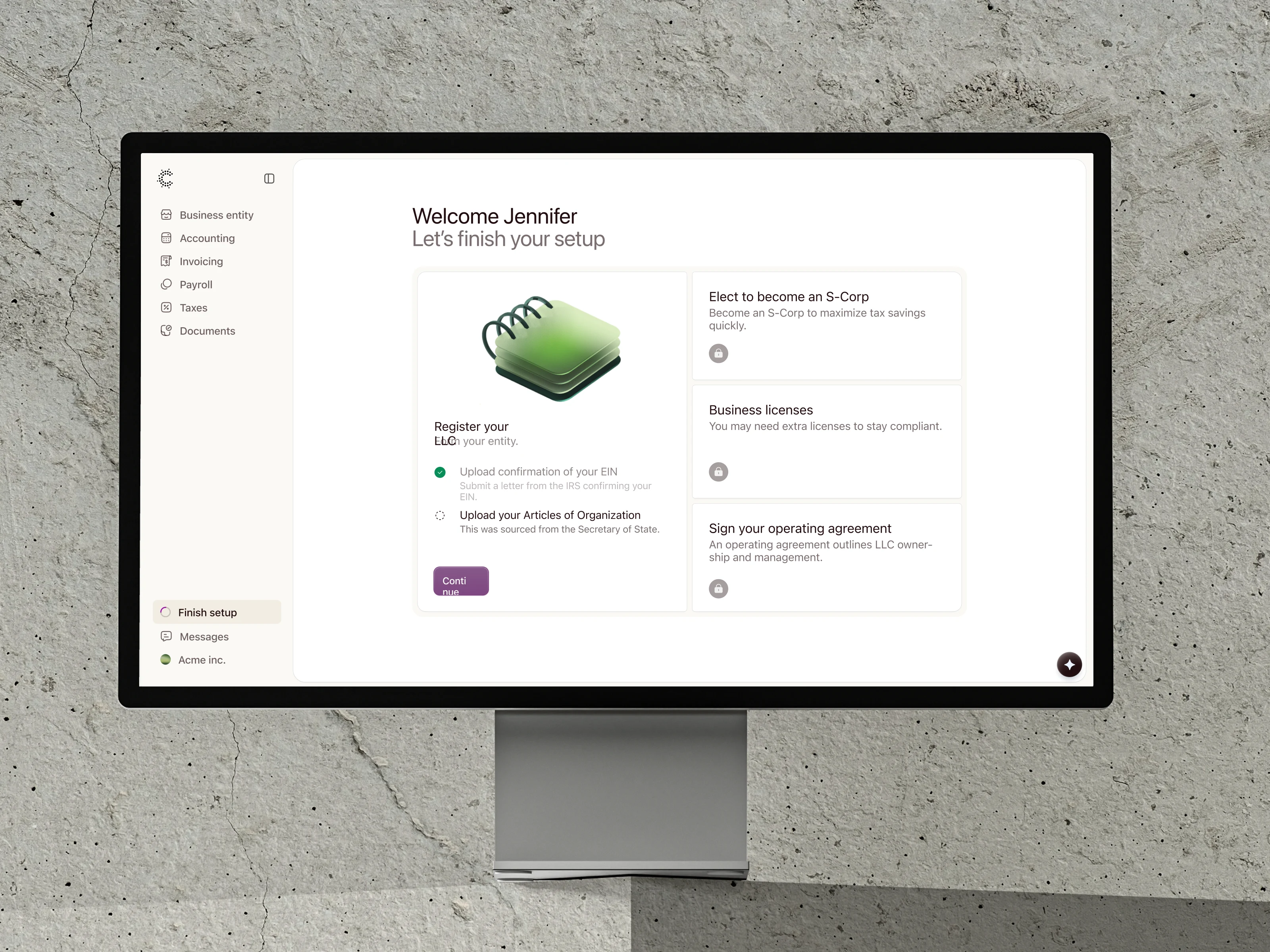
The screens show a complete list of required documents with brief explanations of what each one is, giving users time to gather everything before starting. Progressive disclosure and visual hierarchy make the list feel manageable rather than overwhelming.
Document upload needed to eliminate the most common failure point: users uploading the wrong document and having no idea why it was rejected. We designed the upload interface around visual examples that show users precisely what a valid document looks like before they submit anything.
Verification guidance surfaces at the moment of upload rather than after rejection, removing the back-and-forth entirely.
Most founders have no idea what an EIN verification letter is or where to find one. Static help documentation filled support inboxes with the same basic questions.
We designed an AI help panel where founders click "What's this?" next to any confusing requirement and get plain language explanations in real time, with follow-up questions answered on demand. The design challenge was surfacing this help without cluttering the interface, so we positioned it as a persistent sidebar that appears on demand.
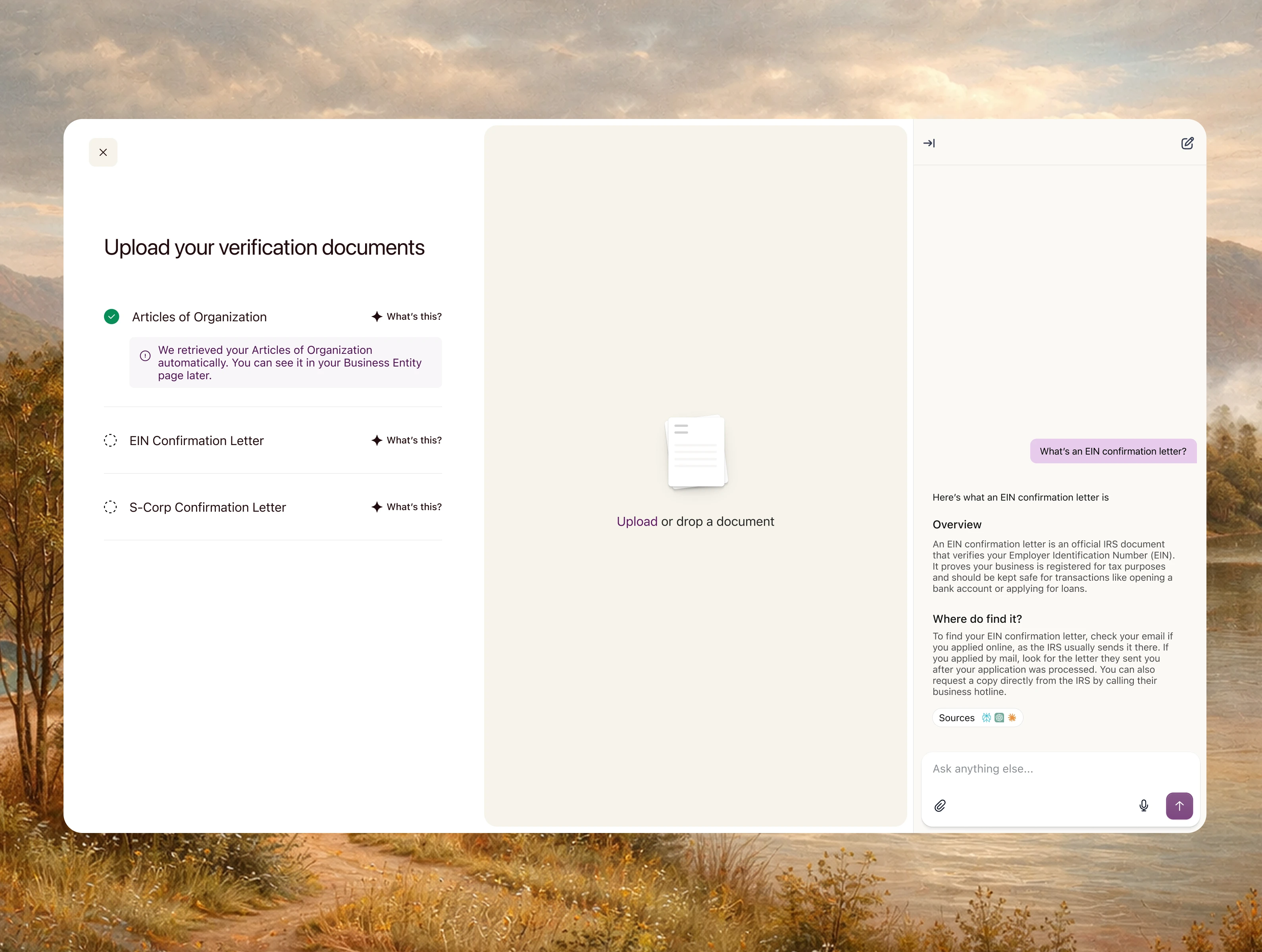
The OCR extraction flow was designed to make an invisible technical process feel tangible. Users upload their documents and immediately see visual feedback showing the system actively scanning and extracting information.
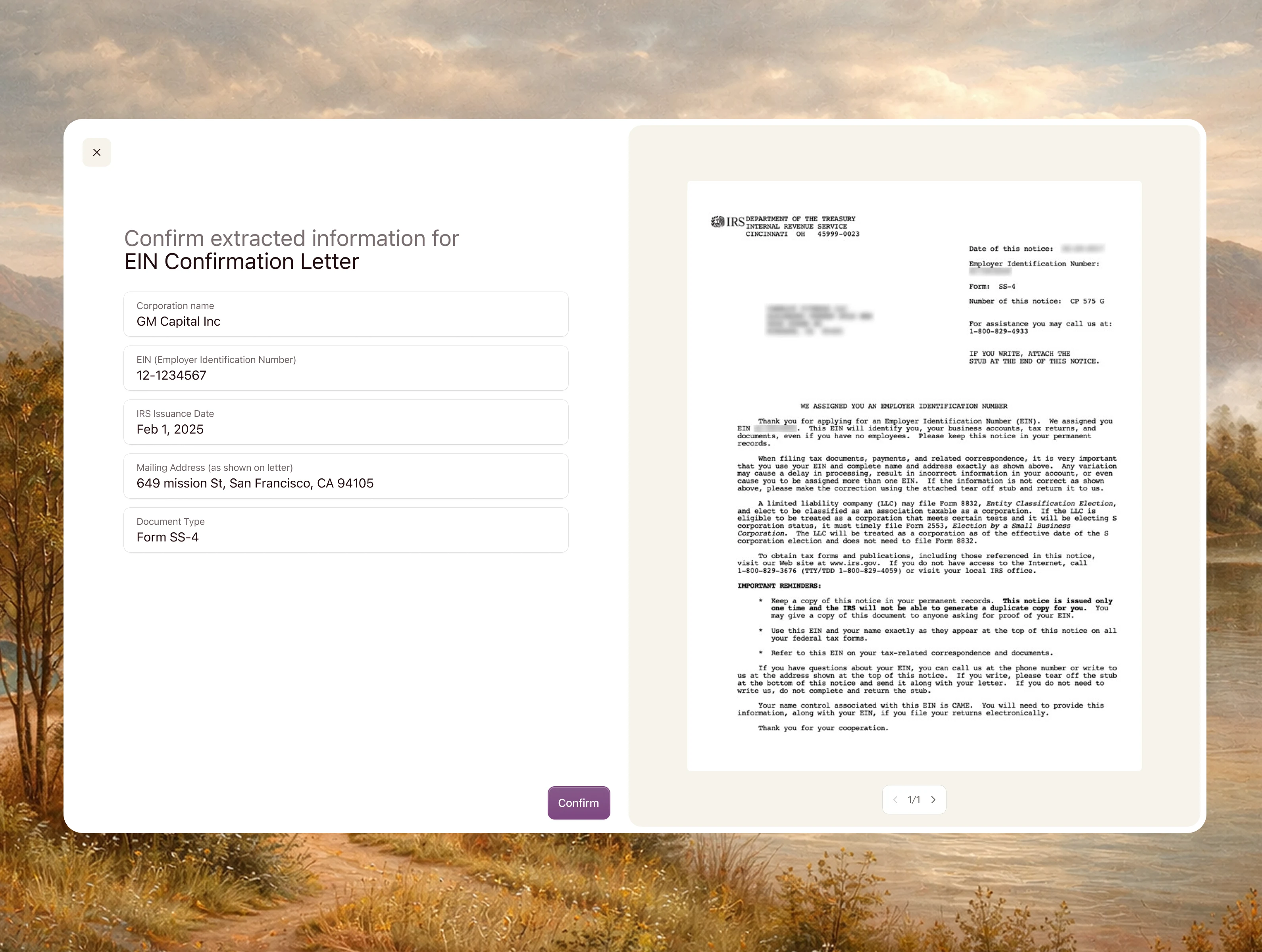
After OCR extracts business names, formation dates, and addresses, users need to trust what the system found.
We designed the confirmation flow around editable fields that surface extracted data clearly so users are reviewing and correcting rather than typing from scratch. Compliance data carries real consequences so the design had to feel accurate rather than assumed, keeping users fully in control of what gets submitted.
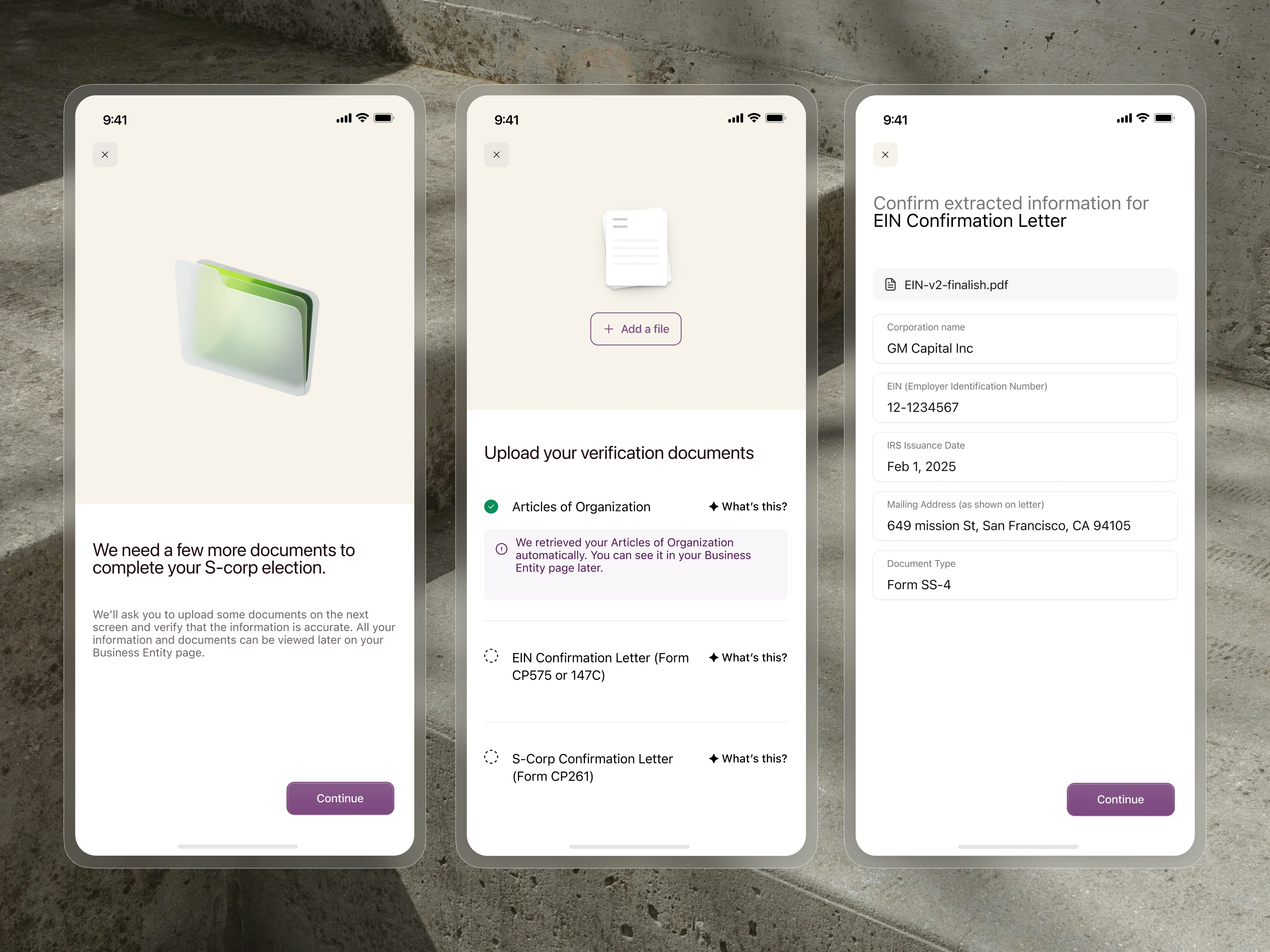
We redesigned the signing flow as a sequential step-by-step process that works on any device. Phone camera upload or desktop, each step shows exactly what comes next so users always know where they are in the process.
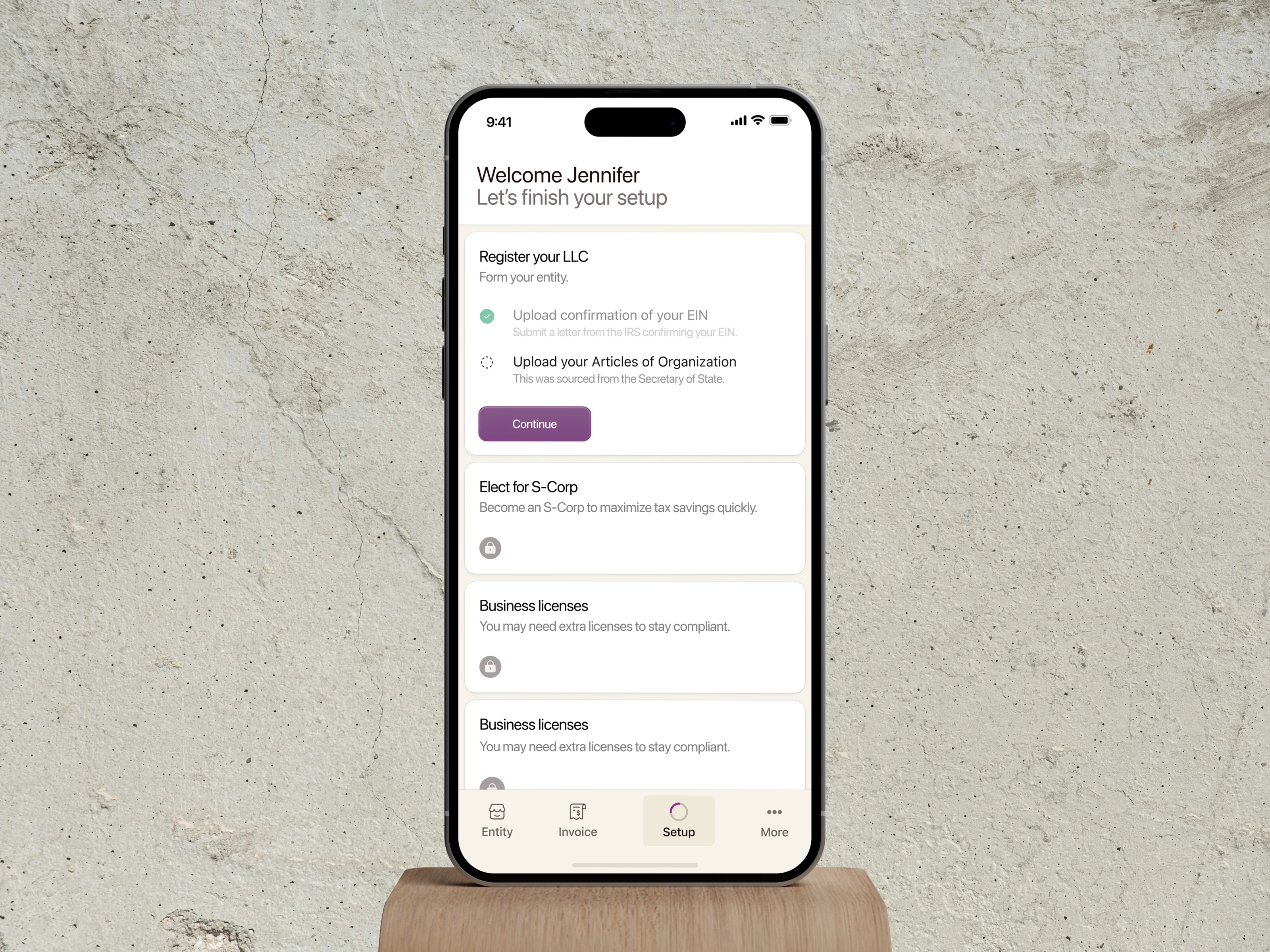
Collective operations team went from reviewing every document manually to handling only edge cases the automated system could not resolve.
Time to activation improved by 50%. What used to take hours of back-and-forth between customers and operations now happens automatically.
Collective can now scale customer acquisition without scaling operations headcount.
Like this project
Posted Jun 25, 2026
Collective ($82M raised), a FinTech platform, had onboarding that took hours of manual work. Pixel One redesigned self-serve in 4 weeks, speeding activation 50%
Likes
5
Views
36
Clients
Collective