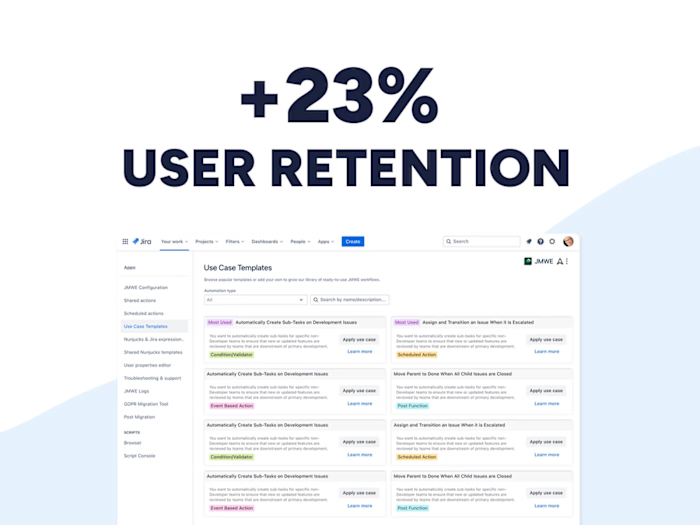
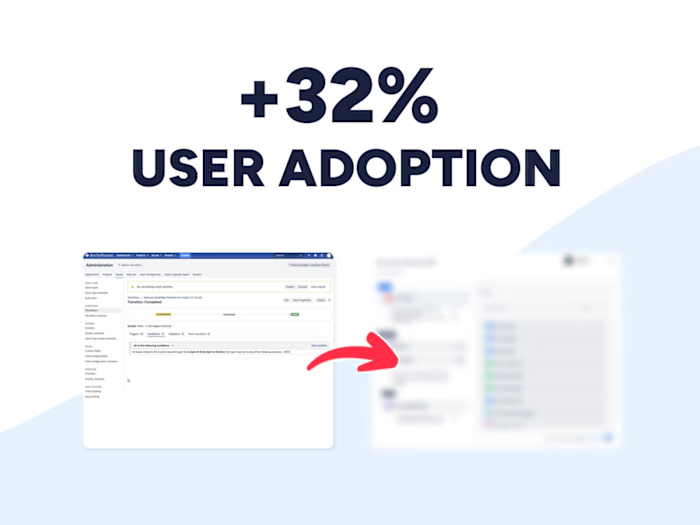
32% increase in User Satisfaction for Jira Automation SaaS tool

Hicham Moutahir


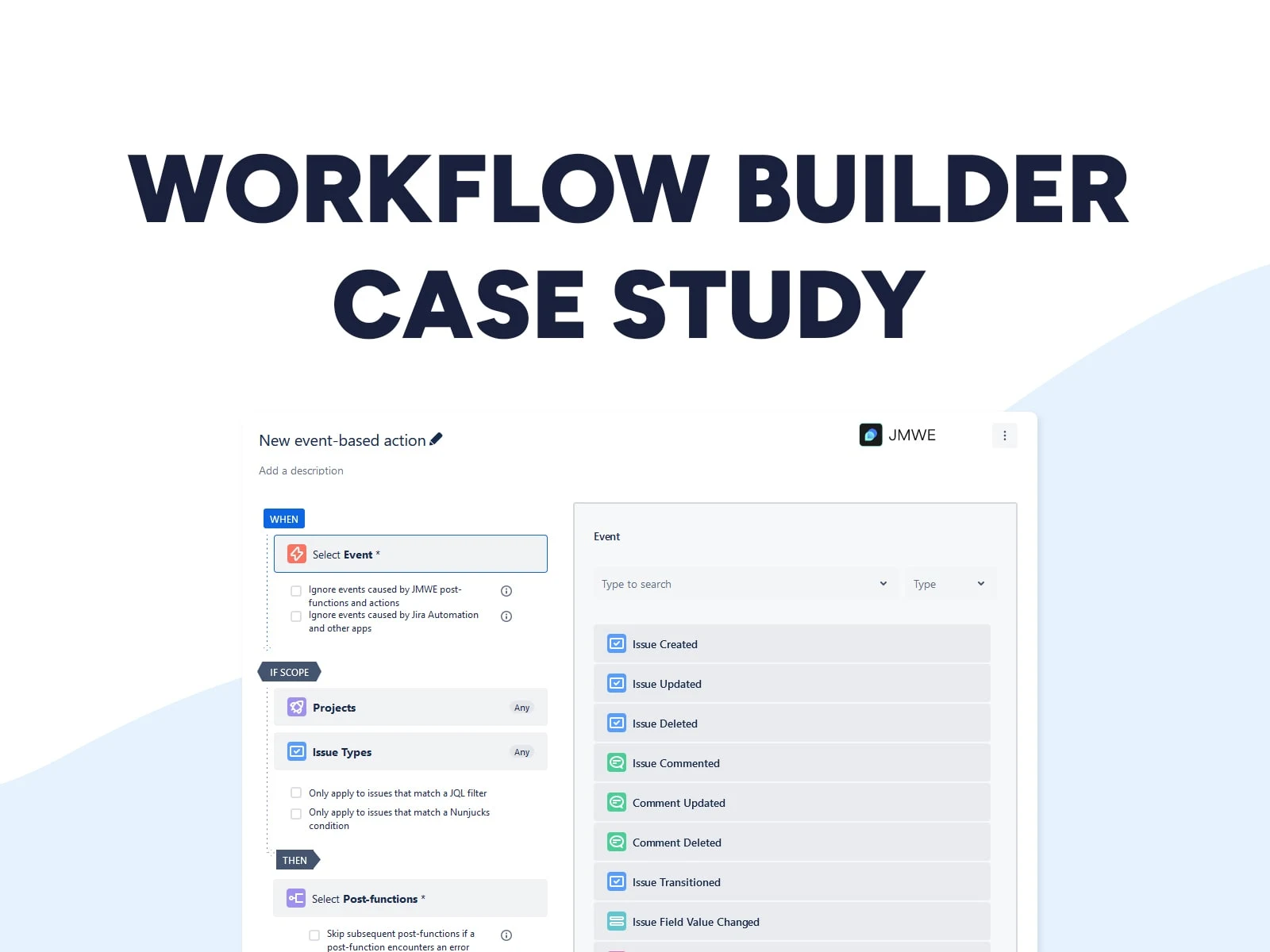
A visual builder that helps Jira admins create automation without feeling like they need to be experts first. Clear steps, safer testing, fewer “did I just break something?” moments.
A short walkthrough showing how Jira admins build, test, and validate automations using the Visual Workflow Builder.
Automation is powerful, but most builders assume deep knowledge. For everyday admins, setup felt risky, slow, and easy to mess up.
Jira teams rely on automation to reduce repetitive work, but the setup experience often assumes expert-level comfort.
It wasn’t obvious what would happen after a change, so people avoided exploring or kept rules overly basic.
We ran a moderated usability study to understand how Jira admins actually build automations today, where they lose confidence, and what would make setup feel safer and faster.
Sessions were recorded, transcribed, and scored using task completion and a short post-session questionnaire.
Recruiting and participants
We recruited 16 participants across 3 methods to get a realistic mix of experience levels and environments.
User Sample:
7 from UserTesting (general pool)
5 internal Appfire users (not on the JMWE team)
3 customers
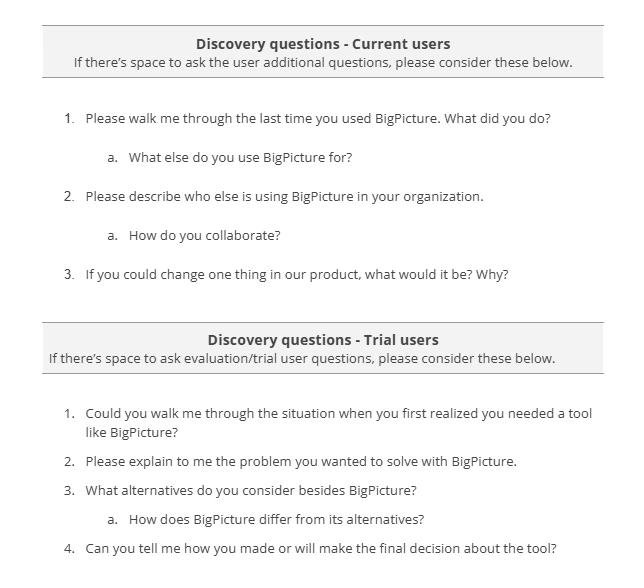
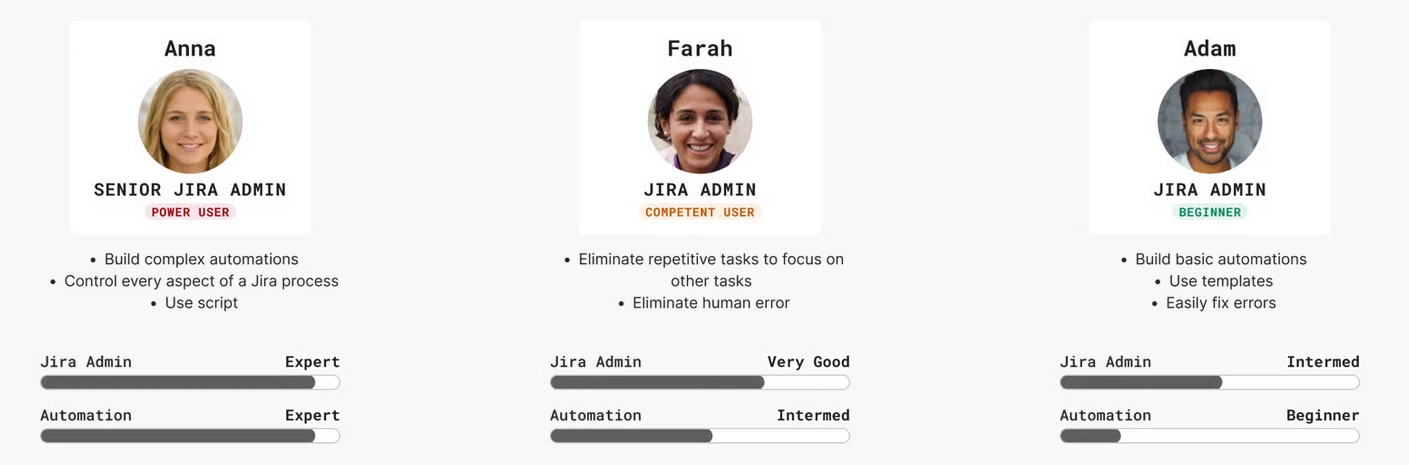
We needed the experience to feel approachable for day-to-day admins, without slowing down power users who build complex automations. The personas helped us sanity check every decision, simple when you start, scalable when you grow.
Journey map
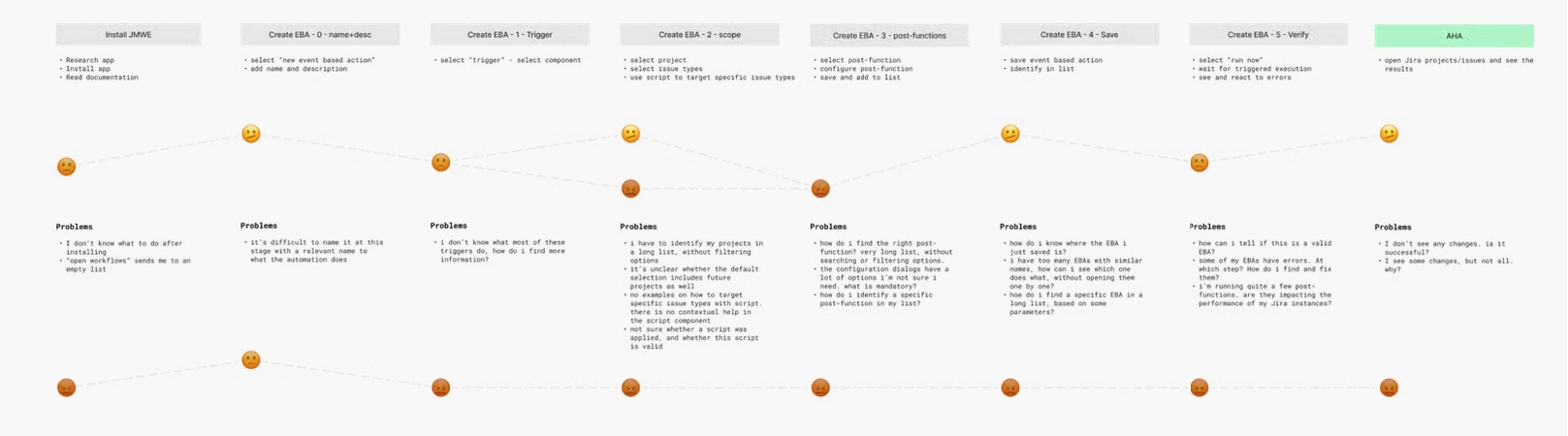
We mapped the end-to-end flow from “install” to “first working rule” and marked the exact moments where confidence drops, usually right before committing changes.
To keep the study grounded in real work, we asked participants to complete 3 common JMWE tasks, then fill a short questionnaire at the end of the 60 minute session.
Task 1: Automatically set an Epic to Done when all issues under it are Done
Task 2: Reopen a parent issue when one of its subtasks is reopened
Task 3: Create multiple subtasks based on parent issue settings
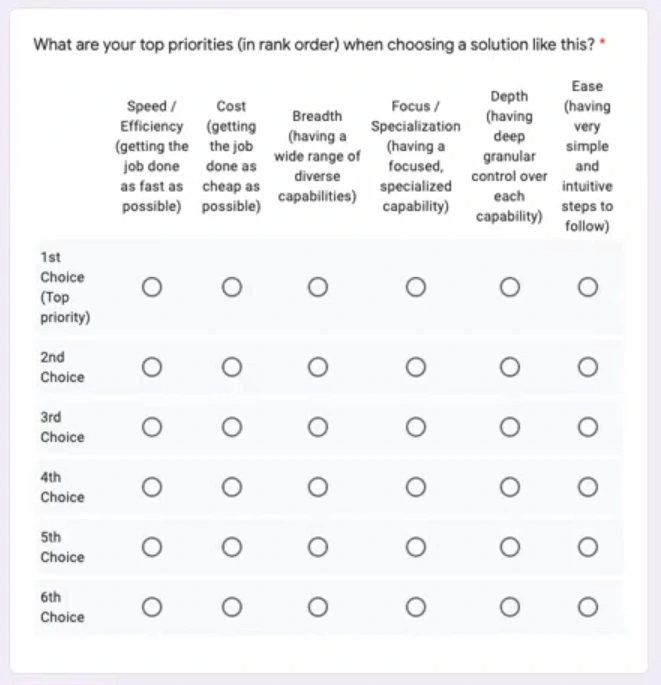
This survey helped us understand how admins prioritize speed, simplicity, and control when evaluating automation tools.
Alongside task success rate, we aggregated the post-test questionnaire into a single UX score out of 10, based on core UX criteria.
The experience feels disjointed, users move between screens without clear context.
Critical choices are buried in long lists, forcing users to scan, guess, and reread.
Walls of text create cognitive overload, especially for first-time setup.
The lack of visual guidance makes even simple workflows feel intimidating.
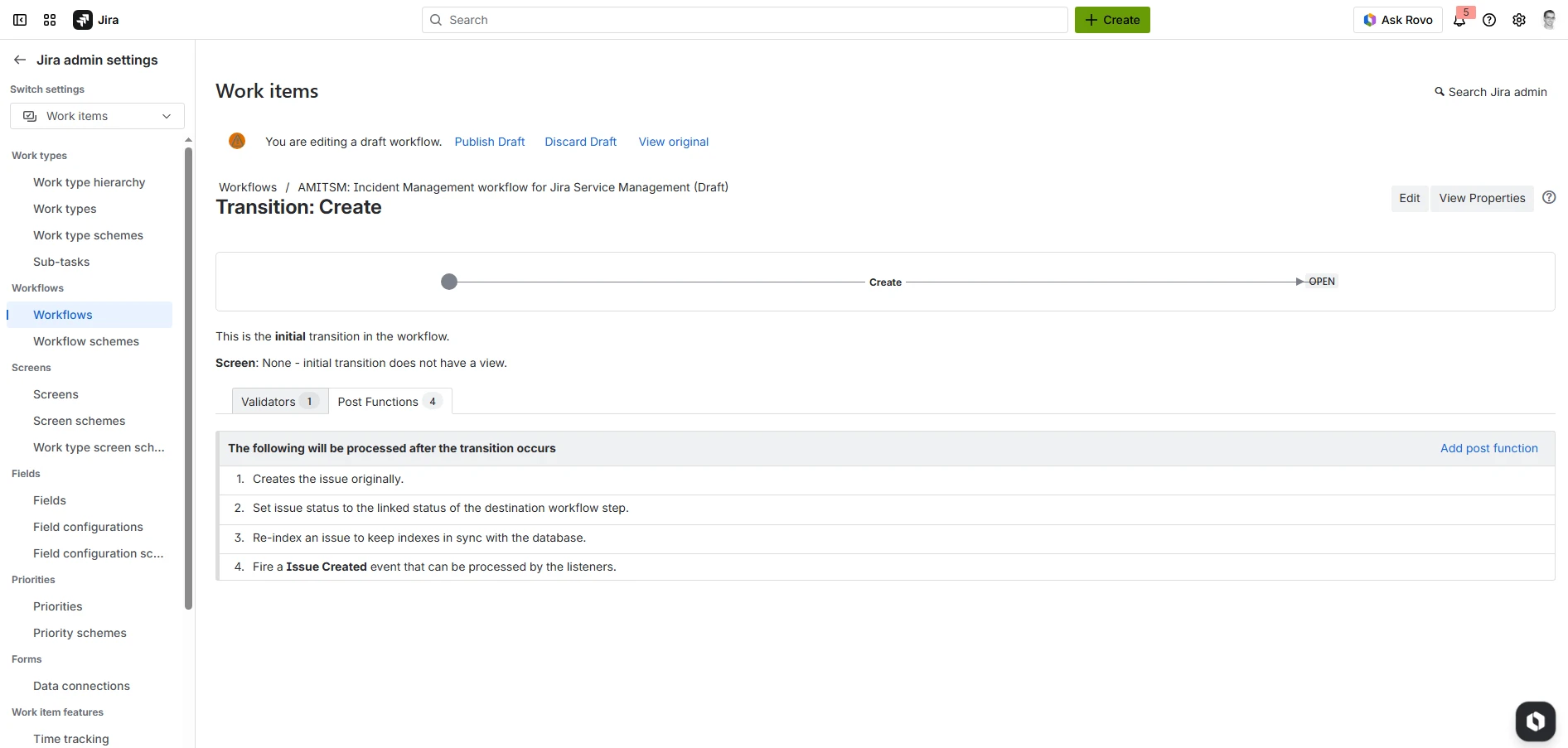
Old way before redesign
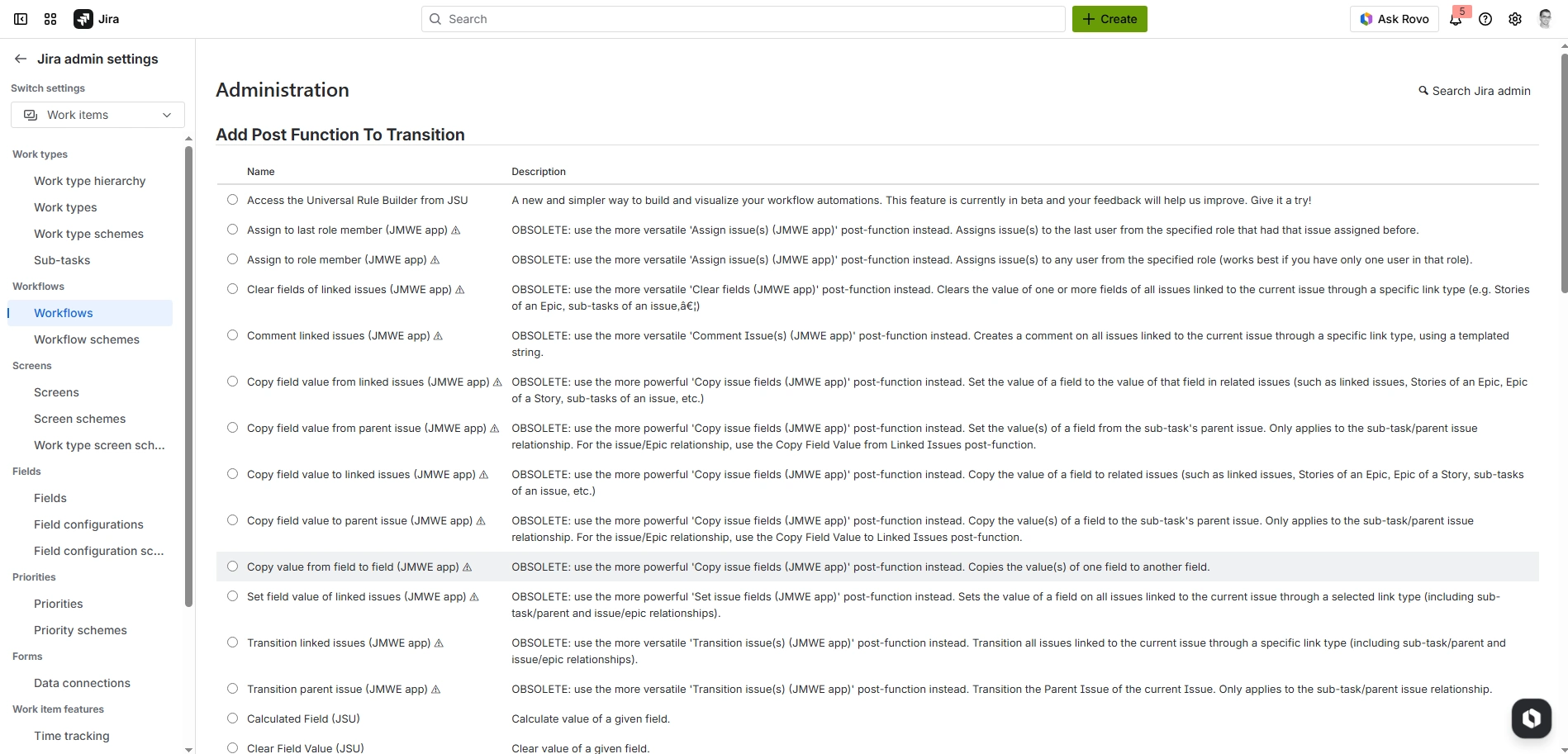
Old way before redesign
Instead of listing every small issue, we grouped the work into the few changes that drove the biggest clarity and confidence gains.
Make the workflow visual and readable, even as it grows in complexity.
Users had to choose from a long, flat list of actions with little context. It was hard to understand what each option did or whether it was the right one.
Actions are grouped by intent, explained in plain language, and previewed in context, so admins can confidently pick the right step without guessing.
New visual workflow builder
We made it obvious what a control does before users click it.
Onboarding guide for first time users
Moderated and recorded sessions across a range of experience levels, focusing on whether admins could complete key setup tasks confidently.
Clearer setup, fewer mistakes, and faster time-to-value for Jira admins.
Like this project
Posted Feb 27, 2026
Visual workflow builder designed to make Jira automation easy to understand, safer to test, and faster to ship. Built for everyday admins, not just power users.