CineMetric AI: Film Industry Analytics Platform

Onifade Ifeoluwa


Designing the Intelligence of Cinema
How I designed and built CineMetric AI, an AI-powered analytics platform for the film industry as a solo vibe coder, from concept to live deployment.
Demo Video
Role: UX/UI Designer & Developer(Vibe Coding)
Timeline: 6 Weeks · Solo Project
Platform: Web App · Deployed on Netlify
Industry: Film & Entertainment AI
Live Product: https://cinemetricai.netlify.app/
01—Overview
The Brief: AI meets the silver screen
Cinemetric AI is an AI-powered platform that helps filmmakers, studios, and producers analyze movie scripts, predict audience appeal, and reduce production risk before any budget is committed.
The platform transforms scripts into data-driven insights, enabling smarter greenlighting decisions and scalable global storytelling.
The Problem
The film industry relies heavily on:
Gut feeling and subjective decisions
Expensive trial-and-error production cycles
Limited data before production begins
This leads to:
High financial risk
Unpredictable audience reception
Poor global scalability
👉 Creators lack a way to validate ideas before investing millions
💡 Solution
Cinemetric AI introduces a system where users can:
Upload or analyze scripts
Receive predictive insights on audience appeal
Understand performance potential before production
Make data-backed decisions
Core idea:
👉 Turn storytelling into measurable intelligence
👤 Target Users
Primary:
Film producers
Studio executives
Independent filmmakers
Secondary:
Streaming platforms
Scriptwriters
Investors in media
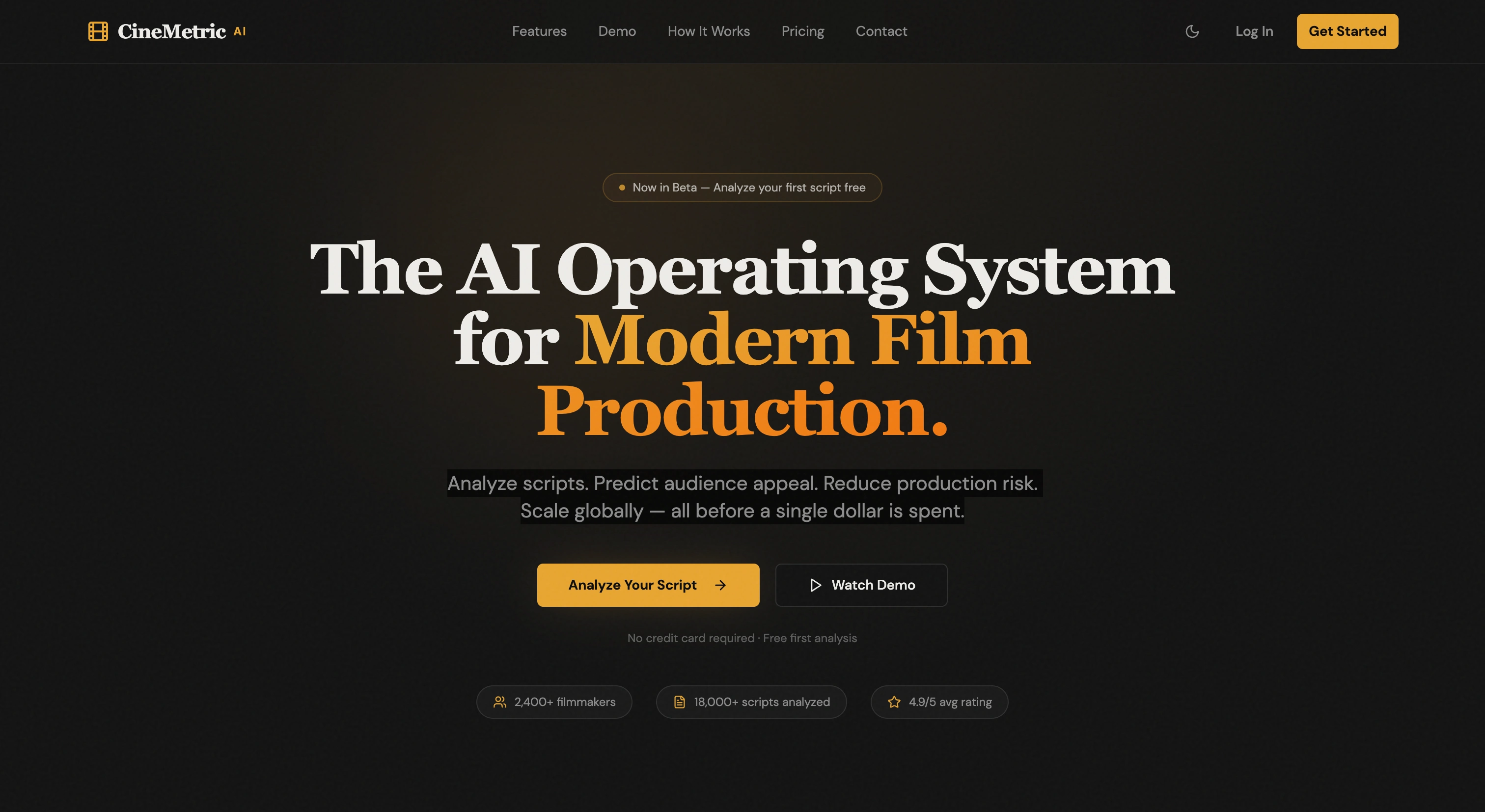
HOME
02—My Role
Wearing every hat
This was a solo vibe-coding project, meaning I owned the product from the first wireframe to the final deployment. No handoffs, no design tokens committee, no approval chain. Every decision was mine to make and defend.
◎
UX Researcher
Conducted competitive analysis of platforms like Cinelytic and IMDbPro. Mapped out user journeys for three core personas: the indie producer, the studio analyst, and the streaming curator.
✦
UI/Visual Designer
Defined the visual language: a cinematic, dark aesthetic with gold accents, editorial typography, and motion design that convey precision and authority without coldness.
{ }
Frontend&Backend Developer (Vibe Coding)
Built the entire front end and backend solo. Structured component architecture, integrated AI APIs, implemented responsive layouts, and deployed to Netlify, from first commit to live URL.
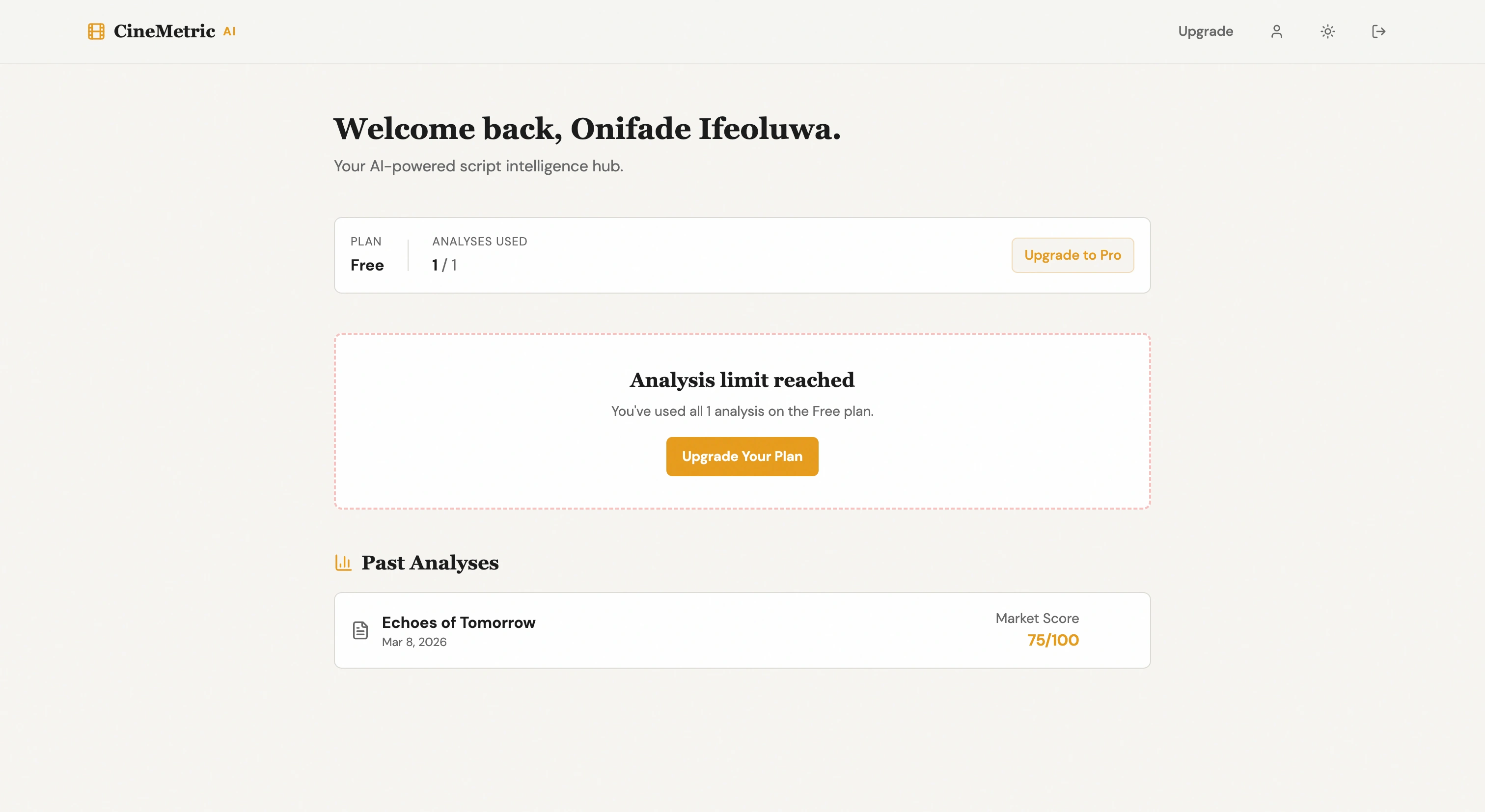
03—Process
From napkin to Netlify
Six weeks. One designer-developer. A clear methodology adapted for high-velocity solo execution.
01
Discovery
Competitive audit, user personas, pain-point mapping
02
Define
Information architecture, user flows, feature prioritisation
03
Design
Wireframes, visual system, component library, prototypes
04
Build
Lovable and Claude A.I
05
Ship
Netlify deployment, performance optimisation, live testing
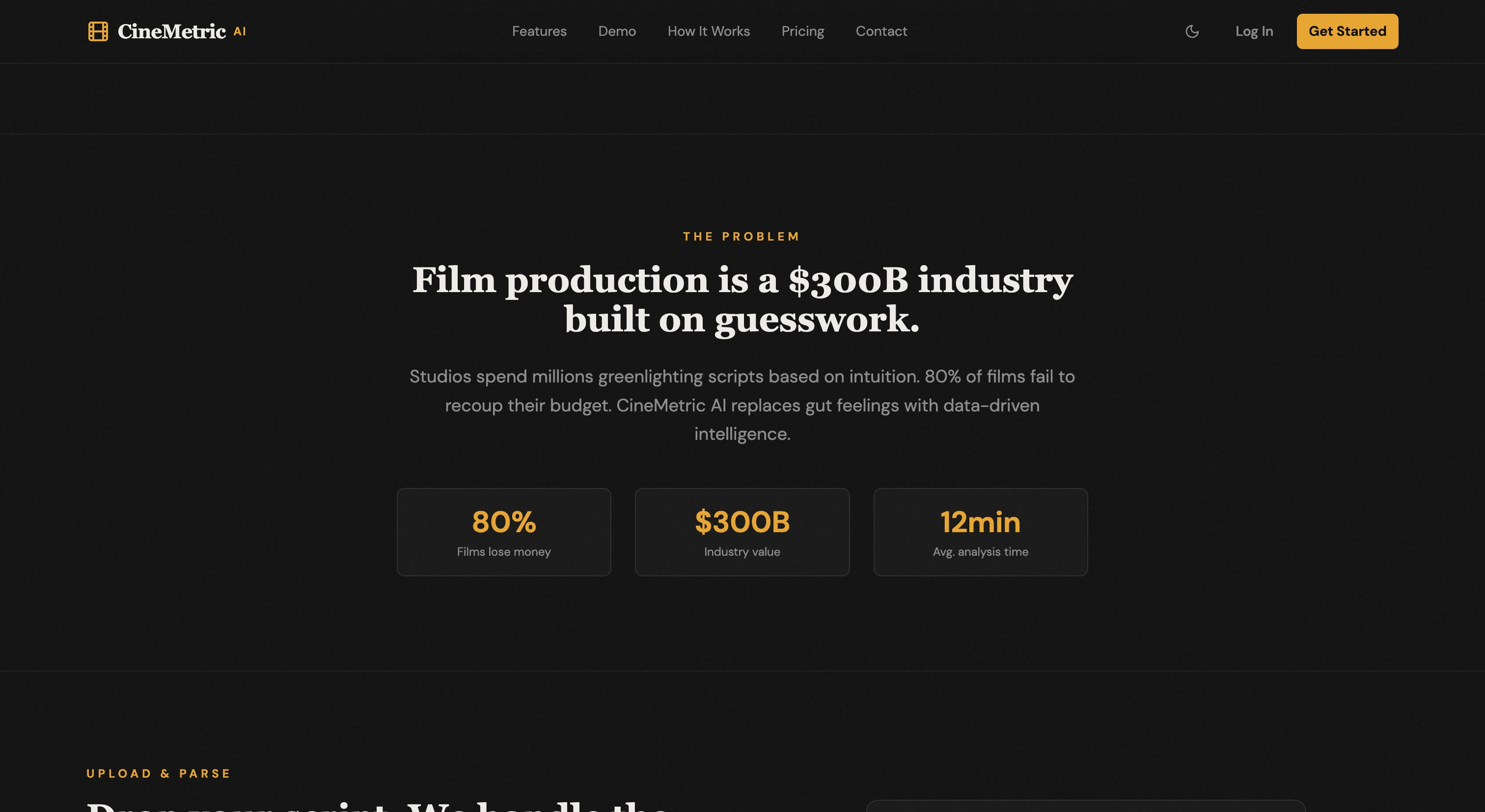
"The film industry has always been a data business pretending to be a gut-feel business. My goal was to make the data feel as compelling as the stories it's about."
04—Design Challenges
Hard problems, solved in the open
🧠 UX Decisions
🔹 1. Clarity Over Complexity
AI products often confuse users.
Decision:
Simplified messaging into clear outcomes:
Analyze
Predict
Reduce risk
Scale globally
👉 Users understand value in seconds
🔹 2. Trust-First Design
Since users rely on predictions:
Decision:
Clean layout
Minimal distractions
Structured sections
👉 Builds credibility and confidence
🔹 3. Narrative Flow
The page follows a storytelling structure:
Problem awareness
Product promise
How it works
Why it matters
Call to action
👉 Mirrors how filmmakers think about projects
🔹 4. Conversion-Focused UX
Strong CTA placement
Clear benefit-driven copy
Reduced friction in decision-making
👉 Designed to turn visitors into early adopters
🎨 UI Design
Visual Direction
Dark theme → cinematic + premium feel
Bold typography → clarity + authority
Minimal UI → focus on message
Design Principles:
Hierarchy: Headline → Value → CTA
Contrast: Important elements stand out
Consistency: Unified spacing and layout
05—Design Decisions
The thinking behind the thing
Dark-first aesthetic
Film is experienced in darkness. A dark UI isn't a trend choice — it's a contextual one that reduces cognitive dissonance for an audience of cinema professionals and signals authority.
Gold as the sole accent
Gold communicates prestige, awards, and value — all deeply tied to the film industry's cultural vocabulary. It's used sparingly: only for the most important data points and calls to action.
Editorial typography hierarchy
Serif display fonts for data headlines create a sense of drama and gravity. Sans-serif body copy keeps readability clinical—the contrast signals: this number matters.
Zero-jargon AI outputs
Every AI-generated insight was written as if explaining it to a smart person who's never heard of a p-value. Plain language isn't dumbing down — it's respecting your user's time.
Motion with restraint
Animations were limited to transitions between data states and loading indicators. No decorative motion. Every movement earns its place by communicating a change in system state.
Mobile as a first-class citizen
Film industry professionals are constantly on the move — on set, at festivals, in screenings. The platform was designed mobile-first, then expanded to desktop, not the other way around.
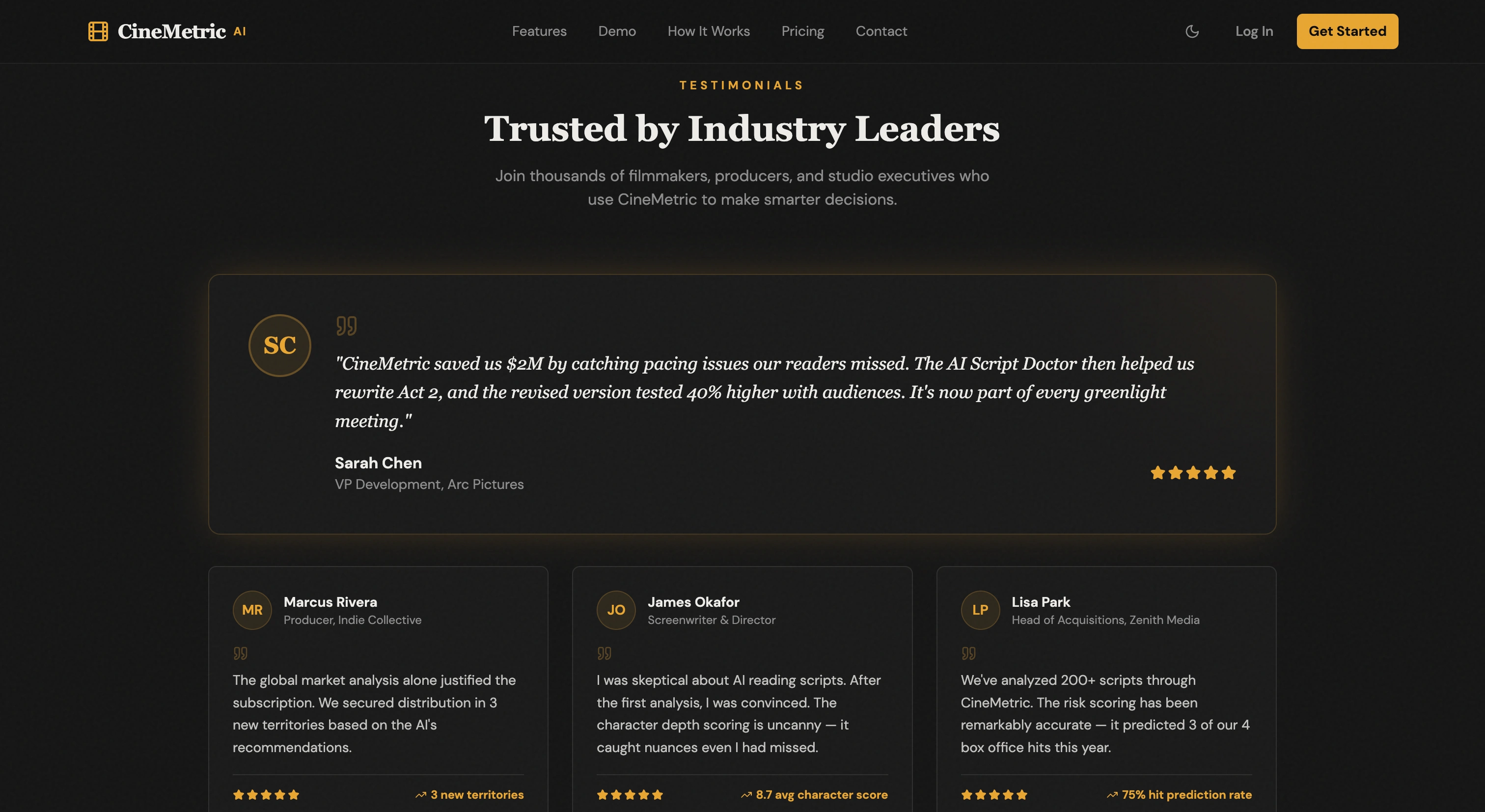
07—Key Learnings
What the project taught me
01
Vibe coding demands a design system first
Moving fast without a visual foundation creates compounding debt. Even a minimal set of CSS variables and spacing tokens saves hours of inconsistency-fixing later. Constraints are velocity.
02
AI features need UX as much as engineering
The hardest part of building an AI product isn't the model — it's designing how to present uncertainty, errors, and limitations in ways that build rather than erode trust.
03
Domain immersion is non-negotiable
You cannot design for an industry you haven't studied. Two weeks of reading about film distribution, P&A spending, and box office analytics made every design decision sharper.
04
Aesthetic choices are strategic choices
Going dark and gold wasn't a style preference — it was a positioning decision. The visual language communicates authority, prestige, and industry-nativeness before the user reads a single word.
✨ Final Note
Cinemetric AI is not just a product—it’s a shift toward data-driven storytelling, where creative decisions are backed by predictive intelligence rather than guesswork.
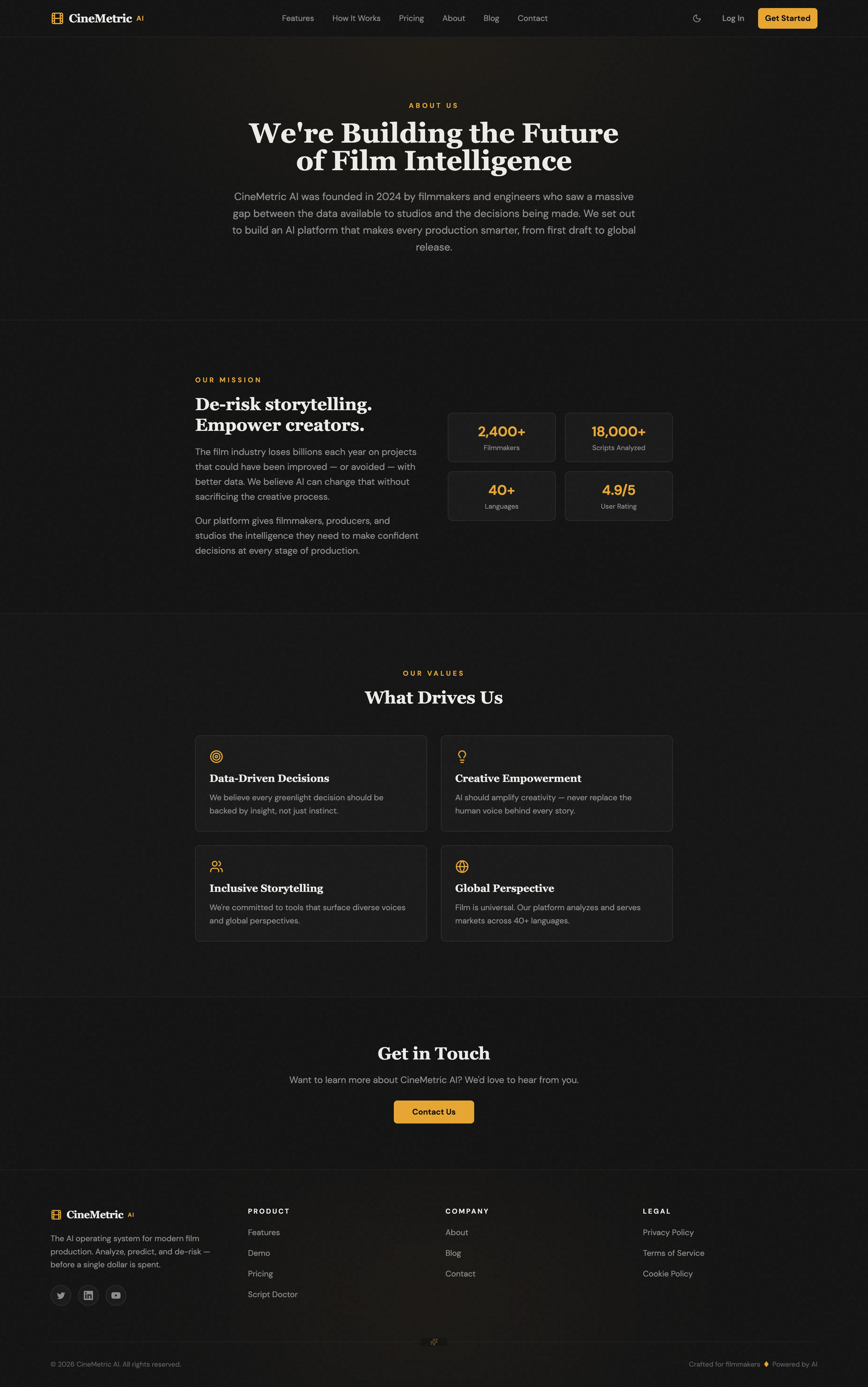
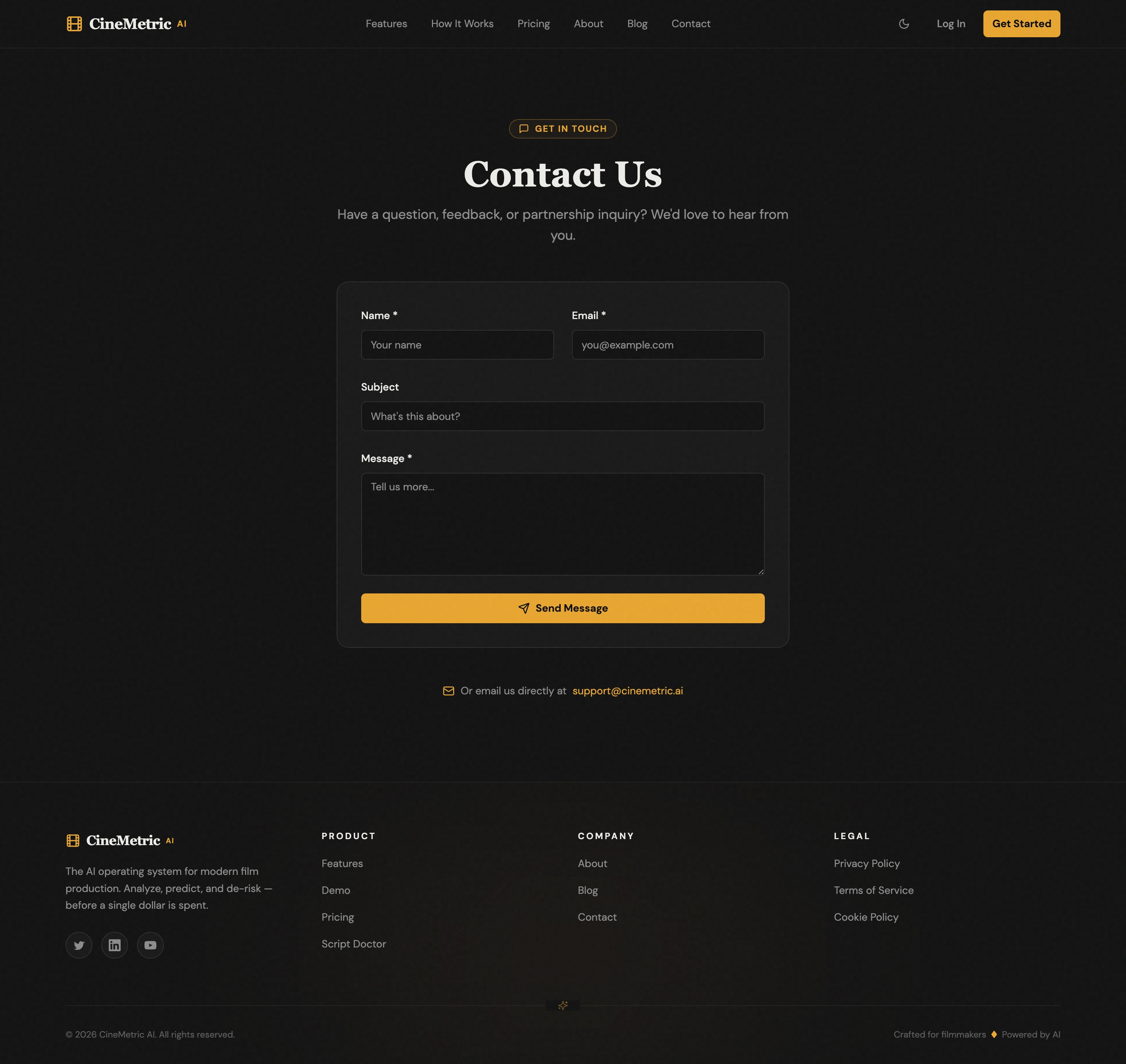
SCREENSHOTS OF PAGES.

Home
Like this project
Posted Apr 9, 2026
Developed CineMetric AI, a web app for predictive script analysis in the film industry.
Likes
0
Views
17