Fleetly - Fleet Intelligence

Vardhanika Jagtap


Fleetly - Fleet Intelligence
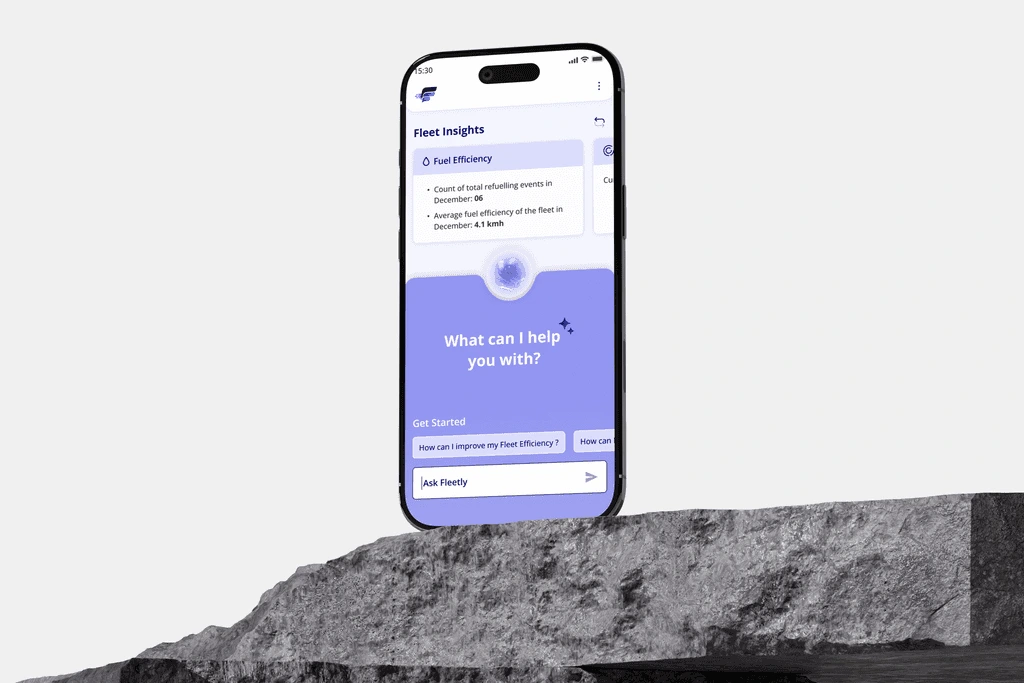
Fleet managers were drowning in dashboards. I designed an AI-powered insights and chat module that lets them ask questions about their fleet in plain language and get answers they can actually act on.
Preview Locked
Role
End-to-End Product Designer
Timeline
2025 | 12 weeks
Client
A leading global automotive company
Tools


Problem Statement
A dashboard full of data isn't the same as an answer.
In India, a fleet manager's morning should start with clarity which vehicles need attention, which routes are at risk, what needs a decision today. Instead, it started with a data hunt.
FleetOntheGo had everything they needed. But getting a specific answer meant navigating 3–4 screens, cross-referencing tables, and assembling the picture manually.
This creates challenges such as:
Slow response to fleet emergencies
Time lost on manual data retrieval
Decisions made on incomplete information
Over-reliance on operations teams for basic status checks
I shadowed fleet managers during their peak operations window, mapped their screen-switching patterns, and studied where the existing product was losing them before designing anything.
Activities:
Stakeholder interviews
Workflow observation
Existing product audit
Competitive benchmarking
40%
Of a fleet manager's operational time spent retrieving data, not acting on it
4
Screens required to answer one simple fleet question
50
Vehicles a single manager is responsible for tracking simultaneously
4
Manual steps to answer "Are any vehicles overdue for service?"
Defining Problem Statement
Fleet managers weren't missing data. They were missing time. Every operational question which vehicles need attention, which routes are at risk, what needs a decision now required navigating multiple screens, cross-referencing tables, and assembling the answer manually. The platform stored intelligence. It just never learned to deliver it.
Research
The Workflow Behind The Numbers
I sat with fleet managers across different operation sizes 12 vehicles to 80+ asking the same questions and observing the same patterns. The tools differed. The frustration didn't.
Ramesh
42 · Fleet Operations Manager · Mumbai
"By the time I find what I need, the situation has already changed."
Pain Points:
Switches between 4+ modules for one answer
No way to query fleet status in plain language
Spends first hour every morning just getting up to speed
Priya
35 · Logistics Coordinator · Pune
"I know the data is there. I just can never find it fast enough."
Pain Points:
Cannot quickly surface which vehicles need urgent attention
Dependent on operations team for anything beyond basic tracking
No personalised view — sees everything, relevant or not
Arvind
51 · Senior Fleet Supervisor · Ahmedabad
"I want to just ask, what's wrong today and get a straight answer."
Pain Points:
Alert fatigue from undifferentiated notifications
No historical query to track recurring issues
Manual effort to generate insights for weekly reporting
Sneha
28 · Fleet Analyst · Bangalore
"I spend half my day pulling numbers that should already be in front of me."
Pain Points:
Manually compiles fleet performance data into weekly reports
No way to visualise trends without exporting to Excel first
Constantly interrupted by managers asking for status updates she has to dig for
Key Insight

Fleet managers weren't bad at their jobs.They were doing the platform's job for it.
Opportunity mapping
Where the intervention has the most leverage
I mapped every pain point to a feature opportunity, then scored each on operational impact vs. integration effort. The top features became the MVP.
AI-generated proactive insight cards
Conversational fleet query via chat
Preference-based insight personalisation
Copy / pin / like actions on responses
Text-to-graph conversion for numerical answers
Pinned response library
Alert prioritisation by severity
Natural language filters for vehicle status
Seamlessly switch between FleetOntheGo and Fleetly
Information architecture
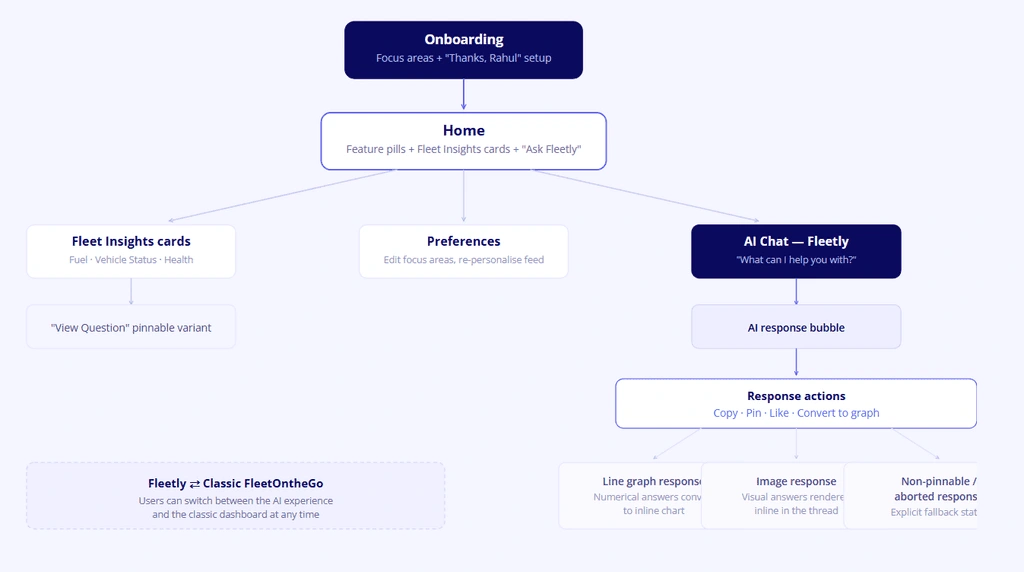
Two modes. One module. Zero extra navigation.
Fleetly lives as a dedicated section within FleetOntheGo no new tab to learn, no context switch to make. Inside it, the experience splits into two views that work together:
Insights Feed — The fleet briefs you. Proactive, preference-filtered cards surface what matters before you think to look.
AI Chat — You brief the fleet. Ask anything in plain language. Get a structured, actionable answer with one-tap options to copy, pin, save, or visualise.
Competitive landscape
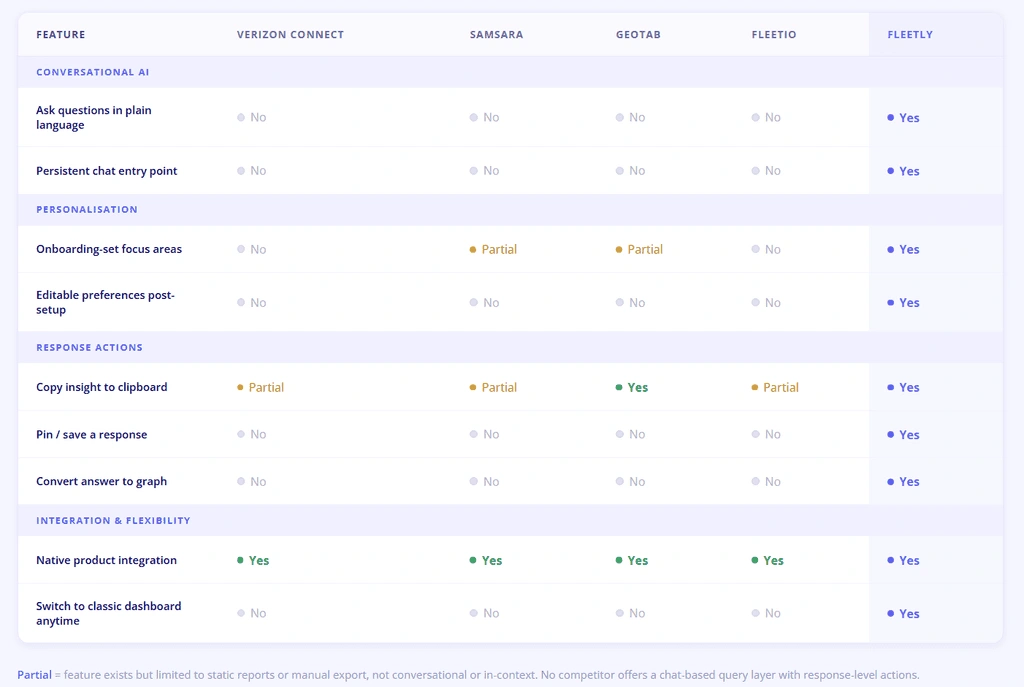
Where existing tools fall short
Fleet management platforms are built around data storage, not data delivery. Conversational querying, proactive AI cards, and preference-based personalisation are absent across the category.
Design system
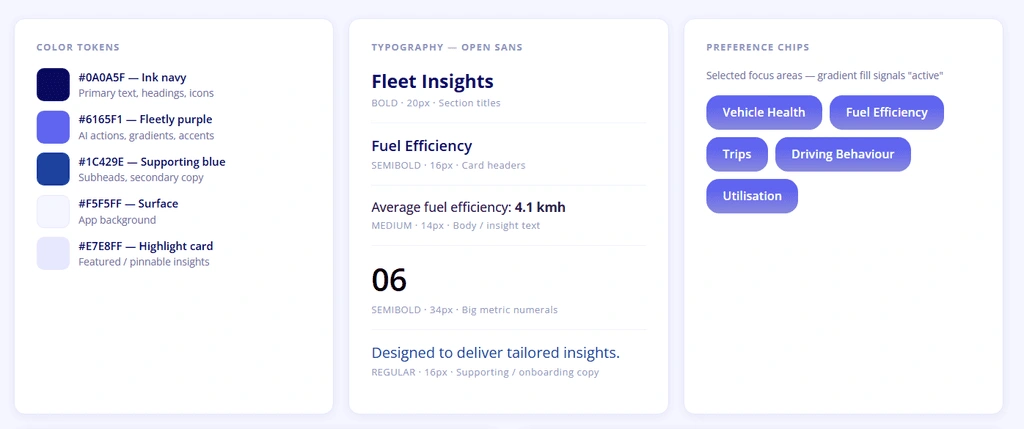
Clarity, speed, trust.
A system built for operations environments, high cognitive load, time pressure, and users who cannot afford to misread a status. Every component earns its place.
Status-coded insight cards (critical / warning / informational)
Chat bubble system with persistent action toolbar
Inline graph conversion component (bar, line, status breakdown)
Preference chip selector with live feed preview
Skeleton loading and empty states for every AI scenario
The Final Experience
From Data Hunt to 10-Second Answers
Logo
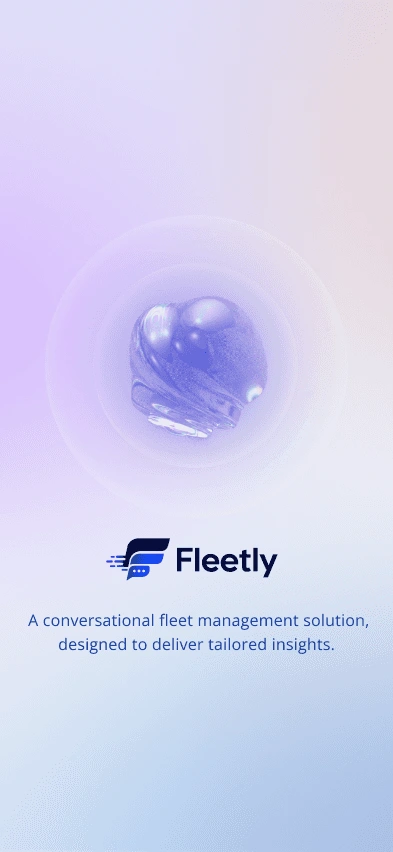
Splash Screen
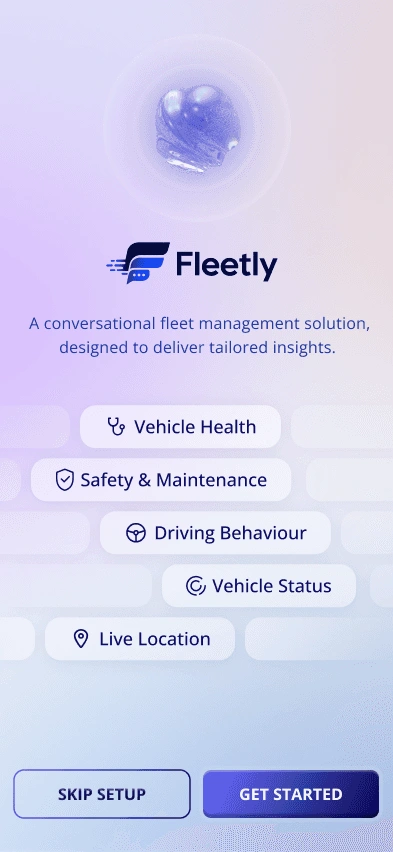
Onboarding
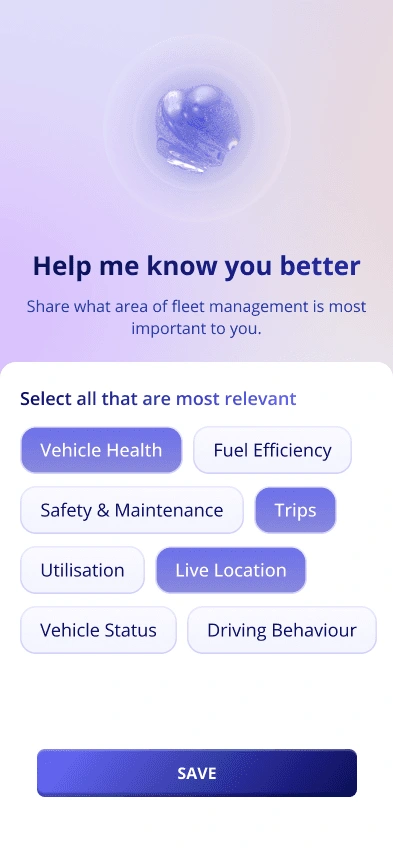
Setup
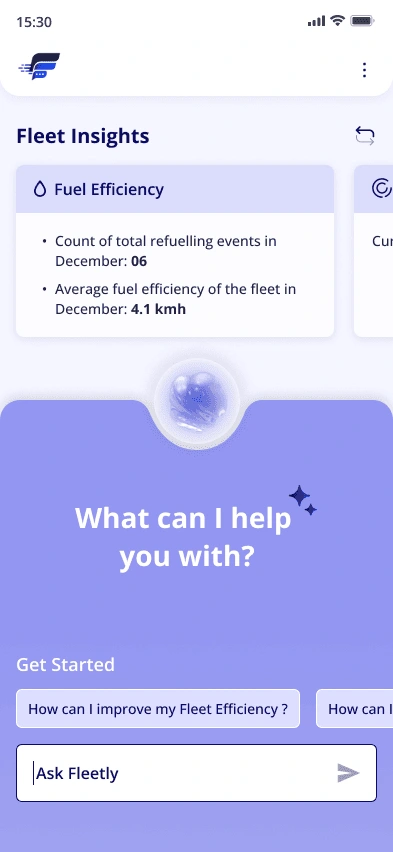
Home screen
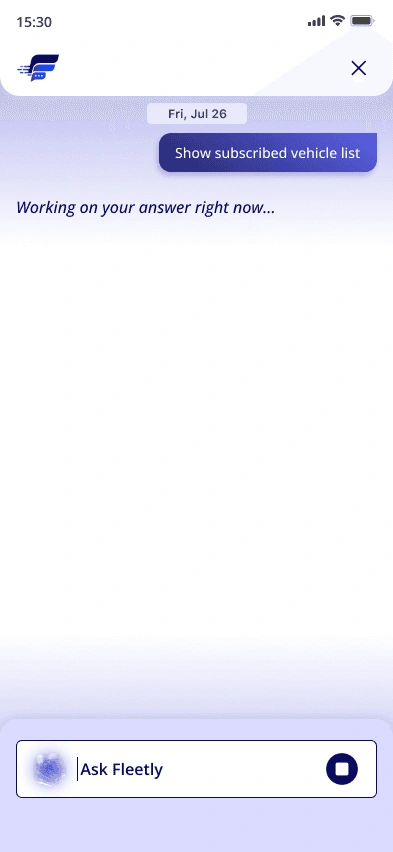
AI chat
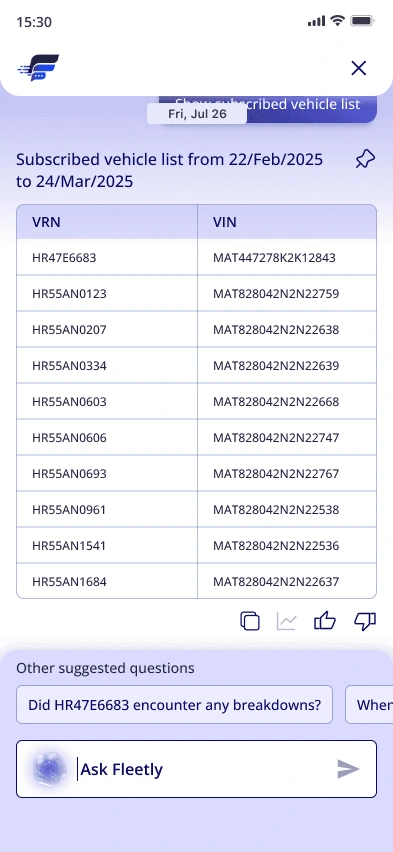
AI Response

The final screens are only half the story. Explore the research, insights, iterations, and decisions that shaped Fleetly.
Like this project
Posted Jul 28, 2026
Built Fleetly - Fleet Intelligence: an AI insights feed and conversational chat to give fleet managers direct, plain-language answers and faster decisions.
Likes
0
Views
7