PKD Patient Management Application

Arundhati Tiwari

PKD - Patient Management Application
Polycystic Kidney Disease (PKD) is a lifelong condition that requires doctors to track a patient’s history, treatments, scans, and progress over many years.
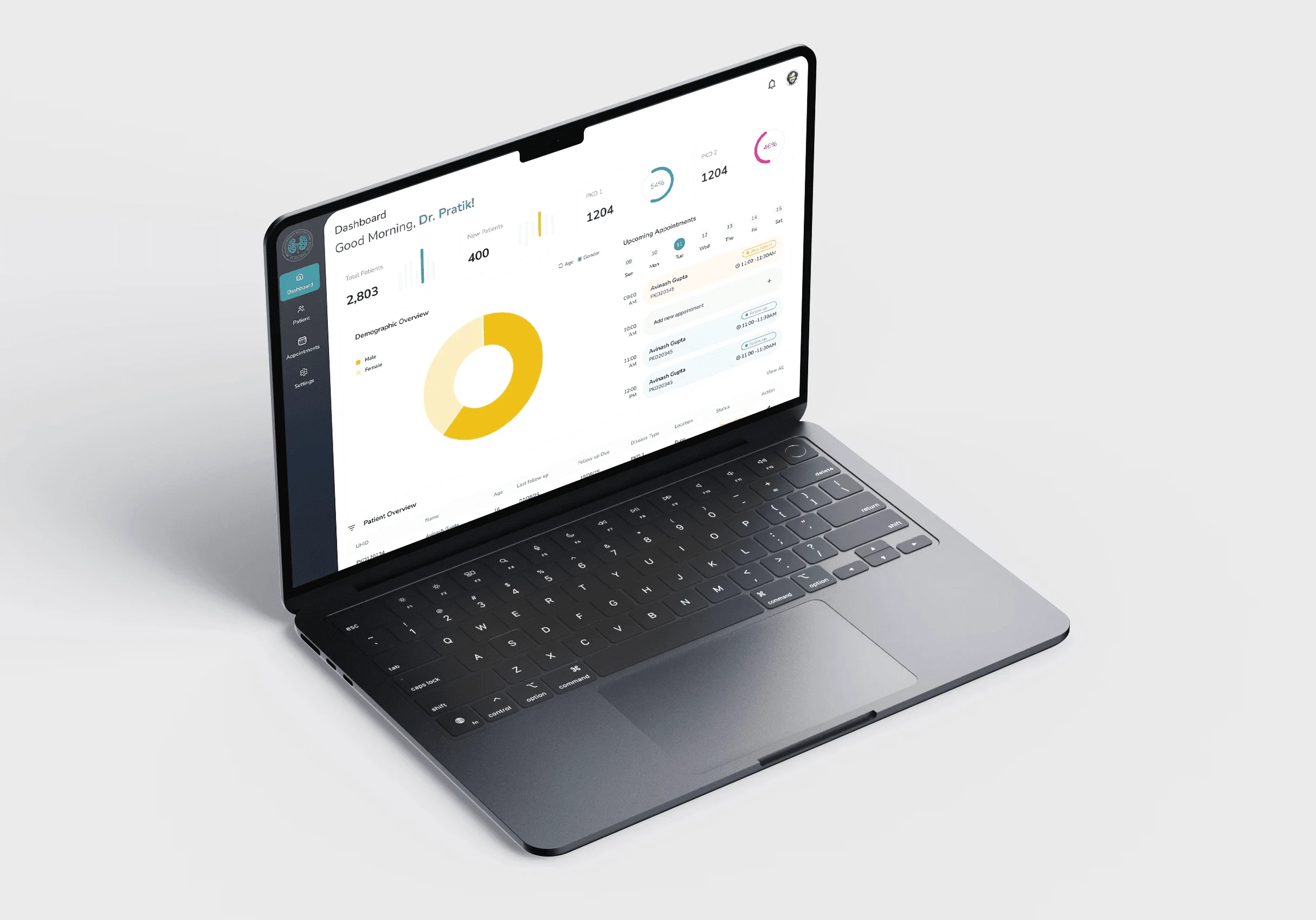
This project explores how a web-based application can help doctors record and track patient data, making disease progression easier to understand over time.
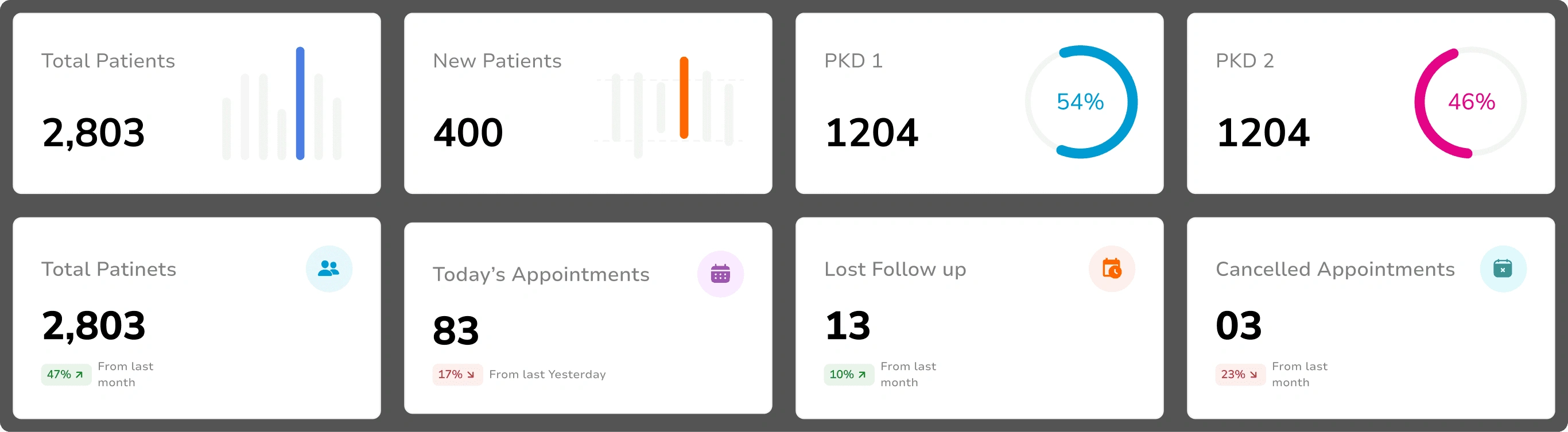
The Indian Association of Polycystic Kidney Disease wanted a simple web application to help doctors record and review patient information in one place.
Doctors across India were maintaining PKD records in manual files, with no easy way to review a patient’s history over time or understand how many PKD cases they were actively managing.
Overview
The PKD association logo sits alongside the patient list screen, grounding the tool in its real clinical context.
Clinical decisions in chronic conditions depend on understanding change over time, not isolated visits.
Patient information for Polycystic Kidney Disease is collected over many visits and follow-ups.
While the data exists, it is scattered across records, making it hard to quickly review a patient’s full history.
Doctors need a clearer way to see past information together, instead of piecing it together manually.
Redefining client goals:
Make patient history easy to review without reconstructing past visits
Reduce effort required to understand what changed since the last visit
Support long-term tracking without overwhelming doctors with detail
Scope focus
This project focused on one critical moment in a doctor’s workflow, reviewing patient history to make informed decisions over time.
Given the short timeline, the scope was intentionally limited to review and follow-up, not diagnosis or treatment.
Designing around long-term patient context
The solution prioritises continuity over completeness.
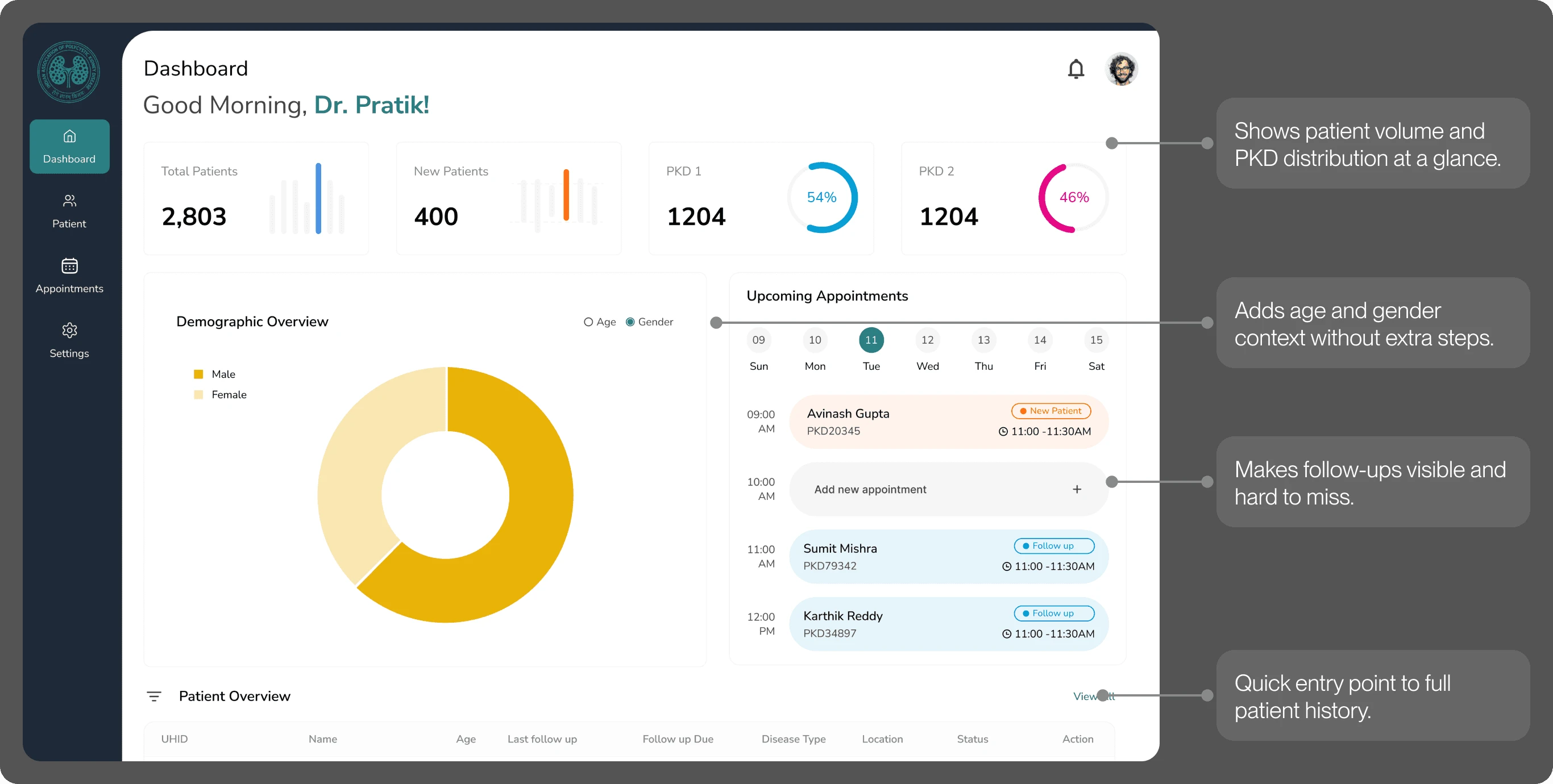
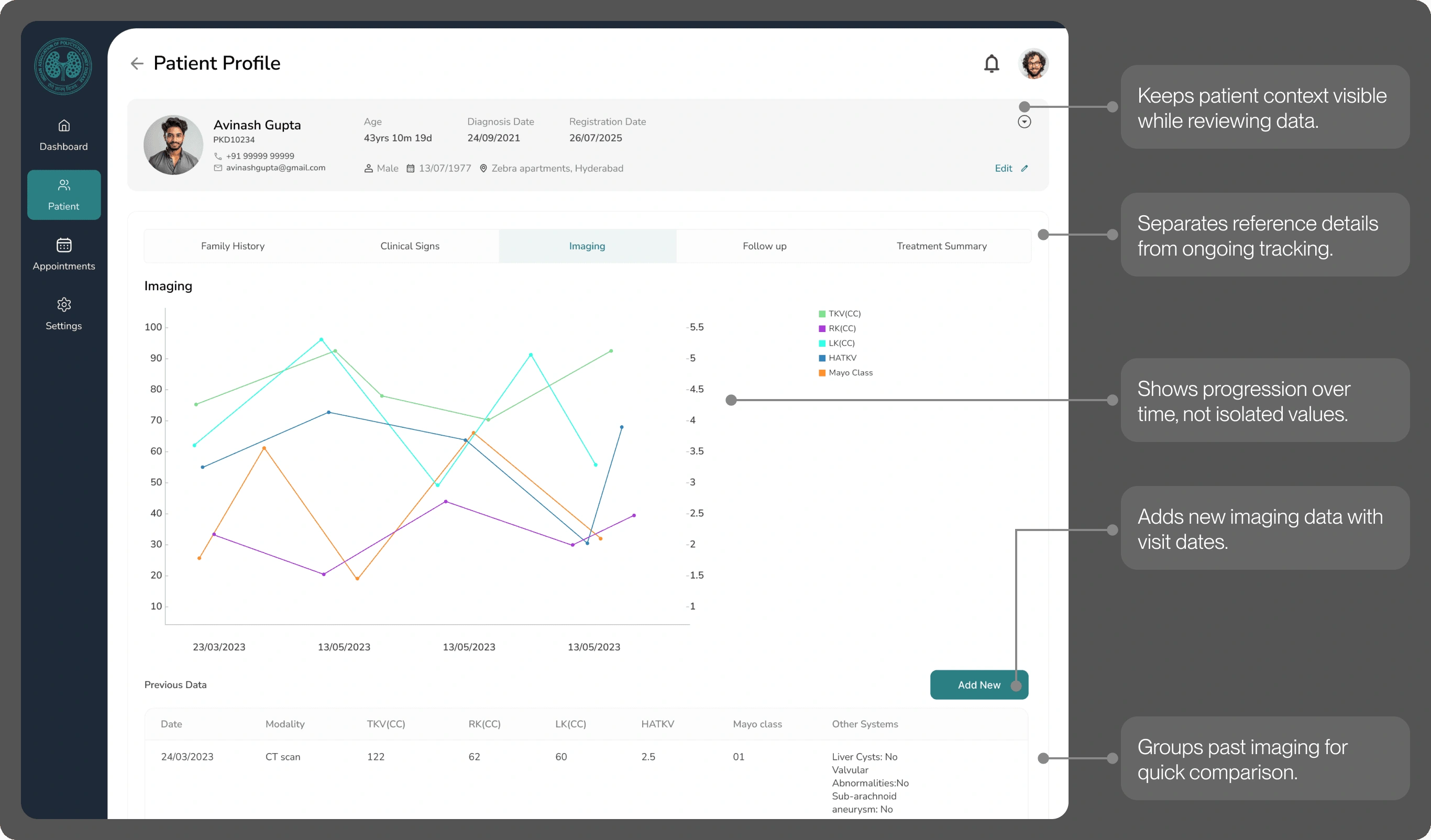
Instead of surfacing all available data, the system focuses on helping doctors quickly understand patient context, spot changes over time, and decide what needs attention next.
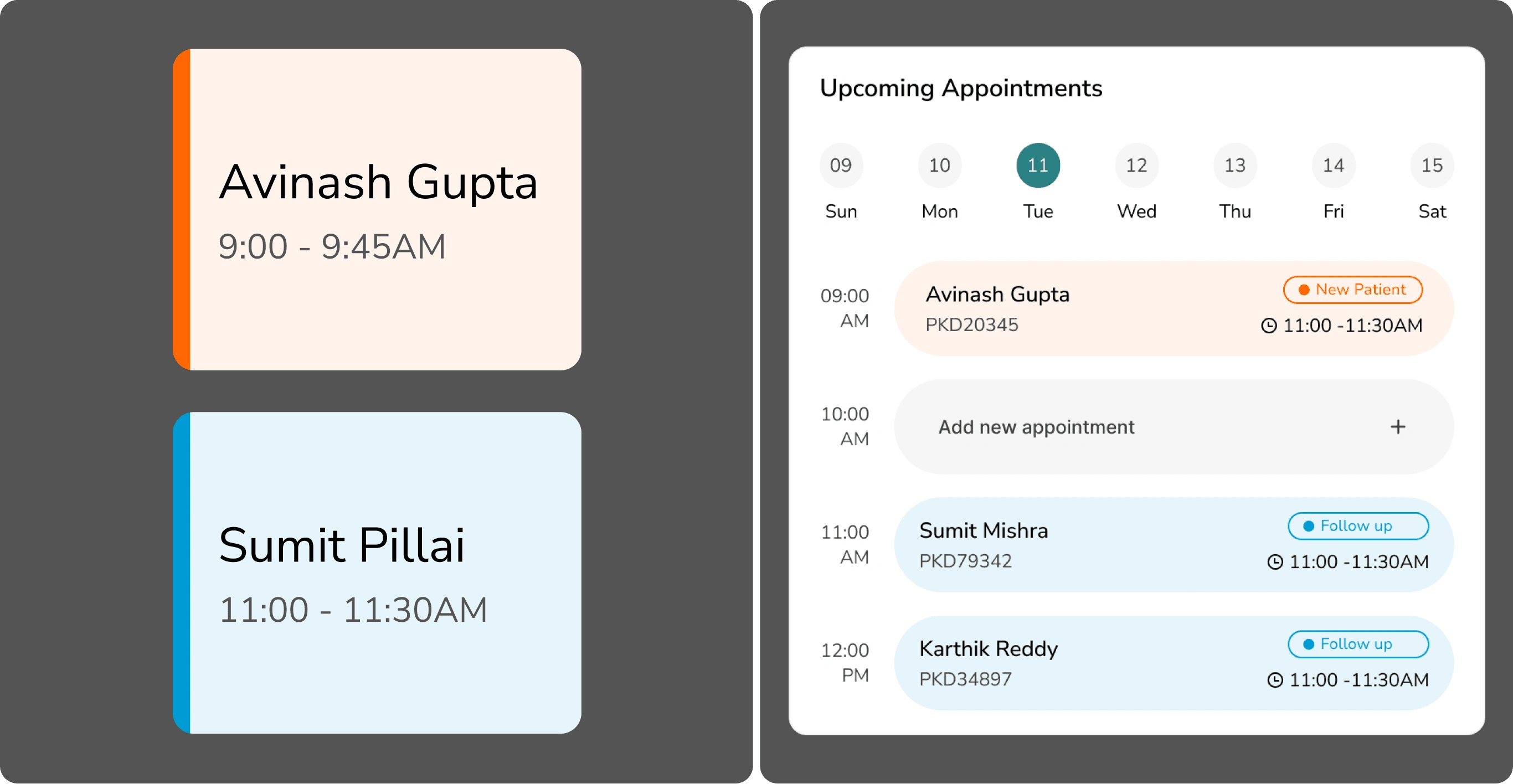
Rather than explaining every screen, the solution highlights a few key moments where design decisions directly support long-term clinical review.

The Impact
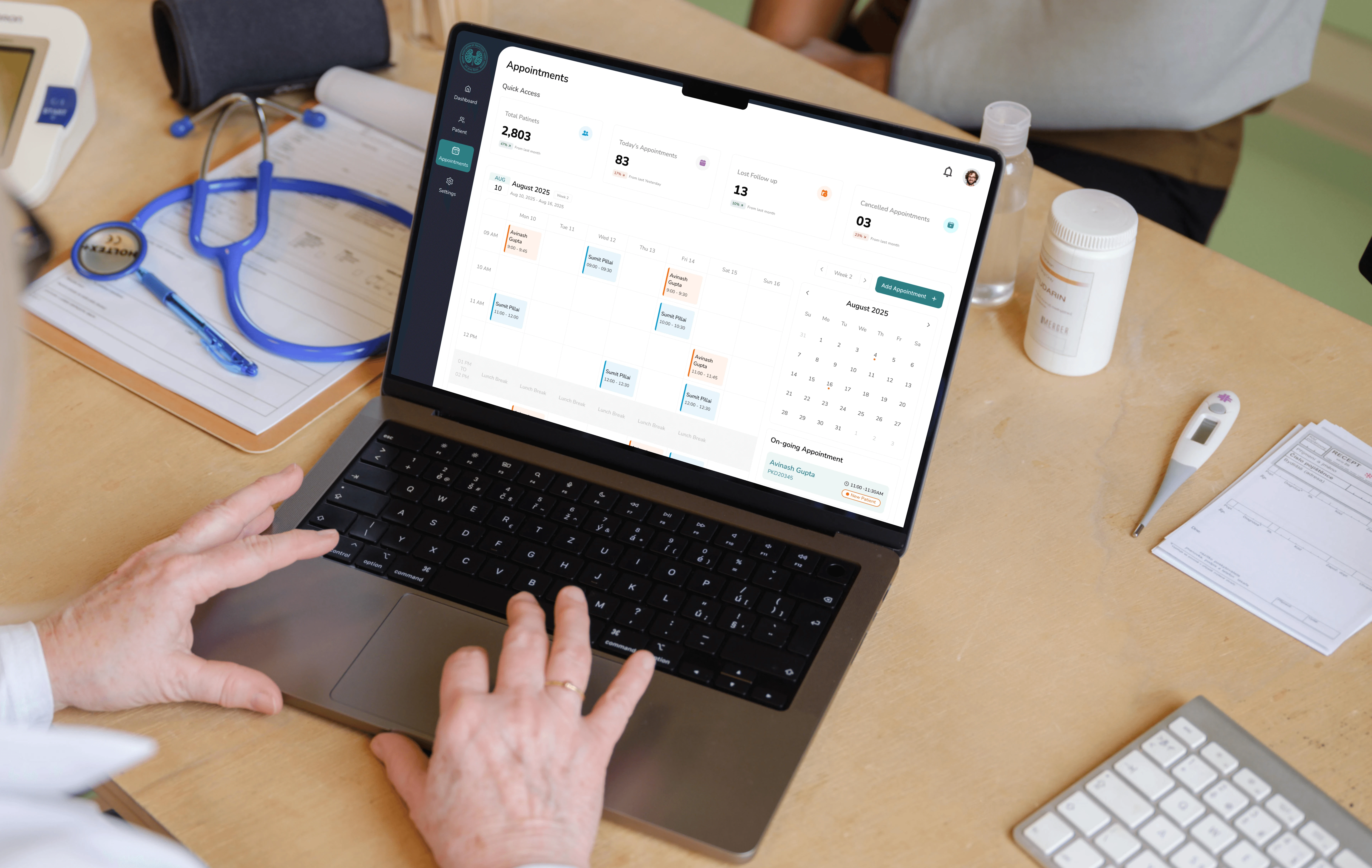
A focused system that helps doctors review, track, and act on patient data without reconstructing history.
Reduced the effort required for doctors to understand patient history and make follow-up decisions
Makes disease progression easier to understand at a glance
Reduces effort needed to compare past and current records
Supports ongoing updates without breaking historical continuity
Learnings
Designing for a real clinical setting reinforced that good systems reduce interpretation effort, not just interaction effort.
Small framing choices (what’s shown first, what’s grouped) heavily influence clinical decision making
Showing change over time is more valuable than showing complete data at once
Doctors value systems that reduce interpretation effort, not just data entry effort
Consistent layout patterns helped users trust and scan information faster across visits
If this system evolved further, the focus would remain on supporting review and prioritisation, not adding more screens.
What's Next
Trend-based alerts for significant changes in imaging or follow-up delays
Smarter summaries that surface what changed since the last visit
Custom views based on disease stage or clinician preference
Deeper integration between imaging data and follow-up planning
Like this project
Posted Jun 9, 2026
Developed a web app for doctors to track and review PKD patient data efficiently.
Likes
0
Views
1