Lifecycle Decision Lab: synthetic checkout-reminder QA

Nimrod Ogachi

Lifecycle Decision Lab
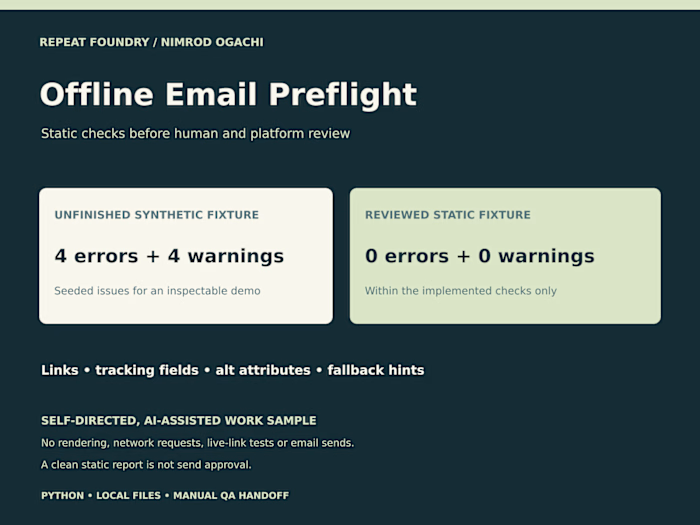
Self-directed, AI-assisted work sample in the Repeat Foundry Email Preflight repository. This is a fictional checkout-reminder rule and a reproducible QA exercise, not a live Klaviyo implementation or paid client result.
The question
Would the reminder make the intended decision when consent, suppression, purchase timing, missing data or repeat-message timing changes?
The work
A standard-library Python evaluator validates synthetic input, then returns one of three outcomes: eligible, ineligible or review. It records every applicable reason and treats incomplete or invalid input as needing review. The project includes an intentionally incomplete baseline, corrected logic, scenario fixtures, regression tests and a decision log.
Evidence
The checked-in suite contains 30 synthetic scenarios: 7 eligible, 8 ineligible and 15 requiring review. Every result matches its authored expected outcome and reason list. The cases exercise purchase ties, exact timing boundaries, invalid timestamps, unknown fields, suppression and reminder cooldown.
The deliberately incomplete baseline marks five ineligible cases and nine review-needed cases eligible. These failures were intentionally seeded for the demonstration; they are not measured production defects.
Boundaries
Passing tests establishes agreement with the fictional specification. It does not independently validate the policy or authorize any send. No customer records, accounts, network calls or email sends are involved. Real consent evidence, event freshness, platform controls and send-time behavior require separate verification.
Read the complete case study, inspect the code and reproduce the report:
https://github.com/Nimrodogachi/Journey-/blob/main/docs/lifecycle-decision-case-study.md
Like this project
Posted Oct 5, 2026
Self-directed, AI-assisted Python case study: 30 synthetic scenarios, explicit decision rules and reproducible QA. No customer data or sends.
Likes
1
Views
7