Built with Kajabi
Designing a Premium Trauma Education Platform

Anush | Foundrline
Verified


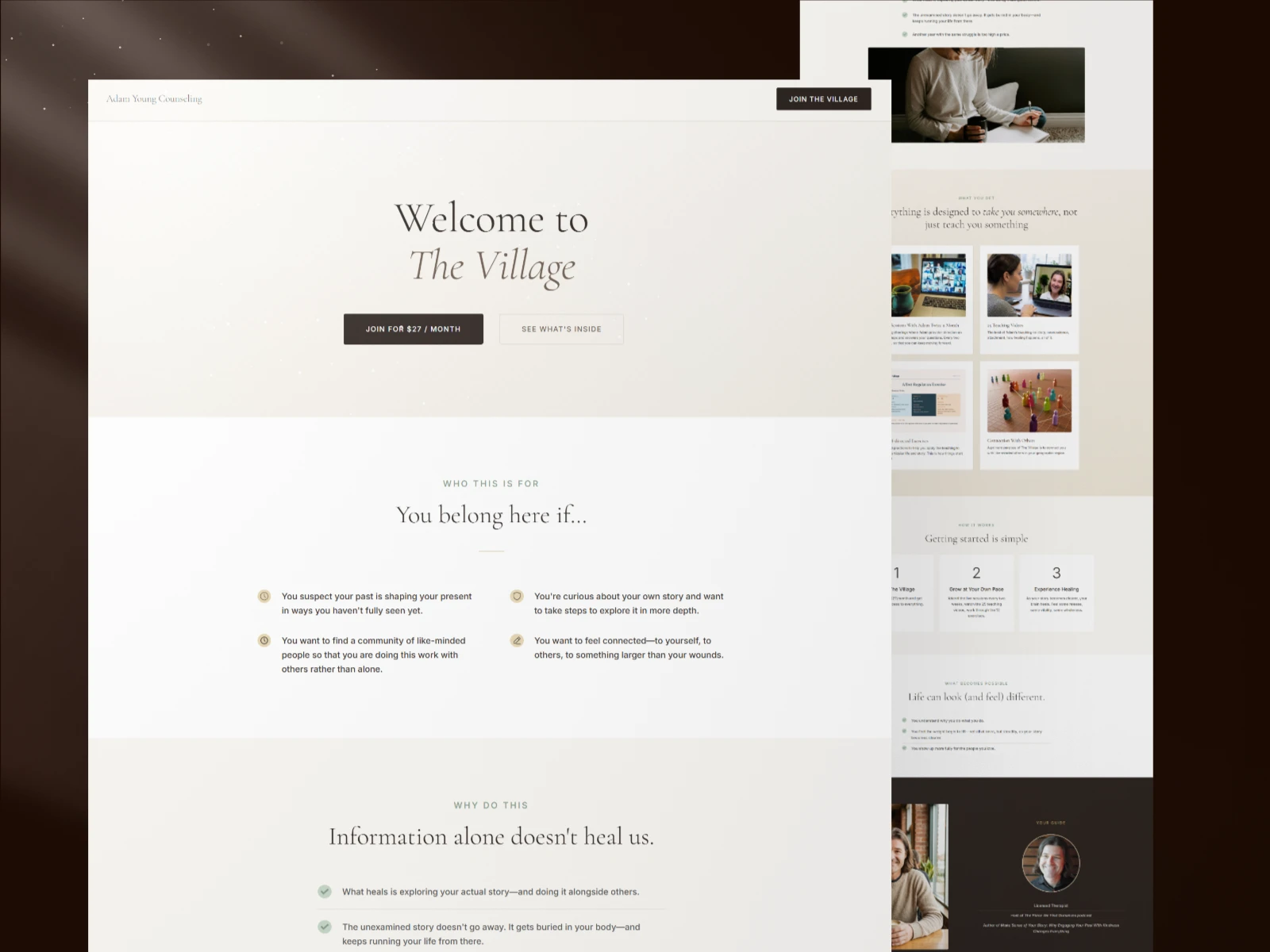
Adam Young Counseling
Platform Strategy, Kajabi Experience Design & Brand Alignment
Snapshot
Transformed a growing trauma education ecosystem into a clearer, calmer, and more scalable digital platform experience on Kajabi.
Client
Adam Young Counseling
Industry
Trauma Education, Counseling, Podcasting, Online Learning
Platform
Kajabi
Audience
Individuals navigating trauma and healing, podcast listeners, counseling clients, conference attendees, and long-form educational audiences
Scope
Platform Strategy
Experience Architecture
Kajabi UX/UI Design
Messaging & Copy Refinement
Brand Alignment
Responsive Development
Conversion Flow Optimization
Scalable Design Systems
Challenge
Restructure and redesign a growing content ecosystem into a cohesive platform experience that improved clarity, emotional usability, navigation, and long-term scalability within Kajabi.
Outcome
Created a more premium, emotionally aligned, and strategically structured digital experience that strengthened trust, improved discoverability, and better connected the platform’s educational ecosystem.

The Challenge
Adam Young had already built significant authority through:
Podcasting
Counseling
Conferences
Educational resources
Long-form trauma and attachment content
The issue wasn’t credibility.
It was platform complexity.
Over time, the ecosystem had expanded across multiple content types, offerings, and user journeys.
Which created a common problem in growing Kajabi platforms:
valuable content becoming harder to navigate as the system scales.
The challenge wasn’t simply redesigning pages.
It was restructuring a digital ecosystem in a way that felt:
calmer
clearer
emotionally aligned
easier to explore
scalable long-term
Especially important for audiences engaging with emotionally sensitive subject matter.
This required thinking beyond “website design.”
It required platform-level experience strategy.
Where Things Were Breaking
The platform had grown organically over time.
Which introduced friction across several layers of the experience.
1. Content Depth Without Clear Guidance
There was a large amount of valuable educational material, but users often had difficulty understanding:
Where to begin
Which resources were most relevant
How different offerings connected together
This created cognitive overload.
Especially for users already processing emotionally heavy subject matter.
2. Fragmented Experience Across Offerings
Podcast content, courses, conferences, counseling services, and educational resources often felt separated rather than connected inside one cohesive ecosystem.
The platform needed stronger structural cohesion.
Not just better visuals.
3. Emotional Tone Wasn’t Fully Reflected Digitally
This was important.
Because Adam’s work is deeply reflective, relational, and emotionally nuanced.
The existing experience communicated information, but it didn’t always communicate emotional safety, calmness, and trust with the same depth as the brand itself.
And in trauma-informed spaces, emotional usability matters.
A lot.
4. Kajabi Constraints Required Strategic System Thinking
Kajabi is powerful, but building premium and scalable experiences inside the platform requires thoughtful structure and hierarchy decisions.
The challenge wasn’t simply UI design.
It was creating clarity and sophistication within real platform constraints.
Strategic Reframing
The biggest shift was moving the experience from:
a content-heavy website
to
a guided healing and learning platform.
That reframed the entire approach.
The objective became:
Reduce overwhelm
Improve discoverability
Create calmer navigation flows
Strengthen emotional trust digitally
Better connect the ecosystem across all offerings
Build a scalable platform structure for future growth
Not louder.
More intentional.
More human.
The Shift In Approach
1. Rebuilt the Experience Architecture Around User Intent
Instead of organizing primarily around content types, the platform structure was redesigned around what users were actually seeking:
Healing
Understanding
Support
Education
Deeper exploration
This made the experience feel more intuitive and emotionally aligned.
2. Simplified Navigation and Platform Pathways
A major part of the work involved reducing friction between experiences.
Including clearer pathways across:
Podcast content
Courses and educational material
Counseling services
Conferences and events
Resources and long-form learning
The platform began functioning more like a connected ecosystem rather than isolated content sections.
3. Designed for Emotional Usability
This project required more than clean UX.
The experience needed to feel:
Calm
Spacious
Reflective
Human-centered
Trustworthy
The interface intentionally avoided aggressive conversion patterns or overstimulating design decisions.
Instead, the experience supported slower, more grounded engagement.
That was deliberate.
4. Elevated the Platform to Better Match Brand Authority
The redesign helped align the digital experience with the authority Adam had already built through his educational work, podcast reach, counseling expertise, and conferences.
The platform needed to feel as thoughtful as the work itself.
5. Improved Clarity Without Losing Depth
One of the hardest balances was simplifying navigation without oversimplifying nuanced subject matter.
The redesign focused on reducing friction while preserving emotional and intellectual depth.
6. Built a More Premium Kajabi Experience
Rather than fighting Kajabi constraints, the platform was redesigned using:
Better structural hierarchy
Modular layout systems
Scalable content organization
Consistent design systems
Cleaner navigation logic
The goal was to create a more premium and scalable Kajabi experience without sacrificing usability.
What Was Built
Included end-to-end:
Platform-wide experience architecture
Kajabi UX/UI redesign
Brand-aligned digital experience system
Messaging and copy refinement
Trust-centered navigation flows
Conversion-aware counseling and course pathways
Modular layout and content systems
Responsive Kajabi implementation
This wasn’t simply a website refresh.
It was a platform experience transformation.
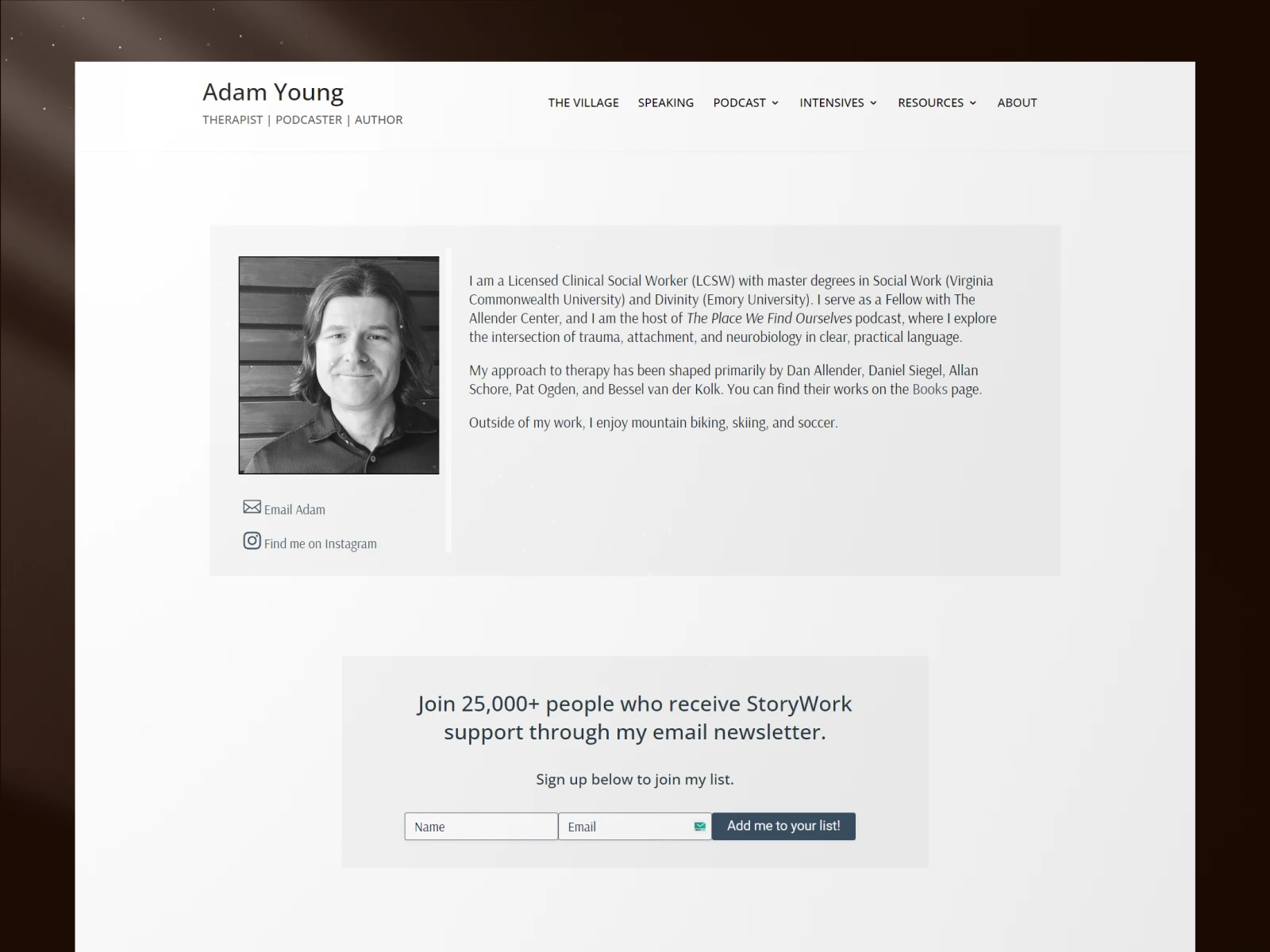
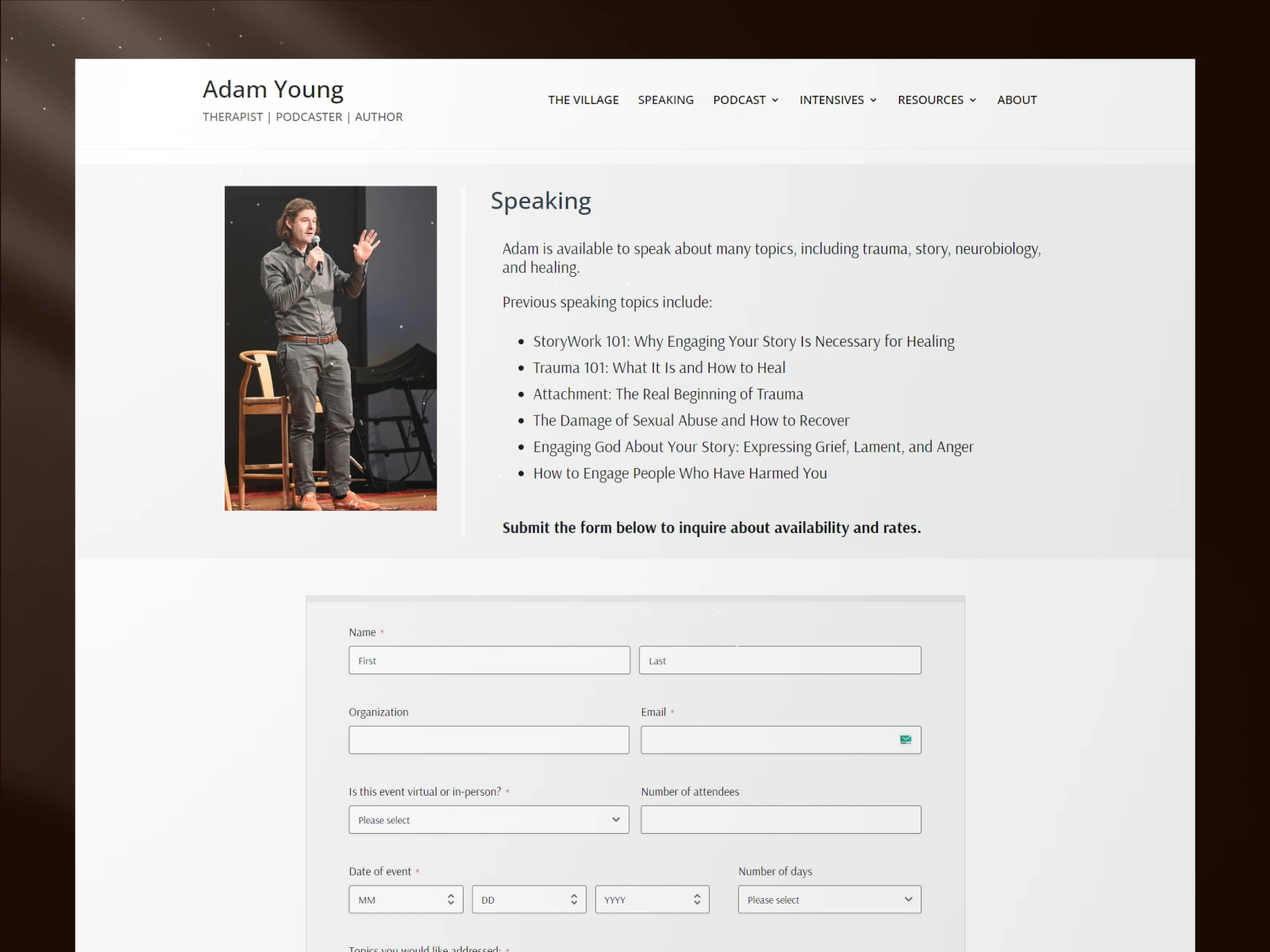
Before → After
Before
Content-heavy navigation
Fragmented platform experience
Harder content discoverability
Emotional tone underrepresented digitally
Growing complexity without clear structure
After
Clearer platform architecture
More cohesive educational ecosystem
Improved discoverability and navigation
Digitally aligned emotional tone and trust
More scalable Kajabi experience system
Why This Mattered
The project helped transform the platform from:
a growing collection of content
into
a more cohesive digital ecosystem designed to support:
Education
Healing
Long-form engagement
Counseling pathways
Course discovery
Future scalability
Especially important for creator-led education brands managing large ecosystems inside Kajabi.
Strategic Takeaways
1. Content-rich platforms often fail through structure, not content quality
The information was already valuable.
The experience needed clearer organization and guidance.
2. Emotional usability matters in trauma-informed design
People don’t just evaluate functionality.
They evaluate how an experience makes them feel.
3. Calm design can increase trust
Not every platform should feel aggressive or conversion-heavy.
Sometimes restraint creates credibility.
4. Premium Kajabi experiences require system thinking
Platform limitations don’t automatically create mediocre experiences.
Structure and hierarchy matter more than assumptions.
If your platform has grown valuable but increasingly difficult to navigate
That’s often not a content problem.
It’s a platform experience problem.
That’s often where I help.
Discuss a similar challenge
Like this project
Posted May 6, 2026
See how a growing Kajabi platform was transformed into a clearer, calmer, and more scalable digital experience for healing and education.
Likes
2
Views
34
Timeline
Apr 27, 2026 - May 2, 2026
Clients
Adam Young Counseling