Commerce Sync: Shopify Inventory and Webhook Integrations

View completed workportfolio-ichigo.vercel.app
One inventory change. Several stores.
A sale in a child store needs to update the parent inventory, and a catalog change needs to reach the other storefronts. Duplicate webhooks and interrupted syncs make that harder than it first looks.
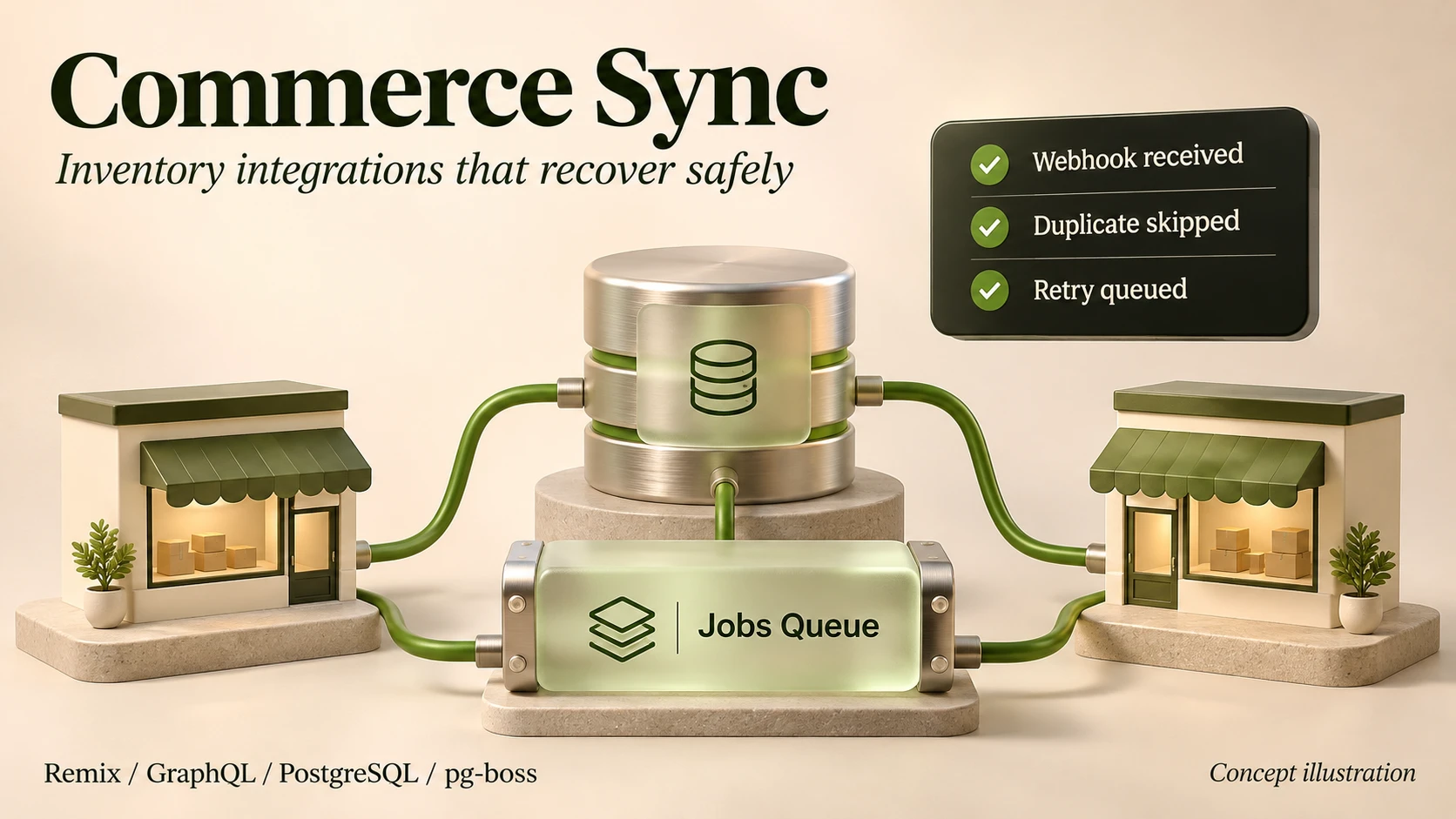
This is a sanitized capability example of my Shopify integration work. Client and vendor details are removed. The render above is an illustration of the architecture.
How the sync works
Incoming webhooks are verified, then checked against a PostgreSQL unique constraint keyed on the delivery ID. Repeated deliveries are skipped. New work goes into pg-boss, a durable queue backed by the same database.
Separate workers handle API throttling, retry backoff and fairness between merchants. Catalog changes follow parent precedence. Inventory changes use last-write-wins, with compensating rollback for partially completed operations.
The engineering behind it
The stack uses Remix, GraphQL, PostgreSQL and pg-boss. Workers run separately from the web tier. Health checks cover liveness and readiness, and the integration harness exercises sync logic against disposable PostgreSQL and a mocked commerce API.
What I can help you build
Shopify apps and API integrations, inventory sync, webhook processing and ongoing backend maintenance. I work remotely from India for up to 20 hours a week, with flexible timing.
Full case study: https://portfolio-ichigo.vercel.app/work/26-inventory-sync/
0 likes · 1 view · Nov 9, 2026
Multi-store Shopify sync with durable jobs, duplicate-webhook protection and recovery from partial failures.