Web 3.0 Based OS Case Study

Vinit Bisht


WEB 3.0 Based OS (Operating System)
Case study & User experience


Web 3.0 has become a buzzword in tech and venture capital since 2020, with major investments fueling its growth in blockchain, cryptocurrencies, NFTs, and the metaverse. Major companies like Meta, Opensea, Coinbase, and Solana have introduced use cases to expand this technology’s reach, though user adoption and satisfaction remain limited. As a transformative phase of the internet, Web 3.0 holds the potential to redefine entire financial systems, though it needs time to mature. This project addresses current user challenges and offers streamlined solutions designed to improve user experience and promote broader adoption. Through in-depth research, user surveys, and solution testing, the report seeks to enhance usability for current users and attract a new user base.
Web 3.0
Web 3.0 envisions a more decentralized internet where control is spread out, not dominated by major corporations as in Web 2.0. Using technologies like blockchain and cryptocurrencies, it aims to recreate the internet’s early days of direct user-to-user interactions (Cook et al., 2020).
The internet’s journey can be seen as three major chapters: Web 1.0, Web 2.0, and now Web 3.0, each with distinct characteristics.
Web 1.0: The Read-Only Era
In Web 1.0, websites were static, primarily for viewing information. Interaction was minimal, similar to looking at posters on a wall. Mobile usability was limited.
Web 2.0: The Social Web
Web 2.0 transformed websites into interactive platforms, introducing social media and user-generated content. This era enabled easy communication, sharing, and mobile-friendly experiences.
Web 3.0: A Decentralized Future
Web 3.0 is focused on making the internet more secure, private, and user-controlled through technologies like blockchain, the metaverse, and NFTs. It aims to give individuals greater ownership and control over their online presence and data.

Web 3.0 isn’t replacing Web 2.0 but rather enhancing it, offering users a more balanced, secure digital ecosystem. With these advancements, we must consider their impact on society and individuals' livelihoods. Society 5.0 emphasizes the integration of advanced technologies in a human-centered way ...

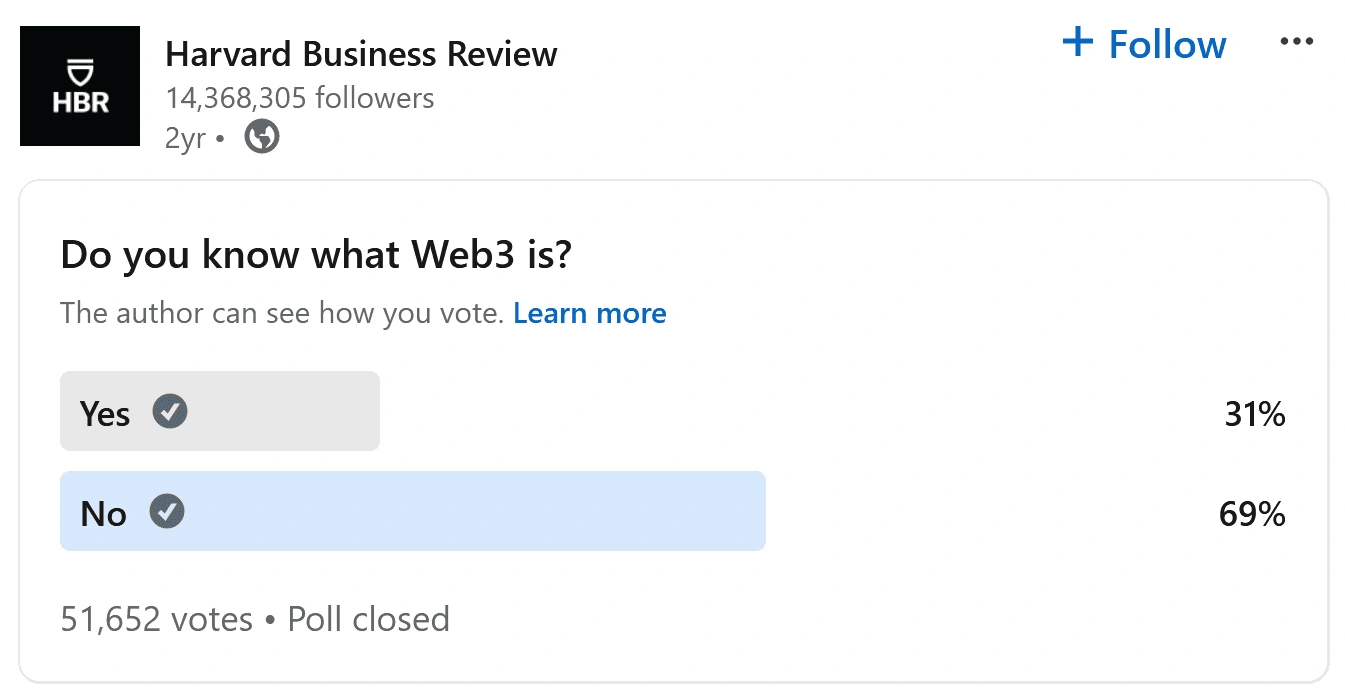
What we know about Web 3.0? ...
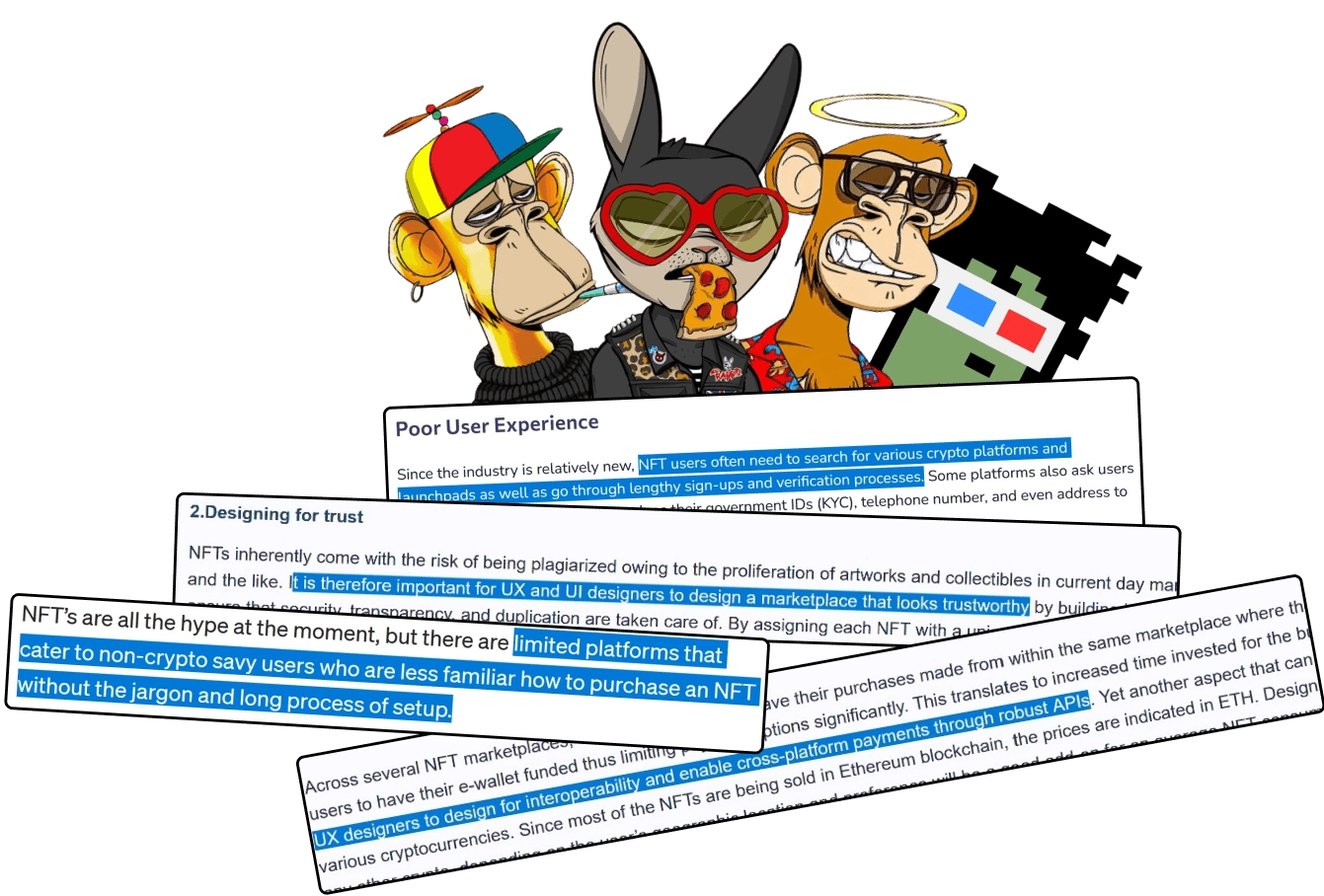
Emergence of NFTs
NFTs gained public attention with CryptoPunks in 2017 ...
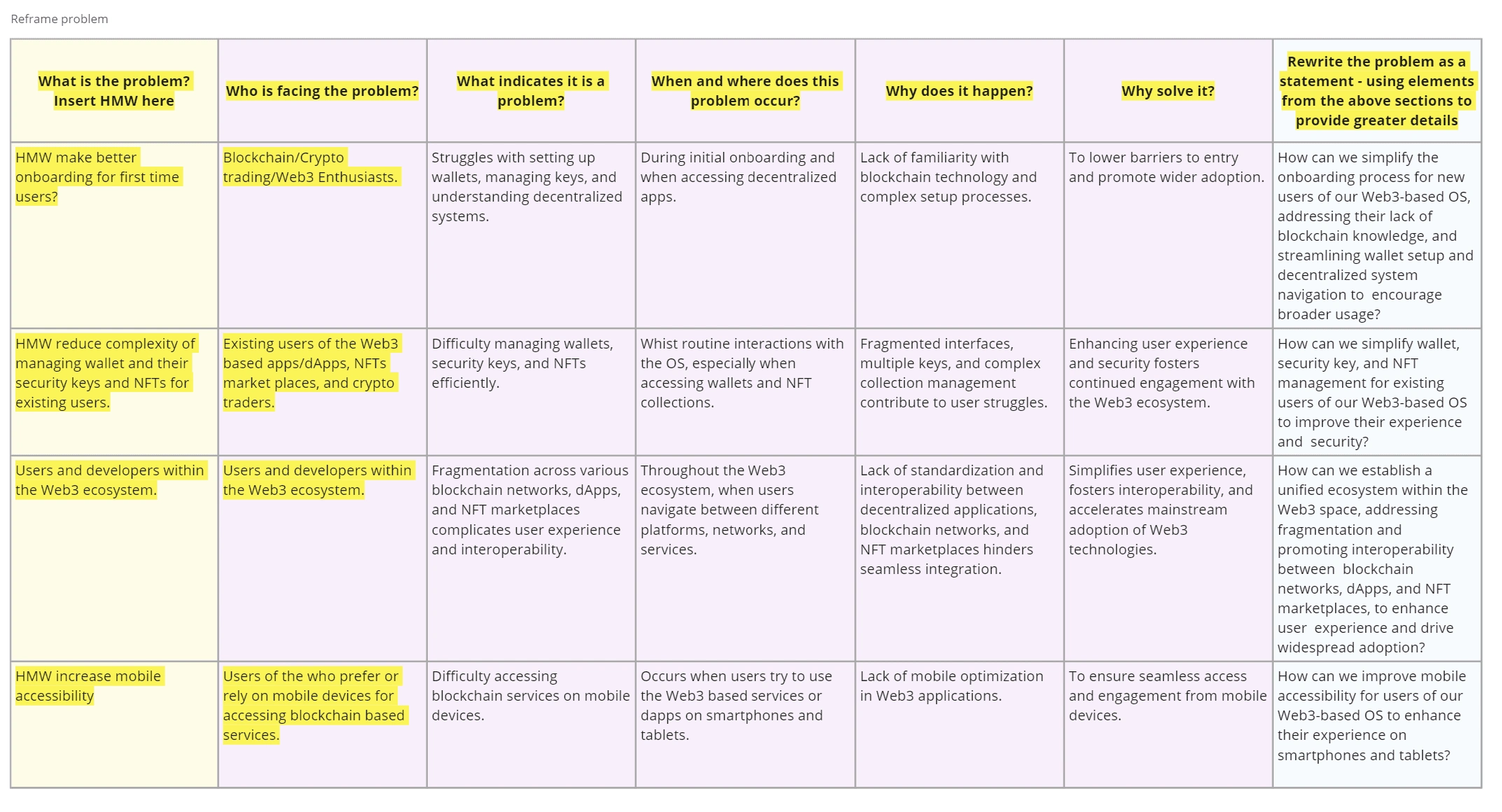
Problem Framing (Structure the issue)
...
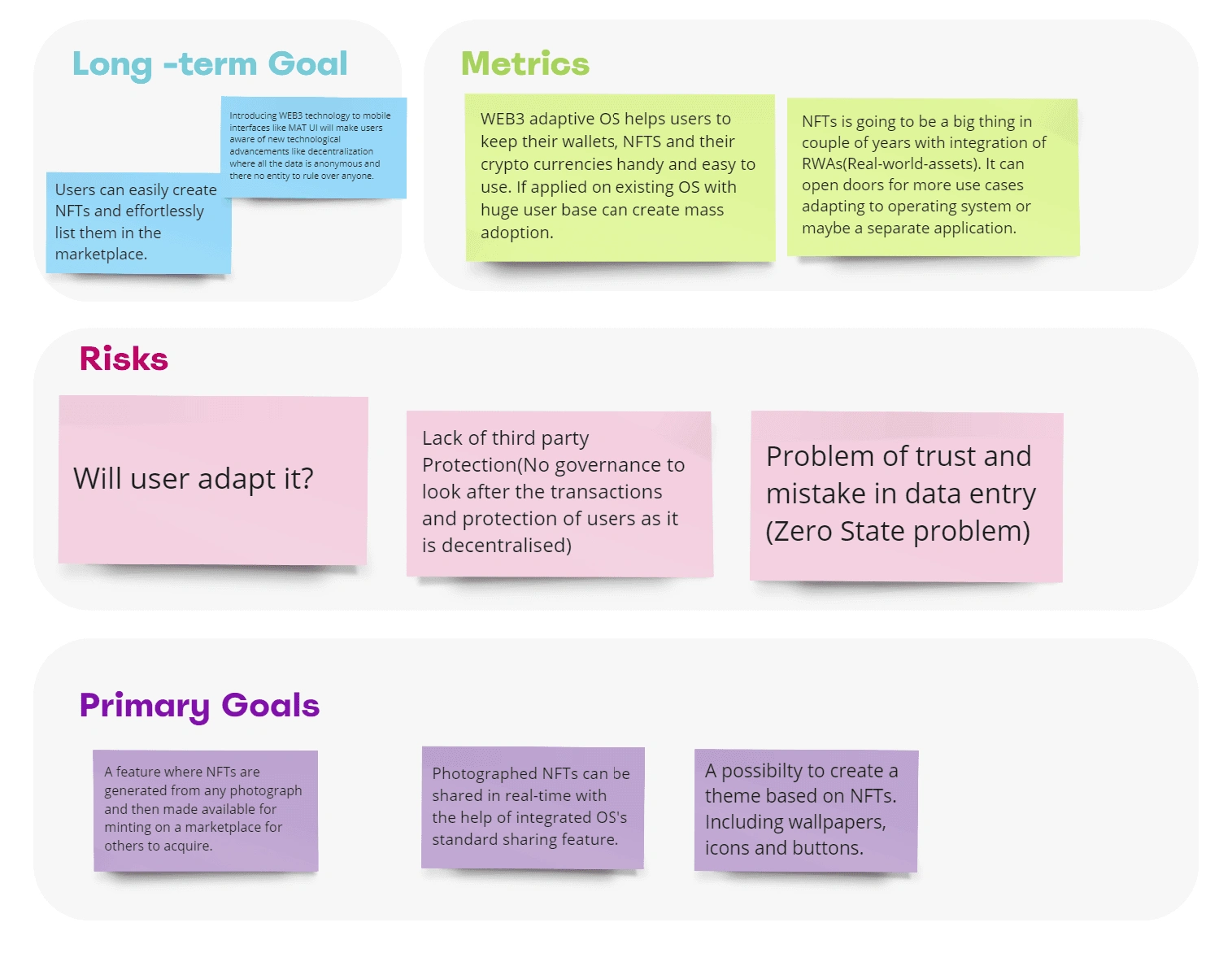
HMWs and Literature Review (Elaborate the problem)
...
Users, Discovery and Core Mapping (A retreat)
...
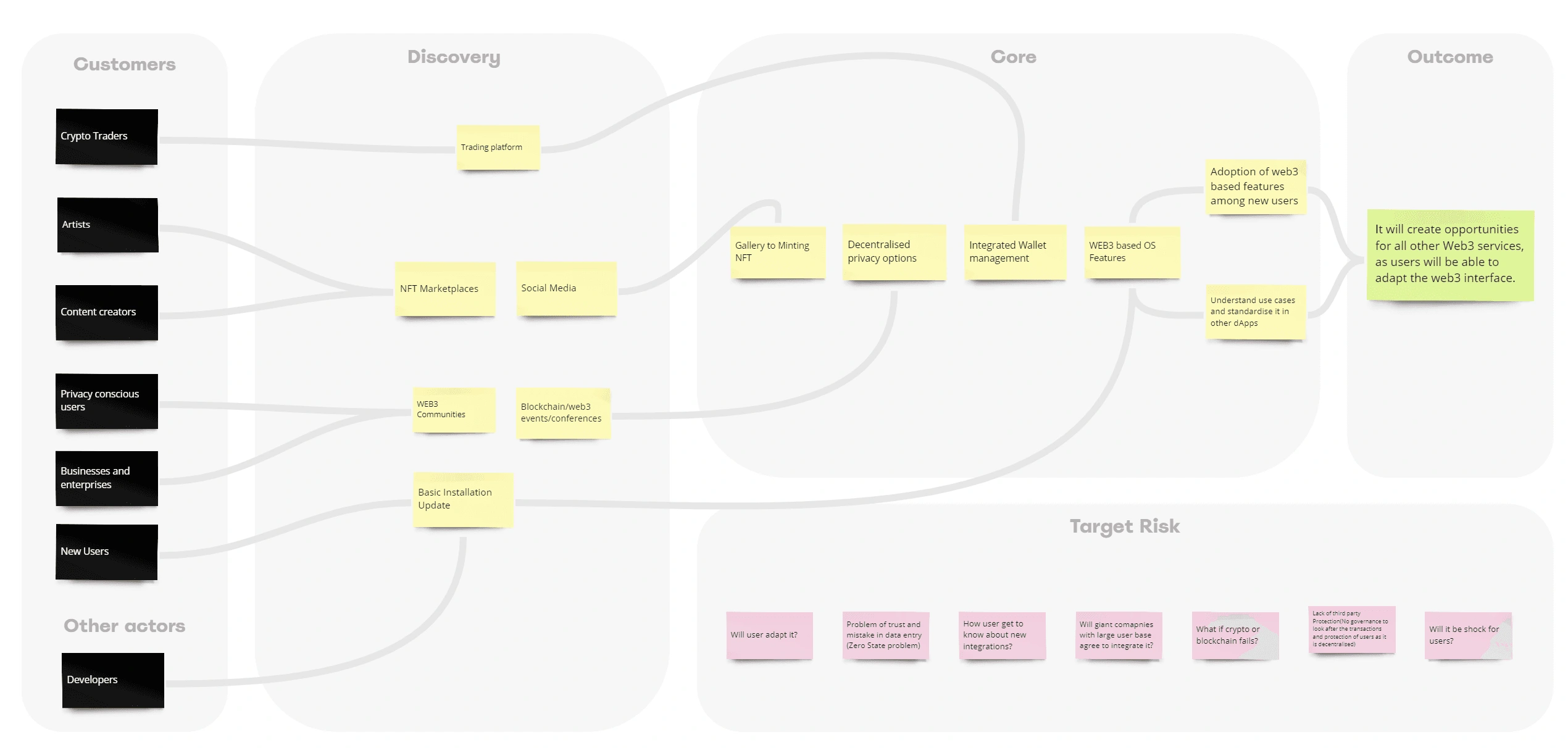
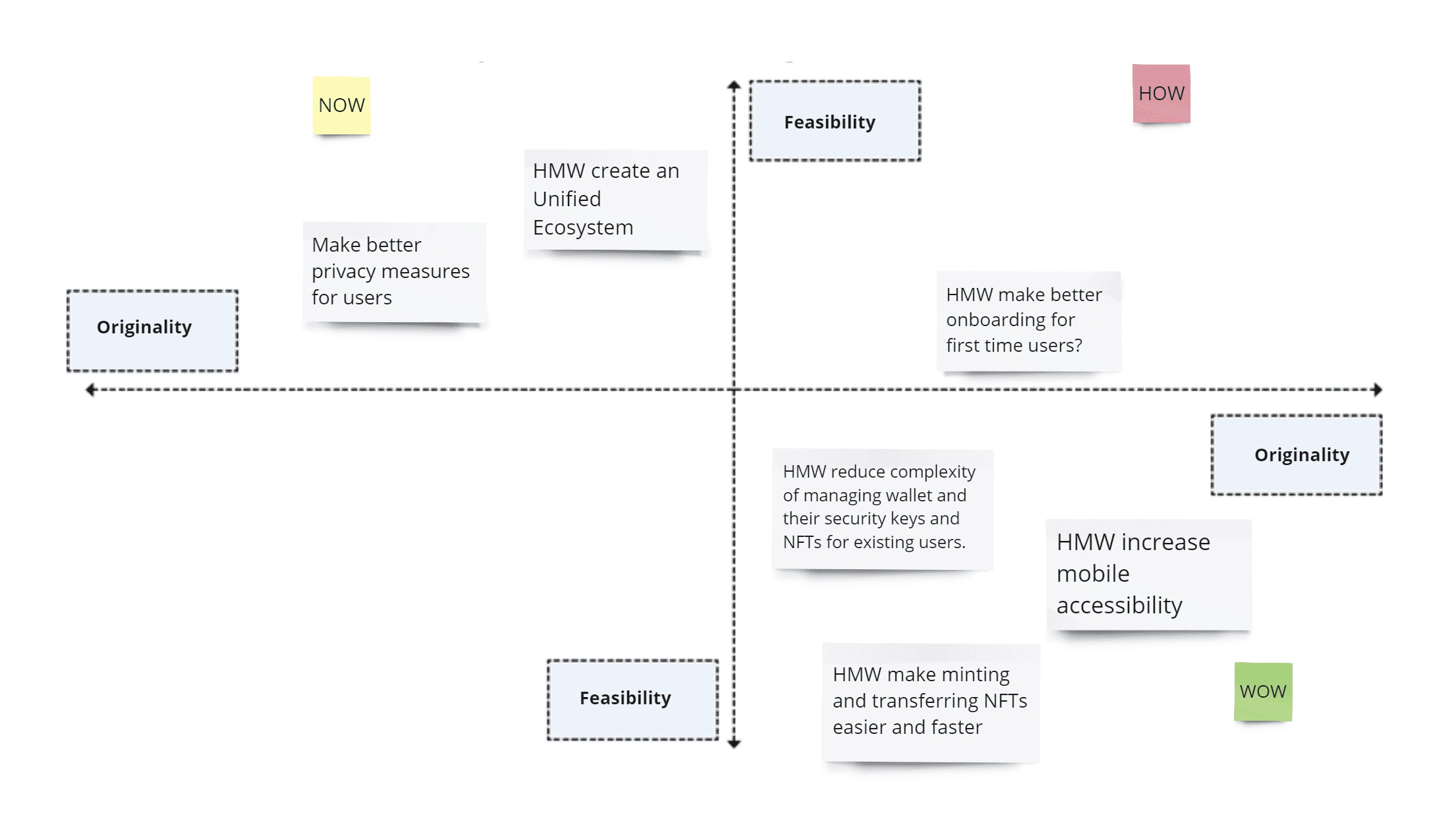
How, Now and Wow matrix (Narrowing the problem down)
...
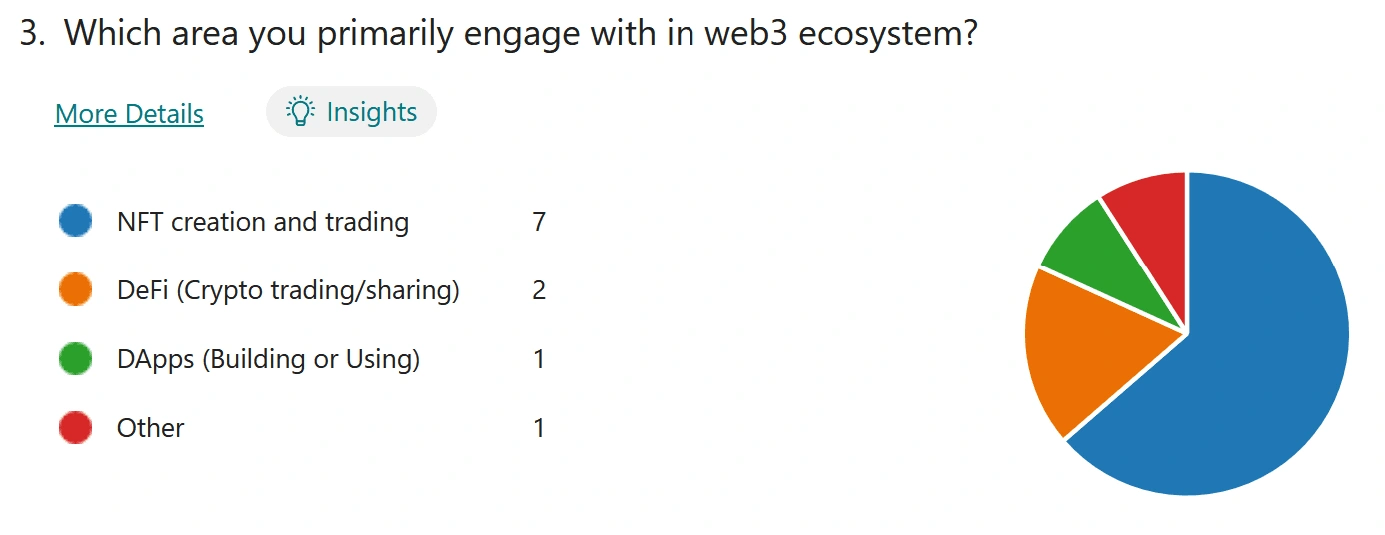
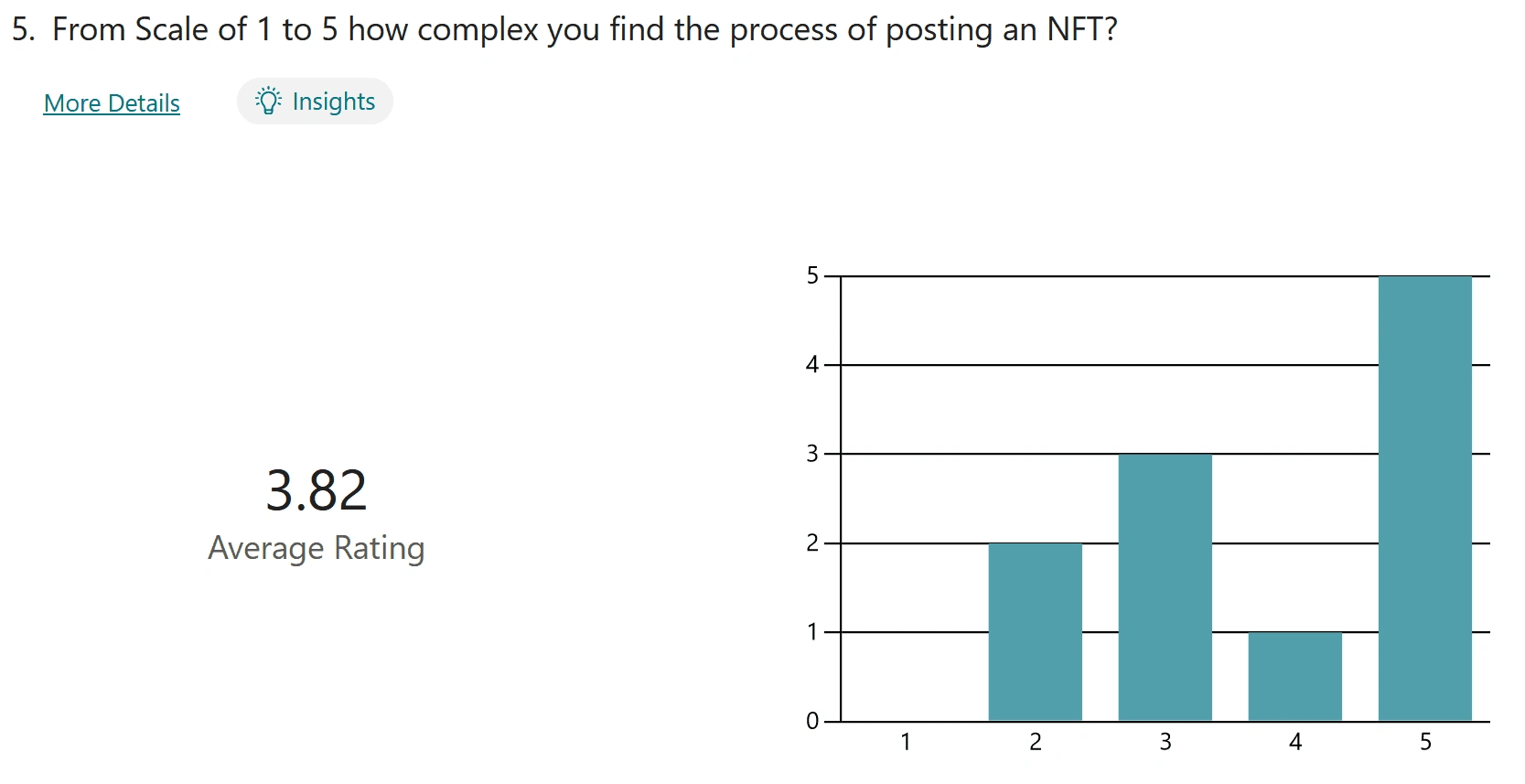
Conducting a Survey (Clarity from users)
...
...
Understanding the user (know everything about user)
...
Mind Mapping (Volcano of ideas)
...
The ideas I finalised to work on were:
Minting NFTs
Transferring NFTs
Theming NFTs
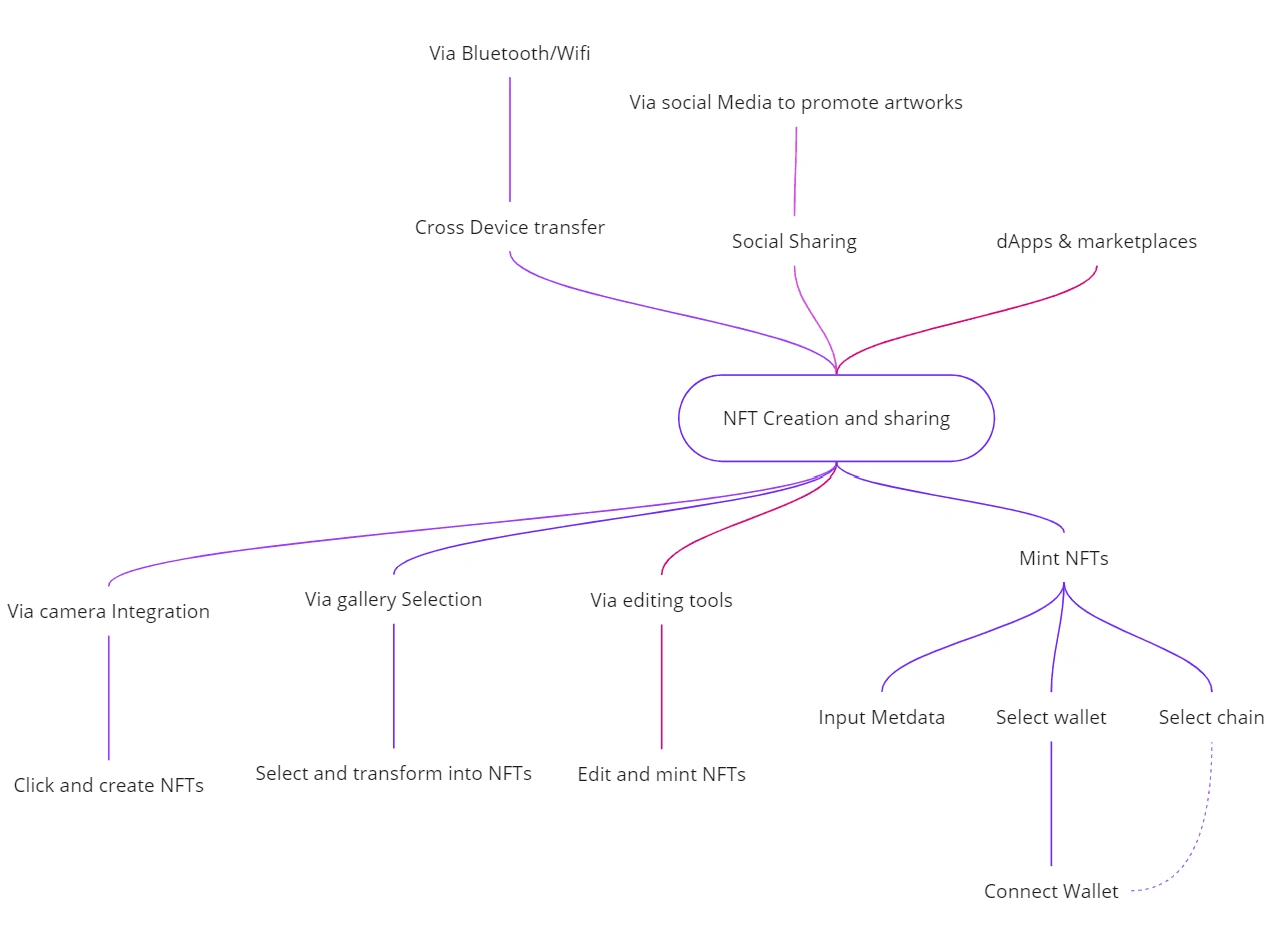
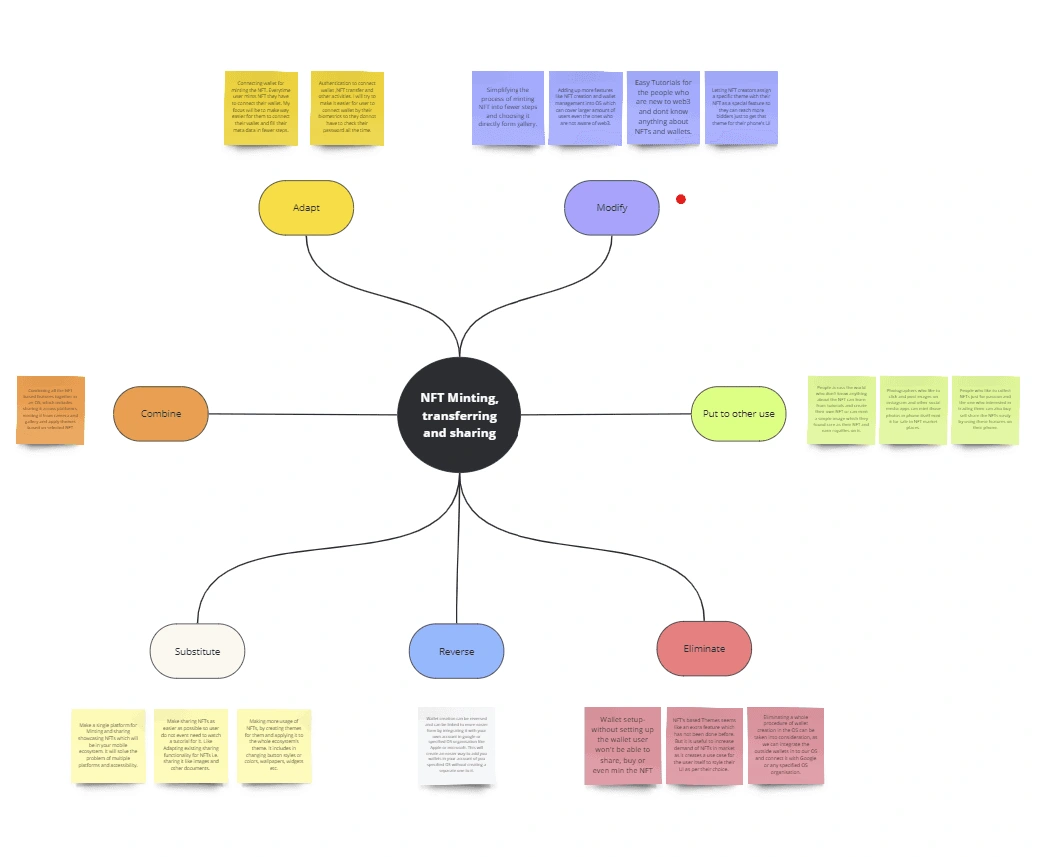
Scamper (Deep dive into ideas)
...
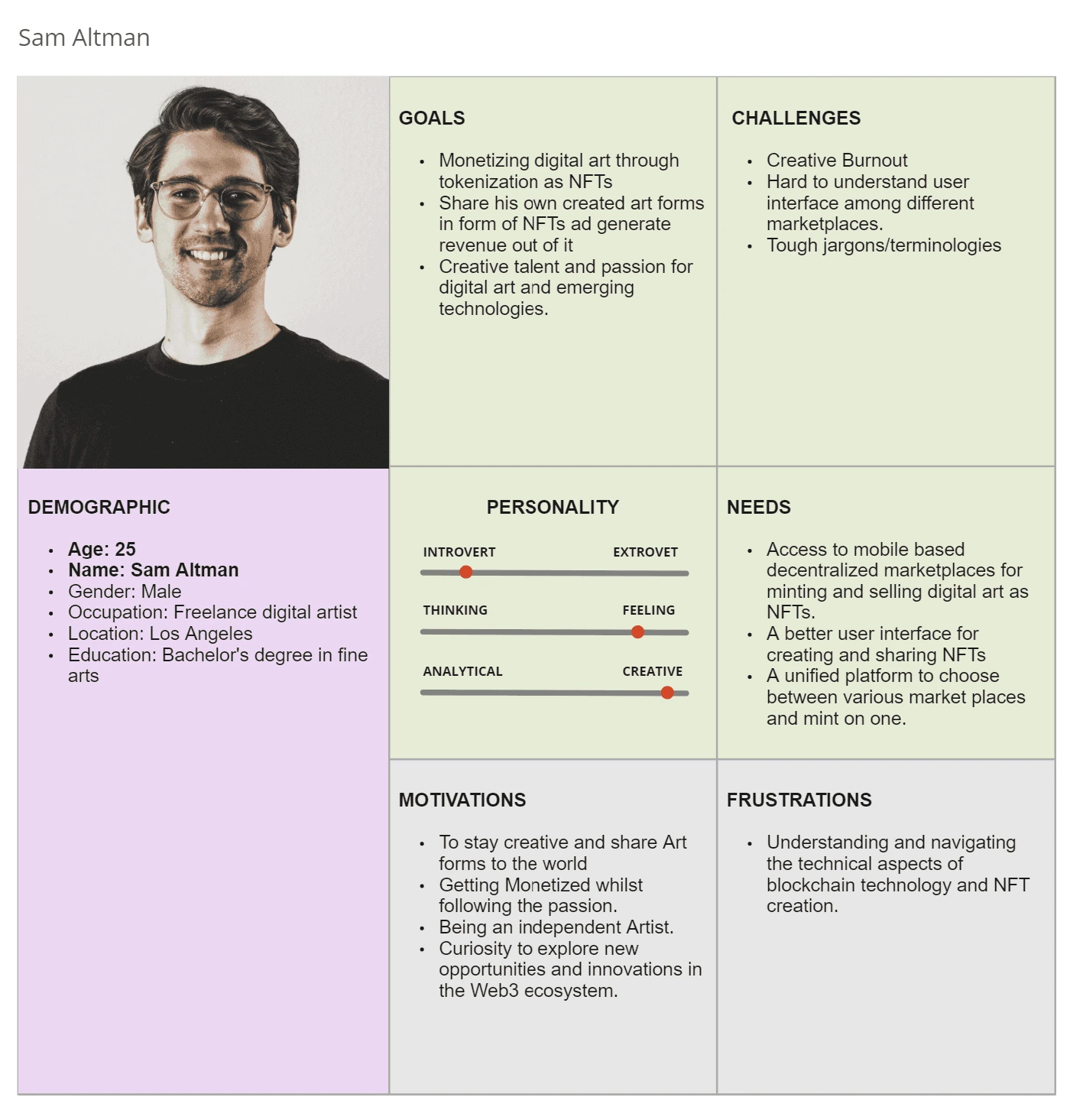
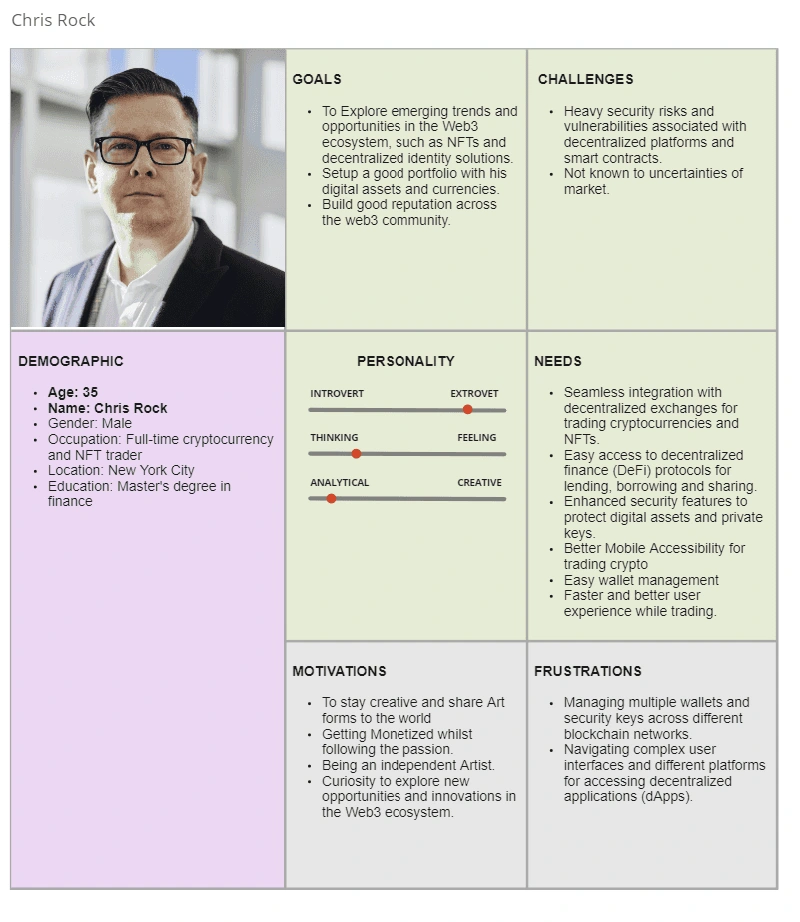
User personas (Empathising more with user)
...
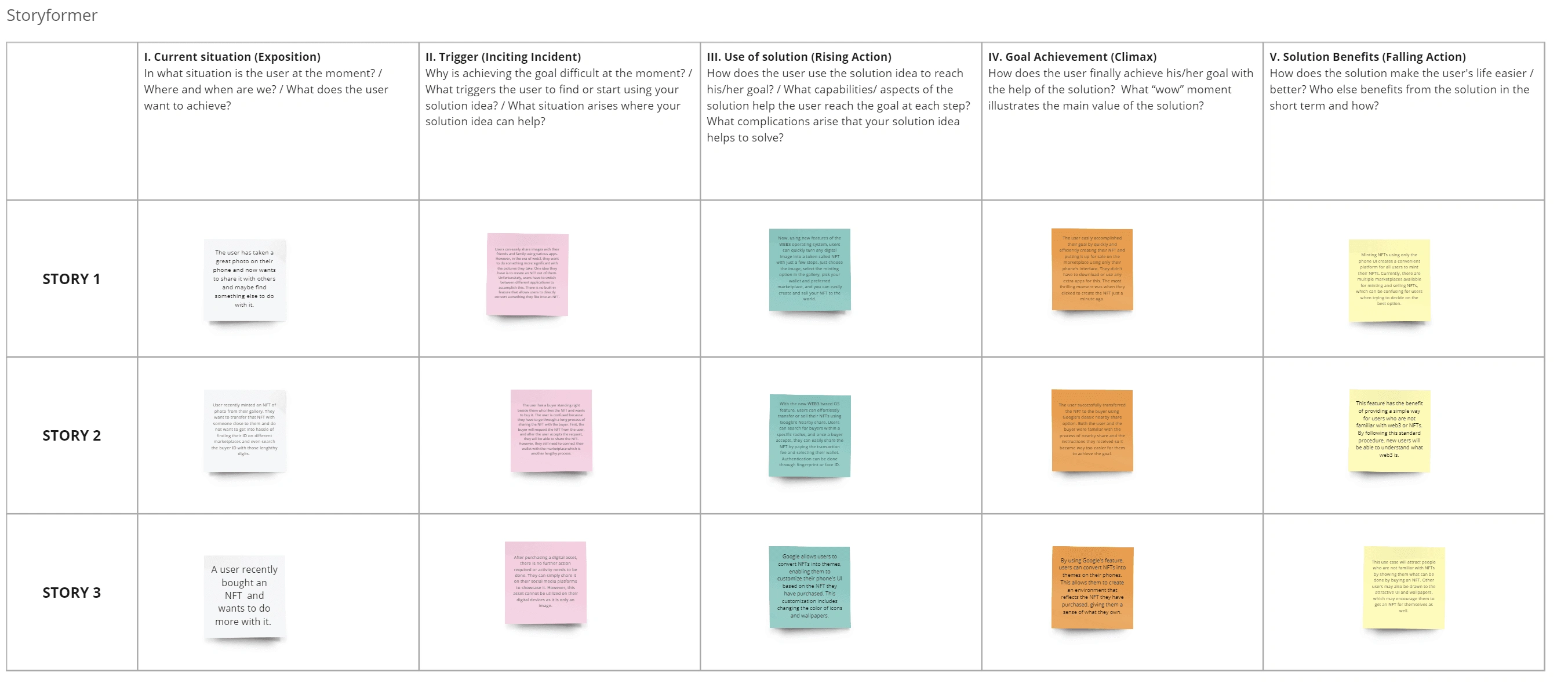
User Flows & Stories (Empathising more with user)
...
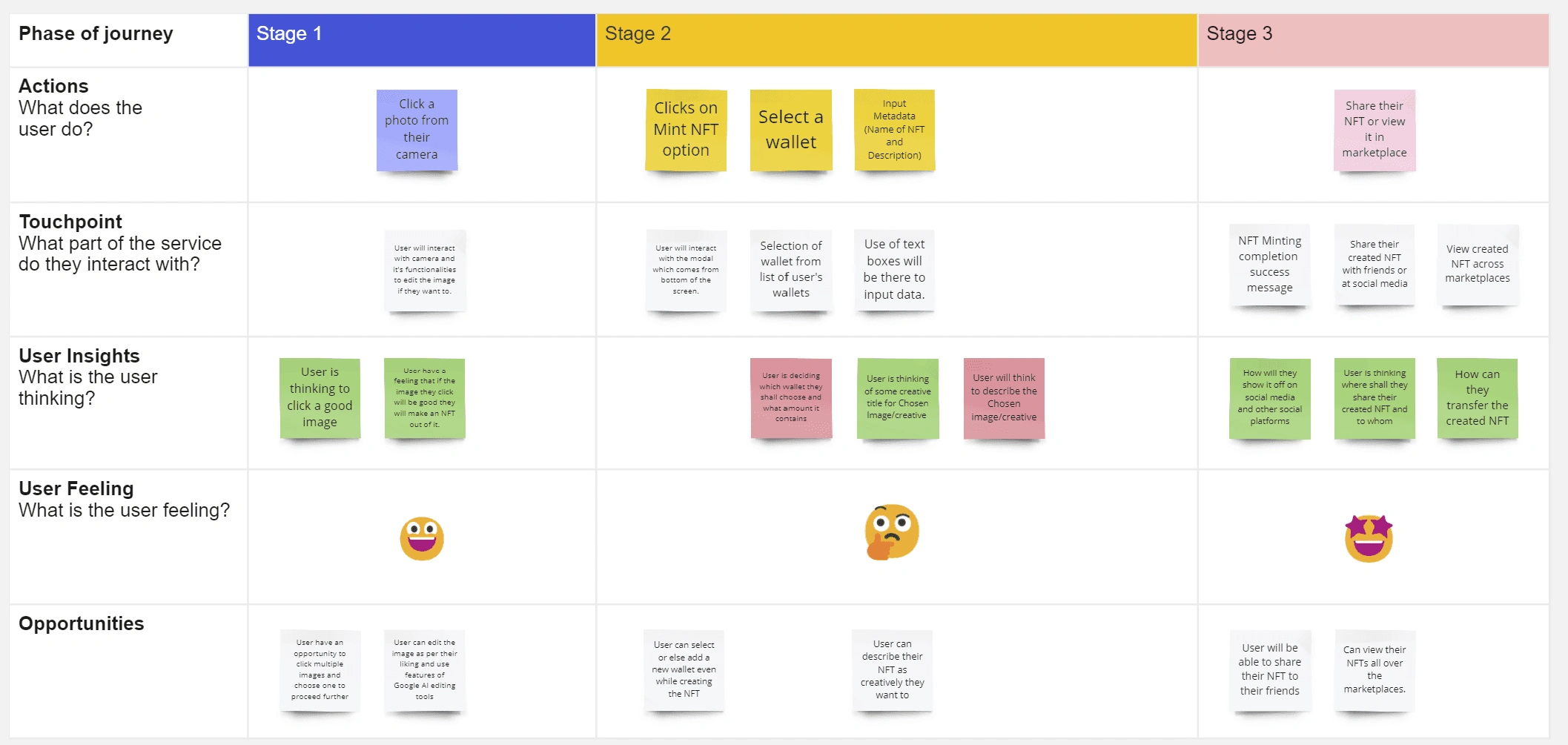
For the first user flow (NFT Mint) ...
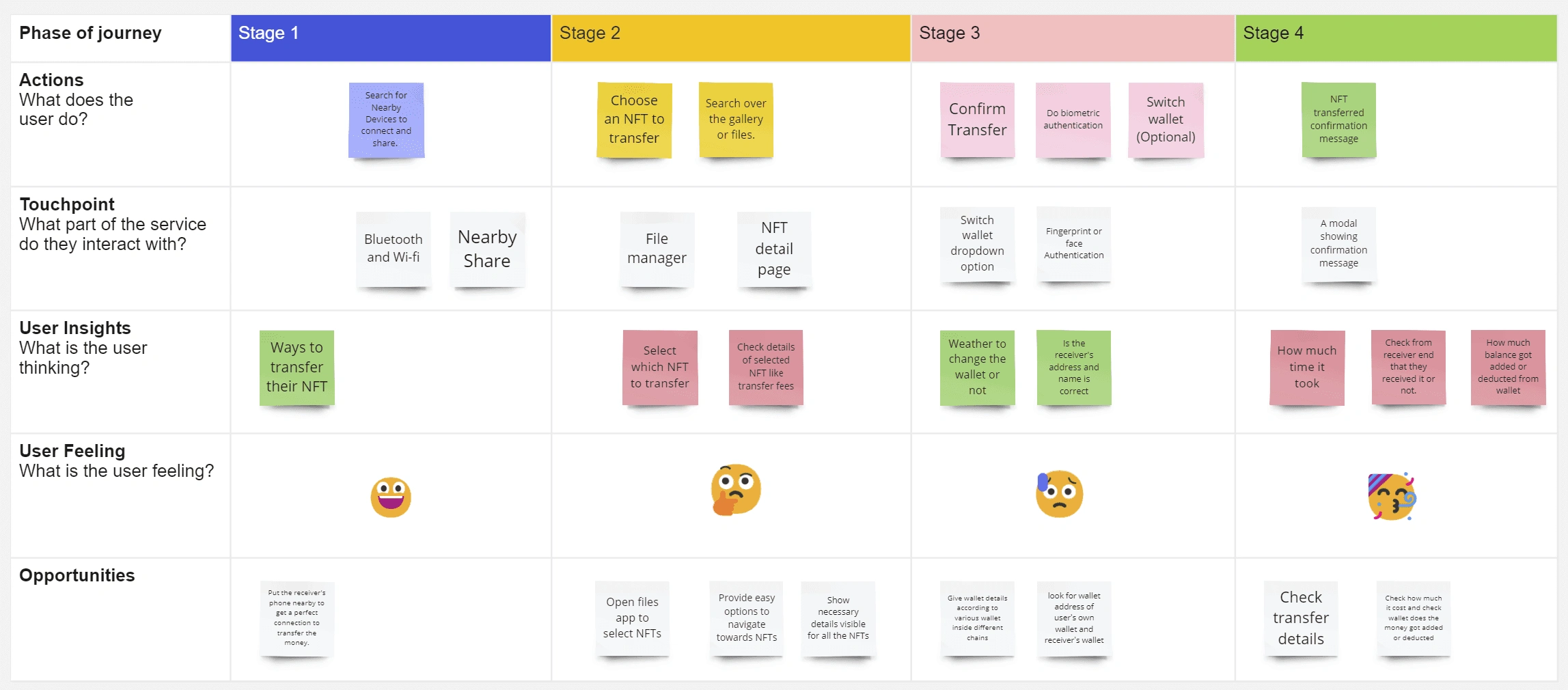
For second user flow (NFT Transfer) ...
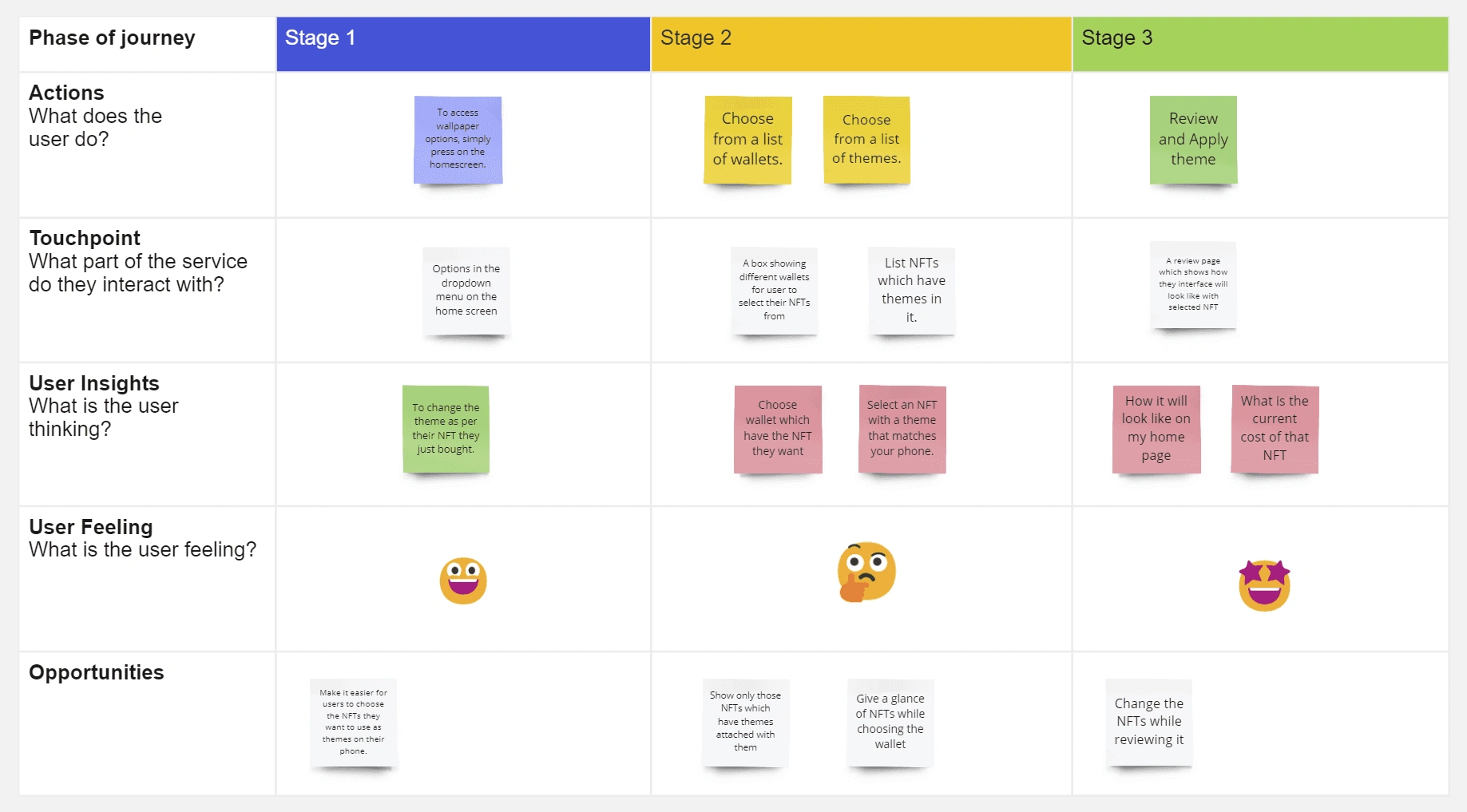
For third flow (NFT Theming) ...
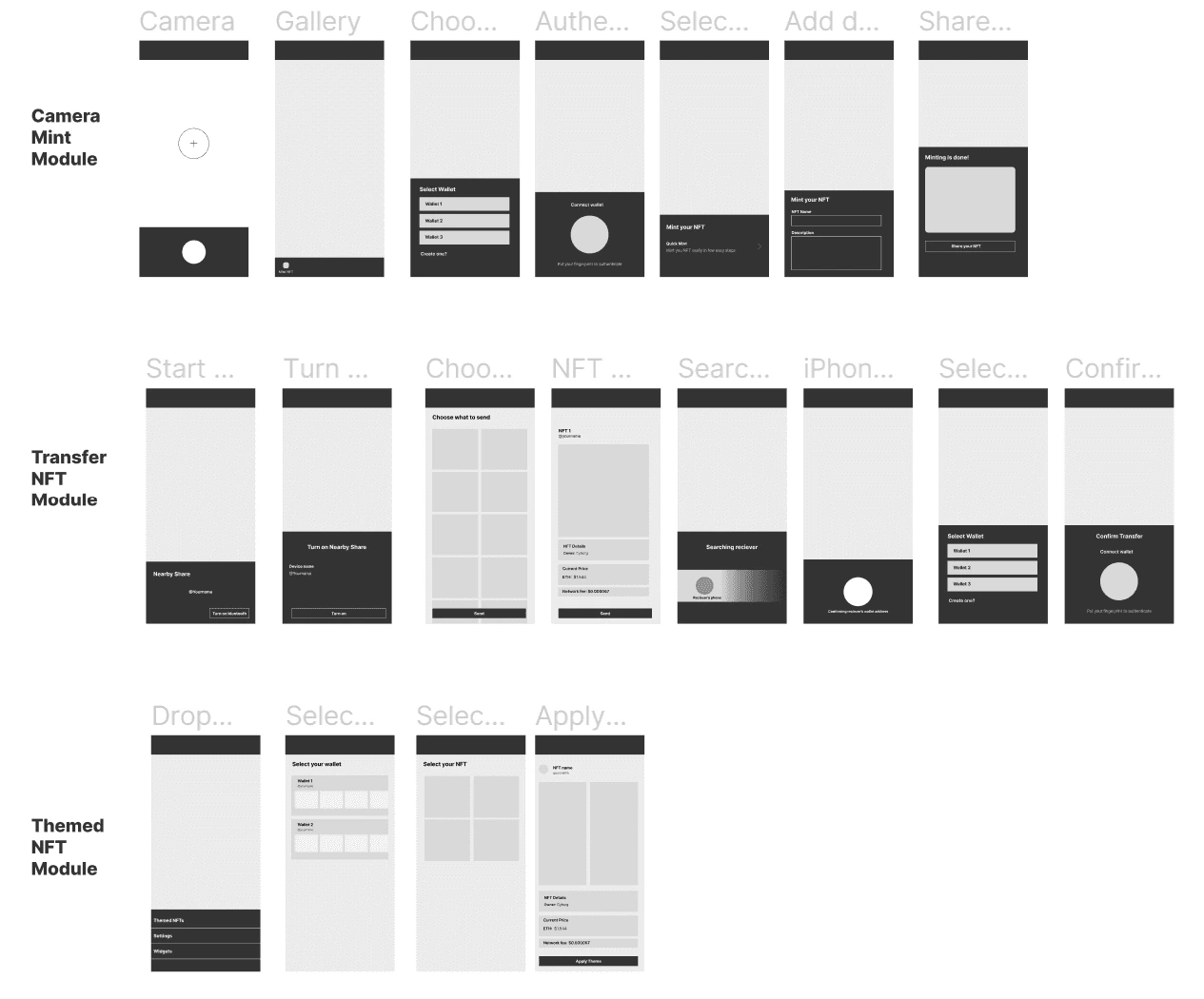
Low Fidelity Wireframes (Visualising the Ideas)
...
Hi-Fi Wireframes (Visualising Interfaces)
...
Usability Study (Testing)
Utilizing these high-fidelity prototypes, I conducted test among selected participants ...
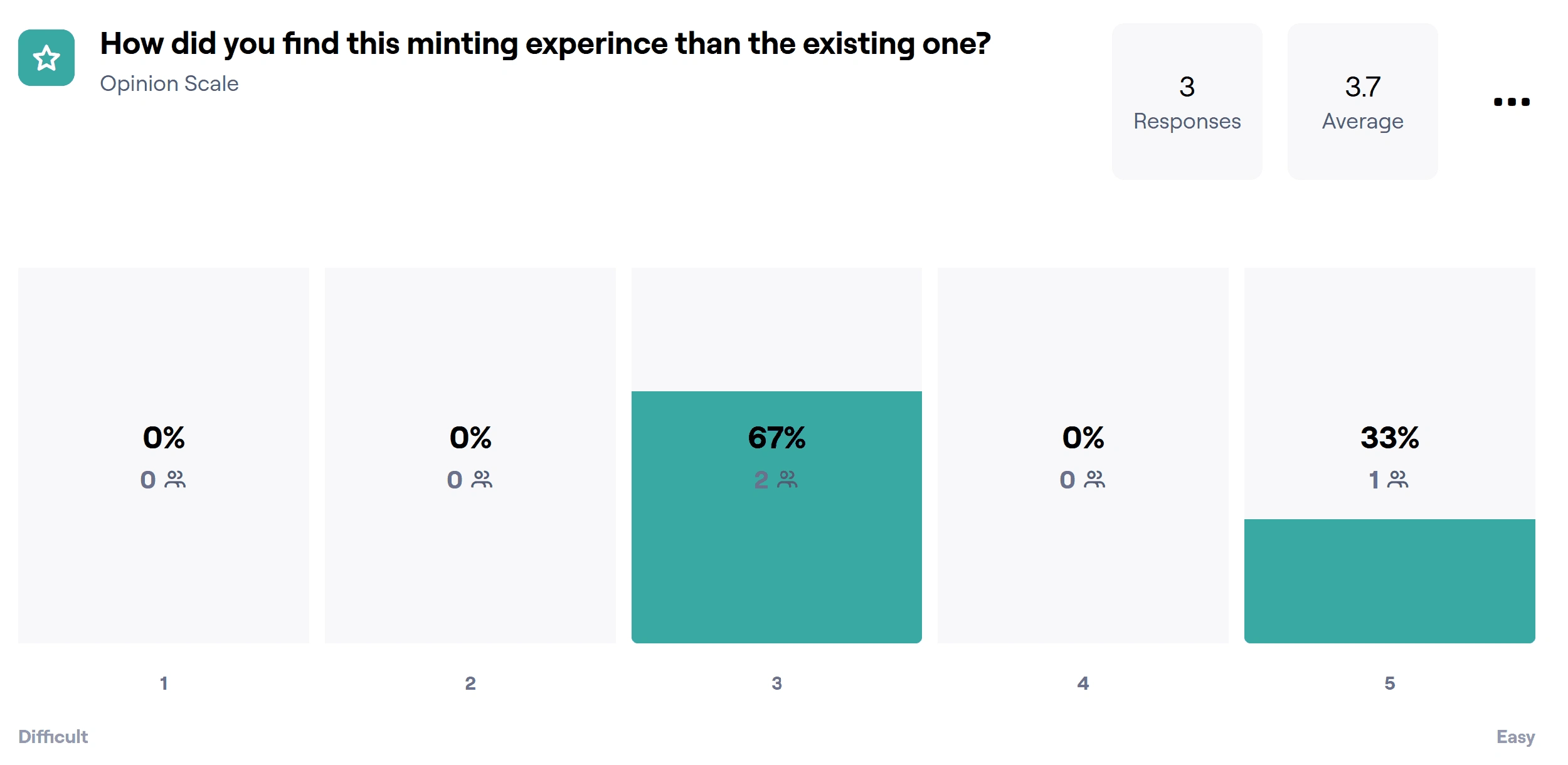
...
Conclusion
In conclusion, ...
For future
Reminding the aim of the project, which is ...

Like this project
Posted May 3, 2026
Case study focusing on user experience challenges and solutions for Web 3.0 technology.