Shelfsy: stock app and launch film for small shops

David Akintade


Shelfsy is a stock app concept for small shops. It counts the shelf at closing time, works out how fast each product sells, and warns the owner two days before anything runs out. I designed the product and made a 41-second launch film around one week in a café and shop called Marlow & Daughter.
Role: concept, product and interface design, packaging, 3D, motion, edit and sound
Deliverables: four core app screens, a 41-second film in 16:9 and 9:16, packaging and case design, a case study page
Tools: Blender for the shop and packaging, HyperFrames and Three.js for the film, ElevenLabs for the narration voice
Type: spec piece; the product, shop and data are fictional
The problem: a shelf looks fine until it doesn't
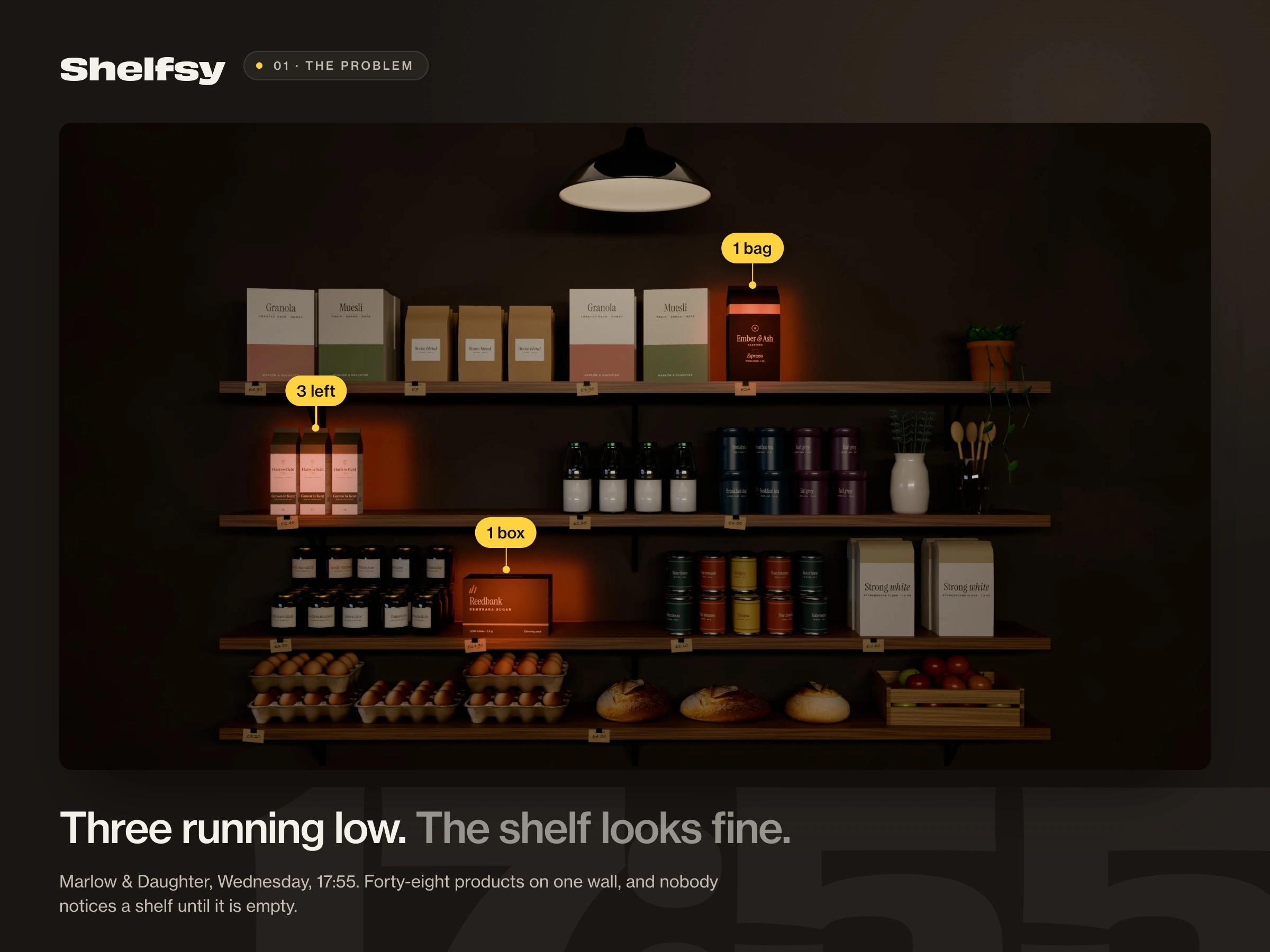
At 17:55 on a Wednesday the wall behind the counter looks full. Three products are close to running out: oat drink, espresso and sugar. In a small shop nobody counts the shelf every evening, so the gap shows up when a customer asks for something that isn't there.
The idea: one evening and one Friday morning
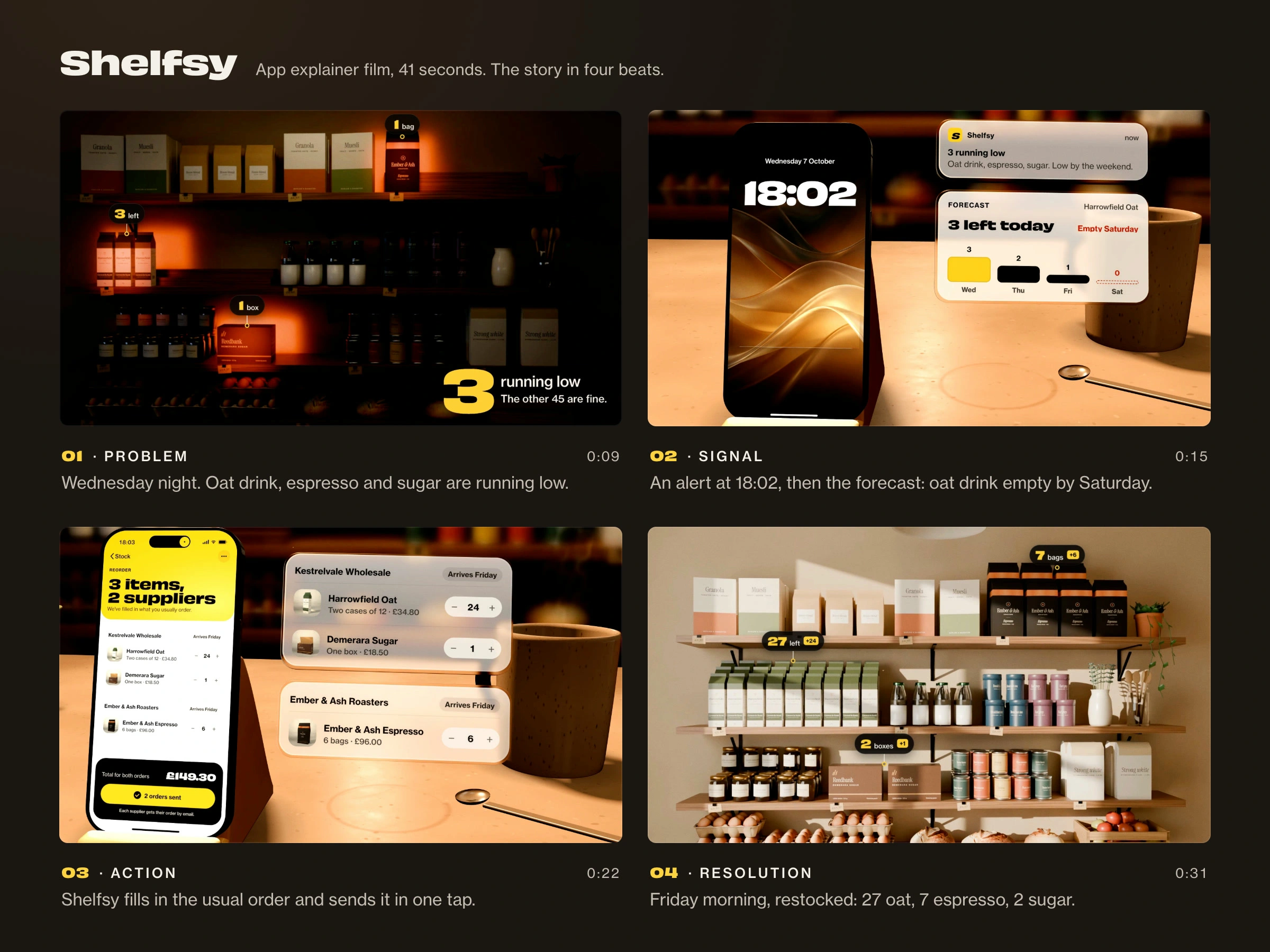
Instead of a feature tour, the film follows one loop through the week: the problem, the signal, the action and the result. Each line of narration gets one camera move and one thing to look at.
18:02: the warning comes two days early
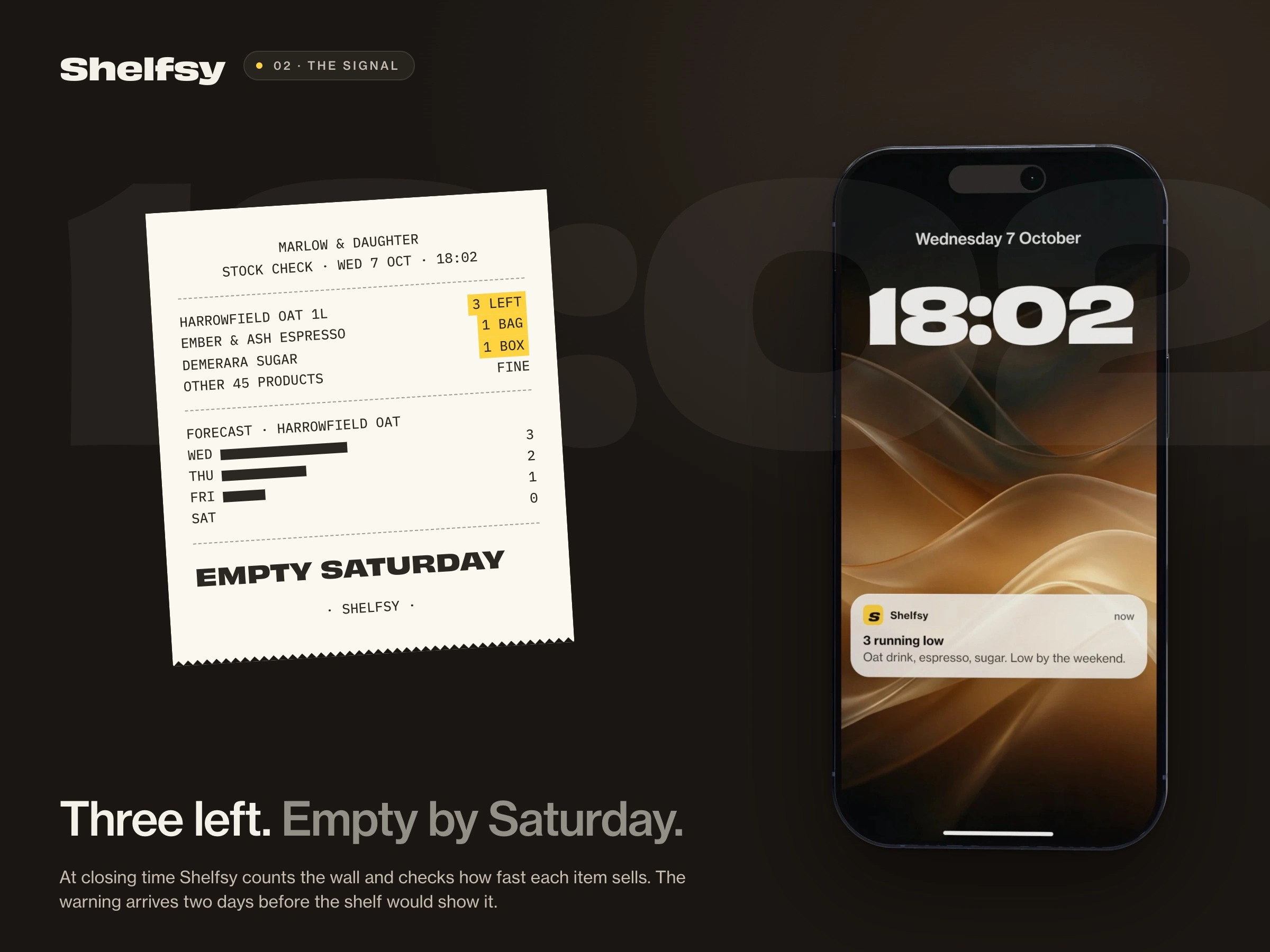
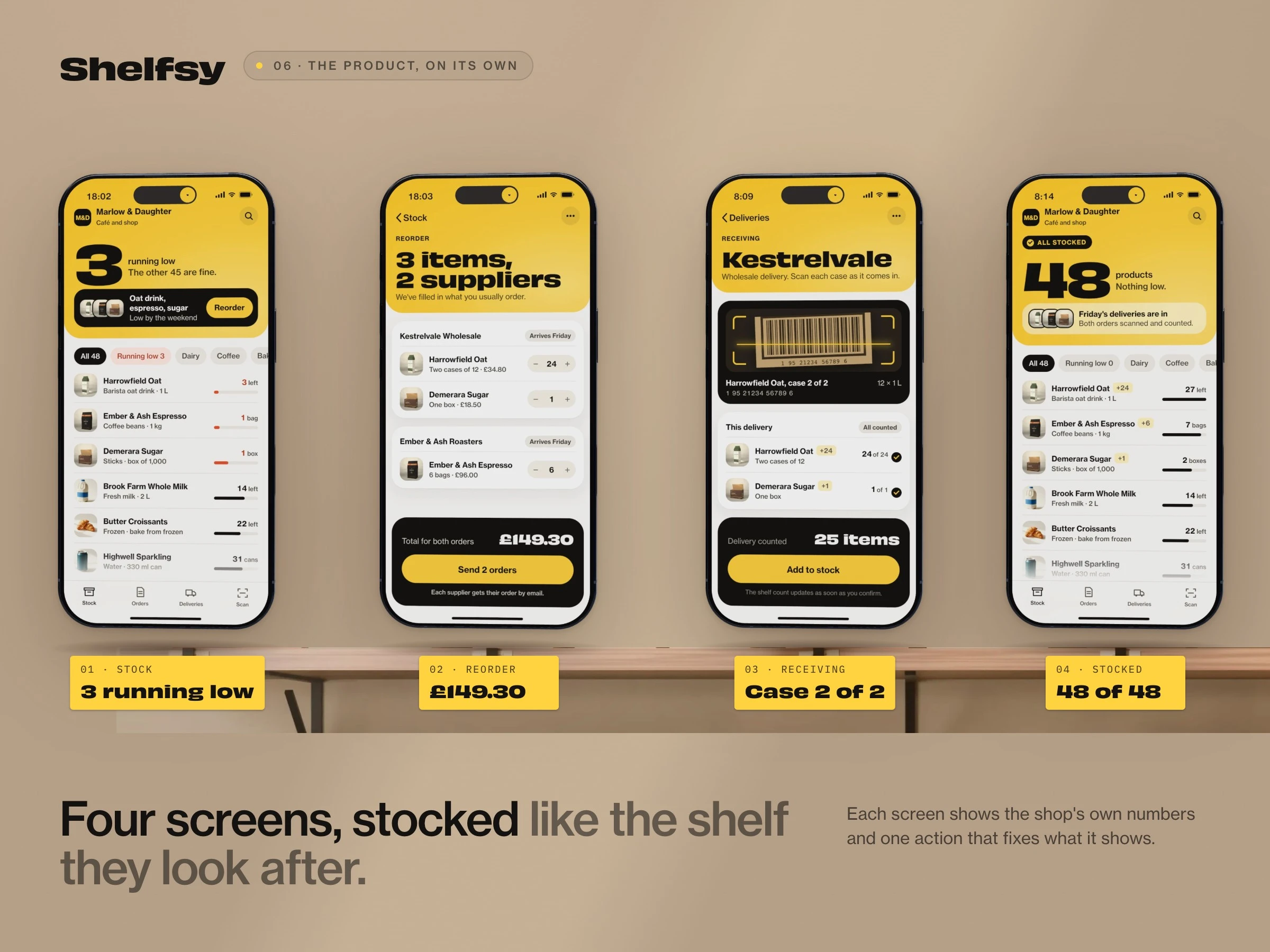
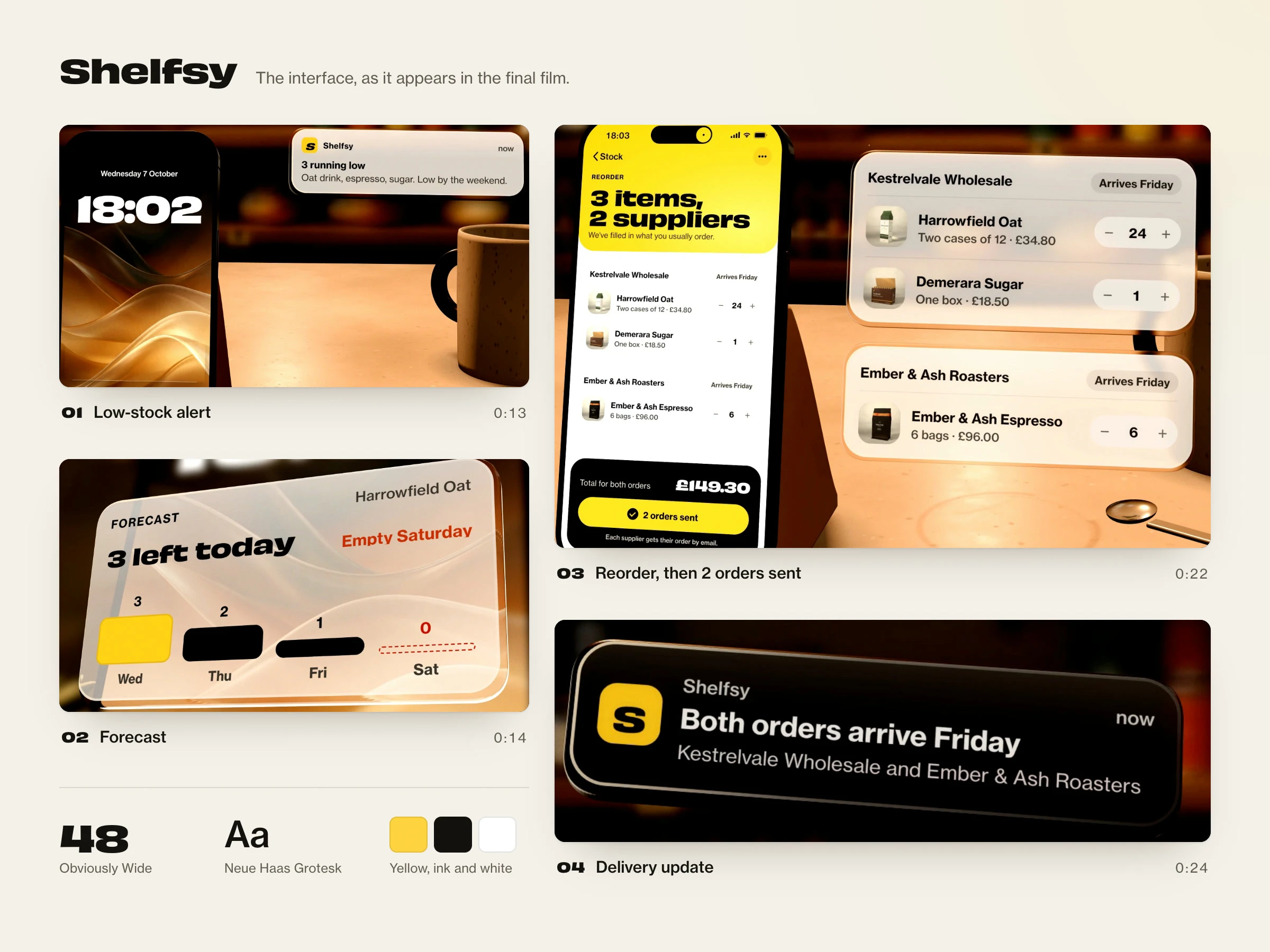
At closing time Shelfsy counts the wall and checks how fast each item sells. Oat drink goes at about a carton a day, so with three left the forecast says the shelf will be empty on Saturday. The lock-screen alert names all three items in one line.
18:03: one tap, two orders
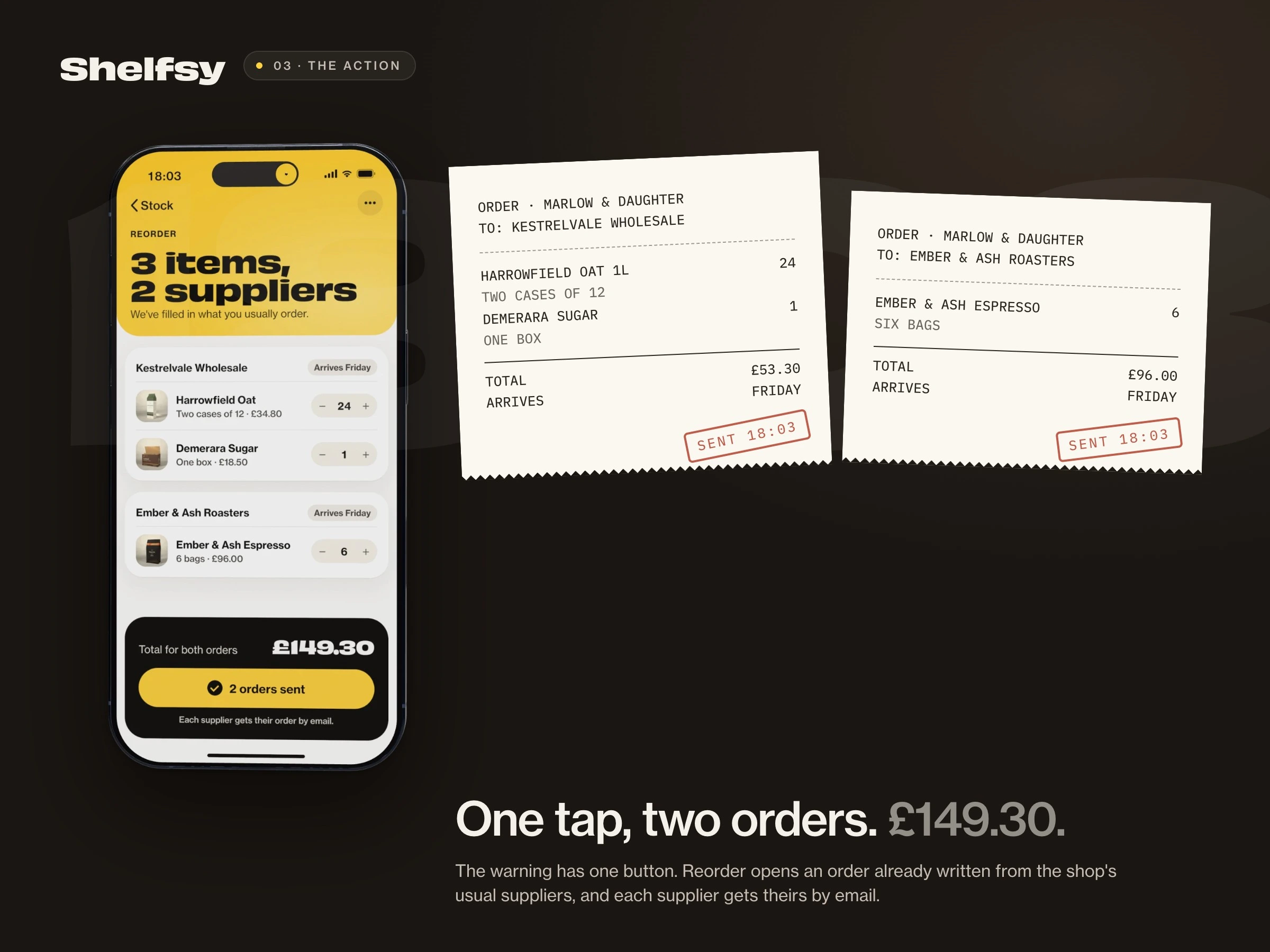
The warning has one button. Reorder opens an order that is already written, from the two suppliers the shop always uses: two cases of oat drink and a box of sugar from Kestrelvale Wholesale, six bags of espresso from Ember & Ash Roasters. One tap sends both, £149.30 in total, and each supplier gets its order by email.
Every number on the screen is a box in the shop
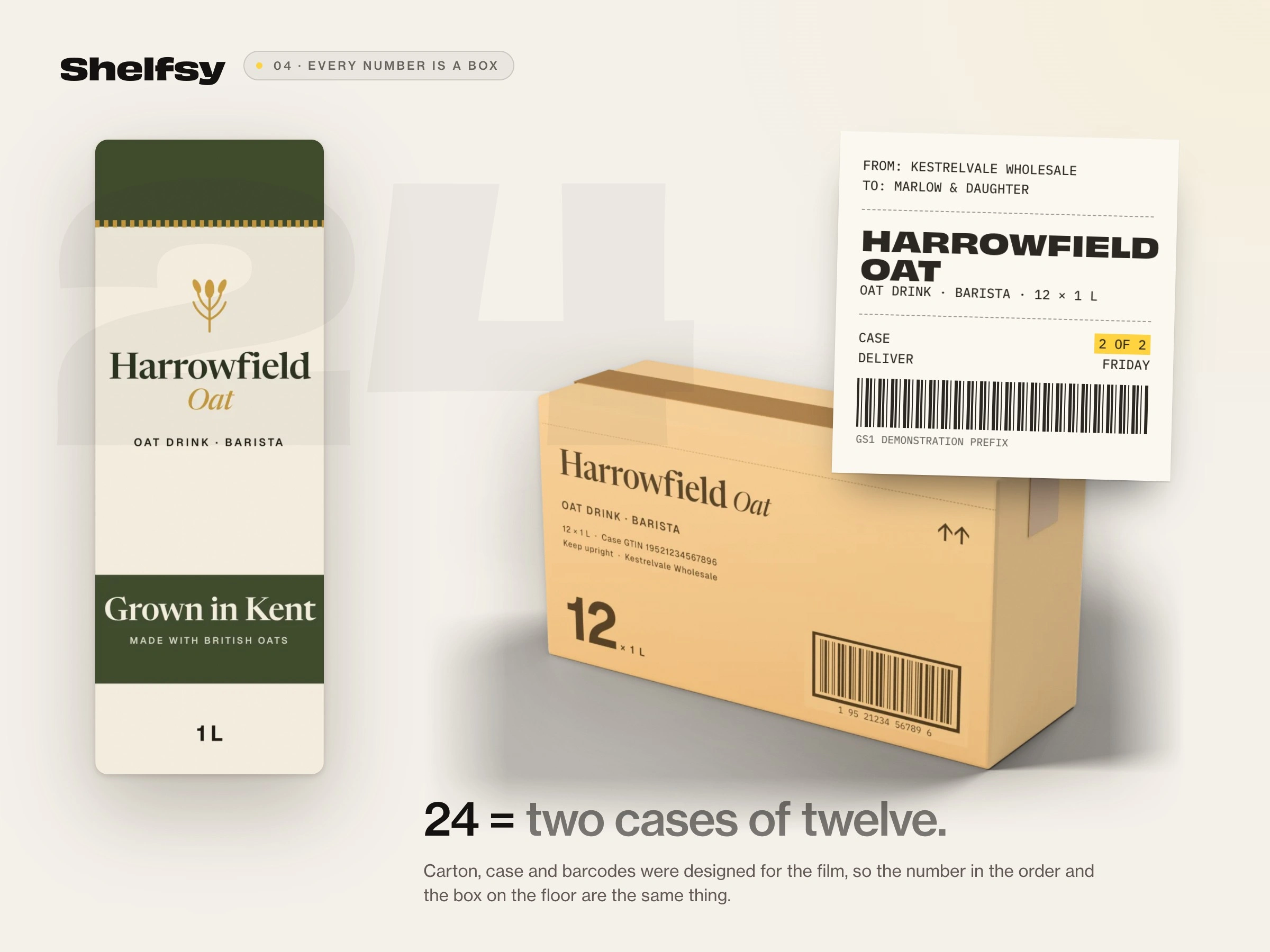
The 24 in the order is two kraft cases of twelve cartons, and the case barcode is what gets scanned when the delivery arrives. I designed the carton, the case and the labels so the interface and the physical stock tell the same story. The identifiers use the GS1 demonstration prefix.
Friday, 08:14: twenty-four cartons in
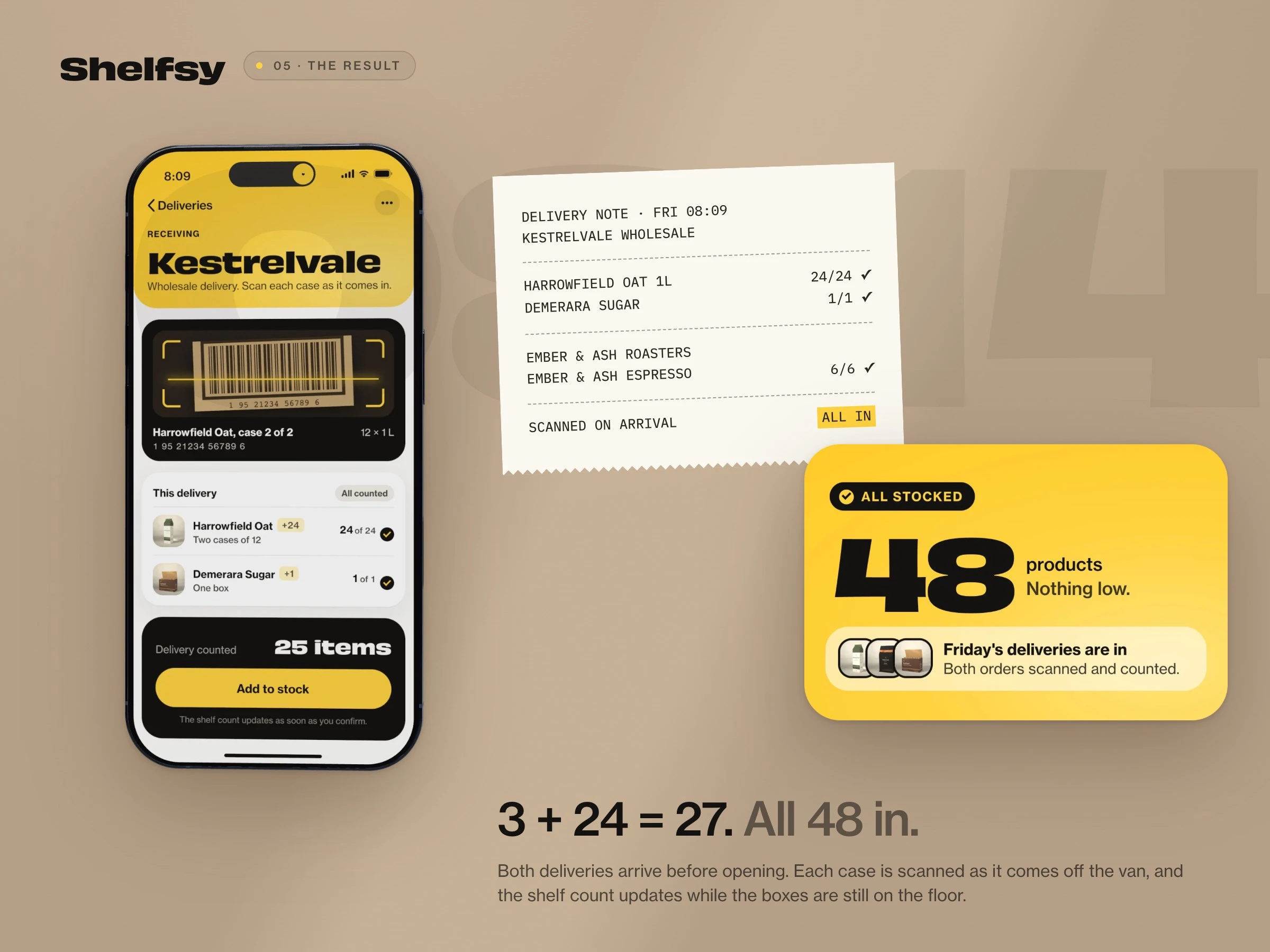
Both deliveries arrive before opening. Each case is scanned as it comes off the van, and the shelf count updates while the boxes are still on the floor. Three plus twenty-four makes twenty-seven, and the app shows all 48 products stocked.
Saturday: same shelf, different outcome
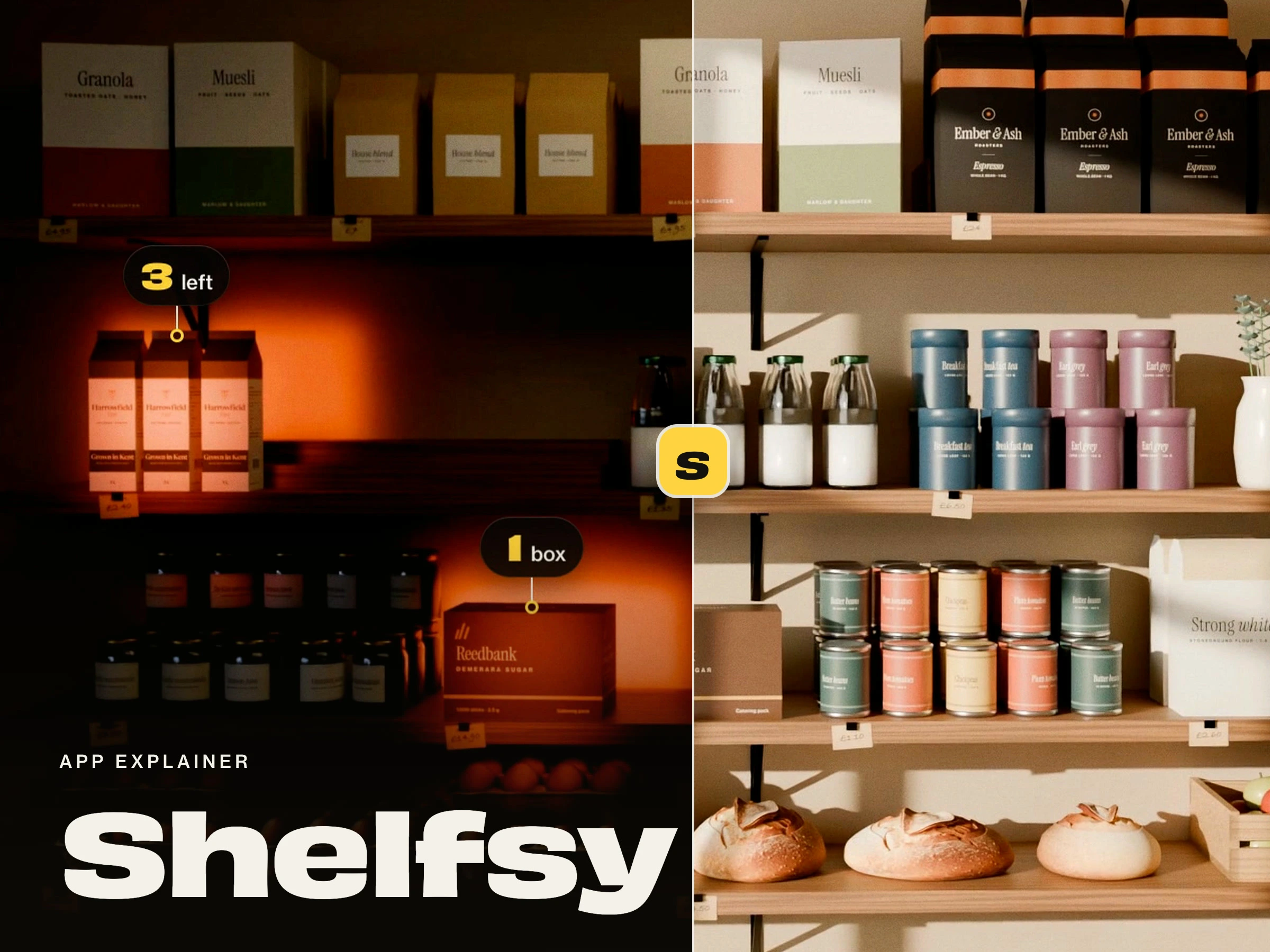
The forecast said Saturday was the day oat drink would run out. Same wall, same camera, two days apart: Wednesday night on the left, the restocked shelf on the right.
The product, on its own
Four screens carry the whole loop. Stock shows what is low and the one action that fixes it. Reorder is filled in from the usual order. Receiving scans each case as it arrives, and Stocked confirms the wall is back to normal.
Designed to be read in motion
The same screens had to work twice: as a product someone could use, and as a character in a film. Every screen was rendered extra sharp and framed so the type stays readable at phone size while the camera moves.
How the film was made
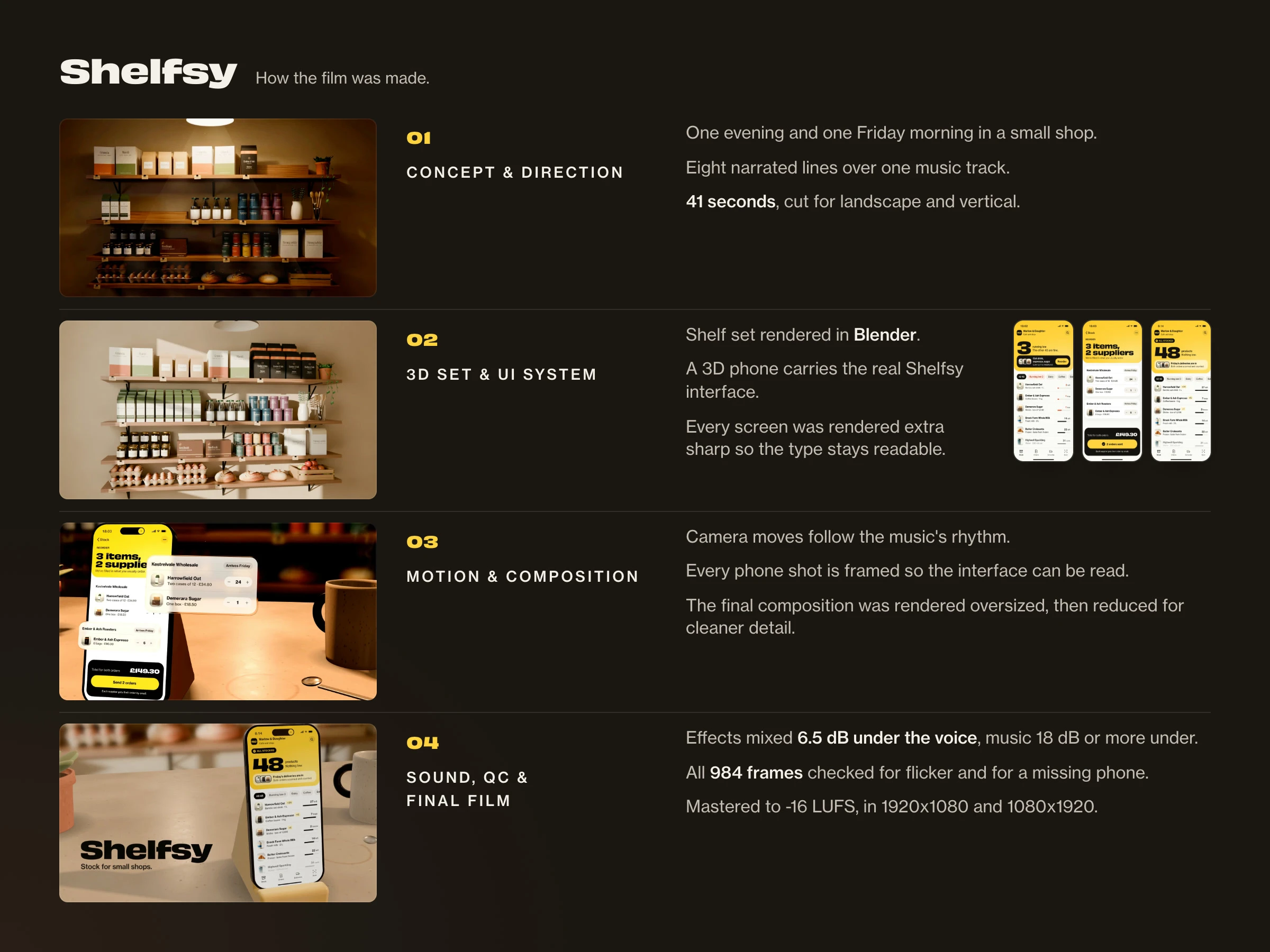
Direction: one evening and one Friday morning, eight narrated lines over one music track, 41 seconds
3D: the shop wall built and lit in Blender with 48 products; packaging modelled from its own artwork
Motion: one camera move per line of narration, cut to a 110 BPM music bed
Sound and finish: narration first with music underneath, mastered to -16 LUFS; all 984 frames checked for flicker and for a missing phone; delivered in 16:9 and 9:16
The week, on one receipt
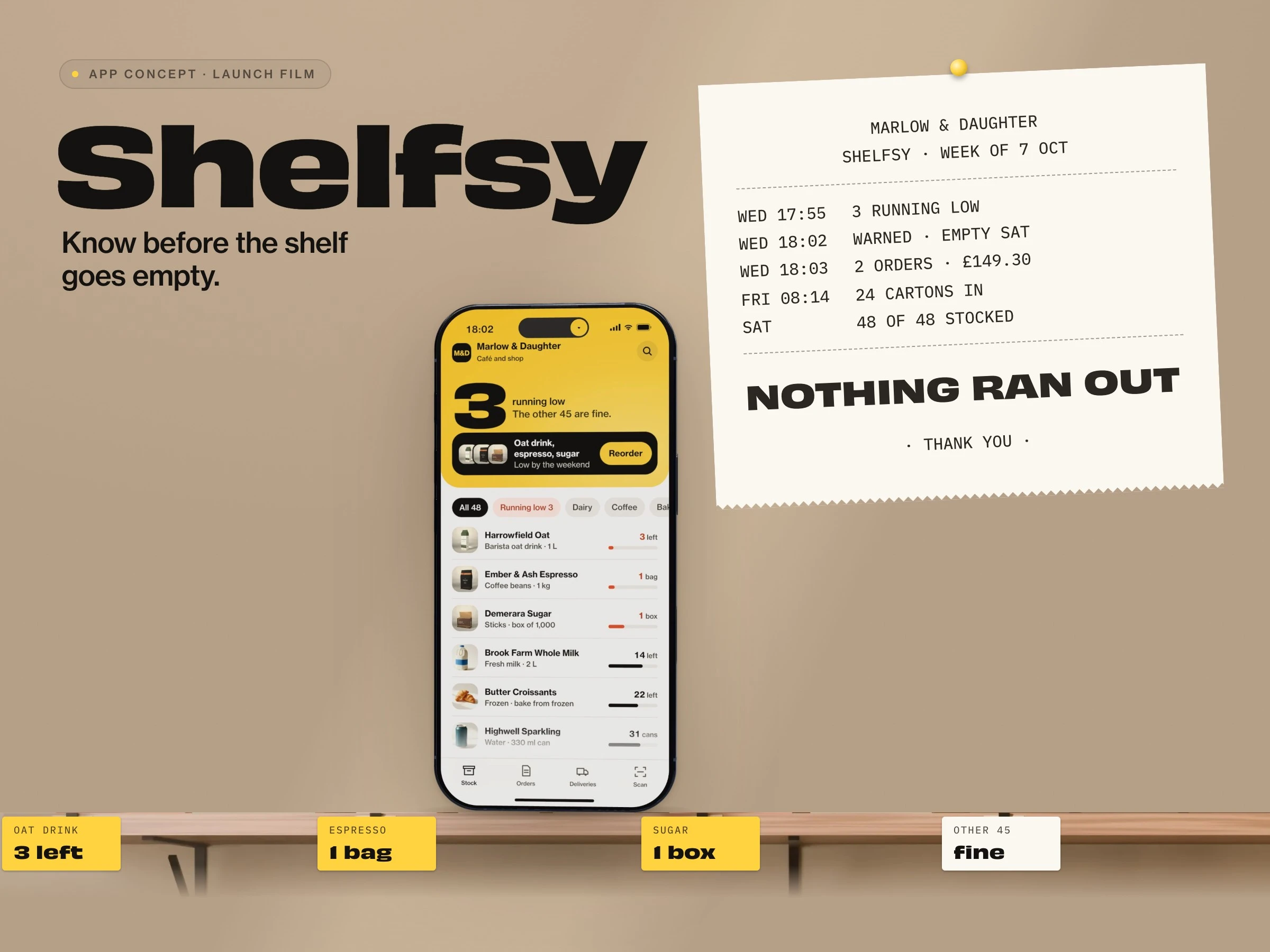
Everything above, printed the way the shop would keep it: three items low on Wednesday evening, two orders sent a minute later, and nothing out by Saturday. This is also the cover of the case study.
My role
I designed the product and made the film: concept, story, interface, packaging, 3D, motion, edit and sound. AI-assisted tools supported selected production tasks, including the narration voice, product imagery and assembly. The direction, product logic, interface design and final approvals were mine.
This is a spec piece. The product, shop, suppliers and stock data are fictional. Full case study: akintadestudio.com/work/shelfsy
Credits: music “Happy Beats & Business Moves Vol. 12” by Sascha Ende, CC BY 4.0. Device model “iPhone 16 Pro (4 colors, not a photo)” by motionkitt, CC BY 4.0.
Like this project
Posted Oct 13, 2026
A stock app concept that warns a small shop two days before a shelf runs empty, with a 41-second launch film, product UI, packaging and 3D.