Housing Ops & Multi-Partner Cost-Share Engine

Brandin Gudmundson


Project class: Self-produced sanitized case study based on real operational work. No participant, employer, or funder-identifying information is included. All examples are sanitized and visuals are synthetic.
1. Operating Constraint
A frontline housing program operated under a hard $1,500-per-person funding ceiling. Every placement decision had to survive that constraint while still producing individualized crisis-housing packages that matched each person's situation, location requirements, and support needs.
The margin for waste was zero. Overspend on one case meant underspend (or no placement) on another.
2. Fragmented Funding and Partner Landscape
No single funder or service provider covered the full cost of a placement. Each case required coordination across 2–3 organizations per case, each with its own eligibility rules, reporting formats, and approval timelines.
The funding landscape was fragmented by design: different partners covered different cost components (rent deposits, furnishings, move-in logistics, ongoing support). Aligning those contributions into a single placement package was a coordination problem before it was a financial one.
3. Research-Driven Cost-Share Engine
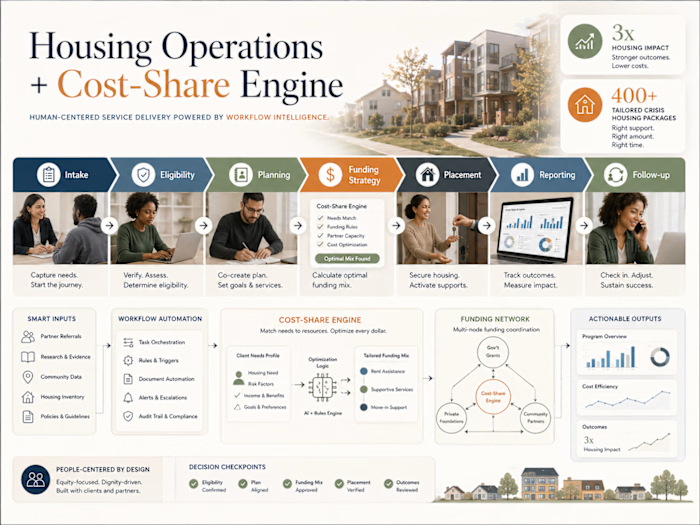
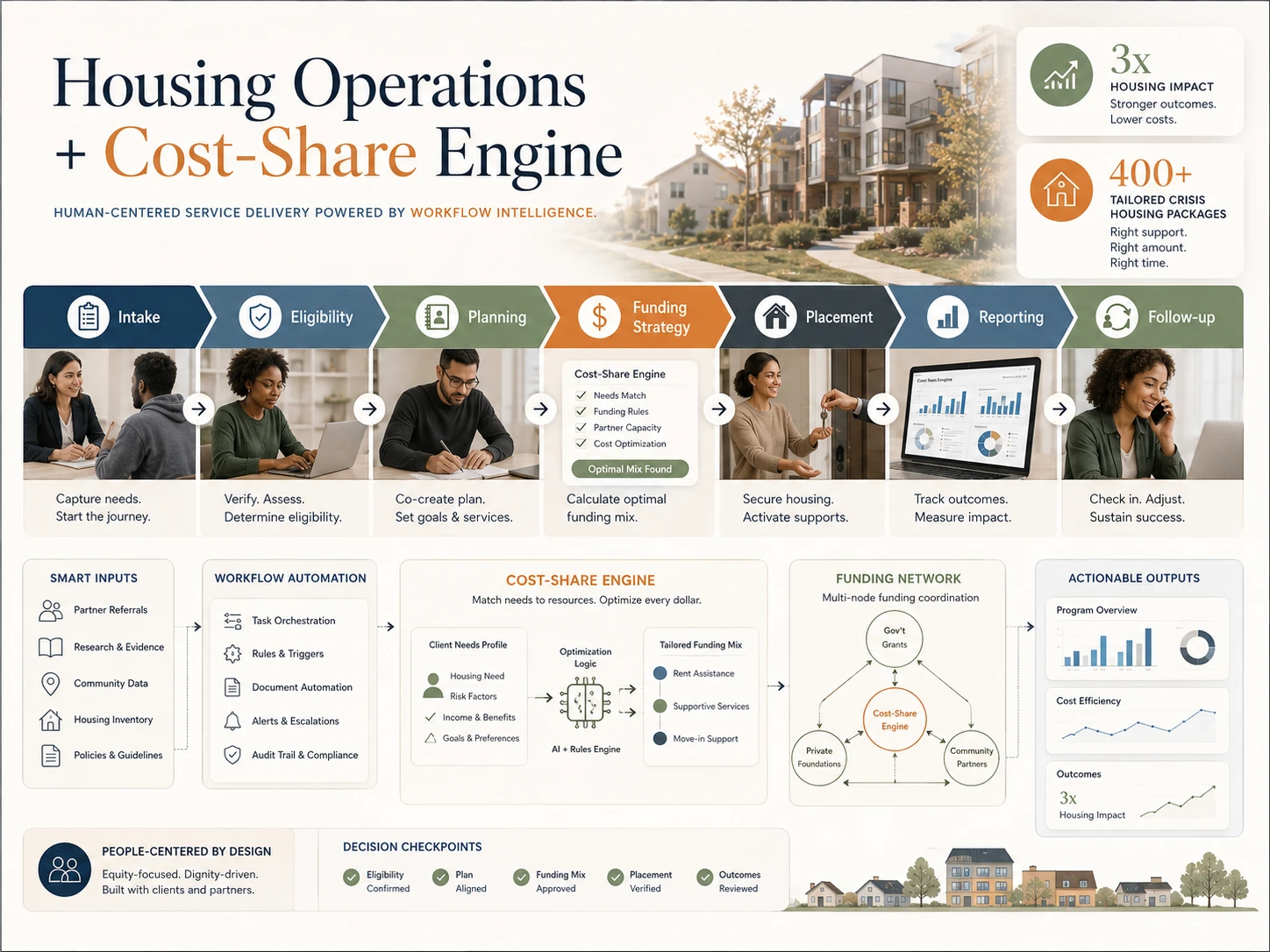
I built a cost-share engine that mapped every available funding source against placement cost components. The engine calculated which combination of partner contributions could fund each package within the $1,500 ceiling, flagging cases where no viable combination existed before staff invested time in a dead-end referral.
The logic was research-driven: built from actual partner agreements, historical cost data, and eligibility boundaries rather than assumptions or averages.
4. Intake-to-Placement Automation Net
Repetitive administrative steps (intake data collection, eligibility pre-screening, document routing, status tracking) were separated from decisions requiring human judgment and automated into a structured workflow.
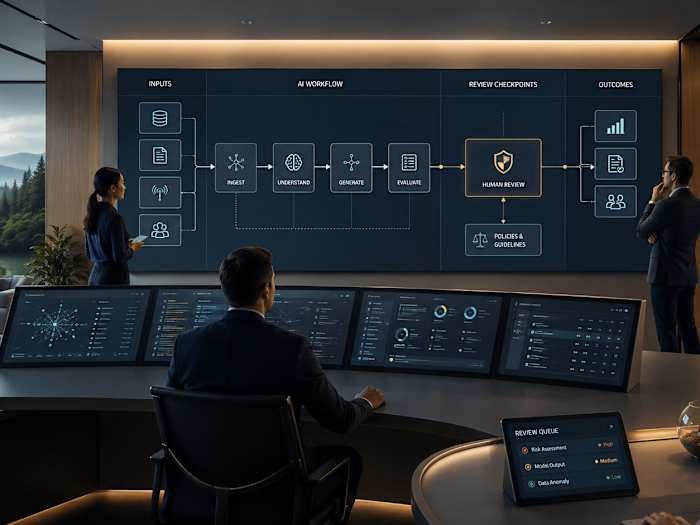
The automation net handled the predictable path. When a case hit an exception, ambiguity, or edge condition, it surfaced to a human operator with the relevant context already assembled.
5. Human Funding and Placement Approvals
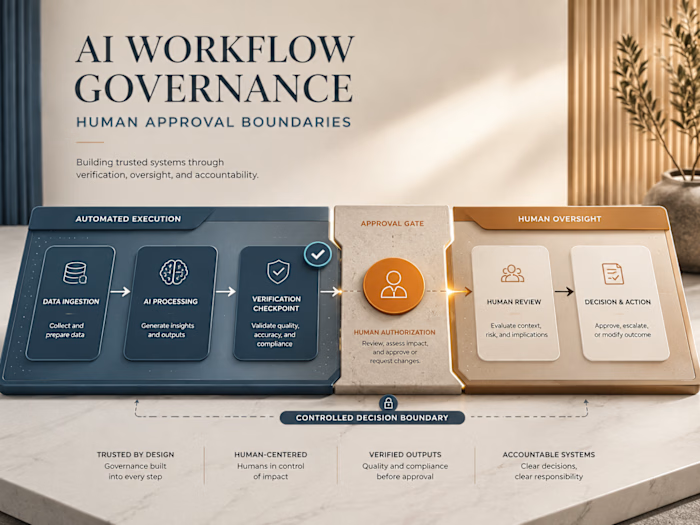
Every funding allocation and final placement decision required explicit human approval. The system prepared recommendations and assembled supporting evidence, but no money moved and no placement was confirmed without a human sign-off.
This was a deliberate governance boundary, not a bottleneck. Automated preparation, human authorization.
6. Tailored Crisis-Housing Packages
Each package was individualized: matched to the person's circumstances, location constraints, support needs, and the specific funding combination that made it viable. There were no generic templates.
The program produced 400+ individualized crisis-housing packages, each one assembled from the cost-share engine's output and approved through the human authorization layer.
7. Measurable Outcomes
Housing output exceeded the 30-placement mandate by more than threefold. The operating model supported housing placements within the program's $1,500-per-person funding ceiling.
8. Privacy and Evidence Boundaries
This case study contains no participant, employer, or funder-identifying information. All names, organizations, and figures beyond the structural claims above are sanitized. Visuals are synthetic reconstructions of workflow architecture, not screenshots of live systems.
The preserved claims ($1,500 ceiling, 2–3 organizations per case, 400+ packages, threefold mandate exceedance) reflect real operational outcomes.
If your organization runs complex, multi-partner workflows under tight funding constraints, I can help you find the structure inside the complexity. Book a Workflow Clarity and Governance Scan
Like this project
Posted Aug 4, 2026
Sanitized case study: I built a cost-share engine and intake-to-placement automation net for a frontline housing program operating under a $1,500-per-person ceiling, producing 400+ individualized crisis-housing packages across multi-partner funding.