From Fragmented Product Data to One Unified Operations System

Shyamal Jasani
Verified


A B2B automotive business was managing products, suppliers, pricing and supply information across disconnected records. I helped restructure the data and turn it into one internal Airtable system built around how the team actually works.
Project Overview
The business had a large amount of operational data, but the information was fragmented across products, suppliers, pricing and supply records.
The problem was not simply storing more data. The team needed a clear system where related information could be found, updated and managed without jumping between disconnected records or creating duplicate data.
The goal was to turn the existing Airtable setup into a structured internal operations system without introducing another external tool.
How It Started
We started by reviewing the existing data structure and understanding how the team worked with product information day to day.
Several issues quickly became clear:
duplicate and inconsistent records
product information spread across multiple tables
supplier and pricing relationships were difficult to follow
no simple interfaces for common workflows
sandbox and production data needed to remain consistent
Before designing interfaces, the underlying data structure had to make sense.
The Approach
1. Understanding the workflows
We identified the information the team regularly needed around:
products
suppliers
supply availability
supplier pricing
internal pricing logic
This helped separate what belonged in the database from what users actually needed to see in the interface.
2. Restructuring the data
The existing Airtable architecture was reviewed and cleaned so that products, suppliers, pricing and supply information could be connected properly.
Duplicate records were also removed before moving the improved structure toward production.
3. Designing role-focused interfaces
Instead of exposing the full Airtable base to users, we planned simple interfaces around the actions they performed most often.
The system included:
Product Catalog
Pricing Logic
Supply Product Hub
Supplier Directory
Supplier Pricing
4. Preparing the production setup
The improved architecture was first validated in a sandbox environment.
Once the structure was stable, the production setup could be rebuilt around the cleaner data model and the approved interfaces.
Biggest Challenge
The biggest challenge was not creating more screens.
It was simplifying a large amount of connected operational data without removing the flexibility the business already had in Airtable.
Products could relate to multiple suppliers, pricing records and supply information, so changing one part of the structure could affect several workflows.
The system therefore had to remain simple for the team while keeping those relationships intact behind the scenes.
What We Built
Product Catalog
A central place for the team to browse and review product information without working directly inside the underlying tables.
Pricing Logic
A clearer view of the information used when reviewing and managing product pricing.
Supply Product Hub
A dedicated workspace for understanding supply-related product information and connected records.
Supplier Directory
A structured view of suppliers and the product information connected to them.
Supplier Pricing
Supplier-specific pricing information connected directly to the relevant products and supplier records.
What Changed
The project moved the business away from fragmented operational records toward one structured internal system.
The team now had:
clearer relationships between products, suppliers and pricing
cleaner records with duplicate data removed
dedicated interfaces for common workflows
less need to search through raw Airtable tables
a clearer structure for maintaining the system in production
one foundation that could support future internal workflows
Instead of rebuilding the business process around a new platform, the solution improved the Airtable environment the team was already using.
Inside the System
Product Catalog
A central view for browsing products and accessing the information connected to each record.
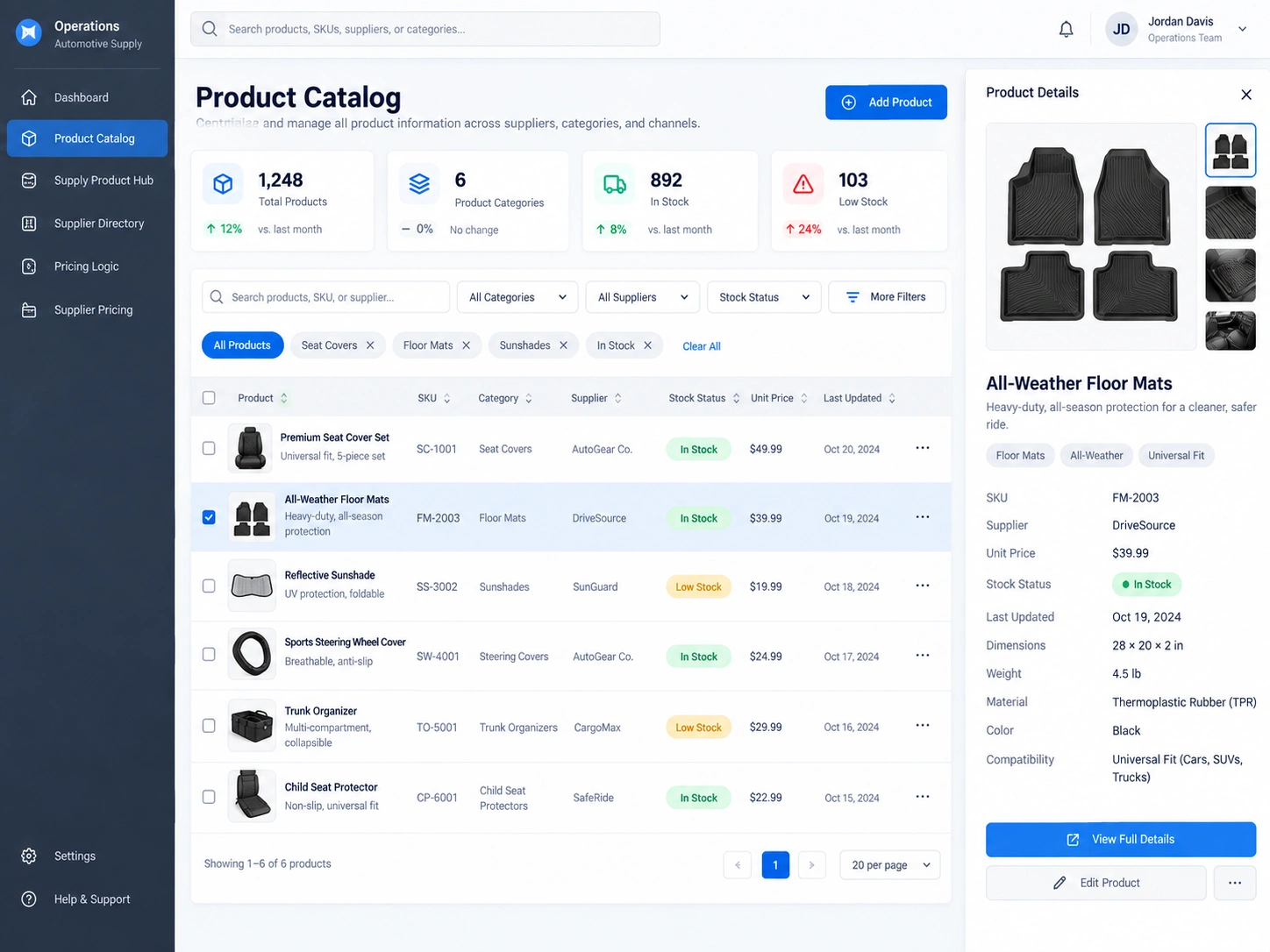
Product Management
Supply Product Hub
A dedicated workspace for reviewing product supply information.
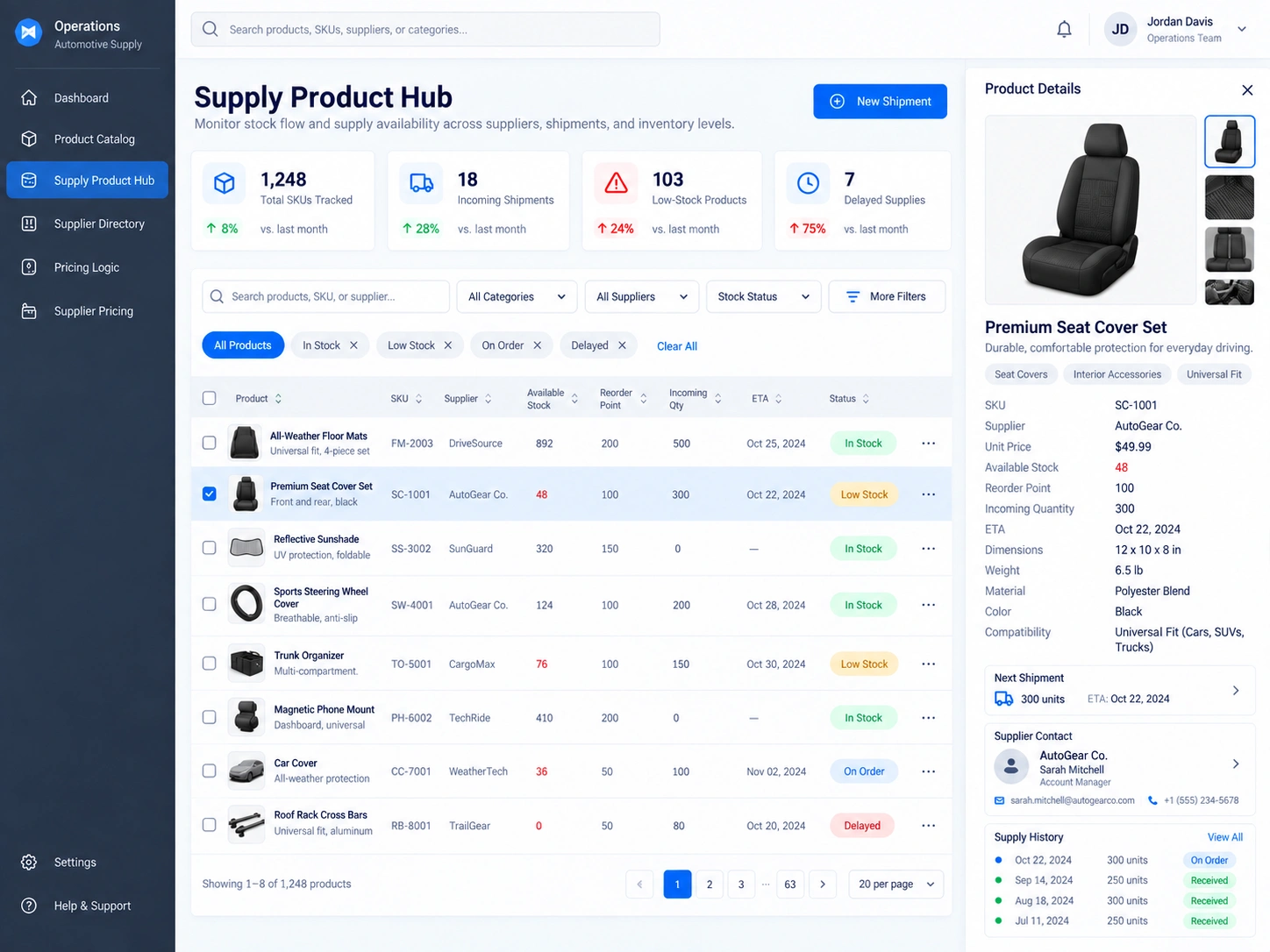
Supply Product Hub
Supplier Directory
Supplier information organized around the relationships the operations team actually needs.
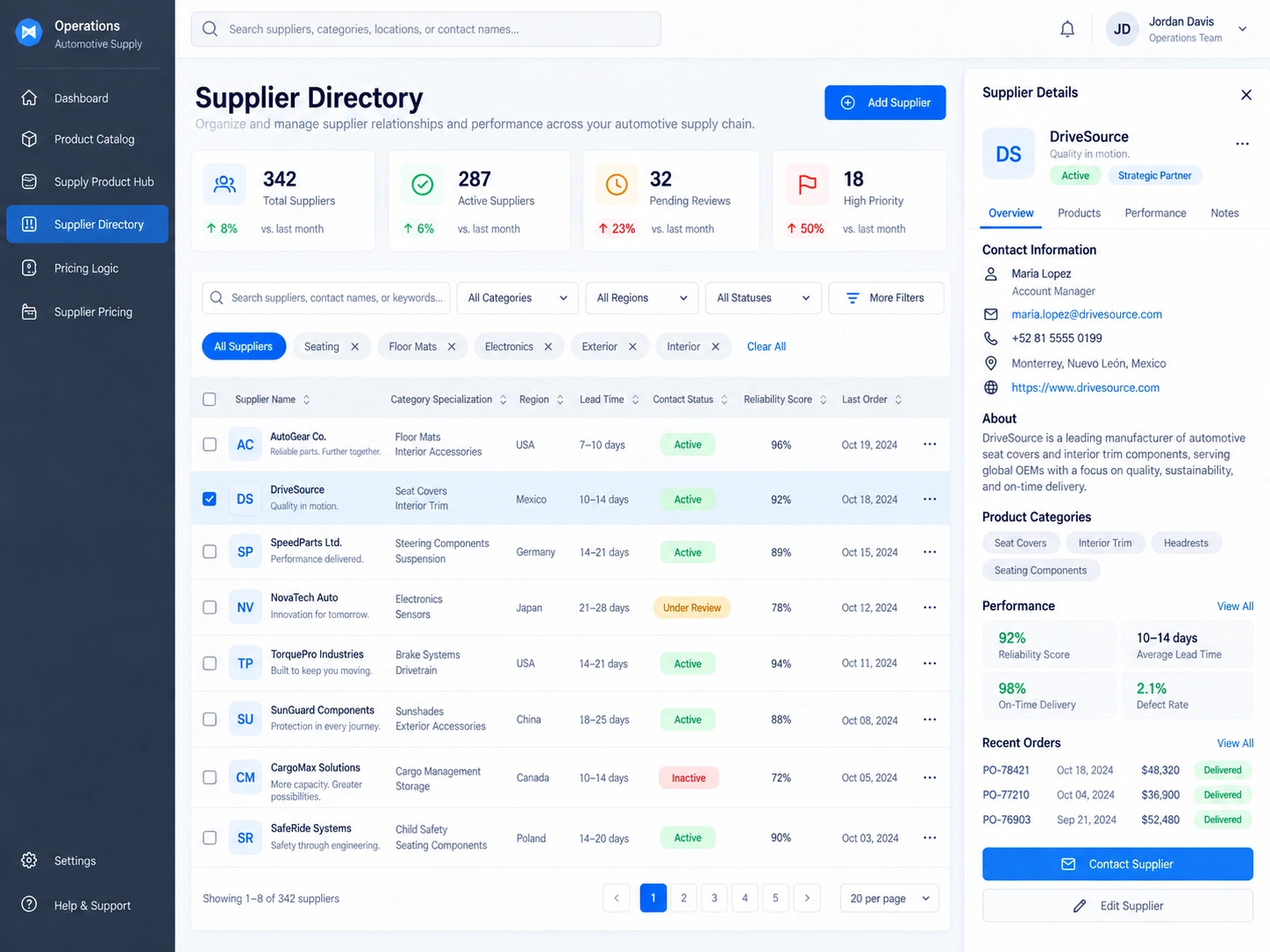
Supplier Directory
Pricing Logic
A focused interface for working with product pricing information.
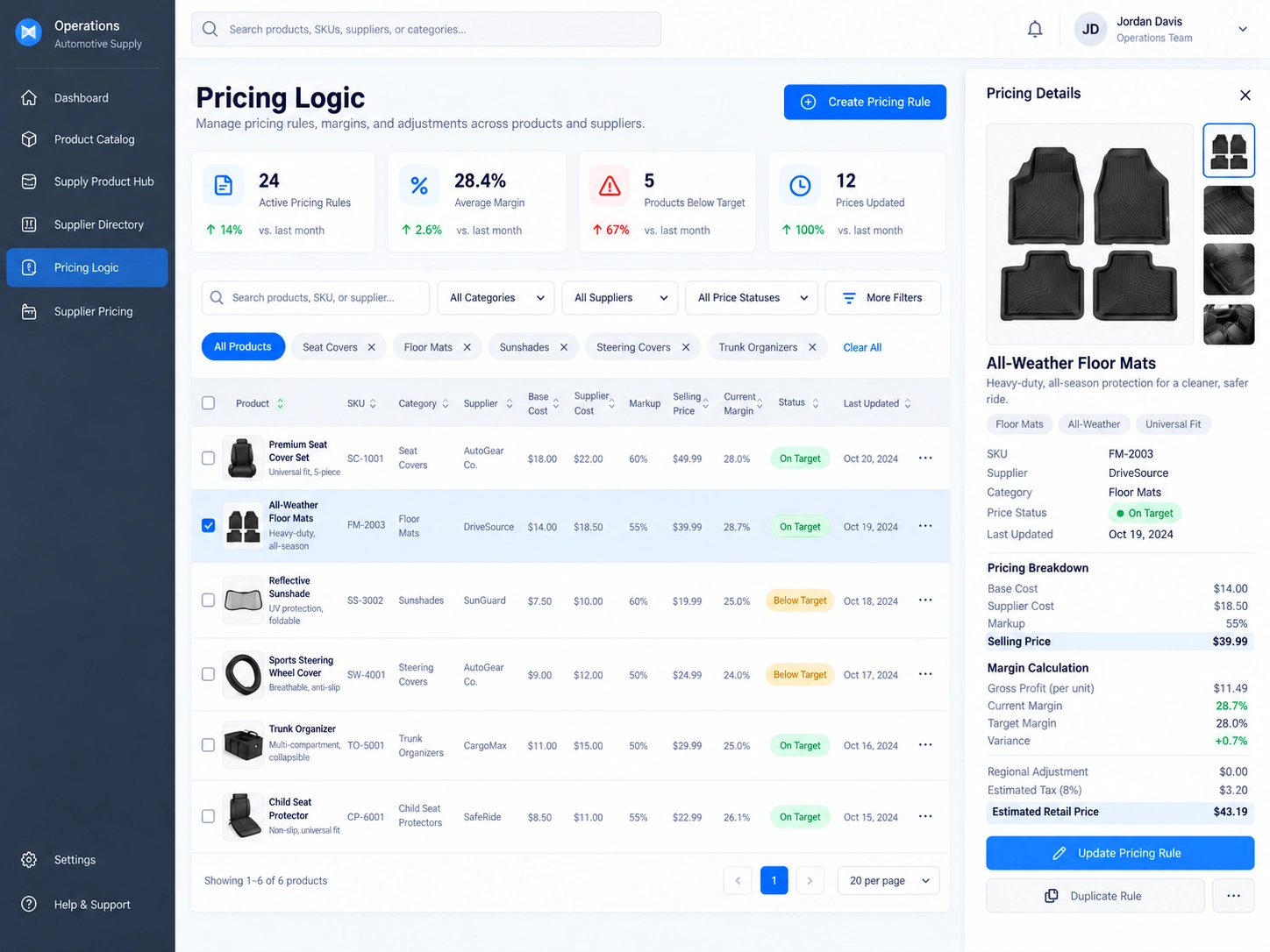
Pricing Logic
Like this project
Posted Sep 22, 2026
Reorganized fragmented product, supplier, pricing and supply data into one structured Airtable OS with dedicated interfaces for the team's core workflows.
Likes
0
Views
0
Timeline
May 1, 2026 - Aug 1, 2026