CIRCLES Social Media App - Development

Devowise Studios


CIRCLES Social Media App
Project Overview
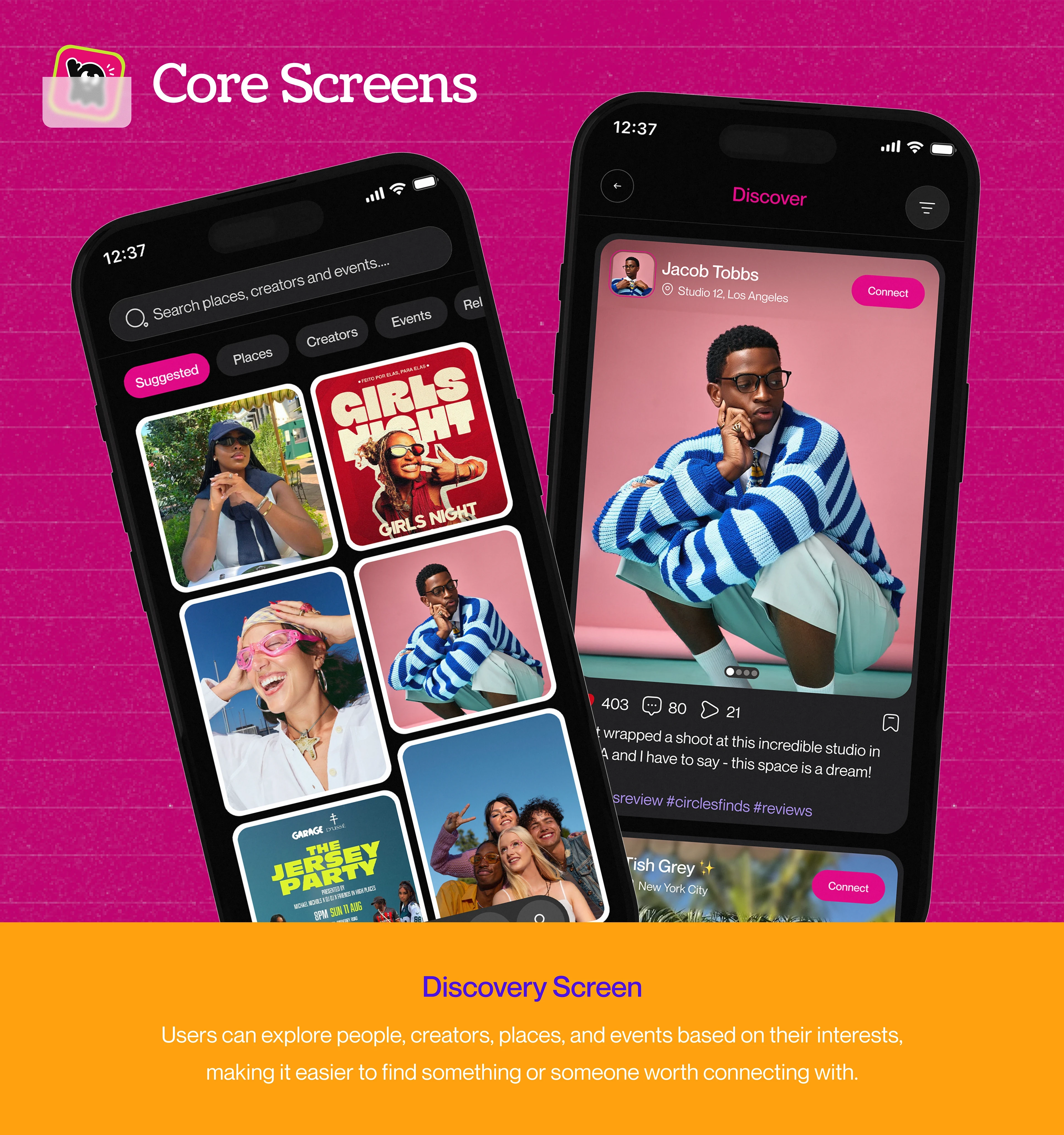
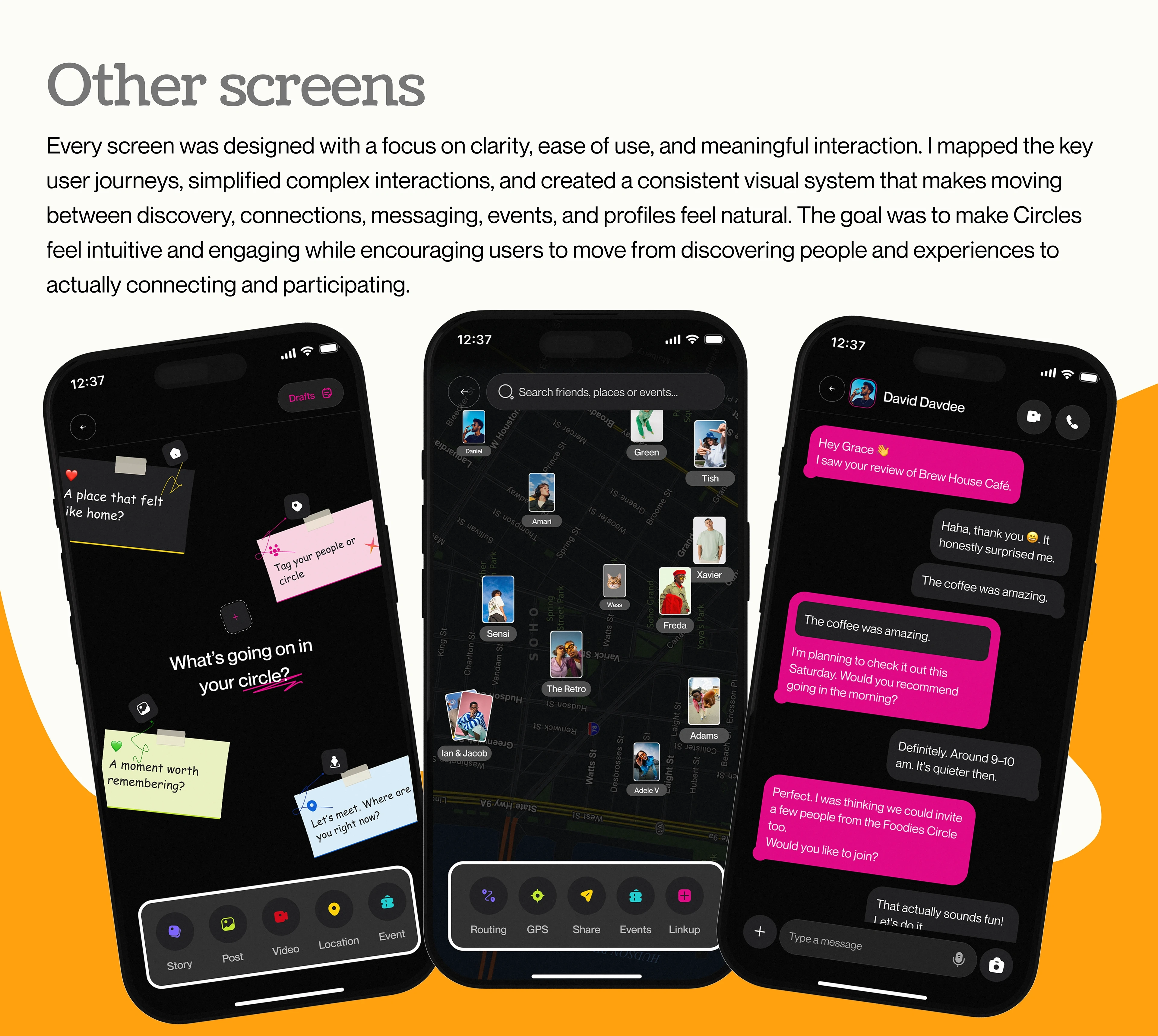
CIRCLES is a mobile social media platform designed around community, content sharing, and meaningful connections. The product brings social interaction, user profiles, content discovery, and communication into a single mobile experience.
As a Full-Stack Developer, my focus was on turning the product concept into a functional mobile application by connecting the frontend experience with backend services, APIs, user data, and application logic.
My Role
I worked across the full application stack, including:
Mobile frontend development
Backend development
API integration
Database architecture
Authentication
User profiles
Social interactions
Content management
Notifications
Application state management
Performance optimization
Testing and deployment
Mobile Frontend
The mobile application was developed using a component-based architecture to keep the interface consistent and maintainable.
Reusable components were created for:
User profiles
Post cards
Social feeds
Navigation
Buttons and forms
Comments
Interaction states
Notifications
Content sections
The frontend communicates with backend services through APIs, allowing content and user information to be dynamically loaded instead of being hardcoded into the application.
Backend Architecture
The backend provides the core logic behind the social platform.
It manages:
User accounts
Profiles
Authentication
Posts
Comments
Likes and reactions
Social connections
Notifications
User-specific content
Application permissions
The backend separates business logic from the mobile interface, allowing the application to remain scalable as additional social features are introduced.
API Integration
The mobile application communicates with backend services through structured APIs.
API requests handle operations such as:
Creating and retrieving posts
Loading user profiles
Updating profile information
Managing social interactions
Adding comments
Retrieving notifications
Managing user relationships
This architecture also allows the backend to support additional clients in the future, such as a web application or administrative dashboard.
Authentication & User Management
Authentication provides users with secure access to their accounts and personalized content.
The system handles:
Registration
Login
Session management
Protected requests
Profile management
Logout
User-specific information is retrieved through authenticated API requests rather than exposing private application data directly through the mobile client.
Social Feed
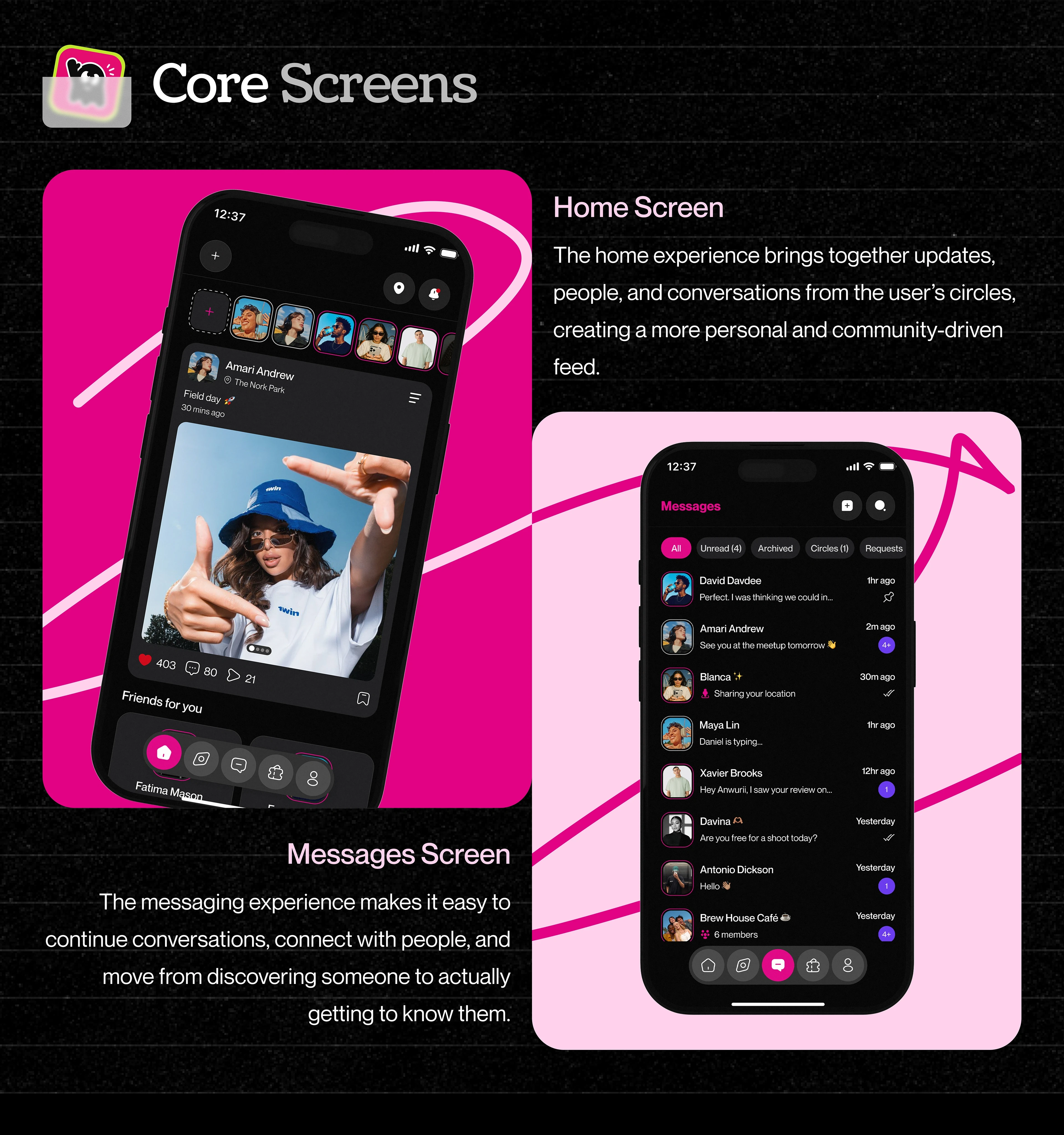
The feed is one of the central parts of the application.
Content is retrieved dynamically from the backend and presented through reusable post components.
The feed architecture supports common social interactions such as:
Viewing posts
Opening profiles
Liking content
Commenting
Interacting with other users
Refreshing content
The frontend manages the interaction states while the backend handles the underlying data and business logic.
User Profiles
Each user has a dedicated profile containing their personal information and social content.
Profile functionality includes:
Profile information
User content
Social connections
Profile updates
Interaction with other users
The profile system was structured so that user data could be dynamically retrieved and updated through API requests.
Database Architecture
The database stores the core entities required by the social platform.
The structure can include:
Users
Profiles
Posts
Comments
Reactions
Connections
Notifications
Media references
Relationships between these entities allow the backend to efficiently associate content with its creator and connect interactions to the relevant users and posts.
Application State
Because social applications contain continuously changing information, state management was an important part of development.
For example, when a user likes a post, the interface needs to immediately reflect the updated state while keeping the backend synchronized.
The application therefore separates temporary interface state from persistent backend data to keep interactions predictable and responsive.
Notifications
The notification system provides users with updates related to their activity and interactions.
Events such as social interactions can generate notifications that are retrieved through the backend and displayed within the mobile application.
This creates a more connected experience while keeping notification logic centralized within the backend.
Performance
Performance was considered across both the frontend and backend.
The development focused on:
Reusable components
Efficient API requests
Optimized media handling
Efficient content rendering
Minimizing unnecessary state updates
Structured database queries
Responsive navigation
These optimizations are particularly important for social applications where feeds can contain large amounts of dynamic content.
Security
Security was considered across the complete application stack.
Authentication and authorization help ensure that users can only access and modify information they are permitted to access.
Backend validation is also used for incoming requests rather than relying exclusively on frontend validation.
Testing
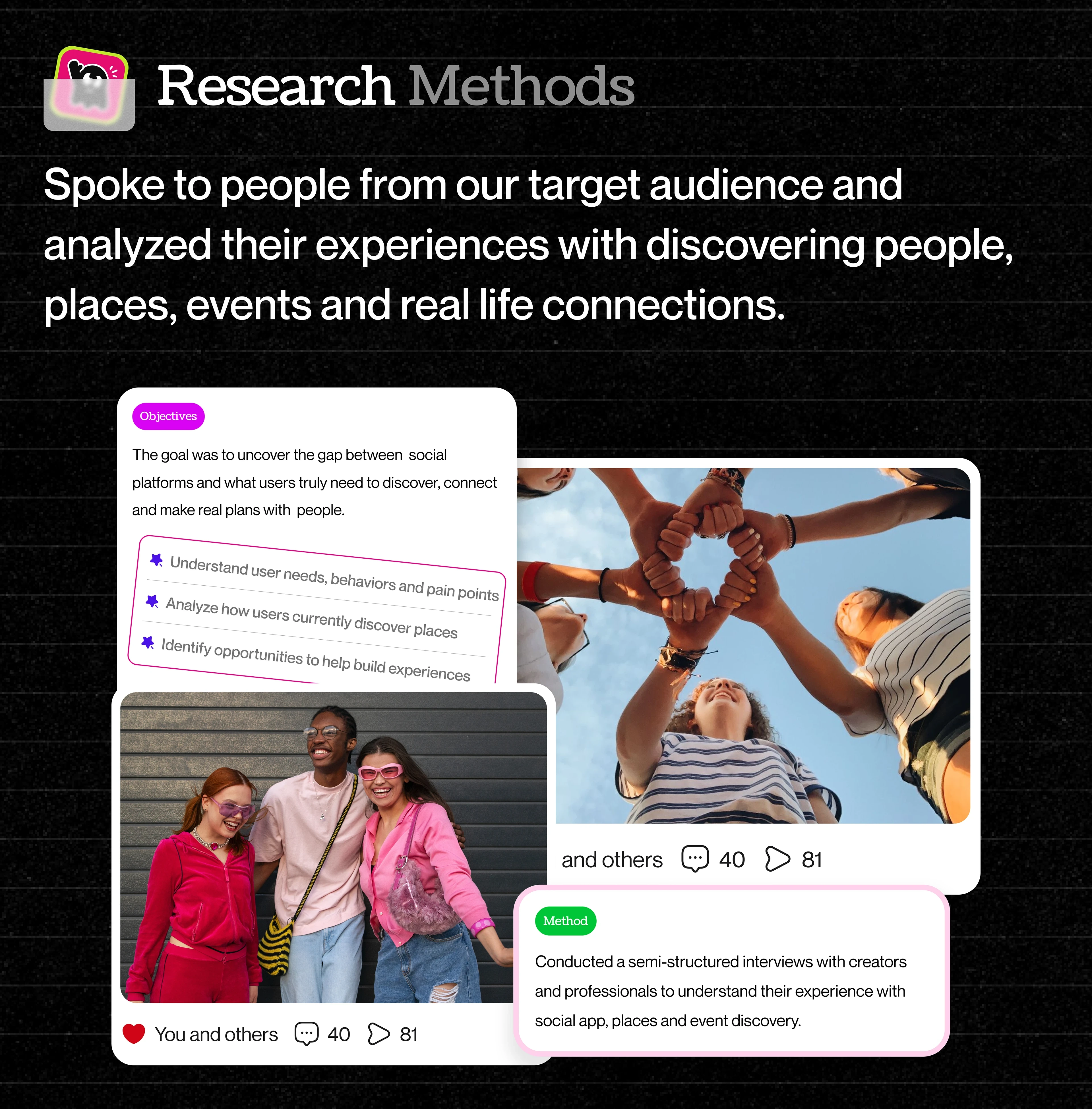
The main user journeys were tested across different application states.
Testing covered:
Registration and login
Profile management
Feed loading
Creating content
Social interactions
Comments
Notifications
Navigation
API failures
Empty states
Mobile responsiveness
Development Workflow
The development process followed a structured approach:
01 — Product Analysis
Analyzed the product requirements, user flows, screens, and core social features.
02 — Architecture
Separated the application into frontend, backend, API, and database layers.
03 — Frontend Development
Built reusable mobile components and connected them to application state.
04 — Backend Development
Implemented server-side logic, authentication, data management, and APIs.
05 — Integration
Connected the mobile application with backend services and tested real data flows.
06 — Testing & Optimization
Tested key user journeys and optimized performance and application behavior.
07 — Deployment
Prepared the application and backend infrastructure for production deployment.
Technology Stack
The final technology list should reflect the actual tools used on the project. The architecture consisted of:
Mobile: Cross-platform mobile development
Frontend: Component-based mobile architecture
Backend: Server-side application architecture
API: REST-based API communication
Database: Relational/document data storage
Authentication: Secure user authentication
Version Control: Git
Deployment: Cloud-based application infrastructure
Final Outcome
CIRCLES was developed as more than a visual social media concept. The product was structured as a complete mobile application connecting the user interface with backend services, APIs, authentication, database operations, and social functionality.
The full-stack architecture provides a foundation that can be extended with additional social features, richer content discovery, messaging, advanced notifications, analytics, and other platform capabilities.
Like this project
Posted Sep 18, 2026
CIRCLES is a modern social media app built with scalable mobile architecture, backend APIs, authentication, data management, and interactive social features.