
As a Bulgarian brand of audiology and medical aid centers, Victoria help provides a range of hearing aid services—from free consultations and hearing tests to the distribution and servicing of high-end devices. They had already built a strong reputation as a brand that takes its work to heart, but their growth relied almost entirely on "word of mouth".
Recognizing the need to expand their reach and room for growth, they decided to invest in digital presence. Together, we established clear goals
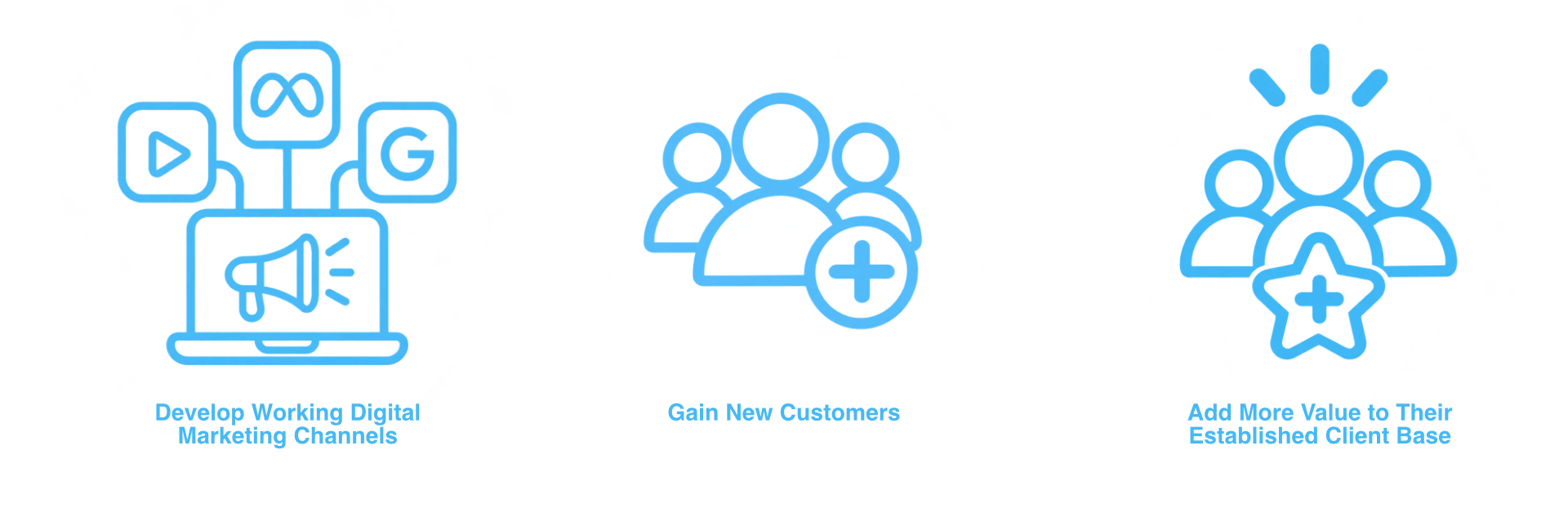
Challenges on the road:
- An outdated website: The existing website lacked modern functionality, comprehensive information, and a user experience that reflected the quality of the actual services.
- Limited social media activity: The brand needed a consistent communication strategy to reach new audiences and maintain relationships with existing customers.
- Barriers surrounding their services: Misconceptions, uncertainty, and stigma often discourage people from seeking professional assistance. Educational communication could help address these concerns and push customers further down the funnel.
Developing their Digital Presence
The original website offered little beyond basic business information. My responsibility was to develop the content, structure, and user journey of a replacement website.
A key requirement was to introduce online appointment booking, replacing the previous phone-only process, and reduce the workload on the centers' staff by providing answers to frequently asked questions, detailed information about the available models, and valuable opportunities for customers, such as funding for specific products through the National Health Insurance Fund.
Most importantly, the goal was to carefully develop a mid-to-bottom-funnel conversion channel that would turn potential customers' interest into appointments and generate a steady flow of fresh customers for the centers.
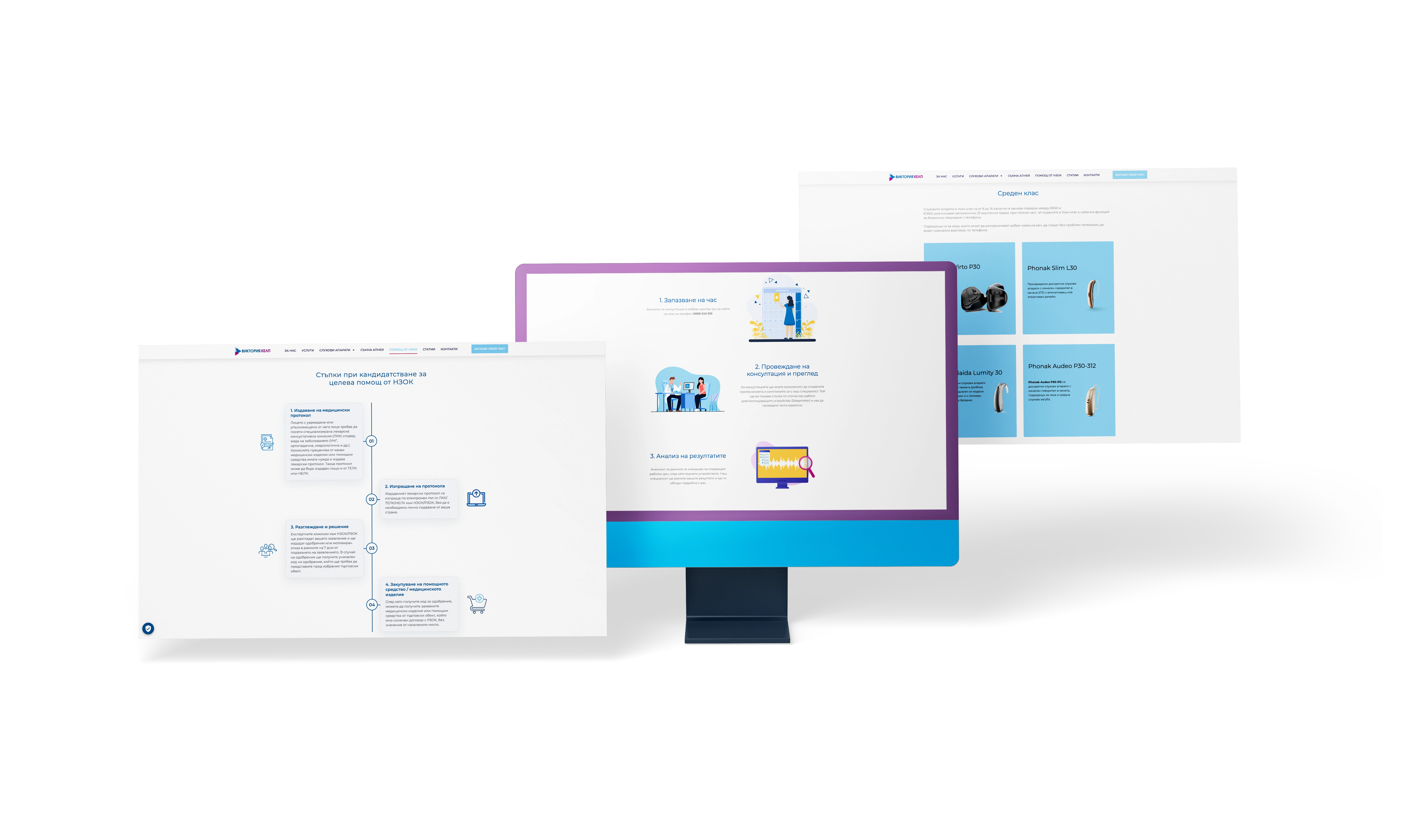
Creating the Website into a Customer Acquisition Hub
The website was designed to serve as a central hub for all of Victoria Help's services, providing useful information and a seamless experience for both existing and potential customers. I worked on prototyping the layout and UI with the customer journey in mind, defining three key principles to guide the website's design and overall experience:
Intuitive user experience, tailored to the needs and preferences of the brand's two main customer audiences.
Modern, clean visual design, without unnecessary complexity or distracting elements.
Clear and efficient visual communication, making information easier to understand and the website simpler to navigate.
I set myself a pretty simple goal – to make Victoria Help's website look better, feel better, and work more effectively than any of their competitors' websites, by far.
However, I couldn't go overboard with the design, as the two main customer audiences (adults aged 35+ and seniors aged 65+) generally prefer cleaner, easier-to-navigate interfaces without too much visual complexity.
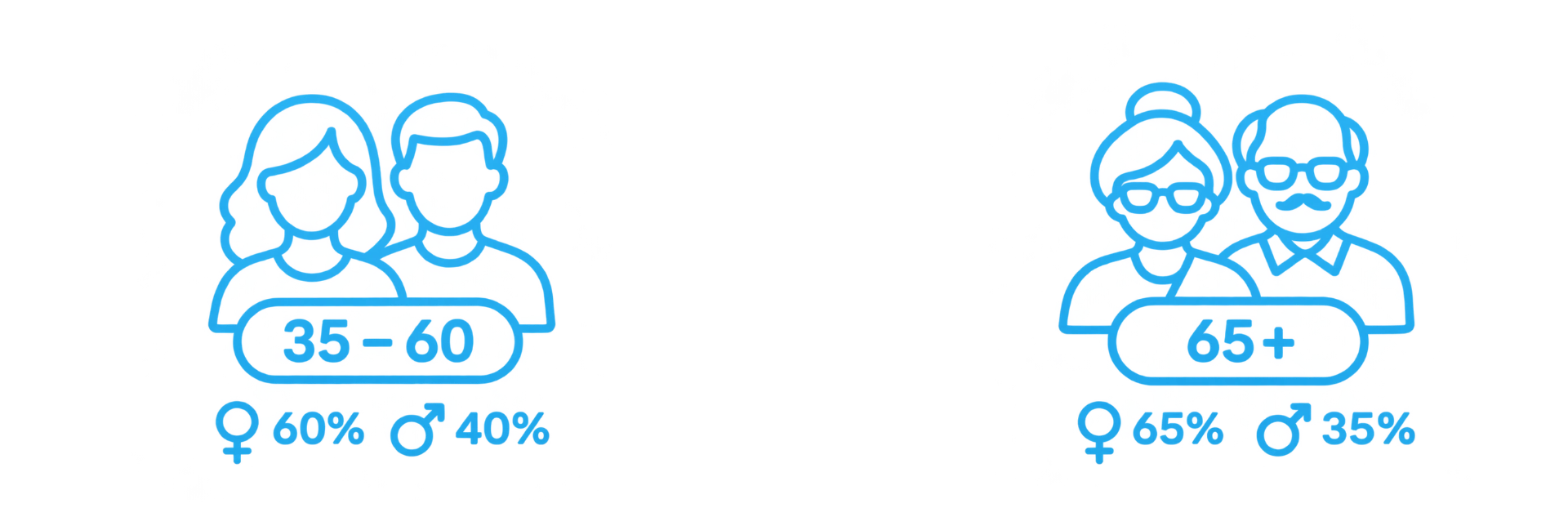
The primary audience was 35–60, as adult children often encourage their elderly parents to get hearing aids and play a major role in the purchasing decision. Also, they are mostly digitally native.
So, together with the web design studio – Webrosso, we focused on creating a modern but simple experience, using visuals only where they helped communicate information more clearly, made navigation easier, or brought some life to sections that otherwise felt a bit too static.
Working on the Content and Customer Psychology of the Funnel
Beyond the design, I put a lot of thought into the content and how it could help turn visitors into customers. After all, we're talking about medical services, where trust is a major factor in decision-making. So, I worked on incorporating different marketing techniques throughout the website – risk reversal through free consultations and product trials, objection handling by addressing common concerns, choice architecture to make product selection easier, and social proof and authority signals to build credibility. All with the idea of making the decision easier and giving people fewer reasons to hesitate before booking an appointment.
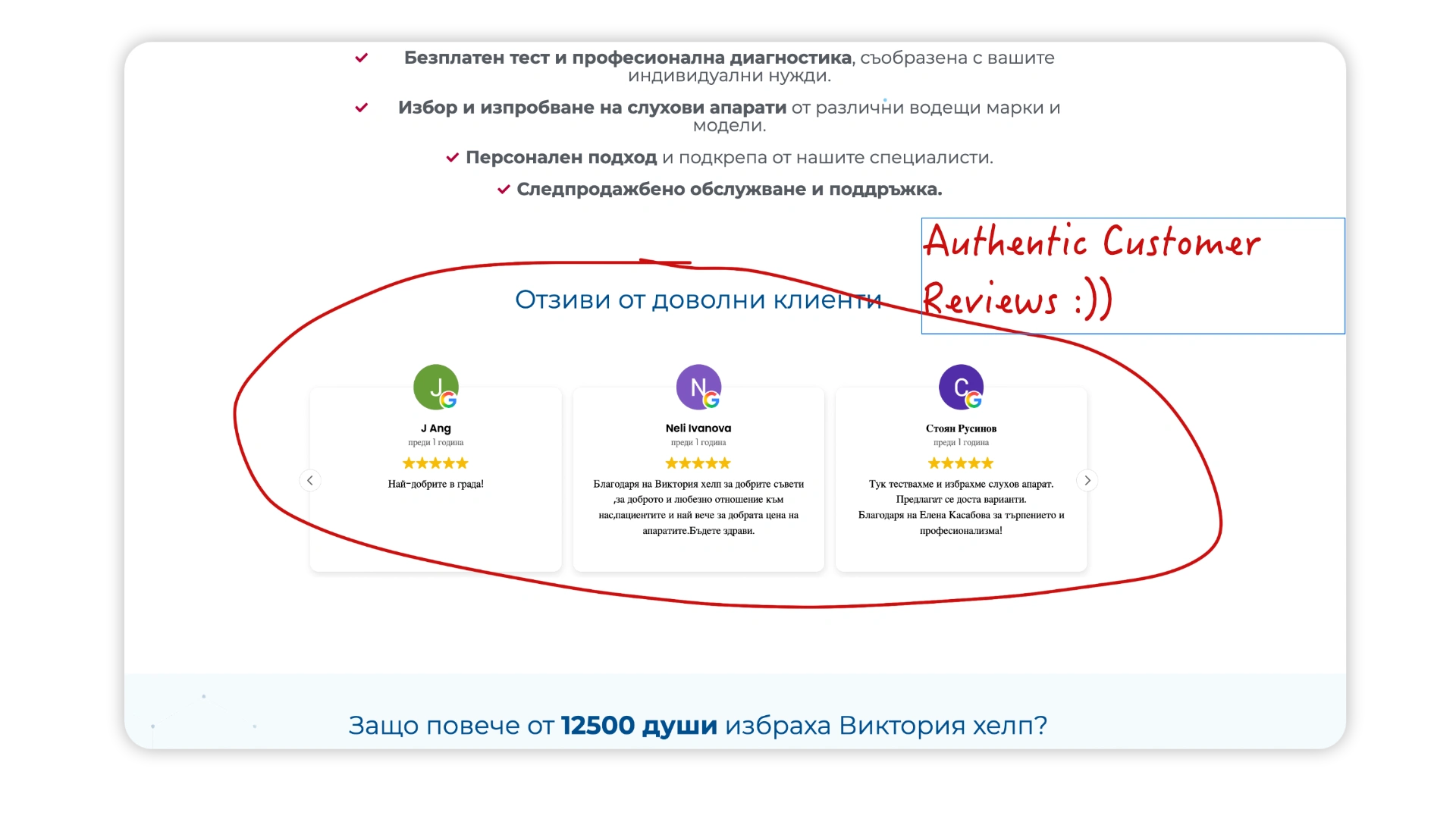
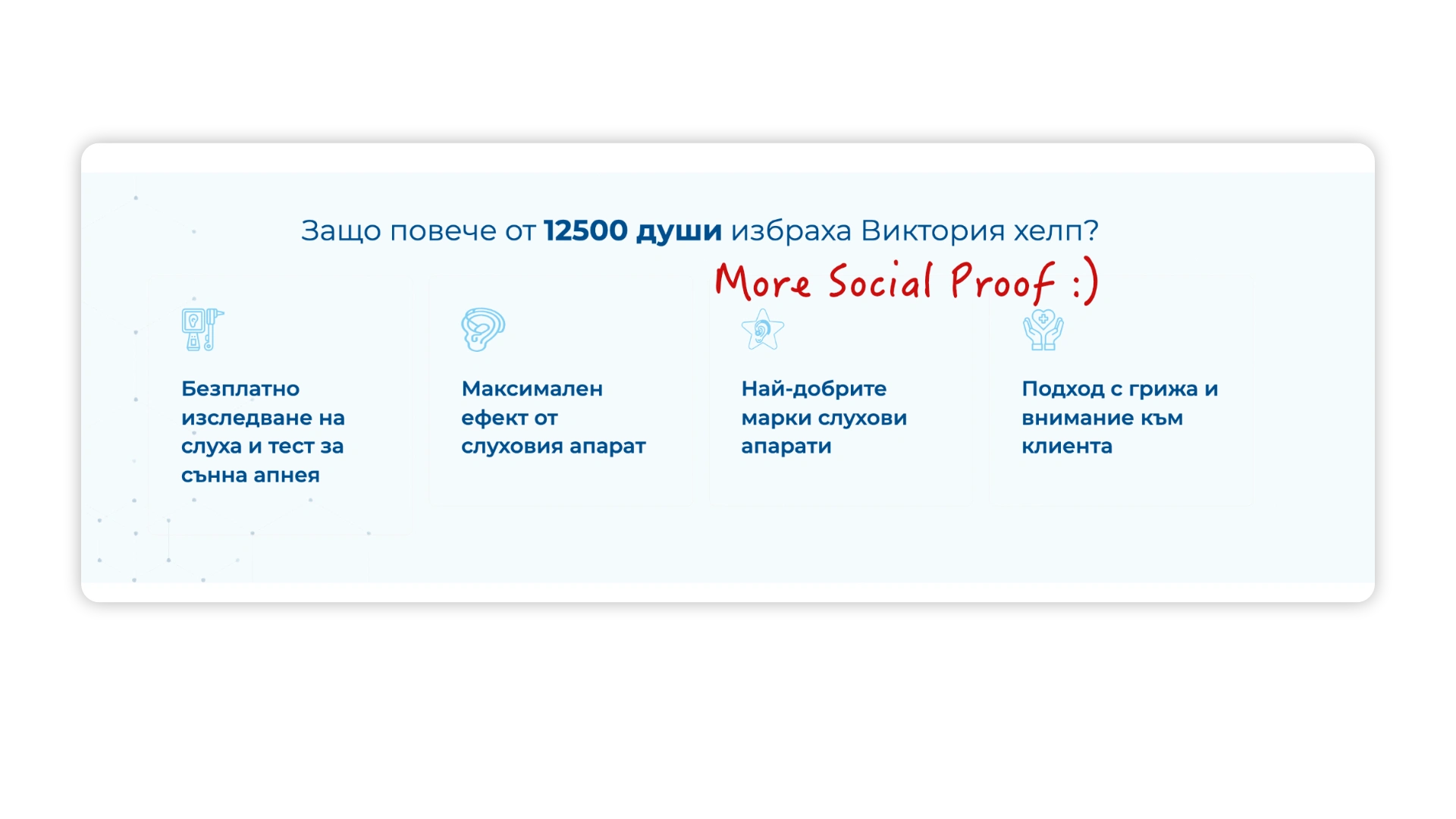
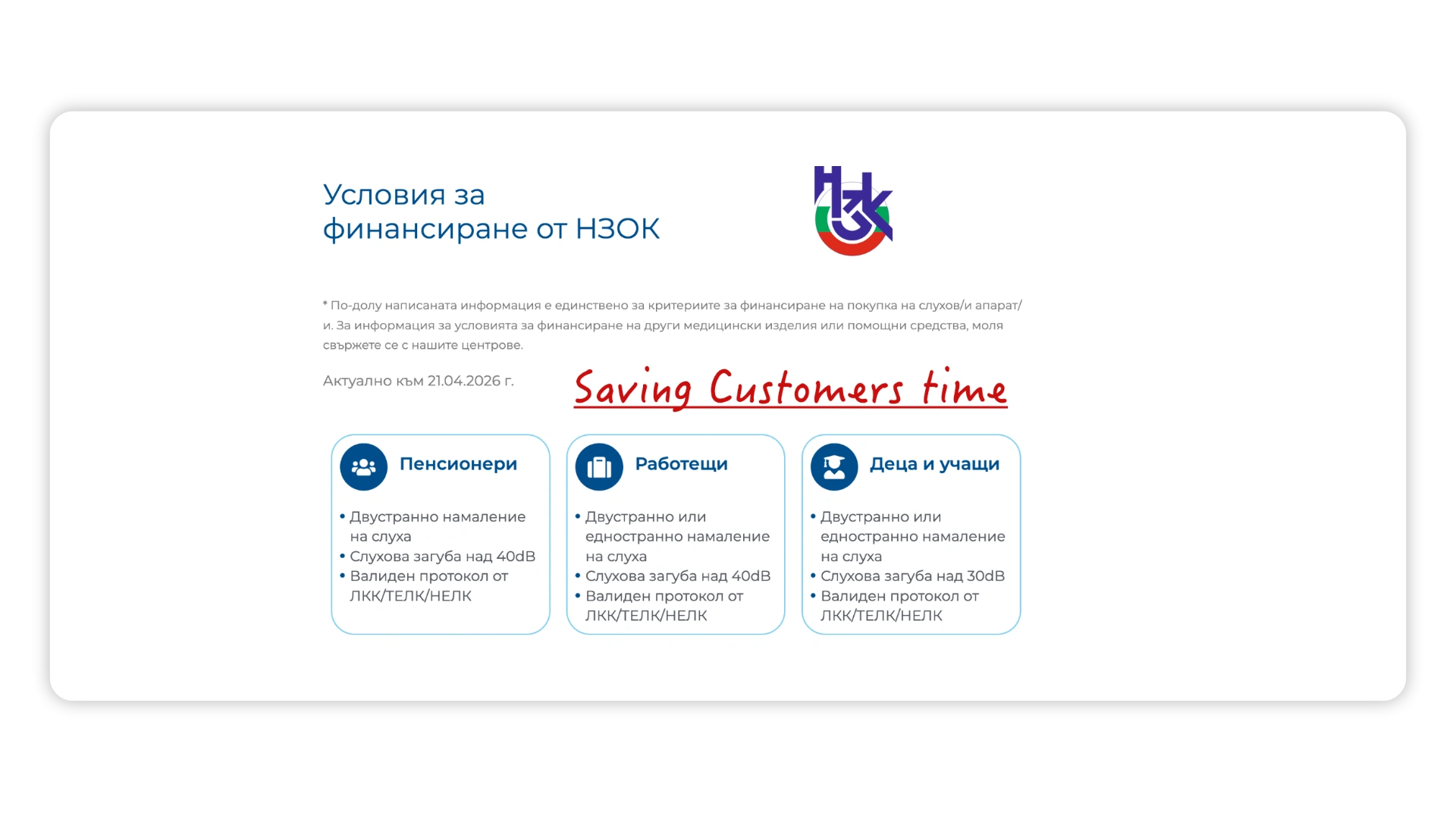
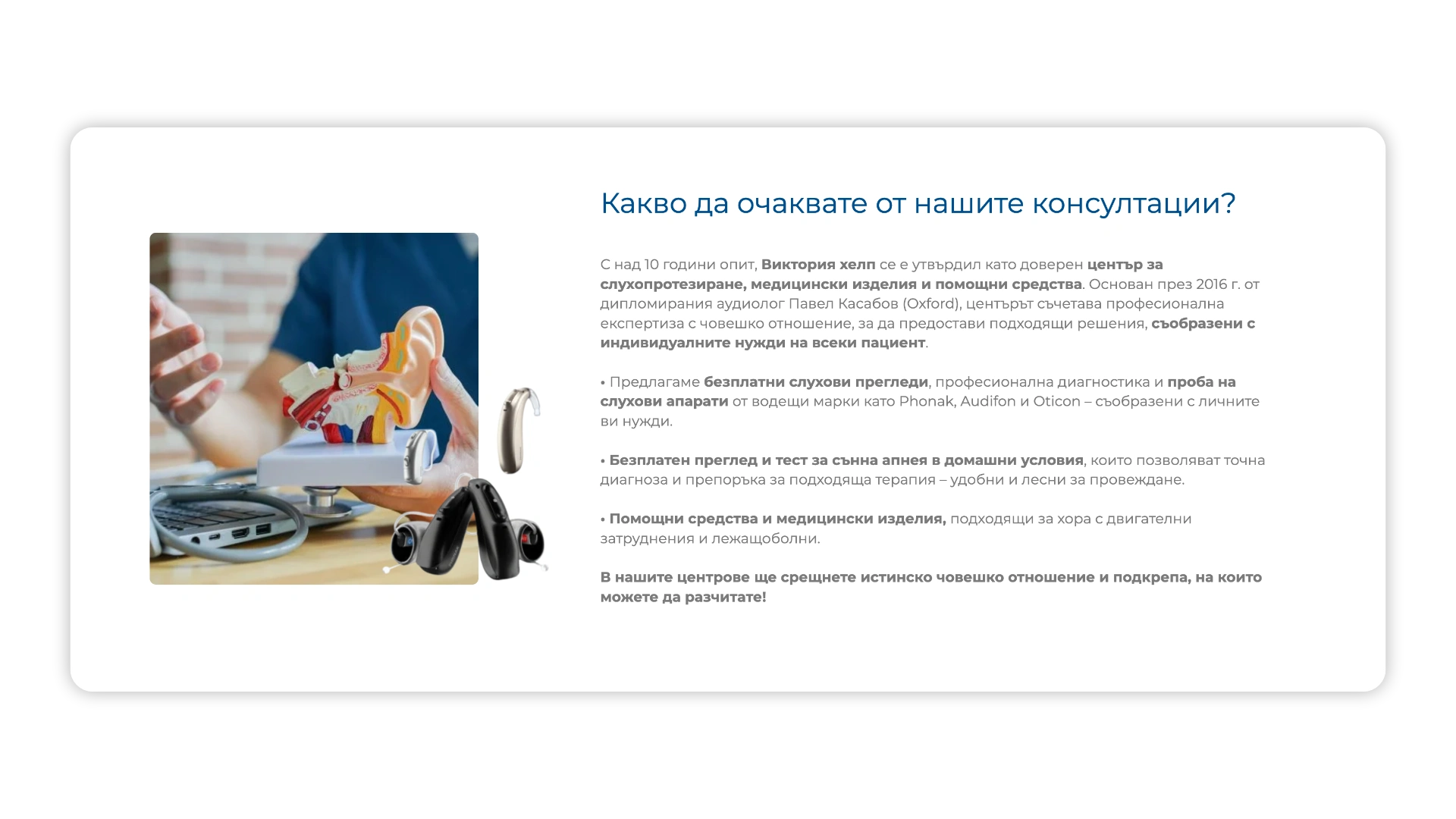
The written content was another big part of this. I wanted it to be informative, answer as many customer questions as possible, but most importantly – tell the story of Victoria Help, because that's where much of their real value lies. What makes them different isn't simply the products or services they offer, but the personal attention, patience, and genuine care they give to each customer. I wanted that to come across throughout the website, rather than relying on generic medical service descriptions. At the same time, the content needed to be practical and help visitors find the information they were looking for without having to call the centers for every little thing.
I also added Q&A sections to the homepage and sleep apnea page, and wrote 12 articles on popular topics and common customer questions, with the goal of improving SEO and GEO and attracting more relevant organic traffic.
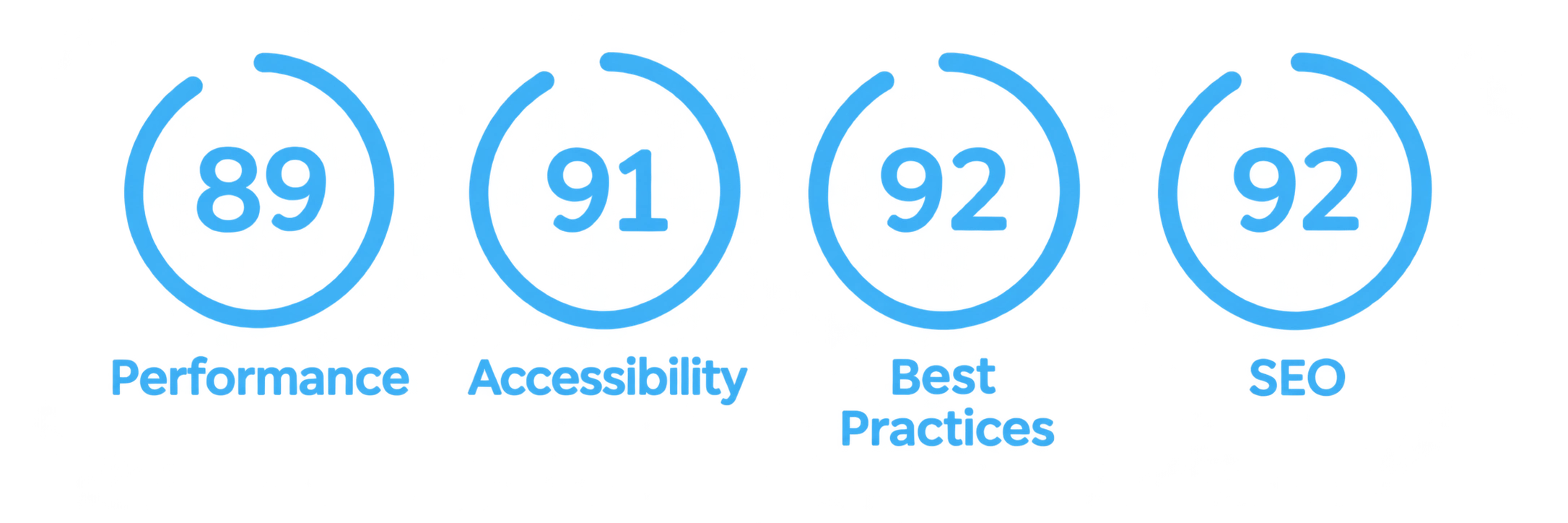
For the GEO tracking I used the amazing MettleGEO software, developed by an ambitious bulgarian startup all the way back in 2025.
Turning the Website into a Customer Acquisition Channel
Once the website was up and running, it was time to start bringing in customers. First things first – I integrated the necessary Meta and Google tracking tools, set up GTM events for the key user interactions on the website, and added Microsoft Clarity to better understand user behavior and show the client how actual customer journeys looked. With everything in place, we moved on to digital advertising.
Victoria Help had two main services to advertise – audiology and hearing aids, and sleep apnea and CPAP therapy. Although both were medical services, their markets were at very different stages of maturity, so I approached them with two different advertising strategies.
Audiology & Hearing Aids – Capturing Demand in a Saturated Market
The hearing aid market in Bulgaria was already quite mature, with plenty of established competitors and customers who were familiar with the available solutions. I'd put it at Stage 4 in terms of market sophistication, where simply advertising the products and their benefits wasn't enough to stand out.
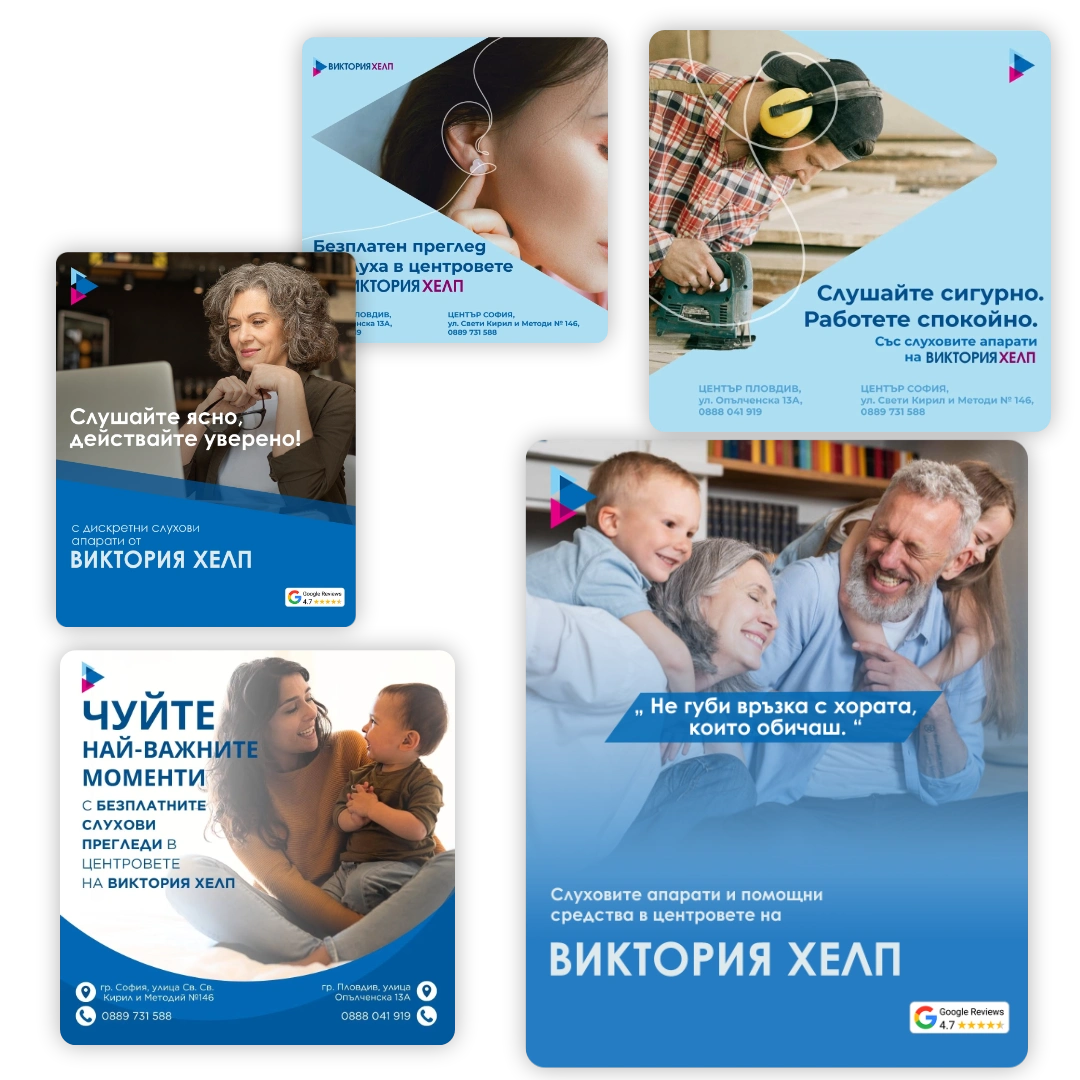
For this, I went with two channels working together – always-on Meta ads for reaching people higher up the funnel, introducing Victoria Help and its advantages, and Google Search ads for capturing both the intent generated by Meta and the demand that already existed in the market.
Over the course of two years, I kept testing different Meta ad variations – messaging, visuals, formats, and audiences – to see what worked best and gradually improve the results.
Sleep Apnea & CPAP Therapy – Creating Demand Before Capturing It
Sleep apnea was a very different case. The market in Bulgaria was still relatively immature, with a large part of the potential customers being either completely unaware of the condition or aware of their symptoms without knowing what was causing them.
So, unlike hearing aids, we couldn't just rely on people actively searching for the service. We had to create that interest first.
I focused on educational Meta ads to introduce sleep apnea, its symptoms, and the possible consequences of leaving it untreated. These were supported by plenty of educational content on the website and Google Search campaigns targeting different levels of customer awareness – from people searching for explanations of their symptoms to those already looking for a sleep apnea test or consultation.
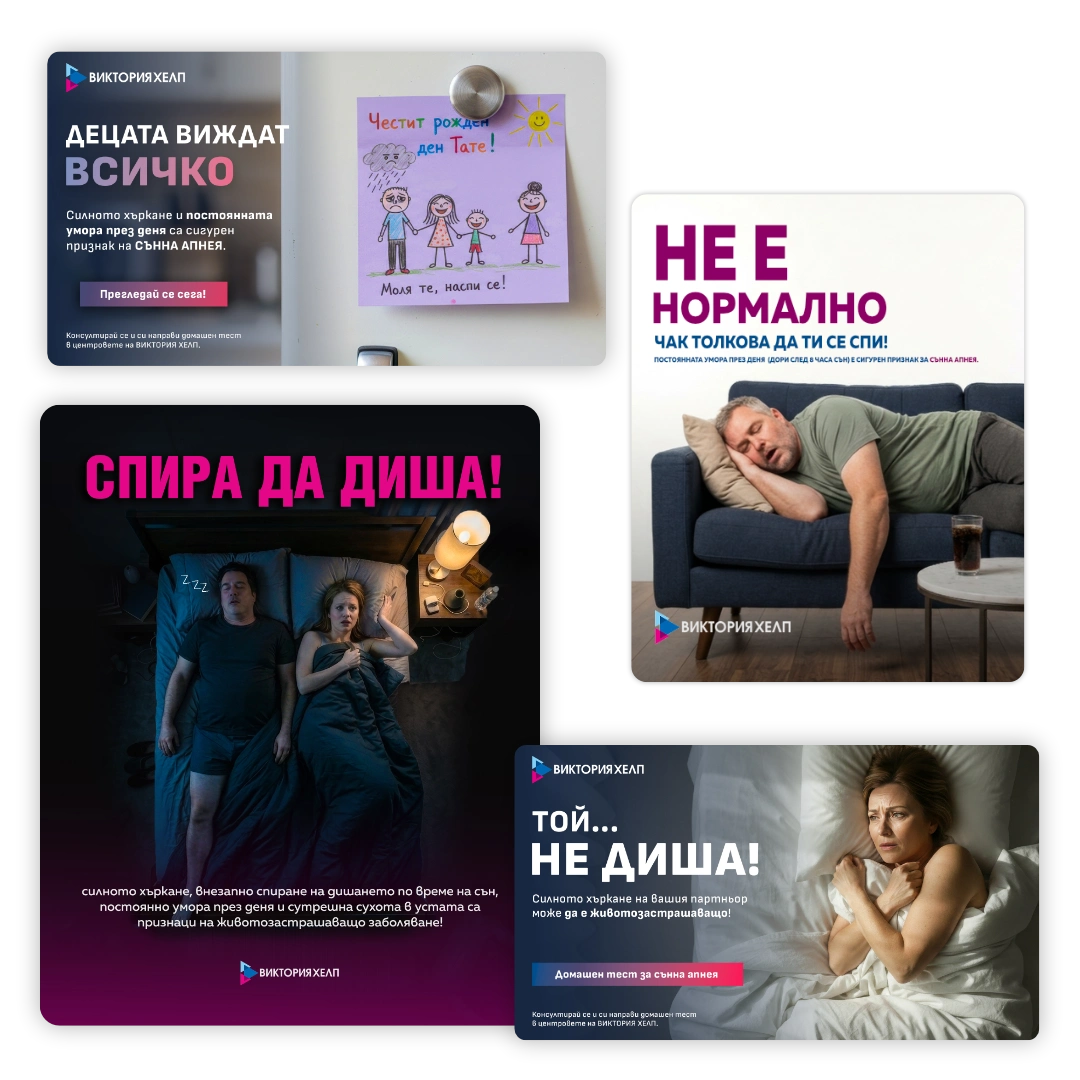
But there was another challenge. Getting people to book a free consultation or sleep test was one thing. Getting them to actually understand the need for CPAP therapy and consider buying a device was another.
That's why part of the advertising and website content also focused on explaining CPAP therapy itself – how it works, what benefits it offers, and why the right device and professional support matter.
The idea was to cover more of the customer journey, rather than simply bringing in consultation requests – from making people aware of a problem they might not even know they have, to educating them about the treatment and eventually converting them into CPAP customers.
For the Google Search campaigns across both services, I tested different combinations of short-tail and long-tail keywords before narrowing them down to the ones that brought the most conversions. I also went with a more aggressive bidding approach, aiming for a higher share of top-of-page placements. The reasoning was simple – both markets were dominated by one large franchise brand, holding roughly 80% of the market, while Victoria Help had established itself as a strong number two. So, competing for those top search positions was especially important if we wanted to capture a bigger share of the existing demand.
And the approach worked well, with the campaigns achieving annual average CTRs of 15.66% for audiology services and 11.37% for sleep apnea services – both well above typical Google Search benchmarks and a strong indication that our ads were reaching people with relevant intent.
Producing Content and Building a Social Media Presence
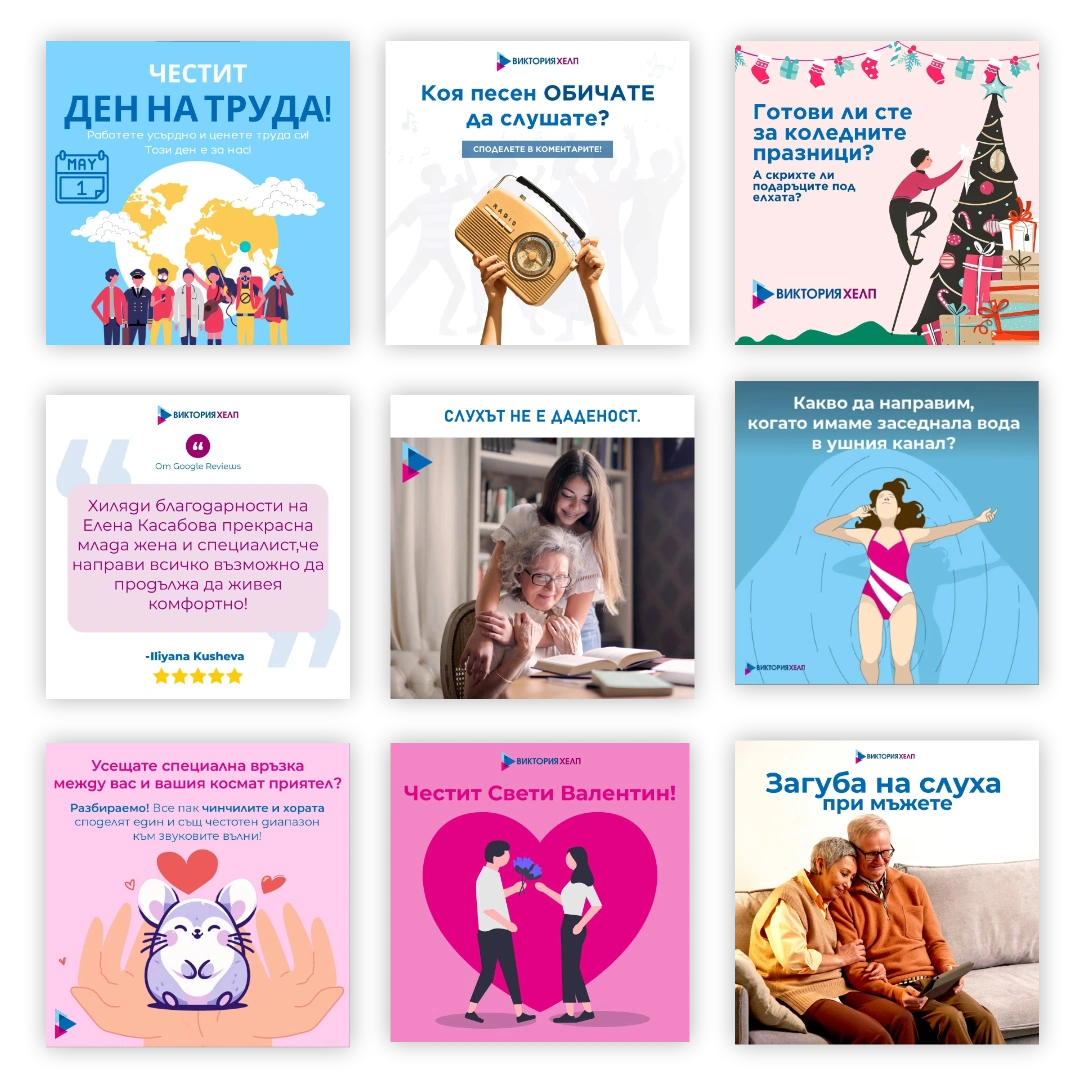
To build credibility, grow a community around the brand, and reach new audiences, I focused on creating a mix of useful, educational, and occasionally more engagement-driven content. The idea was to make Victoria Help's social media presence more than just another channel for advertising their services, but a place where people could learn something useful and get to know the brand better.
I focused primarily on Facebook, as it was the preferred social media platform for our main target audiences and remains widely used in Bulgaria. I worked on the content strategy, designed the visuals, wrote the copy, and boosted selected posts when it made sense to give them some extra reach. Over time, I also tested different content approaches to see what people responded to best.
Over the course of a year and a half, I brought together a small production team to shoot and produce different educational videos, mainly explaining what happens during consultations and hearing examinations at Victoria Help. The goal was to remove some of the fears and uncertainty people might have before visiting a center, while explaining the process in a more engaging and easy-to-understand way.
The videos were later embedded into the corresponding sections of the website, where they served another purpose – helping visitors better understand the services and feel more confident about booking an appointment.
Conclusion
What I like most about this project is that it wasn't just about creating a better website or running some ads. It was about building Victoria Help's digital presence almost from scratch and making all the different parts work together – the website, advertising, content, and social media, each with its own role in bringing new customers to the business.
And with two very different markets to work with, there was plenty of room for different strategic approaches, creative testing, and optimization. From competing for existing demand in the hearing aid market to educating people about a condition many of them didn't even know they had.
But beyond the marketing side of things, I'm also happy that I got to work with a business that genuinely cares about its customers. Victoria Help already had a strong reputation and a good reason for people to choose them. My role was to bring those advantages into the digital space and turn them into something that could help the business grow.
And I think that's what makes this project one I'm particularly proud of.
0 likes · 27 views · Oct 6, 2025
Developing the Digital Presence of an Audiology and Medical Service Brand


