Longitude Society: Expedition Travel Website

Devansh Prakash

About the project
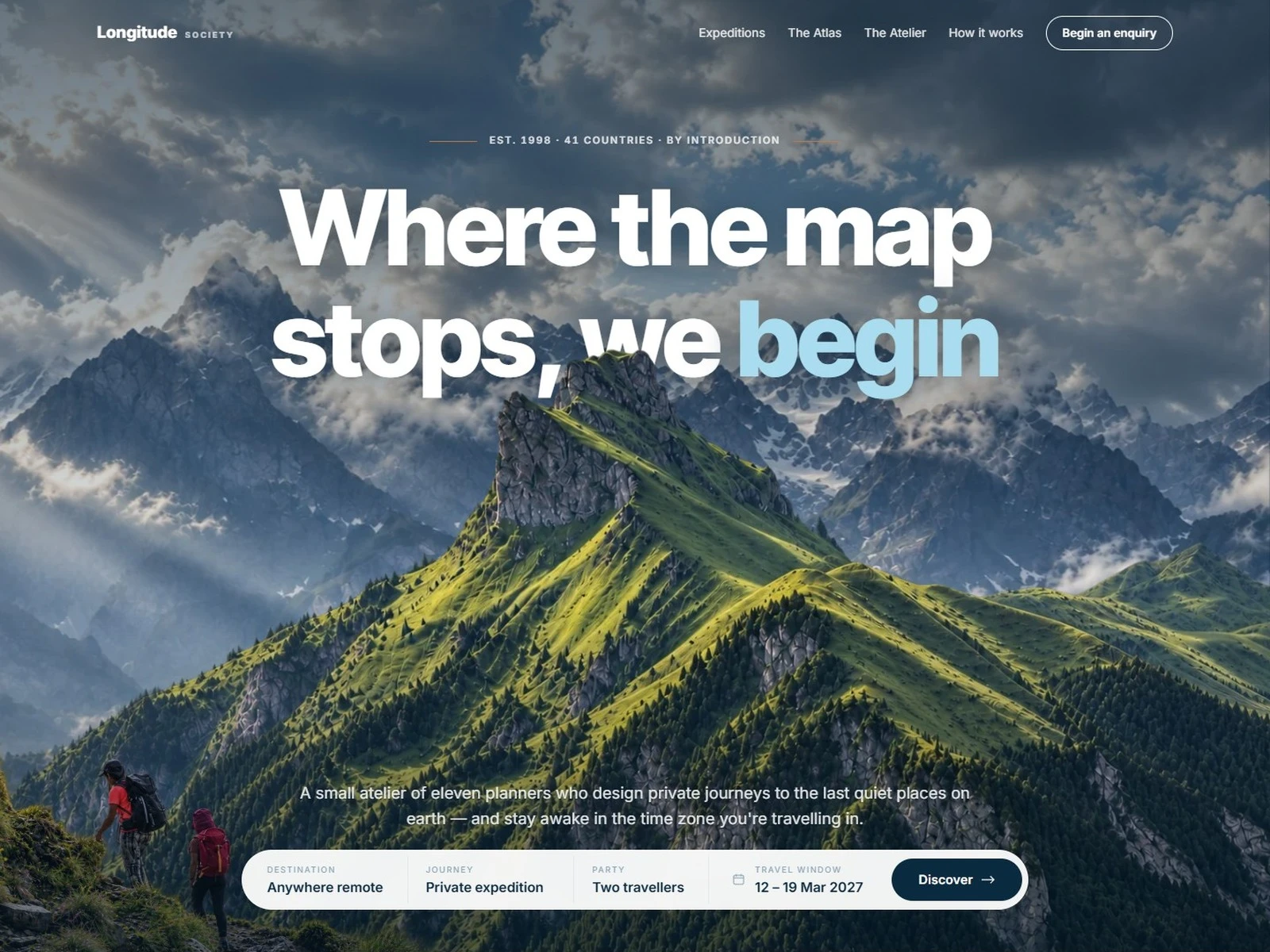
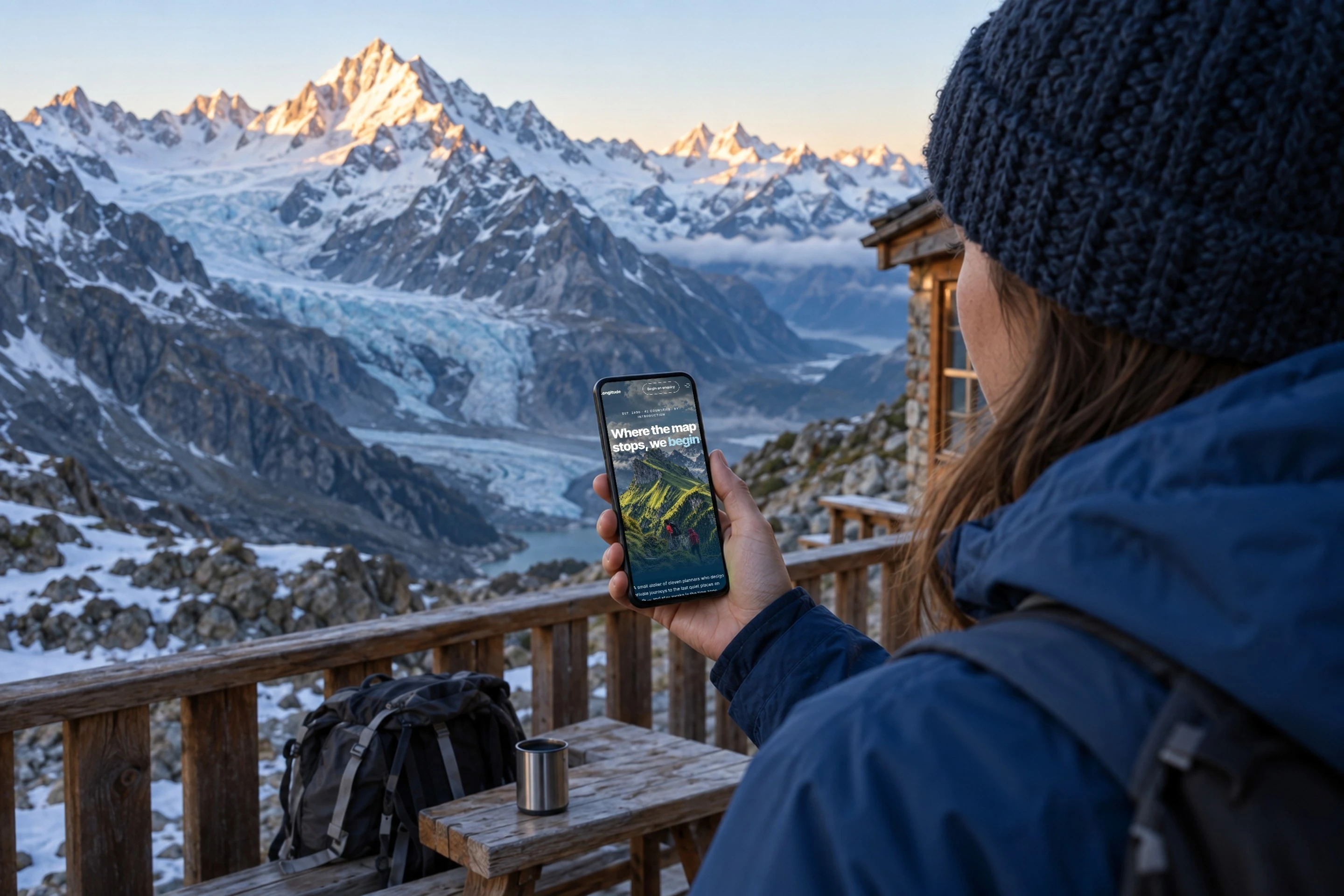
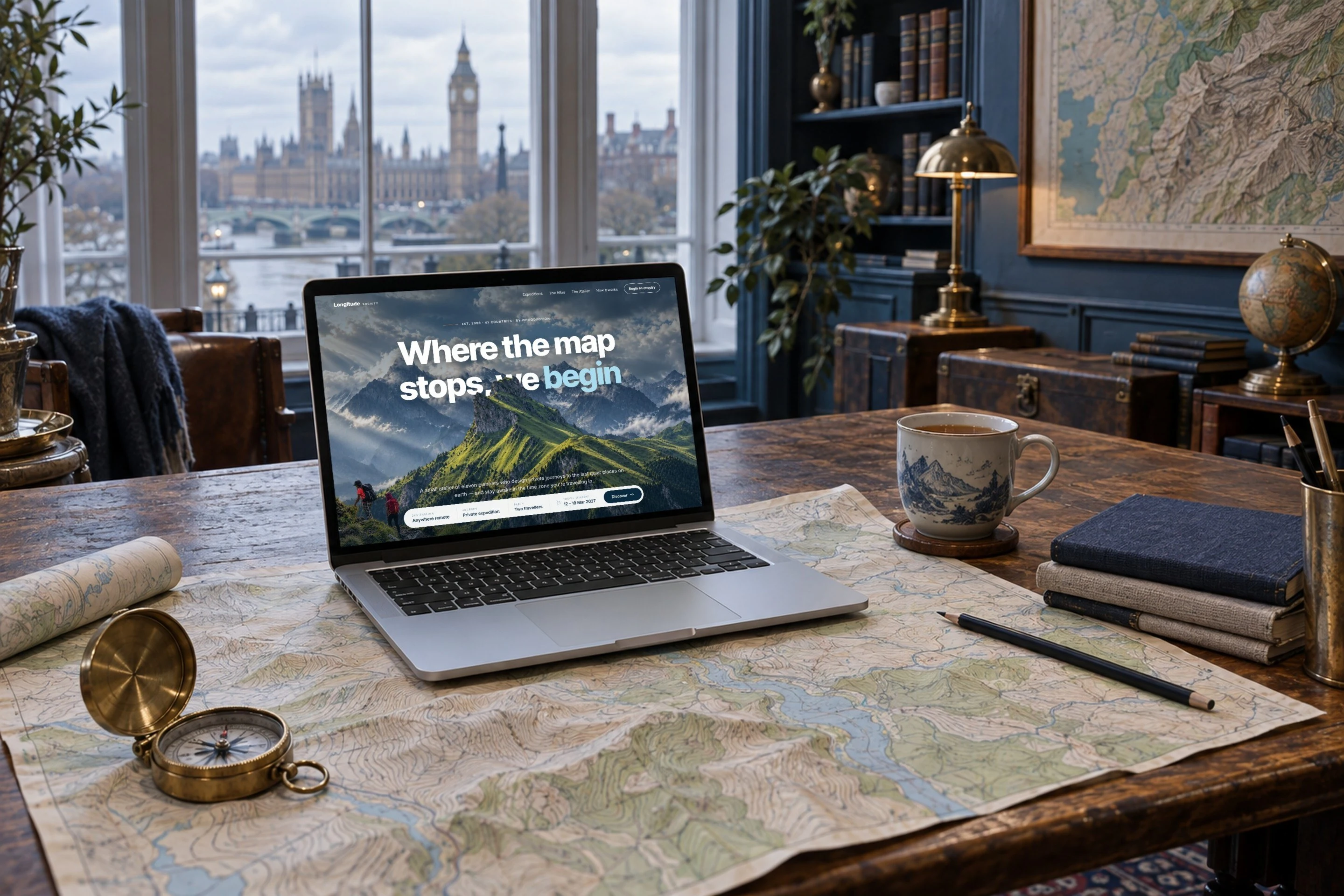
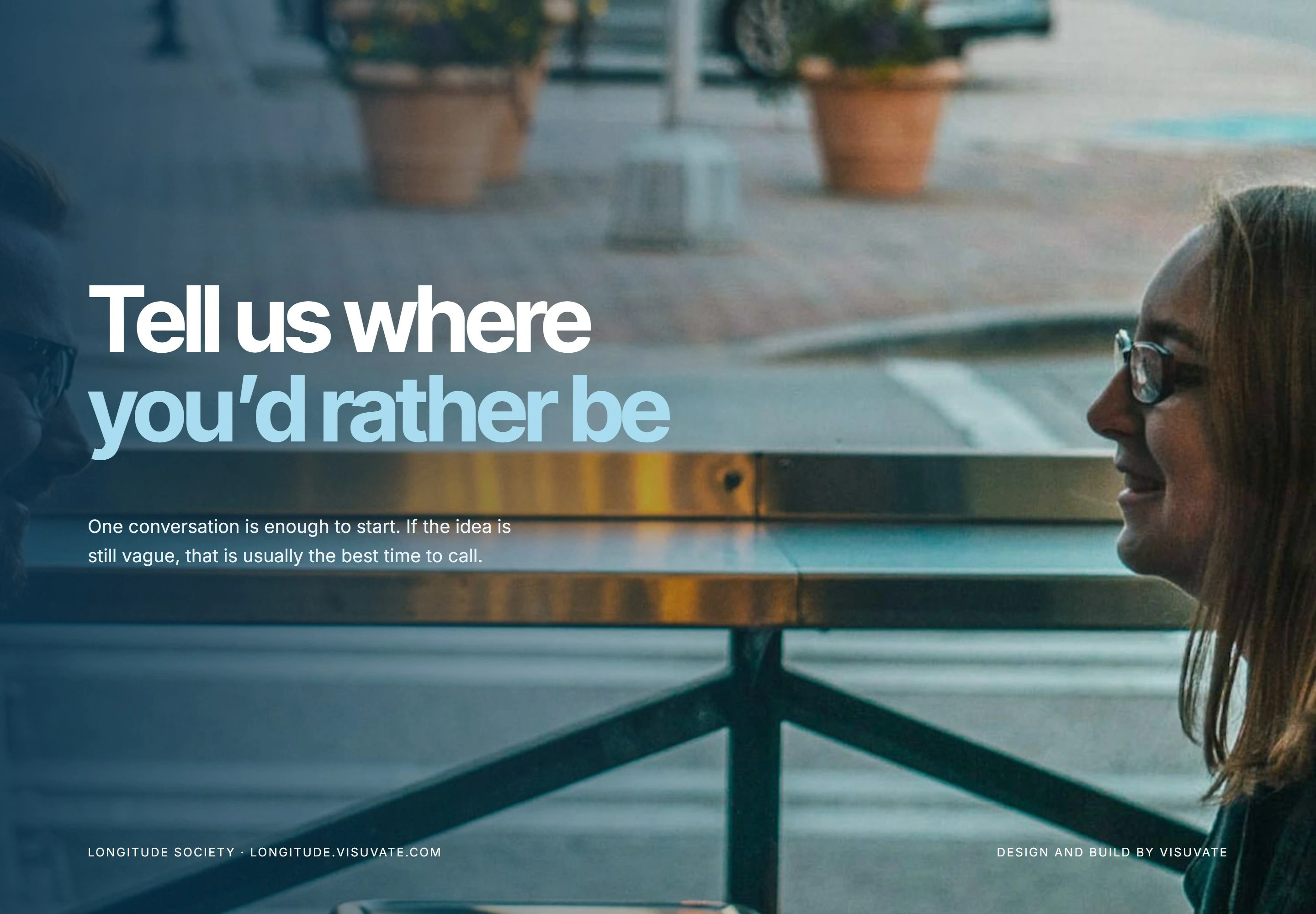
Longitude Society is a private-expedition travel studio designed and built end to end, six pages that run from a full-screen hero into a register of open journeys, an atlas of forty-one countries, the planners behind them and an enquiry form, so the conversation starts on the site itself.
Longitude Society is a concept brand for a small atelier of planners who design private journeys to remote places, built to prove that a travel site can sell judgement rather than packages, which is the hardest thing in the category to put on a page.
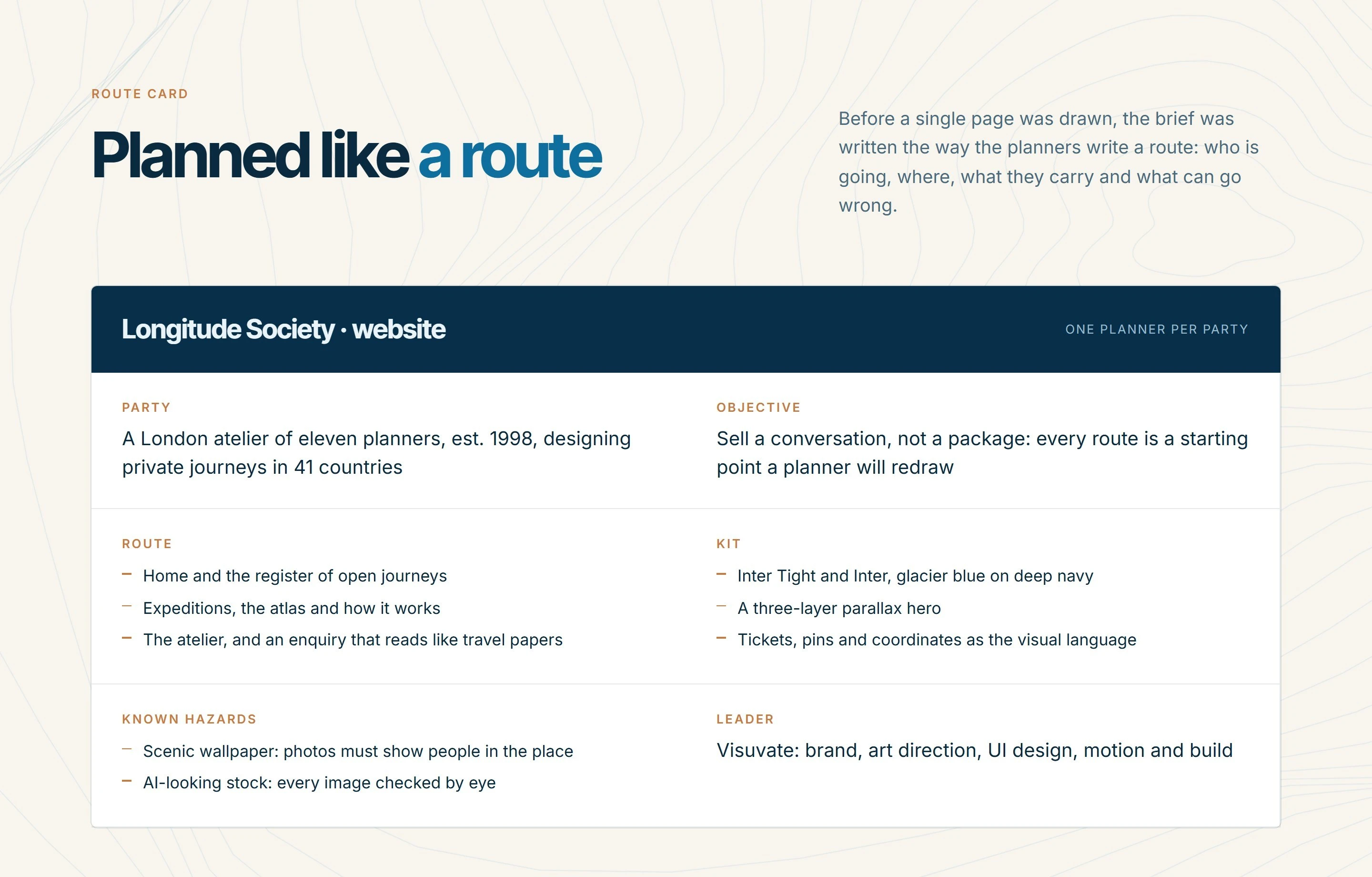
The brief
A travel brand that sells bespoke planning has nothing to show but photographs everyone else also has. The site had to make an atelier of eleven planners feel deliberate and rare, without listing packages like a tour operator.
The approach
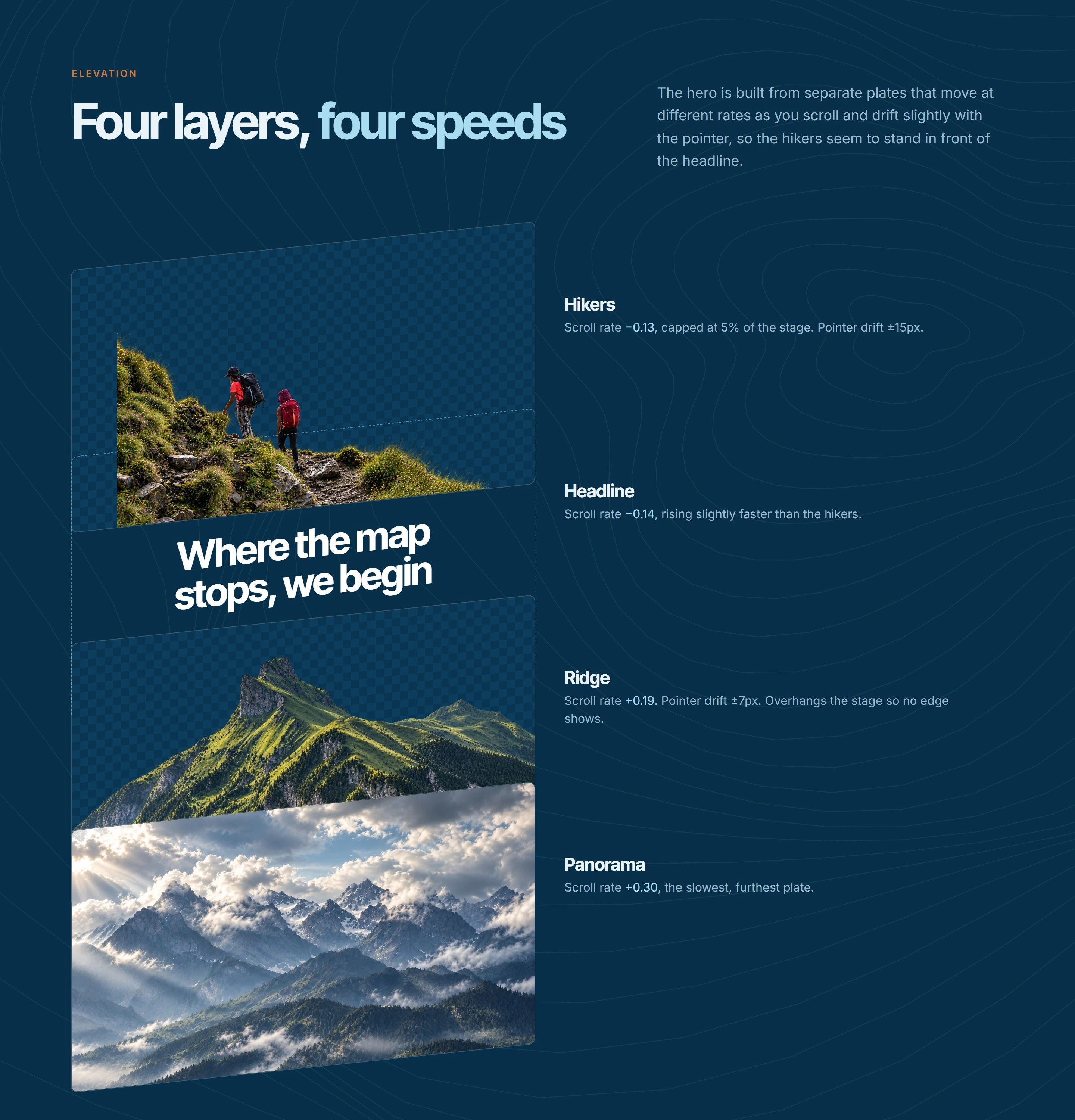
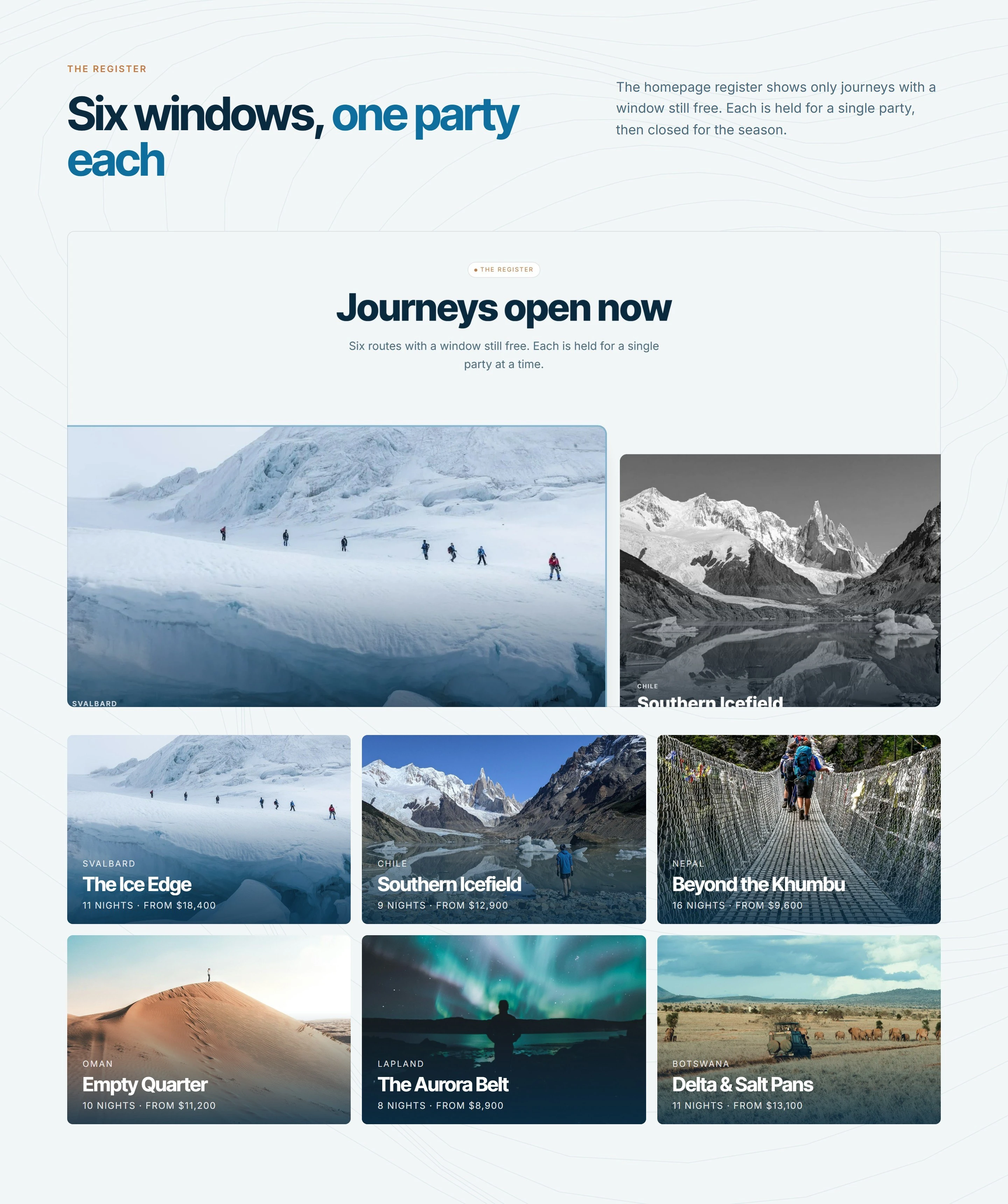
We built six pages around one idea: every journey is drawn, not sold. A full-screen hero, a register of the routes open now, an atlas of forty-one countries, and a timeline showing how seven months actually overlap.
Homepage and pages
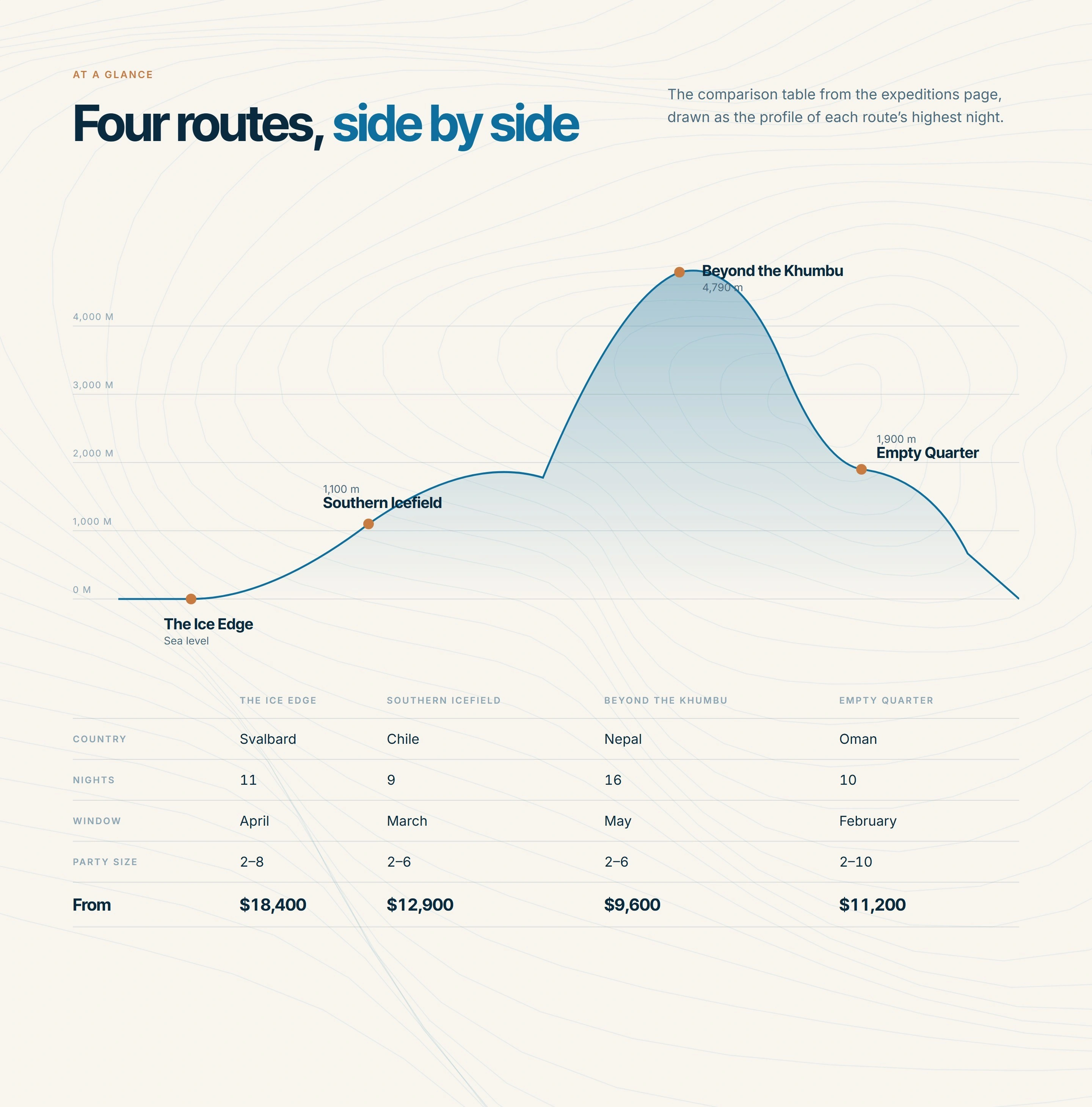
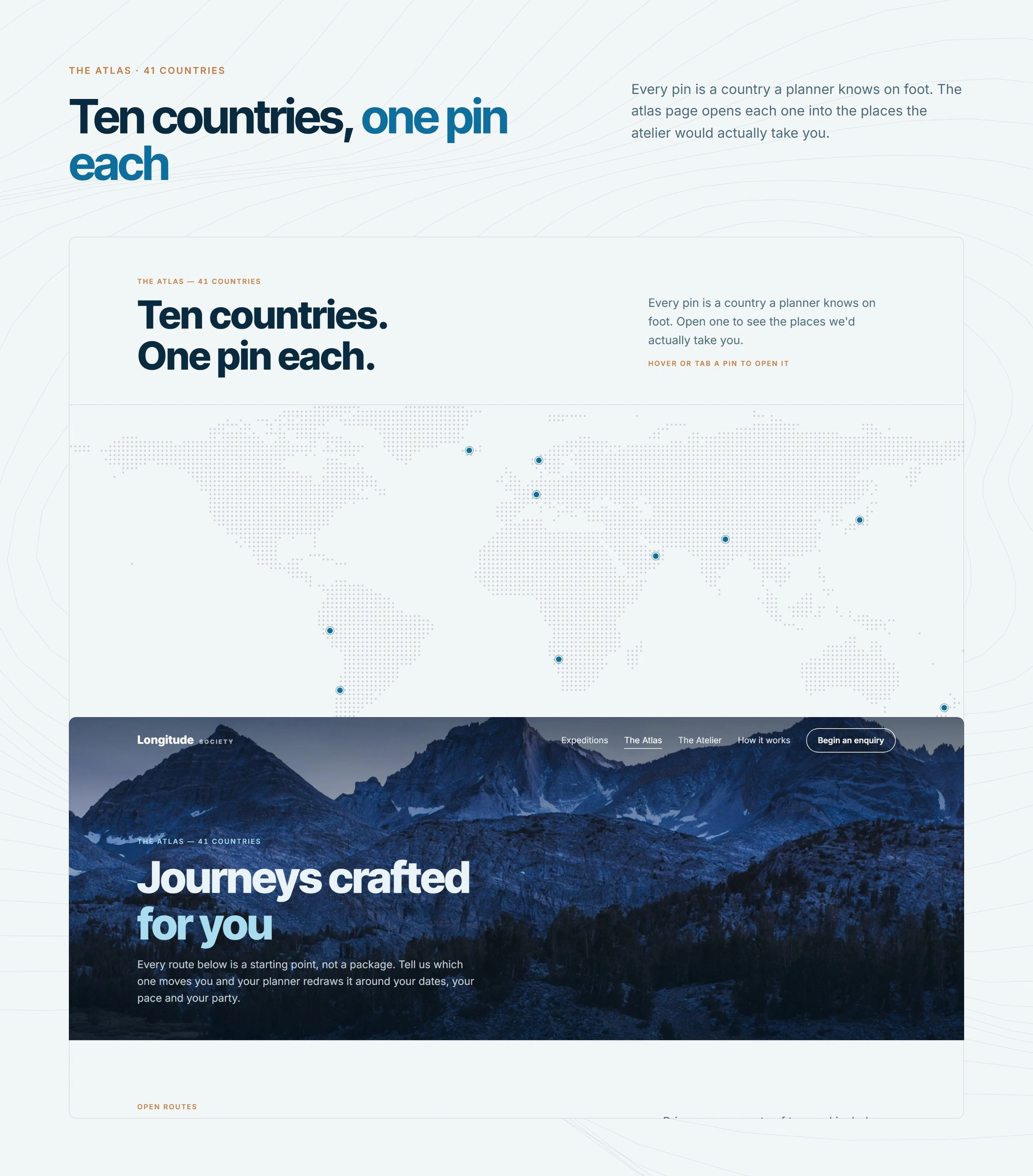
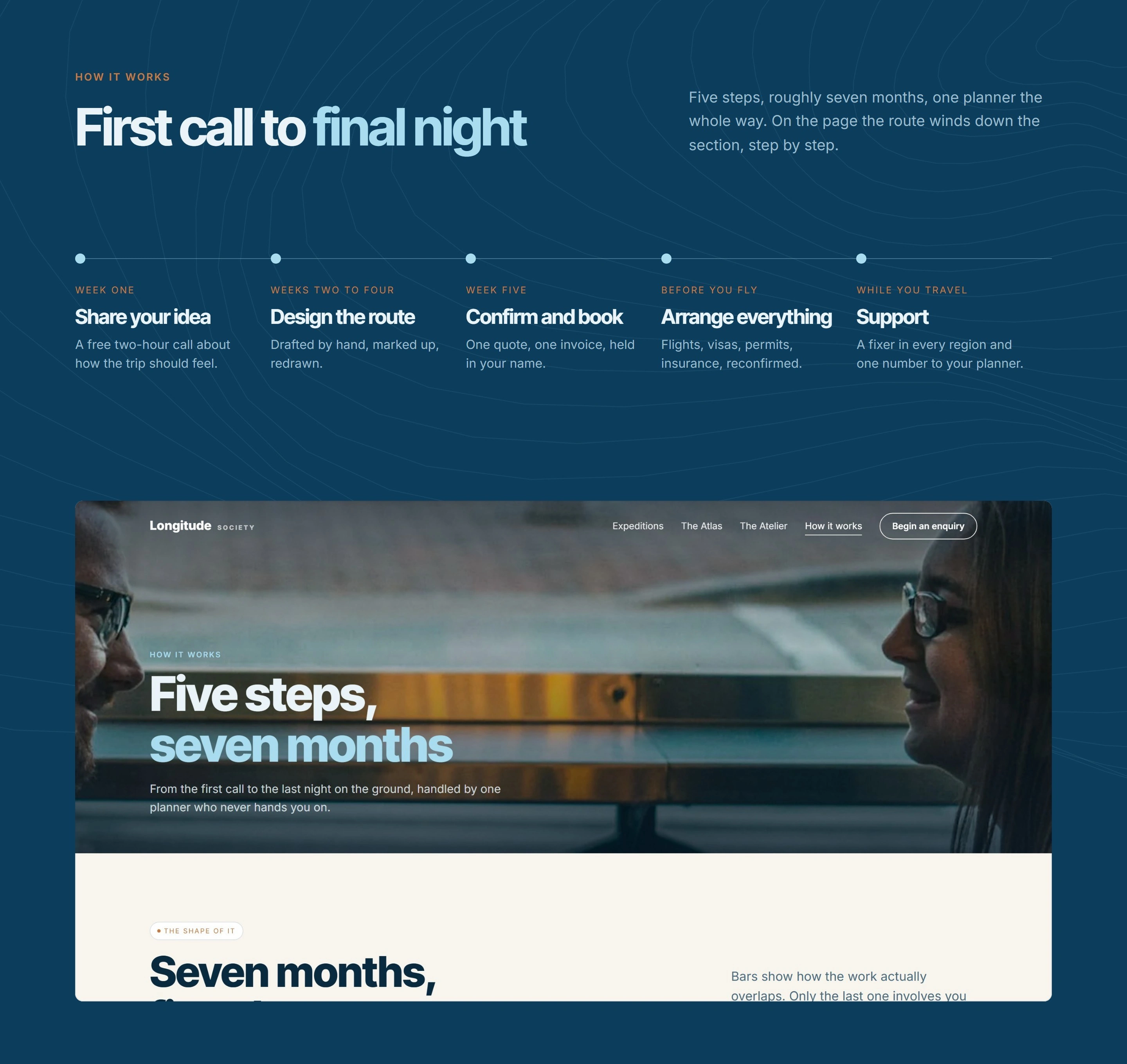
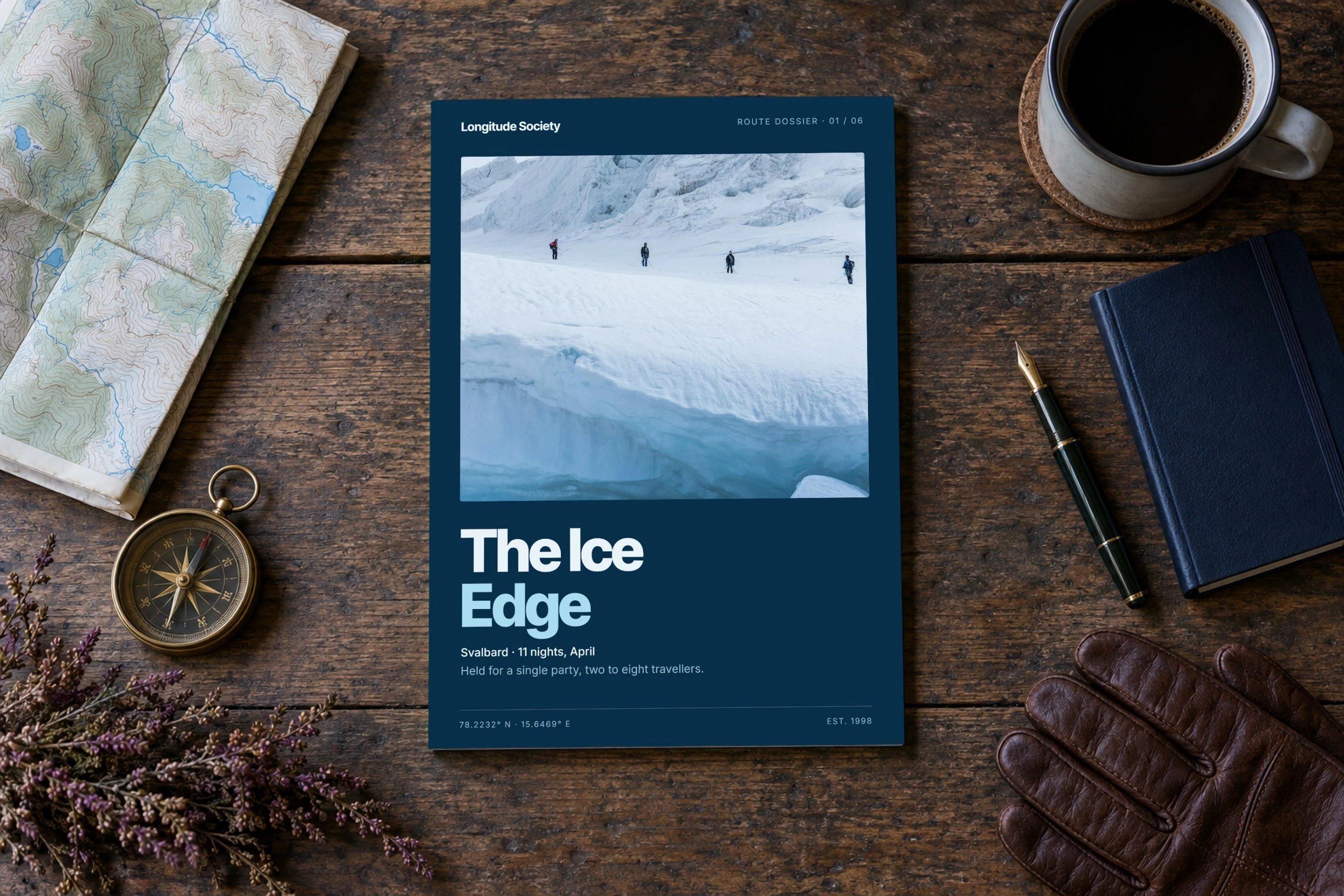
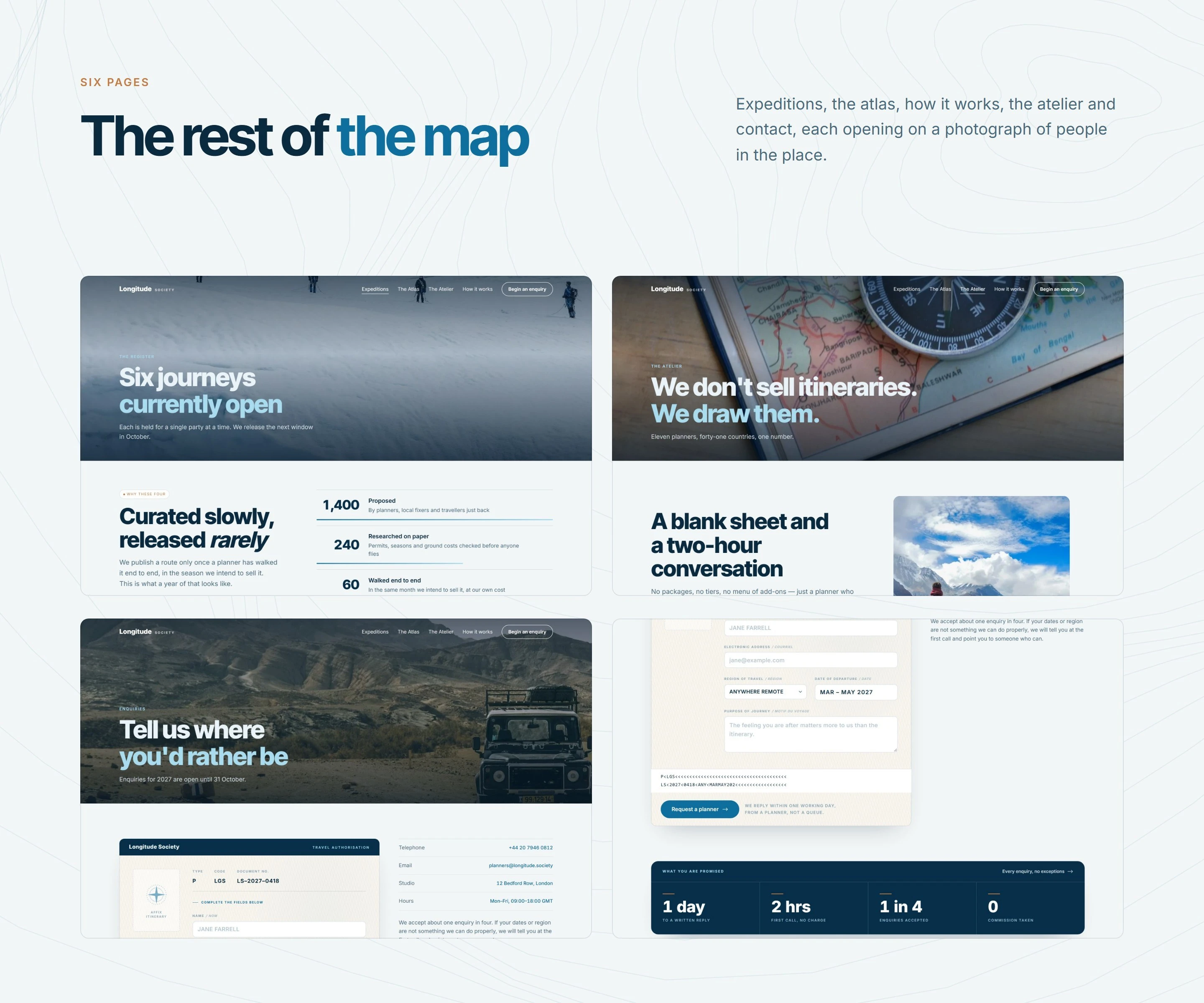
Six pages carry it: a home that opens on a full-screen frame, an Expeditions register of the routes currently open, an Atlas of forty-one countries with a pin for each, The Atelier for the people and the method, a How it works timeline, and an enquiry page shaped like a travel document.
How it was built
The site is hand-built in plain HTML, CSS and JavaScript, with its typefaces embedded in the page rather than fetched from a CDN, so it opens as readily on a hotel connection as on a desk.
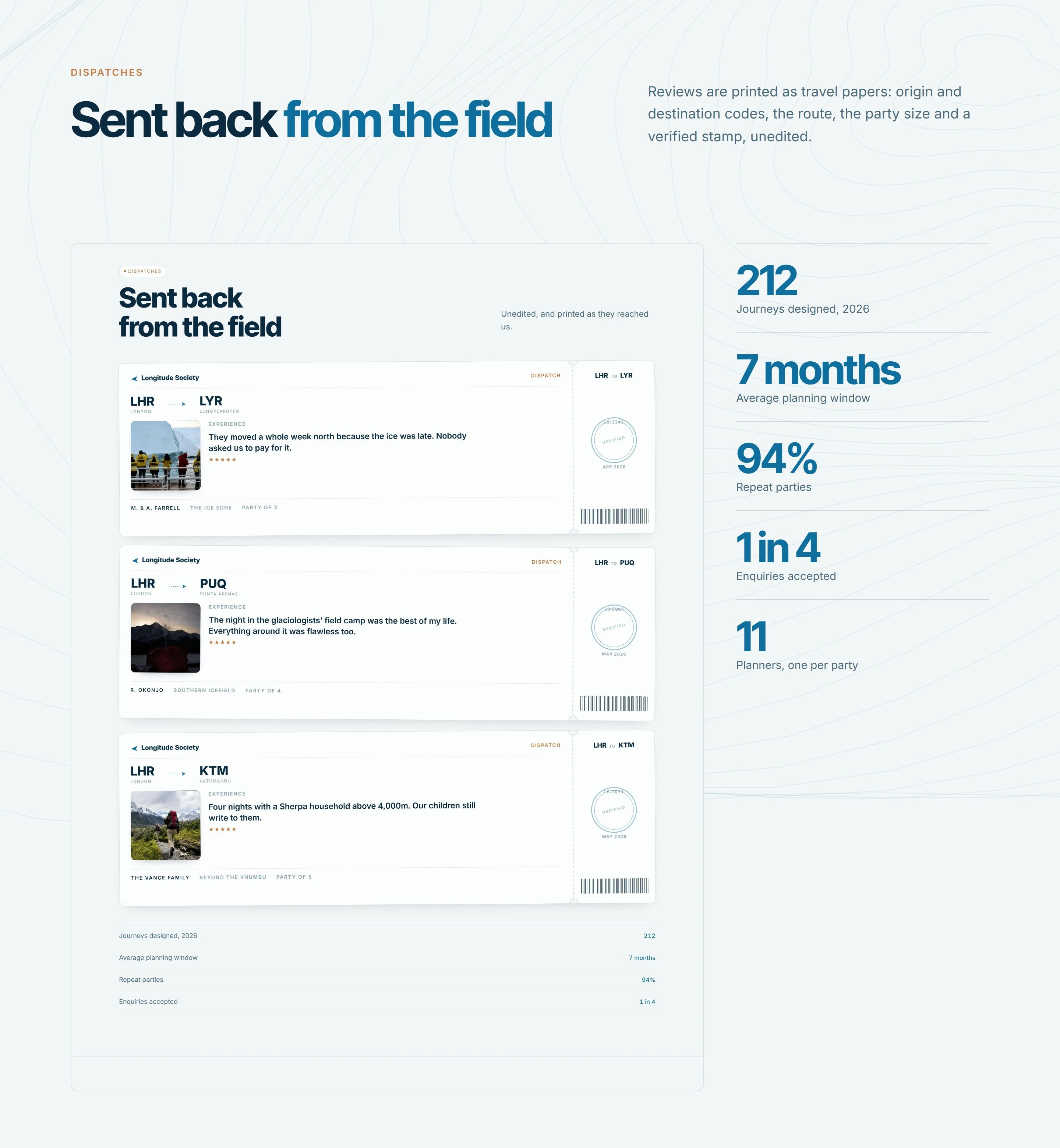
Interaction is used only where it earns its place: a hero search that composes an enquiry, an atlas that opens a country on hover or keyboard, seven months of planning drawn as overlapping bars, and dispatches from past travellers printed like boarding passes.
The outcome
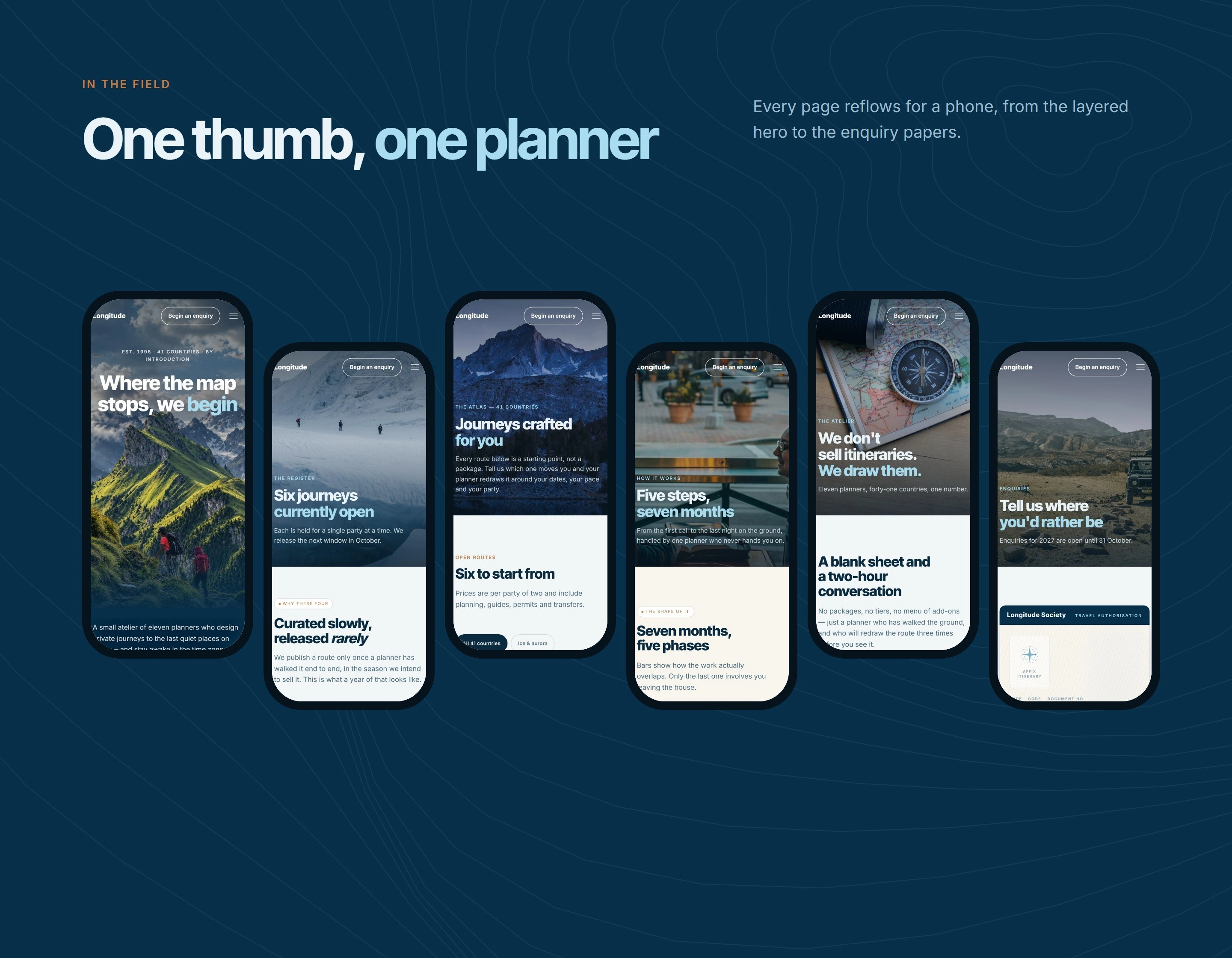
The site now reads as a studio rather than a catalogue. A visitor can judge the method in a single scroll, see which travel windows are still free, and send an enquiry that already carries the shape of the trip.
Like this project
Posted Sep 24, 2026
A private-expedition travel studio site: full-screen hero, register of open routes, atlas of 41 countries, method timeline and an enquiry form.
Likes
0
Views
8