Role-Based Demand Creation System

Rohit Shihora


B2B founders usually think their problem is “more leads.”
It’s not.
LinkedIn works when it’s treated like a system, not a content platform.
MultiStack Holder needed more than posts. They needed narrative clarity, audience precision, and a conversion path that made sense. I rebuilt their LinkedIn from profile psychology to ad sequencing. Every touchpoint had a role. Every campaign had a purpose.
I designed a full LinkedIn demand architecture. Organic authority, paid amplification, retargeting layers, and conversation triggers were mapped before execution. No vanity metrics. No noise. Just structured visibility turning into high-intent conversations.
Instead of “trying LinkedIn,” I started extracting demand from it.
It’s unclear positioning, scattered messaging, and disconnected touchpoints.
Phase 1: Audience Design
Before campaigns, I mapped the buying center.
Not job titles.
Not company size.
Actual roles:
buyers and final deciders
initiators and daily users
gatekeepers controlling information
influencers shaping opinion
Each role cared about something different.
The system respected that from day one.
This prevented wasted spend on people who could never move the deal forward.
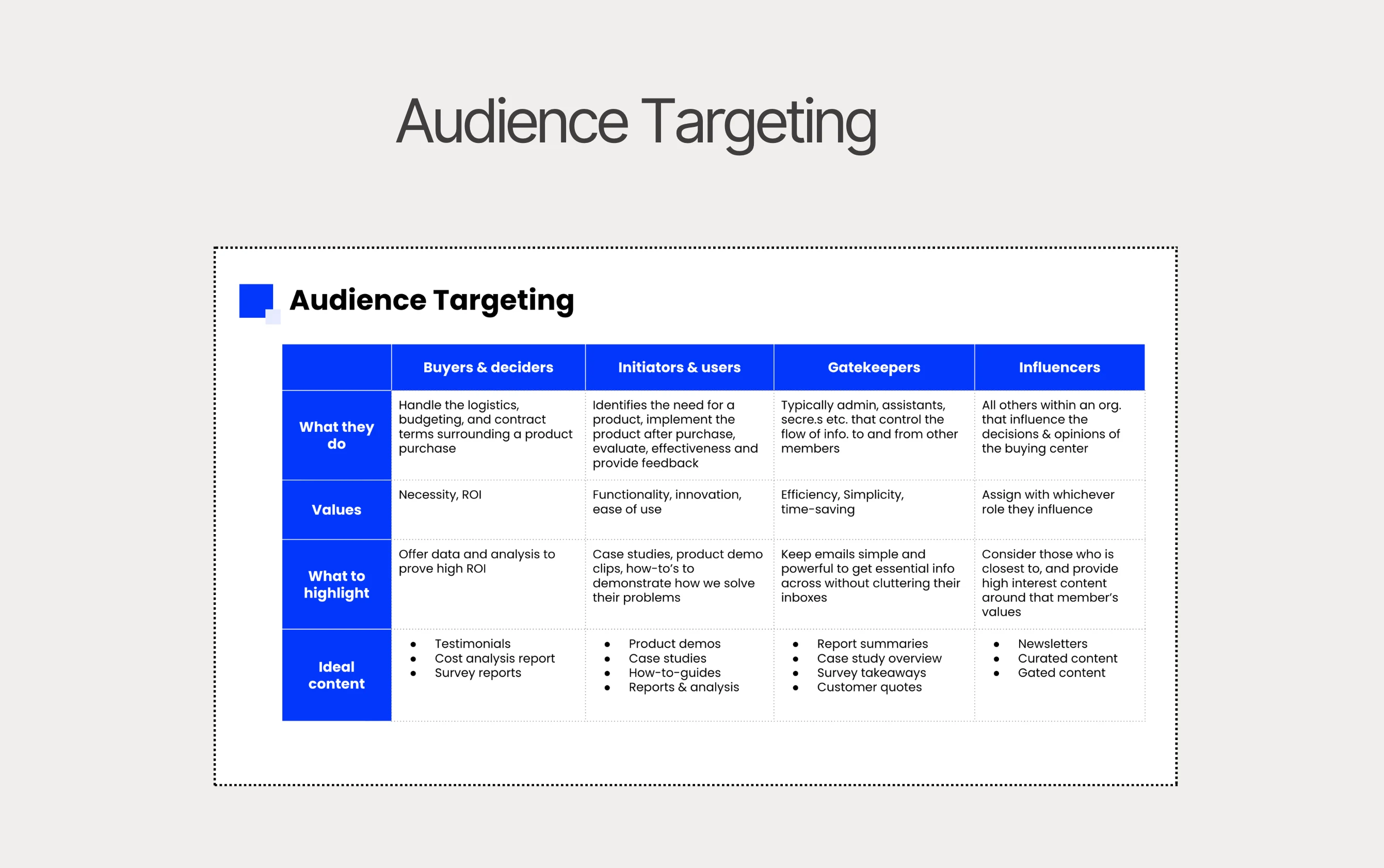
Audience in 4K clear picture
Phase 2: GTM Goal Alignment
Every role had one clear job.
Executives: awareness.
Product leaders: demo.
Business heads: trial or deeper evaluation.
Nothing overlapped unnecessarily.
Nothing chased vanity metrics.
This kept the funnel clean and readable.
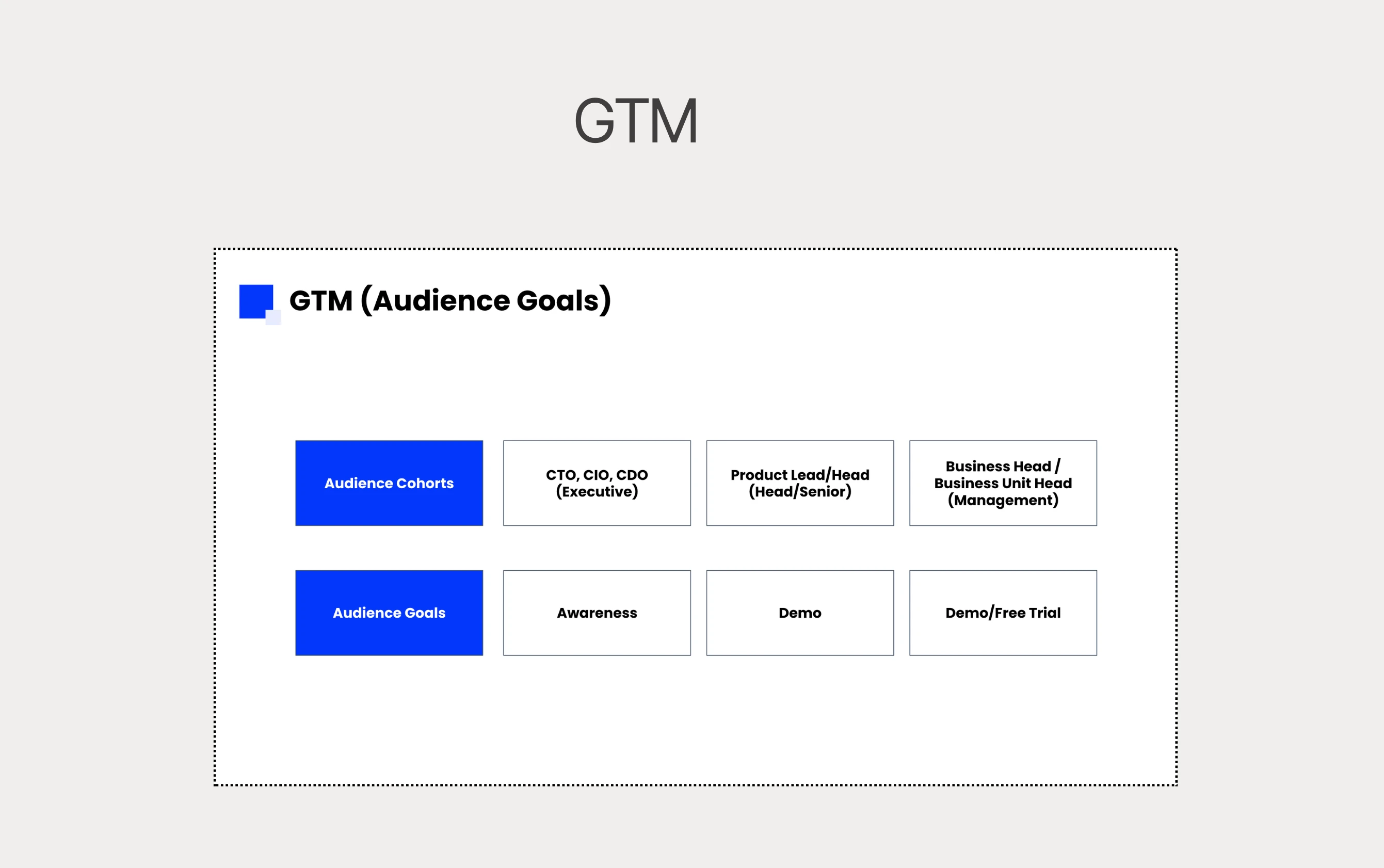
GTM
Phase 3: TOFU Architecture
Awareness was built by role, not by reach.
Executives saw brand and credibility.
Product leaders saw problem framing.
Business heads saw relevance to outcomes.
No selling here.
Just clarity.
The goal wasn’t clicks.
It was familiarity without fatigue.
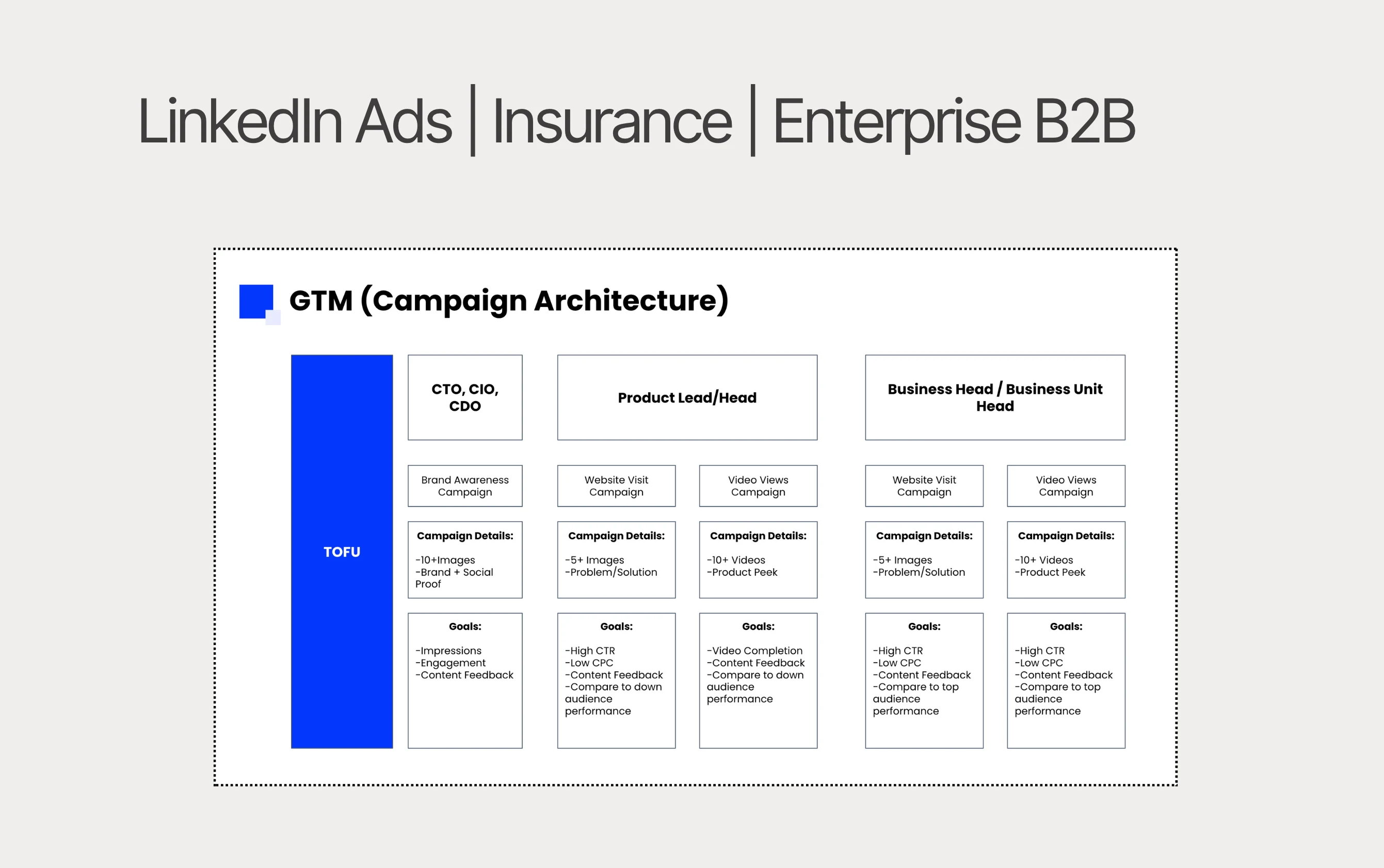
Campaign Architecture for Awareness in GTM
Phase 4: Mid-Funnel Flow
Once attention existed, messaging changed.
Each role entered a different path:
executives moved through trust and validation
product heads through use cases and depth
business heads through applicability and impact
This is where most LinkedIn funnels collapse.
They treat everyone the same.
This one didn’t.
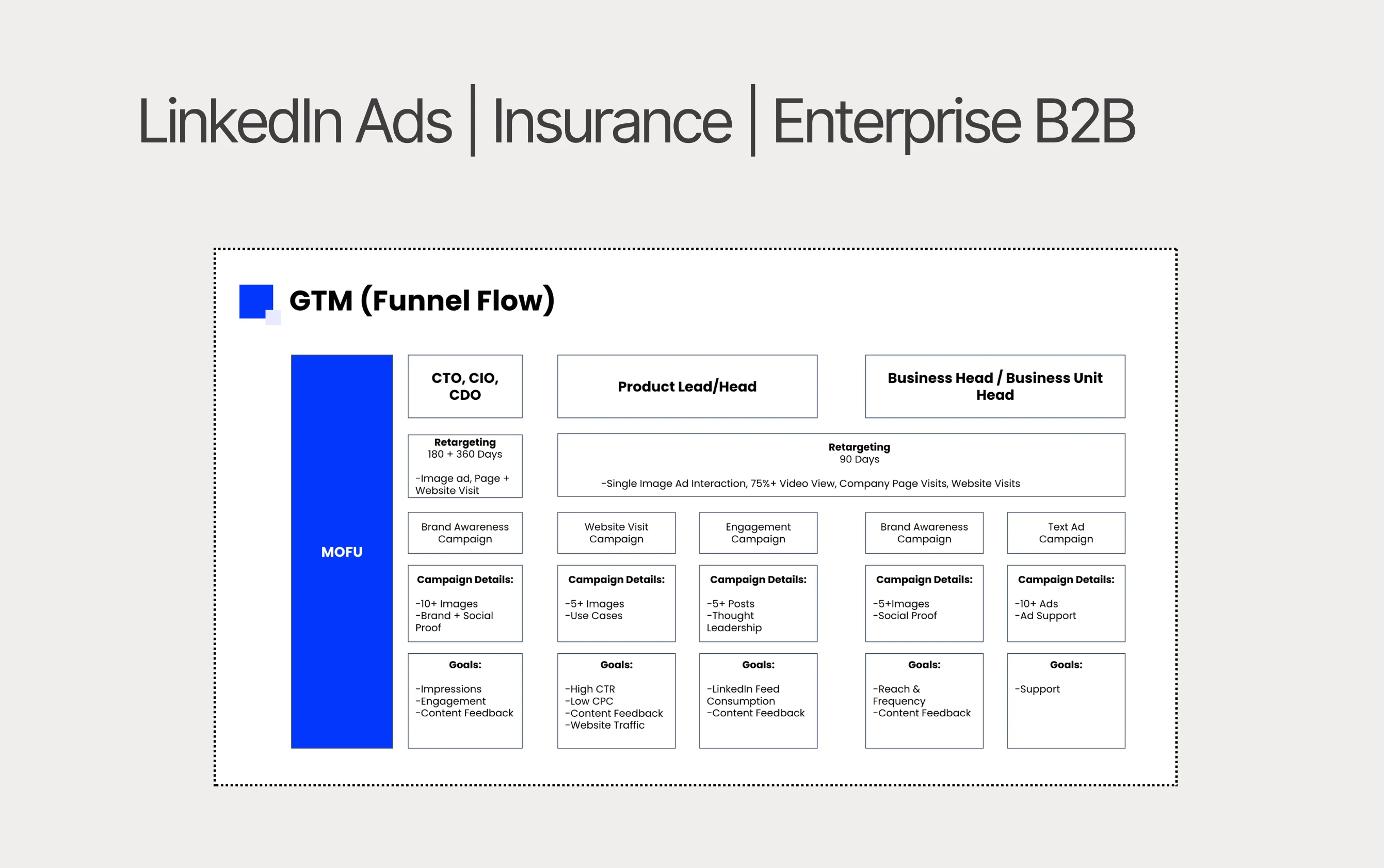
Campaign Architecture for Consideration in GTM
Phase 5: Retargeting & BOFU Logic
High-ticket decisions need time.
Retargeting wasn’t aggressive.
It was patient.
Different windows were used:
short for active evaluators
longer for slow internal alignment
The system allowed people to re-enter the funnel naturally,
without forcing demos too early.
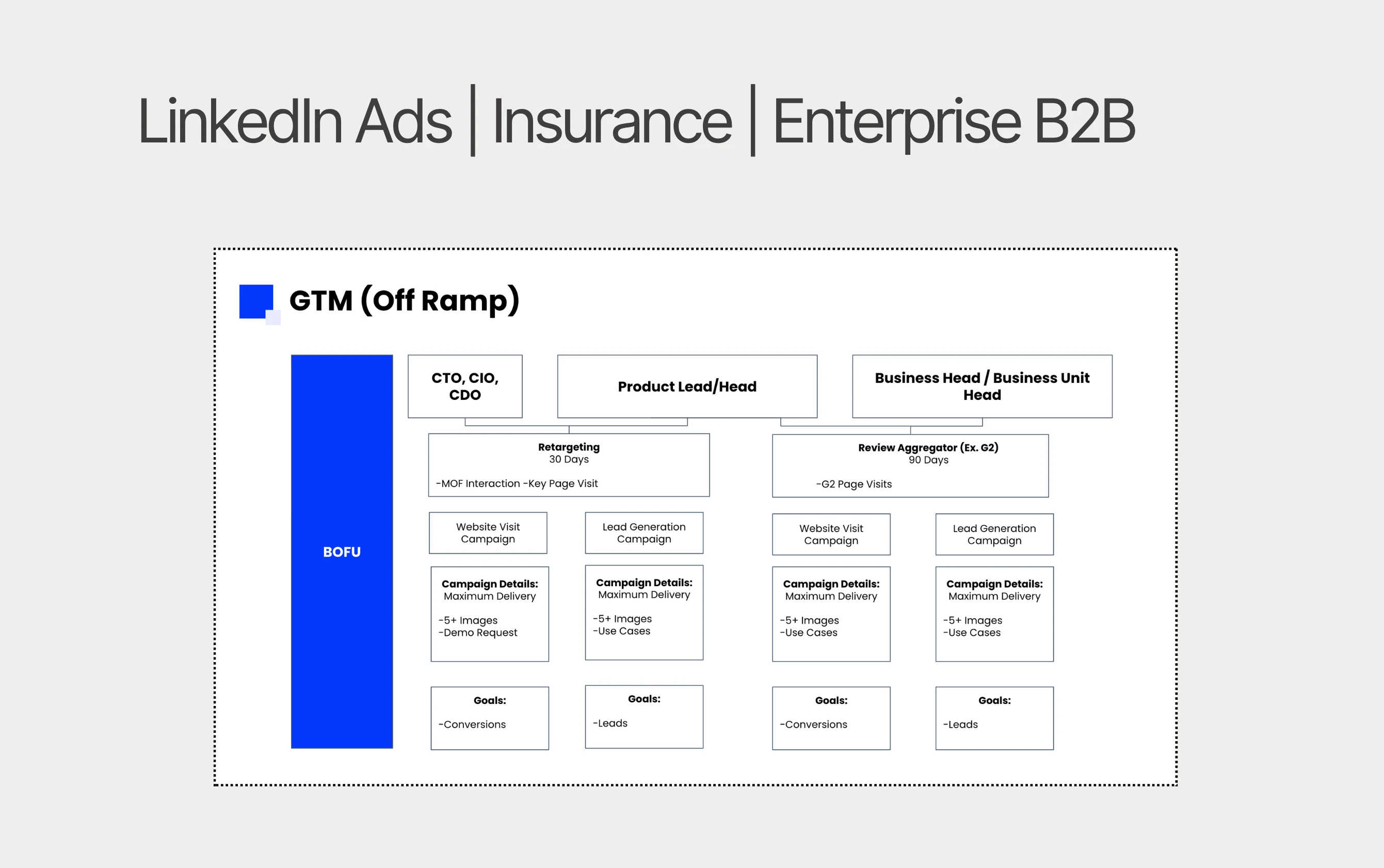
Campaign Architecture for Decision time in GTM
Final Outcome
It was about building demand that sales could actually work with.
The system created:
predictable engagement across roles
clarity on where deals were slowing
alignment between ads and sales motion
LinkedIn stopped feeling expensive.
It started feeling intentional.
Like this project
Posted Feb 10, 2026
B2B founders usually think their problem is “more leads.” It’s not. I built a multi-layered LinkedIn system of authority content, segmentation & retargeting.