I Spent 20 Years Doing the Job Before I Automated It

Rusty Williamson


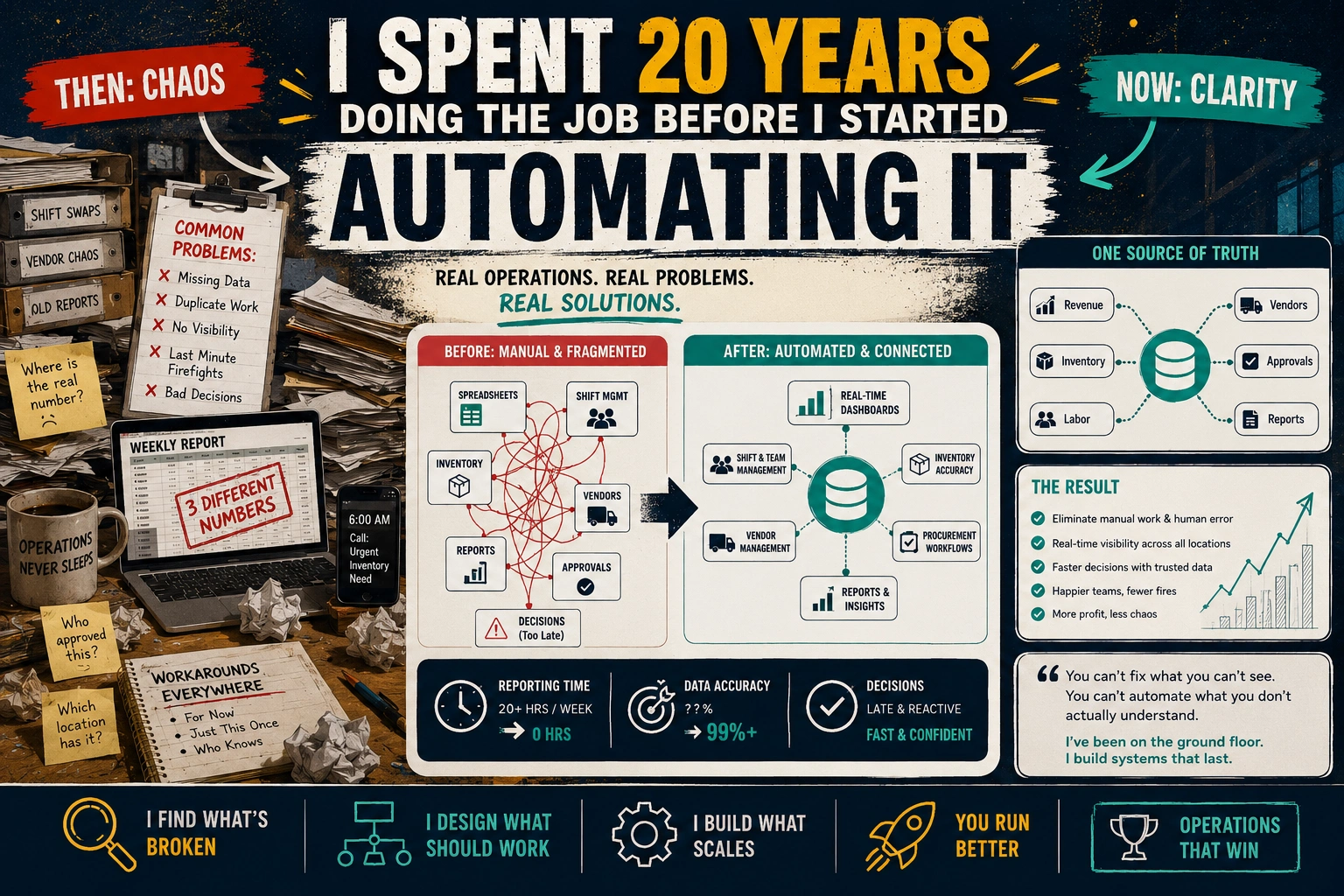
Here's something most automation people won't tell you: the hardest part of building a system isn't the code. It's knowing what actually happens on the ground floor.
I managed hospitality operations for 20 years. Multiple venues. Hundreds of employees. The kind of environment where a missed shift swap on a Friday night costs you real money, and a spreadsheet error in revenue tracking doesn't surface until someone's already made bad decisions off it.
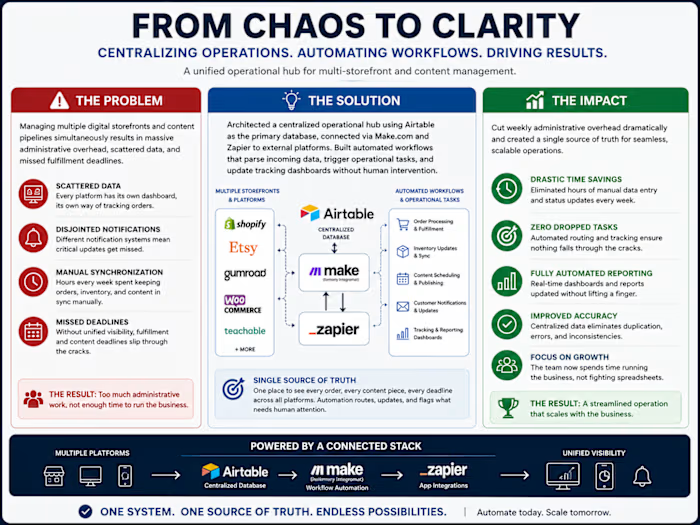
I lived inside those broken processes. I was the guy staying late on Sundays rebuilding the weekly report because three different spreadsheets gave three different numbers. I was the one getting the 6am call because nobody knew which location had the inventory we needed.
So when I started building automation systems, I didn't start by learning Python. I started by already knowing where the bodies were buried.
The gap nobody talks about
Most automation consultants ask you to describe your workflow. Then they automate what you described.
The problem? What people describe and what they actually do are almost never the same thing.
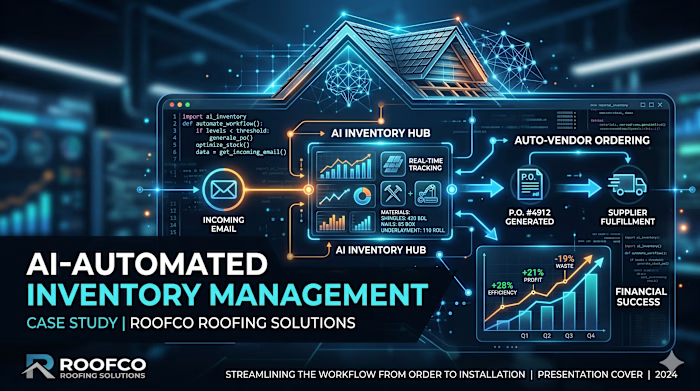
On my last build (an inventory system for a roofing company), I spent more time standing in the warehouse watching people work than I did writing code. The official process said invoices got checked against deliveries. What actually happened was someone eyeballed the pallet, said "looks right," and moved on. That gap is where the 7% inventory loss was hiding.
You can't find that in a Zoom call. You find it by being the kind of person who's stood on that warehouse floor before.
Why this matters if you're hiring
If your business runs on "someone remembers to check," that's not a process. That's a liability. And the person who automates it should understand why it broke that way in the first place, not just how to wire up an API.
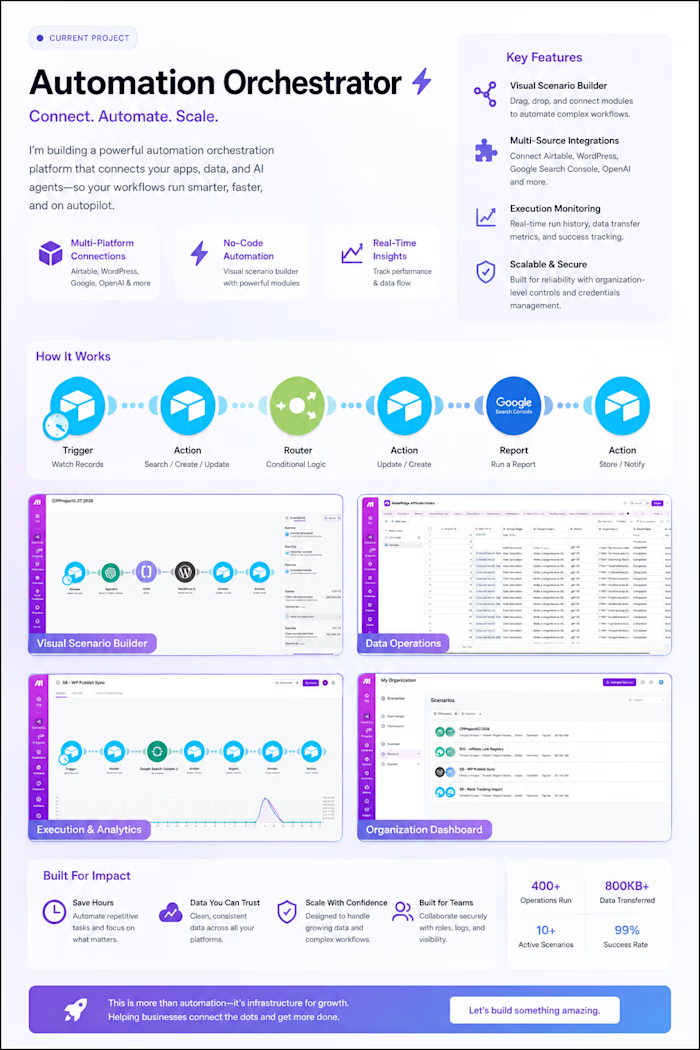
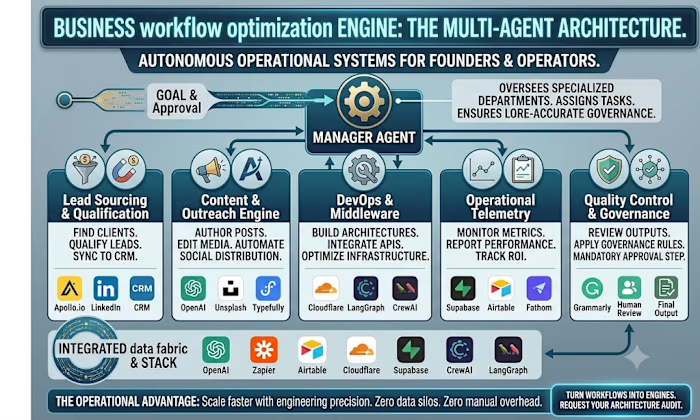
I've built systems that eliminated entire data entry teams, cut reporting time from 20+ hours a week to zero, and turned one-tap phone approvals into full procurement pipelines. But the reason those systems actually stuck is because I mapped the real workflow first, not the one in the employee handbook.
If you're sitting on 5, 10, 20 years of operations experience and thinking about making the jump into building systems instead of just managing them: the experience isn't baggage. It's the whole advantage.
And if you're a business owner reading this wondering whether your ops could be automated: they probably can. But the first step isn't a tool. It's someone who understands what your Tuesday morning actually looks like.
Like this project
Posted Jun 16, 2026
What 20 years of managing operations taught me about why most automation projects fail before a single line of code gets written.