
Nut Digital runs Amazon, Shopify, Meta, Google and SEO growth for 151+ eCommerce brands. Like most agencies, that work was spread across a dozen tools: ad dashboards, store admins, spreadsheets, Slack threads and monthly reports. The idea was to pull all of it into one platform, where the agency and its clients could pick services, connect their stores, track orders and see performance in one place.
My team and I designed and built it. Over about two months we took it from a blank Figma file to a full product design, now handed over and in active development. Here's how it came together.
5 workspaces Services, Connectors, Store, Analytics, Chats
14 services across 5 growth categories
18 connectors Shopify, Amazon, Stripe, Slack and more
Design + build One team, end to end
Scope:
eCommerce growth platform, product design + development
My role:
Product design and development lead
Timeline:
~2 months to full design handover
Status:
Design delivered, platform in development
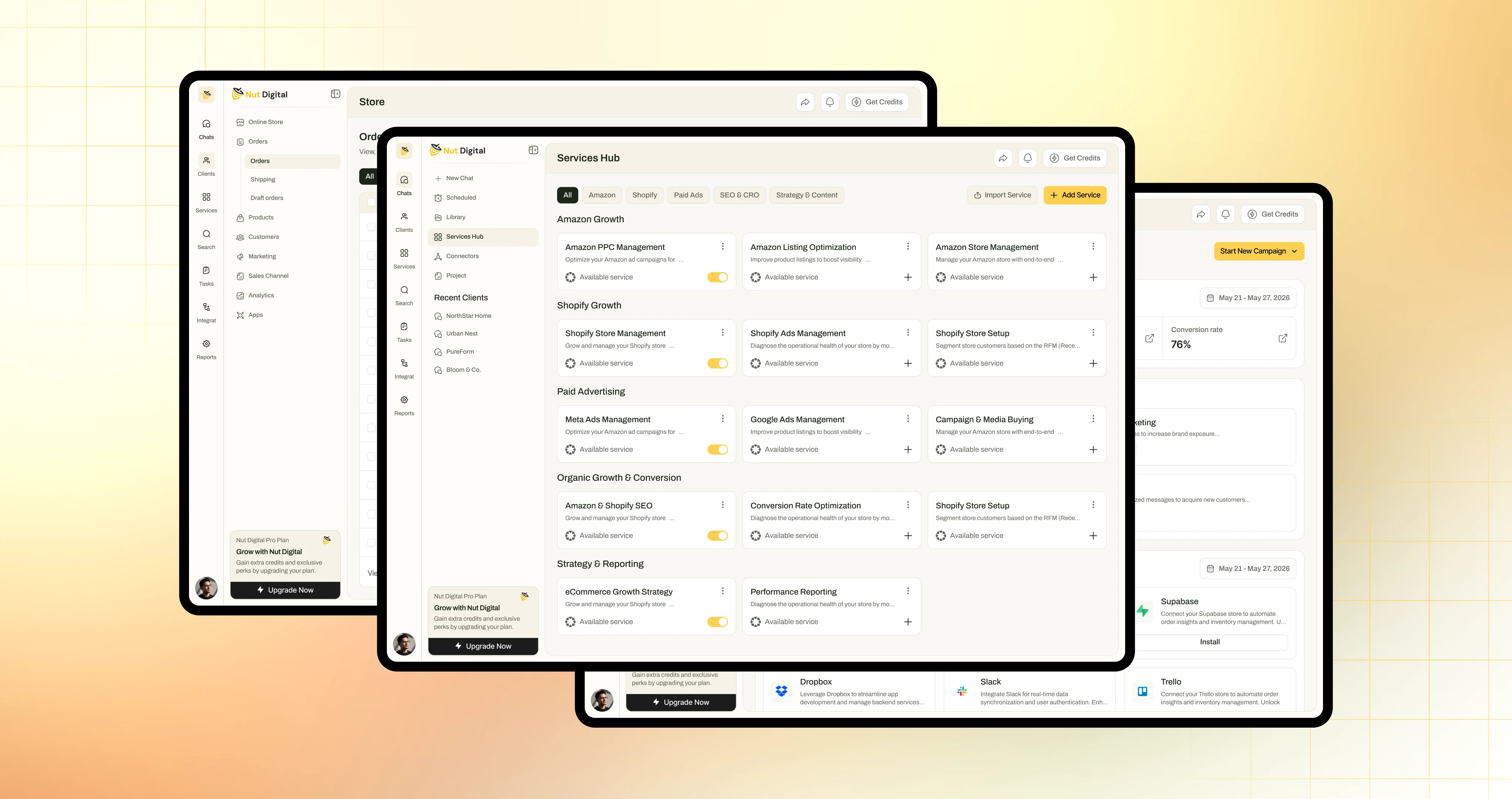
The brief: turn an agency into a platform
Nut Digital sells a lot of services: Amazon PPC, listing optimization, Shopify store setup, Meta and Google Ads, SEO, CRO, reporting. Each one lived in its own corner, and clients had no single place to see what they were paying for or how it was performing.
The brief was to make the agency feel like a product. A client should be able to switch a service on, connect their store in a minute, and see revenue, ad spend and ROAS without waiting for a monthly PDF.
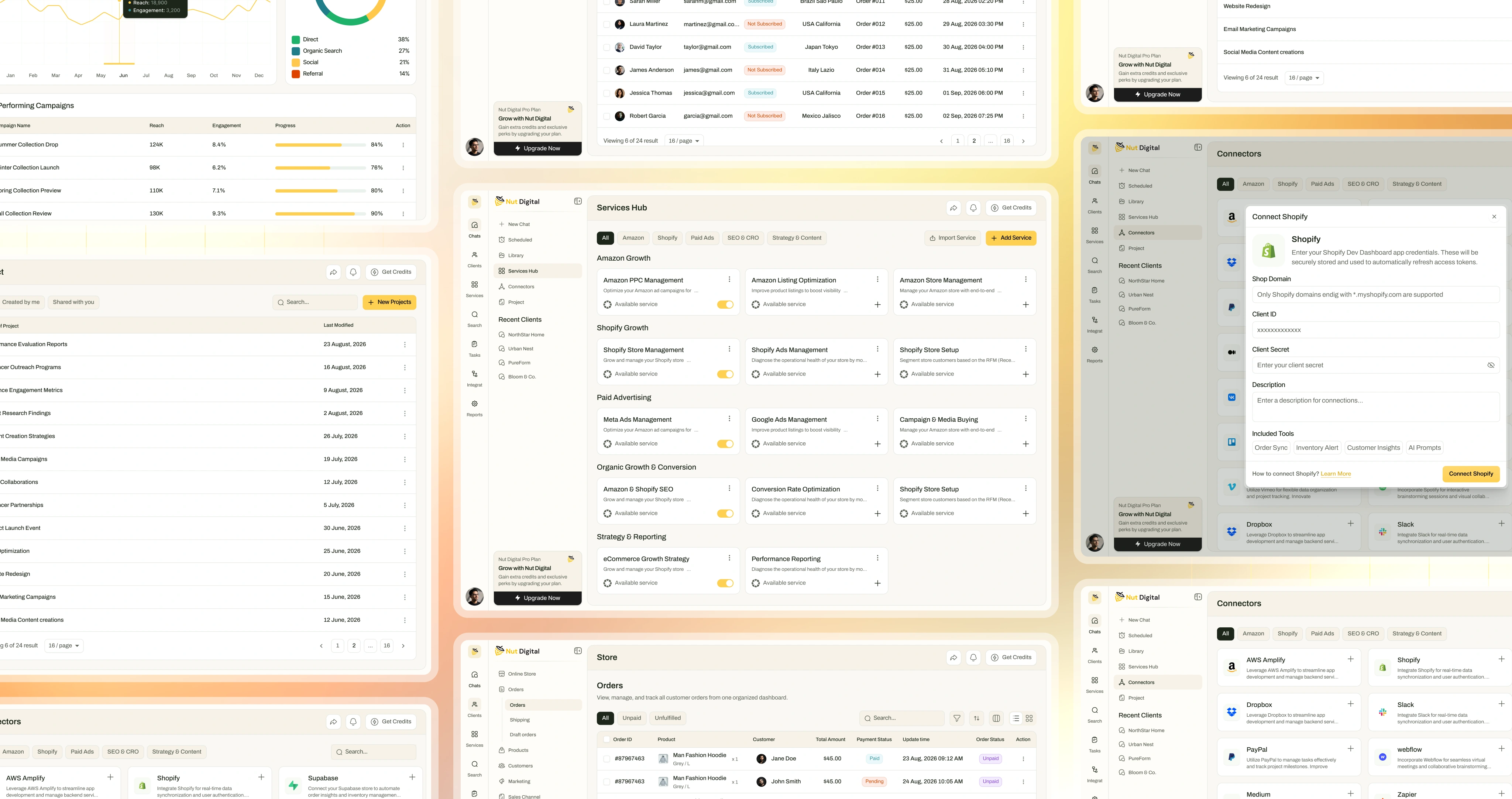
What we delivered
→ Services Hub. Every service grouped by goal (Amazon Growth, Shopify Growth, Paid Advertising, Organic Growth & Conversion, Strategy & Reporting), each one switchable on or off, with filters by channel.
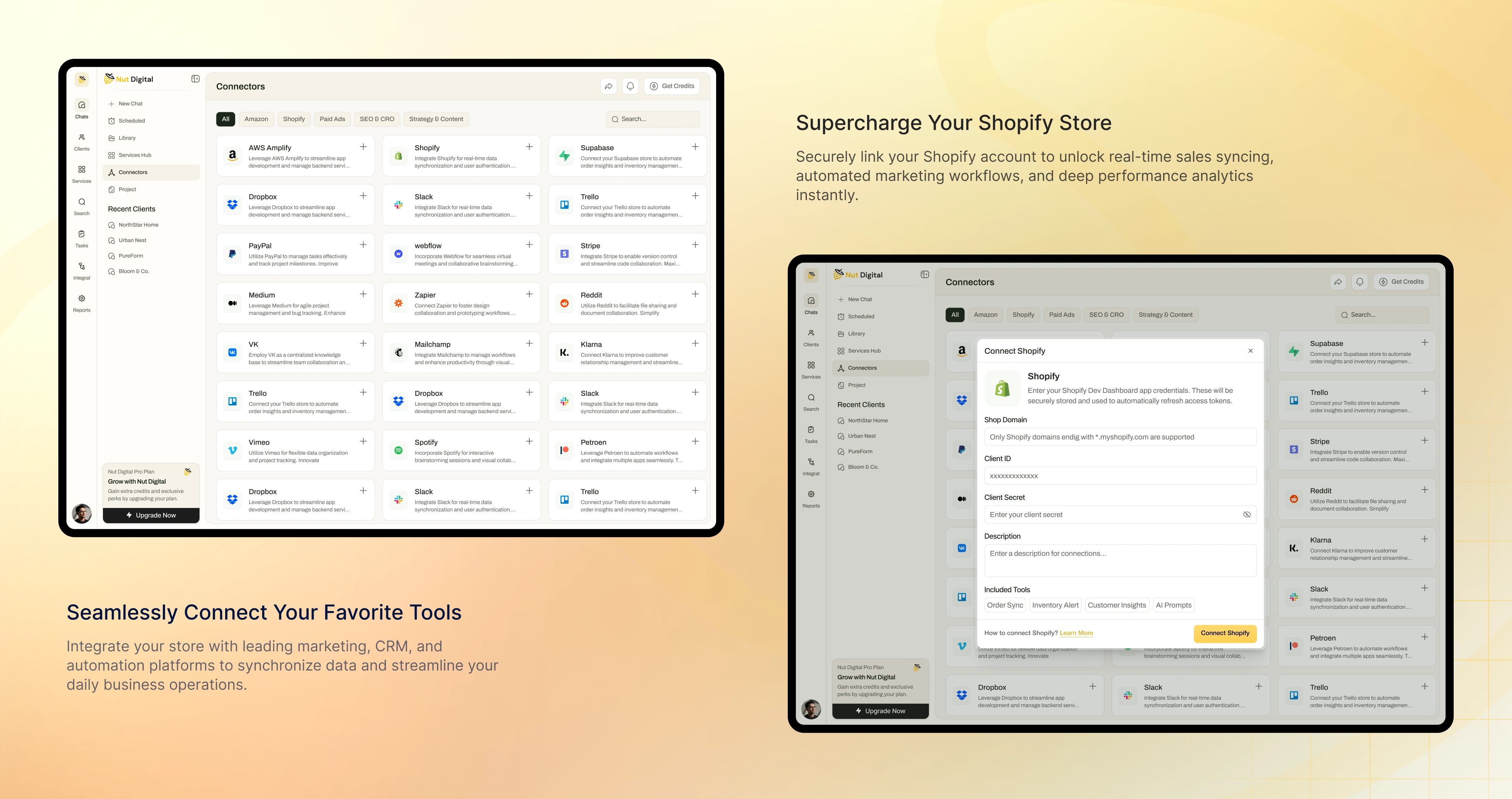
→ Connectors. A single library of 18 integrations, from Shopify and Amazon to Stripe, Slack, Mailchimp and Zapier, each with the same connect flow.
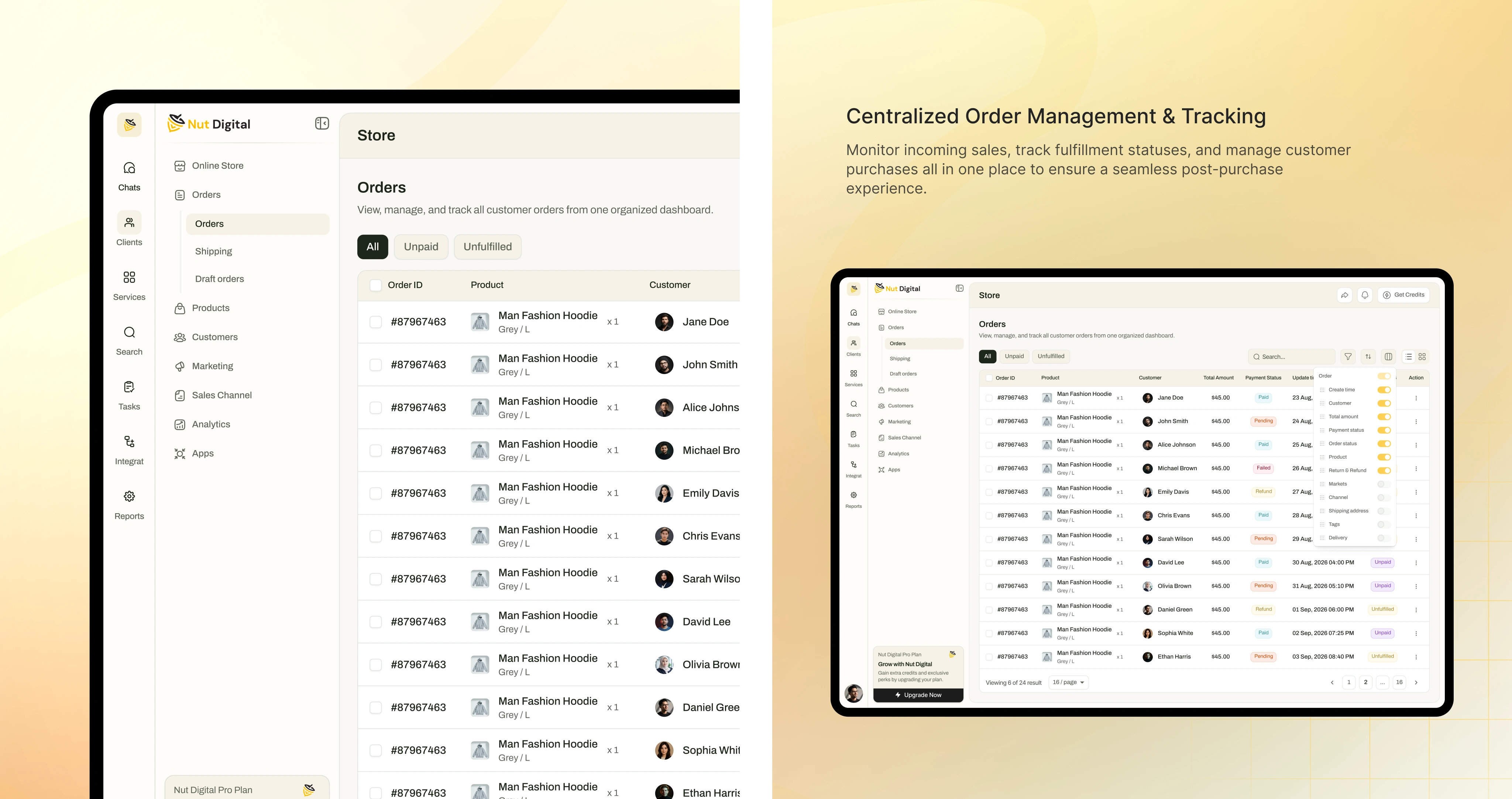
→ Store and orders. One order table with paid, pending, refund and fulfillment statuses, quick filters, search, and columns users can show or hide.
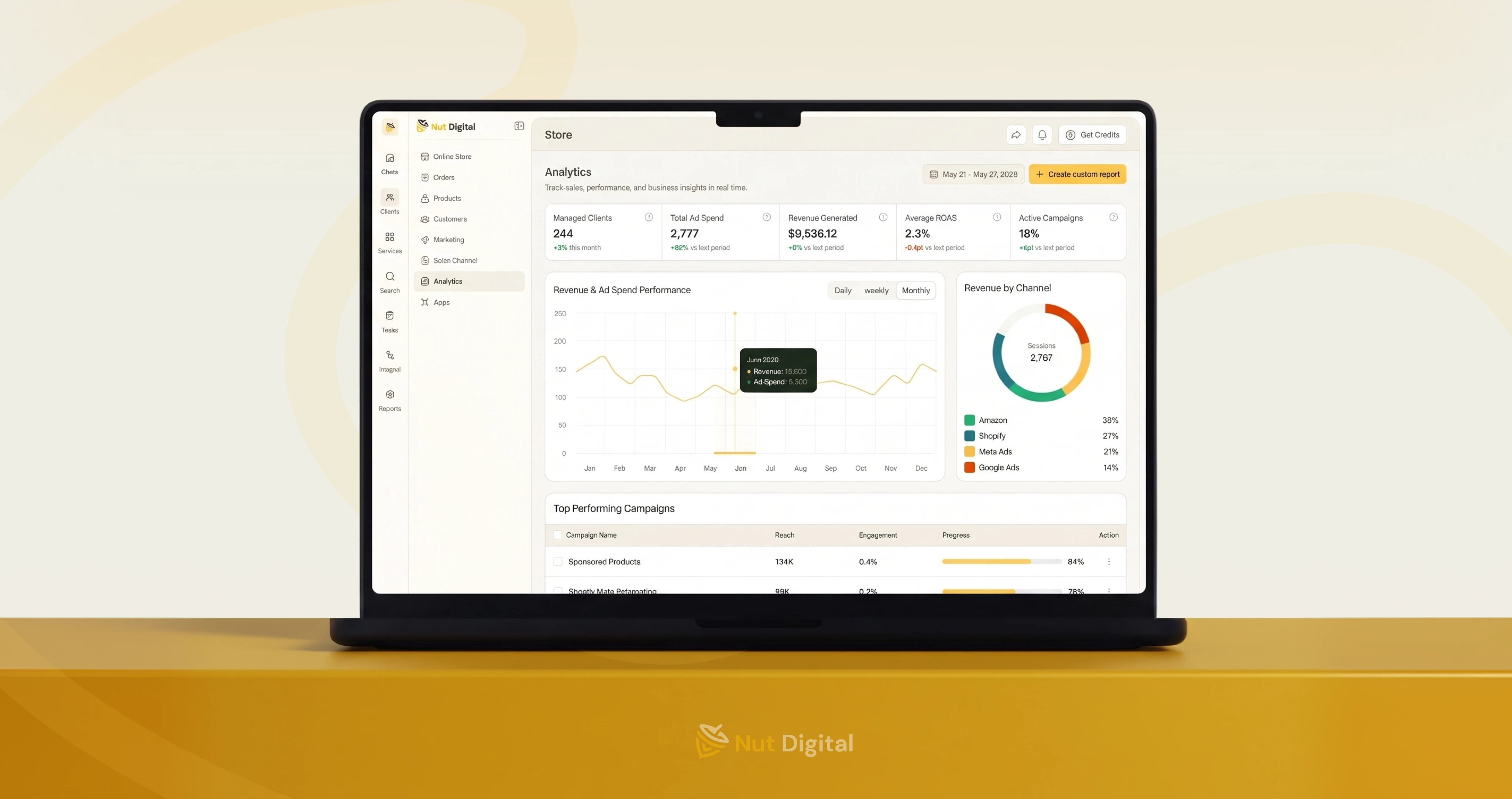
→ Analytics. Managed clients, ad spend, revenue, average ROAS and active campaigns at a glance, plus revenue vs ad spend over time, revenue by channel, and top performing campaigns.
→ Marketing tools. Email, SMS, social and automation in one place, with campaign launch built in.
→ Chats, clients and projects. An AI chat workspace, recent clients one click away, and a project list shared across the team.
→ Plans and credits. A Pro plan and credit system built into the product, so upgrades happen inside the app.
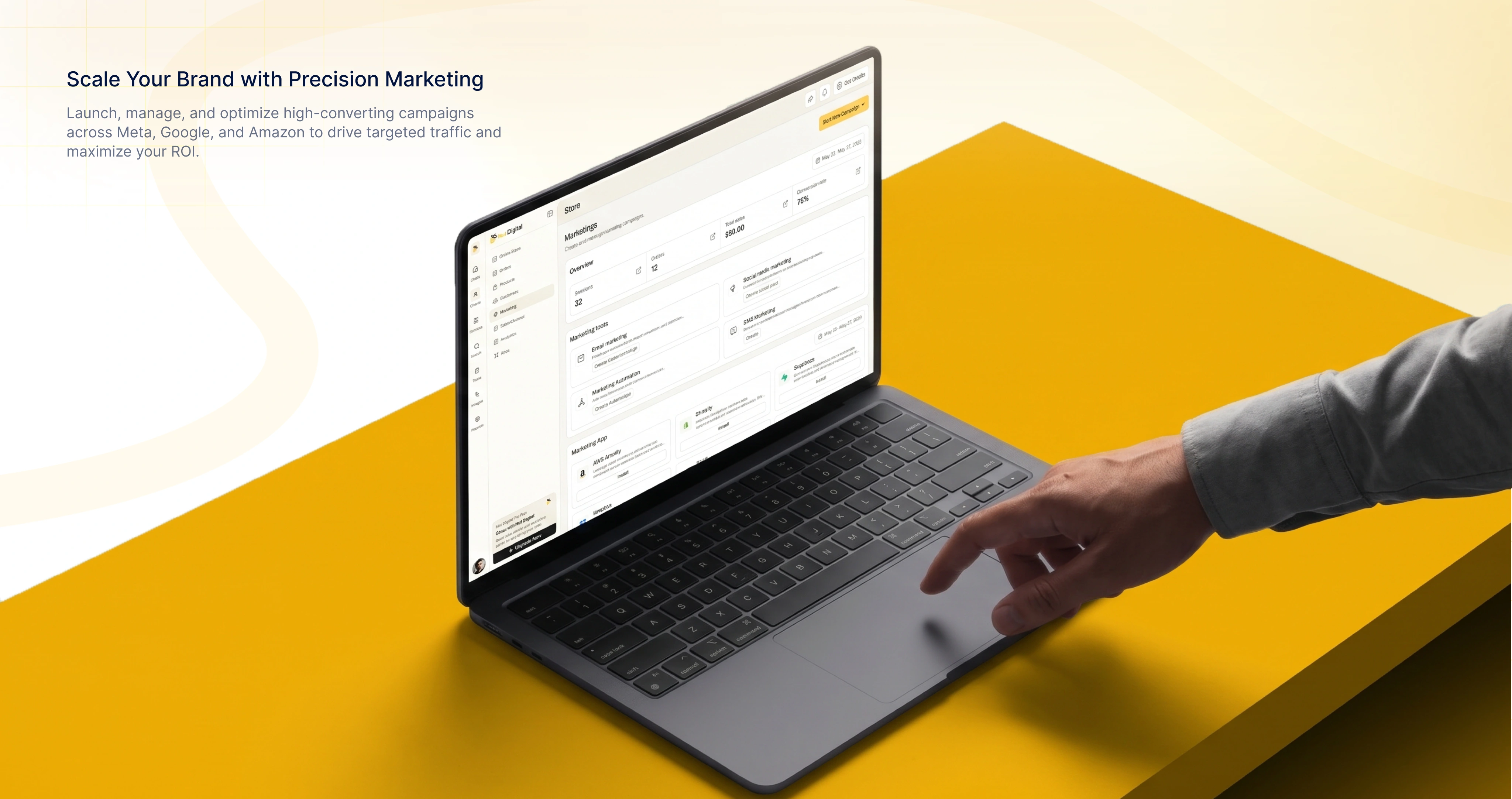
How I approached it
The product had to serve two jobs at once: an agency running dozens of client accounts, and a store owner checking their own numbers. So the layout splits into a slim icon rail for the main workspaces (Chats, Clients, Services, Search, Tasks, Integrations, Reports) and a second panel that changes with context. You always know where you are, and switching between a client's store and the services catalogue takes one click.
Visually, we kept it warm and calm: soft cream surfaces, one confident yellow for actions, and plenty of space, so a data-heavy product still feels easy to live in every day.
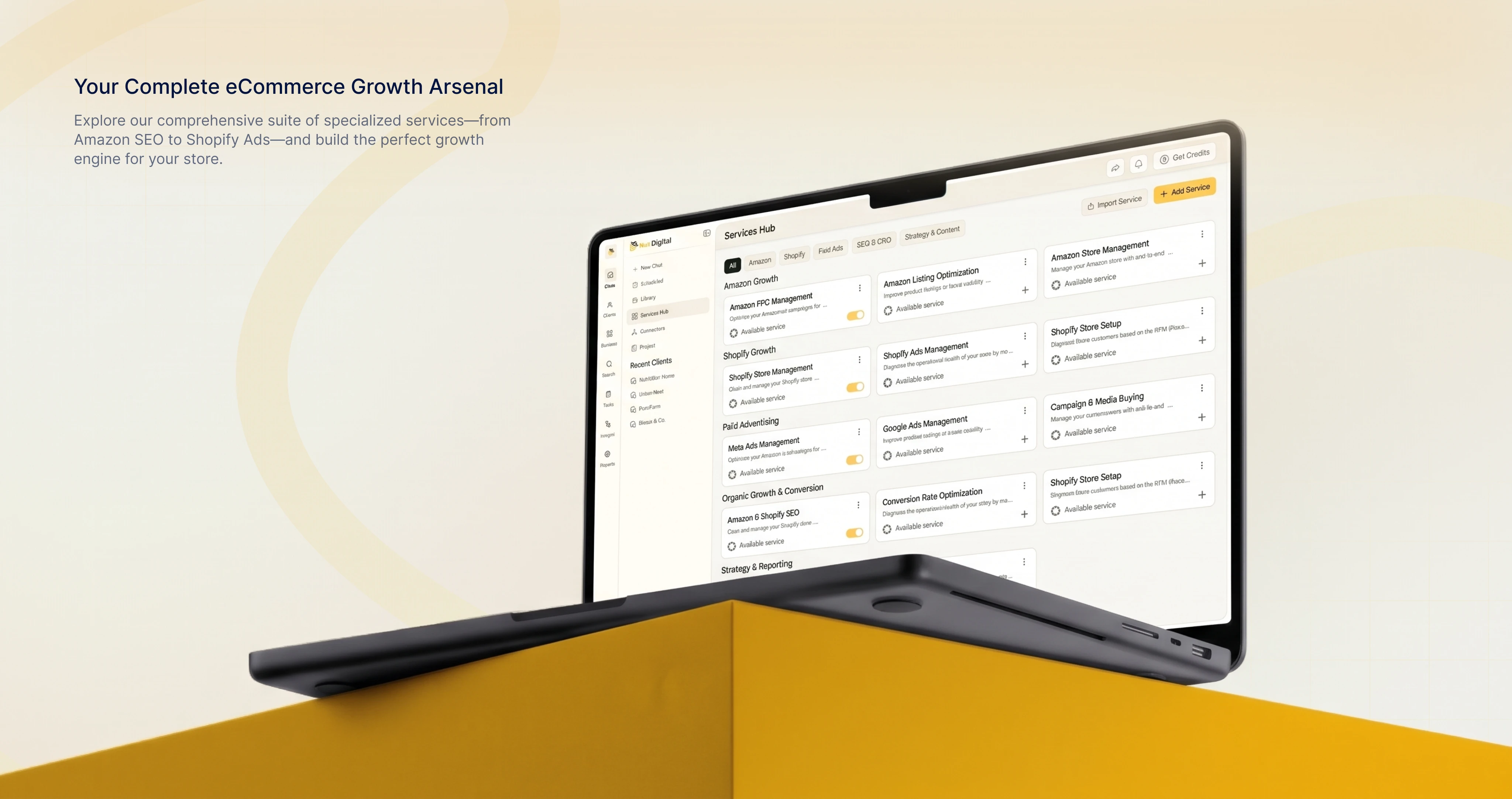
Where it got hard
→ Every connector authenticates differently. Shopify wants a shop domain plus app credentials, others use OAuth or API keys. We designed one connect pattern for all of them (who you're connecting, what credentials, which tools it unlocks like Order Sync, Inventory Alert, Customer Insights and AI Prompts), so connecting a new tool always feels the same.
→ Four channels, one set of numbers. Amazon, Shopify, Meta Ads and Google Ads each report revenue and spend their own way. Showing them side by side in one chart and one ROAS figure meant agreeing on a single definition for each metric before a single screen was drawn.
→ A services catalogue that doesn't feel like a menu. Fourteen services can easily become a wall of cards. Grouping them by the outcome a client wants, not by the team that delivers them, made the hub readable at a glance.
→ Dense tables that stay usable. Orders carry a lot of data. Status chips, quick tabs (All, Unpaid, Unfulfilled) and a column picker let each user see only what matters to them.
The outcome
The full product design is delivered and the platform is now in development. Nut Digital has one place where its services, client stores, orders and performance data live together, instead of a stack of separate tools and monthly reports.
An agency has plenty of tools. What it rarely has is one place where clients can see the work, and that's what this platform is for.
0 likes · 1 view · Nov 27, 2026
eCommerce growth platform for a marketing agency: services hub, store connectors, orders and analytics in one product. Designed and built end to end.


