Platform UX Enhancement and Feature Expansion

Alex Zalizka


About Project
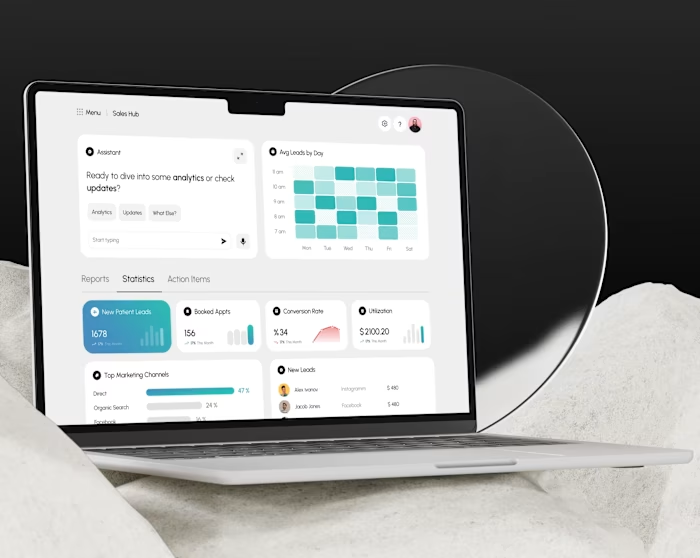
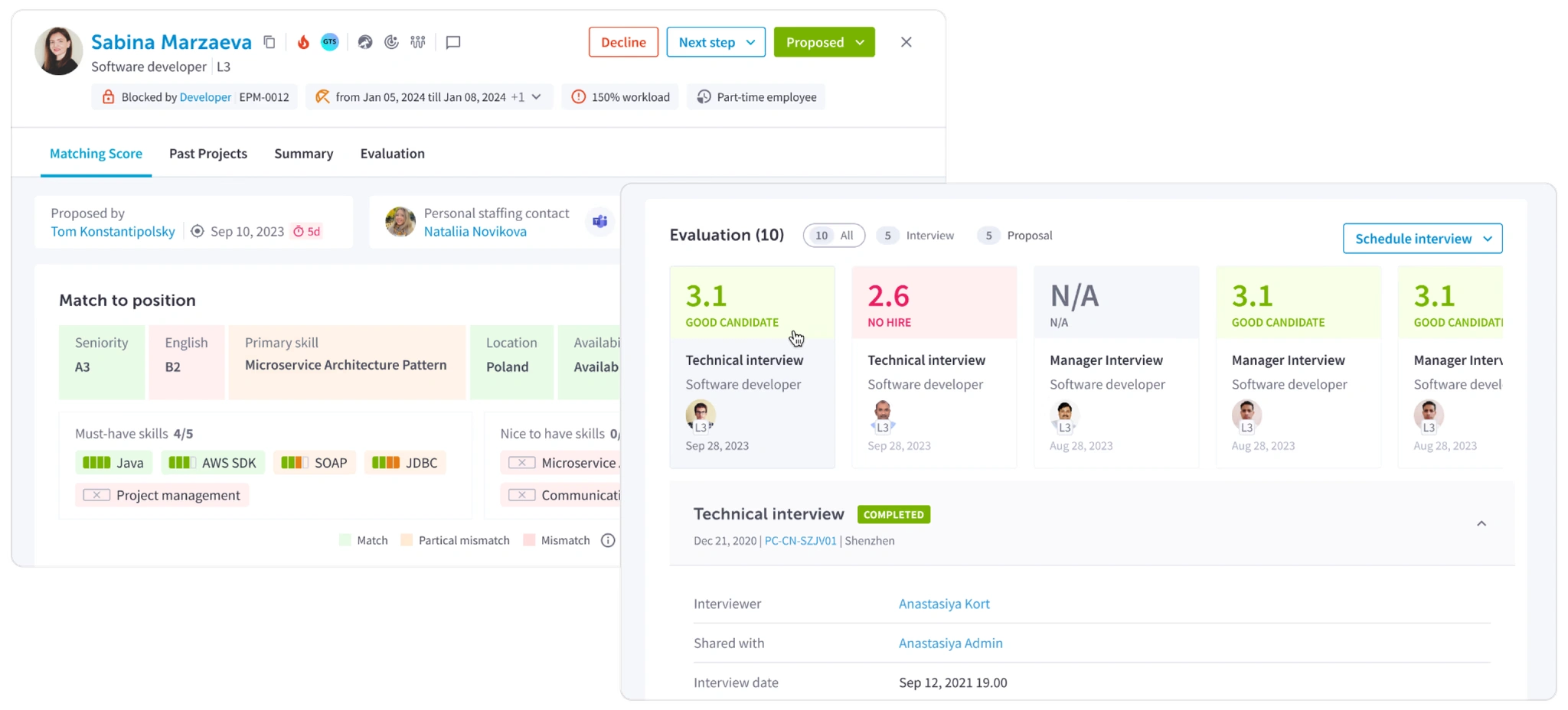
Platform is a complex and powerful tool that aggregates a tremendous amount of information from the various structures of the company.
It helps to simplify the analysis and reporting of the real-time data. With the help of Radar, user can view set of data from different angles and in various breakdowns.
Challenges
The platform faced problems because it was developed without a dedicated designer, resulting in a poor user experience.
Inconsistent design caused by the lack of a design library.
Inefficient user workflows and unclear navigation.
Difficulties in analyzing data due to a cluttered interface.
My job was to both improve the current functionality and add a huge number
of new features.
My Role
Was a key designer on the project
Defined UX problems and users pains
Created prototypes and mockups
Collaboration with BA, Dev & Qa teams
Delegated task to other designers and supervising
Creation and maintenance of the system design
Interviewed users & conducted user testing
Presented solutions to main stakeholders
Long Story Short
200+ New Features Added
Design system resolved 70+% of inconsistencies.
Usability completion rates improved by 1.5x to 2x.
Data-driven approach helped get rid of unnecessary functionality and set the right vector for further development of the application.
Time to complete key scenarios reduced by 30%.
Process
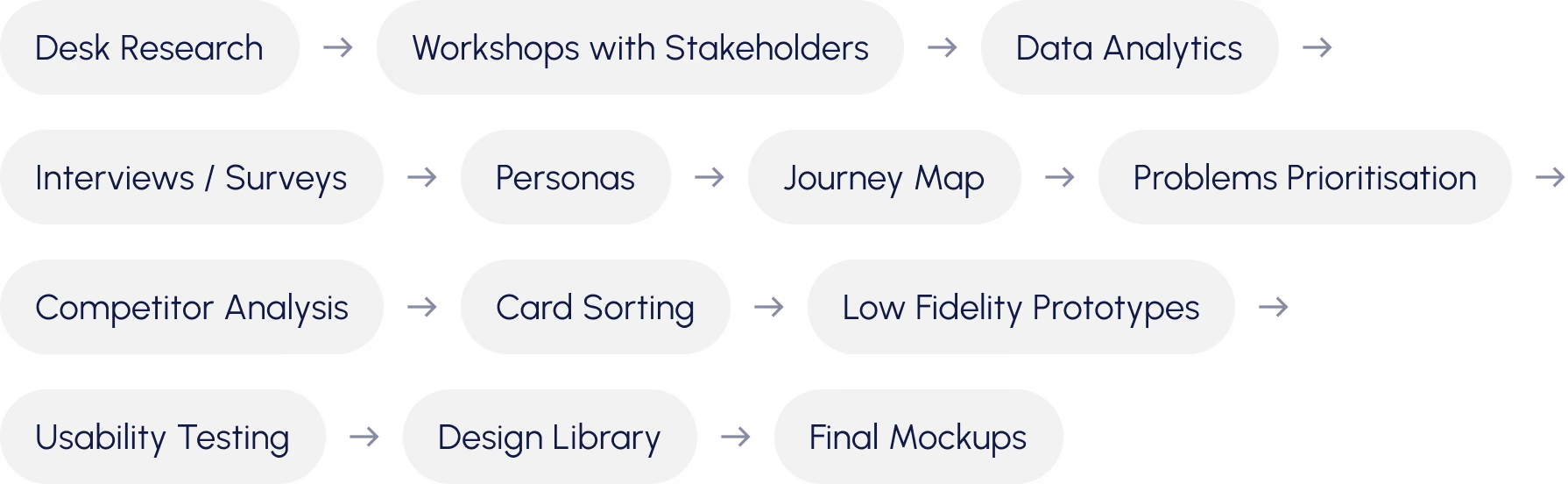
Discovery Phase
The first step for me was to identify the biggest pain points for core groups of users.
A Desk Research was conducted. In order to gather initial information about the product, several interviews with stakeholders and a couple of workshops were conducted, where I generated a number of hypotheses that were worth testing in the first place.
The brief, which included goals, timelines, expected deliverables, responsible persons, and more, was compiled and updated as new information became available.
Interviews and Surveys
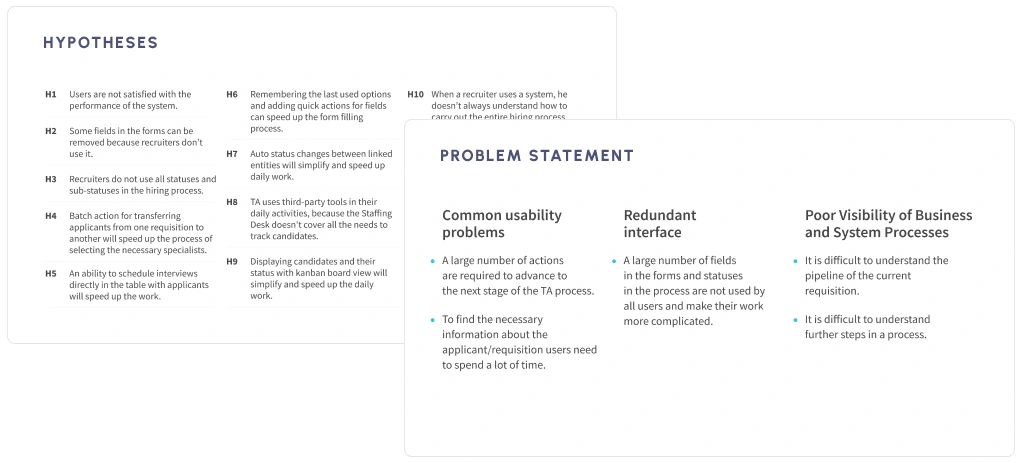
In order to collect qualitative data, to better understand the requirements for the tasks as well as people's motivations, problems and pains, it was decided to conduct interviews. Because the business processes differed from one location to another, the range of respondents had to be expanded.
Also, in order to cover more people and to understand how painful for users certain issues are, a questionnaire with both open and closed questions was additionally sent out.
List of respondents was collected using data from google analytics.
Define
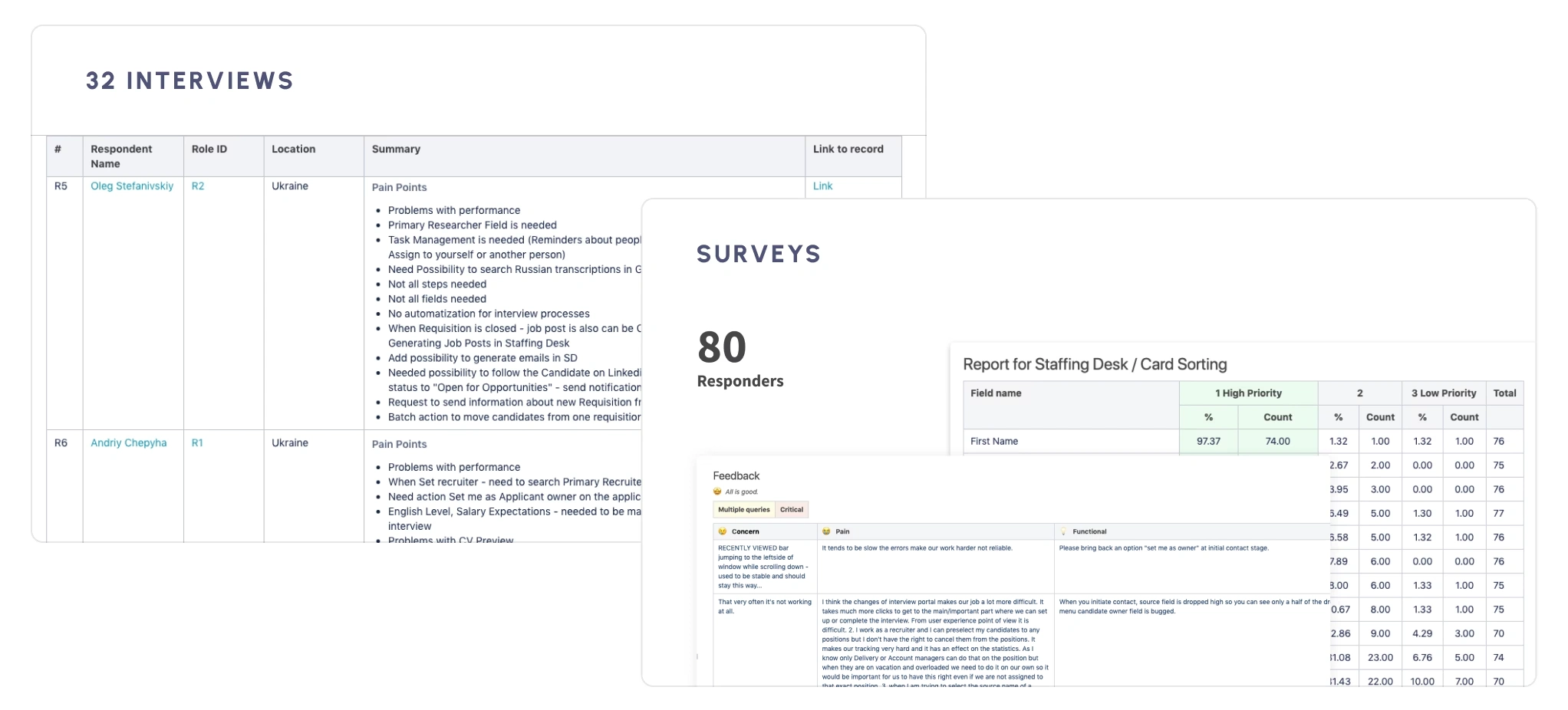
After collecting the core information, it was time to process it and create a User journey map to understand where users were experiencing major problems.
The research also revealed 4 groups of users with different goals, tasks and problems. I took this into account and compiled user personas that helped me in my further work with the platform.

So I know the problems, where should I start?
To prioritize the identified problems it was decided to use Effort/Impact matrix, where on one axis I defined how serious the problem is for users, and on the second axis I defined the time and effort to solve it.

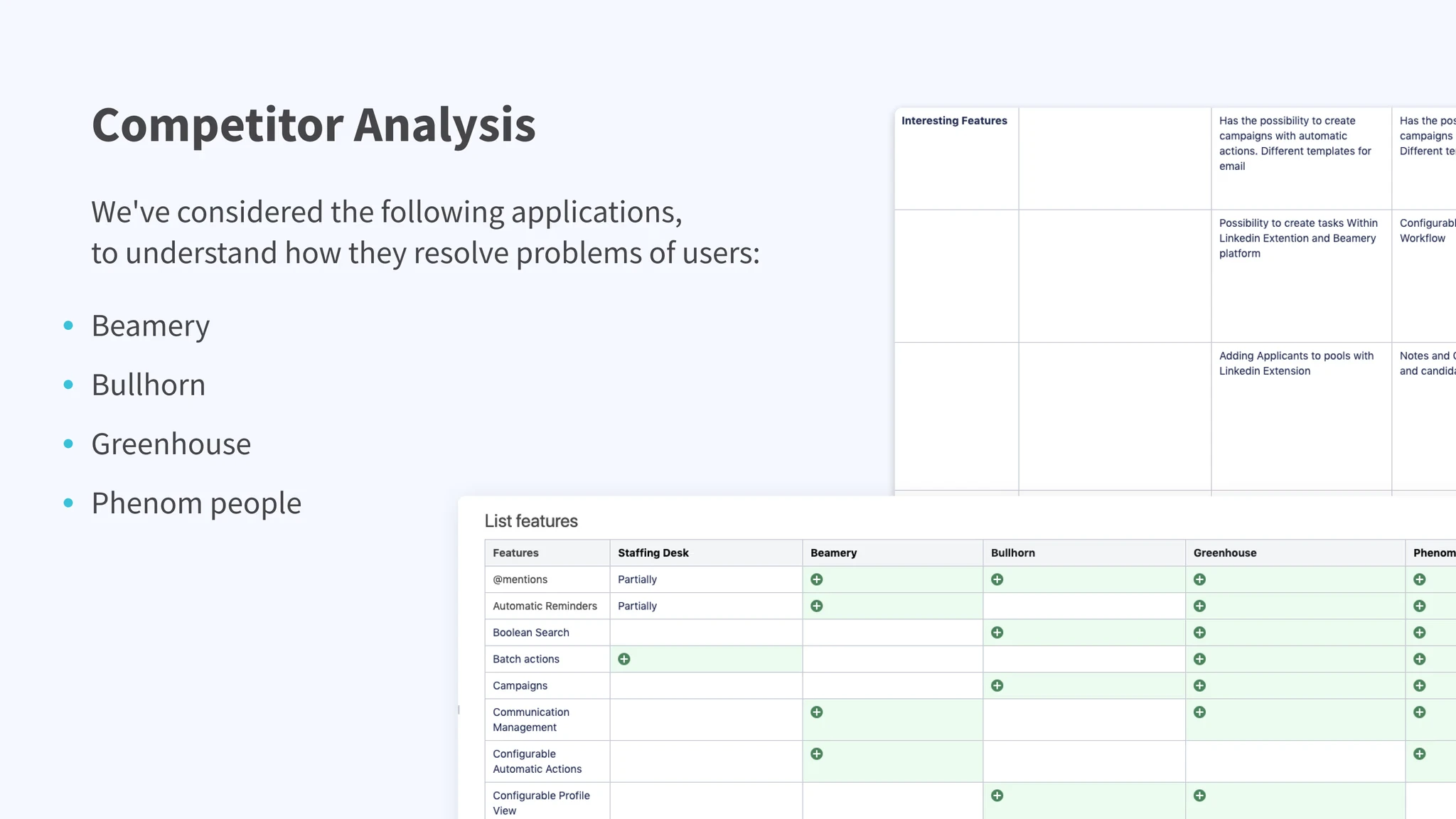
How our competitors solve this problems?
Competitors were analyzed to understand how they solve user problems, to identify their strengths and weaknesses and discover potential opportunities.
It is time to generate ideas
Wireframes were used to generate ideas. Interactive prototypes were generated within the figma and tested on users.
After collecting feedback, the functionality was refined and continued to be tested until users had no questions while performing tasks. In case I had several different solution options, A/B testing was performed to understand which option worked better.

Data-Driven Approach
To better understand who our users are and how they interact with the app I used Google Analytics and Looker Studio

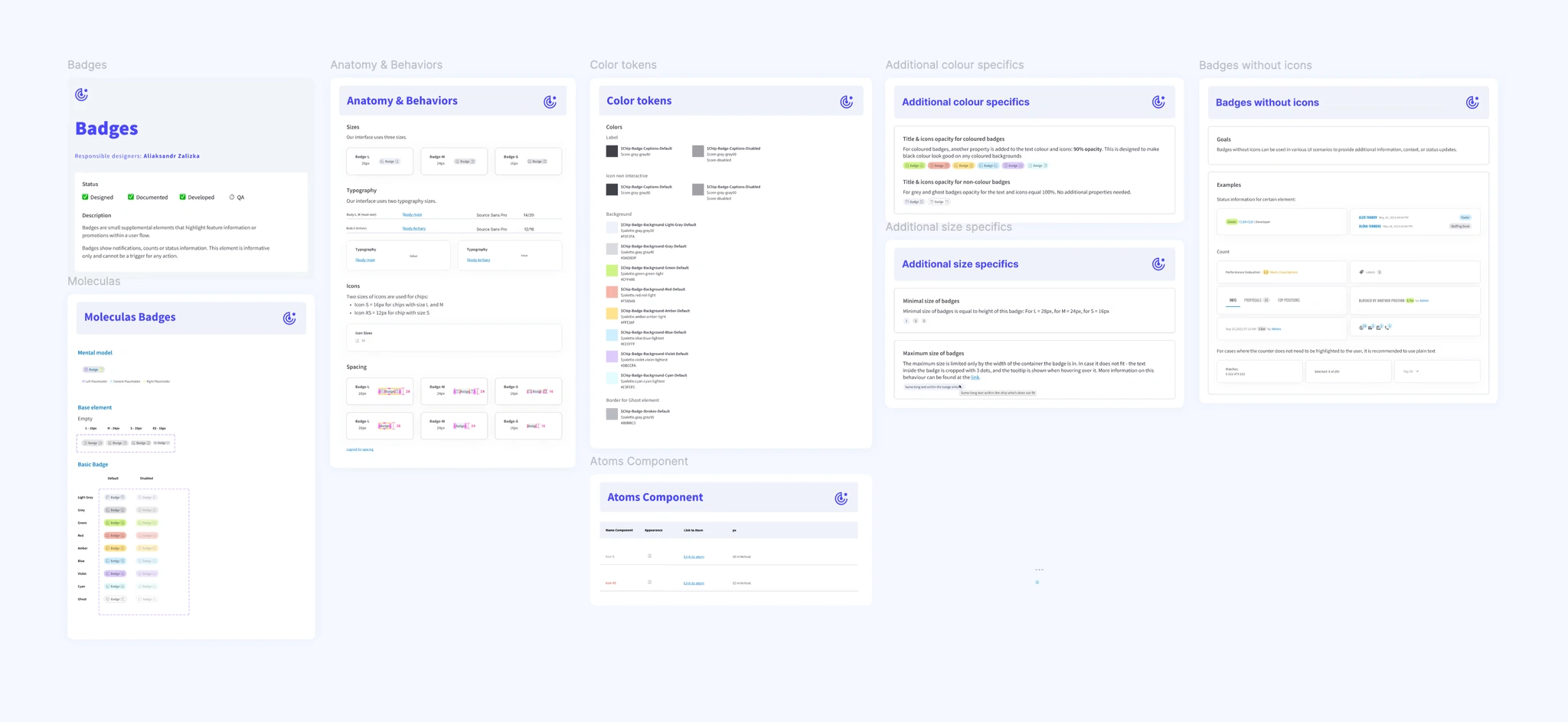
Dealing with non-consistency through Design System & Atomic Design Methodology
To get rid of non-consistency I’ve created a board where I have collected all the uses of standard elements.
Then for each element, I’ve created a flexible component that solved all current problems with the ability to scale in the future.
Additionally, I’ve prepared documentation to avoid misuse of components in the future and for easier onboarding of new employees
Next, our developers implemented the solution and rolled it out universally across our application.
Like this project
Posted Jul 11, 2025
Improved platform UX, added features, resolved design inconsistencies.