Built with Framer
SenseHawk Solar SaaS Website Development

Hardikkumar Vinzava Top 1% Framer Creator
Verified


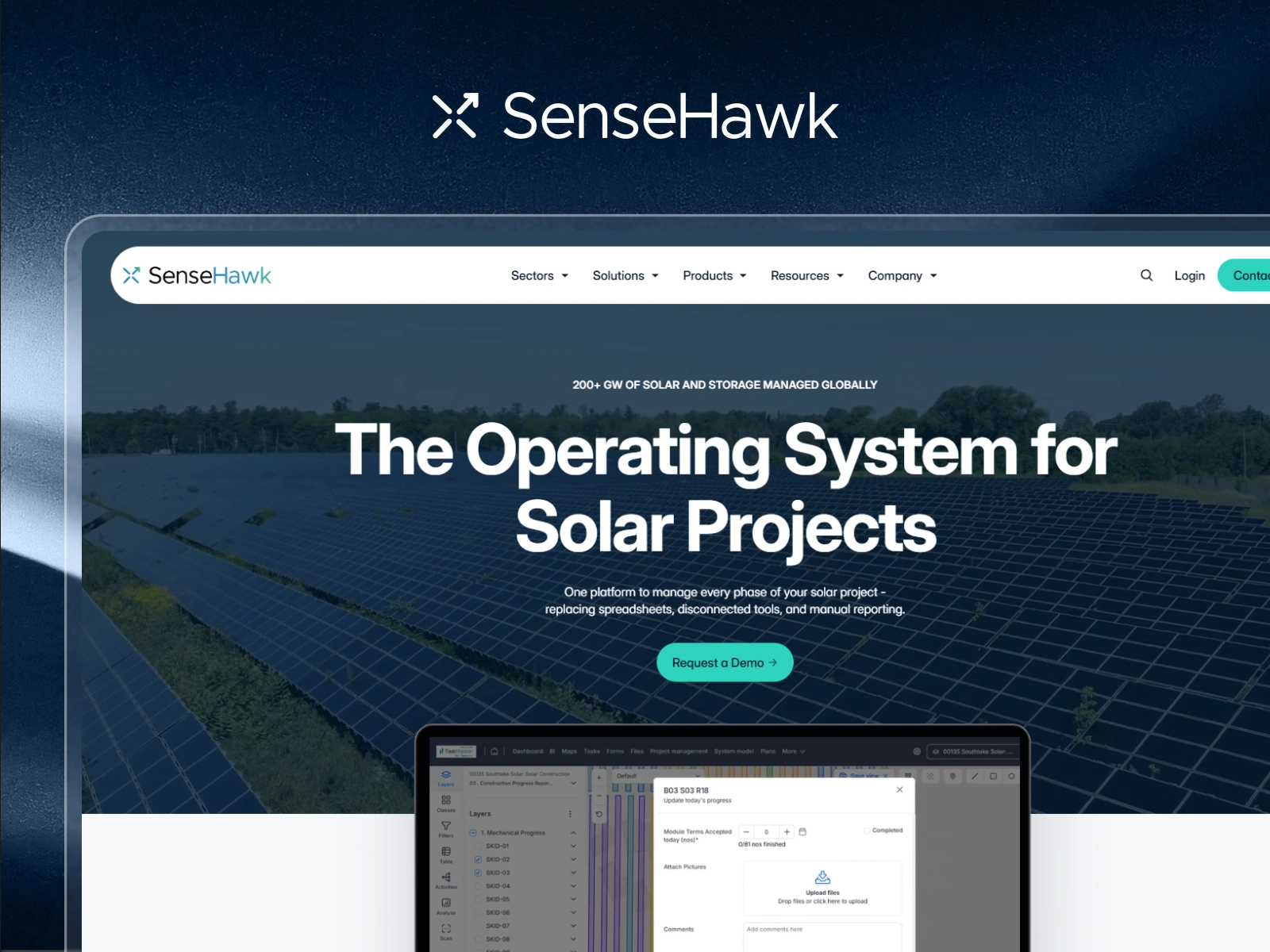
SenseHawk Enterprise Solar SaaS Website
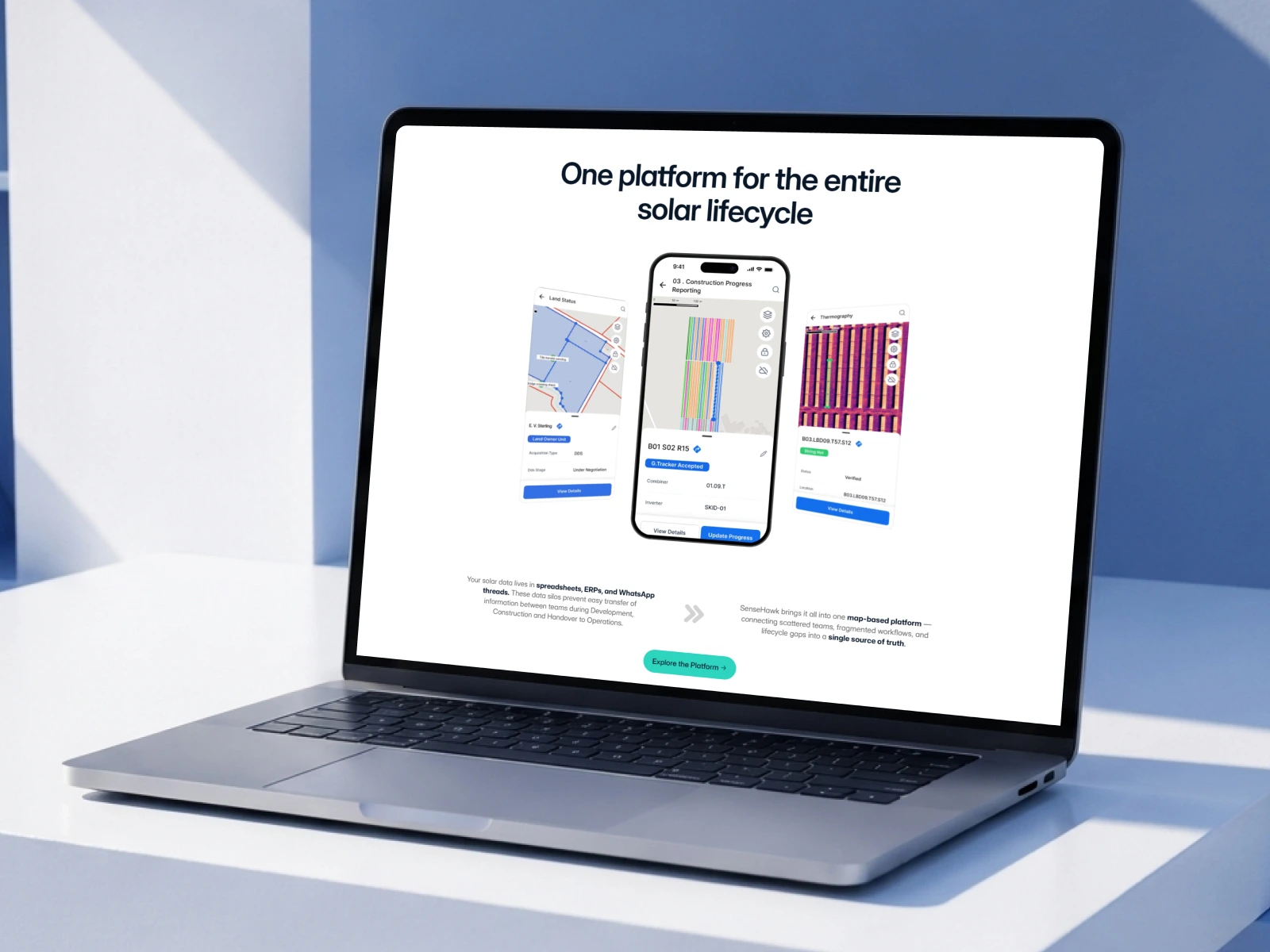
Managing a utility-scale solar project should not require teams to piece together updates from spreadsheets, ERP systems, drone reports, and WhatsApp conversations.
SenseHawk brings that fragmented information into one connected platform.
The website needed to make a highly technical product feel clear, credible, and commercially valuable to solar developers, EPC teams, asset owners, and operations teams.
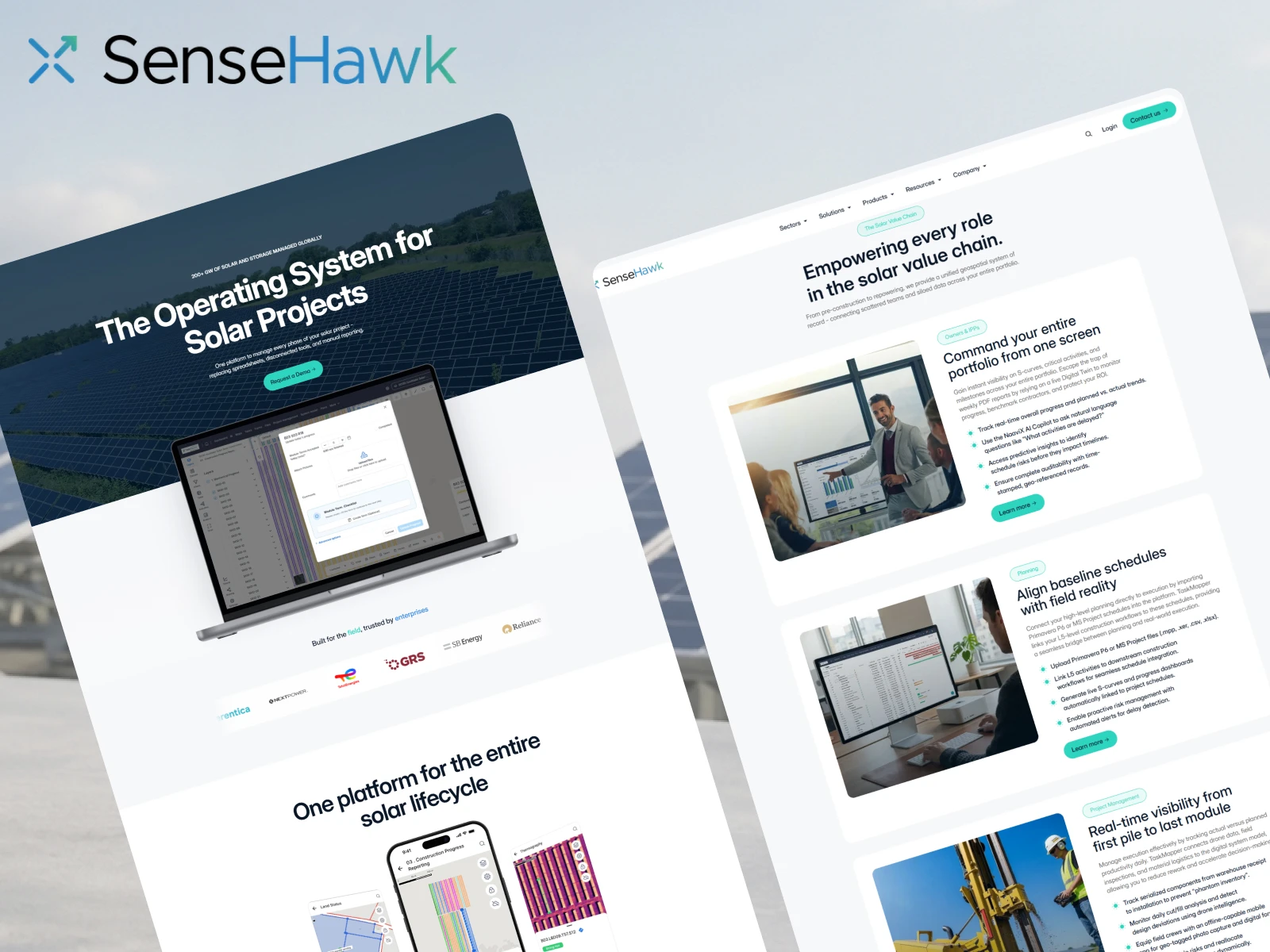
I developed a polished, responsive website experience that transforms complex product capabilities into structured visual stories, guides visitors through the complete solar lifecycle, and creates clear pathways toward booking a product demonstration.
Project Overview
Project Type: Enterprise SaaS Website Design & Development
Industry: Solar Energy, Renewable Infrastructure, Construction Technology & SaaS
Role: UI/UX Designer, Framer Designer & Framer Developer
Platform: Framer
Live Website:
https://www.sensehawk.com/
At a Glance
Developed a scalable enterprise SaaS website experience
Created clear product storytelling for a complex solar platform
Structured the experience around the complete solar project lifecycle
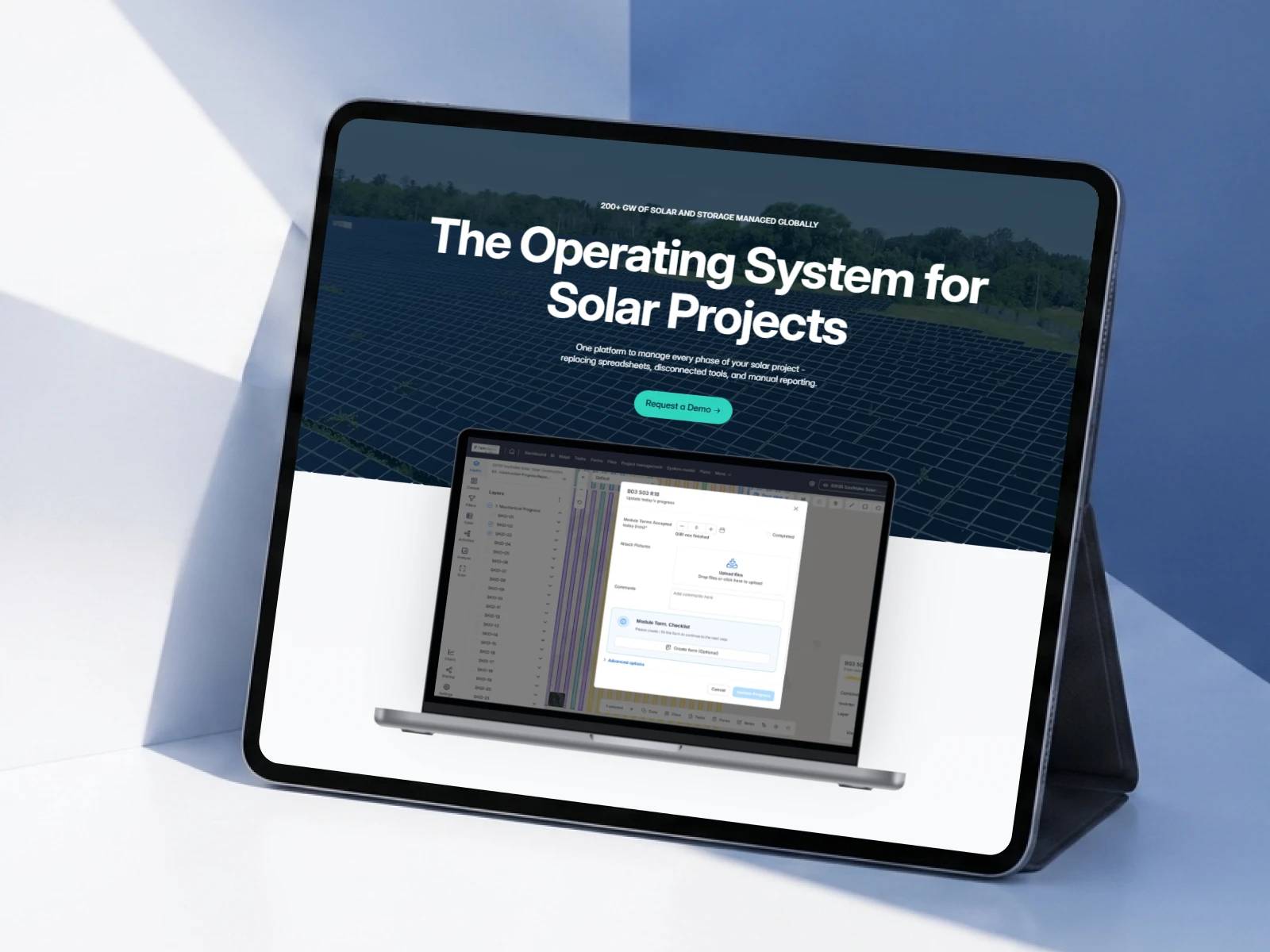
Built responsive layouts across desktop, tablet, and mobile
Created reusable components for products, solutions, statistics, and resources
Presented technical platform capabilities through approachable visual sections
Developed clear journeys for EPCs, developers, owners, and operations teams
Added strong product-demo and expert-consultation conversion paths
Improved content hierarchy, accessibility, and SEO foundations
Created a flexible structure for future product and resource updates
About SenseHawk
SenseHawk is a solar project management and asset intelligence platform designed to support the complete lifecycle of large-scale solar projects.
The platform connects development, construction, commissioning, handover, and operations through a shared, map-based system of record.
Instead of allowing project information to remain scattered across spreadsheets, ERPs, drone reports, PDFs, and messaging threads, SenseHawk brings schedules, designs, inspections, equipment data, field updates, and performance information into one connected environment.
SenseHawk supports developers, EPC contractors, owners, independent power producers, and operations teams that need reliable information across complex solar portfolios.
The Challenge
SenseHawk solves an advanced operational problem.
Its platform supports geospatial data, digital twins, drone imagery, construction schedules, quality inspections, equipment traceability, field workflows, and asset operations.
That level of capability creates a website communication challenge.
Visitors need to understand the platform quickly without being overwhelmed by technical terminology or a long list of disconnected features.
The website also serves multiple audiences with different priorities.
Developers and EPC teams need visibility into schedules, field progress, productivity, quality, and construction risk.
Owners and IPPs need portfolio-level oversight, reliable handover information, and protection against delays or margin loss.
Operations teams need an accurate digital record of equipment, inspections, issues, and asset performance.
The experience therefore needed to explain one connected platform while still making each visitor feel that the product was designed for their specific workflow.
Project Goals
The central goal was to make SenseHawk’s technical depth easy to understand and commercially compelling.
The website needed to:
Position SenseHawk as an operating system for solar projects
Explain how the platform replaces fragmented tools and manual reporting
Present the entire solar lifecycle in one connected narrative
Communicate the value of its map-based digital twin
Show how field and office teams work from the same information
Build trust with enterprise renewable-energy organisations
Address the needs of different customer types
Present measurable platform scale and business value
Create strong pathways toward product demonstrations
Improve the discovery of solutions and resources
Remain responsive and readable across all devices
Support future growth through reusable content structures
Scope of Work
Website Strategy
The website structure was planned around the questions enterprise buyers ask when evaluating solar project software:
What problem does the platform solve?
Which project phases does it support?
How does it connect field and office data?
Can it support large portfolios?
Which teams can use it?
What information becomes visible?
How will it reduce risk and manual work?
What does implementation look like?
How can we see the product in action?
Information Architecture
Content was structured around:
Platform overview
Solar lifecycle stages
Core product capabilities
Industry and customer solutions
Project planning
Construction management
Quality and field operations
Digital twin technology
Asset ownership and operations
Resources and company information
Demo and expert-contact pathways
Responsive Framer Development
The website was developed using responsive Framer layouts with attention to:
Content widths
Typography scaling
Navigation behaviour
Product visualisation
Data and statistics presentation
Card stacking
CTA placement
Image proportions
Interactive sections
Mobile readability
Component Architecture
Reusable components were established for:
Navigation
Hero sections
Product cards
Solution cards
Lifecycle stages
Platform features
Statistics
Customer logos
Testimonial content
Resource cards
Calls to action
Forms
Footer navigation
Interaction Design
Purposeful interactions were used to improve product understanding, including:
Button hover states
Scroll-based section reveals
Product feature transitions
Interactive platform explanations
Card hover feedback
Accordion-style content
Responsive navigation
Repeated demo CTAs
SEO and Accessibility
The build supported:
Descriptive page titles
Search-focused meta descriptions
Clear heading hierarchy
Accessible interactive controls
Descriptive image alt text
Readable colour contrast
Logical page structure
Responsive content presentation
The Process
1. Simplifying the Product Story
The first challenge was not deciding what to include.
It was deciding how to organise the information so visitors could understand the platform without already being experts in solar construction software.
The story was structured around a familiar pain point: project data living in separate tools and communication channels.
SenseHawk’s value was then presented as a transition from fragmentation to one connected, map-based source of truth.
2. Mapping the Solar Lifecycle
Instead of presenting every feature as an isolated product function, the website connects capabilities to real project stages.
The experience guides visitors from development and planning through construction, handover, and long-term operations.
This makes the platform easier to understand because each capability is shown in the context of a real workflow.
3. Building Audience-Specific Journeys
SenseHawk serves different decision-makers across the renewable-energy industry.
Content pathways were organised for:
Developers
EPC contractors
Owners and IPPs
Planning teams
Construction teams
Quality teams
Field teams
Operations and maintenance teams
Each journey focuses on the visibility, control, and outcomes most relevant to that audience.
For example, the project-management solution positions SenseHawk as a unified command centre for managing schedules, field execution, and progress data within a GIS-powered platform.
4. Translating Technical Capabilities Visually
Complex capabilities were broken into focused content blocks with supporting product visuals and direct explanations.
The platform experience highlights concepts such as:
Map-based digital twins
Drone data
CAD and geospatial layers
Progress tracking
Equipment traceability
Schedule validation
Quality inspections
Field reporting
Portfolio-wide visibility
SenseHawk describes its digital model as more than a map, combining geospatial foundations with equipment-level traceability and project information.
5. Creating Reusable Framer Systems
Repeated content patterns were developed as reusable components to improve consistency and simplify future updates.
This allows new product features, customer solutions, statistics, and resources to be introduced without redesigning the complete website.
6. Designing Responsive Behaviour
Enterprise SaaS pages often combine large headlines, dashboards, maps, diagrams, statistics, and technical descriptions.
Each section required deliberate responsive decisions.
On smaller screens:
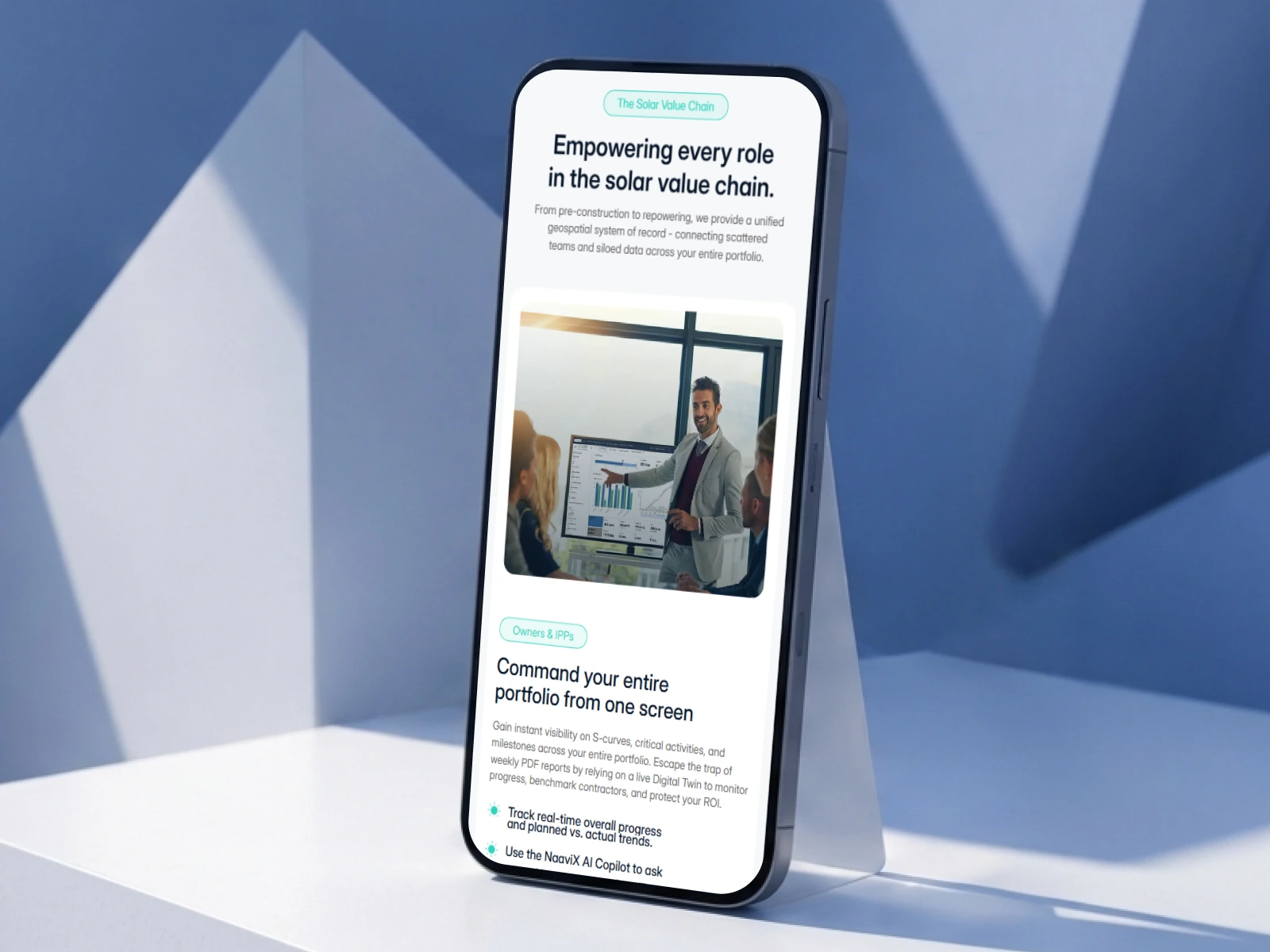
Multi-column layouts become focused vertical sequences
Dashboard visuals retain legibility
Statistics are reorganised for quick scanning
Calls to action remain visible
Technical descriptions use shorter readable widths
Navigation prioritises the most important destinations
7. Strengthening Conversion Paths
The primary conversion goal is not an instant online purchase.
It is a qualified conversation.
Calls to action such as requesting a demo, seeing the platform in action, and speaking with an expert were placed throughout the experience after visitors had received enough information to understand the potential value.
8. Final QA and Refinement
The complete experience was reviewed for:
Responsive consistency
Navigation behaviour
Product visual clarity
Content hierarchy
Button states
Section transitions
Card interactions
Forms
Link accuracy
Mobile readability
Cross-page consistency
SEO structure
Accessibility
The Solution
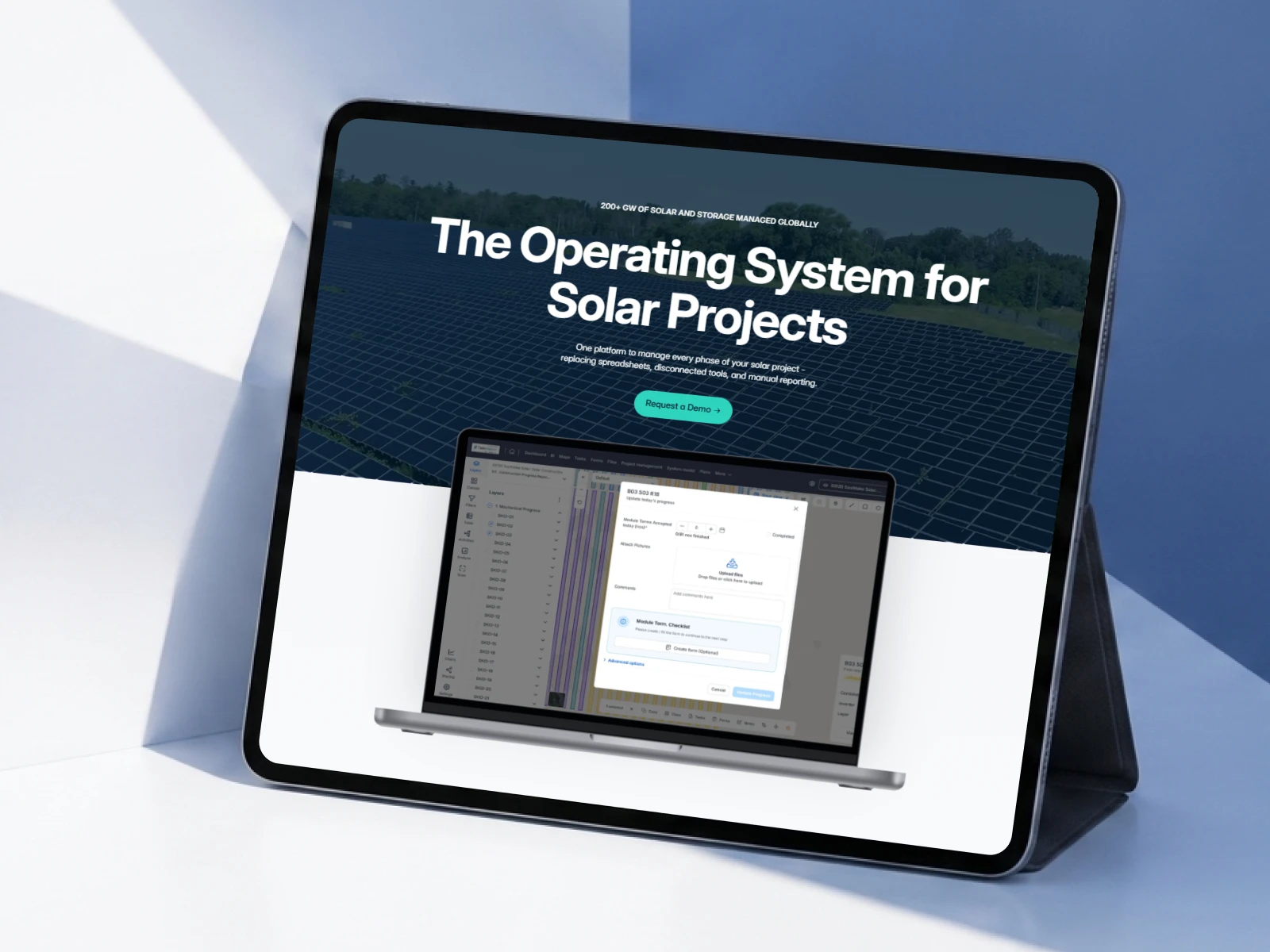
The final website presents SenseHawk as a connected operating system for solar project delivery rather than a collection of separate software tools.
The homepage establishes the scale of the problem, introduces the platform’s unified approach, and then guides visitors through its digital-twin foundation, project phases, customer use cases, and business outcomes.
SenseHawk’s core positioning centres on replacing disconnected tools and manual reporting with one platform for every phase of a solar project. The company states that its platform supports more than 200 GW of solar and storage globally.
The experience balances technical depth with a clear commercial story:
Connect the Data
Bring project, field, equipment, design, schedule, and inspection information into one environment.
Create Visibility
Give office and field teams access to the same current project record.
Identify Risk Earlier
Reveal schedule slippage, design deviations, productivity issues, and quality concerns before they become larger problems.
Support the Full Lifecycle
Preserve project knowledge from development and construction through handover and operations.
Enable Better Decisions
Replace delayed manual updates with visual, contextual, and portfolio-wide intelligence.
Key Features
Enterprise solar SaaS website
Multi-page Framer architecture
Responsive desktop, tablet, and mobile layouts
Solar lifecycle storytelling
Map-based digital twin presentation
Product and platform capability sections
Customer-specific solution pages
EPC and project-management content
Owner and IPP solution pathways
Planning and scheduling use cases
Construction and field visibility
Quality and inspection workflows
Equipment traceability
Statistics and proof points
Customer and partner logo sections
Resource and insight cards
Reusable Framer components
Product-demo calls to action
Expert-contact forms
SEO-ready content structure
Accessibility-focused implementation
Explaining the Digital Twin
The digital twin is central to the platform, but the term can feel abstract without context.
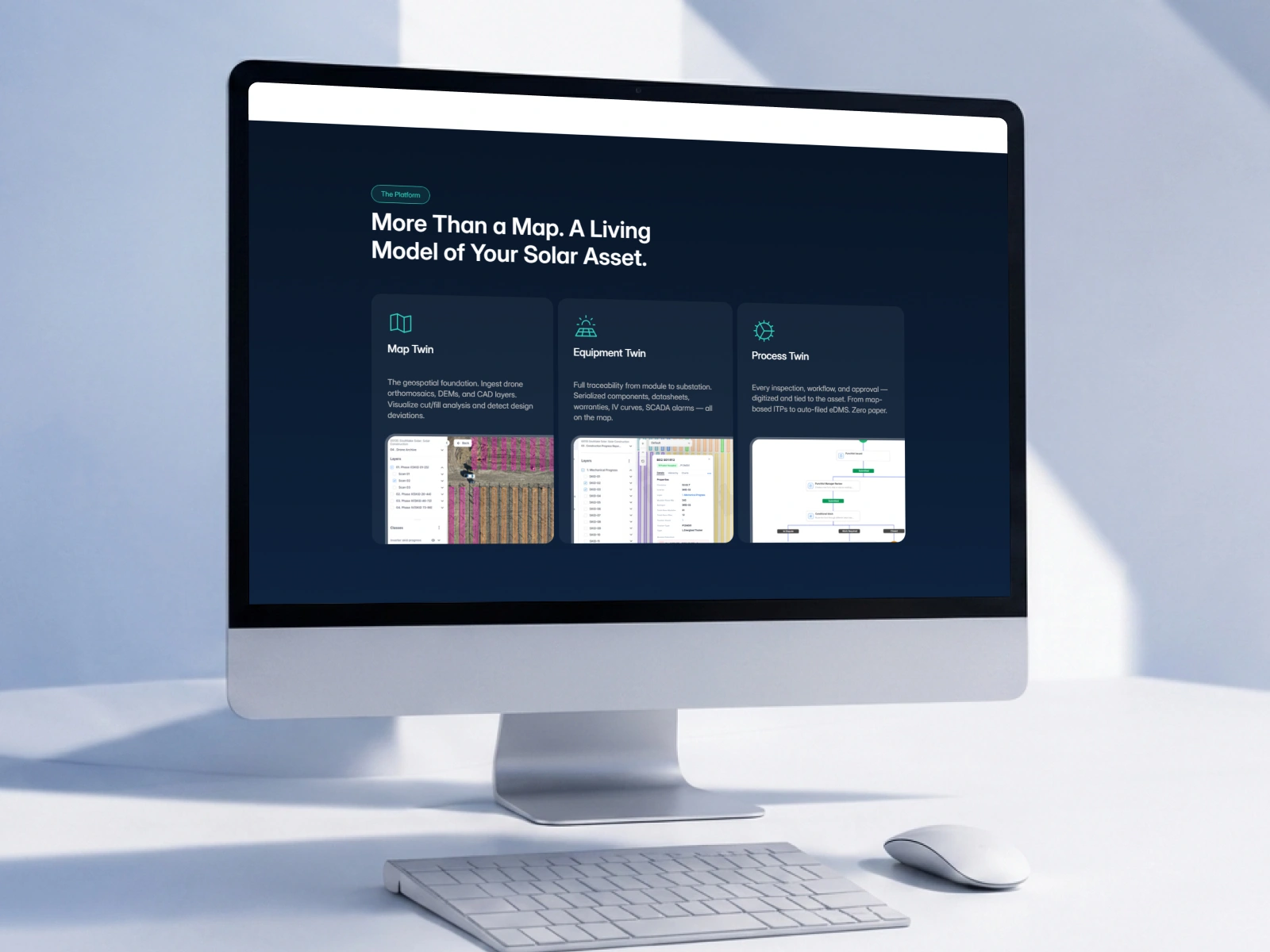
The website explains it through connected layers.
Map Twin
The map provides the geospatial foundation for the project.
Teams can work with drone orthomosaics, terrain information, CAD layers, cut-and-fill analysis, and visual comparisons between design intent and on-site conditions.
Equipment Twin
Project equipment can be tracked from individual modules through larger electrical systems, helping teams maintain traceability throughout construction and operations.
Project Information
Schedules, inspections, issues, documents, field activity, and progress information become connected to the physical asset rather than remaining in separate reports.
This layered explanation helps visitors understand that the platform is not simply a project map.
It is a living record of the solar asset.
Planning and Construction Experience
Utility-scale solar schedules are difficult to trust when field updates arrive late or through inconsistent formats.
SenseHawk’s planning solution is positioned around closing that gap.
The platform helps teams understand whether delays are related to productivity, material readiness, quality, or workfront conditions. It also aims to reveal slippage before it affects the critical path.
The website translates this into practical project value:
More reliable progress updates
Better schedule validation
Clearer workfront visibility
Faster identification of delays
Reduced dependence on manual reporting
Better alignment between site and planning teams
Owner and Portfolio Experience
Owners and independent power producers need to understand more than the status of one construction activity.
They need reliable visibility across portfolios, contractors, sites, schedules, inspections, and operational assets.
SenseHawk positions its owner and IPP solution as a live portfolio-wide system of record that combines schedules, drone data, field inspections, and performance insights in one digital twin.
The website communicates this value through:
Portfolio-wide visibility
Earlier risk detection
Better contractor oversight
More reliable project handover
Reduced reporting burden
Stronger protection of project margins
Continuity between construction and operations
Building Enterprise Trust
Enterprise software buyers need evidence that the product can operate at scale.
The website builds credibility through several layers.
Platform Scale
Large project and portfolio statistics establish that SenseHawk is designed for utility-scale environments.
Industry-Specific Language
The website speaks directly to solar development, EPC, planning, commissioning, handover, operations, and repowering workflows.
Practical Pain Points
Messaging is grounded in recognisable problems such as fragmented spreadsheets, delayed reports, disconnected systems, and unclear field progress.
Product Visuals
Maps, dashboards, site data, and digital-twin interfaces make the platform feel tangible.
Customer-Specific Solutions
Dedicated solution pathways show that the product supports different responsibilities across the solar value chain.
Clear Demonstration Path
Visitors can move from product education into a live demonstration or expert conversation without navigating through an aggressive sales funnel.
Conversion-Focused Page Flow
The website follows an enterprise SaaS conversion journey.
Identify the Problem
The experience begins with fragmented project information and disconnected teams.
Introduce the Platform
SenseHawk is presented as one connected operating system for solar projects.
Explain the Technology
The digital twin, maps, equipment records, field workflows, and project information are introduced visually.
Connect Capabilities to Outcomes
Features are tied to progress visibility, quality, scheduling, traceability, risk reduction, and project control.
Establish Scale and Credibility
Statistics, customer logos, use cases, and industry-specific content reinforce trust.
Invite the Conversation
Visitors are directed toward requesting a demonstration or speaking with an expert.
This structure helps technical evaluators understand the product while giving business decision-makers a clear reason to continue the conversation.
Interaction Strategy
The interactions were designed to support product comprehension rather than create decorative movement.
Section Reveals
Product stories enter progressively as visitors scroll, helping break a technically dense subject into manageable sections.
Feature Transitions
Platform capabilities can be explored without loading visitors with every detail at once.
Card Feedback
Hover states clarify which products, solutions, and resources are interactive.
Navigation Behaviour
The navigation supports access to platform information, audience-specific solutions, company content, and conversion actions.
Repeated Demo Actions
Calls to action appear after meaningful product explanations, reducing the gap between understanding the value and starting a sales conversation.
Deliverables
Complete Framer website development
Enterprise SaaS information architecture
Responsive desktop layouts
Responsive tablet layouts
Responsive mobile layouts
Reusable Framer component system
Platform capability sections
Solar lifecycle storytelling
Digital twin presentation
Customer solution pages
Planning and project-management content
Owner and IPP experience
Statistics and proof sections
Resource card system
Product-demo conversion blocks
Contact and expert enquiry forms
SEO-ready page hierarchy
Accessibility refinements
Final responsive QA
Handover-ready Framer project
The Results
SenseHawk now has a digital experience that communicates a complex solar technology platform with greater clarity and confidence.
The finished website delivers:
Clear positioning as an operating system for solar projects
A connected story across the full asset lifecycle
More approachable explanations of technical capabilities
Stronger visibility for the digital-twin platform
Relevant pathways for different customer types
Improved presentation of enterprise scale and credibility
Clearer demonstration and expert-contact journeys
Consistent responsive behaviour across devices
A reusable structure for future platform updates
A polished experience aligned with the renewable-energy industry
The final website makes SenseHawk feel sophisticated without becoming difficult to understand.
It presents a powerful technical platform through a focused business story: connected data, greater visibility, earlier risk detection, and better solar project outcomes.
Content Management Efficiency
The website was structured to support regular product, solution, and resource updates.
The team can manage:
Product capabilities
Customer solutions
Solar lifecycle content
Platform statistics
Customer logos
Product screenshots
Industry use cases
Insights and resources
Calls to action
Company information
Contact details
Reusable Framer components keep these updates visually consistent and make it easier to expand the website as the platform evolves.
Tech Stack
Framer
Framer Components
Component Variants
Responsive Stacks
Layout Constraints
Product Visualisation Sections
Interactive Feature Components
Accordion Components
Native Framer Forms
SEO Metadata
Accessibility Settings
Responsive Image Optimisation
Lessons & Insights
Complex Platforms Need a Simple Entry Point
Visitors should understand the core business problem before being introduced to technical features.
Product Capabilities Need Context
A feature becomes more valuable when it is connected to a real project phase, workflow, team, or risk.
Enterprise Audiences Need Specific Journeys
Developers, EPC teams, owners, and operators may use the same platform, but they evaluate it through different responsibilities.
Visual Product Evidence Builds Confidence
Maps, dashboards, site imagery, and digital models make advanced software easier to understand and trust.
Scale Should Be Visible
Large project statistics and portfolio-level use cases help enterprise visitors recognise that the platform is built for their operating environment.
Conversion Should Follow Understanding
For high-consideration SaaS products, demo calls to action are most effective after the visitor understands the problem, solution, and potential business value.
Reusable Systems Support Product Growth
A modular Framer structure makes it easier to add solutions, capabilities, customer stories, and resources without losing consistency.
Final Outcome
SenseHawk now has a polished enterprise website that turns a sophisticated solar project platform into a clear and compelling digital story.
The final experience combines responsive Framer development, lifecycle-based product storytelling, digital-twin visualisation, audience-specific solutions, measurable proof, and focused conversion pathways.
It does more than list software features.
It shows how connected data can help solar teams plan, build, hand over, and operate projects with greater confidence.
Like this project
What the client had to say
Very fast and efficient work!


Paul Vlassov, Oz Golden Rush
May 25, 2026, Client
Posted Aug 4, 2026
Built SenseHawk’s Framer website with responsive product storytelling, scalable components, clearer conversion paths, and a polished enterprise SaaS experience.
Likes
0
Views
14
Timeline
May 21, 2026 - May 25, 2026
Clients
Oz Golden Rush