Rural RPM: Designing for Clinician Capacity, Not Data Volume

Ajay Singh


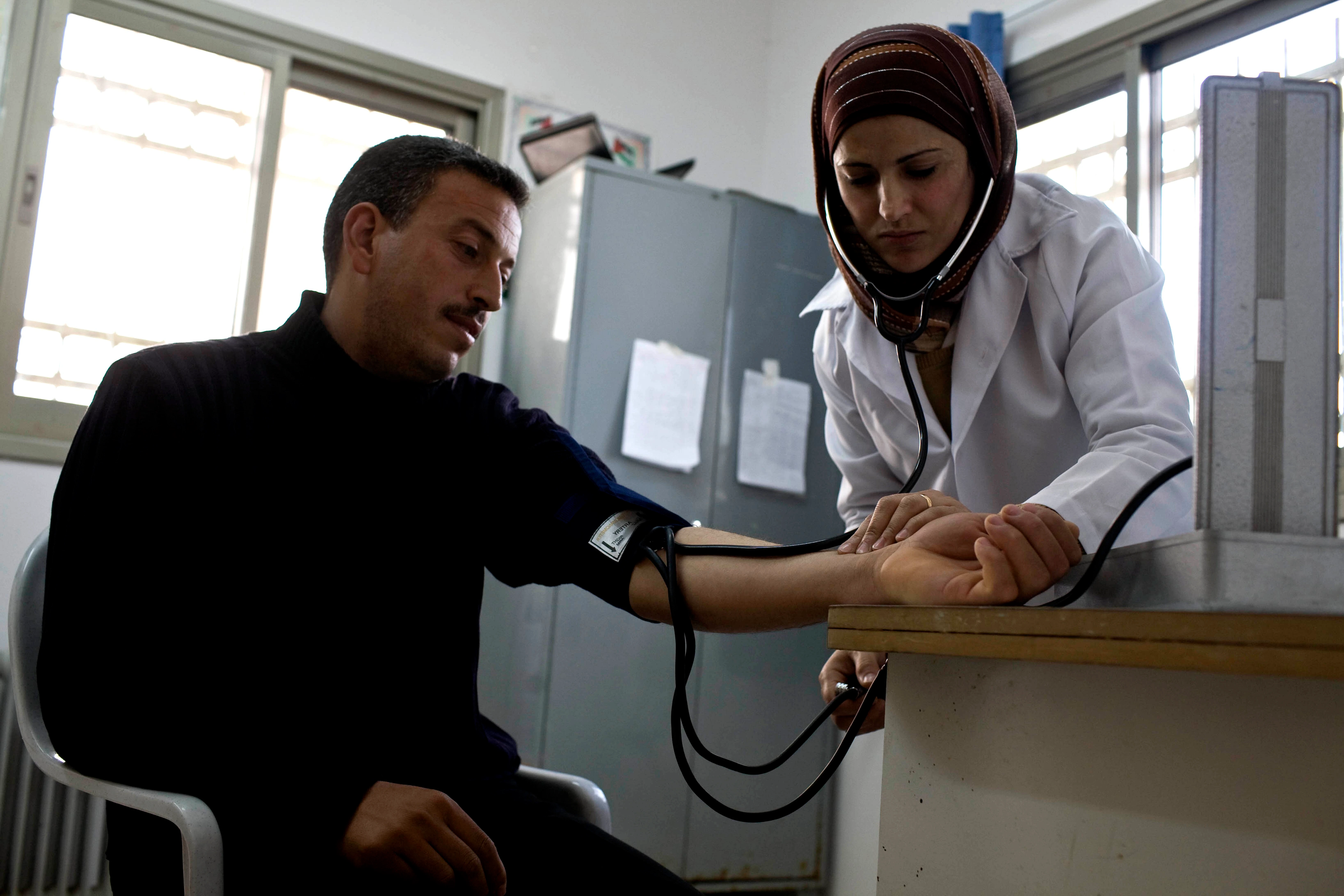
The $50 billion Rural Health Transformation Program creates a genuine opportunity to scale remote patient monitoring, but only if the operating model is built around clinician capacity, not data volume.
The Rural Health Transformation Program is a $50 billion, five-year commitment to reshape care delivery across rural America. It arrives while rural hospitals continue to face financial strain, workforce shortages, and structural constraints that have been building for more than a decade. The Sheps Center at UNC Chapel Hill captures the sharpest edge of that pressure: 154 rural hospital closures and conversions since 2010, including 86 facilities that stopped providing health services entirely and 68 that lost inpatient capability while continuing limited outpatient care.
Remote patient monitoring looks like an obvious place to invest. Rural patients face real geographic barriers to care, and chronic disease rates in rural populations consistently run higher than in metro areas. The gap between a patient at home and the clinician managing their condition is exactly the kind of problem monitoring technology can help close.
But there's a question worth asking before the systems get built:
What happens when remote monitoring starts generating data faster than rural clinical teams can realistically act on it?
The constraint may not be getting data out of the patient's home. It may be figuring out what actually deserves a clinician's attention once it arrives.
Assumptions Borrowed From Elsewhere
RPM isn't a single operating model. Implementations vary widely across organizations, patient populations, and program designs. But many of the dominant frameworks were built under conditions more typical of large, well-resourced health systems, and those conditions don't transfer cleanly to rural care settings.
Four structural areas make the mismatch clear.
• Staffing. Large systems can staff dedicated monitoring teams or centralized care management operations. Most rural organizations aren't short on staff so much as short on available incremental capacity. The nurse who would review an RPM alert is often also managing a full patient panel, handling documentation, and covering work that would sit with separate roles in a larger system.
• Connectivity. Rural broadband gaps are real and well documented, both in FCC data and in the scale of USDA ReConnect Program funding. Connectivity matters, but solving transmission doesn't automatically solve what happens after transmission. It's a prerequisite, not a complete operating condition.
• Device workflow. Standard Bluetooth-paired devices, smartphone-dependent apps, and multi-step onboarding create friction that's easy to overlook in a controlled pilot and much harder to ignore when the user is an older patient managing COPD in a rural county. Technical burden on the patient side determines whether data flows at all.
• Clinical technology environment. Many rural organizations run on a patchwork of systems: different EHRs, regional networks, specialty platforms, external partners, legacy infrastructure. RPM data landing in an environment that wasn't built around it creates integration work, and that work ultimately falls on clinical and administrative staff.
The real question isn't whether RPM works. It's whether its underlying assumptions match the environment it's being deployed into.
The Scarce Resource Is Clinician Attention, Not Data
Picture a rural Critical Access Hospital enrolling several hundred patients in a remote monitoring program. Every day, those patients transmit blood pressure readings, weight, glucose, oxygen saturation, heart rate, and symptom check-ins.
The data is flowing. That's a real technical achievement.
Now ask the operational questions. Who reviews it, and on what schedule? What counts as a meaningful change versus normal variance? Who gets the alert? Who follows up with the patient? How much time does each newly enrolled patient add to a nurse's day?
More data doesn't answer any of these questions. It can make them harder to answer. Call this signal-to-clinician-capacity fit: the volume and priority of clinical signals reaching the care team needs to stay proportional to the workforce available to act on them.
Success isn't measured in readings collected or alerts fired. It's measured in the right signal reaching the right person, at the right time, with enough context to act on it.
We've seen this play out directly. In one digital health implementation, unifying wearable data, EHR connectivity, and automated risk detection into a single workflow cut physician review time by 60% while increasing patient interaction by 45%. The gain didn't come from collecting less data. It came from reducing how much raw information physicians had to sort through before acting.
RPM can solve a distance problem while quietly creating an attention problem. That's not a knock on the technology. It's a critique of implementations that treat data volume as the primary success metric.
A patient whose readings get reviewed inconsistently, routed to the wrong person, or buried in a queue of low-acuity notifications isn't being monitored. They're being tracked.
Alert fatigue, where high notification volume desensitizes clinicians to genuinely meaningful signals, is already well documented across digital clinical workflows. Remote monitoring adds another potential source of that burden, and rural teams running lean staffing have even less buffer to absorb it.
What a Rural-Native RPM Model Should Take Away, Not Add
A strong rural RPM operating model deserves to be judged as much by what it removes as by what it adds.
On the patient side, that means minimizing dependence on patient-managed connectivity and setup wherever it's clinically and technically feasible. Where coverage allows, cellular-connected devices that transmit automatically cut down on Bluetooth pairing, app logins, and troubleshooting. The question worth asking is simple: what does the program stop requiring the patient to do?
The same logic applies on the clinician side. The goal isn't another dashboard demanding active monitoring. It's a system that filters routine readings, surfaces trend-based signals alongside threshold alerts, adds relevant clinical history to escalations, and routes actionable information into workflows clinicians already use, instead of adding another portal to check.
Every low-value alert that never reaches a clinician is a design win. Every eliminated portal switch is a design win.
Algorithms and automated prioritization have a role, but a narrow one: filter, contextualize, prioritize, route. Clinical decisions stay with qualified healthcare professionals. The technology's job is to protect the time available for those decisions, not to replace them.
The strongest rural RPM models score well against a simple evaluation framework:
• What does the program stop requiring the patient to do?
• What does it stop requiring a nurse to manually review?
• What portal does it eliminate?
• How many low-value alerts never reach a clinician at all?
Interoperability Is Really a Workforce Problem
The interoperability conversation in rural health usually gravitates toward data exchange standards, API compliance, and certification frameworks. Those matter, but there's a more immediate operational argument.
If device readings sit in one system, medications in another, encounters in the EHR, and communication somewhere else entirely, someone has to manually reconstruct the clinical picture before acting.
In a well-resourced system, that work might belong to a dedicated care coordinator. In a rural organization, it usually falls to a nurse or clinician who already has a full schedule.
Poor interoperability quietly consumes workforce capacity. Every disconnected workflow adds clicks, context-switching, manual reconciliation, and duplicate documentation, and multiplied across hundreds of enrolled patients, that operational cost adds up fast.
Interoperability in a rural RPM model isn't about infrastructure elegance. It's about protecting the clinical time available for decisions that actually require clinical judgment.
Reimbursement and Workflow Have to Be Designed Together
Medicare reimburses RPM services through CPT codes including 99453, 99454, 99457, and 99458, covering device setup, data collection, and treatment management. That framework has helped drive adoption.
But reimbursement alone doesn't produce sustainable operating economics.
Rural providers work across payer mixes and reimbursement structures that can materially shape RPM economics. The operational questions matter just as much as the billing codes: Who does the monitoring? Who reviews escalations? How much staff time does each enrolled patient actually require? Can the program keep running once initial funding runs out?
A technically successful RPM workflow that's economically unsustainable is still not a successful operating model. Technology can't be designed in isolation from the clinical and financial workflow that has to support it.
The Real Test of the $50 Billion Program
The Rural Health Transformation Program is a chance to rethink operating-model assumptions, not just fund another round of technology deployment.
Success shouldn't be measured by devices deployed, patients enrolled, readings collected, or dashboards launched. Those numbers are easy to count. They just don't tell you whether the program actually worked.
The harder, more revealing questions: Did the investment reduce unnecessary workload? Did clinically meaningful signals reach clinicians faster and with more context? Did the design fit the staffing that actually exists, rather than staffing that doesn't? Could patients use the technology without a heavy technical lift? Could the organization sustain the workflow once the funding runs out?
Underneath all of it is one framing question that should guide every implementation decision: was this RPM model actually designed for a Critical Access Hospital, or was it designed for a large health system and simply scaled down?
Scaling down a model built on different assumptions isn't transformation. It's reproduction at smaller volume, with the same mismatches and a much thinner margin for error.
The real measure of a rural RPM program isn't how much data it generates. It's whether the right signal reaches a clinician who has the time and the context to act on it.
Like this project
Posted Sep 19, 2026
Asked the uncomfortable question behind rural RPM: What happens when the technology scales faster than the clinical workforce needed to act on it?