Built with Webflow
LeadScraper — AI Lead Gen Landing Page That Converts
Approve request to show earnings
View

Fahad Raee
Verified



Overview
Website: leadscraper.de
Industry: AI SaaS · B2B Lead Generation · Sales Automation
Services: Figma UI/UX Design · Webflow Development · CMS Architecture · Conversion Optimisation
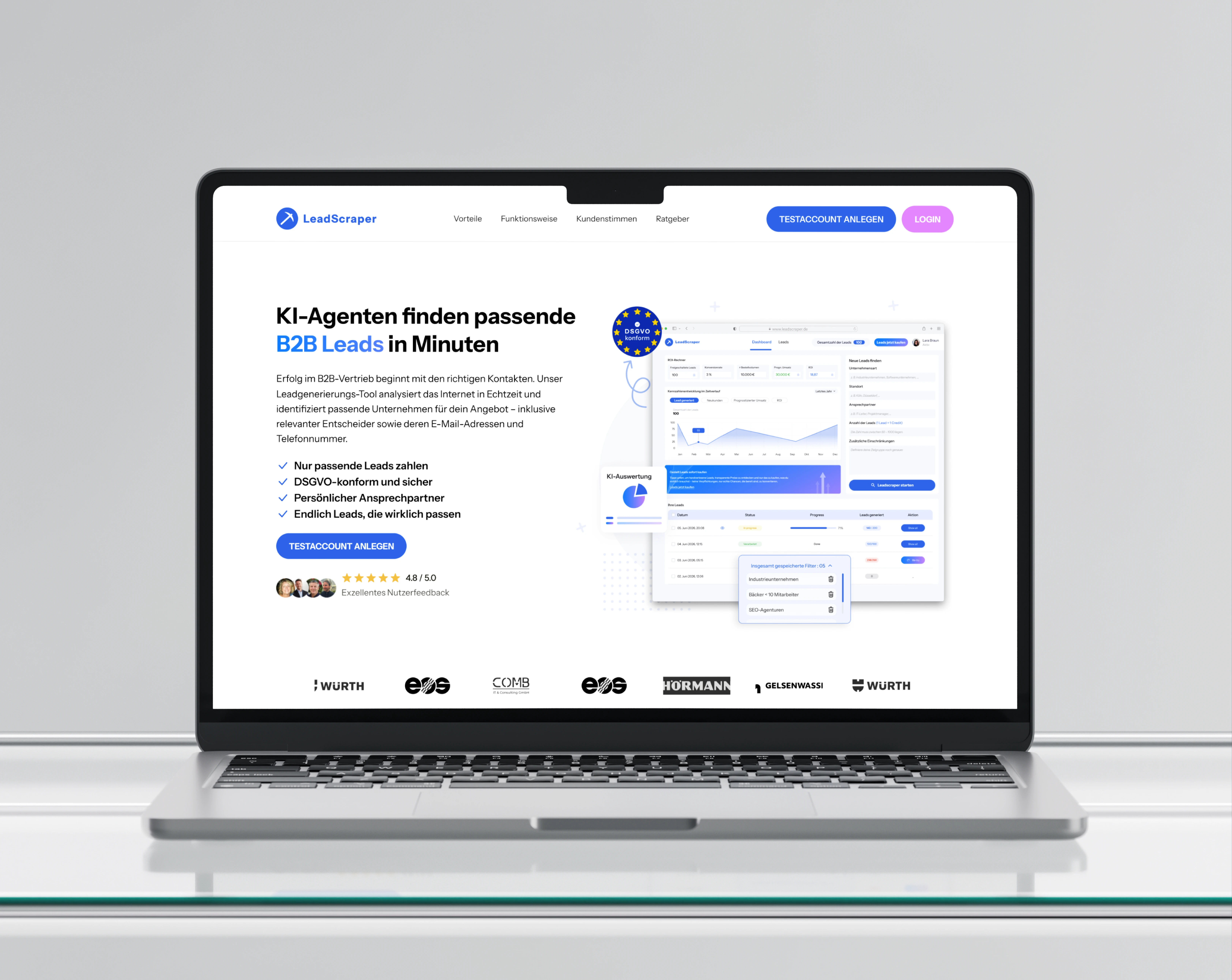
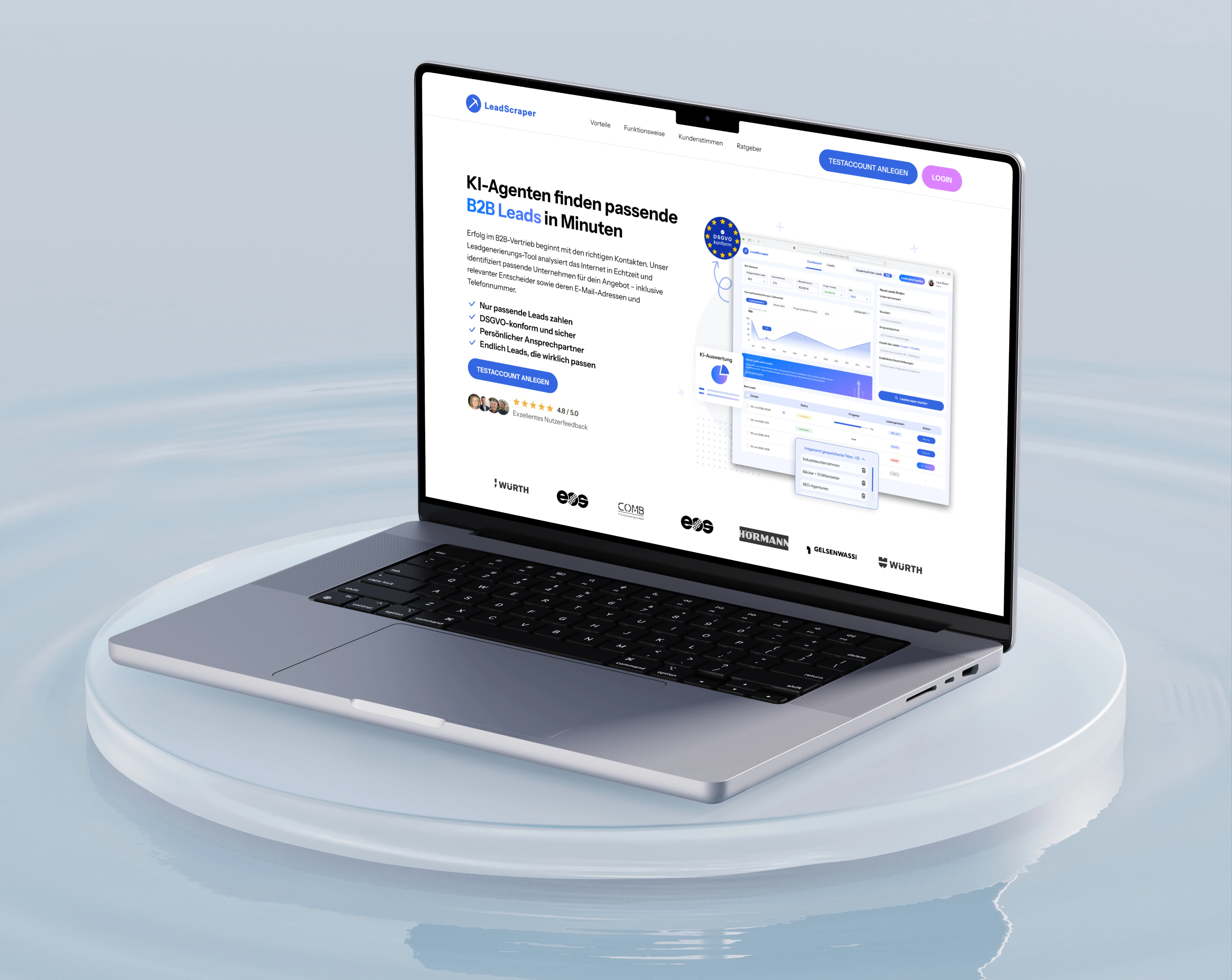
LeadScraper is an AI-powered B2B lead generation platform that identifies companies, decision-makers, and contact data through natural-language search in real time, GDPR-compliant, and without relying on static databases.
Unlike traditional lead databases that quickly go stale, LeadScraper crawls the live web and extracts relevant prospects dynamically. That's a technically meaningful advantage, but also a complex one to explain to busy sales teams who just want more qualified leads, faster.
The goal was to build a SaaS marketing website that positions the product as powerful, credible, and easy to start using without burying the value proposition in AI jargon.
The Challenge
1. Technical Depth vs. Sales Team Simplicity
The platform's AI and real-time data extraction capabilities are genuinely advanced. But the target buyer, a B2B sales rep or team lead, cares about one thing: "Will this get me better leads, faster?" The site had to answer that before anything else.
2. GDPR Trust in a Data-Sensitive Market
LeadScraper operates in the German and European market, where GDPR compliance isn't just a feature, it's a prerequisite for trust. Any hesitation around data practices and buyers leave immediately.
3. Standing Out From a Crowded Category
AI lead generation tools are everywhere. Without clear differentiation, real-time vs. static databases, natural-language search, and GDPR compliance, LeadScraper looks like every other tool in a saturated market.
4. Getting Visitors to Try It, Not Just Read About It
The goal wasn't to inform but to get qualified users into a trial. Every page needed to make the start feel frictionless.
The Solution
Problem-First Page Structure
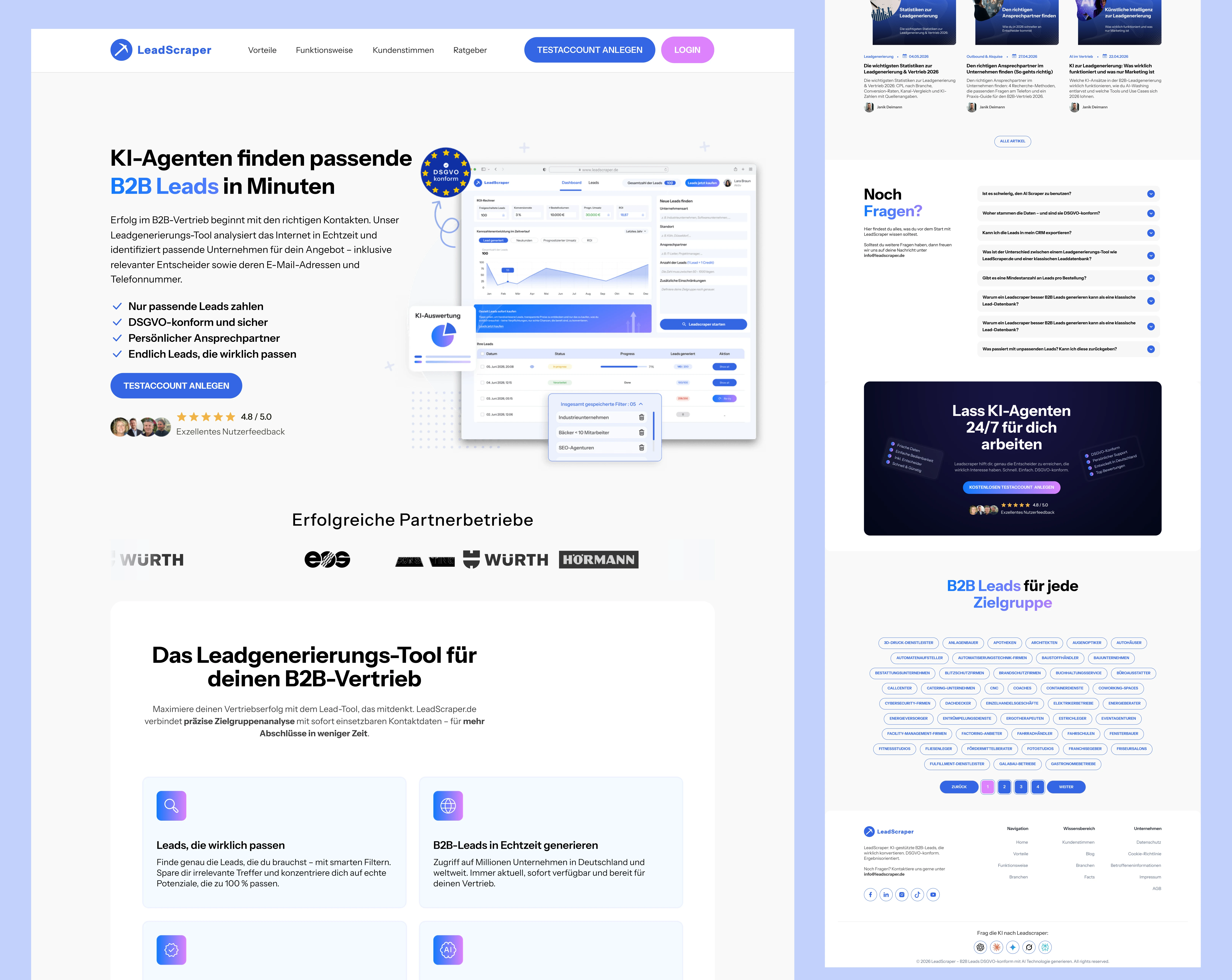
The site opens with the problem every B2B sales team knows: bad leads waste time. LeadScraper's AI solution is introduced as a direct, specific, credible, and fast to understand.
GDPR Trust Embedded by Design
Compliance credentials, data sourcing transparency, and security practices are positioned prominently throughout, not hidden in a footer or legal page.
Real-Time vs. Database Differentiation Made Visual
The core differentiator, live web crawling vs. static databases, is explained visually and early, so users understand why LeadScraper is different before they see any pricing.
Conversion Path Optimised for Trial Intent
Strategic CTAs guide users from interest → understanding → test account, with reduced friction at every step. No unnecessary barriers between a curious visitor and a signed-up user.
Deliverables
UI/UX Design (Figma)
Full website UI/UX design with responsive layouts
Clear typographic hierarchy for technical content
Structured feature presentation and benefit-led sections
Reusable UI component library
Webflow Development
Pixel-perfect responsive Webflow implementation
CMS blog and article structure for SEO growth
Reusable component system
Performance optimisation and clean class architecture
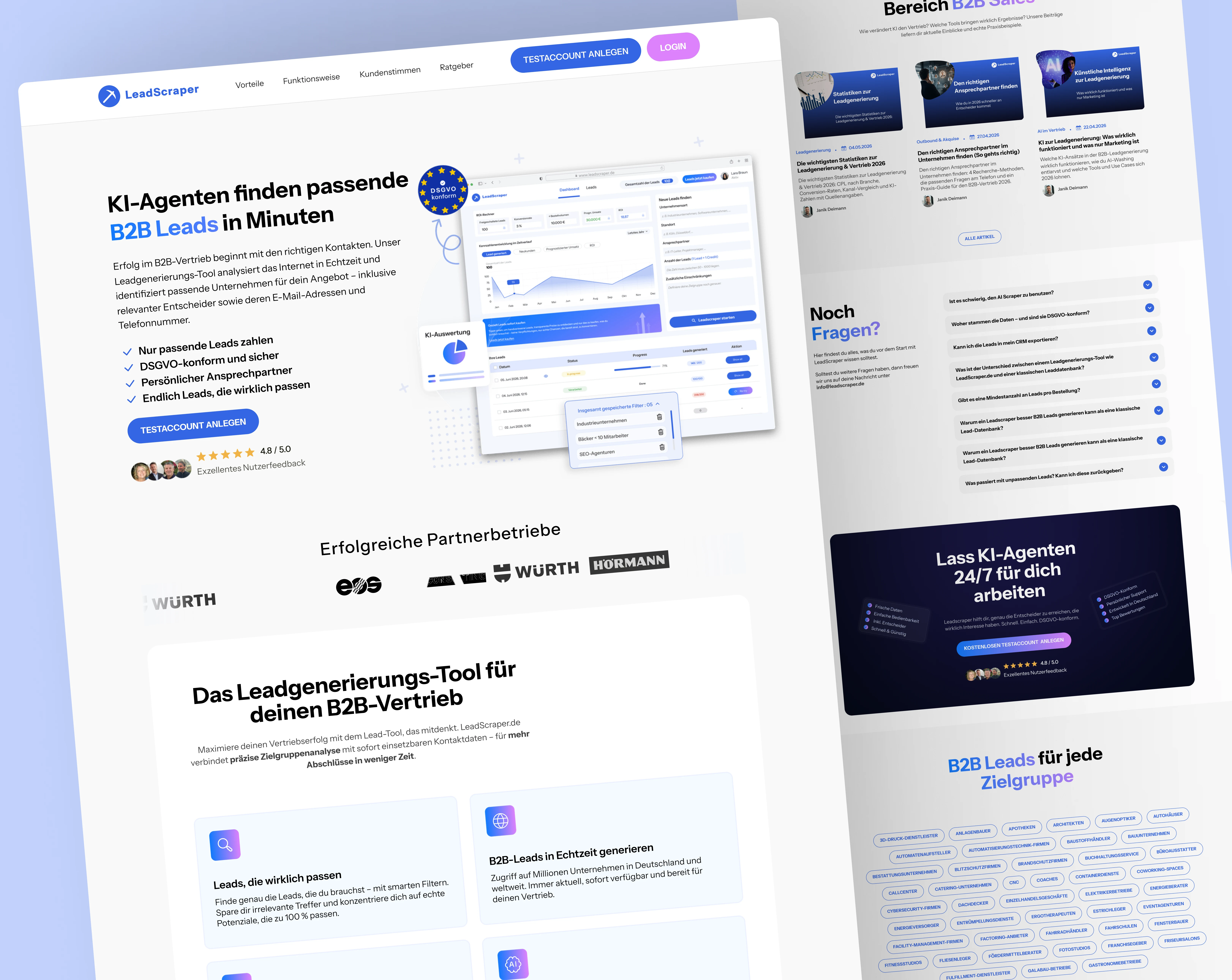
Pages Delivered: Homepage · Features/Product pages · CRM integrations · Blog/Resources · About · Contact/CTA
Outcome & Impact
Clear product positioning. LeadScraper's AI-driven, real-time differentiator is now immediately visible and understandable to sales team visitors.
GDPR credibility front and centre. Trust signals woven throughout the experience reduce hesitation for European buyers at every touchpoint.
Conversion-ready structure. A smooth path from landing to trial signup reduces the friction between an interested visitor and a user who's signed up.
Built for long-term SEO growth. The CMS blog architecture supports ongoing content publishing, helping LeadScraper build organic discoverability over time.
B2B SaaS websites need to do two things in the first 10 seconds: make the value obvious and make starting feel easy. Most don't do either.
I build SaaS landing pages and marketing sites that turn complex AI products into clear, conversion-ready experiences.
→ View my full portfolio: contra.com/fahadraee
Like this project
Posted Nov 14, 2025
LeadScraper needed a landing page that could sell AI lead generation to a privacy-conscious German market. I designed and built a GDPR-compliant Webflow page with clear value props, trust signals, and a signup flow that converts cold traffic.
Likes
0
Views
10
Clients
IBOAdvisors