The Confusing Consequence of Route 17

Donley Ferguson

Atlanta has recently undergone a complete overhaul of its public transportation system. Payment processes changed. Information access shifted from paper schedules to mostly digital navigation. Nearly every existing route was adjusted, renamed, rerouted, or restructured.
As a result, passengers and drivers now exist in a strange space between past information and future understanding.
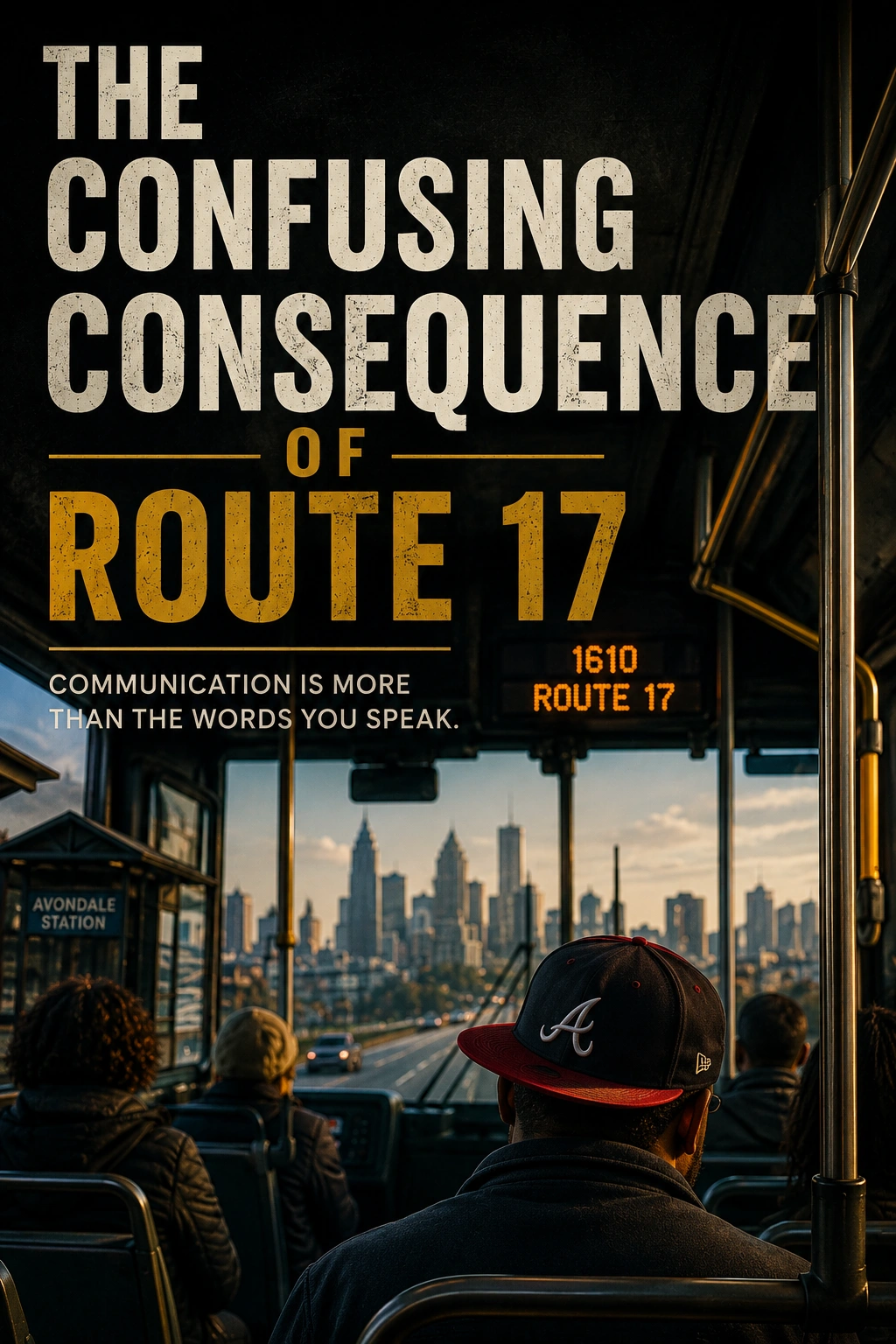
At 7:50 a.m., bus 1610 on Route 17 pulls into Avondale Station with a long hydraulic sigh. The bus slides into its slot and the waiting passengers rise almost in unison. A few remain seated a second longer, gathering bags and coffee cups like churchgoers hearing the final hymn.
The driver steps down from the bus, his wrinkled shirt tucked deep into oversized slacks. He rubs his forehead, glances at the crowd forming near the door, and mutters half to himself, half to the morning air:
"The stop don't even give me time to use the bathroom."
The passengers pool around him like water around a stone, listening to the trickling words without responding. For a moment, nobody moves.
Then, the driver leaves the doors open.
The passengers board without tapping to pay.
Five minutes later, the passengers settle into the soft choreography of public transit. Headphones adjusted, backpacks folded at their feet, eyes drifting toward windows. A man near the front wearing a Braves hat leans forward.
"Say driver… why don't the buses have the paper schedules anymore?"
The driver exhales slowly through his nose.
"The buses ain't the same anymore."
The brim of the man's hat tilts slightly to the right.
"This bus won't pick me up tomorrow?"
"No," the driver says. "It won't be the same bus."
The man pauses, the brim now level with the horizon.
"The routes change every day?"
Now the driver's voice rises an octave.
"Read the schedules at the station."
"They got paper schedules there?"
The driver glares into the rearview mirror.
"Man, I'm tryna tell you everybody got different buses now."
"So how I'm s'posed to get down here tomorrow?"
A woman halfway down the aisle looks up from her phone and joins the conversation like a translator entering diplomatic negotiations.
"He's trying to say the bus changes, but not the route."
The man with the hat turns toward her slowly.
"The Route 17 stays the same," she continues. "But the actual bus and driver might be different every day."
"Oh."
The man leans back in his seat, his hat now a half moon, and stomps lightly against the floor.
"So the 17 route stays the same… but the bus and driver change."
"That's what I said!" the driver cries, throwing one hand into the air.
"Well, I got confused between the bus and the route."
"Mmmhmm," the woman says softly.
The bus falls quiet again except for the hum of tires against pavement.
Then the man leans forward one more time. Hesitates. His hat bobs gently up and down.
And asks the question underneath all the other questions.
"So where can I get the paper schedules?"
The bus keeps moving.
***
What happens to people when the map changes faster than their understanding?
At what point does access to information stop becoming communication?
How many modern conflicts are really just people trying to navigate systems they no longer understand?
Like this project
Posted May 20, 2026
A narrative essay exploring what happens when systems change faster than the people who depend on them, told through a single bus ride on Atlanta's restructured Route 17.
Likes
0
Views
4