Clean Skin, Clean Code: Skincare Site on Webflow

Maham Vohra


🧴 Project Overview
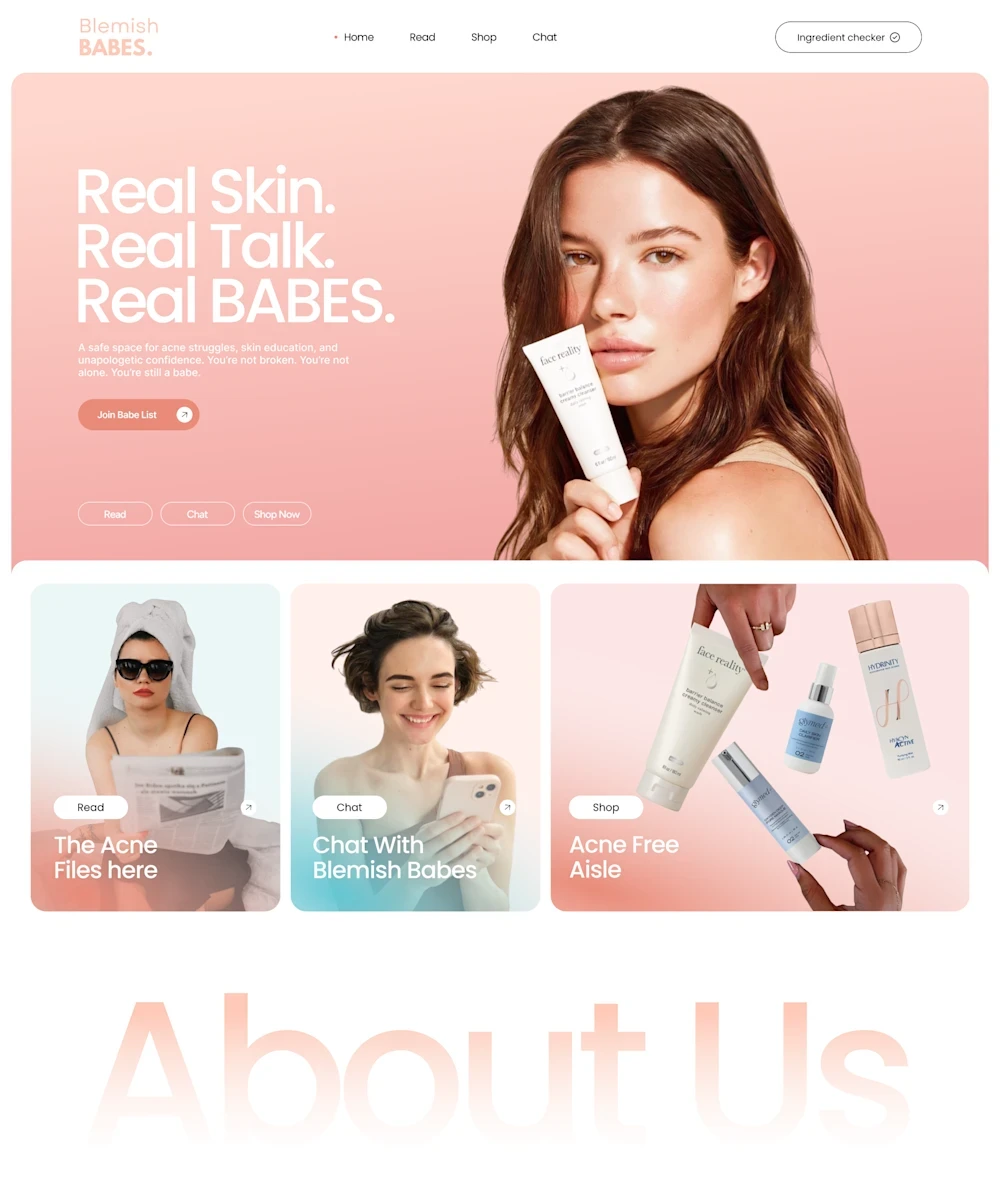
This was a full website design and development project for a premium skincare brand launching their direct-to-consumer channel. The brand had strong retail presence but zero digital footprint. They needed a website that matched the quality of their products: clean, luxurious, and effortless.
Skincare Site on Webflow
Webflow was the platform choice because the client's team needed to manage content independently without developer support for every update. The CMS capabilities combined with design flexibility made it the right fit.
💡 The Challenge
The skincare market is saturated. Every brand claims to be "clean," "natural," and "science-backed." The challenge wasn't just building a beautiful website. It was creating a digital experience that communicated what actually made this brand different without relying on the same tired industry language.
Specific challenges:
Differentiating in a crowded market where every competitor looks similar
Translating a tactile, sensory product experience into a digital format
Building trust with first-time visitors who can't touch or smell the products
Creating a CMS structure flexible enough for the client's content team
Achieving sub-2-second load times despite heavy use of product photography
Ensuring accessibility compliance (WCAG 2.1 AA) across all pages
🔍 Research & Discovery
I audited 15 competitor websites across three tiers: luxury skincare, mid-range DTC brands, and emerging indie labels. The patterns were clear. Most skincare sites fall into two camps: either overly clinical (white backgrounds, microscope imagery, ingredient lists) or overly lifestyle (models in bathrobes, soft focus everything).
The opportunity was in the middle. A site that felt premium and editorial without being cold, and warm and approachable without being generic.
I also conducted user interviews with 8 existing customers to understand their purchase decision process. The key insight: ingredient transparency was the #1 trust signal, but most sites buried it 3 clicks deep. We made it a first-scroll priority.
🎨 Creative Process
The design started with mood boarding and art direction. I pulled references from fashion editorial, architectural photography, and Japanese packaging design. The common thread was restraint: letting negative space do the heavy lifting.
I developed 2 concept directions:
Editorial Luxe: Magazine-style layouts with large typography and full-bleed photography
Minimal Science: Grid-based, data-forward, with ingredient breakdowns as visual centerpieces
The client chose a hybrid. The homepage and brand pages leaned editorial, while product pages incorporated the scientific transparency of the second direction.
Typography was a serif/sans-serif pairing: a refined serif for headlines that conveyed heritage and quality, paired with a clean geometric sans for body text and UI elements. The color palette was built around the product packaging: warm neutrals with a single accent color pulled from their hero product.
📐 Layout & Interaction Design
Every page was designed with scroll behavior in mind. Webflow's interaction capabilities allowed for subtle but impactful animations:
Product images that parallax slightly on scroll
Ingredient lists that reveal on hover with sourcing details
A sticky navigation that transforms from transparent to solid as users scroll
Page transitions that feel smooth without being slow
The product page layout was the most iterated element. We tested 6 different configurations before landing on a split-screen approach: product imagery on the left (with a zoom interaction), and purchase details on the right with ingredient transparency built directly into the buy flow.
🔧 Technical Build
The Webflow build prioritized performance and maintainability:
Platform: Webflow with CMS
Performance: 96 Lighthouse score on desktop, 91 on mobile
CMS Collections: Products, Ingredients, Blog Posts, Press Mentions, FAQs
Animations: Native Webflow interactions (no external JS libraries)
Forms: Custom contact and wholesale inquiry forms with conditional logic
Integrations: Klaviyo for email capture, Google Analytics 4, Meta Pixel
The CMS architecture was designed so the client's team could add new products, publish blog posts, and update homepage featured sections without touching any code. I created a 6-page CMS guide with screenshots for every common task.
📦 Key Deliverables
Fully responsive Webflow website (14 unique page templates)
CMS structure with 5 collections and relational fields
Complete Figma design system (36 components)
Animation system (12 custom interactions)
SEO foundation (meta tags, Open Graph, structured data for products)
CMS training documentation (6 pages with video walkthroughs)
Performance optimization (image compression pipeline, lazy loading, font subsetting)
📊 Results & Impact
The site launched alongside a PR push and influencer campaign. The digital experience became the centerpiece of the brand's growth strategy.
First 60 days post-launch:
Average session duration: 4 minutes 12 seconds (industry average is 1:45)
Bounce rate: 28% (industry average is 47%)
Product page to cart rate: 12.4%
Mobile traffic: 71% of total visits, with a 3.1% conversion rate
Email capture rate: 8.7% (via exit-intent and inline signup forms)
Page load time: 1.6 seconds average across all pages
The client's wholesale inquiries also increased 340% in the first quarter, driven largely by the dedicated wholesale landing page and the overall brand credibility the site established.
🧠 Key Takeaways
Skincare websites live or die on trust. The biggest design lever wasn't the hero animation or the product photography (though both mattered). It was making ingredient information immediately accessible and beautifully presented. When you treat transparency as a design feature rather than a compliance checkbox, it changes how visitors perceive the entire brand.
The Webflow CMS architecture was equally important. A beautiful site that the client can't update independently becomes a bottleneck within months. Building the CMS thoughtfully upfront saved the client thousands in ongoing developer costs.
Like this project
Posted Apr 23, 2026
🧴 Premium skincare brand site built on Webflow. Clean layout, smooth animations, CMS-powered product catalog, and a checkout flow designed to convert. Pixel-perfect and performance-optimized. ✨💅🎨
Likes
1
Views
8