
A design system, campaign scoring, client onboarding and an AI chat assistant for UpHex, an ad platform used by agencies.
Deliverables: Design system, Dashboard and metrics UX, Campaign and template flows, Client onboarding, AI chat assistant, Figma.
Overview
UpHex is an ad platform for agencies that run Facebook and Google ads for local businesses. In 2024 I designed its product: a design system, a faster way to read campaigns, campaign and template scores, client onboarding and an AI chat assistant.
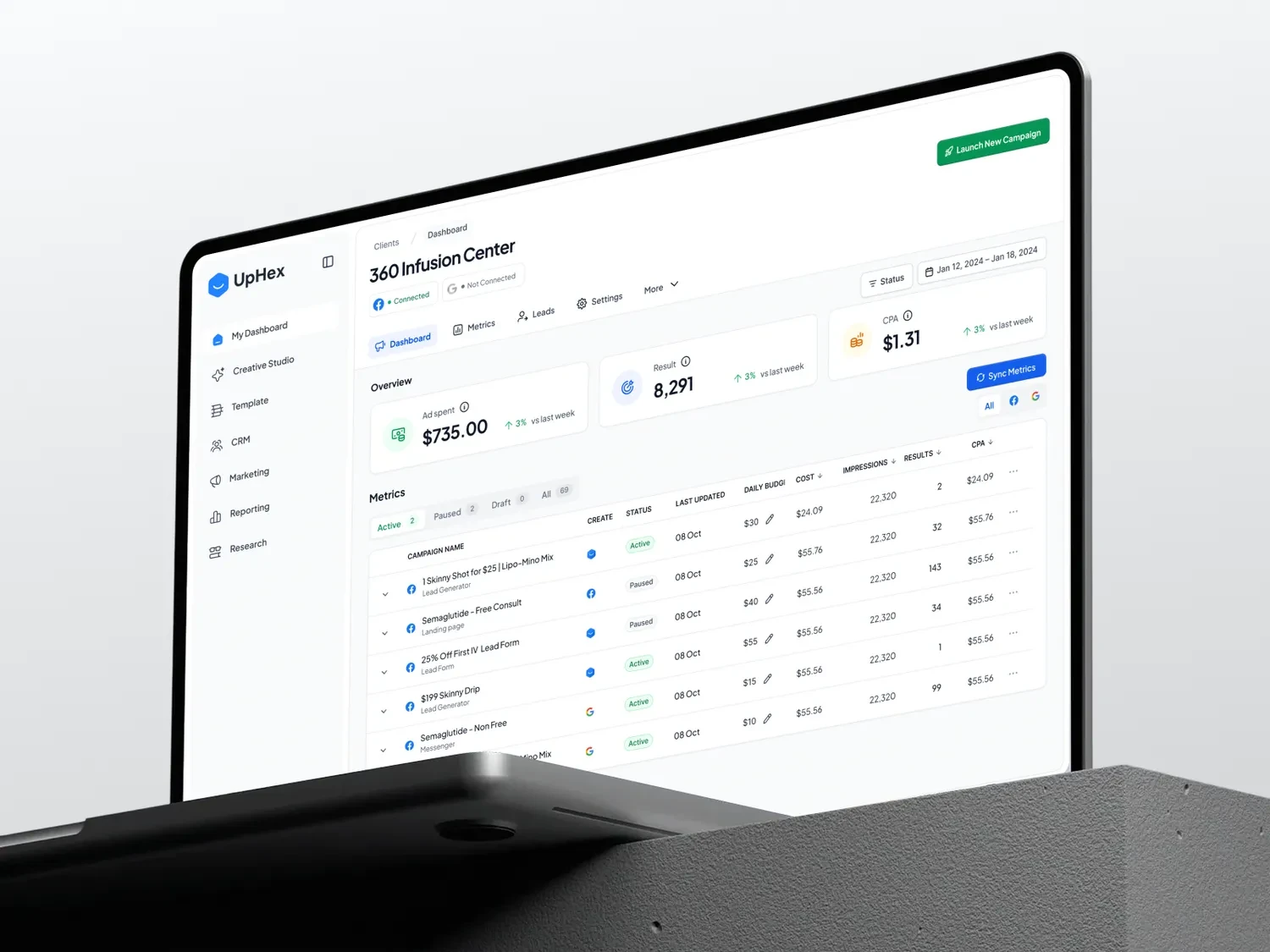
Client workspace overview | Summary metrics sit above the campaign table to establish overall client performance before users move into individual campaign details.
The problem
UpHex already had its main features, but the product was slow to read and hard to move around, and it had no design system behind it.
The side navigation had too many items.
The campaign data table was hard to follow.
There was no navigation, such as breadcrumbs, between sub-pages.
Viewing a campaign's content took many clicks.
Creating a campaign template took many steps.
Nothing scored a campaign or a template, so agencies could not judge what worked.
There was no onboarding and no login flow.
The chatbot and AI campaign generation (images and ad copy) had no design yet.
The solution
A design system for the whole product.
An overlay view to look at a campaign's content quickly.
A campaign score and template effectiveness, with new metrics screens.
A client onboarding flow.
A chatbot, Uppie, that helps write the ad copy and generate the images.
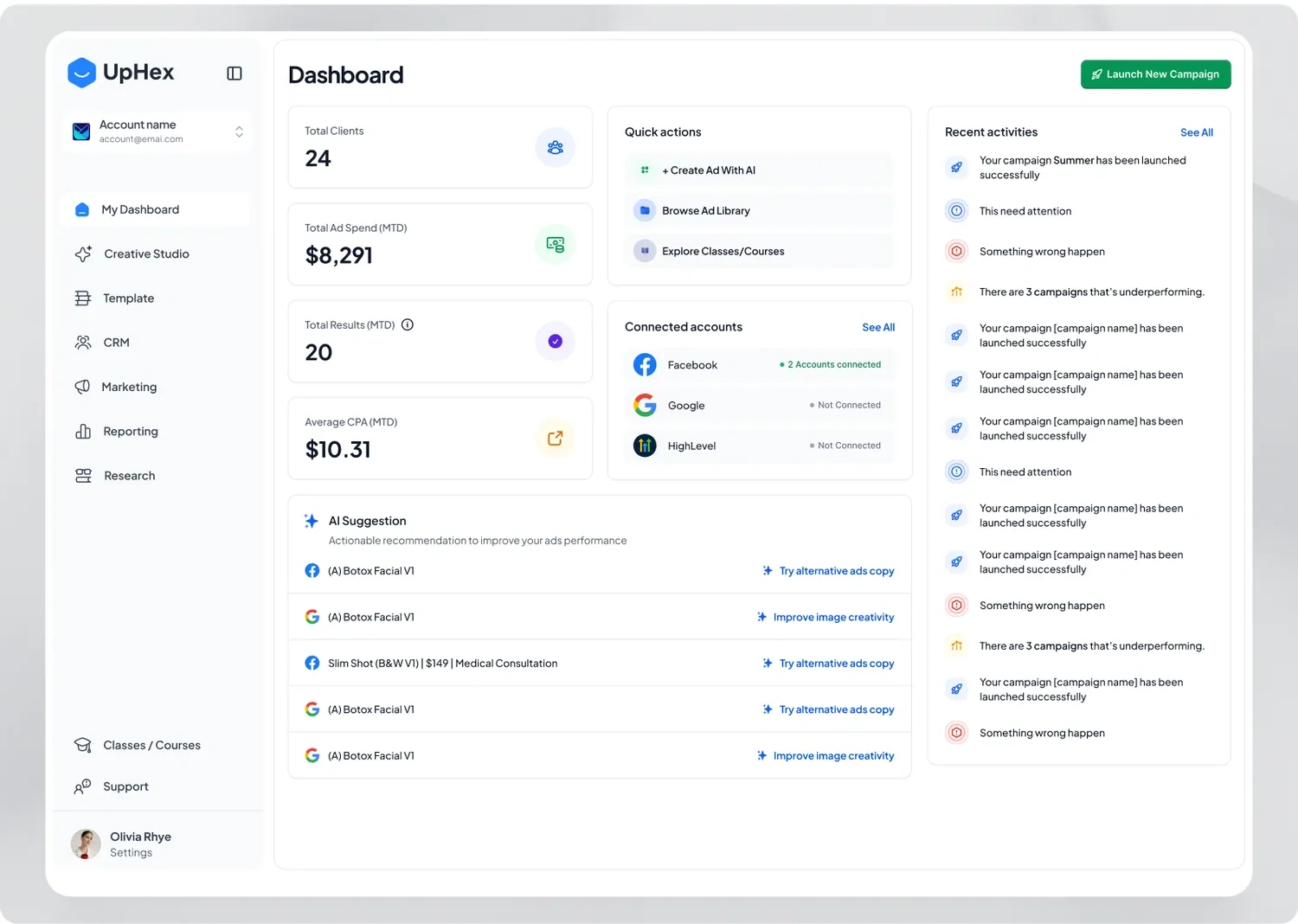
Agency dashboard | Performance summaries, quick actions, and recent activity occupy distinct areas so agencies can move from understanding account health to taking action.
A home screen that points to the next step.
The four headline numbers sit at the top. Quick actions, connected accounts and AI suggestions share the middle, and recent activities run down the right with an icon for each kind of event. An agency sees what needs attention first, then how to act on it.
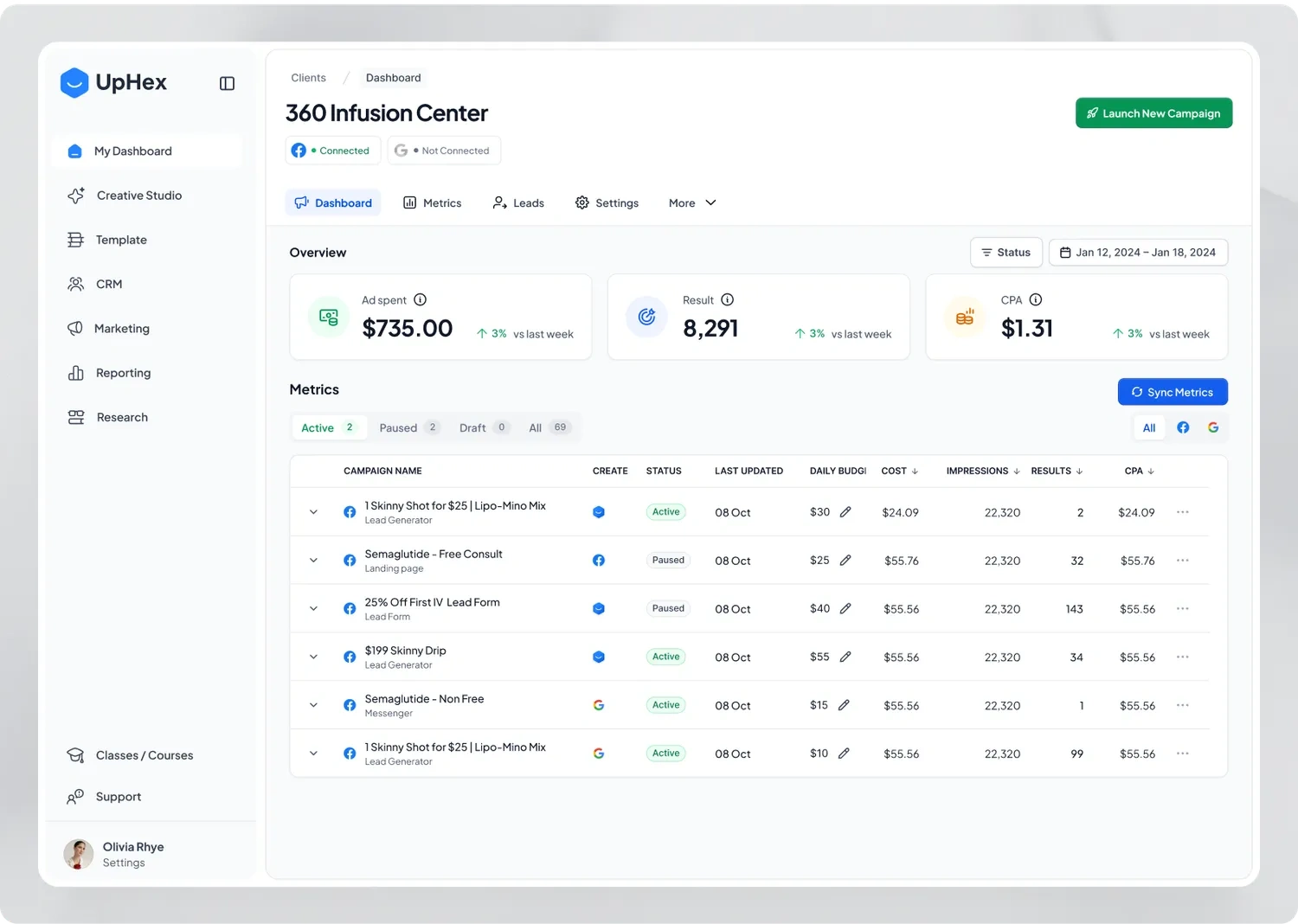
Client dashboard | Status tabs and platform filters narrow the campaign list before comparison, while breadcrumbs and client tabs preserve context between related pages.
Read the numbers first, then the campaigns.
Three summary cards show ad spend, results and cost per result against last week. Below them the table is cut down before it is read, with status tabs that show counts and a platform filter. Breadcrumbs and client tabs keep the reader oriented between sub-pages.
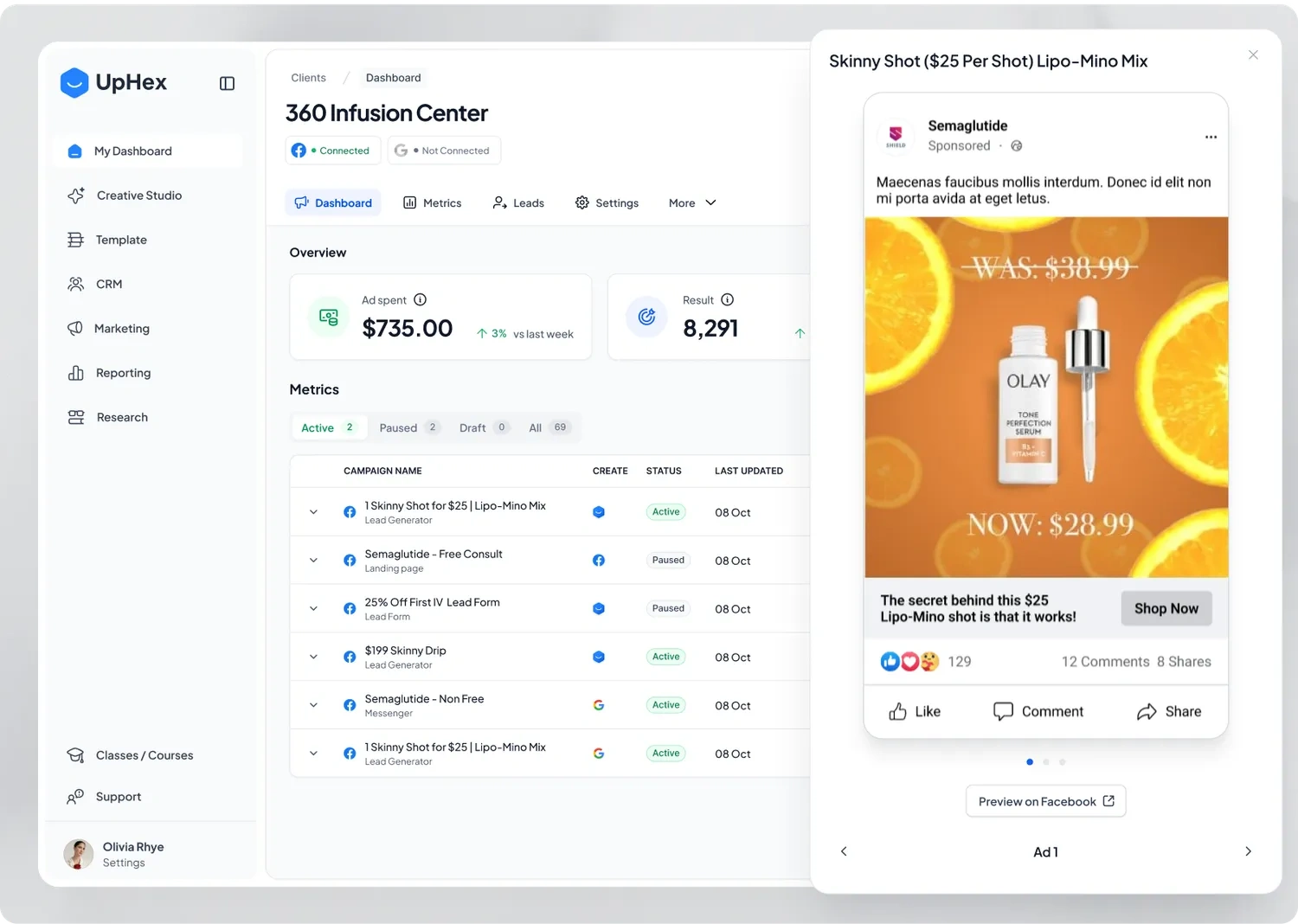
Campaign preview | A side panel opens ad content over the campaign table so agencies can inspect creatives and move between ads without losing their place in the list.
Check an ad without leaving the table.
Opening a campaign slides in an overlay that shows the ad as it appears on Facebook, with arrows to move between ads. The table stays visible behind it, so what used to take several clicks takes one.
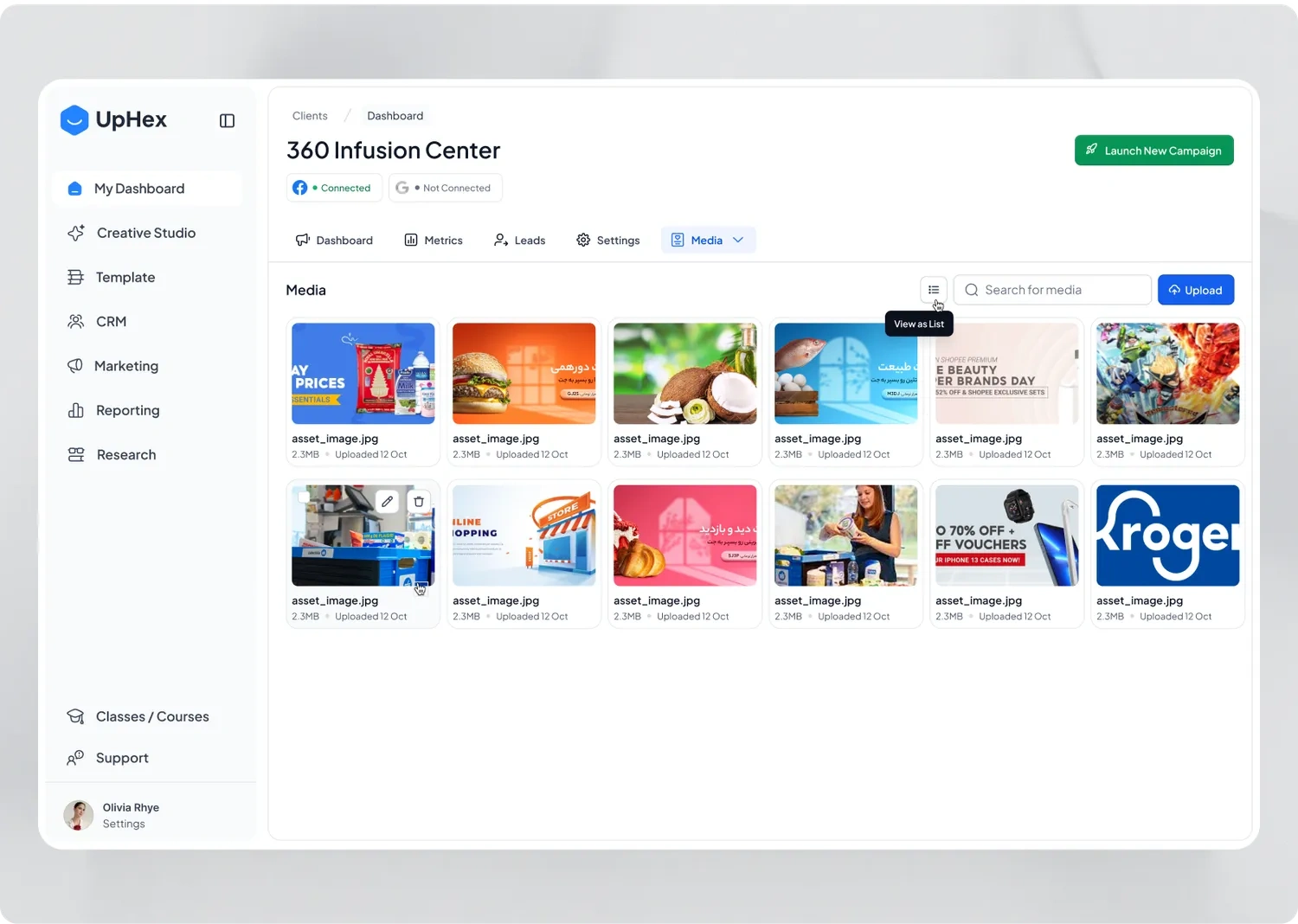
Client media library | A thumbnail grid supports recognition by image, with search and a list-view option providing alternative ways to find and manage client creatives.
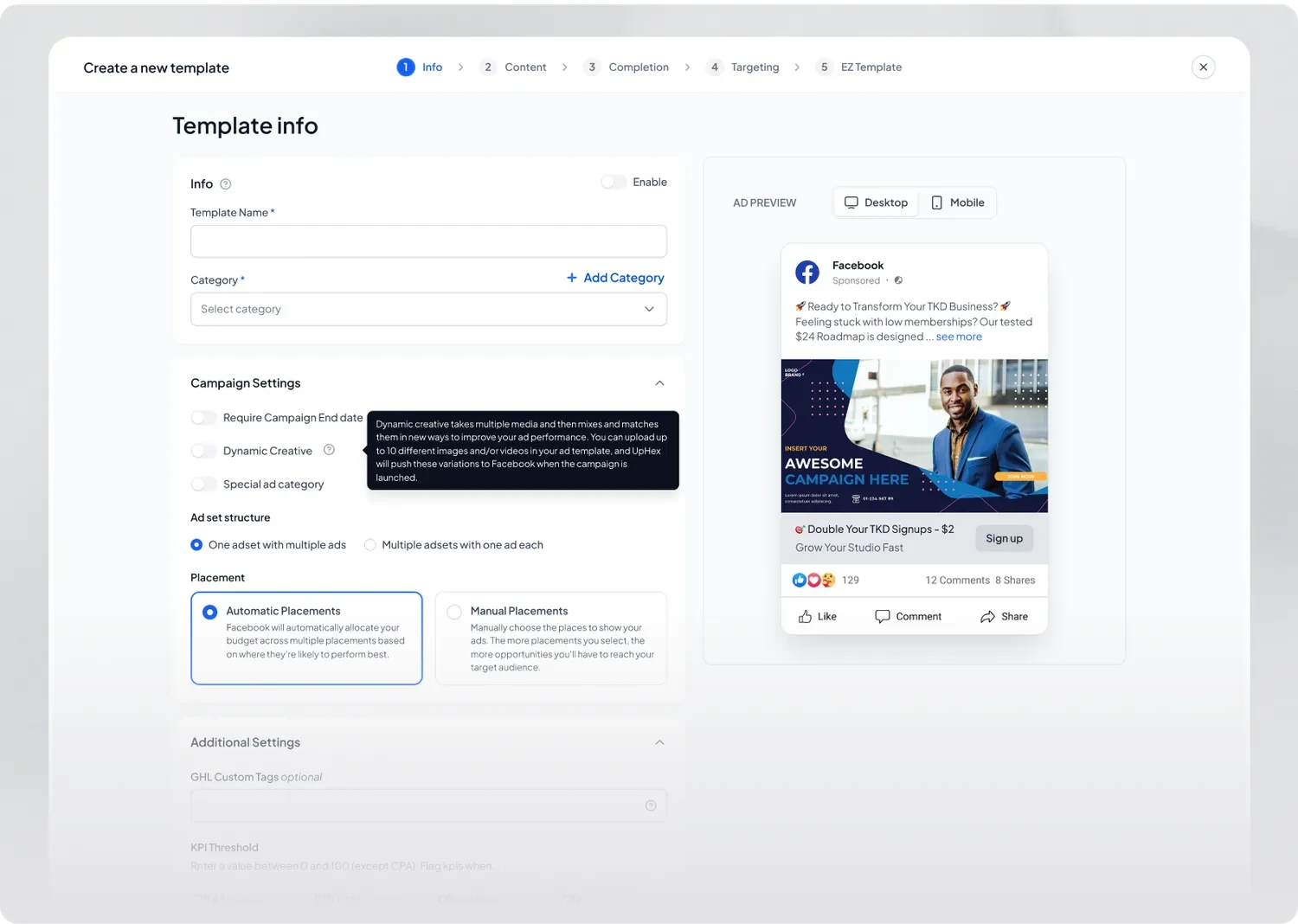
Template creation | Five labelled steps divide template setup into smaller decisions, while an adjacent ad preview keeps the output visible as campaign settings are configured.
A long setup, cut into five steps with a live preview.
Template creation runs through five labelled steps: info, content, completion, targeting and the finished template. The ad preview stays beside the form with a desktop and mobile switch, and short tooltips explain terms like dynamic creative at the moment they matter.
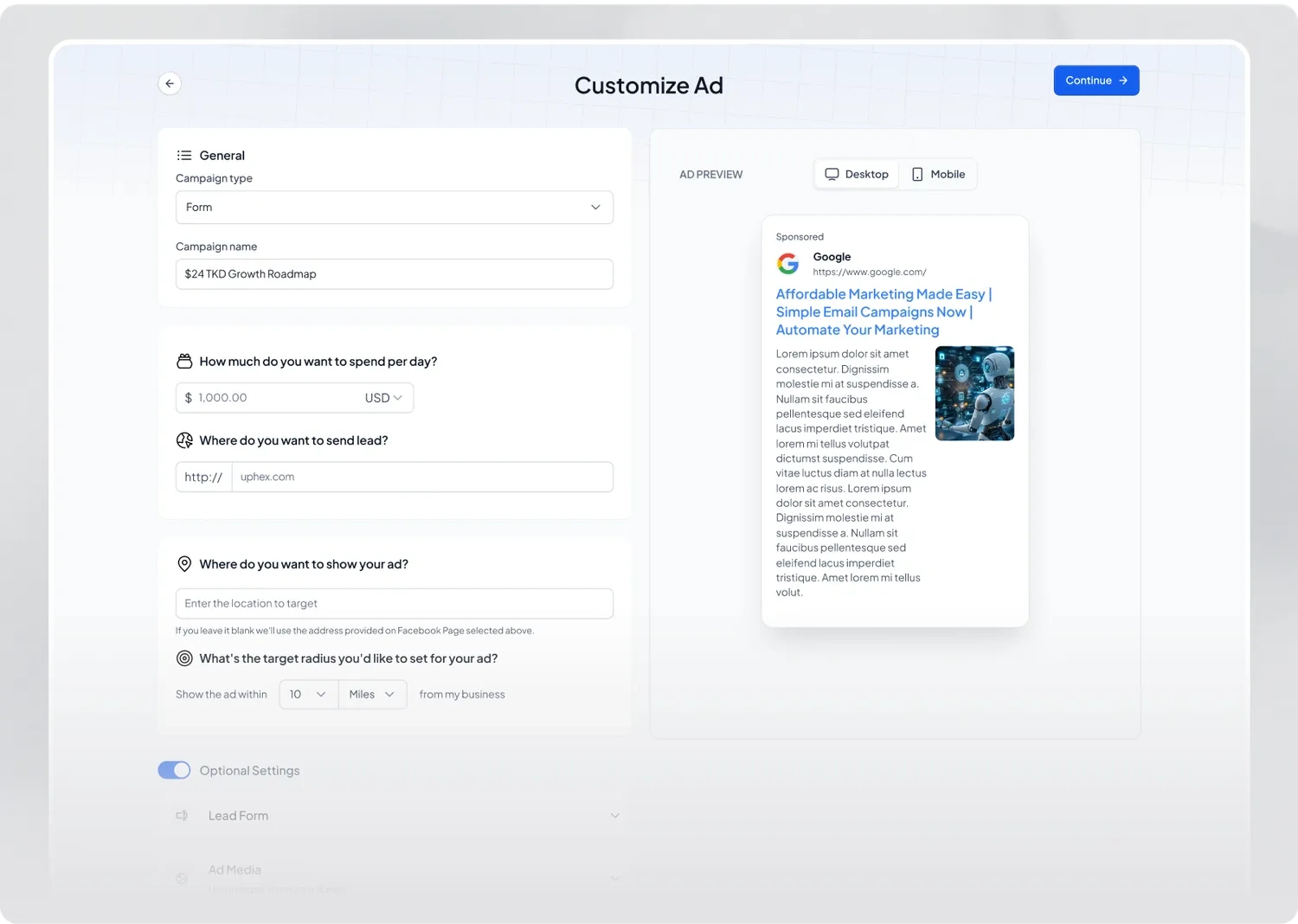
Ad customisation | Question-based labels frame campaign setup around practical decisions—budget, destination, and location—while the preview keeps the ad visible beside the form.
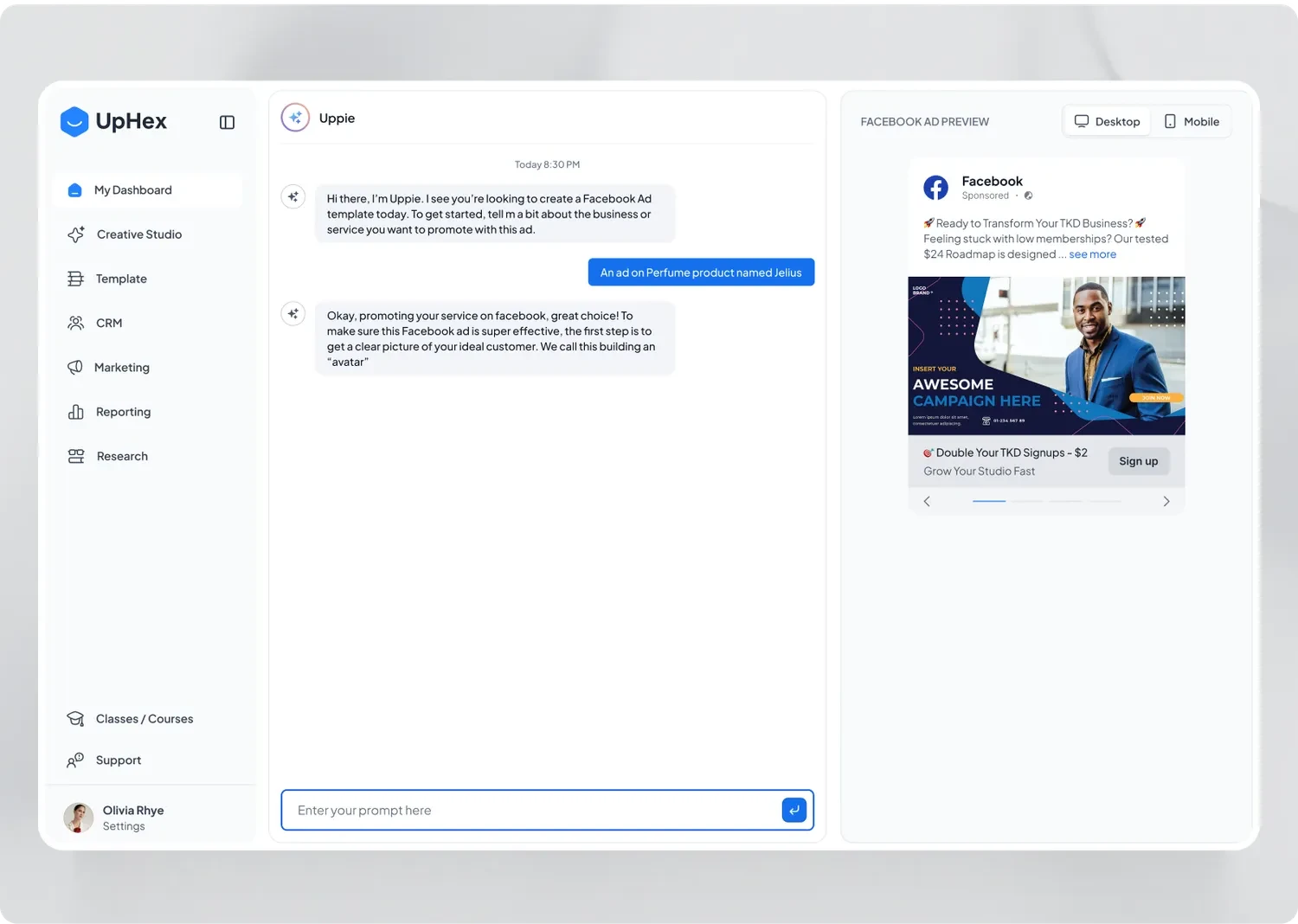
Uppie AI assistant | A conversational flow introduces the business and audience questions progressively, with an adjacent preview keeping the resulting ad connected to the discussion.
Ask one thing at a time, and show the result as it forms.
Uppie opens by asking what the ad is for, then walks through the customer, the audience and the tone, one question at a time. The ad preview sits beside the conversation, so the agency sees the ad take shape instead of waiting for a final answer.
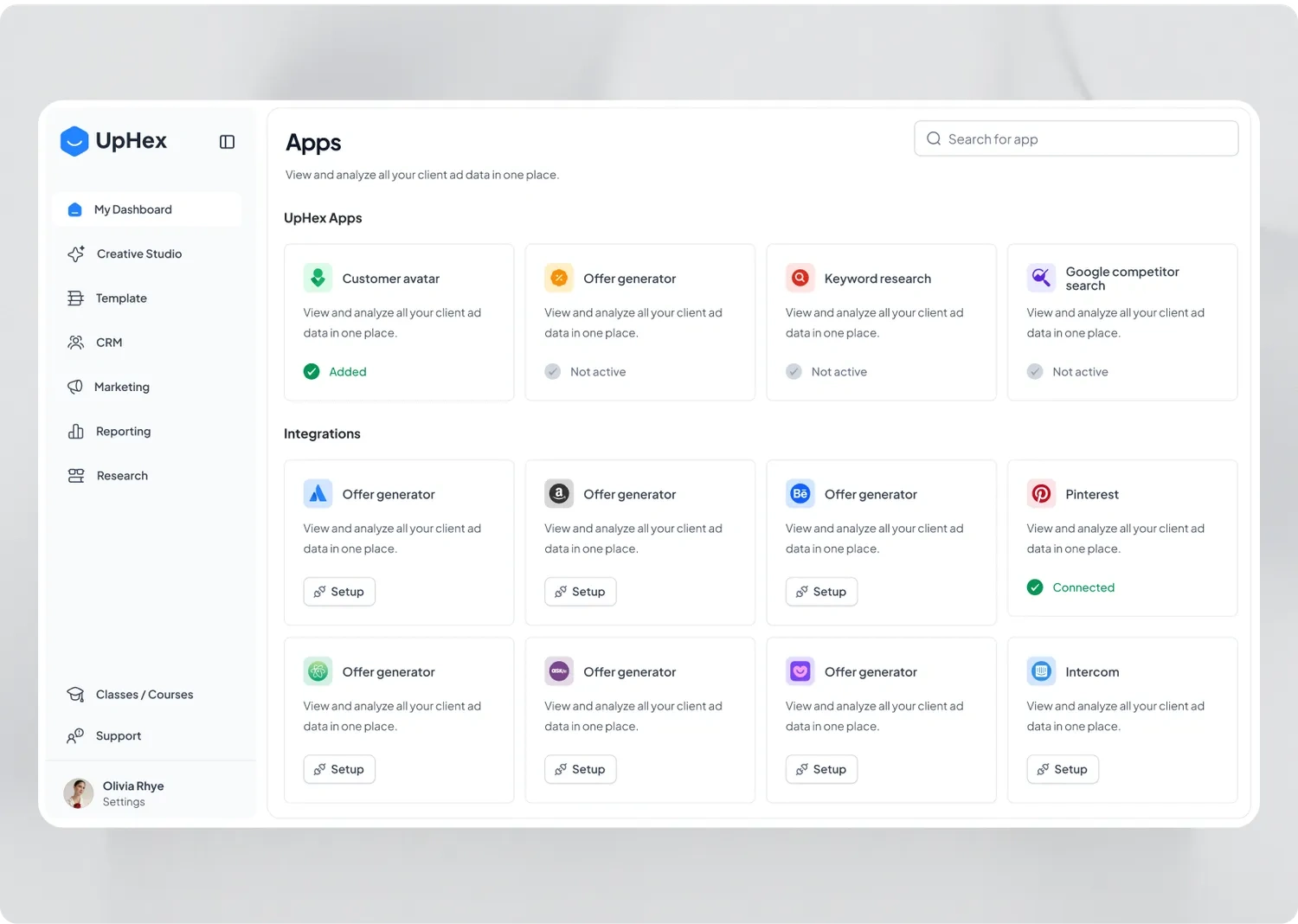
Apps and integrations | Built-in tools and external integrations are grouped separately to distinguish product capabilities from connected services, with status labels showing their current availability.
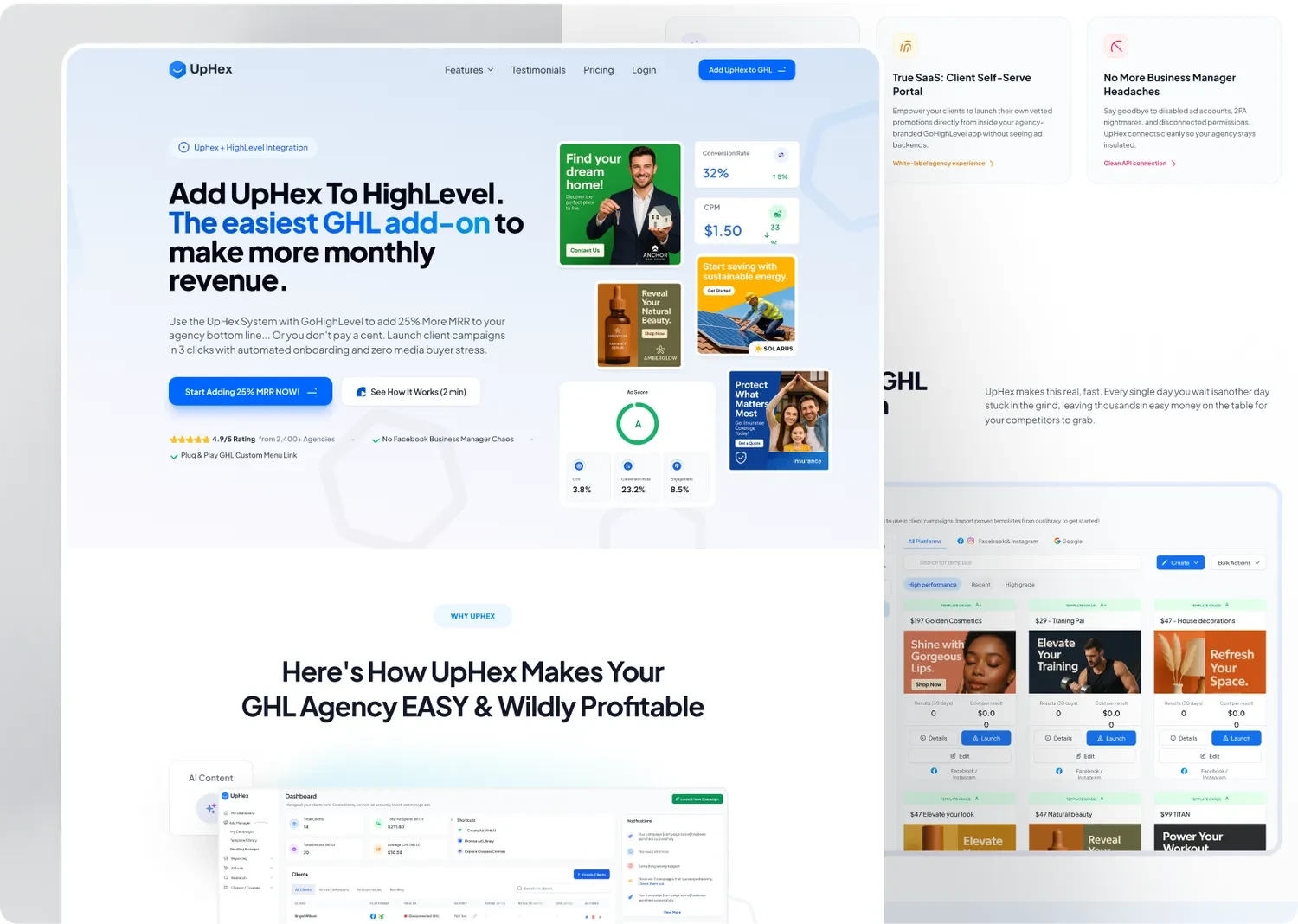
Marketing website | Sample ads, campaign metrics, and template previews connect the HighLevel integration message to the everyday work agencies would perform with UpHex.
0 likes · 0 views · Nov 18, 2026
Designed UpHex’s ad-platform experience, including a design system, campaign and template flows, onboarding, dashboards, and an AI chat assistant.
