Dare forma alla carta - Master's Degree Layout Design

Alessia Visicaro


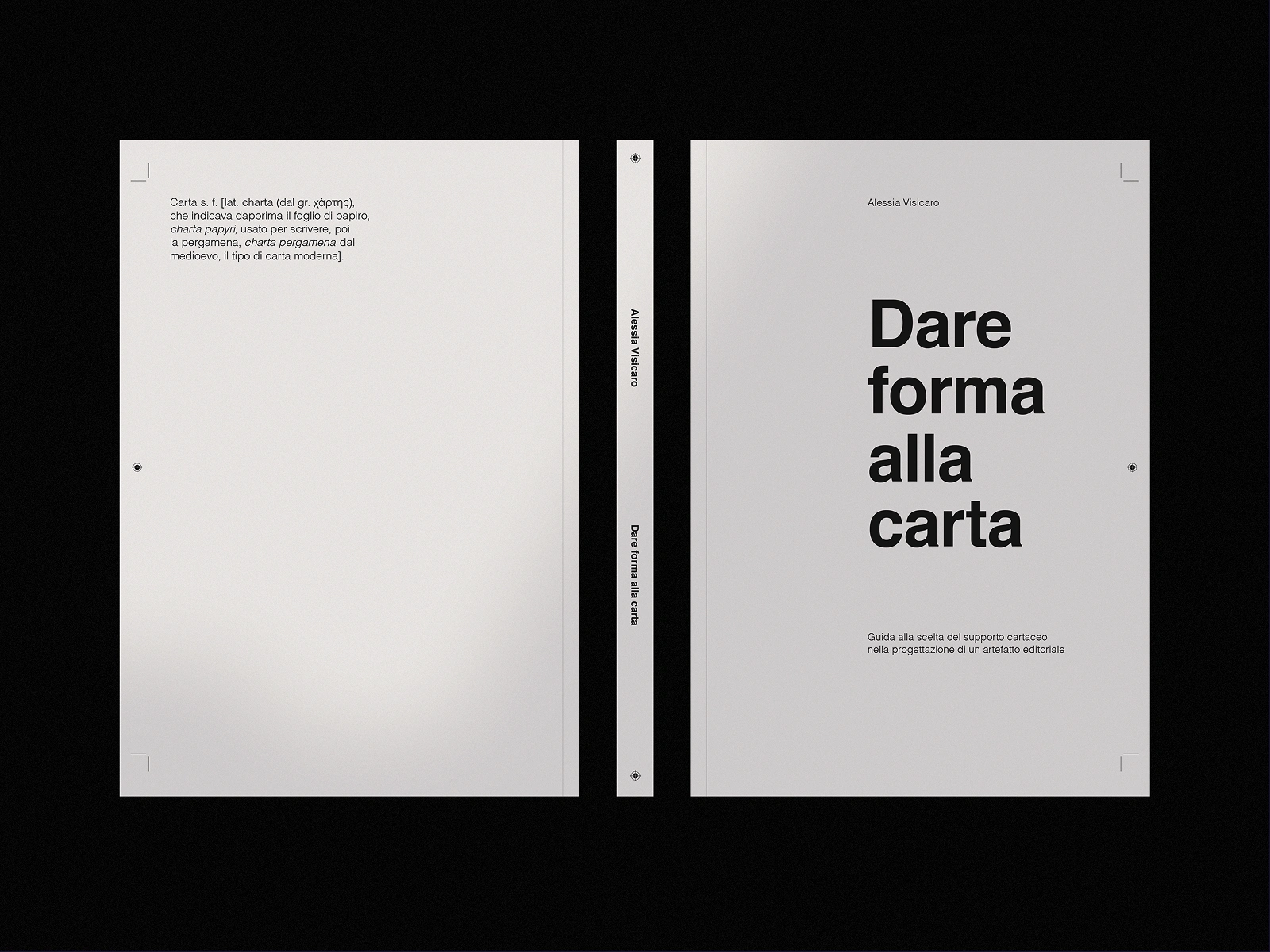
Master Degree Cover Design
Dare forma alla carta - Master's Degree
In many languages, the etymological root of the term "book" is linked to the physical object used as a writing medium.
The Italian word derives from the Latin "Liber", which, in its original meaning, represents the film between the bark and the trunk of a tree. In Greek, biblion derives from "Býblos", a term used to indicate the inner bark of the papyrus. "Bokis", on the other hand, was the German name used to refer to the beech.
This short etymological premise allows us to understand how much the book is ontologically linked to its physicality, whose primary component is that of physical support for writing.
The medium used for writing is, first of all, an interface: a mediation tool between us, our senses, and what the outside world wants to communicate to us.
Secondly, the writing medium must respond to the function of the text, to the message that the content wants to convey.
So it isn't a neutral space, and on the contrary, it's an open space of possibility, capable of interpreting and representing the purpose of the message.
In other words, the being-book depends on the support on which the text is inscribed, the paper.
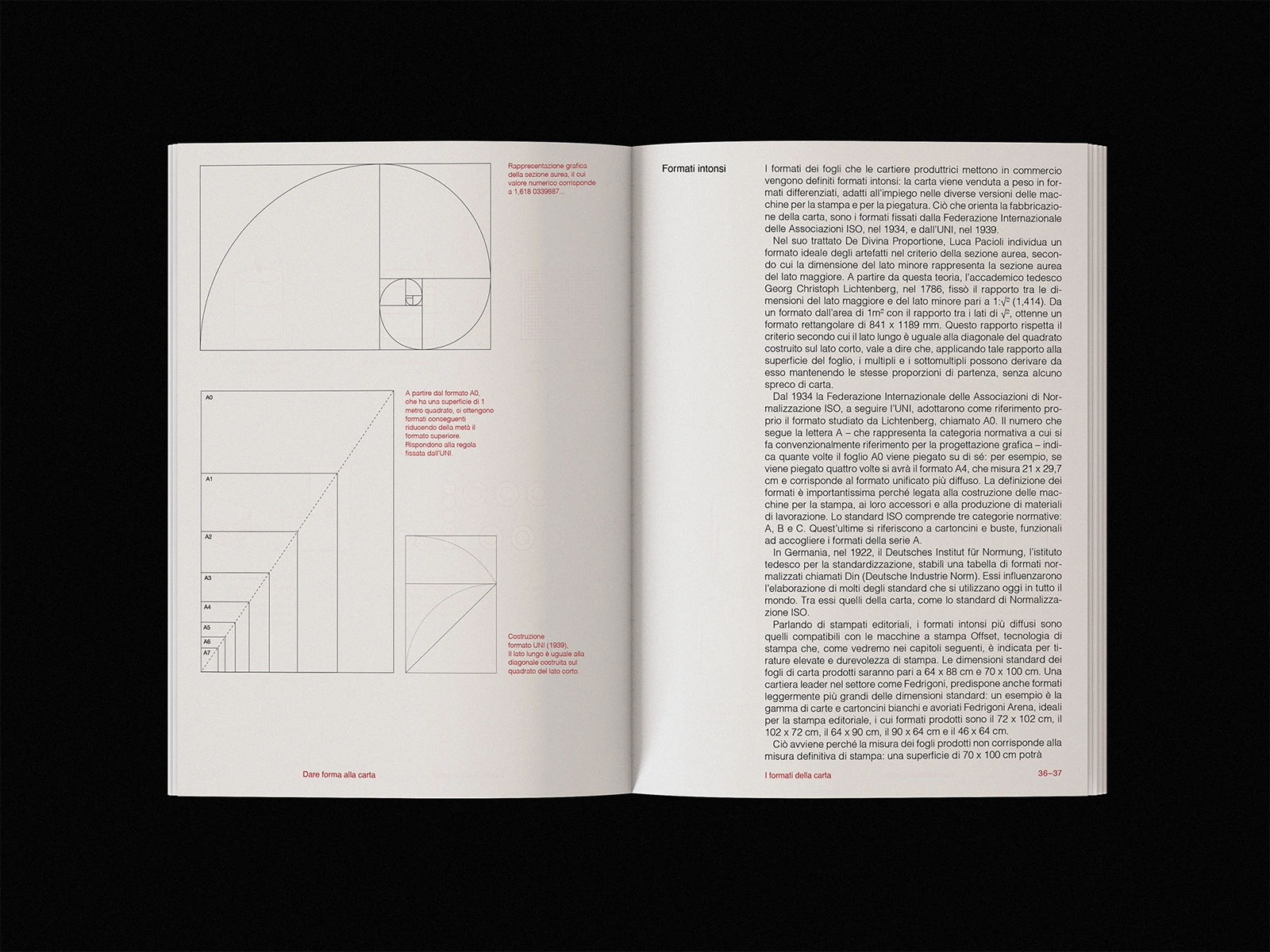
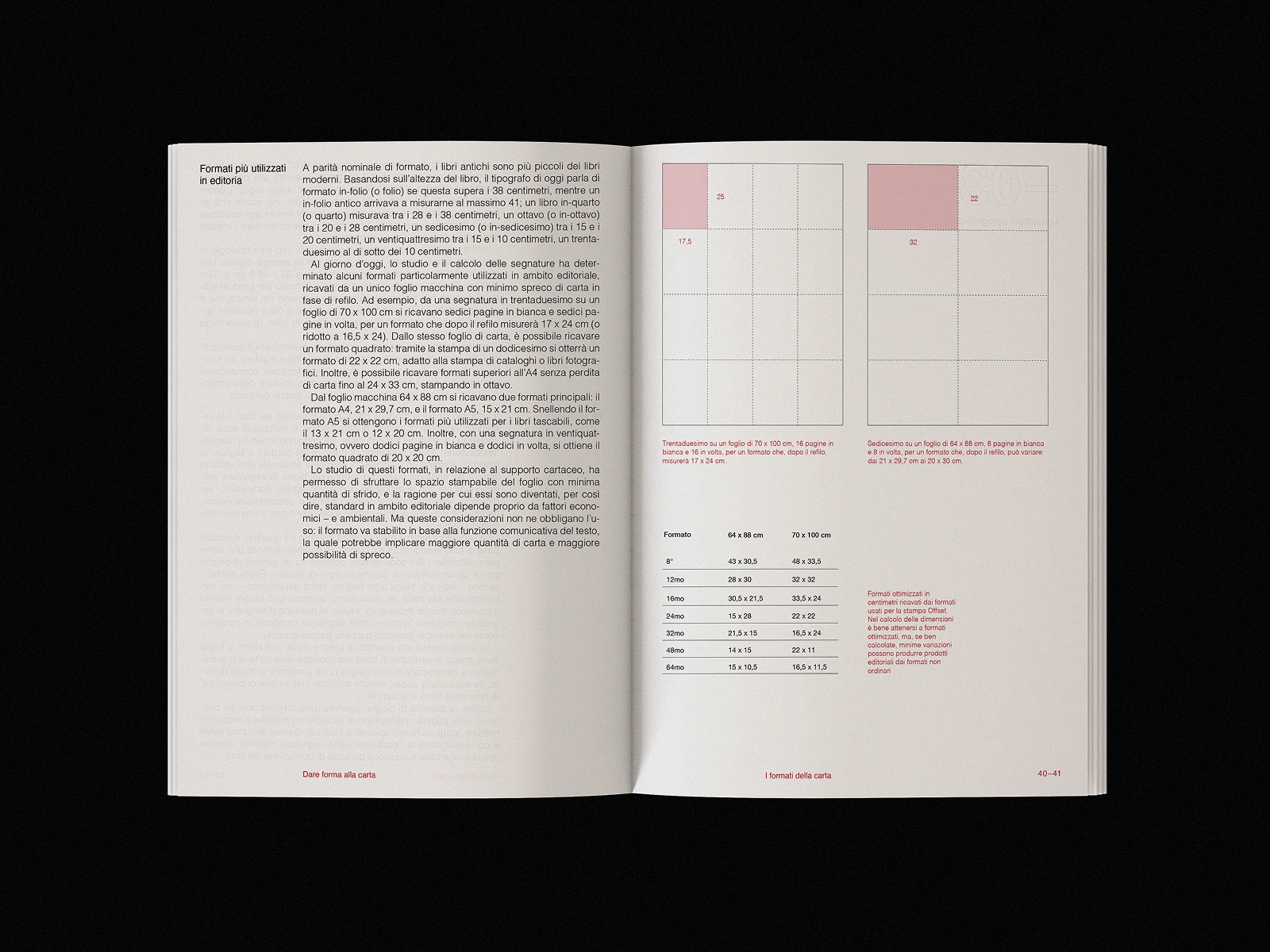
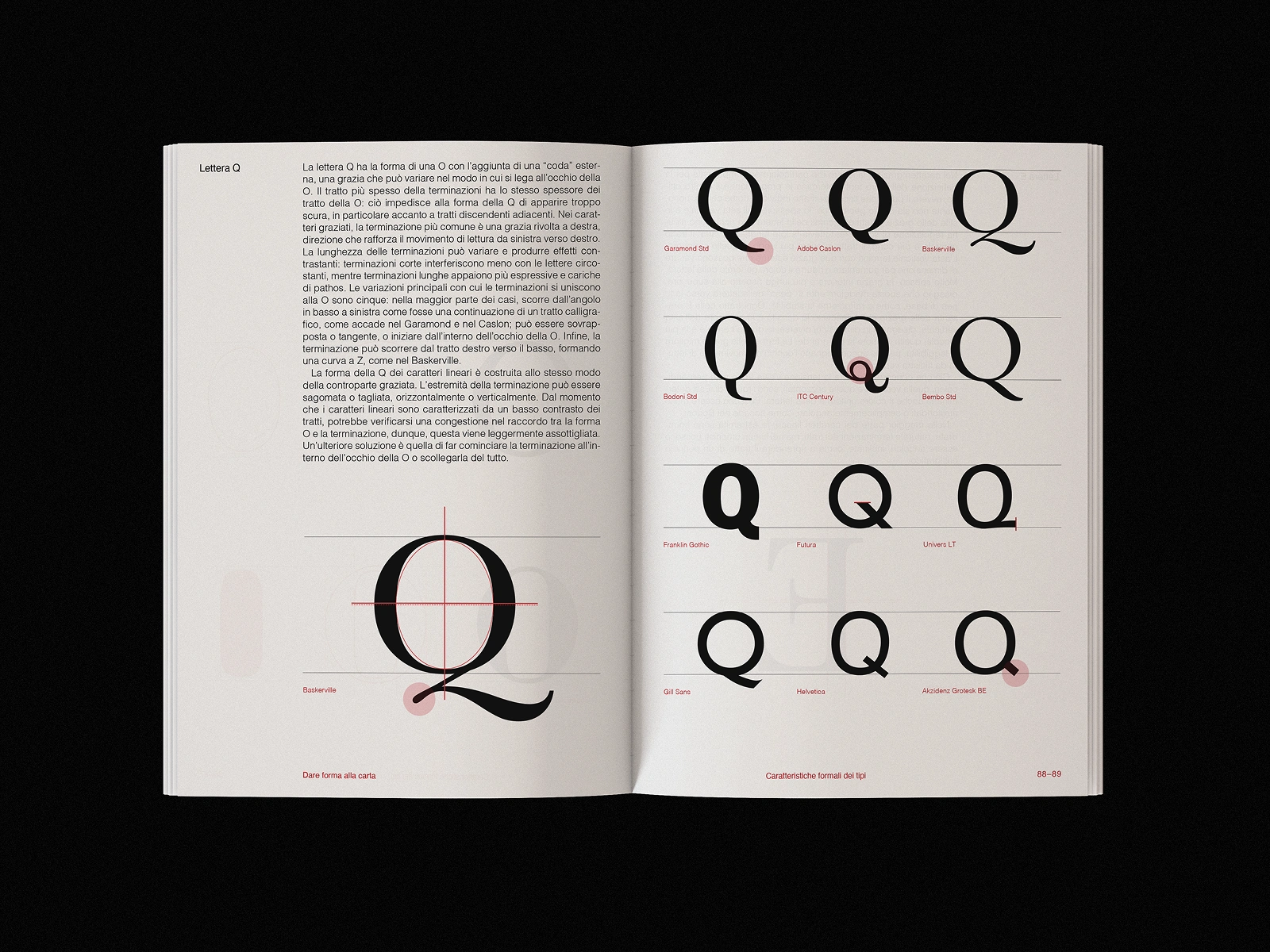
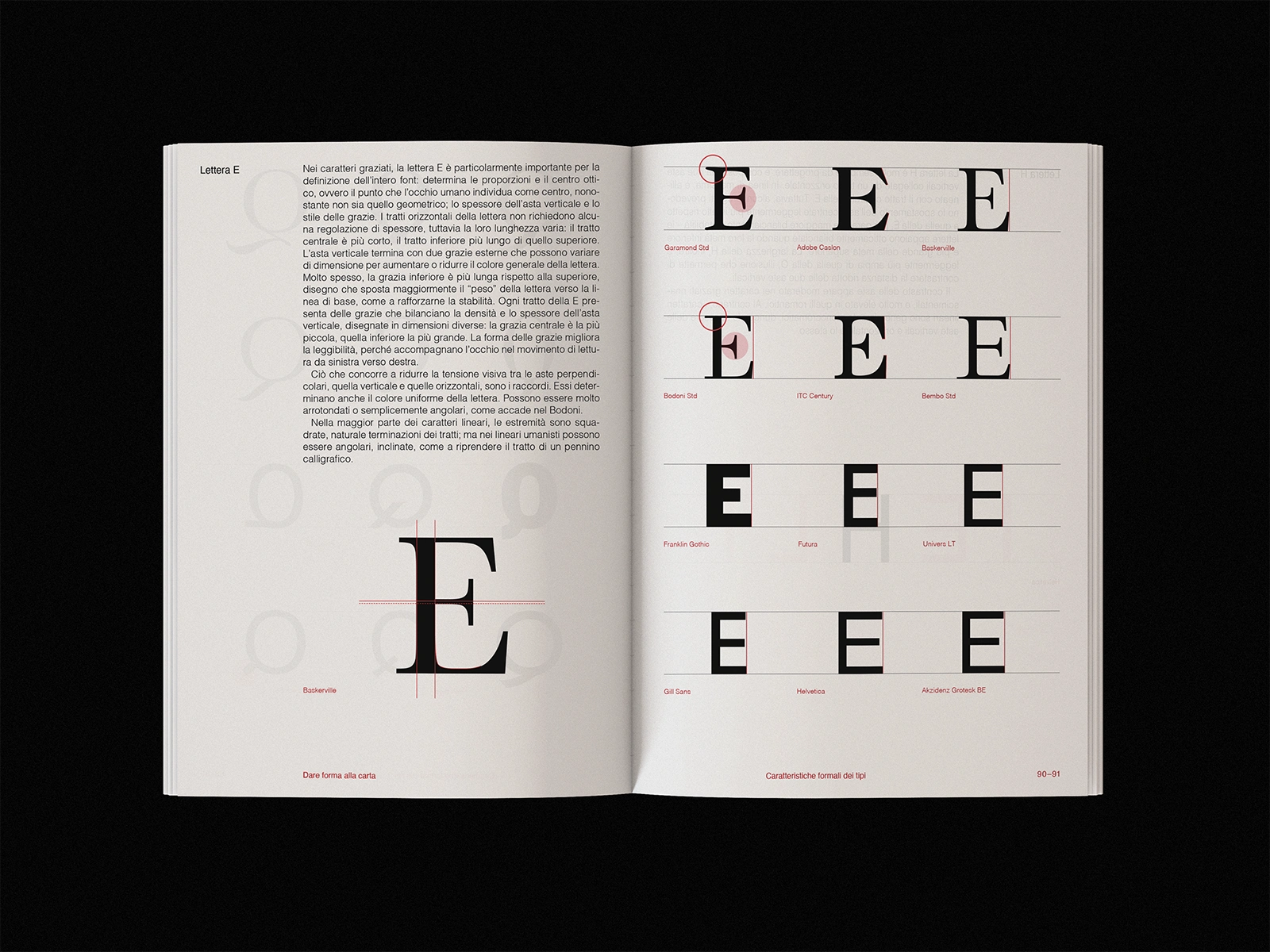
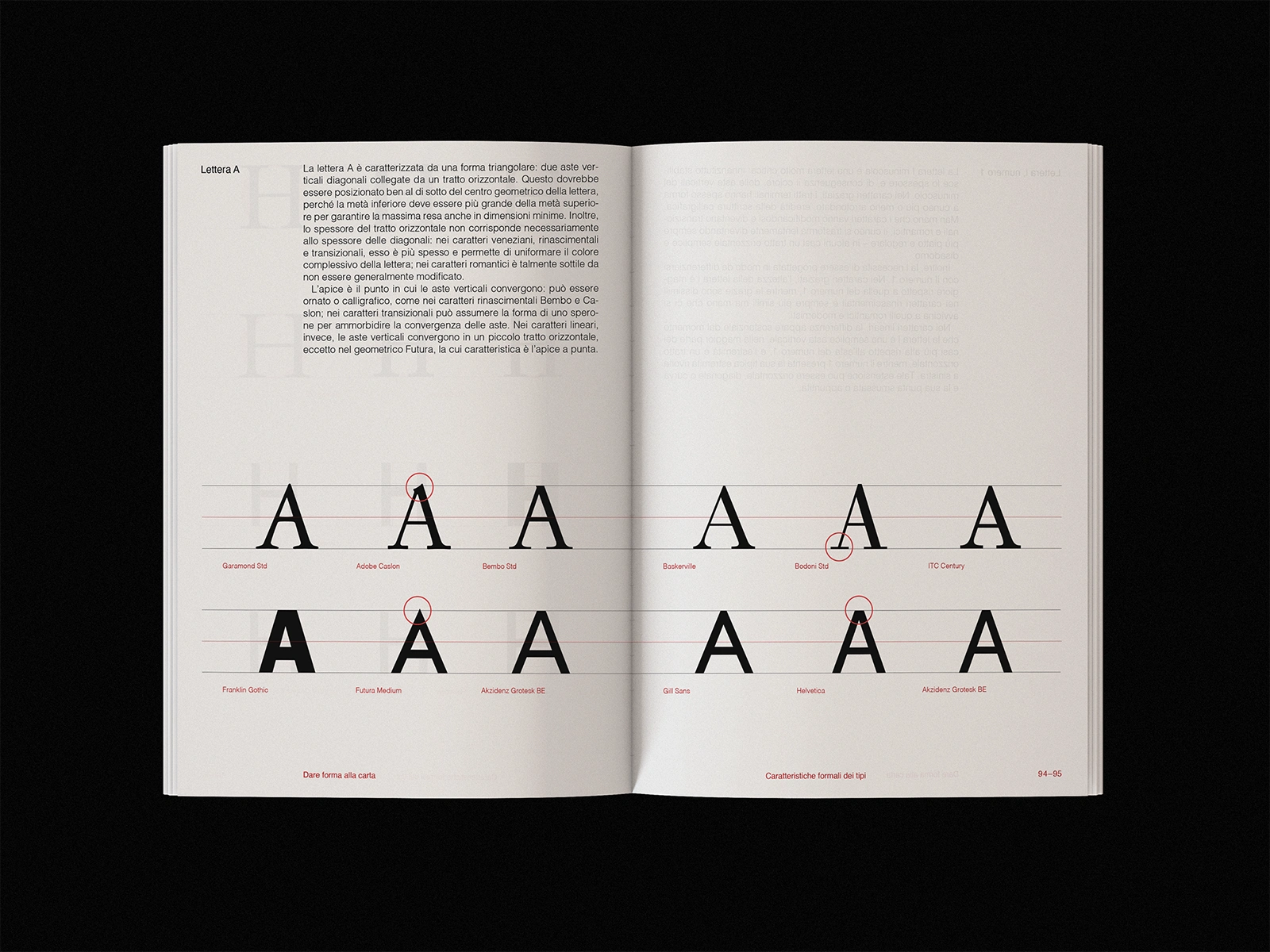
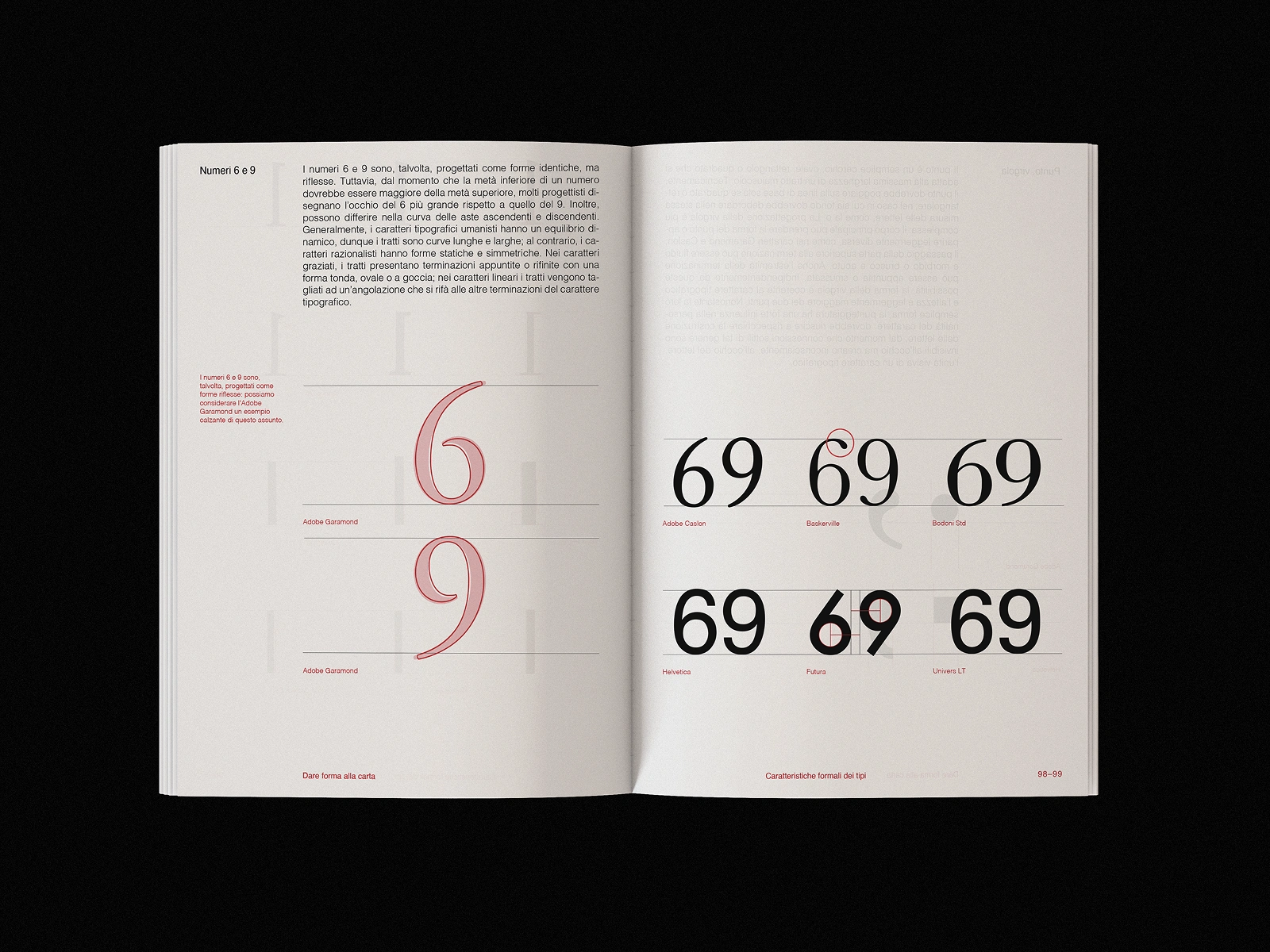
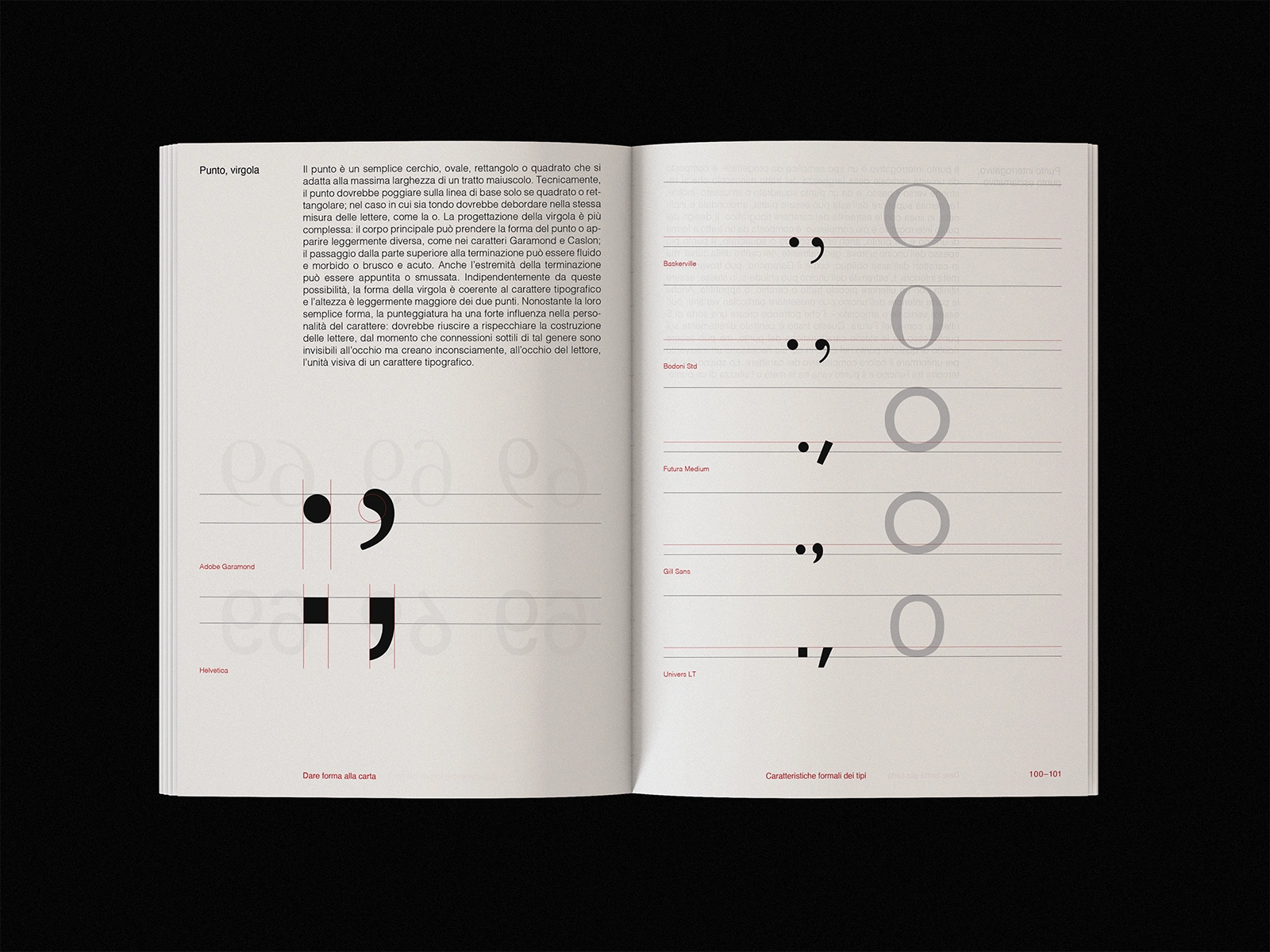
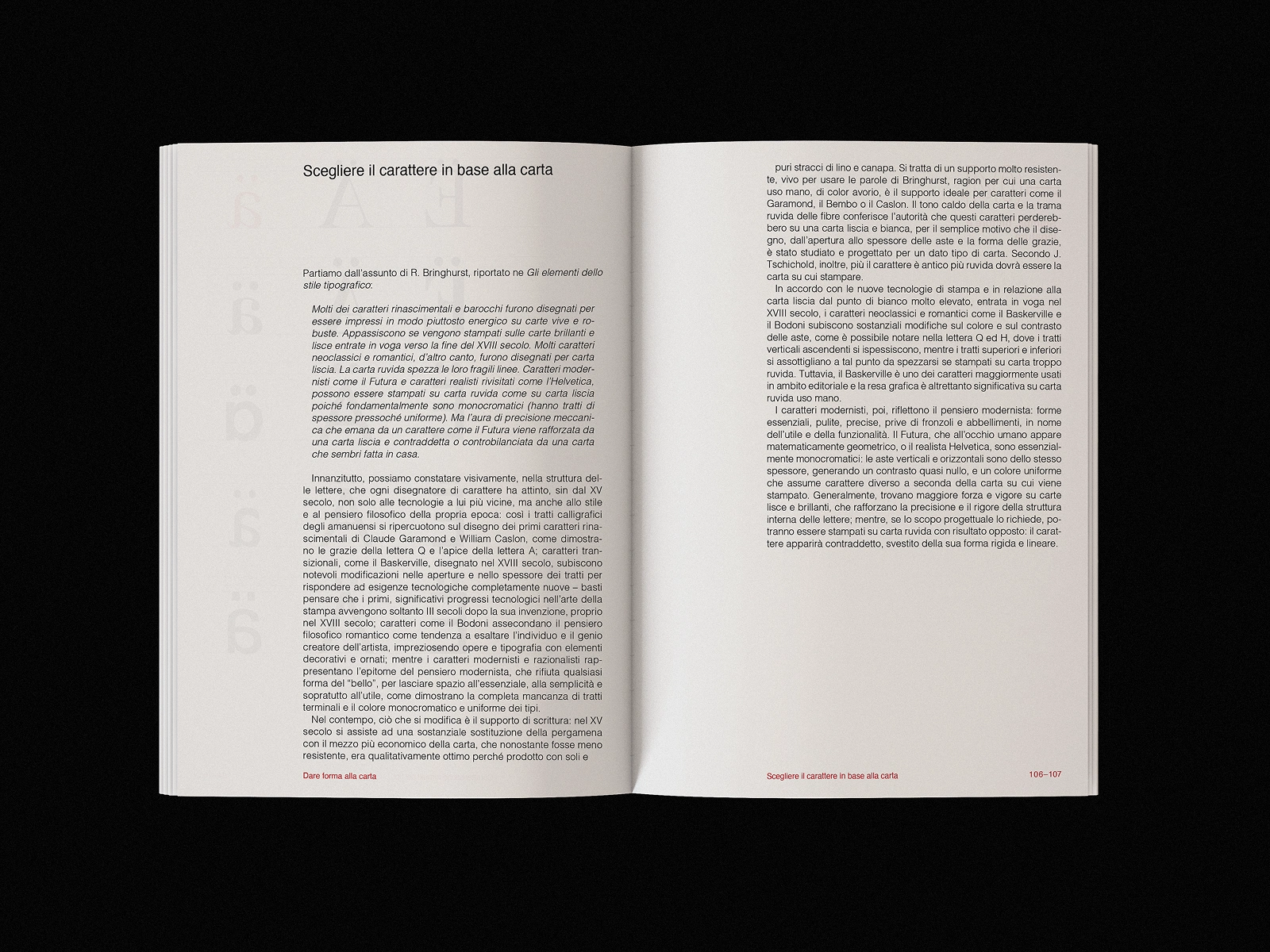
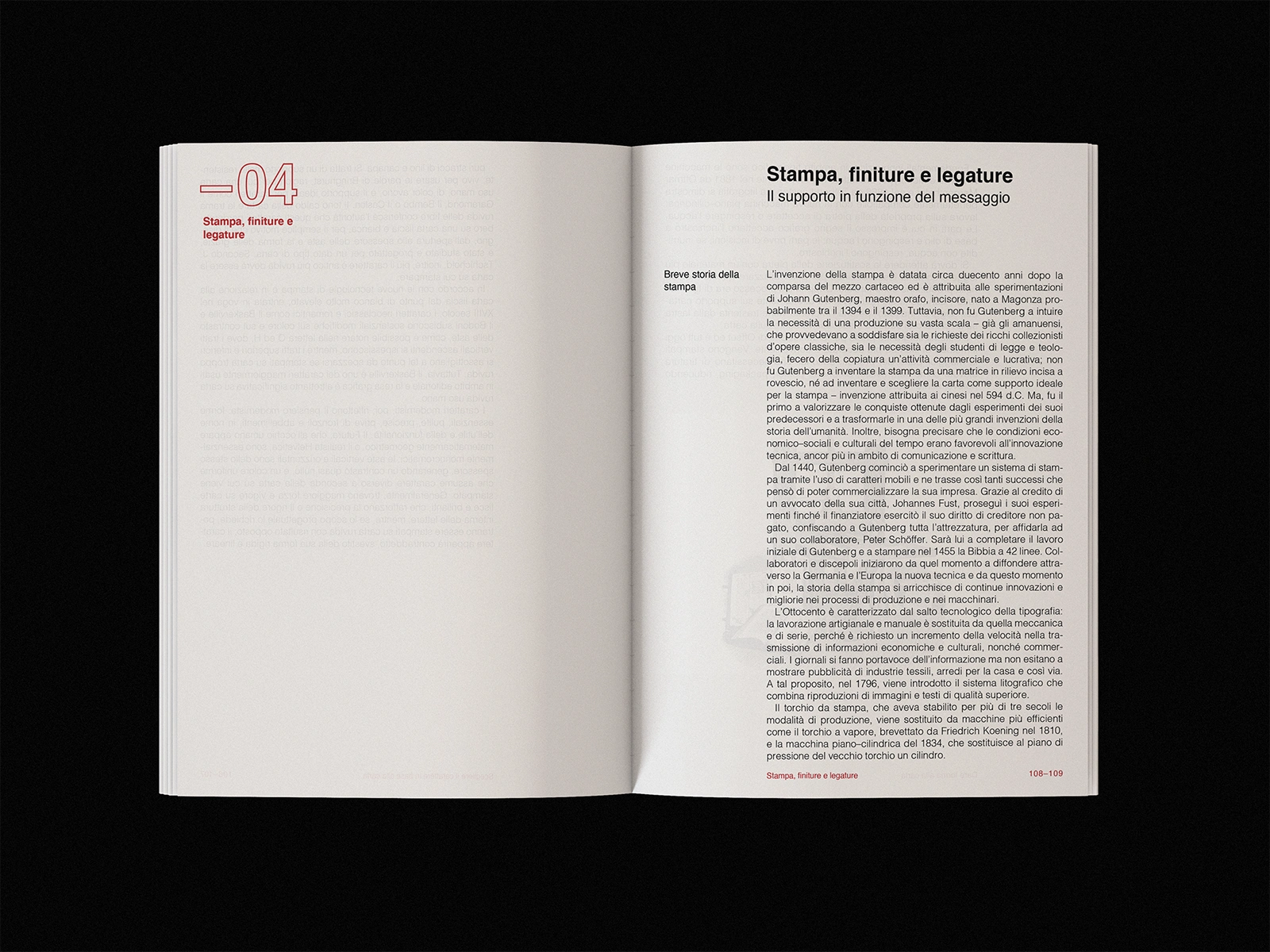
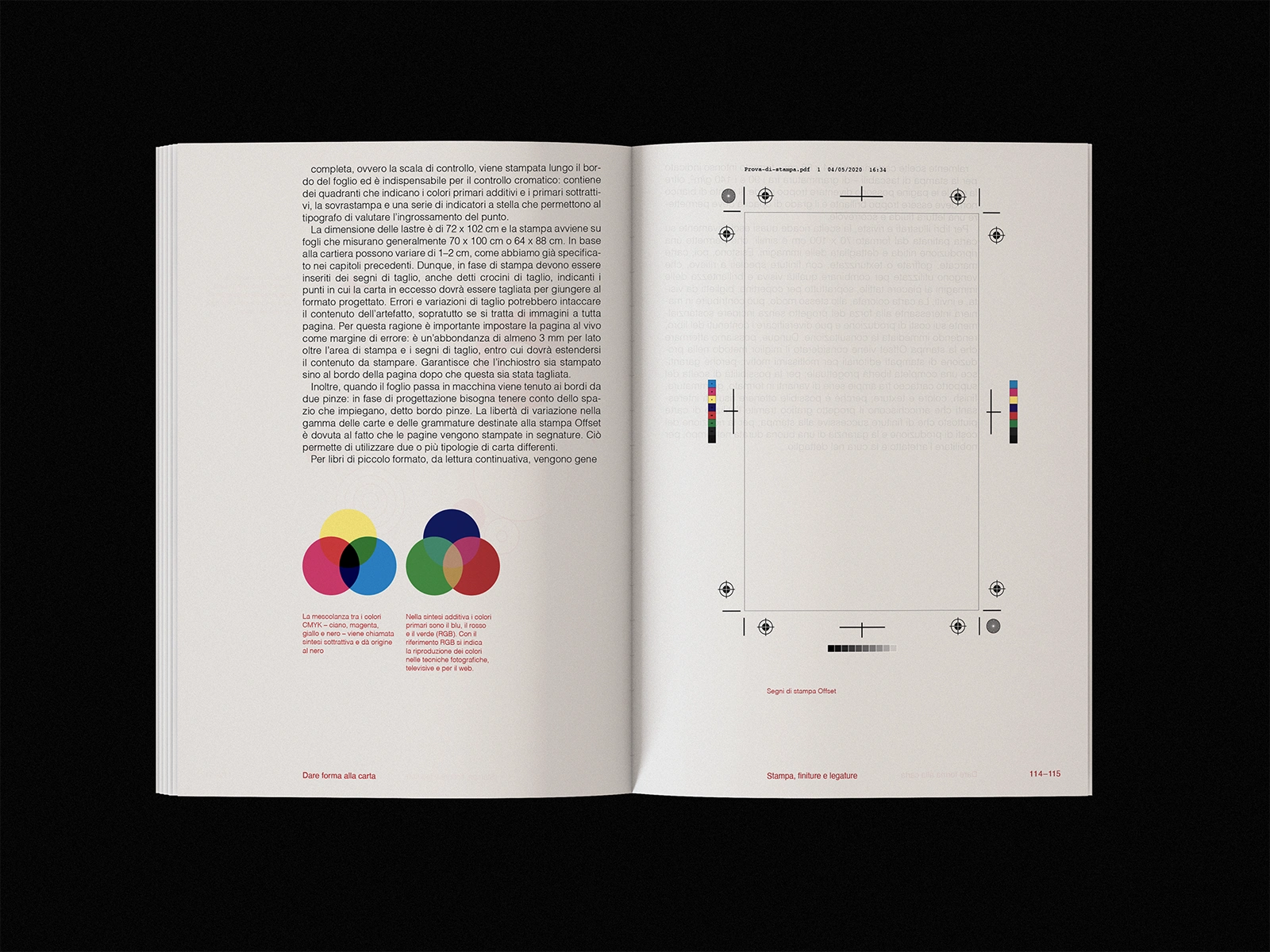
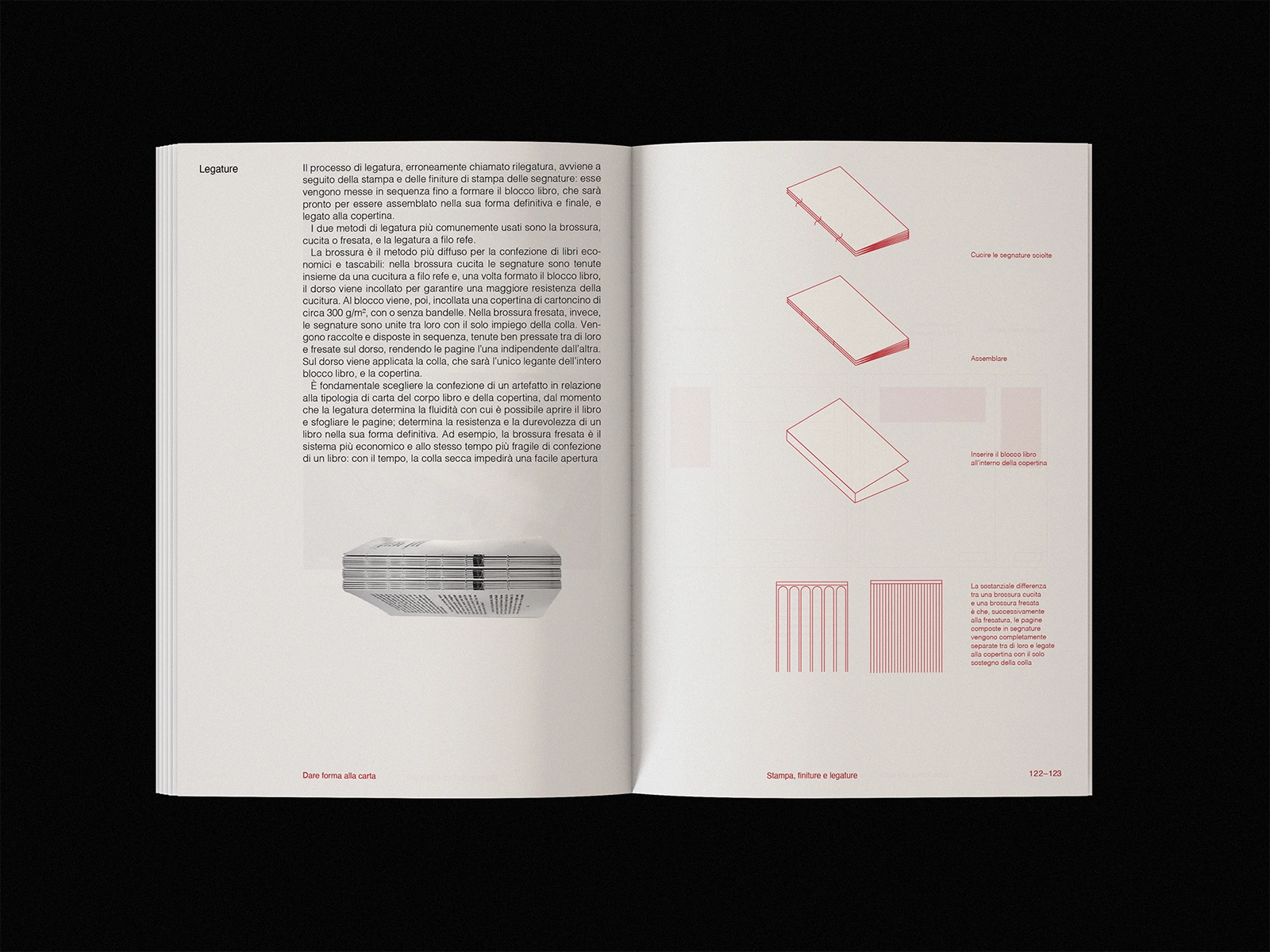
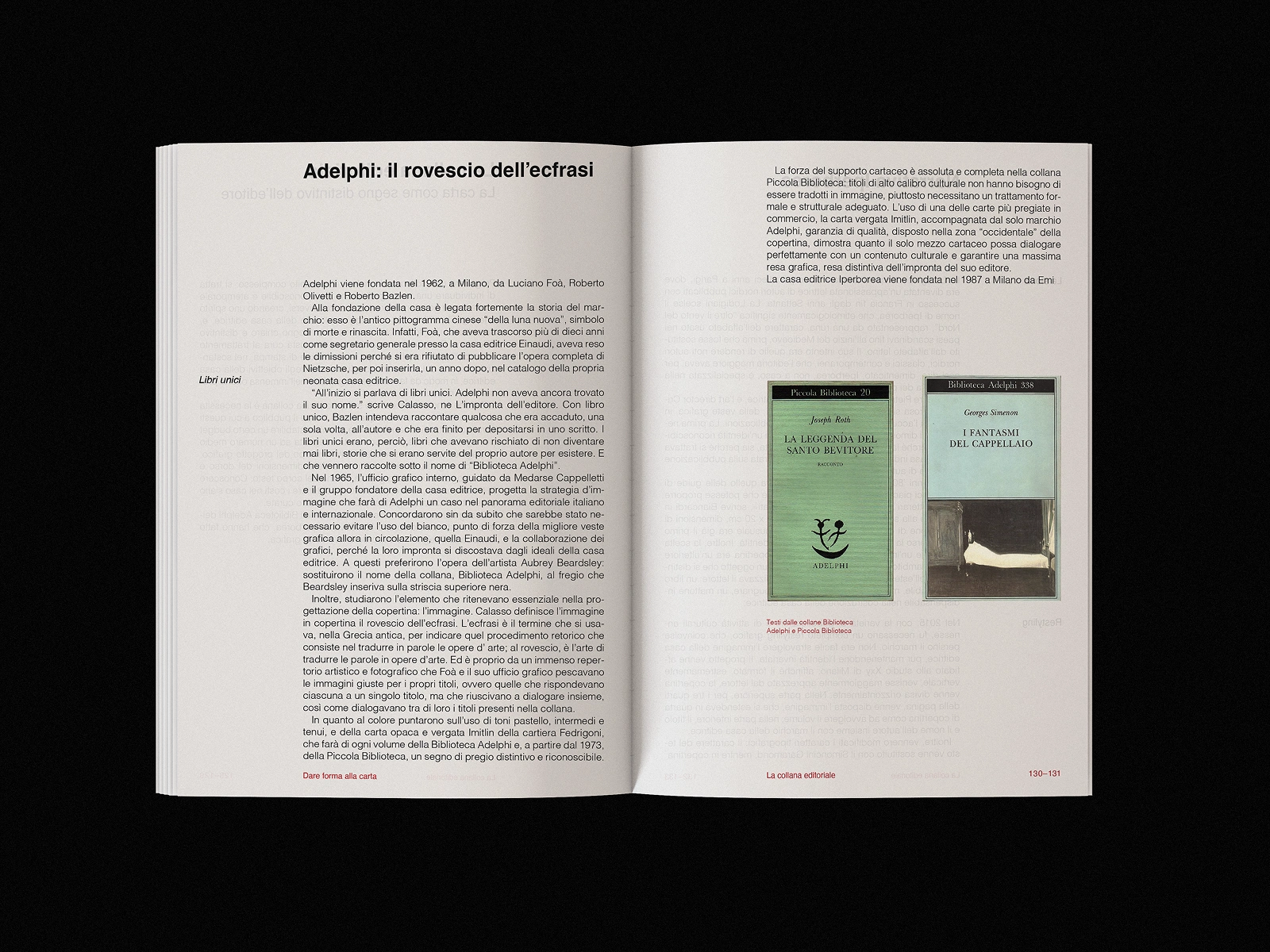
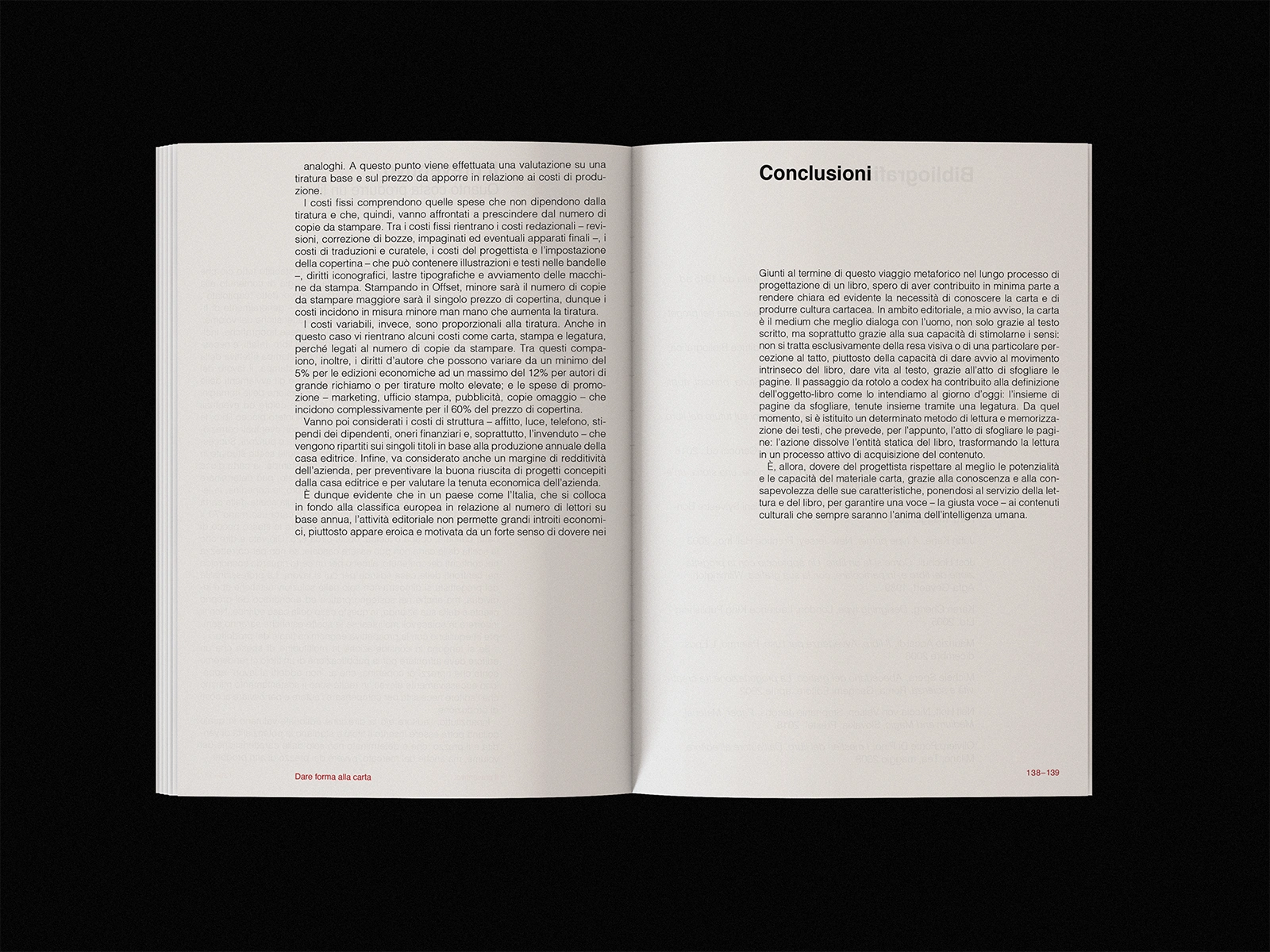
It's for this reason that my thesis is based on the importance of paper in the process of designing and producing a book; on the importance of paper in terms of the message function, the choice of the format of a book, the relationship with the typeface used for a specific content, for a certain method of printing and packaging; on the strength of paper as a hallmark of an editorial series or a publishing house.
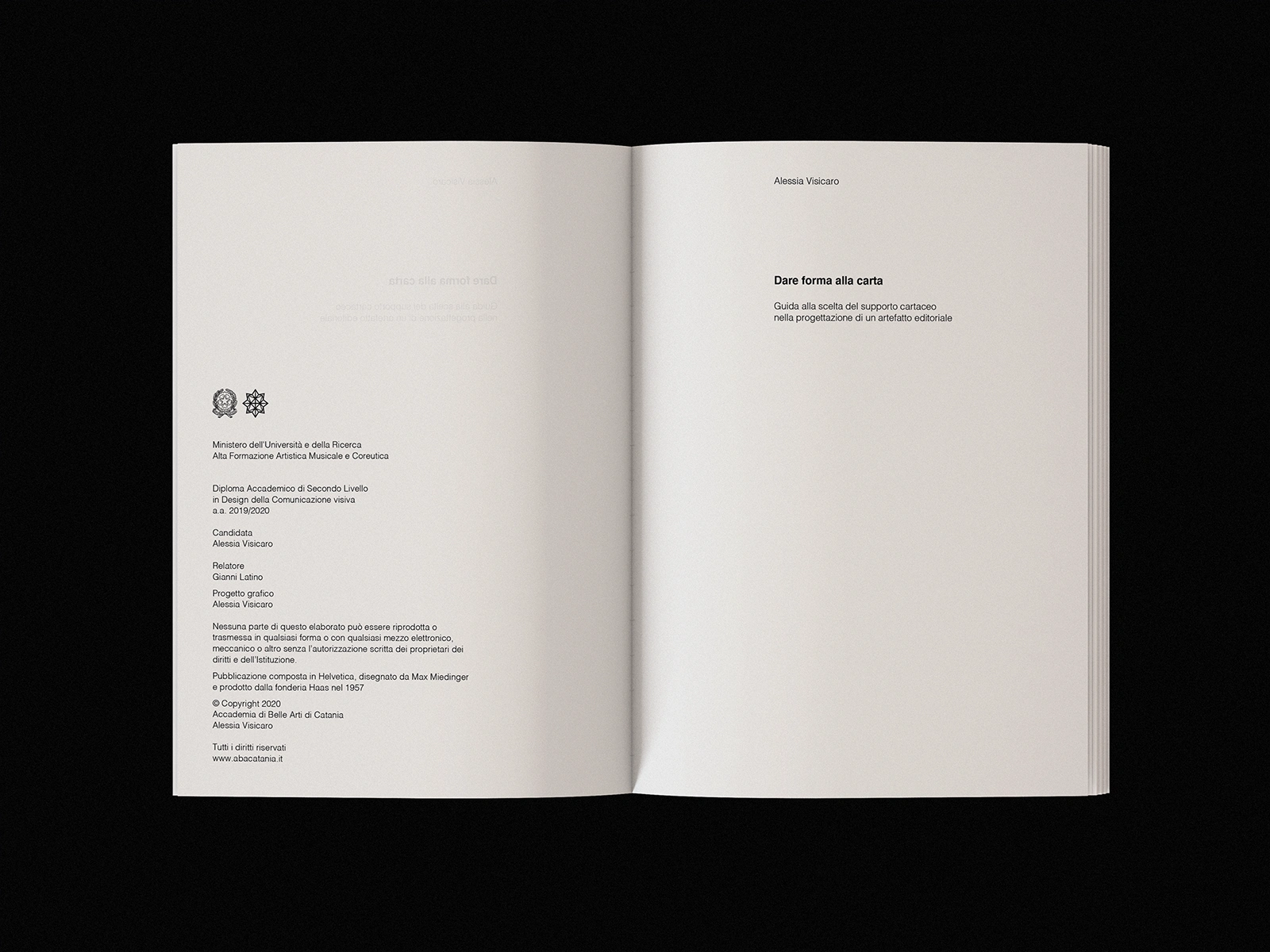
Project details
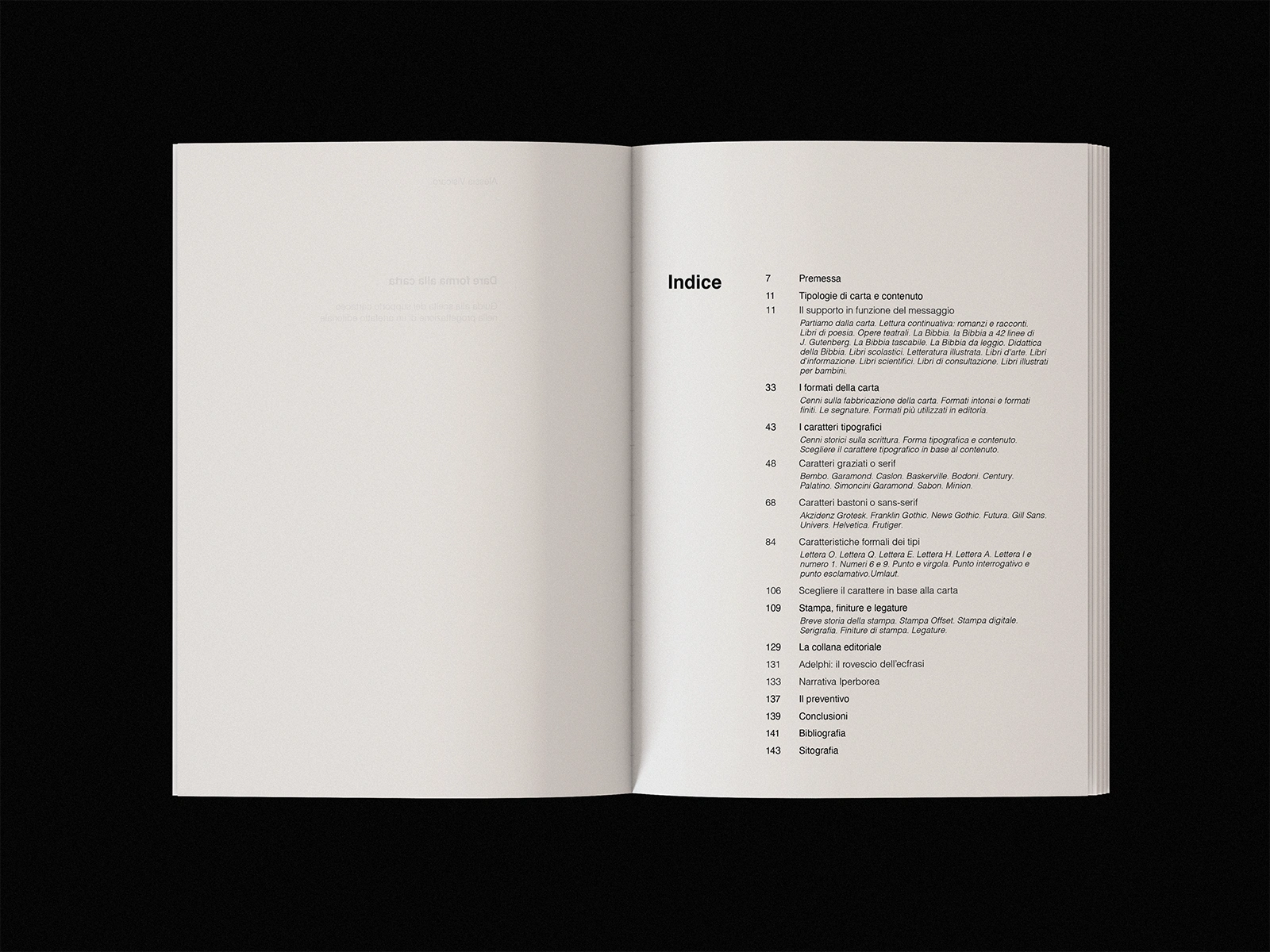
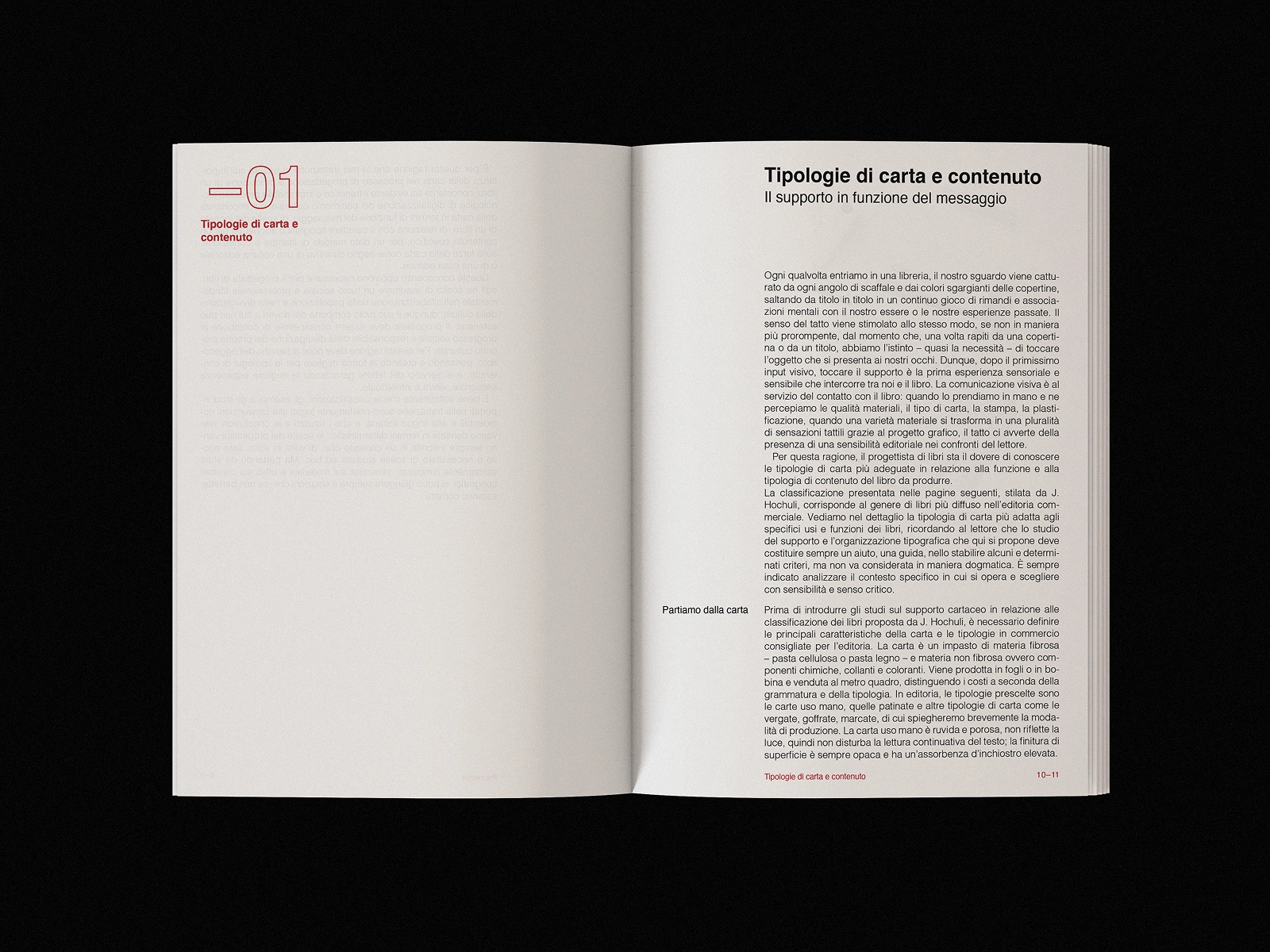
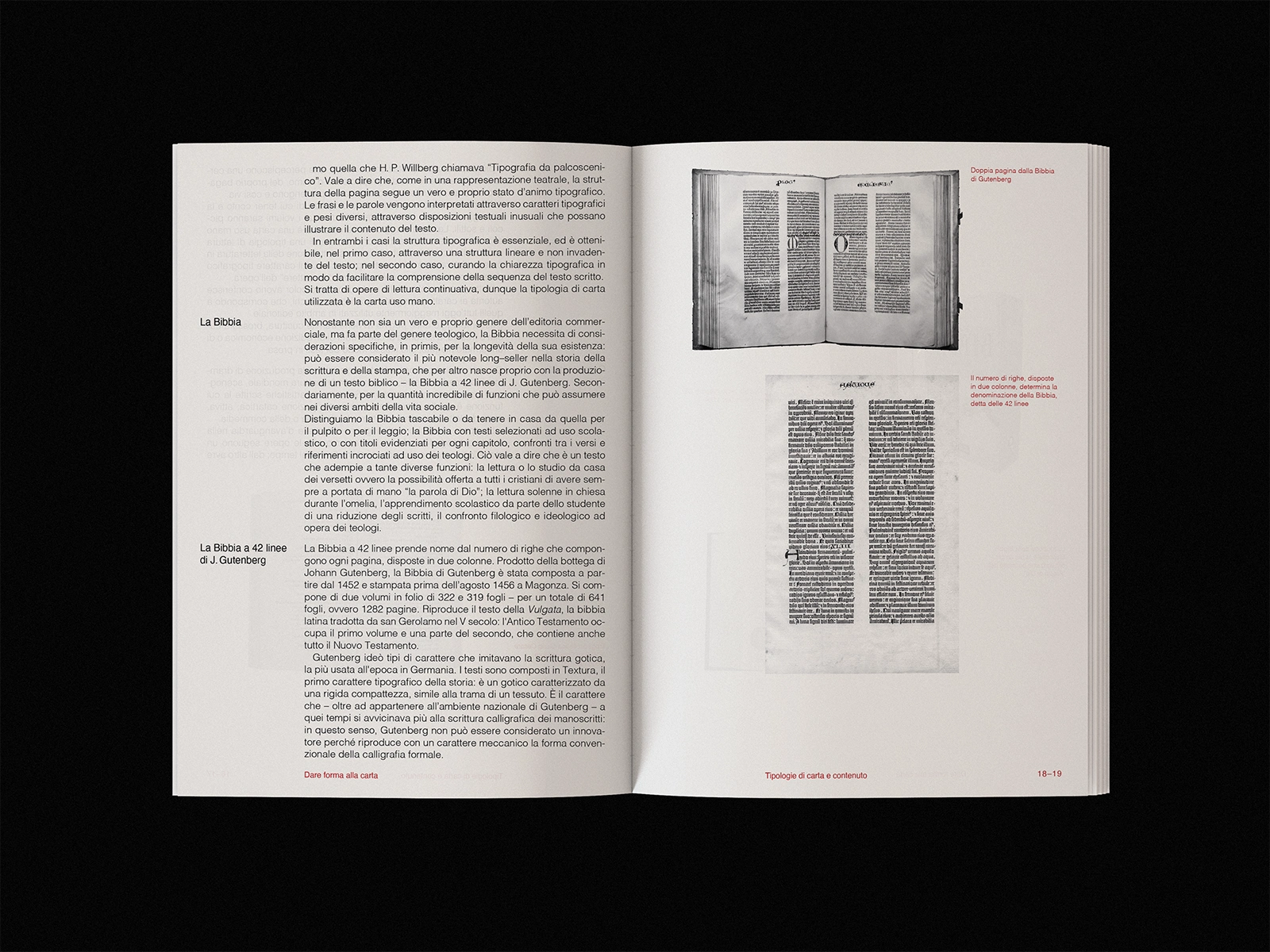
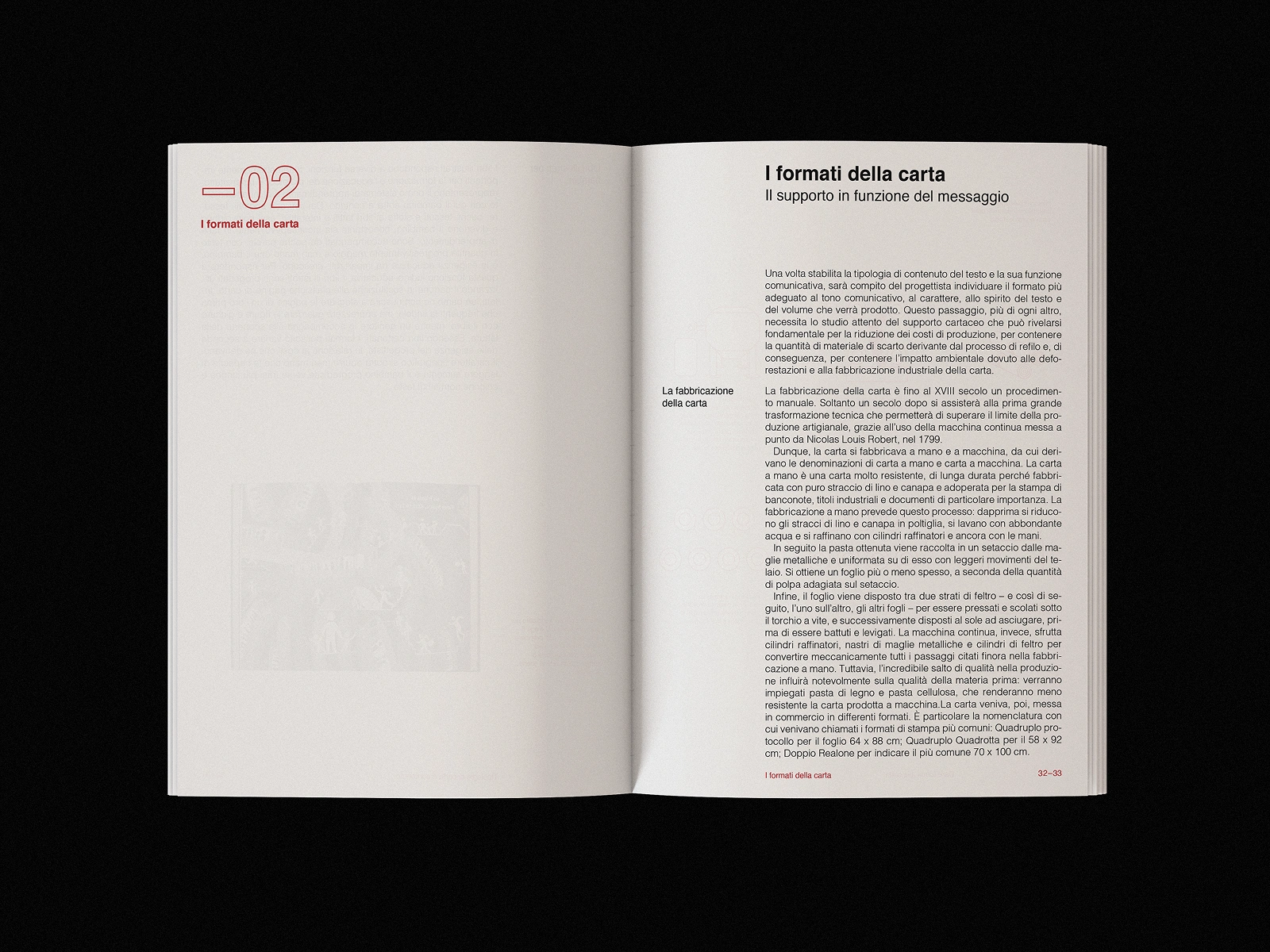
Format: 170x240 mm
Signatures: 9/16°
Pages: 144
Binding: Perfect binding
Grid: 4x6
Gutter: 5mm
Print: Digital Printing
Paper: Fedrigoni Arcoprint, Milk 120 g/m2
Master's Degree Layout Design
Master's Degree Layout Design
Master's Degree Layout Design
Master's Degree Layout Design
Master's Degree Layout Design
Master's Degree Layout Design
Master's Degree Layout Design
Master's Degree Layout Design
Master's Degree Layout Design
Master's Degree Layout Design
Master's Degree Layout Design
Master's Degree Layout Design
Master's Degree Layout Design
Master's Degree Layout Design
Master's Degree Layout Design
Master's Degree Layout Design
Master's Degree Layout Design
Master's Degree Layout Design
Master's Degree Layout Design
Master's Degree Layout Design
Full Project on Behance:
Thanks for watching!
Like this project
Posted Aug 14, 2023
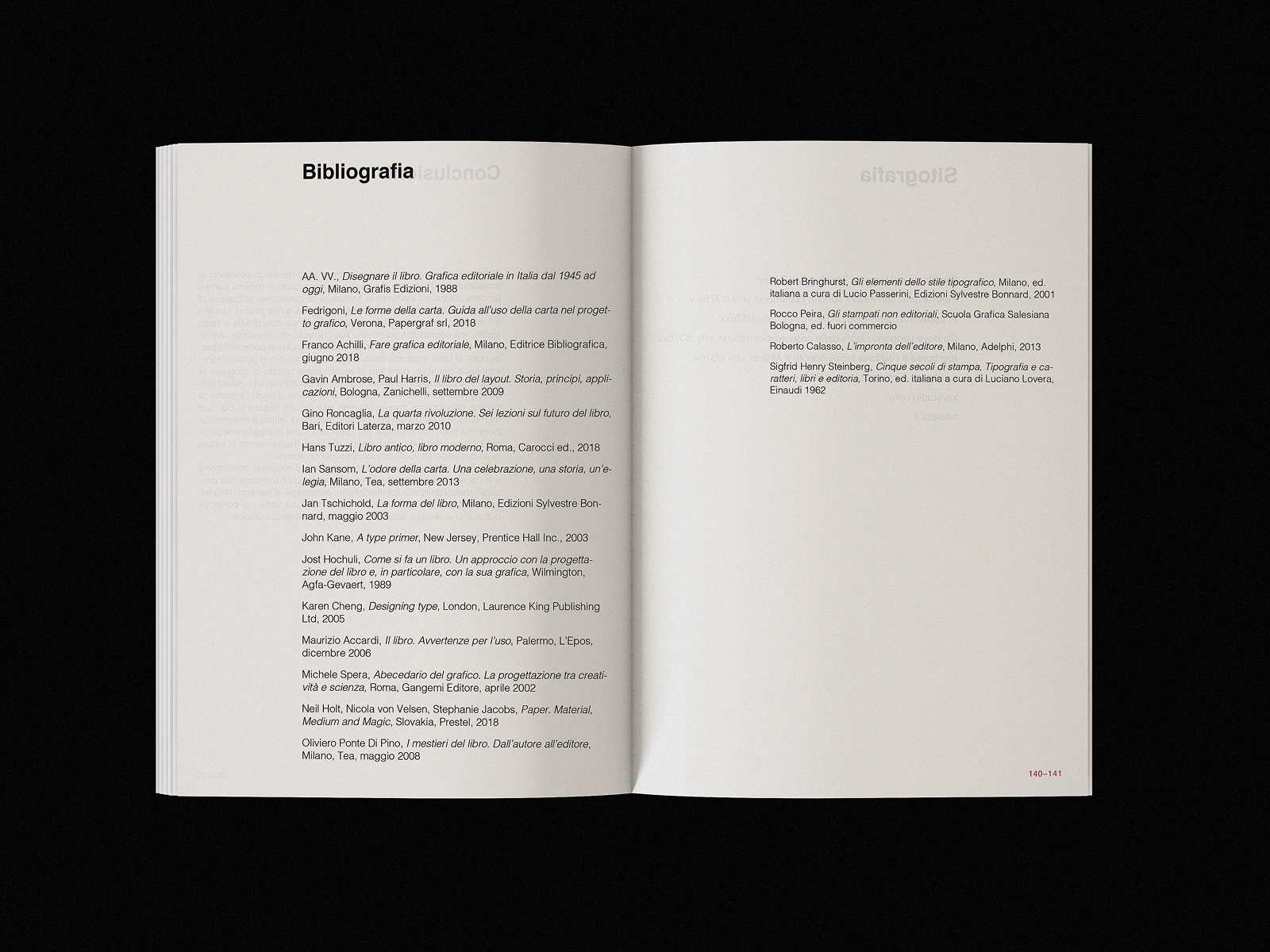
Master's degree thesis in Editorial Design, studying the role of paper in the design process of an editorial artifact.