Gas Management System

Akash Bisht


Building a Supply Chain Solution to help people Manage and Maintain Gas Life Cycle.
My Role
UX Design: Interaction Design, Sketching, Interaction Design, Prototyping.
Team
Product Designer ✦ Product Manager ✦ Senior Designer ✦ Engineers
Timeline
3 months.
Background
The Indian supply chain industry is complex and requires specialized software to manage effectively. Our goal was to develop an in-house solution that makes supply chain management transparent, efficient, and error-free.
Problem Breakdown
The Beginning
A Company was specialized in warehousing and order fulfillment for Supplying Gas Cylinders in Direct to Consumer and Business to Business Segment. The project initiated after brief conversations with our stakeholders. We learned a lot about the Indian Supply Chain Challenges, Deliveries, Warehousing, etc.. The main problems were:
Unable to scale up due to manual operations.
A lot of Human Dependencies to maintain accurate documentation leading to a ton of errors.
Revenue loss due to malpractice.
Absence of real-time visibility and Lack of Streamline processes.
These challenges result in inefficiencies, errors, and potential safety risks. The current manual processes and lack of centralized systems lead to difficulties in tracking and issuing the cylinders.
So, by then our vision was clear -
How Might We Help the business to Address the challenges faced in the entire Gas life-cycle Supply Chain?
Understanding user's ecosystem
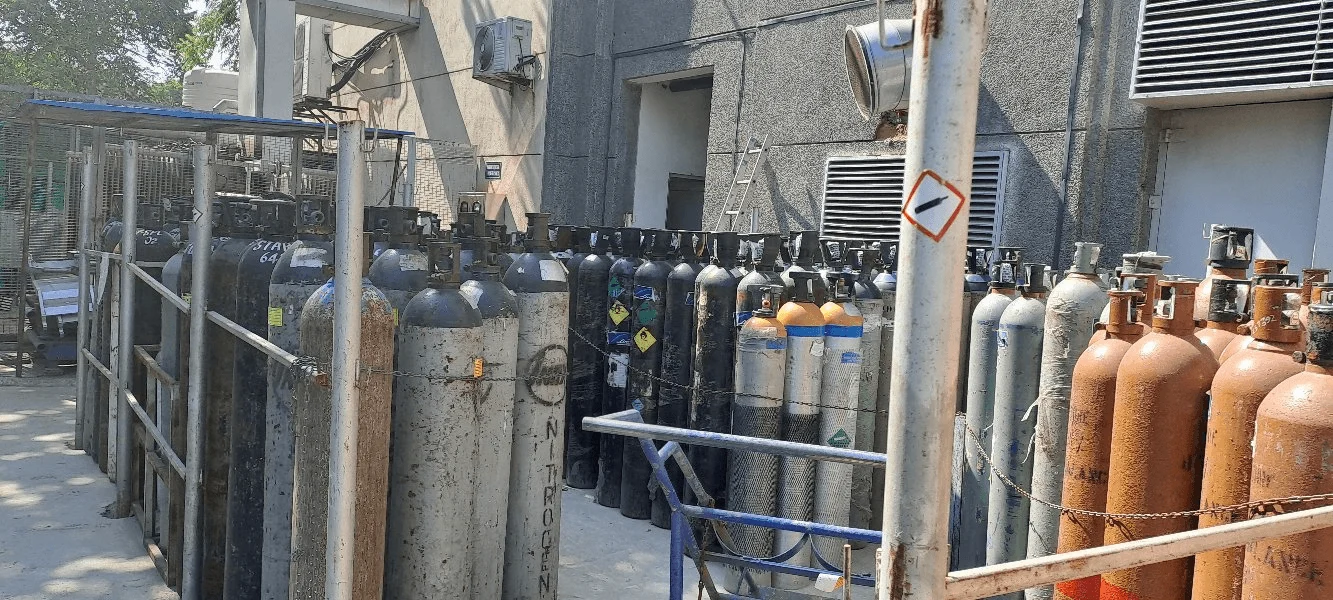
To understand the user challenges, we visited the newly created gas warehouse storage and noted how a particular warehouse and delivery functions in AVL.
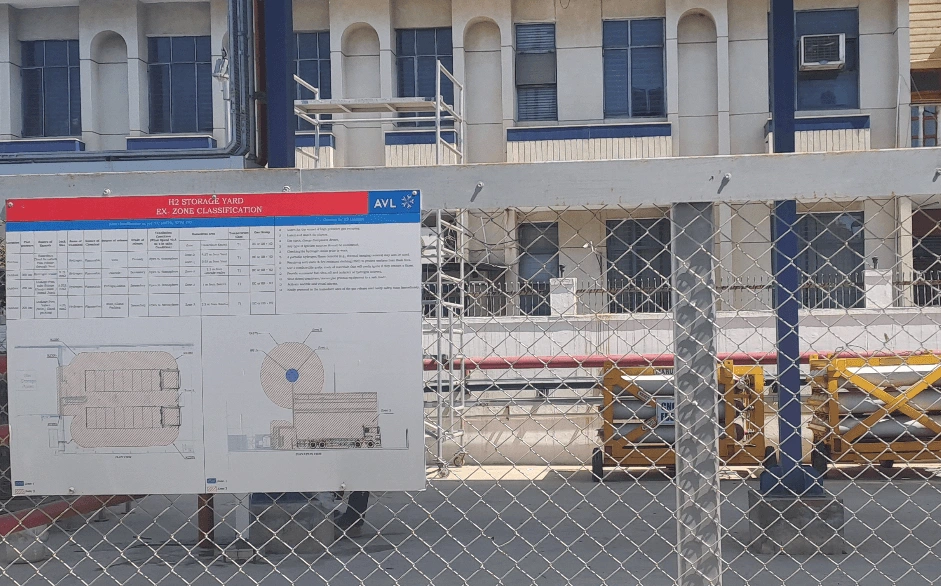
As part of the process, we did not have enough time to perform extensive research, so we did a light form of field visit to understand the ecosystem challenges and its problems. Based on our observations of how the entire ecosystem functions, we noted down key pointers about how the entire supply chain works and the business and user problems.
Design in action
Understanding Phases in Supply Chain and their User’s role:
User’s in the Ecosystem:
Store Operator / Manager
Lab Operator / Manager
Plant Head
Phase 1: Receiving and Tracking of Cylinders.
The Store Manager will overlook and manage a huge amount of the cylinders info. The cylinders will be manually registered by Store Operator to make the cylinders traceable and get it ready to be received by anyone making a special request.
Phase 2: Issuance of Cylinders.
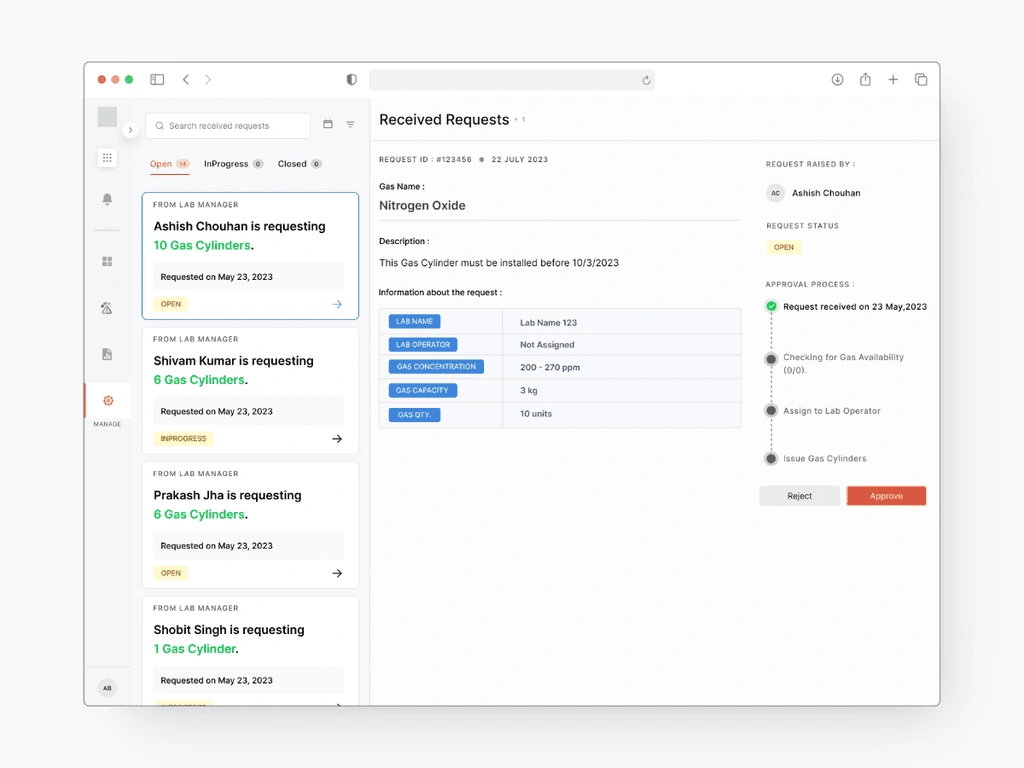
Once all this setup is processed, the Lab Manager will raise a request for cylinders. The managers approve the request and assign a person from the lab operator, in the meanwhile, the store operator will issue the gas cylinders.
Phase 3: Cylinder Installation at Gas Bank.
Once the Gas cylinders are issued by the Store operator, the assigned Lab operator will install the gas cylinder in its own gas yard on a properly assigned location.
Phase 4: Monitoring the Cylinders.
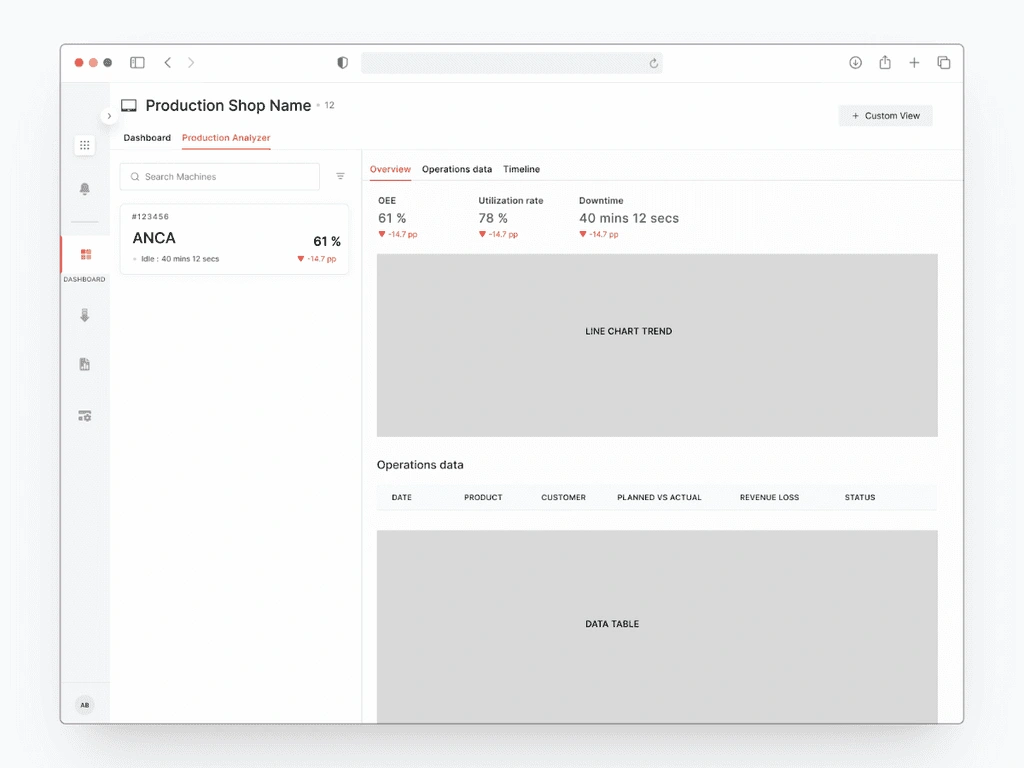
All the different states/phases of gas cylinders will be continuously monitored, and the plant head will also continuously monitor its configuration and consumption details to see if it requires any immediate action.
What was I responsible for?
When we started moving ahead, I was responsible for designing two experiences:
Cylinder Issuance and Installation Experience: Phase 02 and Phase 03.
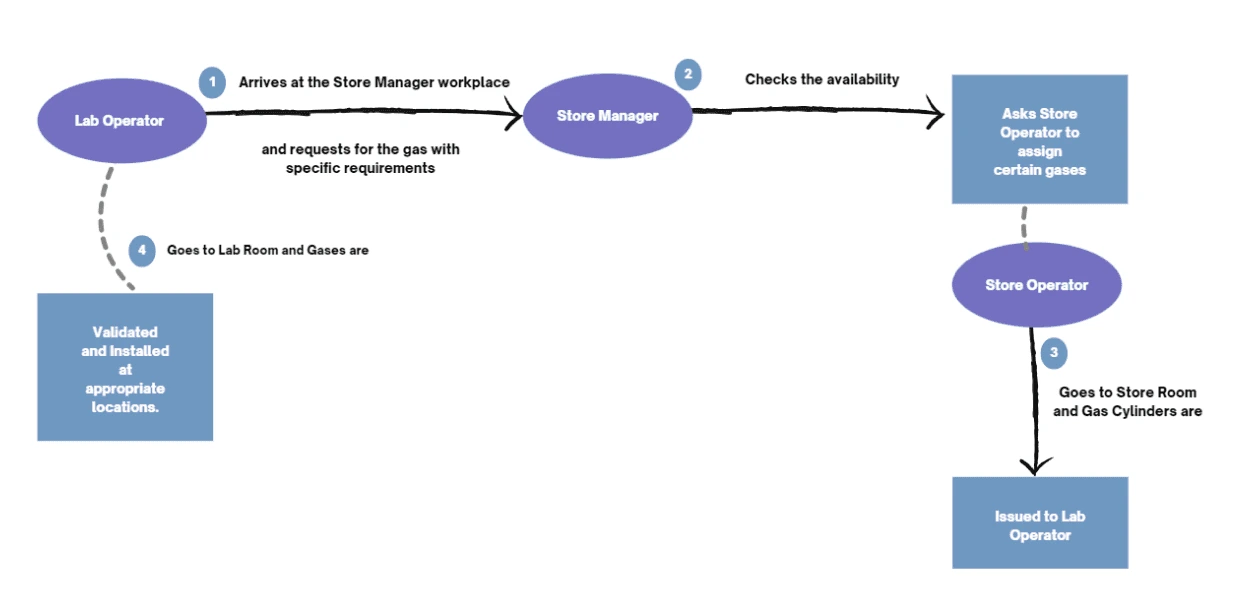
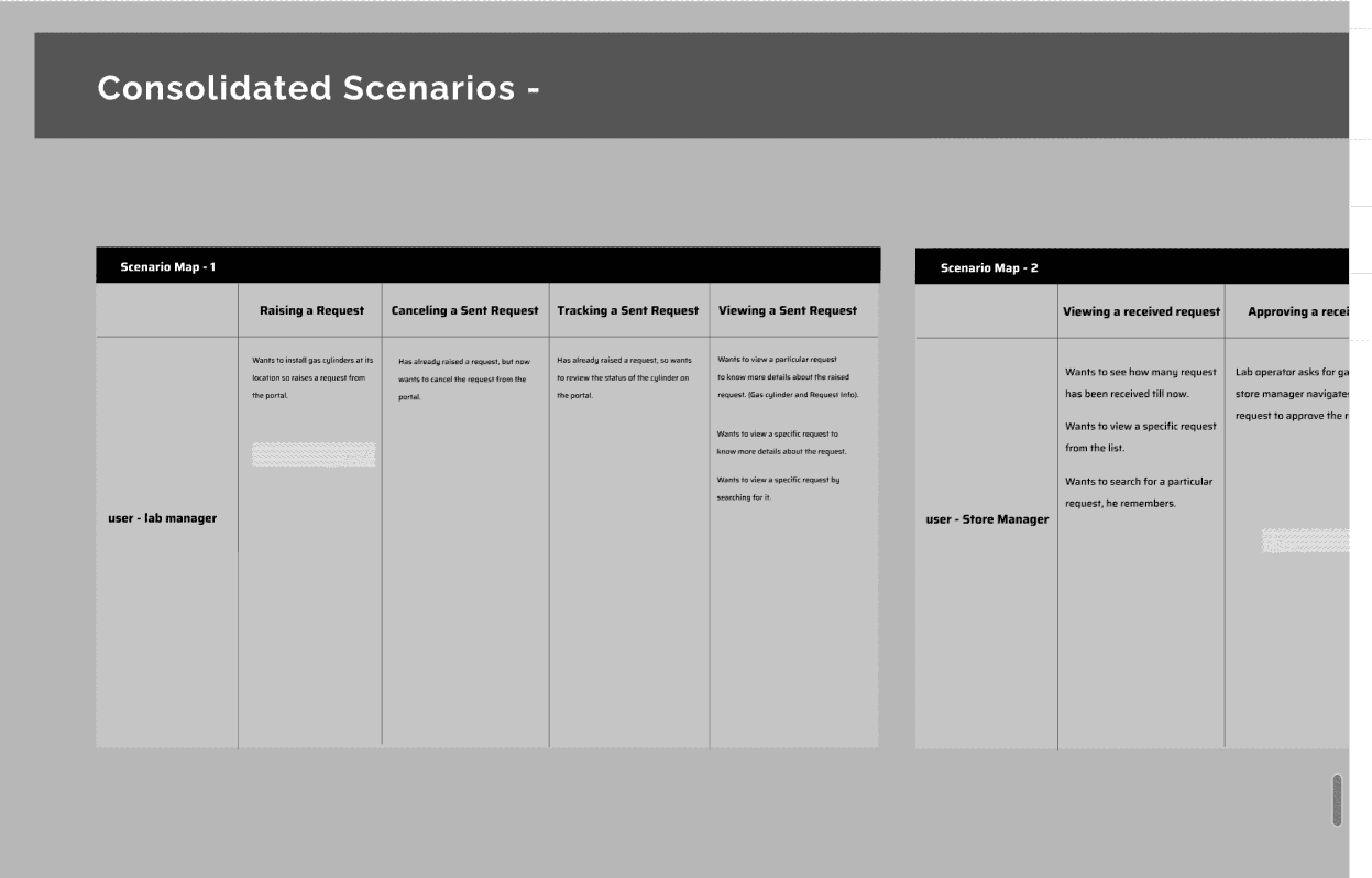
Based on the insights and observations, our team created User personas, Scenarios, Task prioritization, and Workflows.
Redefining Problems
I brainstormed possible solutions and created concepts, wireframes and clickable prototypes for all the experiences under my scope of work.
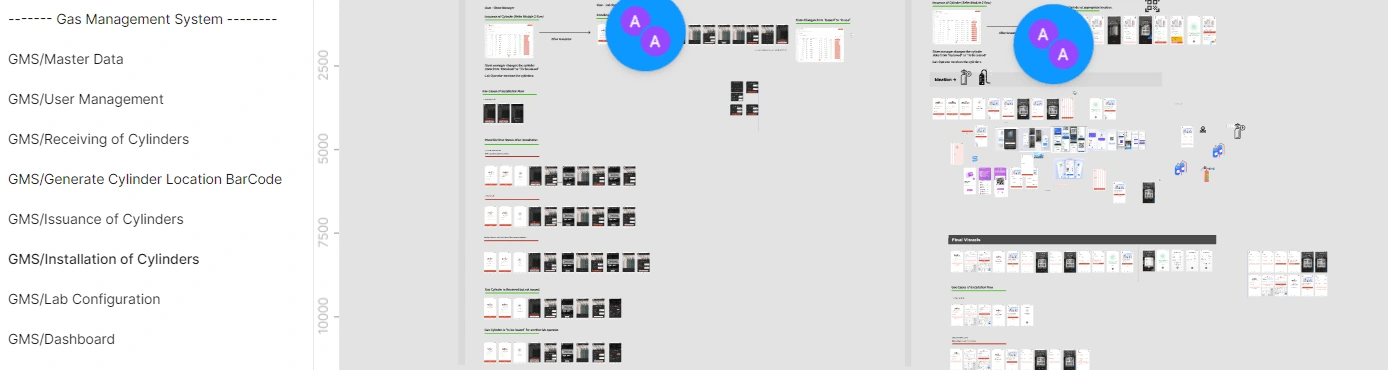
Problem # 1
Missing Communication and collaboration gap. To fix this,
A bar code system was implemented. A unique bar code seal is generated and pasted on for each gas cylinder which contains the yard location, name and concentration value. How does this help? Well, it helps the store manager to keep all the details traceable to avoid confusion with overlapping multiple requests raised by the Lab Manager.
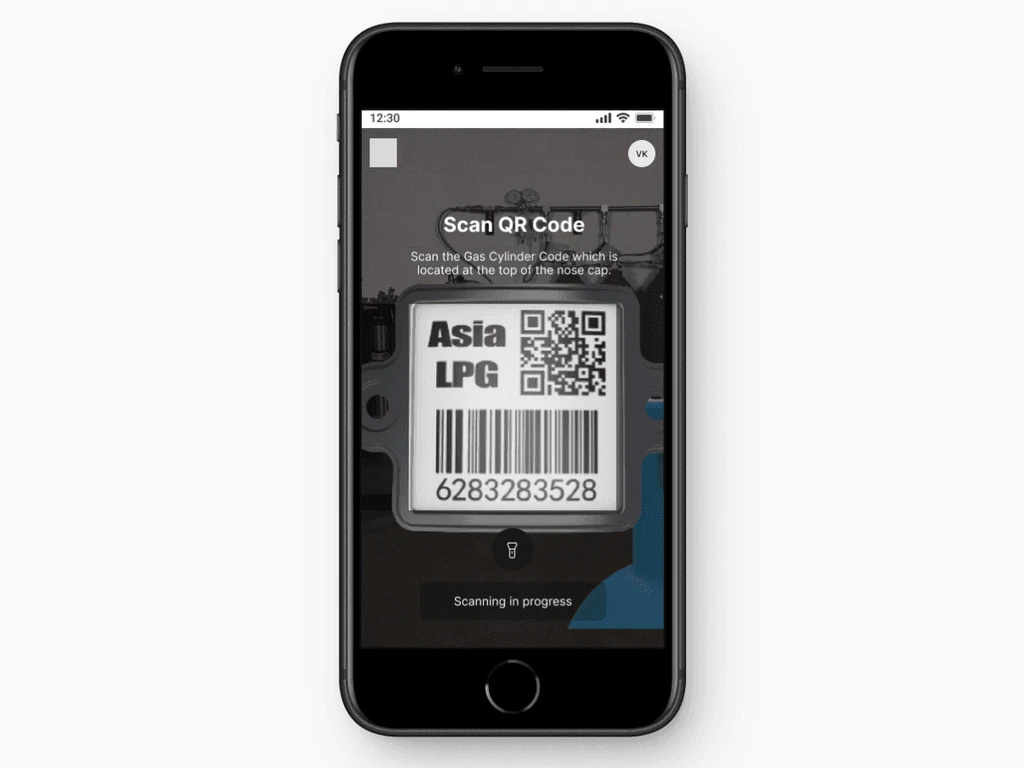
Built a robust system of sending and receiving requests in real-time between Store and Lab Managers.
Any form of discrepancies such as “Non availability of Gas” or “Mismatch requirement or requirement cannot be fulfilled” is addressed so that operations can run smoothly.
Problem # 2
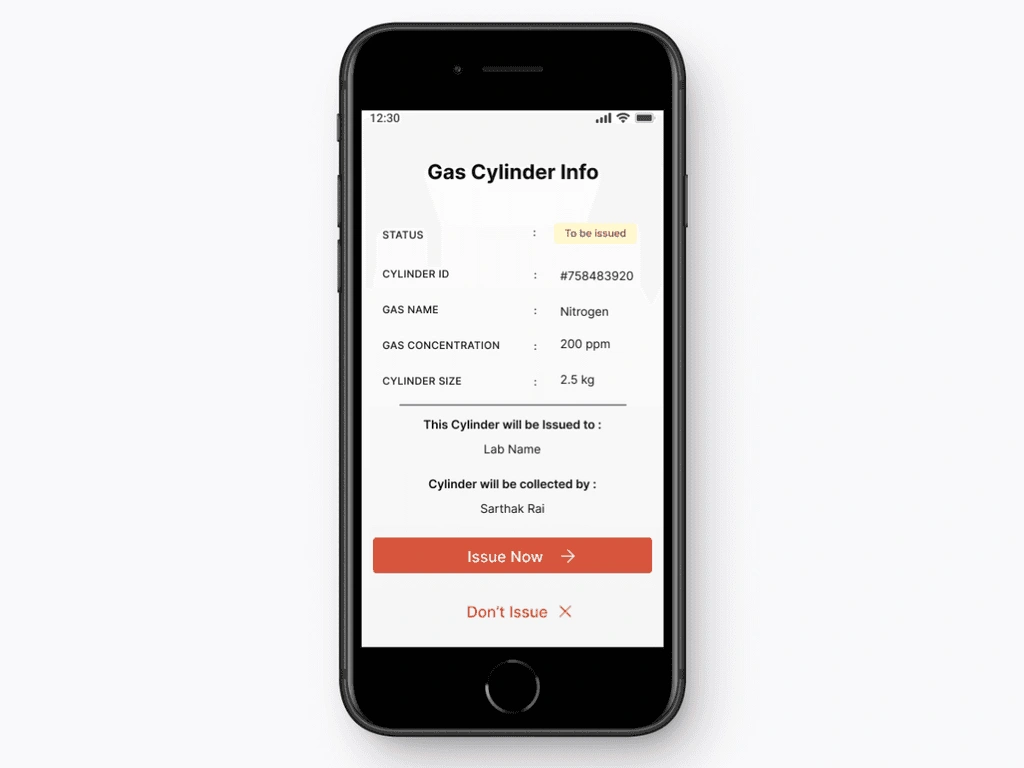
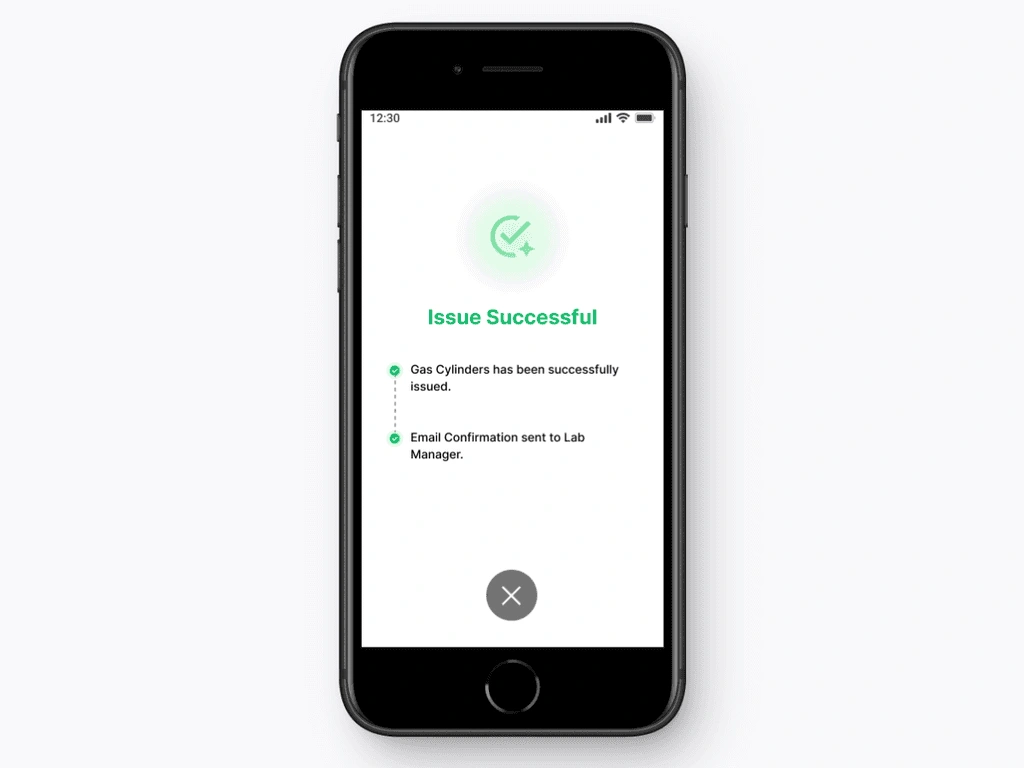
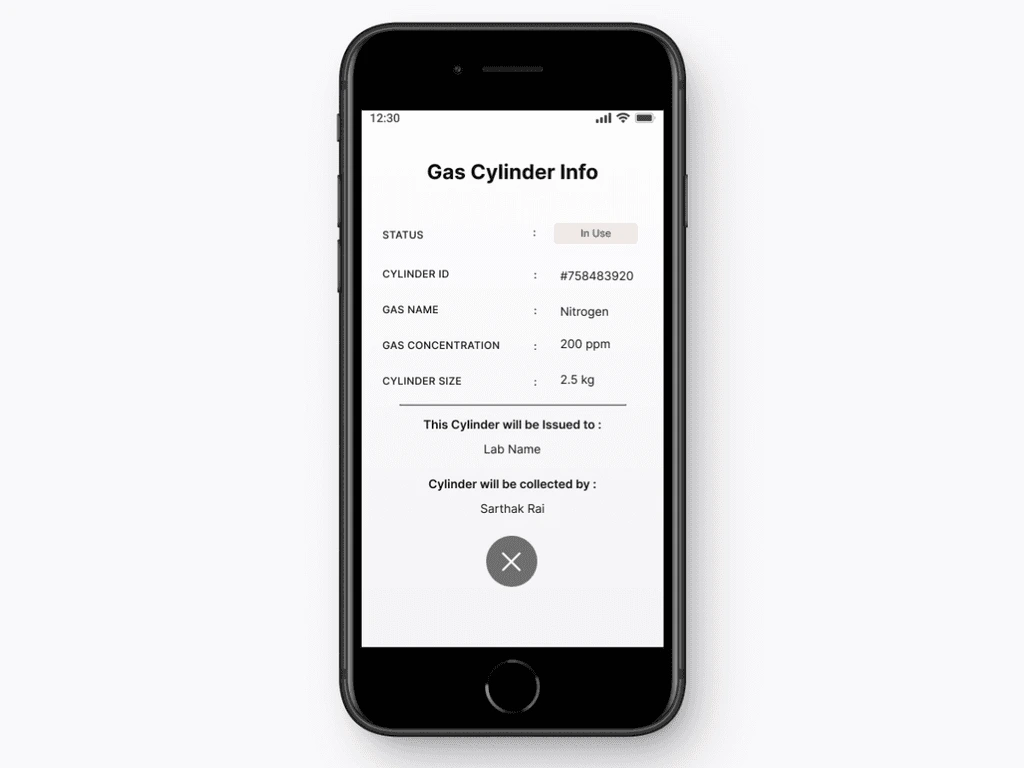
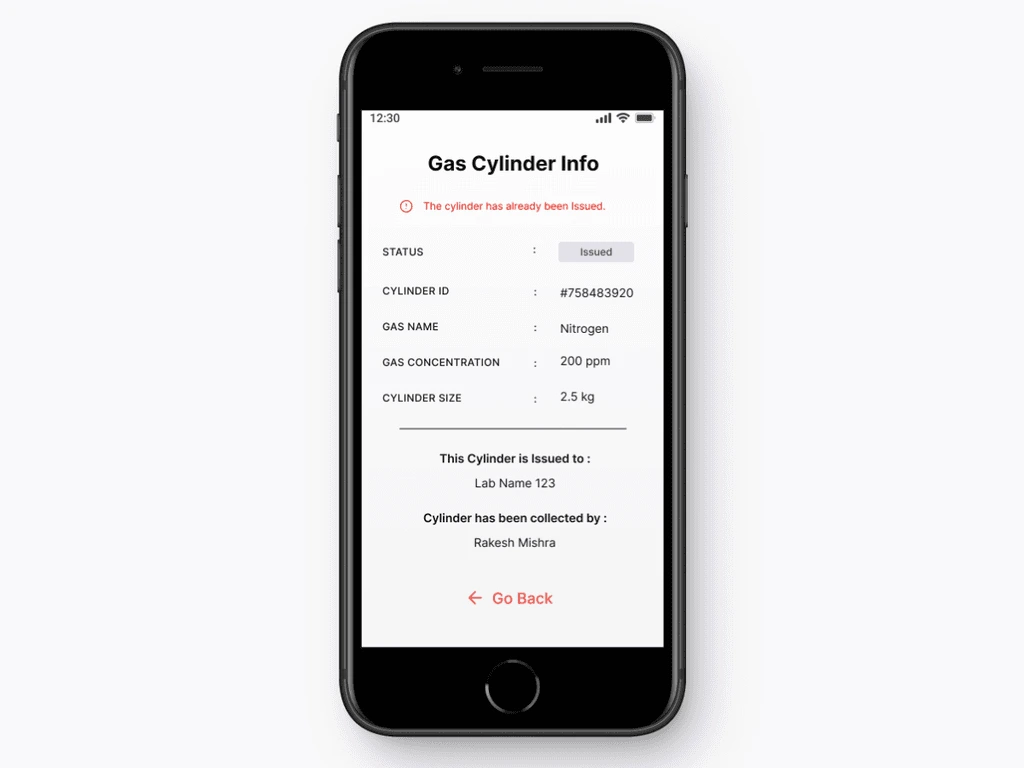
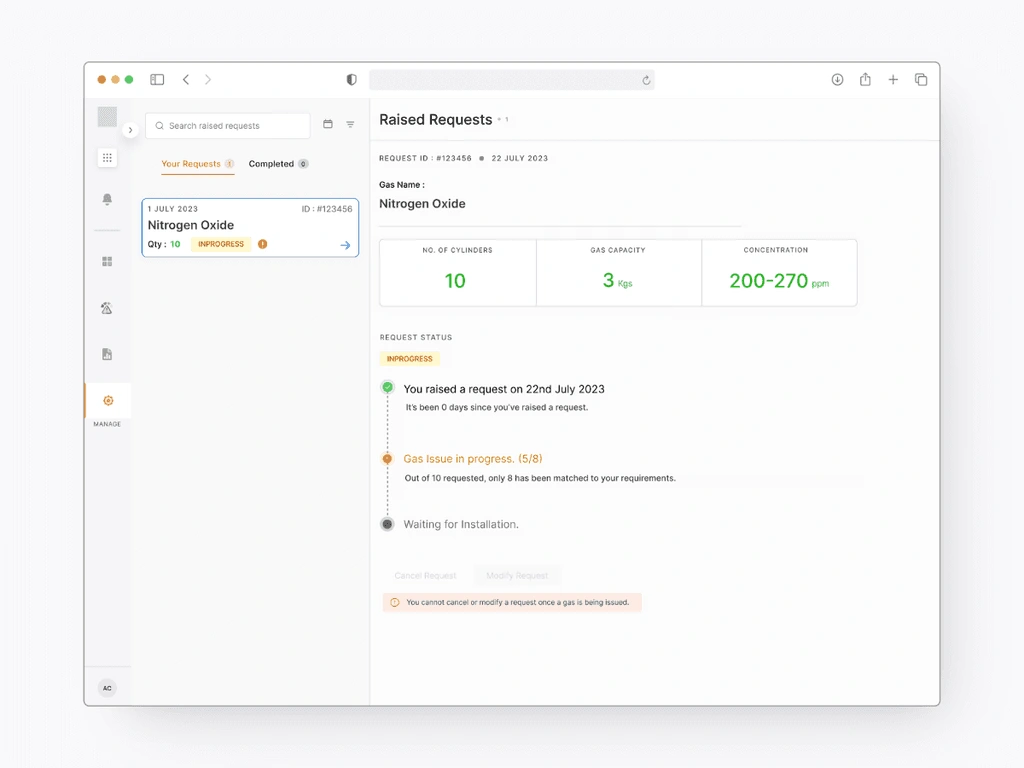
Missing real-time status updates. Each time a Gas Cylinder moves through different phases, it becomes difficult for the Store Manager to handle multiple requests with multiple use-cases. To tackle this, I carefully designed different system checkpoints for tracking the status.
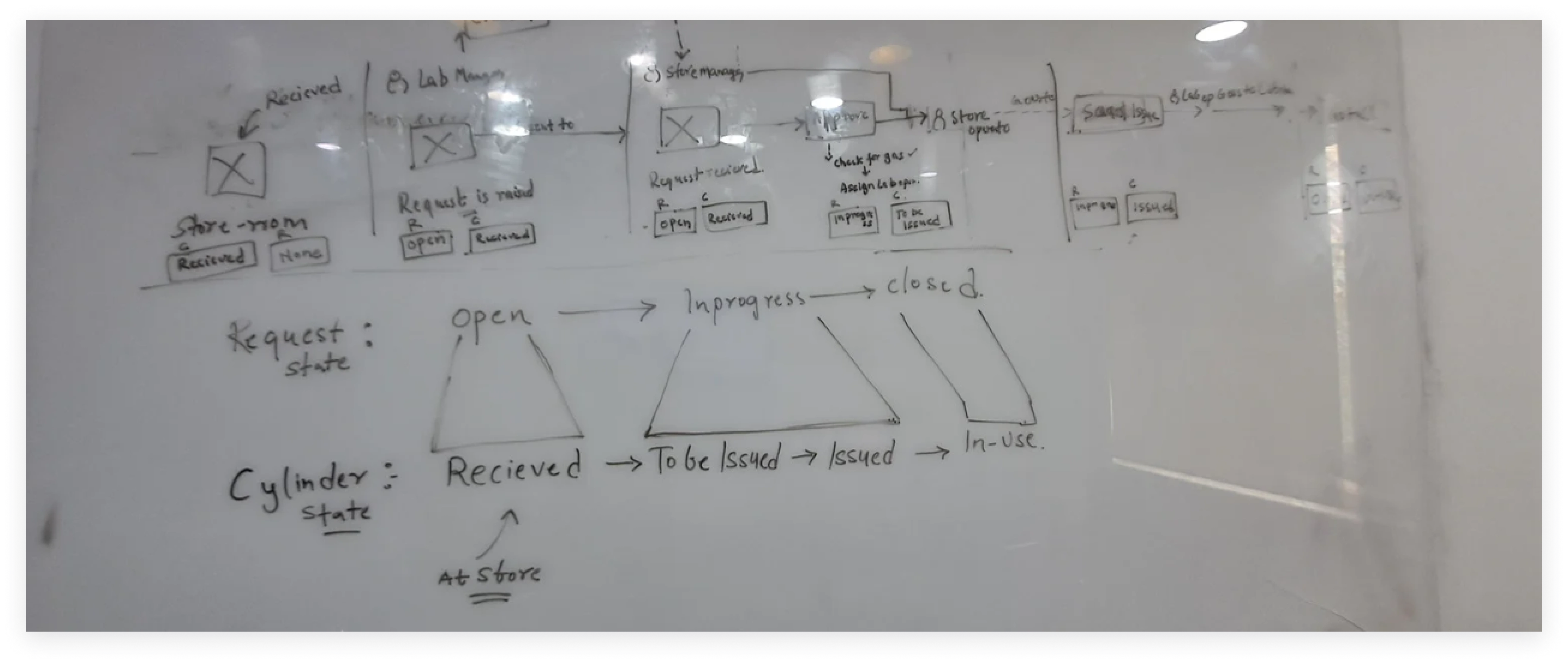
Enabling Store and Lab Operators to capture details through a mobile app whenever the gases are issued or installed.
If anything goes wrong, the system alerts Store and Lab Managers in real-time to ensure prompt resolution.
Problem # 3
Manual toil required to handle gas allocation to gas requests.
Everyone needed to do a lot of calling because of poor visibility. Users face manual toil to handle such requests with different critical error handling scenarios which they might end up with information loss.
So I created end-to-end workflows with clear distinct steps with all the critical error handling and use-cases to ensure the user does not have to worry about any issues encountered.
Here, the most challenging part was to define proper edge cases and error cases which might make or break the experience.
The experience was designed to reduce manual toil.
Problem # 4
Real-time update for important events.
Store and Lab Managers are both notified on their smartphones through messages for any important events that took place such as Cylinder mismatch, Accidental Cause, Installation Issues, Low Threshold limit, Miscellaneous problems.
While notifications are sent in the application, high-severity events are directly sent to their phones, asking for immediate action to resolve the problem.
Challenges
This project had a lot of challenges, including understanding how different users interact within the ecosystem. Also, when designing multiple interactions I had to keep two things in mind:
How the data is being fed into the system?
How different users interact with that data?
Understanding these two key things is very important when you’re working on Key Scenarios and Workflows.
The Impact
Reduced no. of customer calls in their team by around ~60%.
Eliminated mismanagement of gas cylinders around ~70%.
Digitizing the workflows instantly improved efficiency against manual work.
It has reduced the operations cost by around ~20% due to maximum resource utilization creating a long-term sustainability solution.
Key Learnings
Clarify your assumptions.
Solutions can be simple.
Connect with Me!
Email: akashbisht.designs@gmail.com
Copyright © 2024 Akash Bisht. This website was developed in Framer.
Like this project
Posted Jun 18, 2026
Designed a user-friendly gas management system to streamline supply chain and improve operational efficiency.
Likes
0
Views
5