Scaling Governance: Reducing Risk for a Fortune 500 CMS

Fábio Alencar

Scaling Governance: Reducing Risk for a Fortune 500 CMS
I designed a high-integrity publishing workflow that eliminated unverified go-lives. By adding versioning and Page Diff tools, I achieved 100% change visibility in just two sprints.
Tags: CMS, Content Management, Enterprise UX Strategy
Overview
Page Builder is a bespoke CMS that allows Owens Corning to easily wrap UI and representation around existing data structures within the OC ecosystem with componentization and modularity in mind.
The Problem
As the user base grows, more and more people have started to hop in and make small changes, leaving stale drafts saved but never published. This created a risk of unknowingly publishing incomplete, unapproved, or outdated content.
The Goal
Introduce a healthy publishing process to ensure content quality and clarity before final go-live.
We will know the solution is a success when we avoid publishing content that is not ready/approved/complete, achieving a 100% visibility on content status and approval rate.
Timeline: 2 weeks (1 sprint)
Role: Senior Product Designer
Must create a complete solution that address the problem and be ready to be implemented on phases.
Design Process
A rapid discovery-to-delivery process balancing long-term vision with practical MVP constraints.
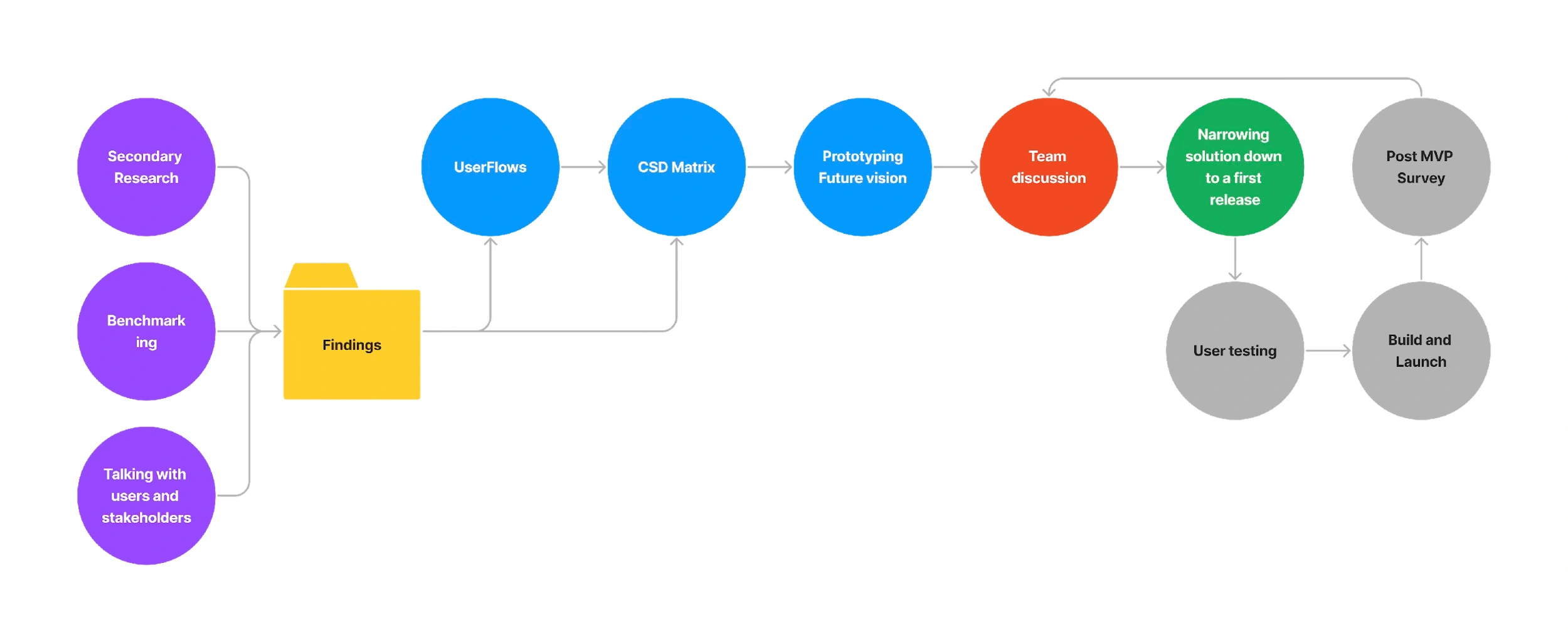
Research: Secondary Research, Benchmarking, User Interviews
Hands-on: User Flows, CSD Matrix, Future Vision Prototypes, Team Discussion
Solution: Narrowing to First Release, User Testing, Build and Launch, Post-MVP Survey
Discovery and Framing
Used a CSD Matrix to structure the problem space and guide research priorities.
Certainties:
Must avoid publishing content that is not ready/approved/complete
Users may unknowingly publish unapproved or incomplete changes
System has distinct user types
There are 4 types of page status: Draft, Submitted, Published, and Archived
Pages have a 4 dimensional model: Version, Status, View, Hierarchy
Suppositions:
The act of publishing likely feels high-stakes or irreversible
There is confusion about who is responsible for the final publication
Users likely have a high volume of drafts, making manual review difficult
Other CMSs might have distinct solutions for the same problems
Doubts:
What defines incomplete, unapproved, or outdated content?
Are users unsure of the impact of publishing?
Do we have an approval workflow?
Do we need version recovery/replace features?
Do we need to compare page versions?
Stakeholder interviews were conducted to gather primary qualitative data, validated using secondary research on publishing workflows and industry benchmarks.
Research and Benchmarking
I conducted secondary research and benchmarking to understand how other CMS platforms handle versioning and publishing workflows.
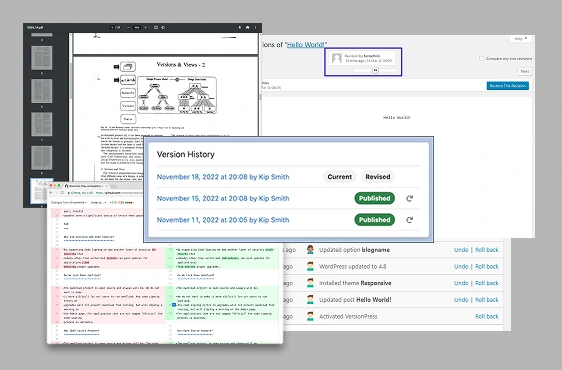
WordPress version history and rollback
GitHub diff comparison patterns
Enterprise CMS publishing workflows
Academic research on content versioning
User Flow Analysis
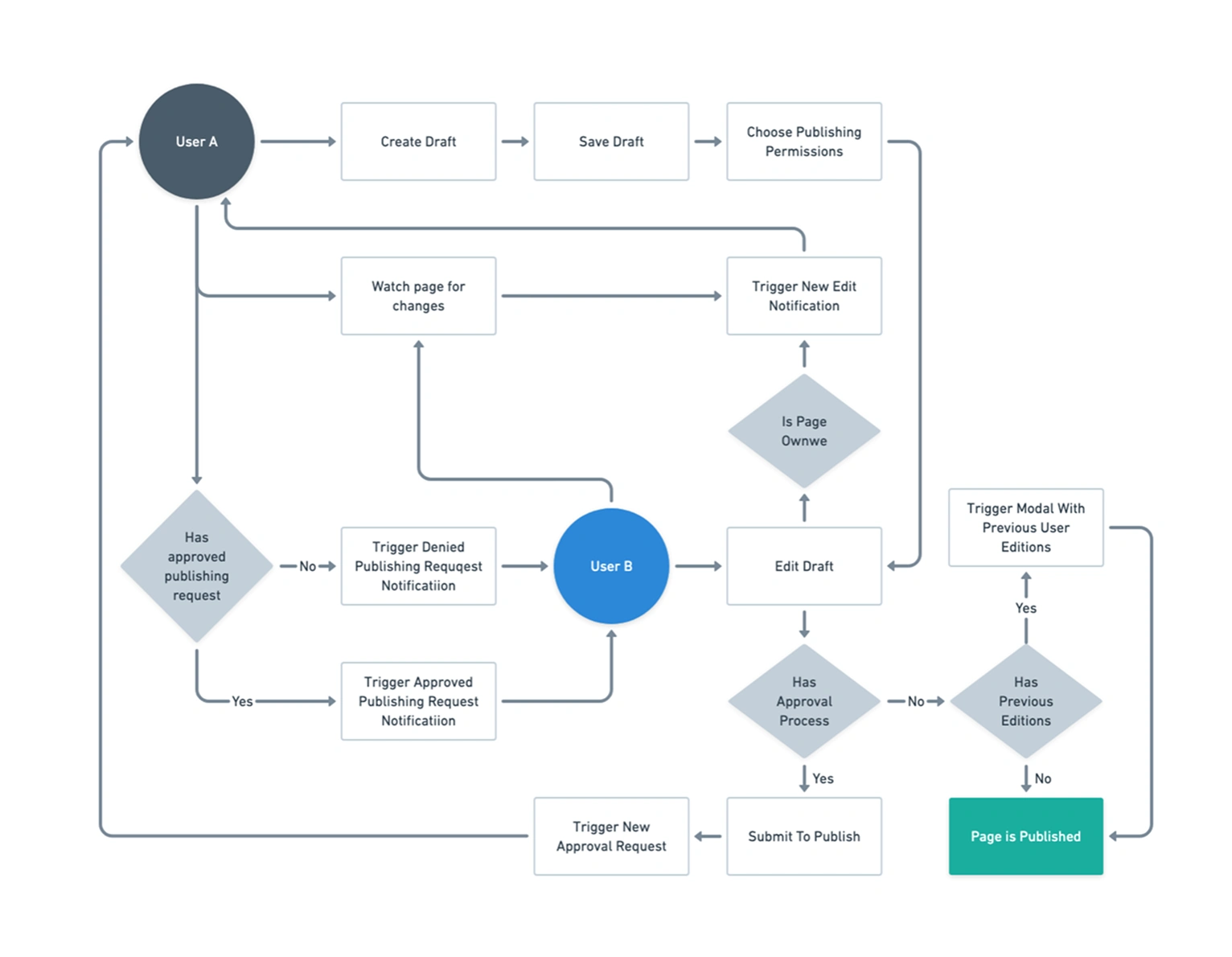
Detailed user flows were created to map the process from draft creation to publication, identifying complex scenarios.
Two User Types: USER A - Approver/Owner and USER B - Editor with different permission levels
Approval Requirements: Scenarios including approval process requirements and page ownership considerations
Publishing Paths: Multiple pathways from draft to published state based on user role and content status
Prototyping and Exploration
Playing around with multiple ideas, I created prototypes in Figma to test key publishing features and iterate with stakeholder feedback.
Future Vision Prototypes:
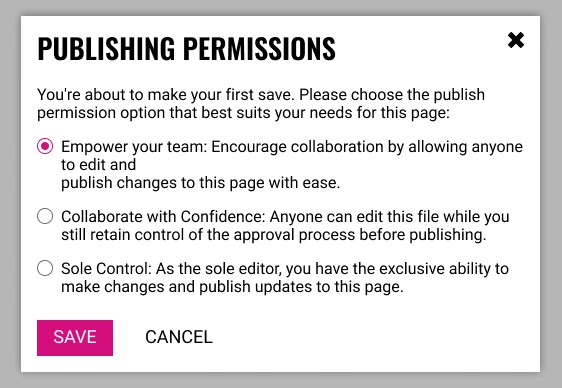
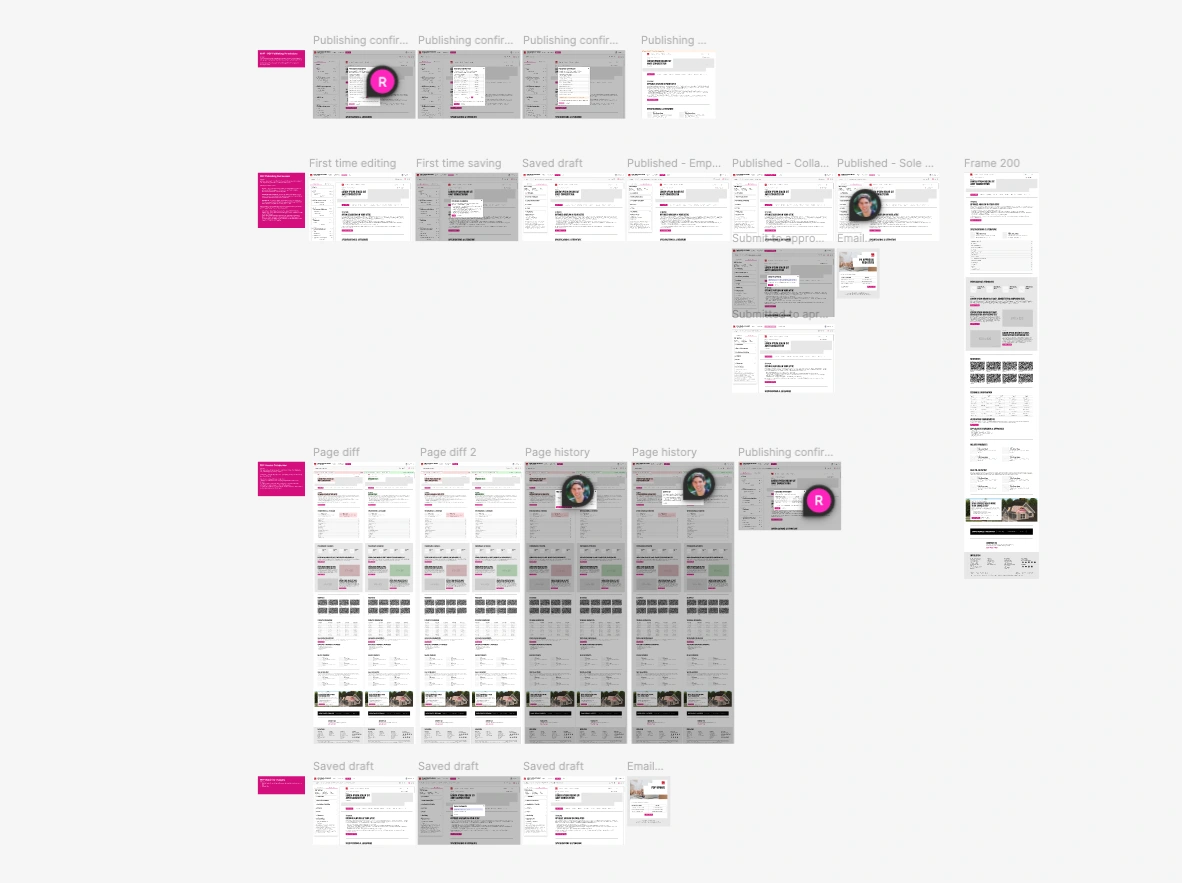
Publishing Permissions - Modal to choose workflow at first save
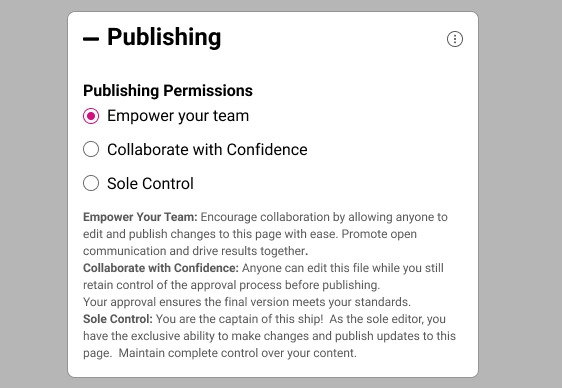
Publishing Settings - Dedicated settings panel for permissions
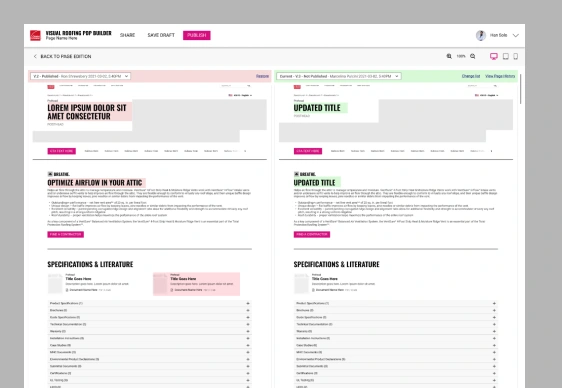
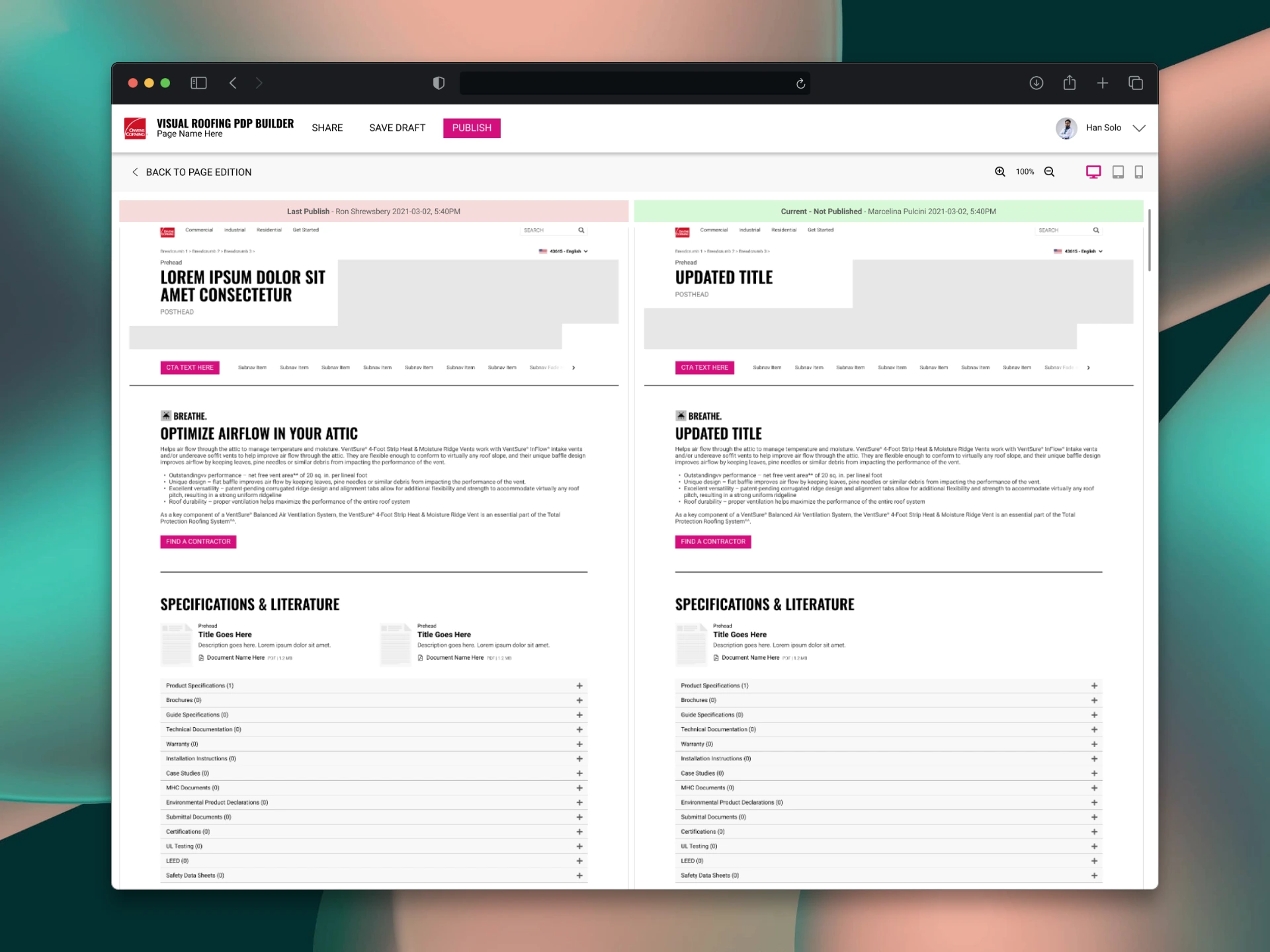
Page Diff - Side-by-side visual comparison of versions
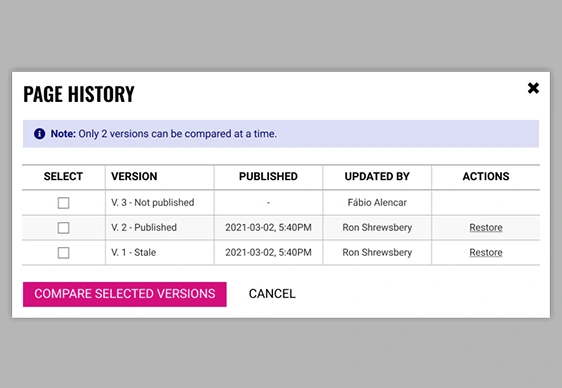
Page History - Retrieve and compare past content versions
Solution Overview
Introduced governance and clarity directly into the publishing flow, preventing accidental deployment of unverified content.
Scoped the MVP to focus on critical publishing functionalities while considering long-term scalability.
Publishing Permissions
Define workflow at first save.
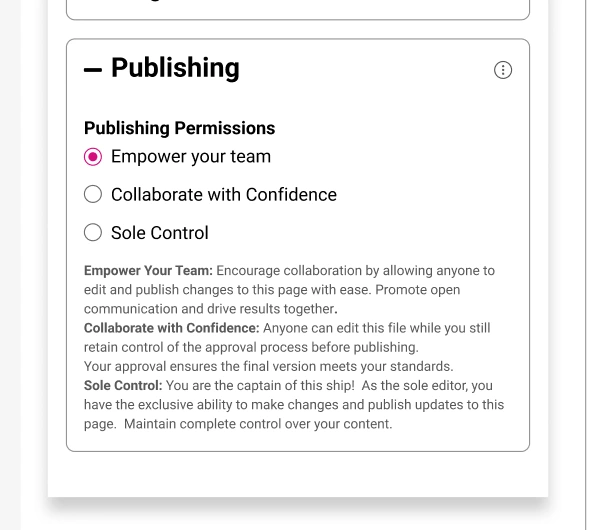
Empower Your Team: Anyone can edit and publish - open collaboration for fast-moving teams
Collaborate with Confidence: Anyone can edit, but owner retains approval control before publishing
Sole Control: Exclusive ability for the owner/sole editor to publish content
Versioning Tools
Clarity through comparison.
Page Diff: Provides side-by-side visual comparison of selected versions or current draft versus live version
Page History Modal: Allows users to retrieve and compare past content versions using a structured, text-based list for accessibility
Confirmation Modal
Force awareness before publishing.
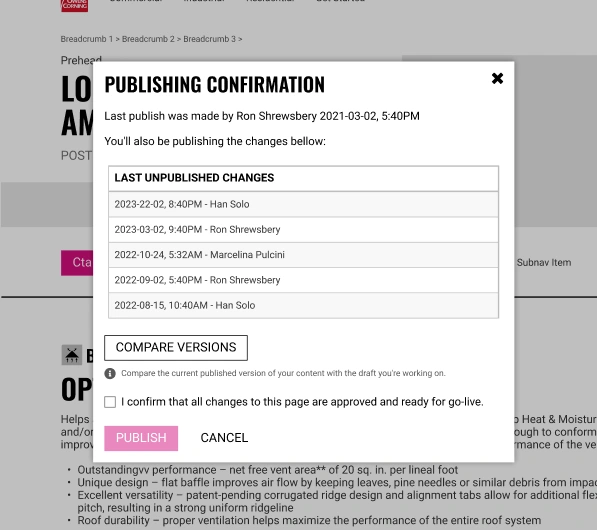
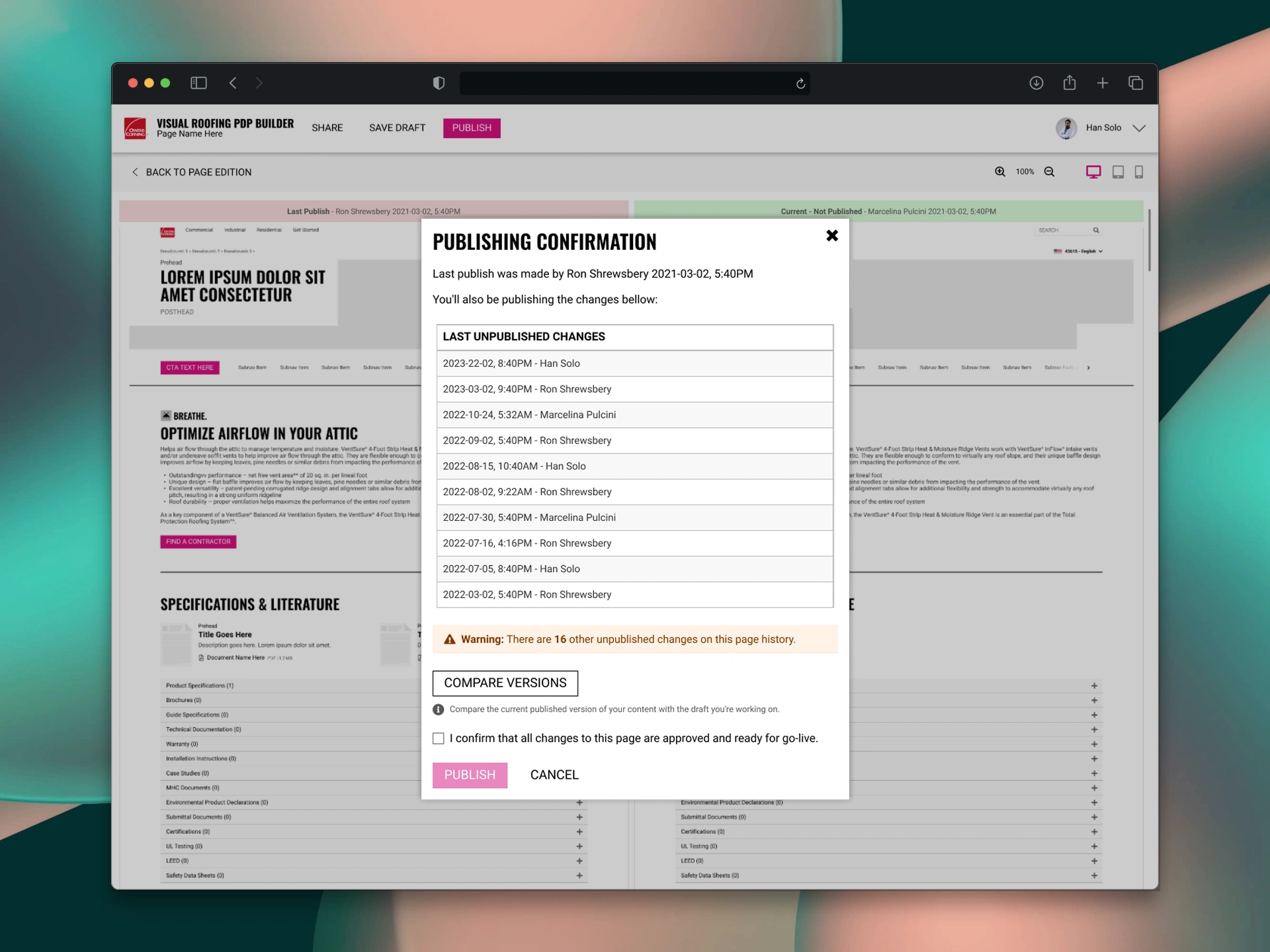
List of Unpublished Changes: Explicitly lists all changes made by all users since last publish
Warning Count: Displays total unpublished changes (e.g., 21 unpublished changes)
Mandatory Confirmation: Requires user to confirm all changes are approved and ready for go-live
First Release (MVP)
When publishing a page with unpublished changes made by other people, the user will be prompted with a modal listing all unpublished changes.
Impact and Key Learnings
Successfully created a long-term vision while narrowing the solution down to deliver impact in a feasible First Release/MVP.
2 Weeks (1 Sprint): Rapid delivery from discovery to first release
3 Permission Models: Flexible governance options for different team needs
100% Change Visibility: Complete transparency before publishing
What Was Challenging?
Finding Reliable Research: Locating trustworthy research and content around CMS versioning topics
Vision vs. Feasibility: Creating a long-term vision while presenting something feasible as an MVP
Balancing User Needs: Balancing interaction needs for distinct types of users
Narrowing Scope: Narrowing the solution down to deliver value on a first release
Content Quality Impact: Designing a solution that improves the quality of published content
Accessibility: Addressing accessibility concerns on visual comparison features
Key Learnings
Complexity of Versioning: Learned about many different aspects of versioning, including status, hierarchy, and variants through benchmarking distinct applications
Feasibility vs. Vision: Balanced long-term vision with practical constraints to deliver meaningful impact in a tight timeline
Focus on Content Quality: Designed a solution that improved OC's content quality by enhancing governance and transparency over published state
Deep Dive on CMS Governance: Benchmarking enterprise CMS practices on versioning and publishing governance provided critical strategic insight for a scalable solution
Testimonial
Excellent at breaking down complex UX challenges. Fabio has supported my UX team at Owens Corning for several years, consistently delivering thoughtful, reliable work. He's excellent at breaking down complex UX challenges, exploring multiple approaches, and presenting well-considered UI solutions.
Anthony Fontana - Leading UX and Digital Transformation at Owens Corning
Like this project
Posted Mar 31, 2026
Designed a publishing workflow that eliminated unverified go-lives, achieving 100% change visibility for Owens Corning's CMS in two sprints.
Likes
0
Views
3