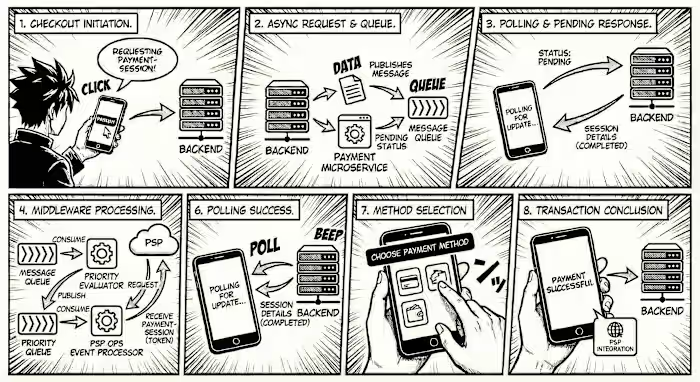
Development and Launch of MishiPay Self-checkout Kiosks

Aishwary Dhare


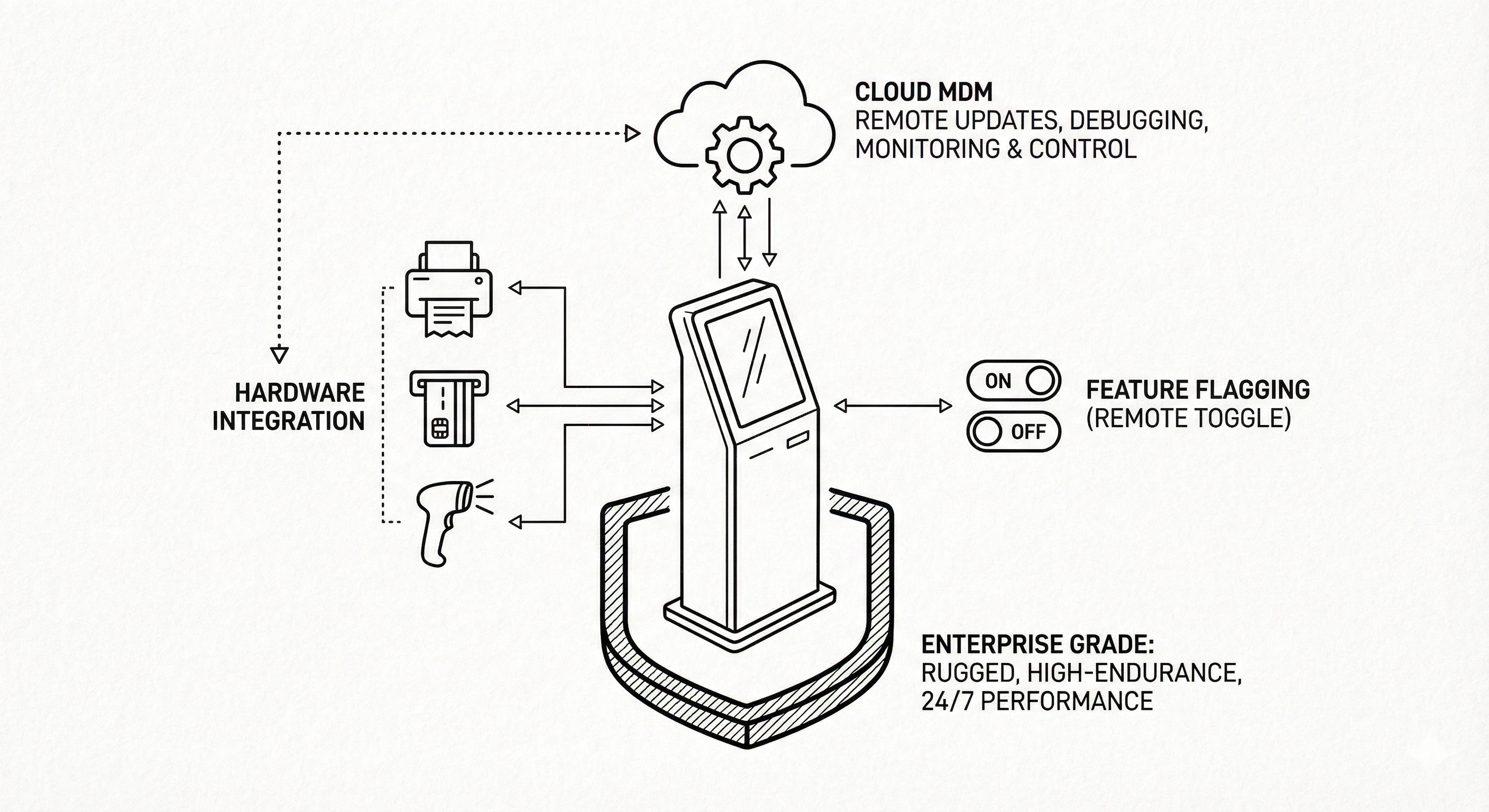
MishiPay Self-checkout Kiosk
Development of a new product line from greenfield to production
Background
During my tenure as Director of Engineering and Engineering Manager at MishiPay, we faced a pivotal strategic decision in late 2021. At the time, MishiPay had a strong commitment toward the "Scan, Pay, Leave" model via Progressive Web Applications (PWA) because it offered a frictionless "Bring Your Own Device" (BYOD) experience for both retailers and shoppers. While the social distancing requirements of the COVID-19 pandemic significantly boosted digital adoption , we realized that adoption alone wasn't enough. Shoppers typically enter a store with a specific purpose, and even aggressive in-store marketing often fails to distract them from their mission. We observed that because of deeply ingrained habits, shoppers only seek out a checkout solution once they have already decided to finish their journey—at which point they instinctively look for a physical counter. To meet shoppers where they were, MishiPay decided to build its own line of Self-Checkout Kiosks.
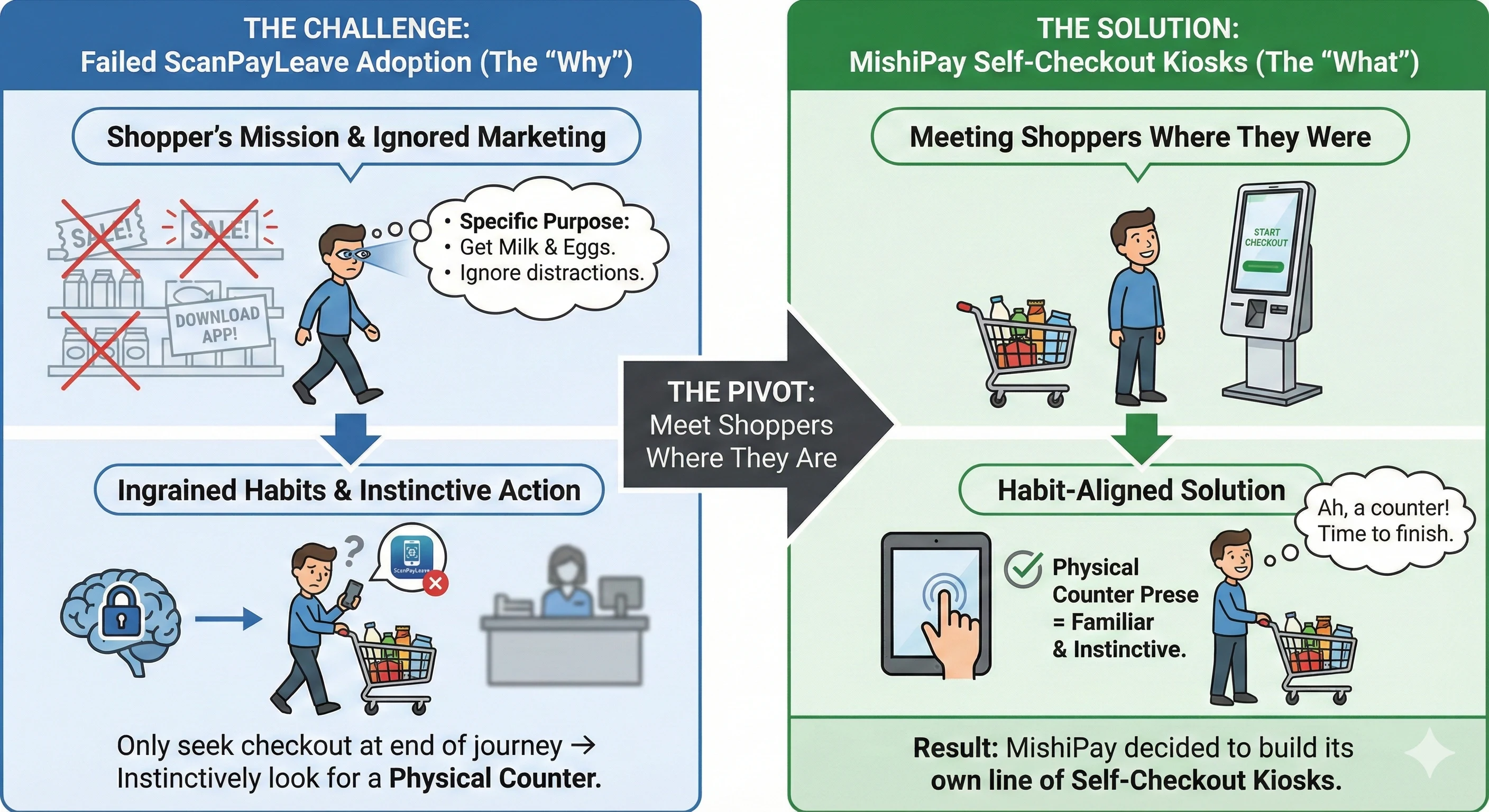
The first steps towards the "Total Store" architecture shift of MishiPay
Scoping
This represented a completely new product line for MishiPay, necessitating a shift toward a "Total Store" architecture. The primary engineering challenges included:
Mobile Device Management (MDM): Integrating with an MDM to maintain control over the global fleet of Android devices along with capability for over-the-air (OTA) updates, remote troubleshooting and monitoring
Hardware Integration: Developing the logic for peripheral devices such as thermal printers, payment terminals and barcode readers
App Development: Building a robust Android application from scratch designed for endurance & high-performance required in retail to run continuously for the entire trade hours of a day
Feature Control: Implementing backend feature flags to manage capabilities dynamically across different clients
Payment Integration: Facilitating seamless connections with Adyen and Stripe POS terminals
Dual-Mode UI: Designing a new interface featuring both a customer-facing "Shopping Mode" and an employee "Admin Mode"
Following an agile framework, we set an ambitious timeline to release version 1.0 (v1) within just six weeks. The design team meticulously prepared the UI/UX journey to match the scope.
Development
Development commenced with a tightly synchronized Gantt chart to ensure backend microservices and APIs were fully operational by the time the frontend team (with a headstart) completed the design and UI work. To ensure there were no technical blockers, I personally coded the initial MVVM design pattern for the Android App and the Proof of Concept (PoC) for hardware integrations, including printers, payment terminals, and barcode scanners.
We designed and documented new microservices specifically to handle device-level communication, while identifying and mapping necessary changes within existing services.
JIRA EPICs were created for the v1 release, with detailed stories and individual tickets assigned to the five-member pod. Daily catch-up calls were instituted to ensure developers received immediate support if they were blocked or had technical queries, maintaining our high code velocity.
QA
The QA team was looped in from the initial scoping phase to ensure a comprehensive understanding of the product’s business logic and technical "in-n-outs".
They developed thorough test cases and researched specialized tools to automate manual testing processes. Adhering to our agile methods, a new release was passed to QA every 2 to 3 days.
This allowed the team to verify sequential updates, test resolved bugs, and identify new regressions immediately. Both the QA and development teams were encouraged to share in-depth insights regarding product usability; consequently, many of our most successful features were actually coined and added to the scope by the engineering team themselves.
Release
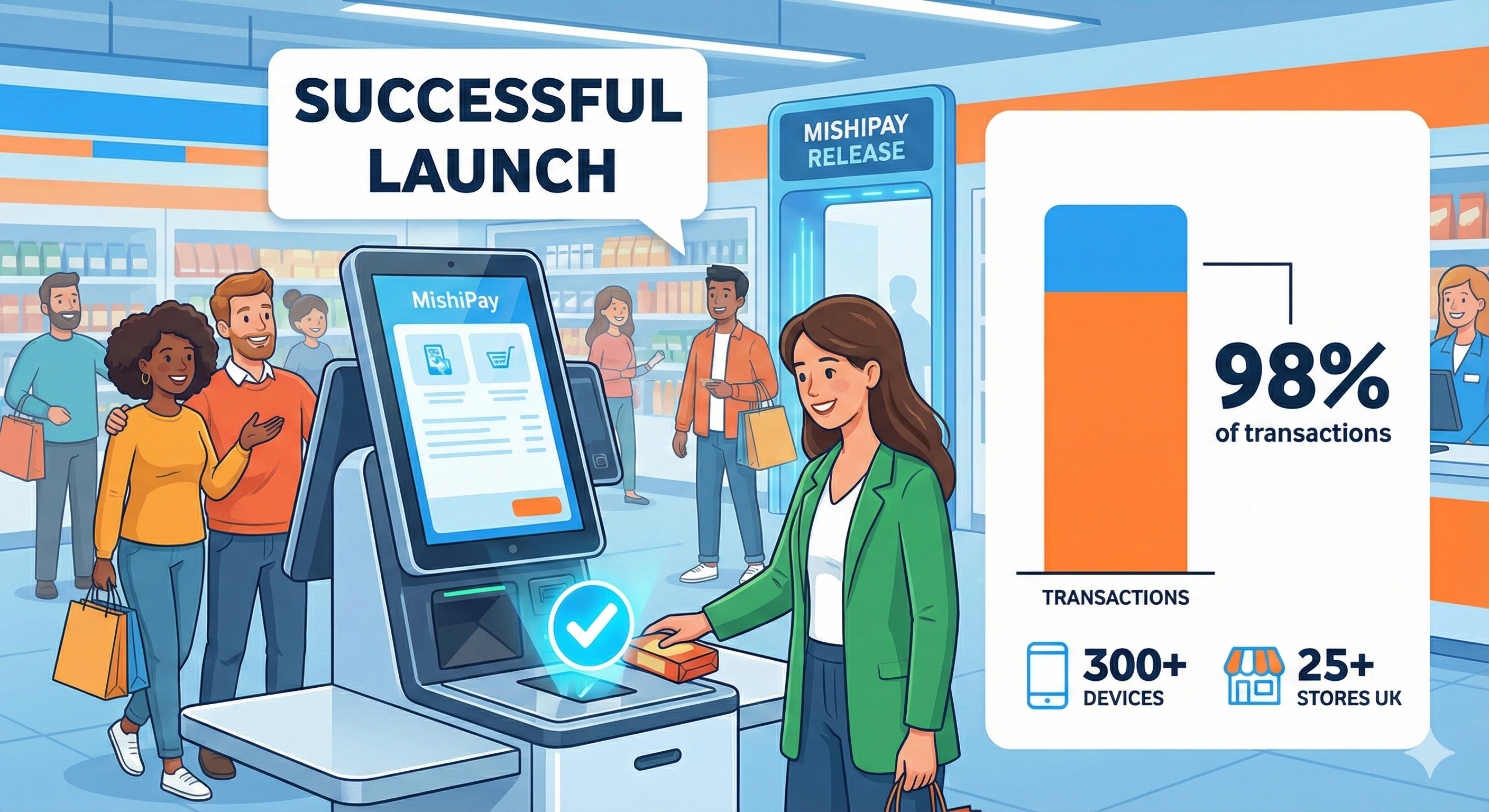
With early adopters already identified, the rollout began with a single pilot store. Eventually expanded into a massive deployment covering 25+ stores with more than 300 devices spread across the UK. The launch of MishiPay Kiosk was a groundbreaking success, the new Kiosk product line eventually growing to contribute 98% of all transactional revenue.
The Upgrades
Following the initial launch, the Kiosk received several critical technical upgrades:
Hardware Agnostic: We re-engineered the application to be hardware agnostic, allowing the same Android app to run on devices from multiple vendors, supporting various screen sizes and both vertical and horizontal orientations.
Remote Debugging: We implemented sophisticated over-the-air debugging and logging capabilities to monitor device health in real-time.
CashDesk Integration: We integrated the Kiosk with "MishiPay CashDesk" solutions, incorporating employee audit logging and contributing to 20% of transactional revenue.
RFID Box Integration: To enable high-volume efficiency, we integrated RFID "drop and go" capabilities. In deployments like the MLSE Scotiabank Arena, where thousands of shoppers surge into stores during ice-hockey game break, this innovation slashed transaction times from 90 seconds to under 20 seconds.
If you are interested in exploring how high-performance engineering and "Phygital" retail solutions can transform your business, please reach out—I would love to discuss how we can work together
Like this project
Posted Jan 7, 2026
Developed MishiPay Self-checkout Kiosks from scratch, enhancing retail checkout solutions.
Likes
0
Views
12
Timeline
Nov 1, 2021 - Jun 30, 2022
Clients
MishiPay