Optimizing a Fashion Annotation Workflow at Amazon

Inbar Fenichel Liel
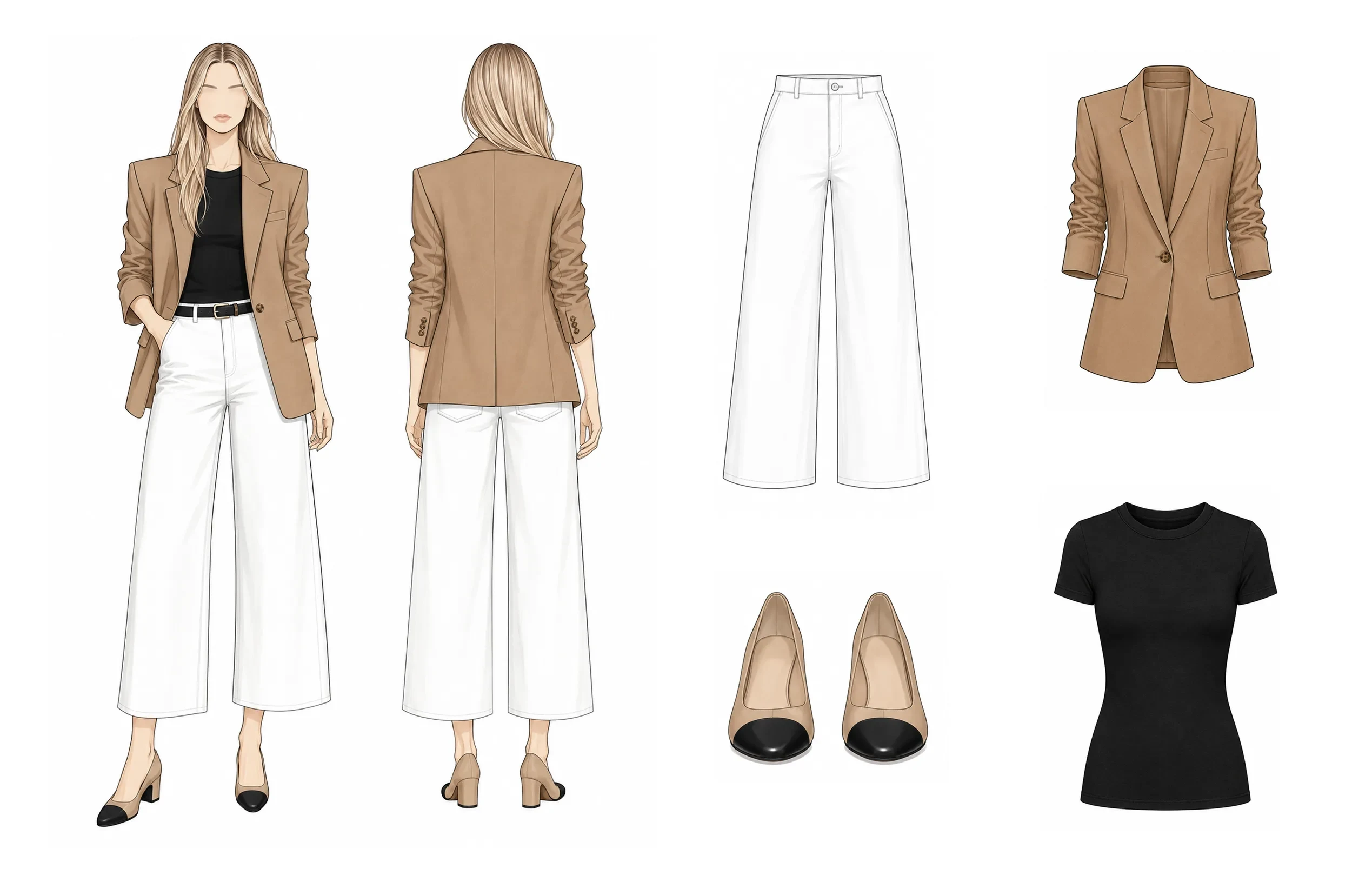
Optimizing a Fashion Annotation Workflow at Amazon
While at Amazon, I worked on a tool used by fashion specialists to create outfit data for a machine learning system.
After working with the first version of the tool, I identified several ways to make the workflow faster and easier for the team.
Because this project is confidential, the original interface and internal details are not shown here. The visuals on this page are simplified illustrations created to explain the interface and my design decisions.
Role: UX/UI designer and fashion specialist
Platform: Internal web tool
Collaboration: Product manager, operations program manager, software engineer, and algorithm team
Scope: Workflow analysis, UX improvements, UI design, testing coordination, and development collaboration
The Problem
Fashion specialists used the tool to create and annotate large numbers of outfits.
The original tool required a lot of browsing and scrolling. Important information was not always visible, and selecting items took more steps than necessary.
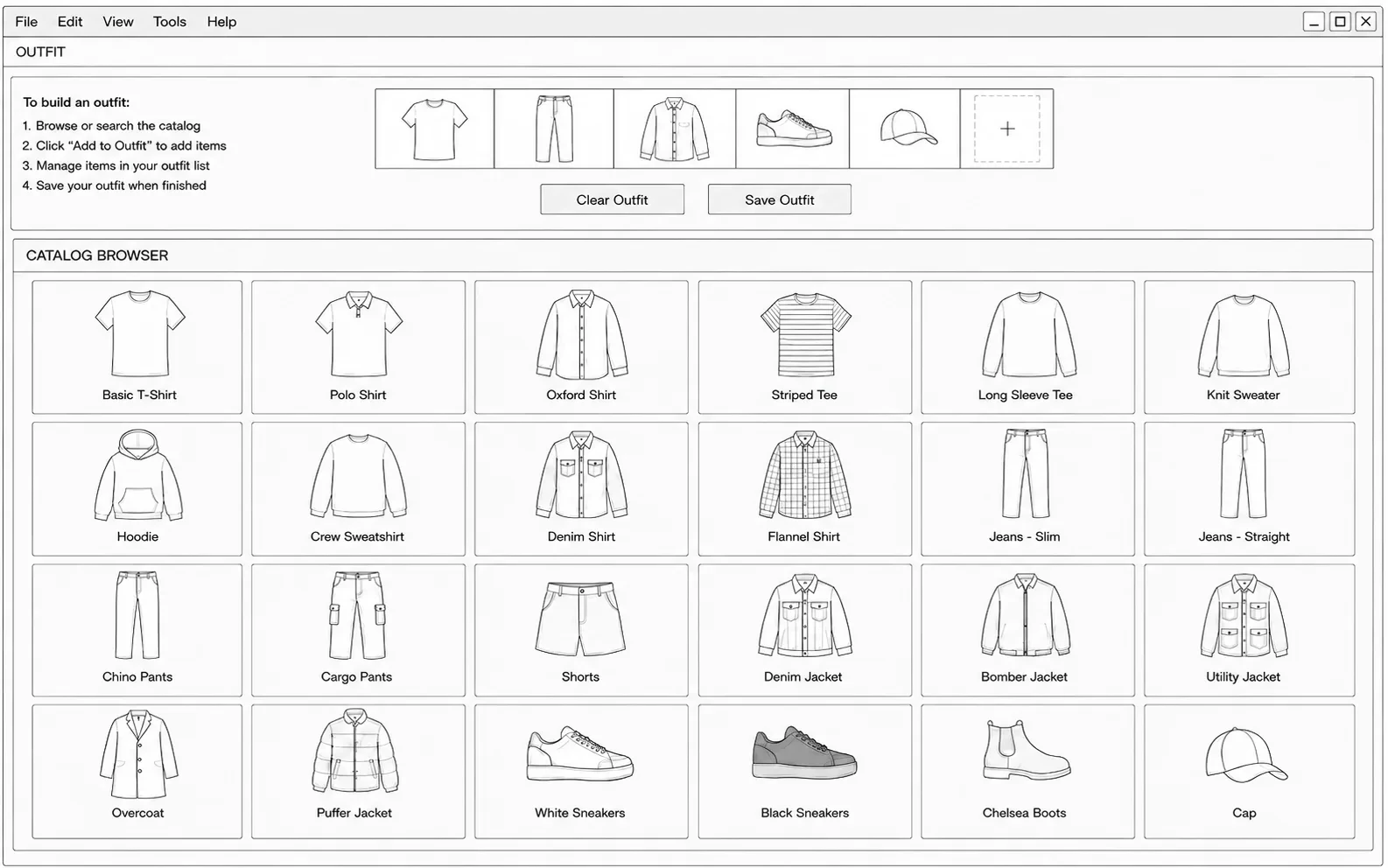
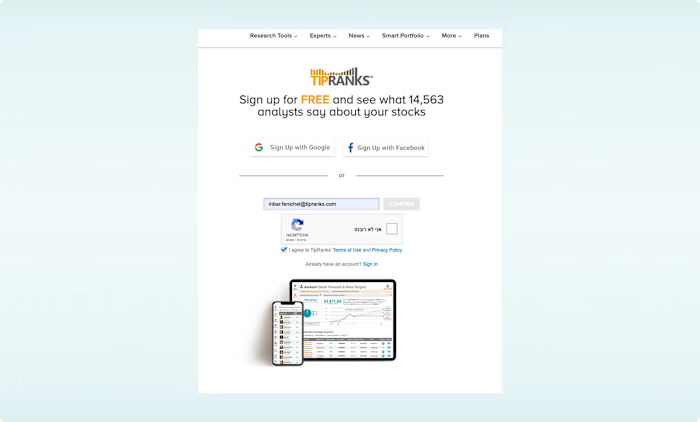
Old interface: Conceptual illustration, not the actual product interface.
Key Improvements
The following changes were designed to reduce unnecessary steps and support a faster annotation workflow.
I met with Engineering to understand the technical requirements and limitations before creating the new experience.
Easier Browsing
I organized the product catalog into categories and subcategories to help users find relevant items more quickly.
Keeping the Outfit in View
I designed the interface so the outfit being created stayed visible at the top of the page while the user browsed the catalog. This reduced the need to scroll back and forth to check which items had already been selected.
Faster Item Selection
I added quicker ways to work with products. Users could open item details directly from the catalog and drag items into the outfit they were building.
Design, Development, and Testing
I reviewed the designs with Product, Operations, and Engineering and adjusted them based on technical constraints.
Before the updated tool was rolled out to the full team, I coordinated testing with a small group of fashion specialists. I collected feedback and checked for usability or workflow issues that could slow down their work.
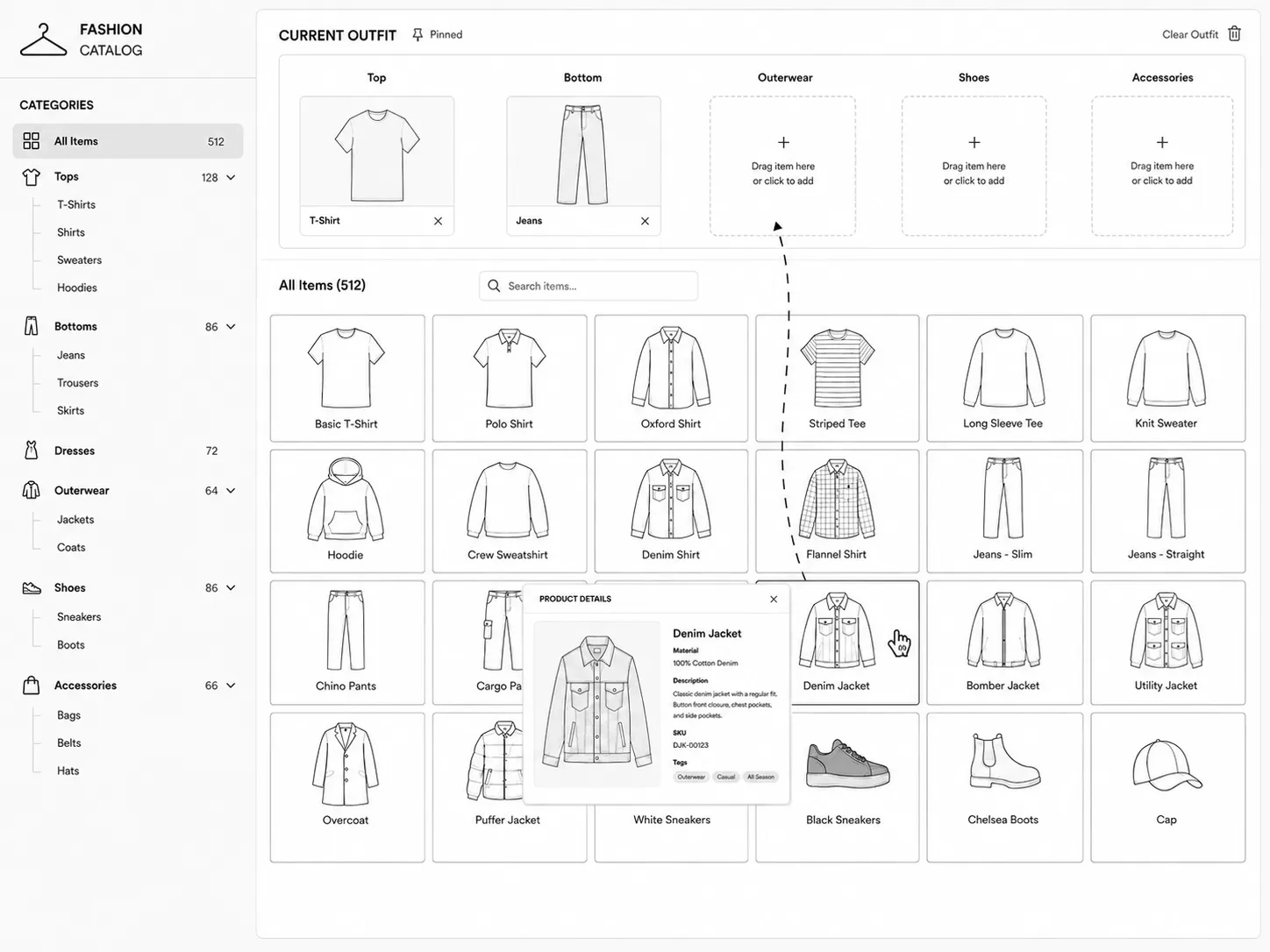
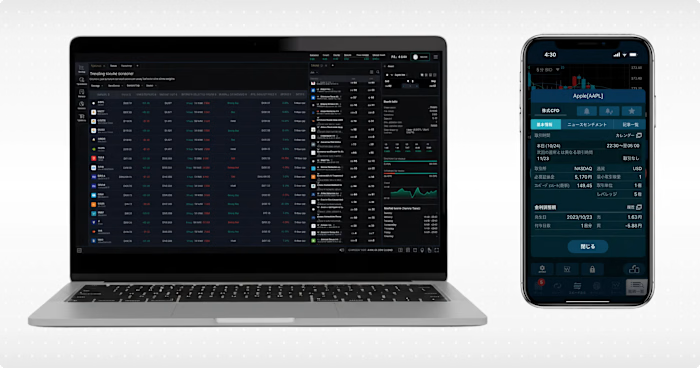
Redesigned interface: Conceptual illustration, not the actual product interface.
Outcome
After several months of use, the redesigned workflow led to a 20% increase in team efficiency.
This project taught me how to turn firsthand user experience into product improvements, work within technical constraints, test with real users, and carry a solution from problem identification through implementation.
55
Fashion specialists
20%
Increase in team efficiency
2 teams
Tel Aviv and Seattle
2019
Like this project
Posted Oct 8, 2026
Redesigned an internal Amazon fashion annotation tool to reduce steps and keep the outfit in view, increasing team efficiency by 20%.
Likes
0
Views
0