Designing The Boardroom Magazine Editorial

Maryam Shakeel


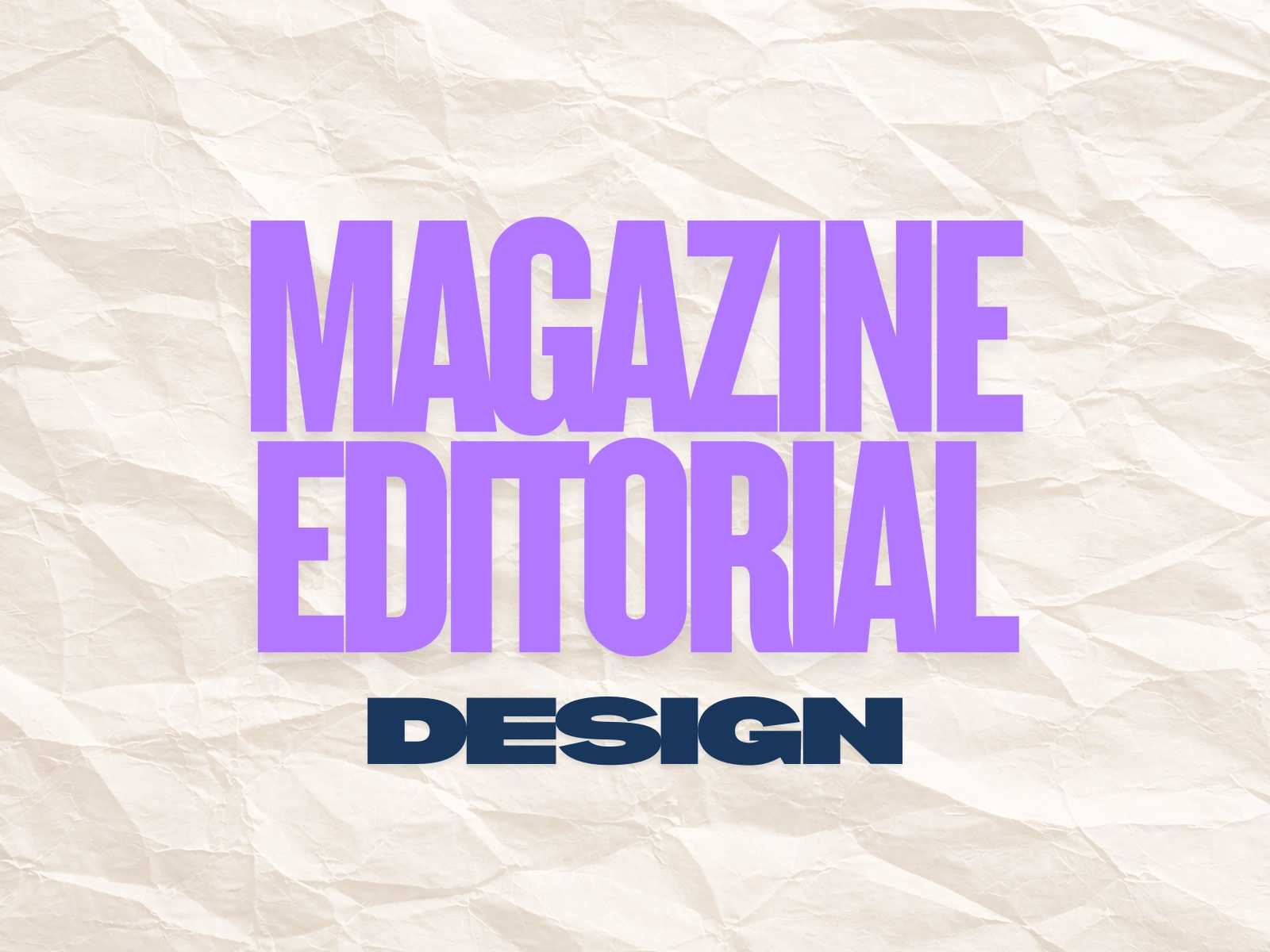
The Boardroom Magazine
Editorial Design Case Study
Project Overview
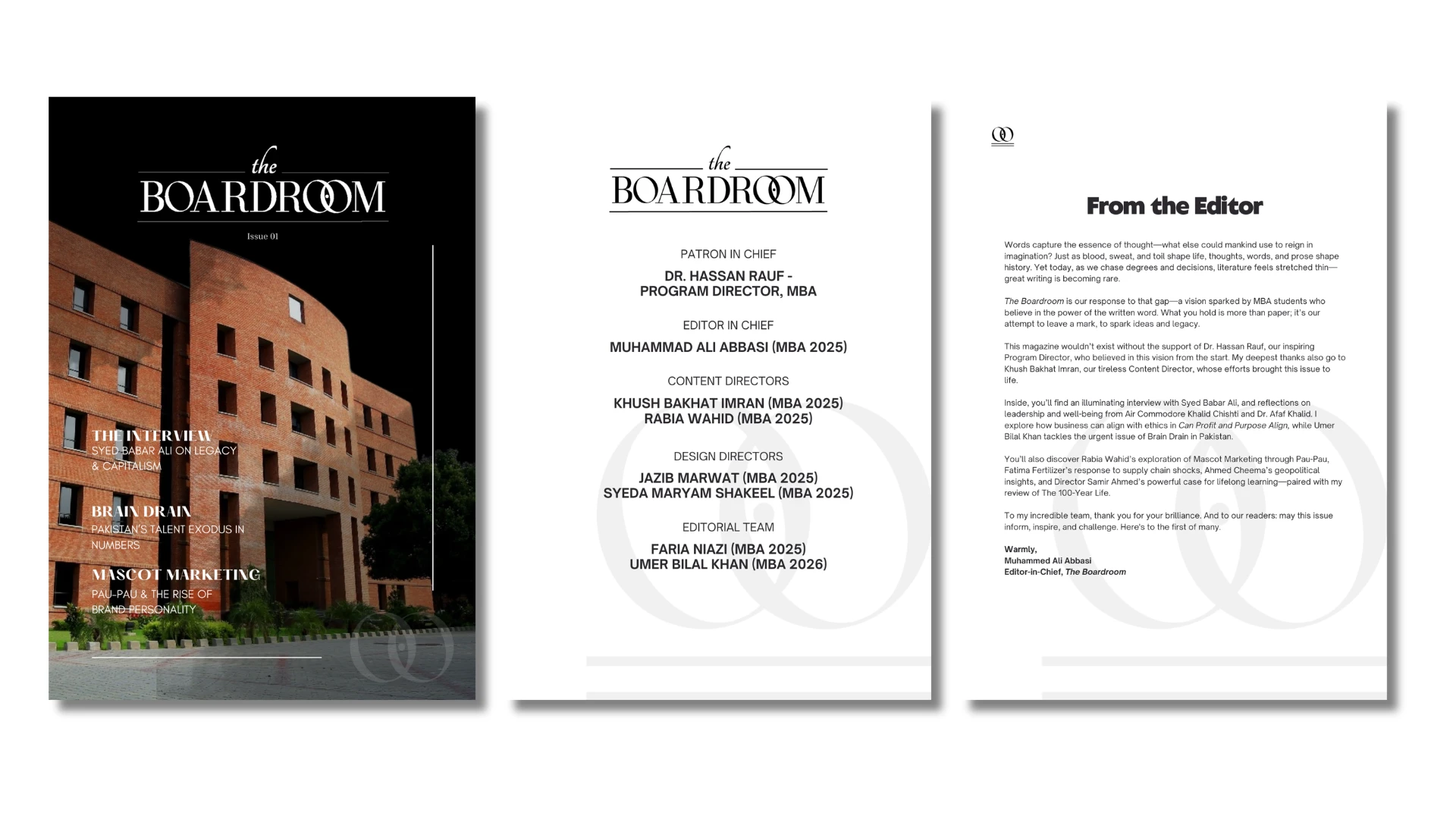
The Boardroom is the inaugural issue of a student-led MBA business magazine that brings together perspectives from students, faculty, and industry leaders. The publication explores themes across business, leadership, innovation, and global affairs.
The magazine includes interviews, analytical essays, case studies, and leadership insights from contributors within the LUMS ecosystem.
As Director of Design, I was responsible for designing the visual structure of the publication and transforming written content into a cohesive editorial experience. The goal was to create a magazine that felt professional, structured, and publication-quality, while maintaining readability across long-form articles.
The Design Challenge
Designing a magazine is fundamentally different from designing slides or digital posts.
The challenge was to convert large volumes of text-heavy content into a reading experience that is visually structured and engaging.
Key challenges included:
Organizing long-form essays into clear editorial layouts
Creating a typographic hierarchy that guides readers through articles
Maintaining visual consistency across different types of content
Designing a publication that feels like a real magazine, not just a compiled document
The design had to balance visual sophistication with clarity, allowing the writing to remain the focal point while improving readability.
Concept & Editorial Direction
The visual direction of the magazine was inspired by modern business publications.
The objective was to create a design language that felt:
Structured
Clean
Editorial
Professional
Rather than using heavy visual decoration, the design relies on typography, whitespace, and layout structure to guide the reader.
This approach ensures the magazine reflects the intellectual tone of the MBA program while remaining accessible and engaging.
Building the Editorial System
To ensure consistency across the magazine, a repeatable editorial design system was developed.
This included:
A defined grid system for page layouts
Consistent margin and spacing rules
Structured placement for article titles and author credits
Clear section transitions between themes
Because the magazine contains different types of content—interviews, essays, and case studies—this system allowed the design to remain cohesive even as the content varied.
Typography System
Typography plays the central role in editorial design.
The goal was to create a clear hierarchy that makes long-form reading comfortable.
The system includes:
Headline Typography
Used to introduce articles and establish strong visual entry points.
Section Titles
Used to separate thematic sections such as:
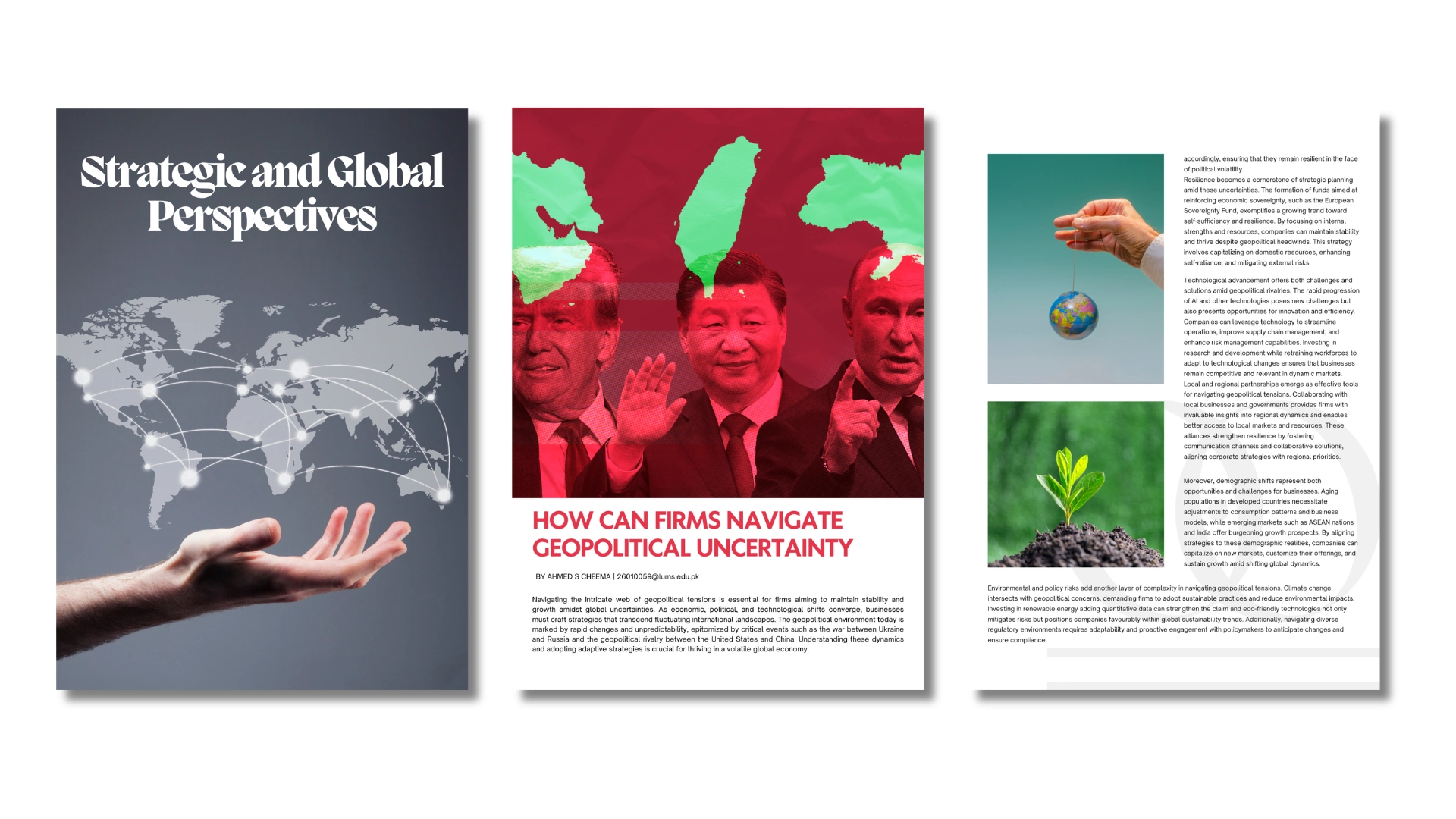
Strategic and Global Perspectives
Innovation & Case Studies
Leadership and Personal Development
Lifelong Learning
Body Text
Designed for long-form readability with consistent spacing and alignment.
Pull Quotes and Highlights
Used selectively to emphasize key insights and improve scanning.
This typographic structure helps readers quickly understand the importance and relationship between different elements on the page.
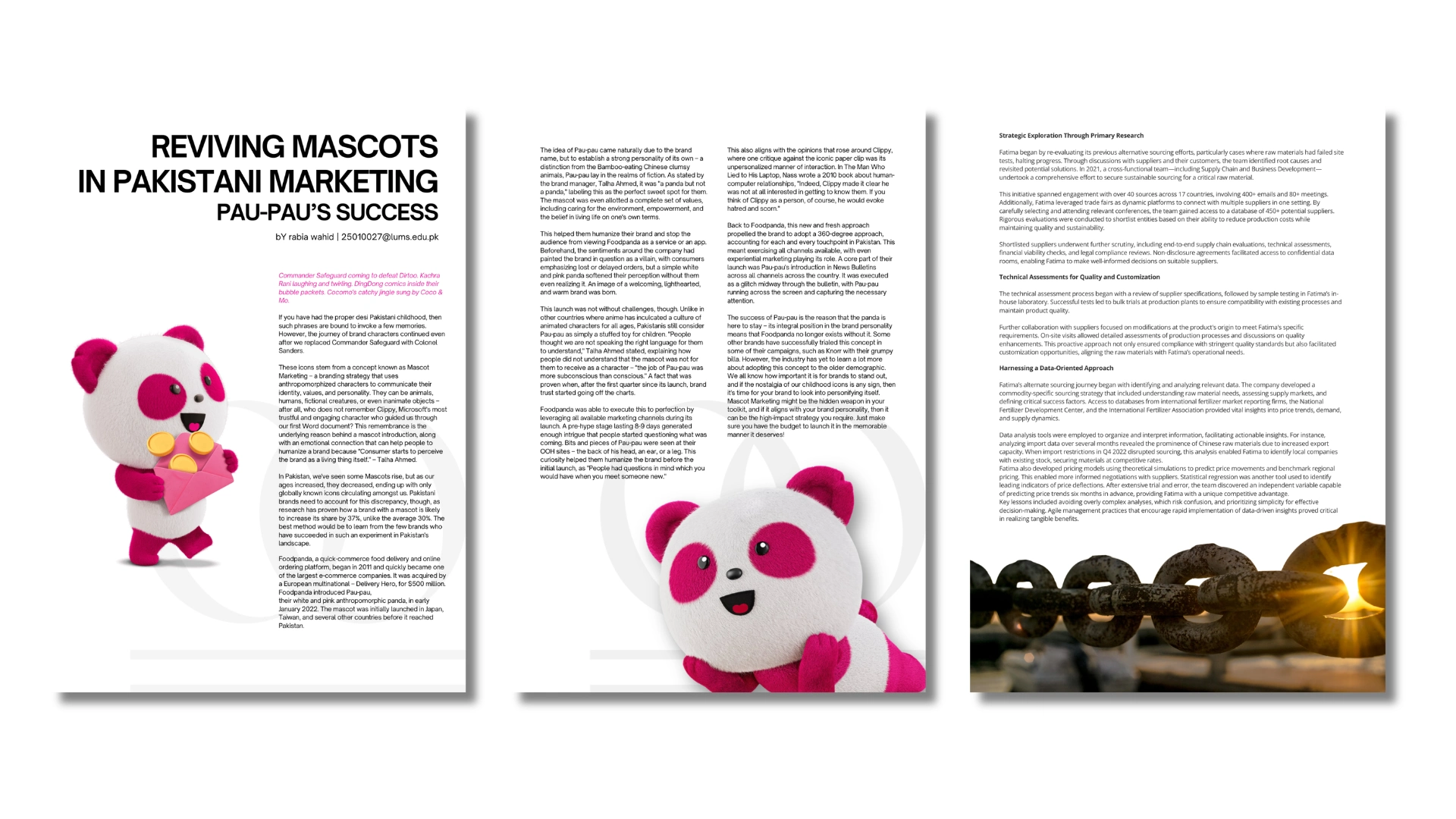
Layout & Grid Structure
A strong grid system forms the foundation of the magazine layout.
The layout emphasizes:
Consistent margins
Balanced text blocks
Clear article openings
Visual breathing space between sections
This structure ensures that the magazine maintains visual rhythm across spreads, allowing readers to move naturally from one article to the next.
The design avoids clutter and instead uses controlled whitespace and alignment to maintain clarity.
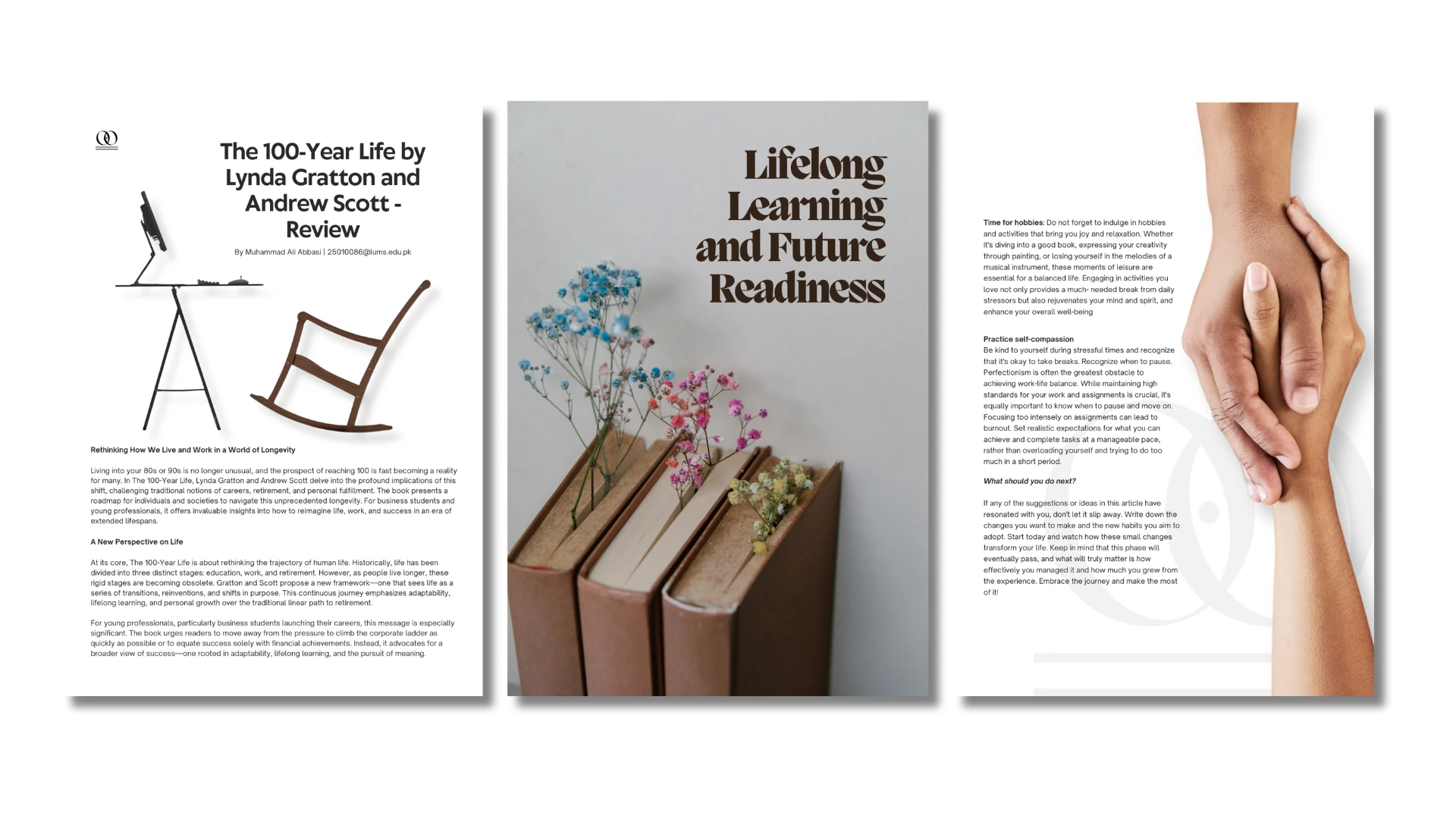
Visual Rhythm & Storytelling
Magazines rely heavily on pacing.
To avoid reader fatigue, the design alternates between:
Text-heavy analytical articles
Interview formats
Section headers and transitions
For example, the issue includes:
A leadership interview with Syed Babar Ali
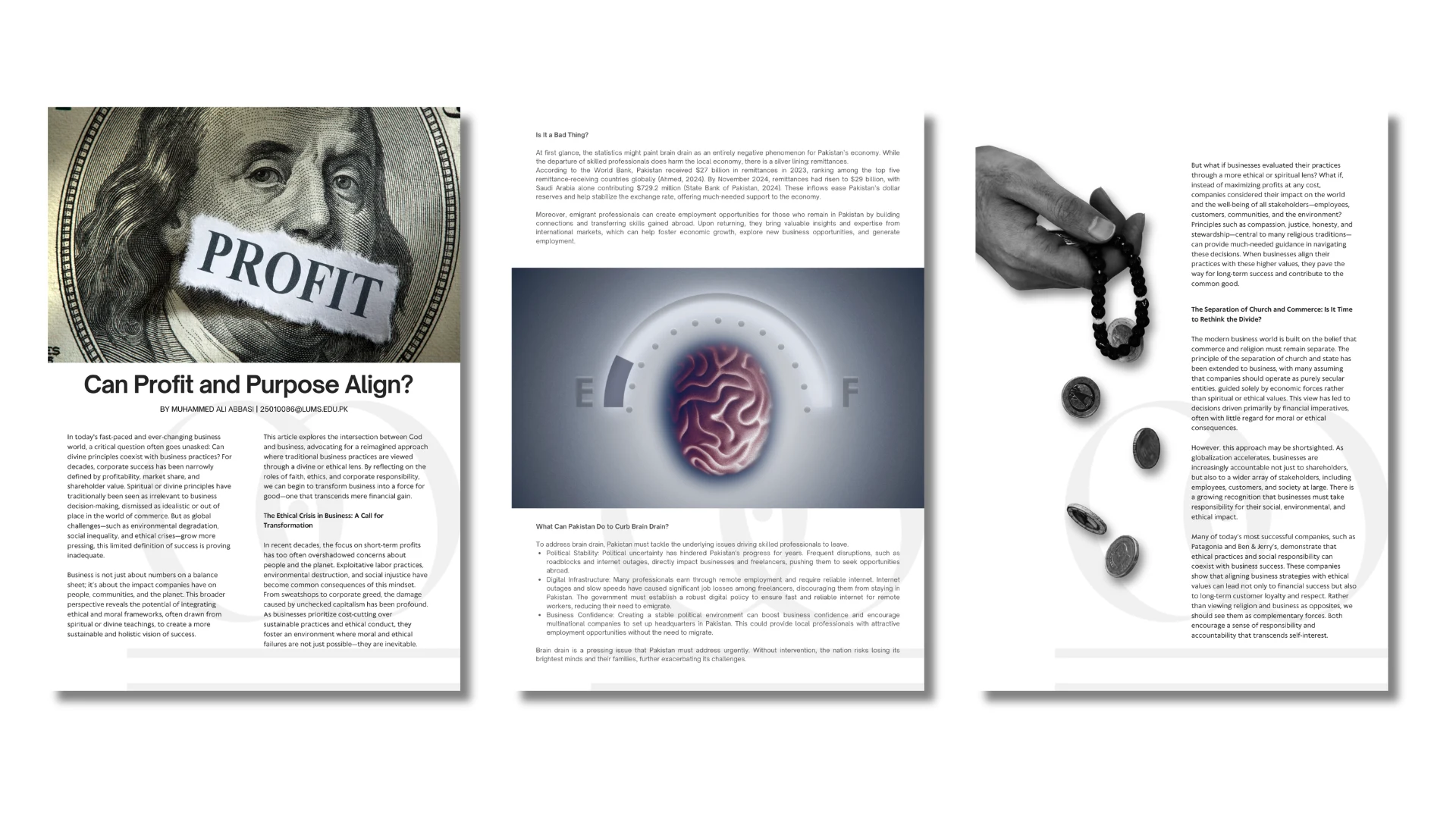
Analytical essays on topics like geopolitical uncertainty and brain drain
Case studies such as Foodpanda’s mascot marketing strategy
Reflections on leadership, mental health, and lifelong learning The Boardroom Magazine
By structuring the magazine around themes, the publication maintains a clear narrative progression from global business issues to personal leadership insights.
Transforming Raw Content into Editorial Layout
One of the key roles of editorial design is turning dense writing into structured reading.
For example, long essays were broken down into:
Clear article openings
Author attribution
Structured paragraphs
Subsections and headings
This allows readers to navigate complex ideas more easily and improves the overall reading flow.
My Role
Director of Design
Responsibilities included:
Designing the full magazine layout
Establishing the editorial visual system
Creating the typographic hierarchy
Structuring article layouts
Ensuring visual consistency across the publication
The work involved translating a wide range of written contributions into a cohesive and visually structured magazine experience.
Outcome
The final publication successfully transformed a collection of essays, interviews, and articles into a cohesive editorial product.
The magazine presents the intellectual work of MBA students and faculty in a format that feels professional, polished, and readable, establishing a strong foundation for future issues.
Like this project
Posted Mar 11, 2026
Designed the inaugural issue of The Boardroom MBA magazine, developing the layout and typography system for a cohesive editorial publication.


![Social Media Visuals [Portfolio Piece]](https://media.contra.com/image/upload/c_fill,w_700/zhplx8ghv1bgweugybev.avif)
![Social Media Videos/Reels [Portfolio Pieces]](https://media.contra.com/image/upload/c_fill,w_700/agx4i2fxdlqgqmbhca8j.avif)
![Social Media Analytics [Portfolio Pieces]](https://media.contra.com/image/upload/c_fill,w_700/rz015vlt1oupdbitxhch.avif)
![Branding & Logo Design Projects [Portfolio Pieces]](https://media.contra.com/image/upload/c_fill,w_700/zfueev5tys8uo33oqrih.avif)