FuelSplit Rideshare App Design

Fortune Iselen


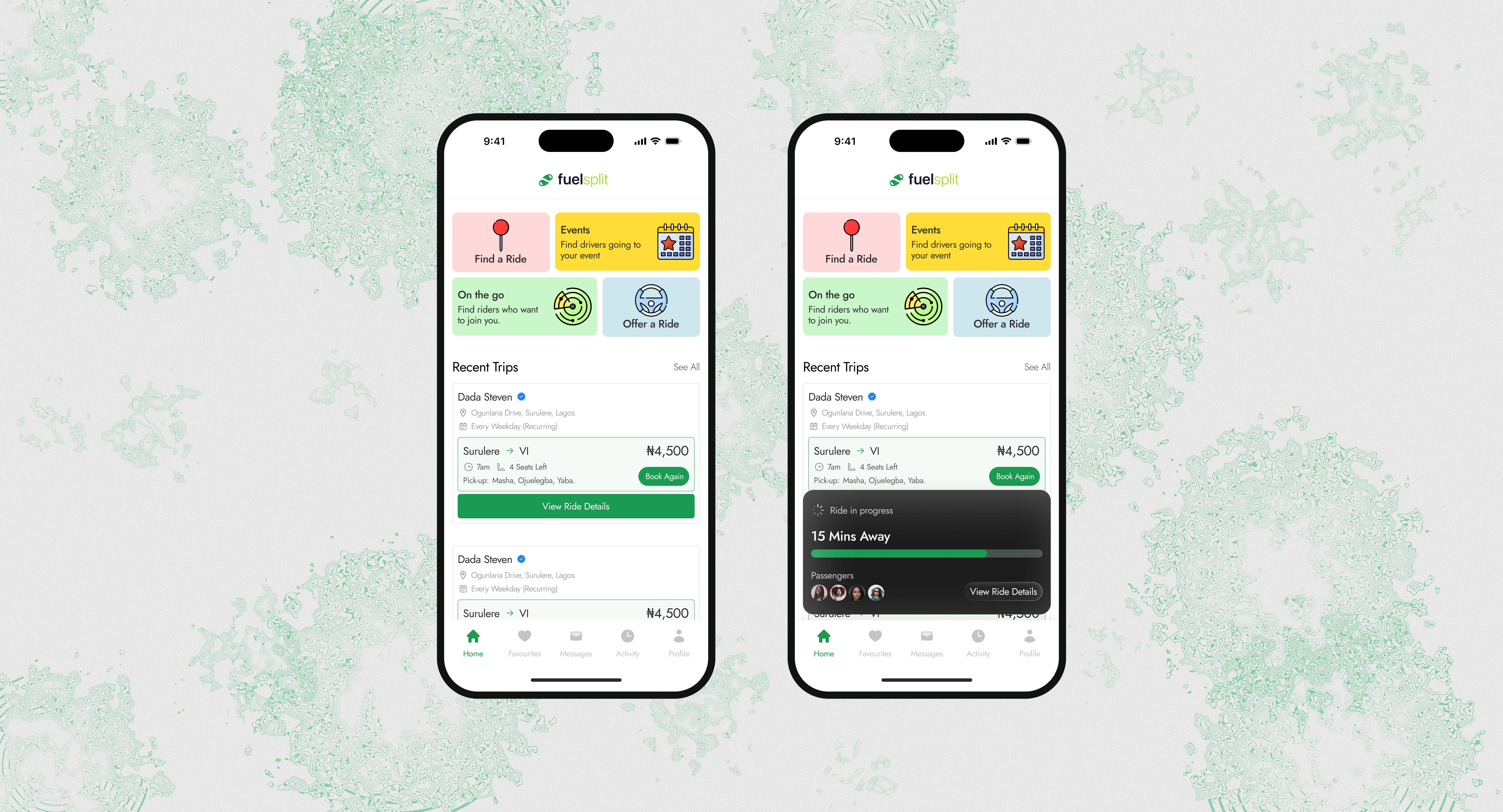
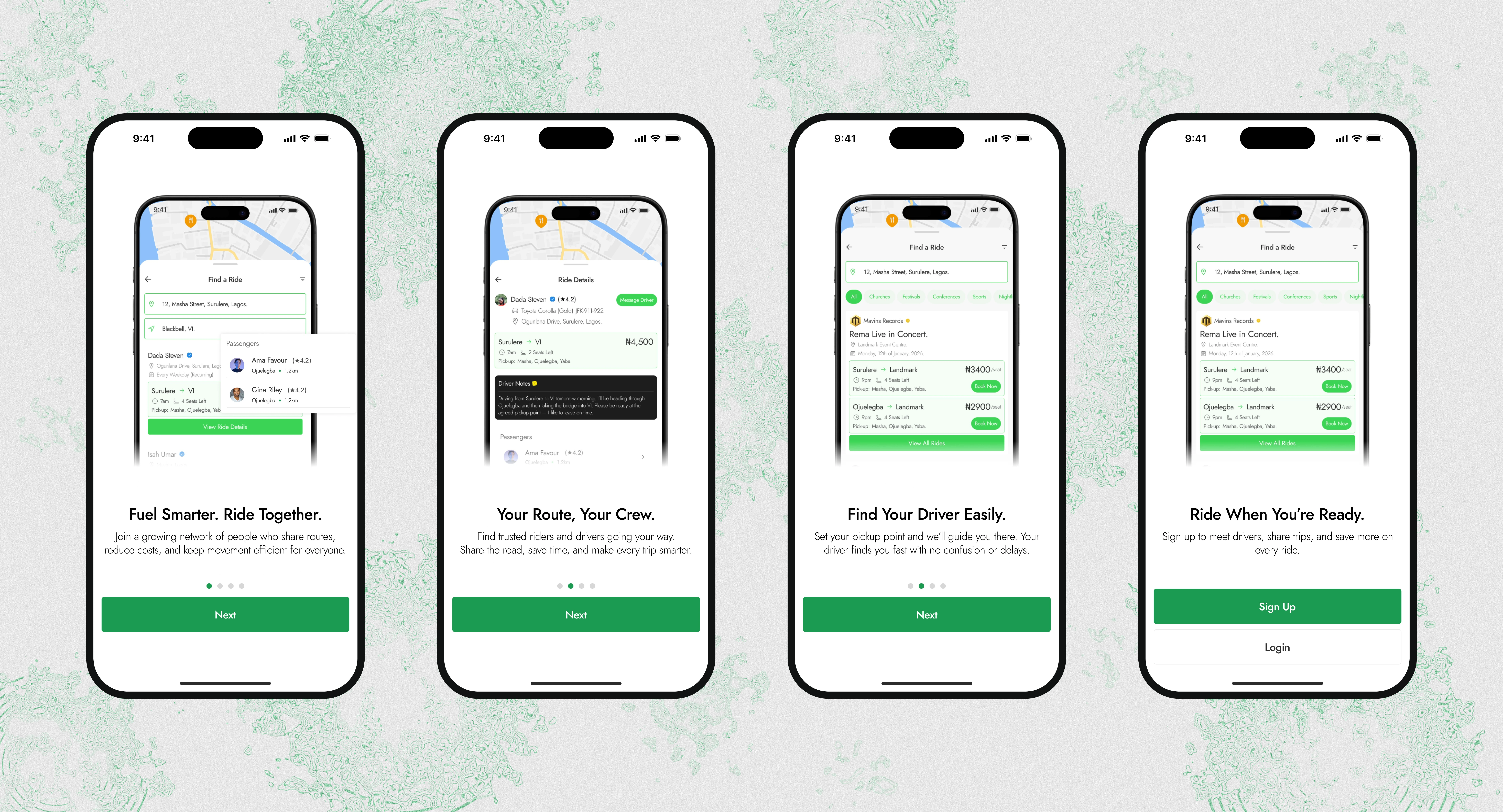
Rideshare app that matches drivers and passengers going the same route, whether it's a daily commute or a one-off trip to an event, and splits the fuel cost between everyone in the car.
The Beginning
The idea for FuelSplit emerged during one of our team conversations about the transportation crisis in Lagos, Nigeria.
The Problem
The problem was already visible around us. Fuel prices kept rising while salaries remained largely stagnant. Both drivers and passengers were spending more of their income on transportation, making daily movement increasingly difficult and expensive.
To better understand the problem, I reviewed academic research on public transportation in Lagos. The findings showed that transportation costs are not just a daily expense but a significant financial burden for many residents. One study found that 43.3% of respondents spent about 10% of their monthly income on transportation, while many others spent even more.
Unlike many European countries with well-developed public transportation systems, Nigeria struggles to adequately meet the transportation needs of its citizens. The combination of rising fuel costs and stagnant wages has made commuting increasingly difficult, particularly for low-income earners.
For many young Nigerians, transportation costs have become so high that employment opportunities are sometimes not financially worthwhile. After deducting transportation expenses, many are left with very little income to support themselves.
The people most affected are minimum wage earners who cannot afford ride hailing services and depend heavily on public transportation. Fuel price increases have caused transport fares to rise significantly, placing additional pressure on people who already have limited financial resources.
Drivers are also affected. Many who own cars now spend considerably more on fuel and often struggle to justify driving alone because of the increased operating costs.
The Opportunity
This led me to identify an opportunity. What if drivers who were already making trips could share their unused seats with passengers willing to contribute toward fuel expenses?
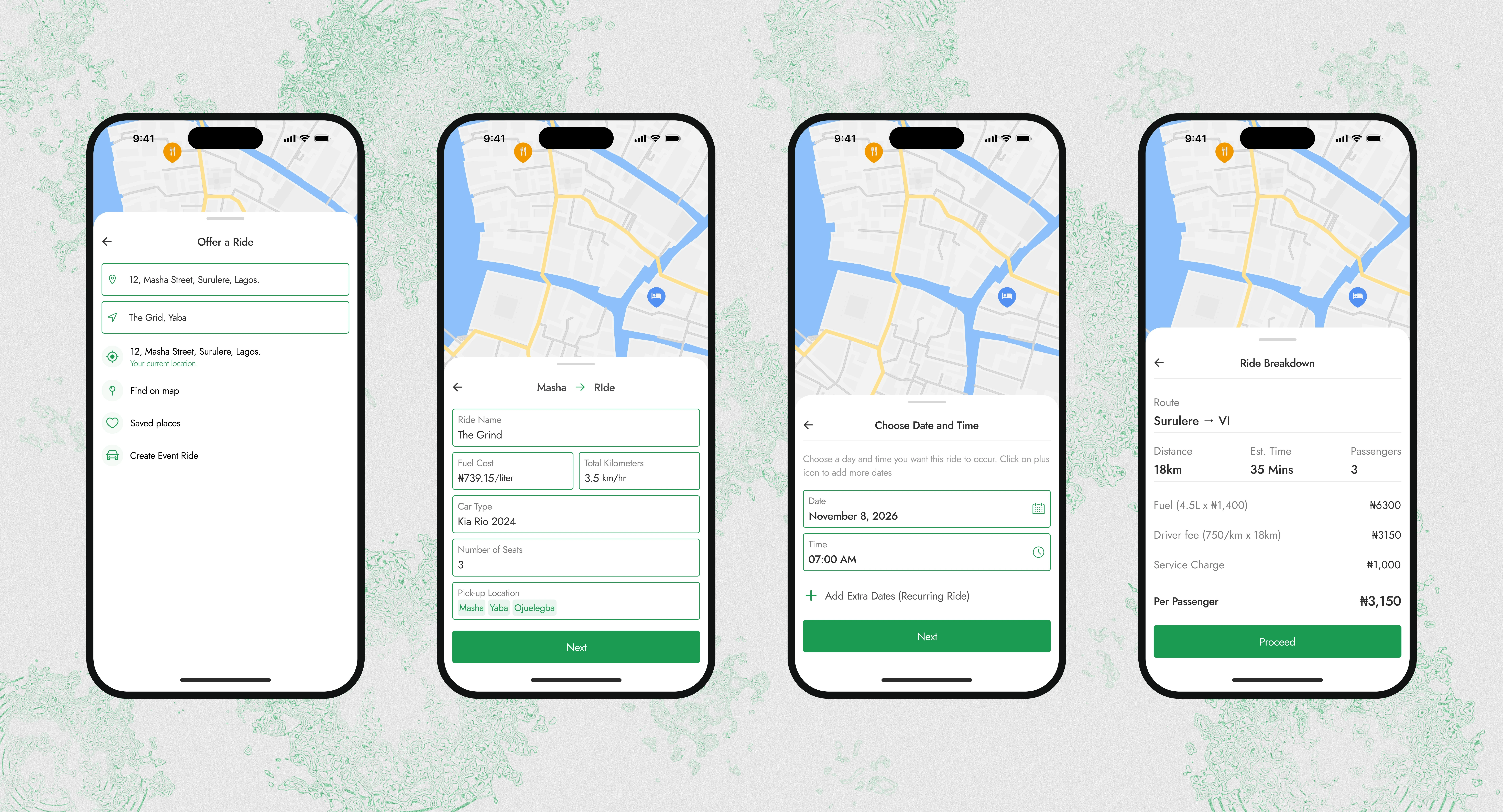
FuelSplit was designed around this idea. It is a platform that enables drivers to pick up passengers who agree to cover part of the fuel cost. Passengers get access to a more comfortable ride at a lower cost, while drivers reduce the financial burden of travelling alone.
To encourage participation, drivers receive an additional incentive of approximately 15% of the total ride cost, excluding the cost of fuel consumed. The platform also charges a 10% service fee.
Success for this product would mean creating a solution that eases the transportation burden faced by low income Lagosians. Ease of use was also critical to the product's success because we envisioned users coming from different age groups and educational backgrounds. The experience needed to be simple, intuitive, and accessible to everyone.
Research Phase
My research process combined secondary research with observations from our immediate environment.
We reviewed articles, reports, and academic studies written by researchers and institutions on transportation and mobility in Nigeria. We also examined conversations on social media, where many Nigerians openly shared their frustrations about rising transportation costs.
The problem was impossible to ignore because it existed all around us. During a brainstorming session with the CEO, the developer, and me, we discussed the pain points people were experiencing and tried to understand the broader impact of the fuel crisis.
A recurring theme quickly emerged. Finances had become the biggest barrier to accessing transportation.
Competitive Analysis
At the height of the fuel price increase, social media platforms were filled with complaints from Nigerians who experienced significant increases in transportation expenses. Many people reported dramatic jumps in ride costs and became more willing to endure uncomfortable public buses rather than pay the increasingly expensive prices of ride-hailing services.
We also studied existing competitors, including Uber, inDrive and Bolt. While these platforms provide convenient transportation services, their pricing models were not designed to address the affordability concerns of low-income users who were gradually being priced out of the market.
This revealed an opportunity. There was space to design a product specifically for people who needed a more affordable way to move around the city.
Rather than competing solely on convenience, FuelSplit aimed to address an emerging problem that existing ride-hailing solutions were not solving: making transportation more financially accessible during a period of rising costs and economic pressure.
Insight Development
With the problem clearly defined, the next step was determining how FuelSplit should work.
The challenge was designing a system that was simple enough for everyday commuters while still creating value for both drivers and passengers. Since we anticipated users from different age groups and educational backgrounds, reducing complexity became a major priority.
I started by identifying the core actions users would need to perform.
For drivers, the platform needed to allow them to:
Create a trip
Set their destination and trip details
Indicate available seats
Accept ride requests
Receive contributions toward fuel costs
Track ride activity and earnings
For passengers, the platform needed to allow them to:
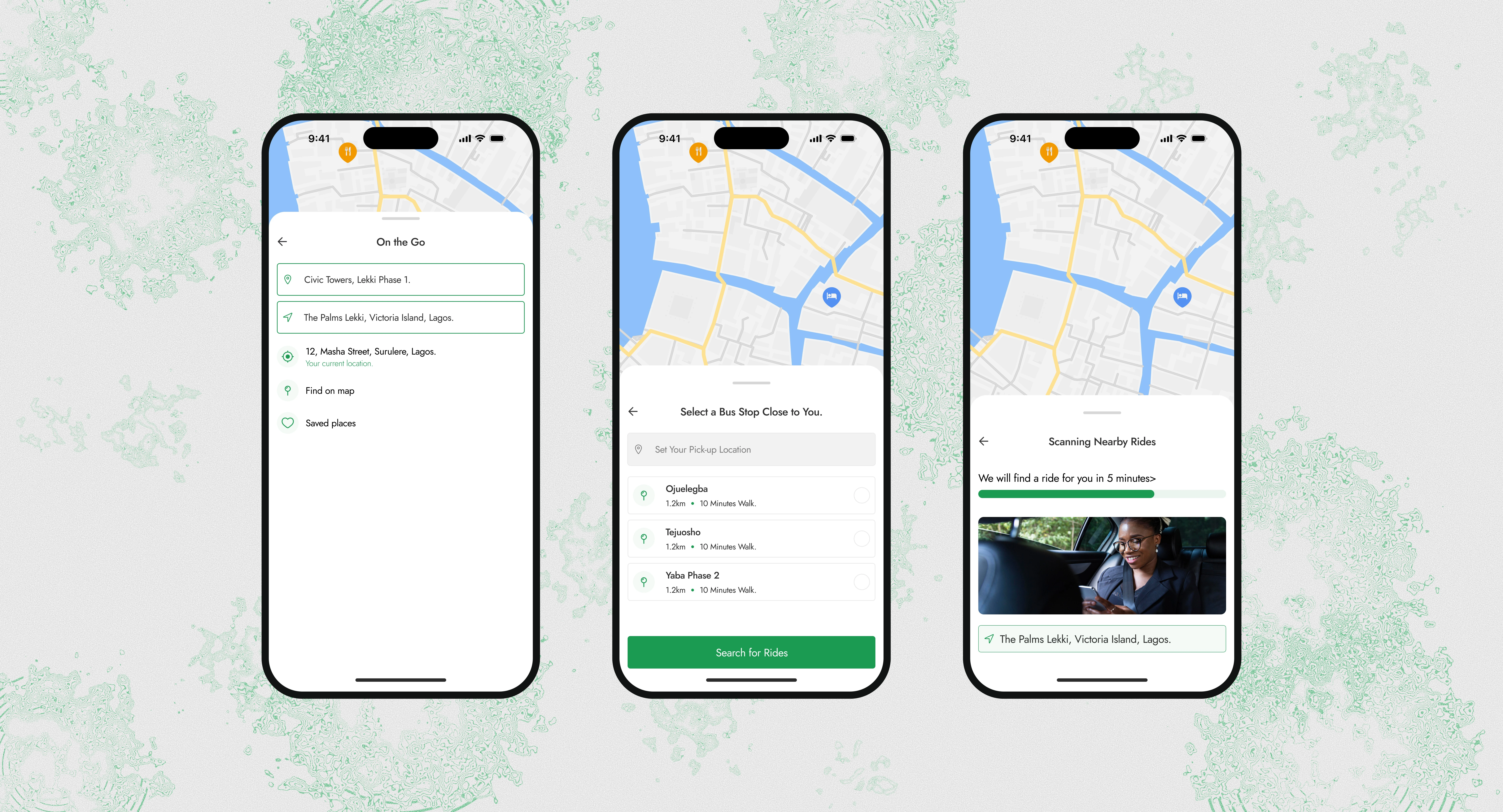
Search for available rides
View trip details and costs
Request to join a ride
Contribute toward fuel expenses
View ride information and history
Once these features were identified, I began structuring the information architecture around two primary user journeys: the driver journey and the passenger journey.
Mapping out the Information Architecture
The information was organised in a way that prioritised the most important actions first. Rather than overwhelming users with numerous options, the experience would guide them toward one clear goal depending on their role on the platform.
For drivers, the primary flow would revolve around creating and managing trips.
For passengers, the primary flow would revolve around finding and joining rides.
I also mapped the steps each user would take to complete these tasks. This helped me understand how users would move through the product, identify potential points of friction, and determine the screens and information required at each stage of the experience.
By defining the information architecture and user flows early, I established a clear structure for the product before moving into interface design. This ensured that every feature, screen, and interaction served a specific purpose and contributed to the goal of making transportation more affordable and accessible.
How Should it Work
With the problem clearly defined, the next step was determining how FuelSplit should work.
The challenge was designing a system that was simple enough for everyday commuters while still creating value for both drivers and passengers. Since we anticipated users from different age groups and educational backgrounds, reducing complexity became a major priority.
I started by identifying the core actions users would need to perform.
For drivers, the platform needed to allow them to:
Create a trip
Set their destination and trip details
Indicate available seats
Accept ride requests
Receive contributions toward fuel costs
Track ride activity and earnings
For passengers, the platform needed to allow them to:
Search for available rides
View trip details and costs
Request to join a ride
Contribute toward fuel expenses
View ride information and history
Once these features were identified, I began structuring the information architecture around two primary user journeys: the driver journey and the passenger journey.
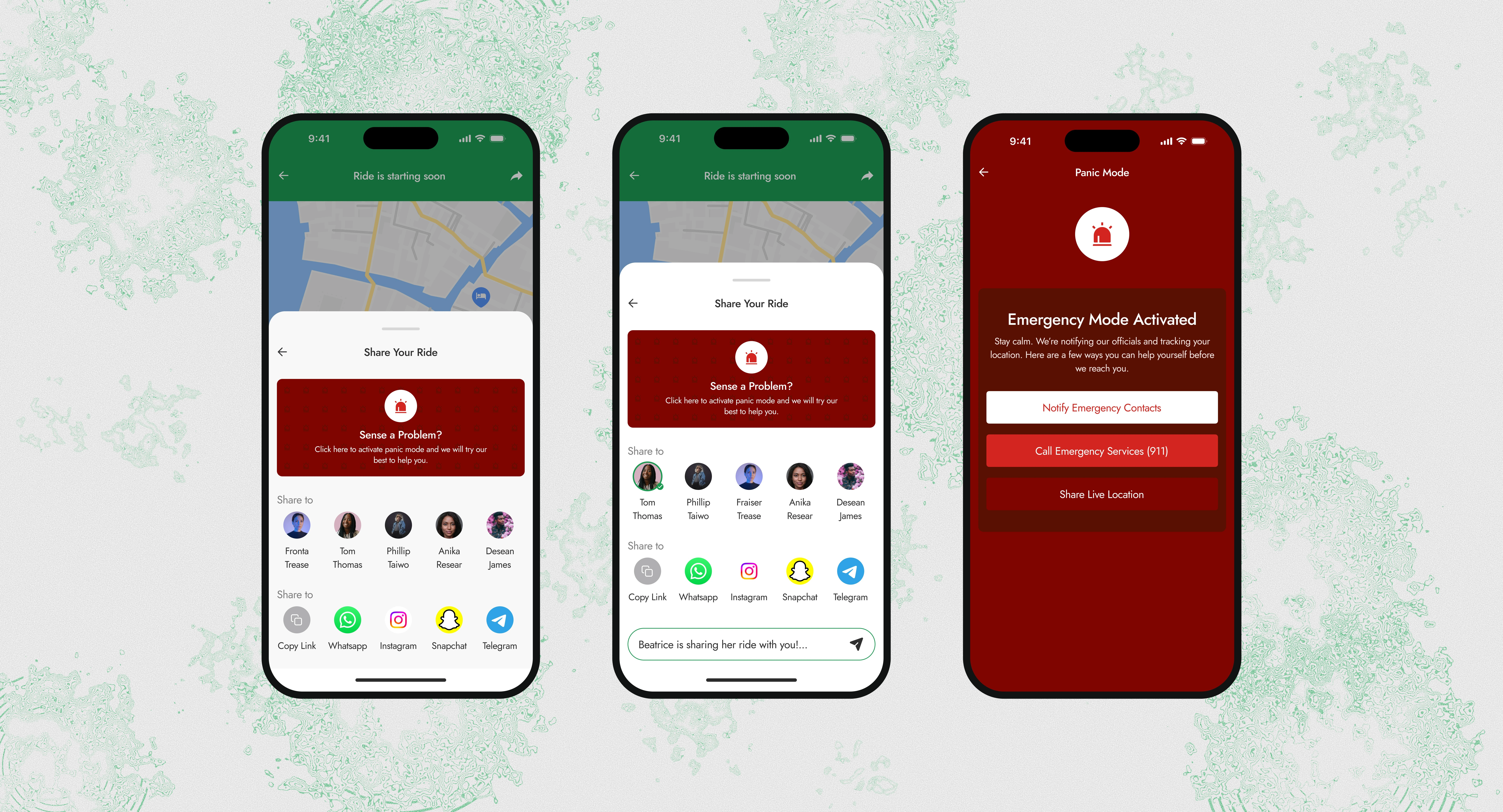
The information was organised in a way that prioritised the most important actions first. Rather than overwhelming users with numerous options, the experience would guide them toward one clear goal depending on their role on the platform.
For drivers, the primary flow would revolve around creating and managing trips.
For passengers, the primary flow would revolve around finding and joining rides.
I also mapped the steps each user would take to complete these tasks. This helped me understand how users would move through the product, identify potential points of friction, and determine the screens and information required at each stage of the experience.
By defining the information architecture and user flows early, I established a clear structure for the product before moving into interface design. This ensured that every feature, screen, and interaction served a specific purpose and contributed to the goal of making transportation more affordable and accessible.
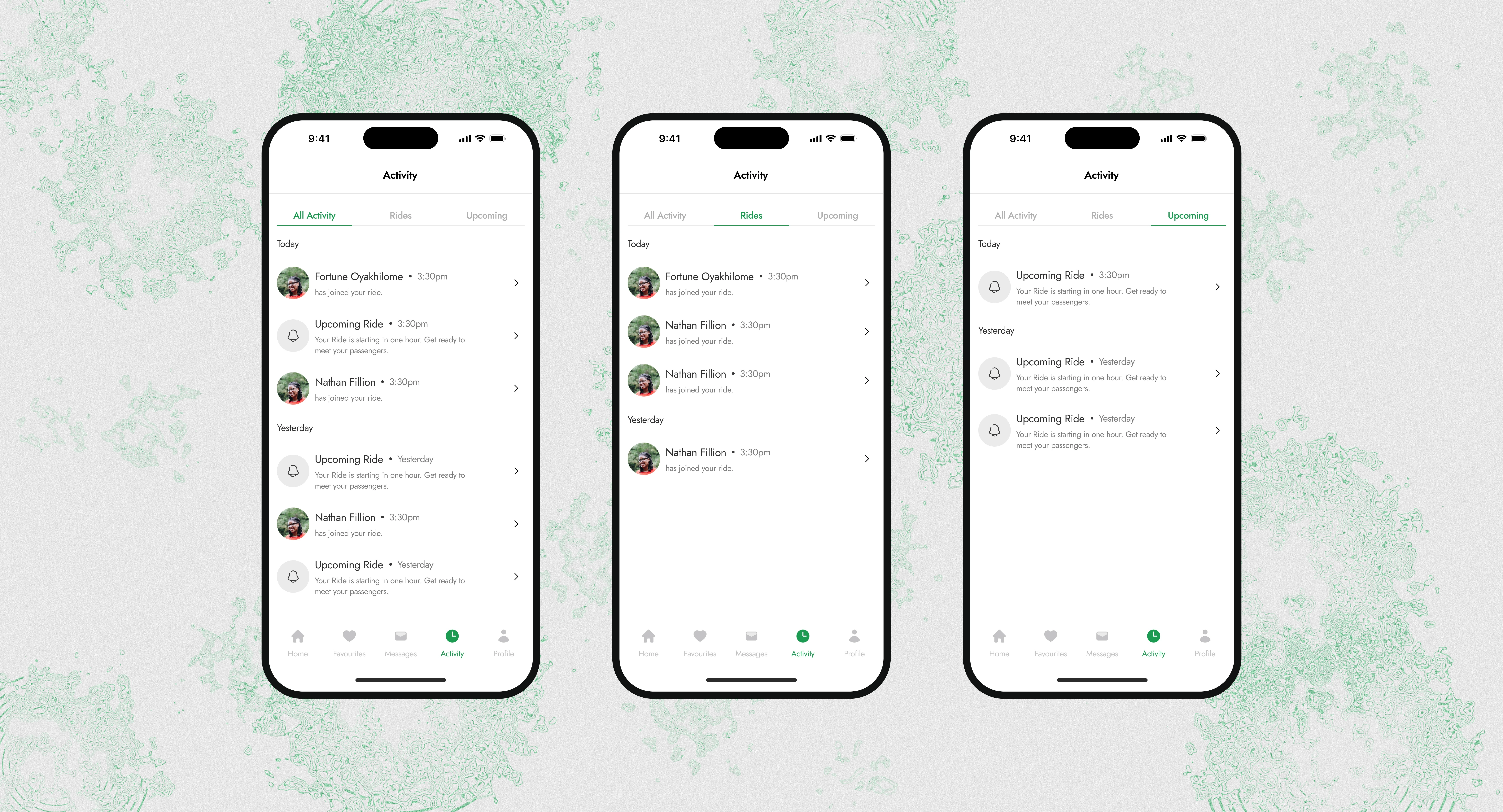
The Design Process
With the product structure and user flows defined, I moved into designing the experience.
At this point, I already had a good understanding of what the product needed to do and how users would move through it. My focus shifted from understanding the problem to translating those flows into actual screens and interactions.
The visual direction had already been established by the brand identity designer, so I did not spend time exploring colours or brand elements. Instead, my attention was on how information should be presented and how users would complete tasks with as little friction as possible.
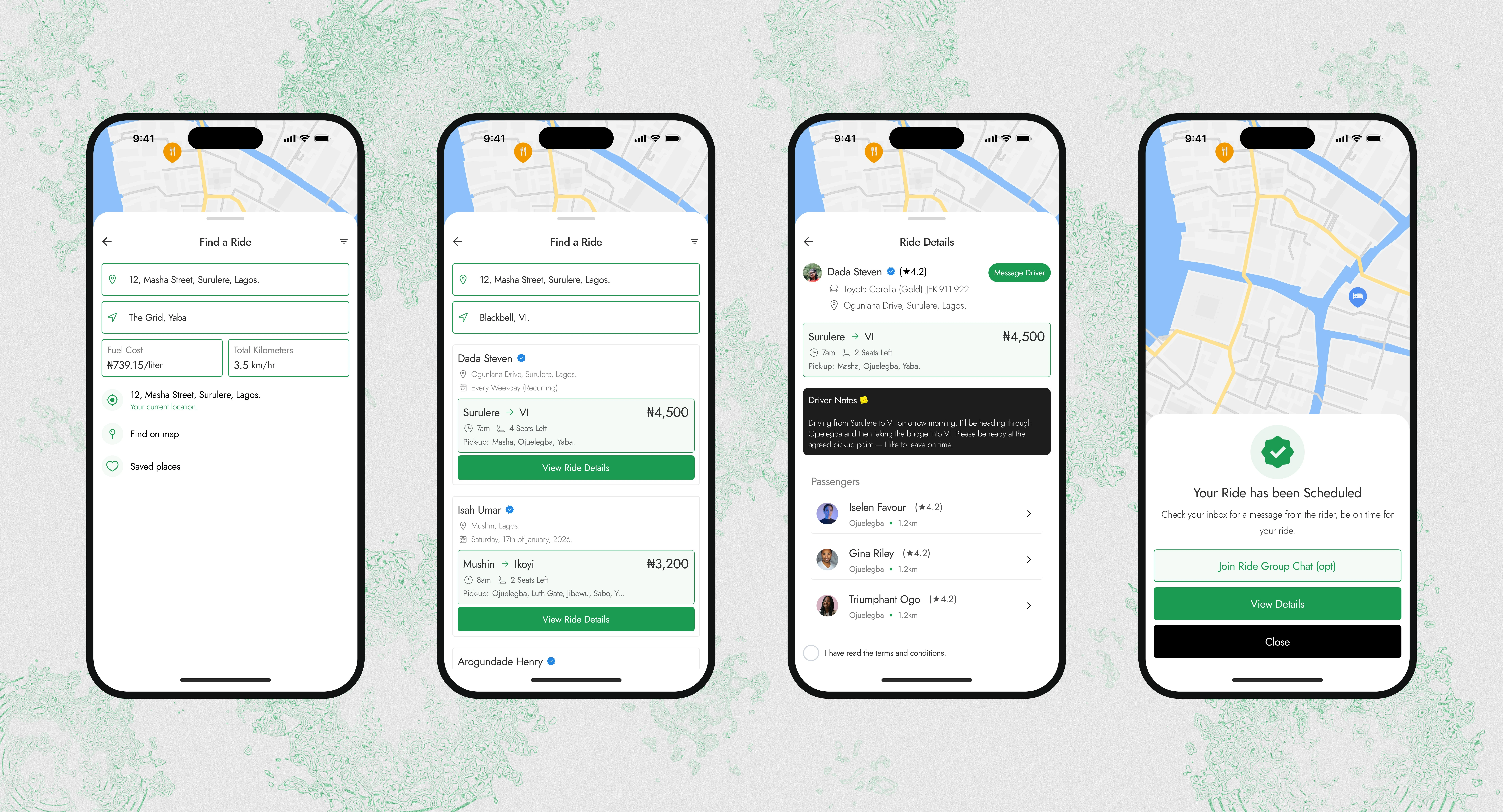
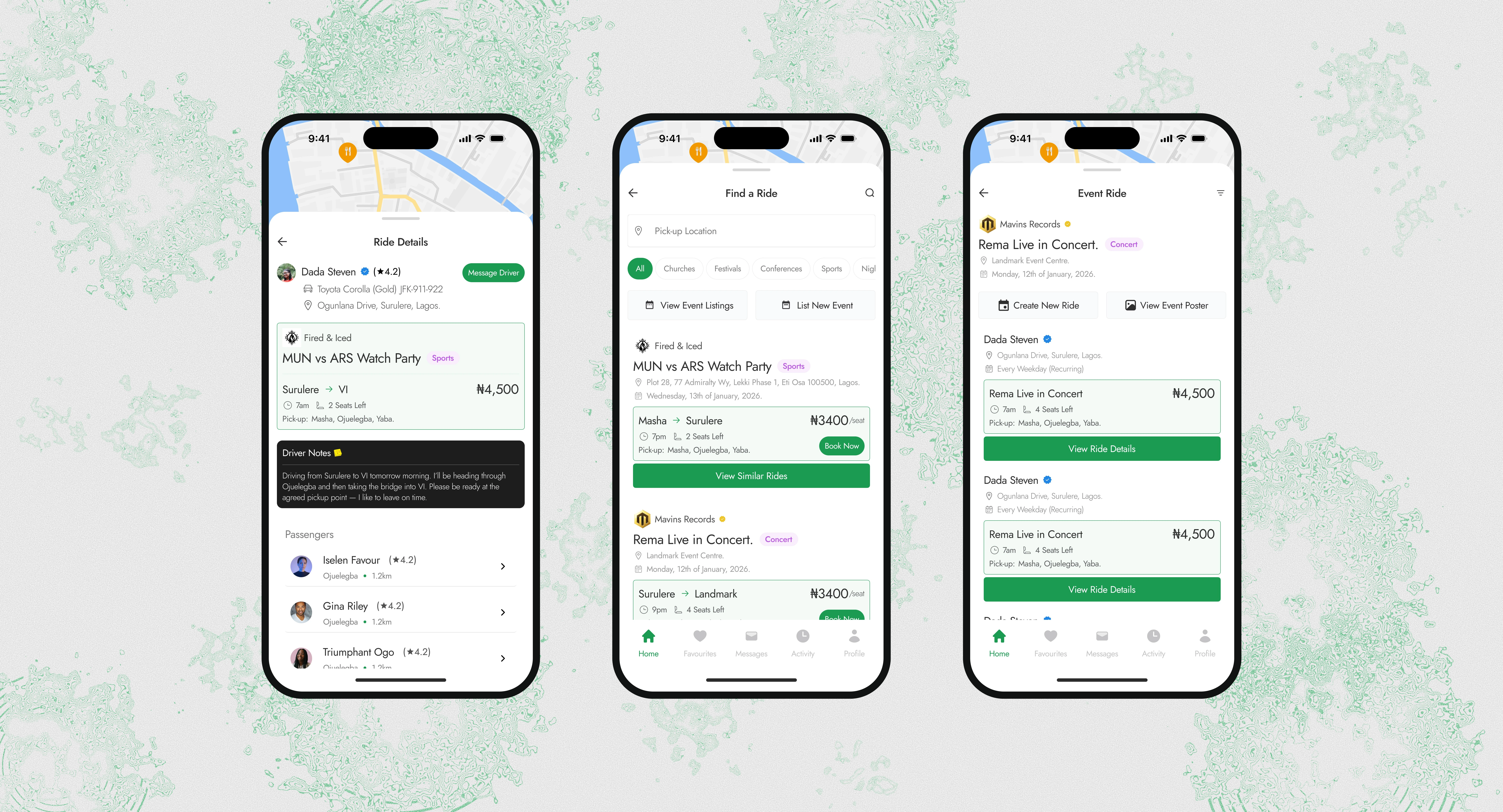
I started by laying out the essential screens for both drivers and passengers and gradually built out the flows from there. Since the product introduced a new way of accessing transportation, I wanted each screen to answer an obvious question for the user.
For drivers, those questions were:
Where am I going?
How many passengers can I take?
Who has requested to join my trip?
How much will I receive from this ride?
For passengers, the questions were:
Where is this driver going?
How much will I contribute?
How many seats are available?
How do I join this trip?
These questions became the foundation for my screen layouts and information hierarchy.
As I designed, I constantly moved between screens to make sure the experience felt connected. If an action happened on one screen, I made sure users understood its result on the next one. This process helped me identify missing information, remove unnecessary elements, and simplify interactions.
Once the key screens were designed, I built interactive prototypes to test how the experience felt from beginning to end. Creating prototypes allowed me to step into the user's shoes and evaluate whether the flow felt natural, whether users always knew what to do next, and whether the product delivered on its core promise of making shared transportation simple and accessible.
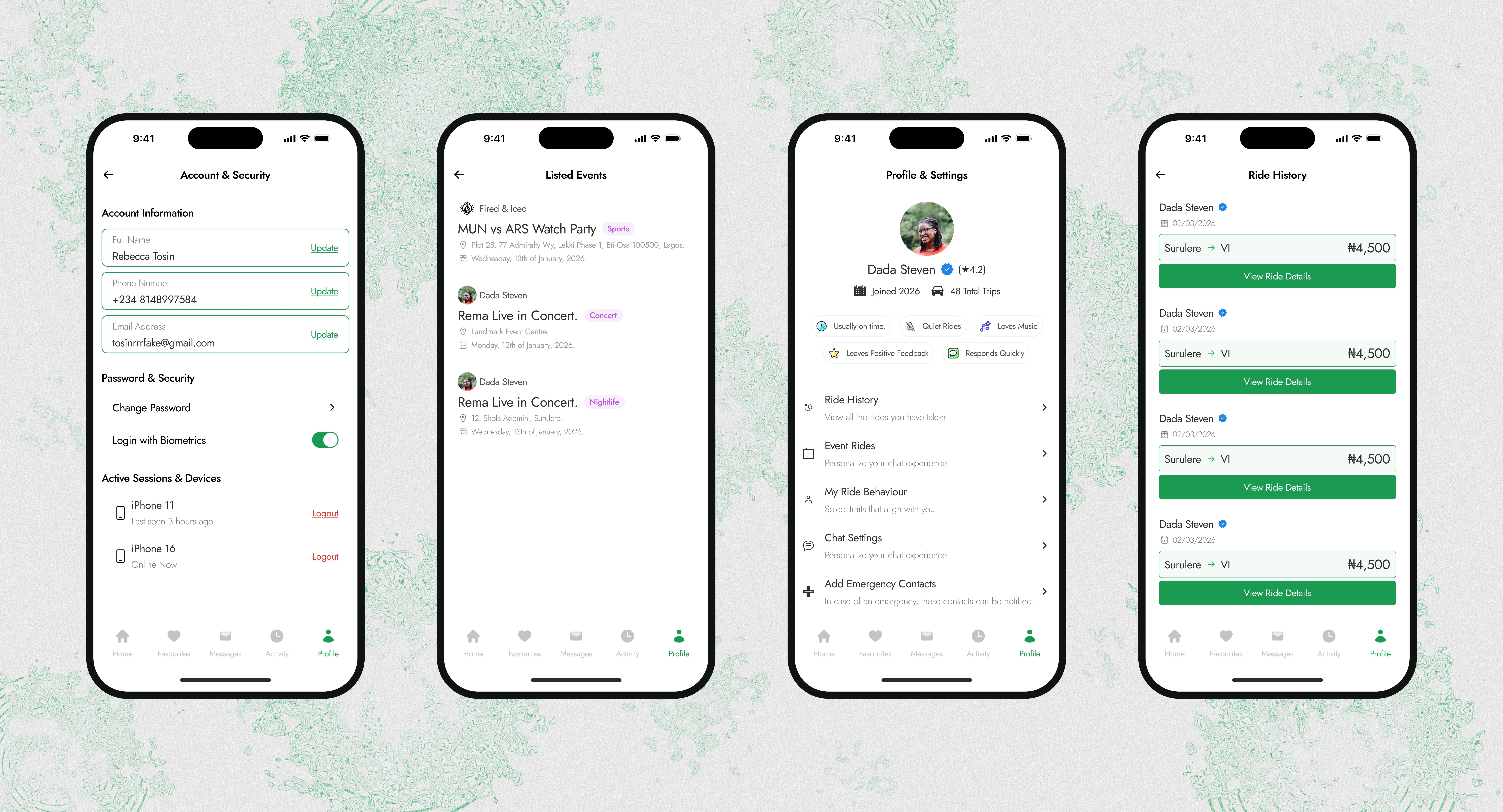
Walking Through the Experience
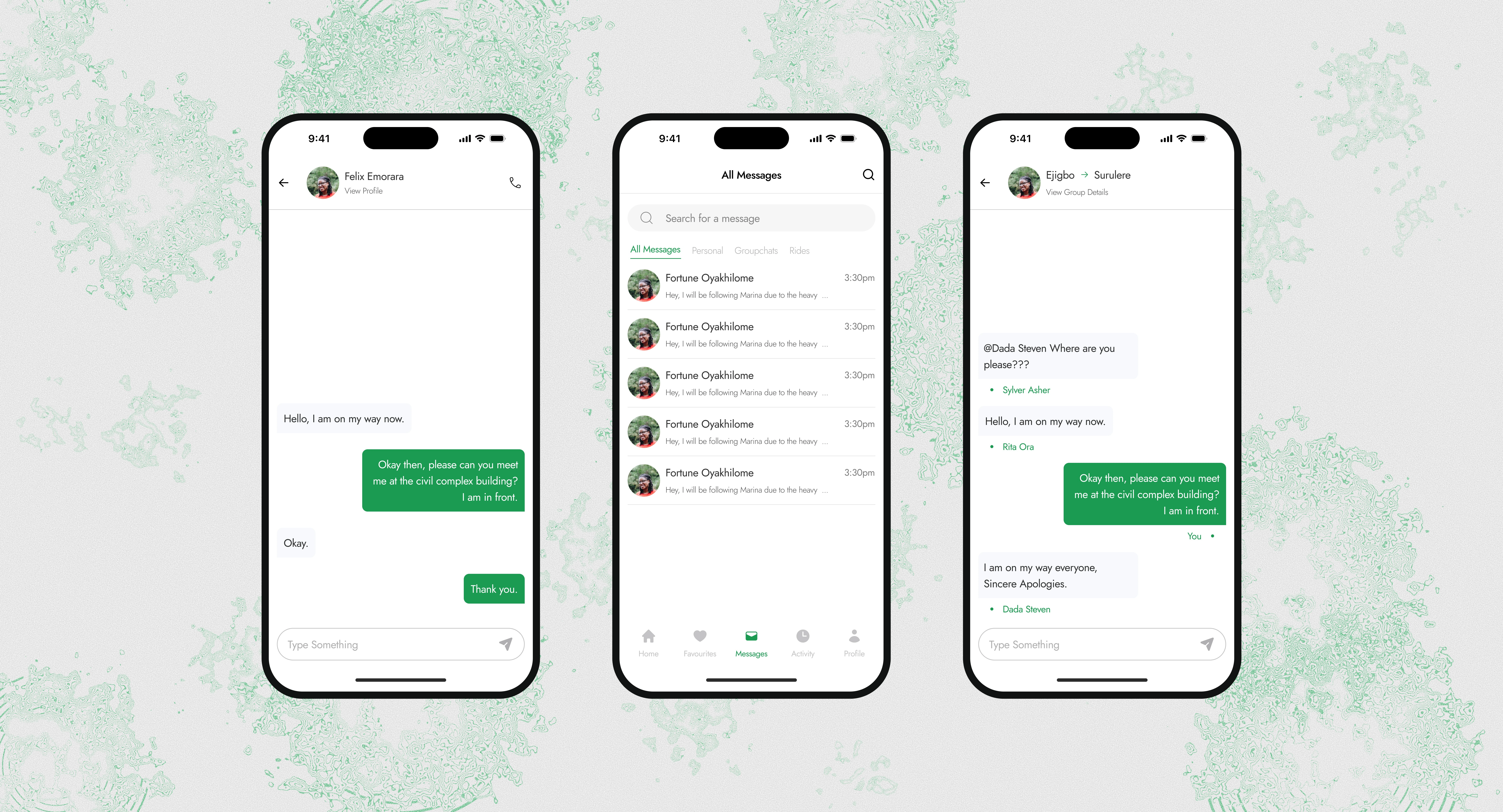
After designing the high fidelity screens and prototypes, I walked through the experience from both the driver's and passenger's perspectives to evaluate whether the flows were intuitive and aligned with the product's goals.
I paid particular attention to a few questions:
Could users understand the concept of FuelSplit without additional explanation?
Could passengers quickly determine how much they were expected to contribute?
Could drivers easily create and manage trips?
Did users always know what action to take next?
As I moved through the flows, I identified opportunities to simplify the experience. Some screens contained information that was not immediately necessary, while certain actions required more steps than they needed to. I refined the flows by prioritising essential information and reducing unnecessary complexity.
Because the product was designed to address a financial pain point, transparency became particularly important. I ensured that contribution amounts, trip details, and ride information remained visible and understandable throughout the experience.
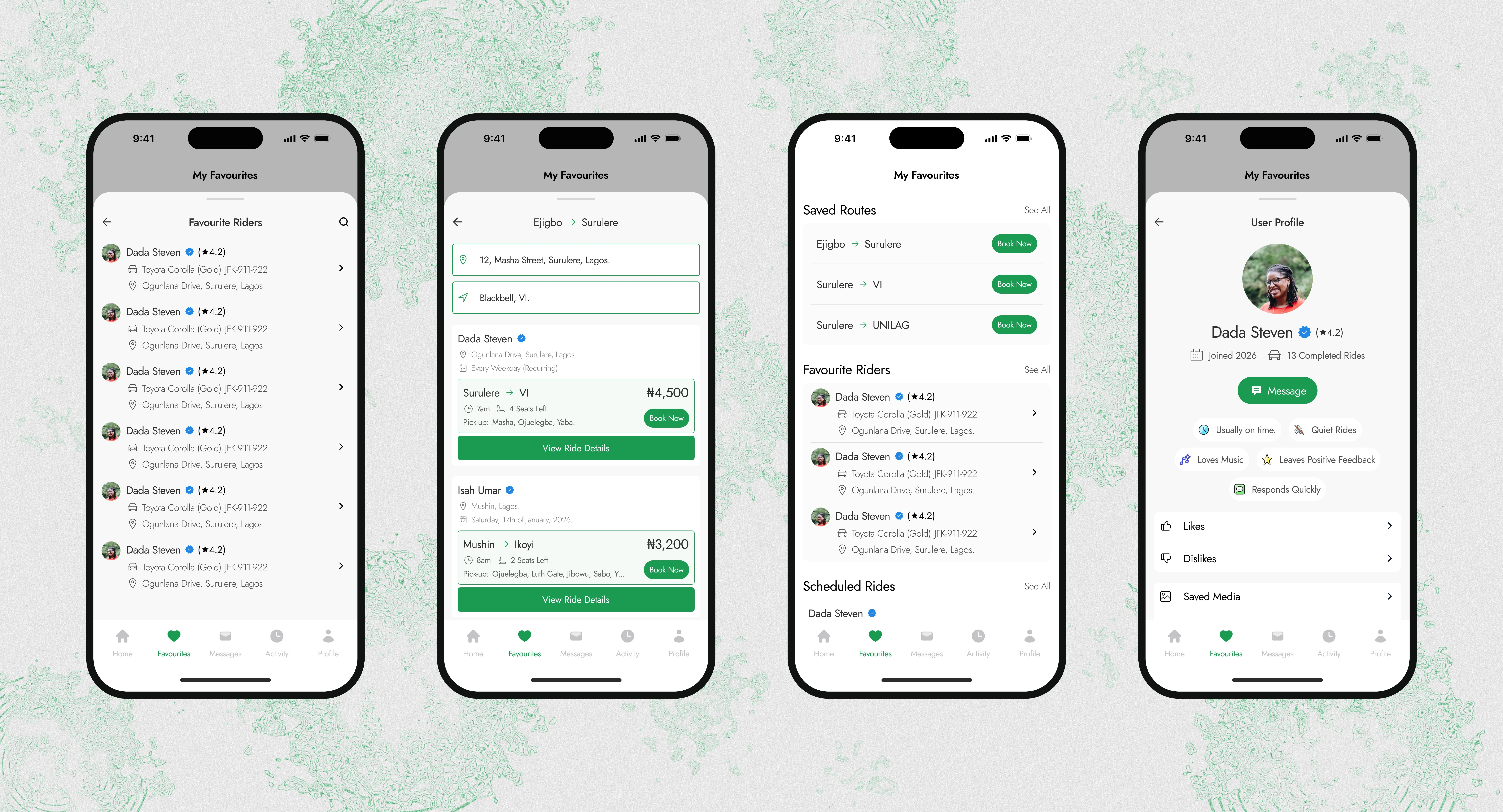
Success Metrics
If FuelSplit were launched, I would measure success using the following indicators:
Number of successfully completed shared rides
Number of repeat users on the platform
Average time it takes users to create or join a trip
Percentage of users who complete a ride after discovering one
User feedback on whether FuelSplit helped reduce their transportation expenses
Ultimately, success for FuelSplit would mean helping people move around Lagos more affordably while enabling drivers to offset part of their fuel costs through shared journeys.
Like this project
Posted Jun 25, 2026
This is Fuelslit. I Developed the concept and design for FuelSplit, a rideshare app addressing rising transportation costs in Lagos.
Likes
0
Views
1