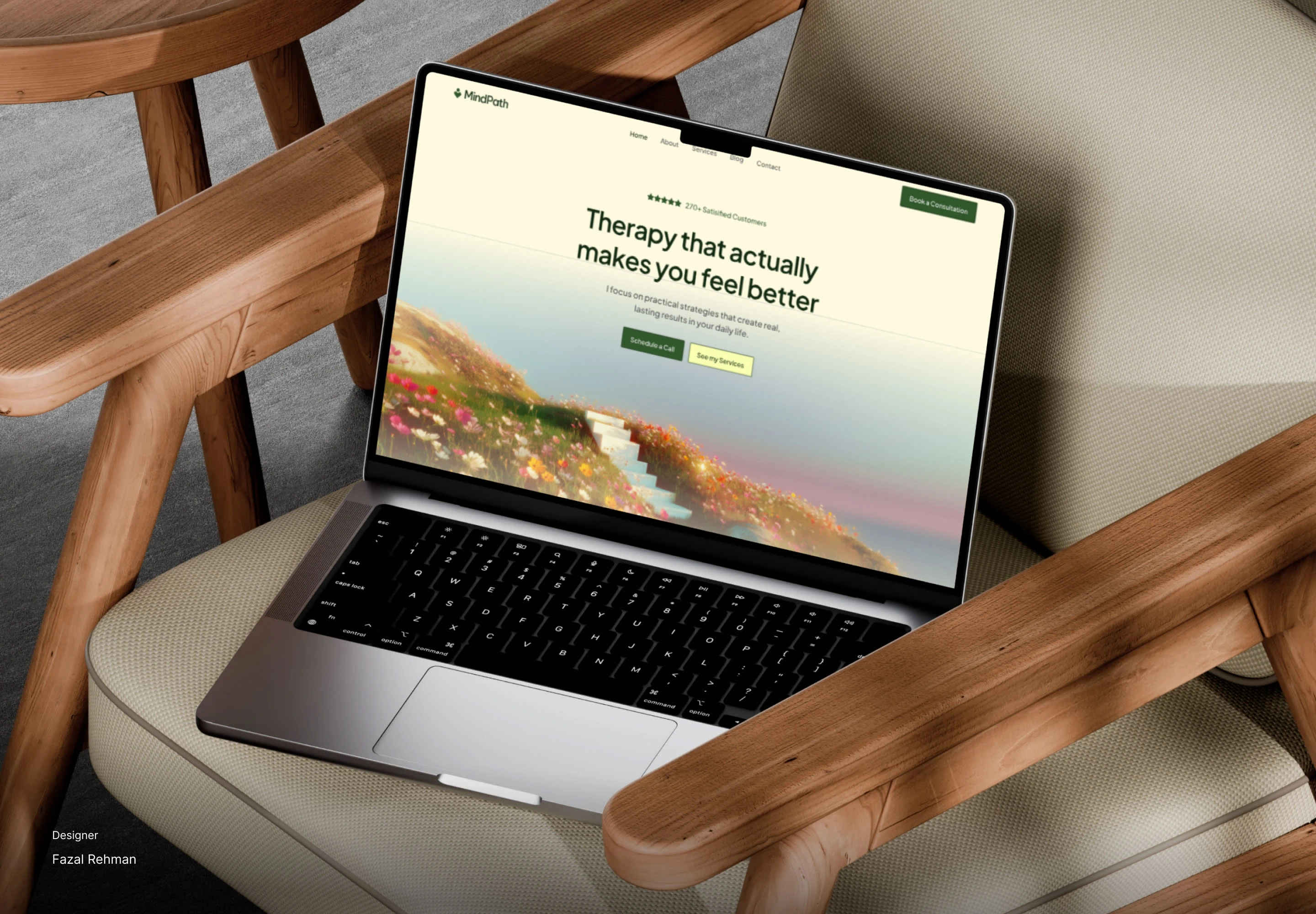
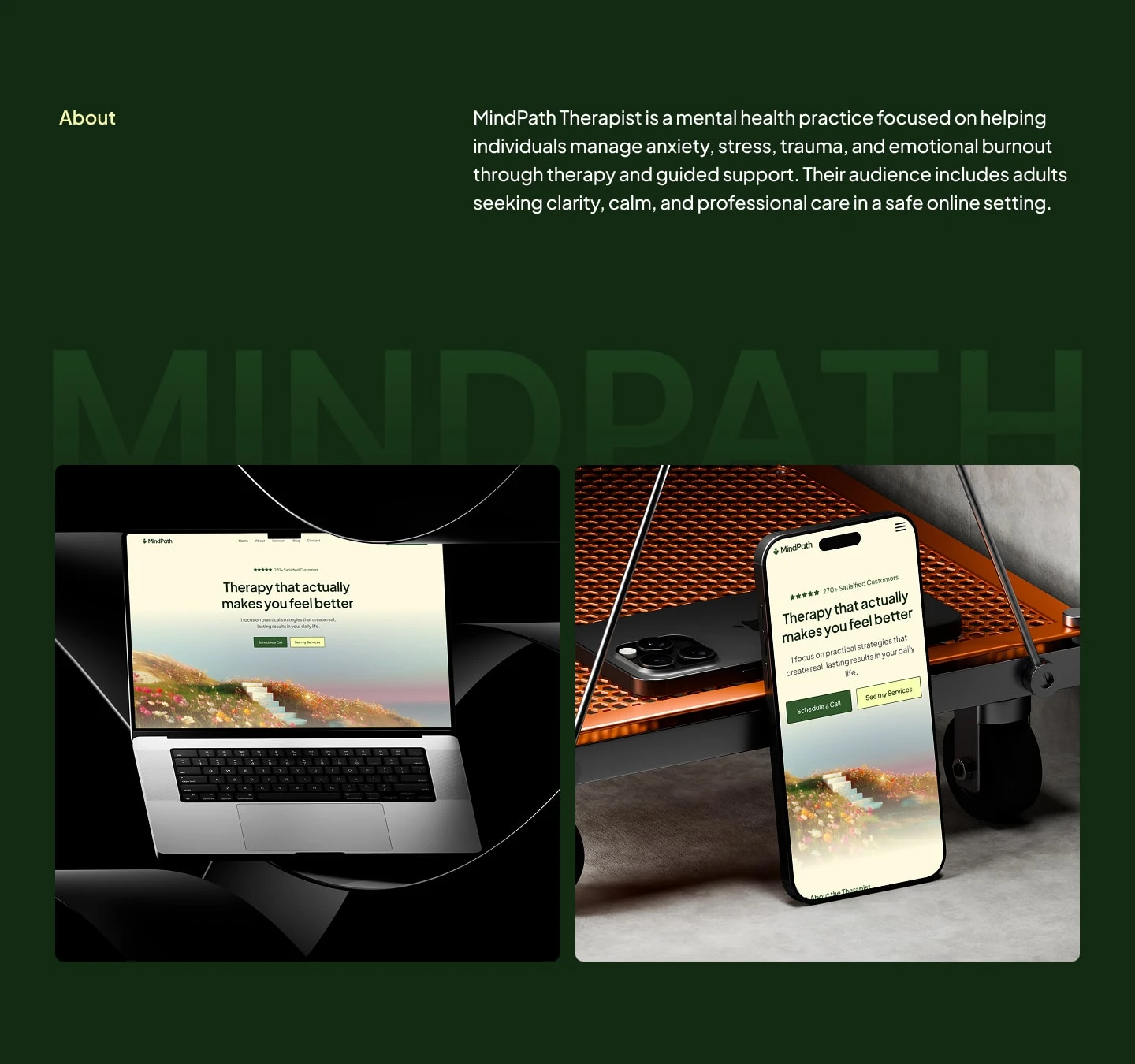
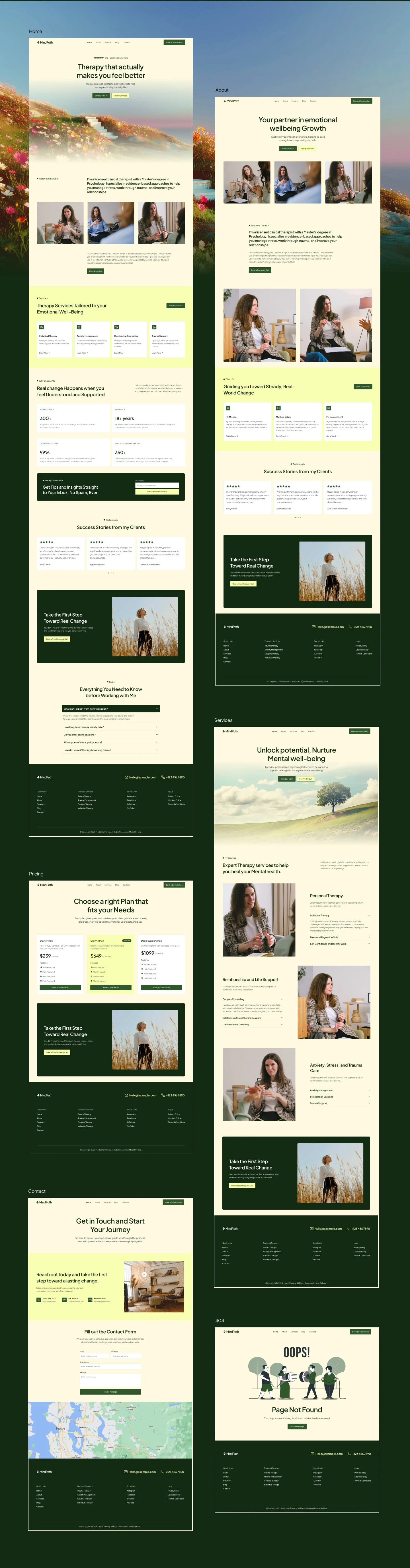
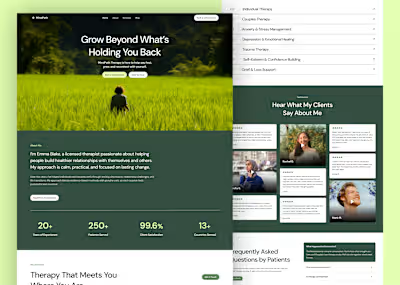
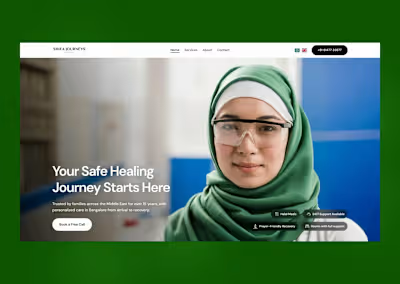
I wanted to help therapists who are just starting out. Many don’t have big budgets but need a professional website to build trust and attract clients. I thought, why not make a ready-to-go template?
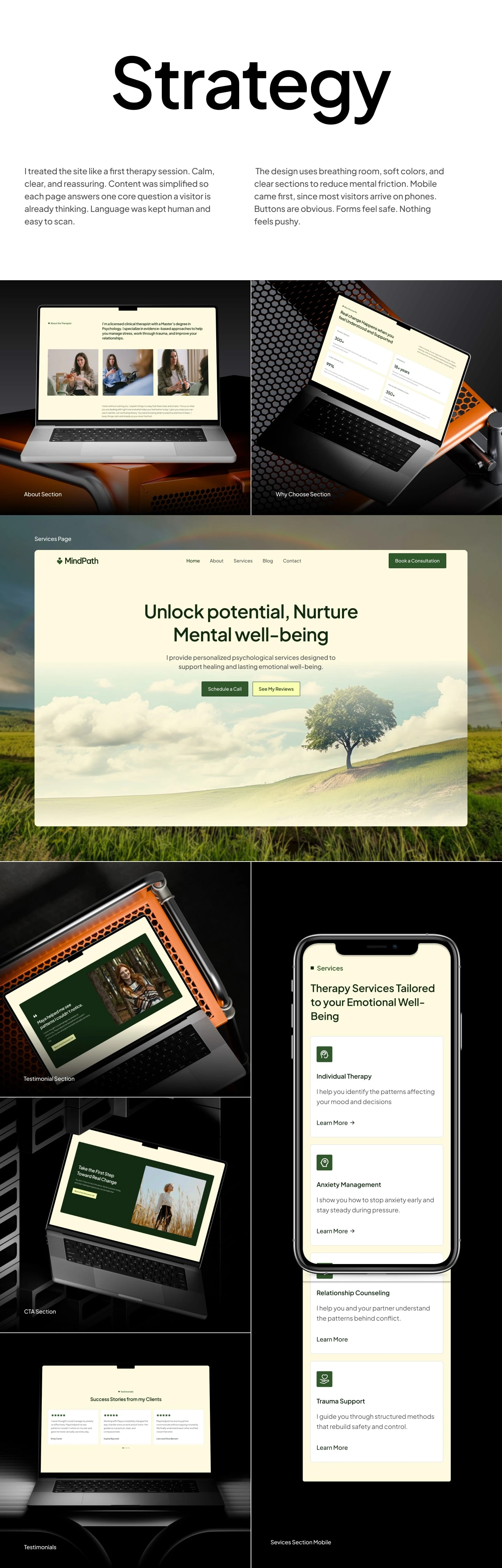
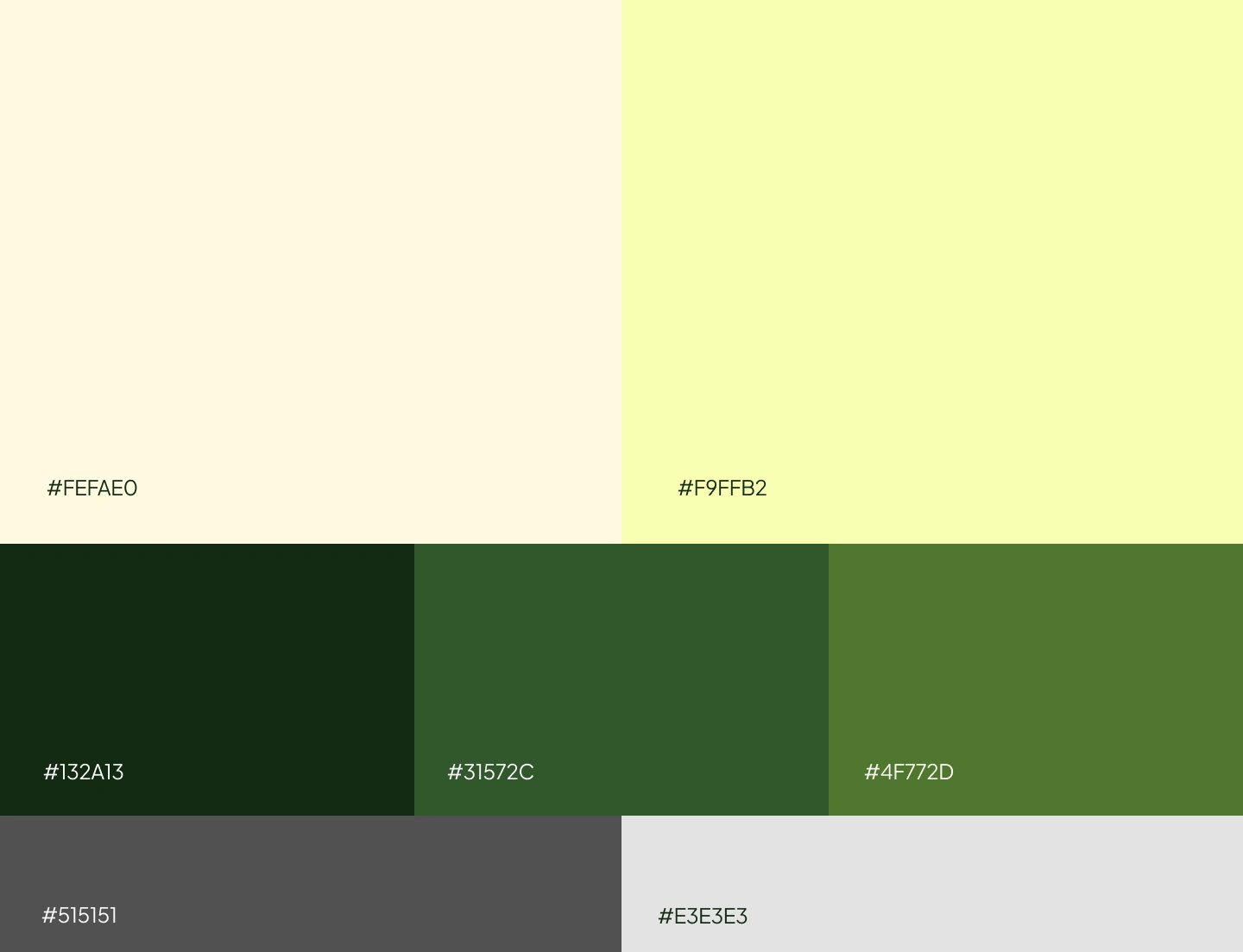
One that’s calm, simple, and easy to edit. It would have a soft color palette, sections for services and testimonials, and a booking button. My hope was that this template could save time and give therapists a polished online presence instantly.
Design in Figma
I started in Figma. I mapped out every section carefully, thinking about the therapist’s clients. The hero area needed to feel welcoming. Services needed to be clear without overwhelming visitors.
Testimonials had to be easy to add. I even imagined a smooth mobile experience because I knew most users would visit on their phones. I wanted the design to feel like a gentle handshake, not a flashy sales pitch.
Building in WordPress
Next, I brought the design into WordPress using Elementor. Everything stayed editable. I tested mobile responsiveness, spacing, and ease of updating content. The template worked perfectly. It looked professional and calming, and I could see it being a useful starting point for a therapist’s site.
What Happened
I launched it with high hopes. I shared it online, showed previews, and even talked about how it could save therapists time and money. But no one bought it. People viewed it, some even commented positively, but the conversions never came.
I realized that therapists don’t usually buy templates; they want guidance. They want someone to handle setup, choose the right words, and structure the site properly. My template, as perfect as it looked, felt like homework to them.
What I Learned
This failure taught me more than any success could. Design alone doesn’t sell. Marketing and understanding the audience’s real behavior are just as important. Therapists need support, not just a prebuilt layout. Selling a template isn’t about how it looks; it’s about how it solves the client’s real problem.
The Outcome
I didn’t throw the project away. Instead, I turned it into a semi-custom service. I kept the same design but now handle setup, small edits, and content guidance. That same template that never sold now helps clients get a complete, functional website without frustration.
What started as a “failure” became a guide for designing services that actually work.