E-Commerce Churn Analysis Project

Aaron Tawiah


📊 E-Commerce Customer Retention & Churn Analysis
📌 Project Overview
Customer retention is one of the most important drivers of profitability in e-commerce. Acquiring new customers is significantly more expensive than retaining existing ones, making churn analysis critical for sustainable business growth.
This project analyzes customer behaviour to identify churn patterns, uncover key drivers of customer attrition, and provide actionable business recommendations to improve retention.
🎯 Business Problem
The company is experiencing customer churn but lacks visibility into:
Which customers are most likely to churn
What factors drive churn
When churn risk is highest
Which customer segments require retention strategies
Without this insight, retention efforts are reactive instead of proactive.
🎯 Project Objectives
Measure overall churn rate
Identify key churn drivers
Segment customers by churn risk
Discover behavioural patterns linked to churn
Build a predictive churn model
Provide retention strategy recommendations
📂 Dataset Description
The dataset contains customer-level e-commerce behavioural data including:
Customer demographics
Purchase behaviour
Tenure
Complaints and support interactions
Payment methods
Order frequency
Customer satisfaction indicators
Each record represents a unique customer with a churn indicator.
🛠️ Methodology
1️⃣ Data Cleaning & Preparation
Handled missing values
Corrected data types
Feature engineering
Exploratory validation
2️⃣ Exploratory Data Analysis (EDA)
Churn distribution analysis
Behaviour comparison (churn vs retained)
Trend analysis by tenure, spending, complaints
Segment analysis
3️⃣ Feature Analysis
Identified strongest churn predictors
Customer lifecycle analysis
Behavioural risk signals
4️⃣ Predictive Modeling
Built classification model to predict churn probability
Evaluated model performance
Identified high-risk customers
📊 Key Insights
New customers show significantly higher churn risk
Customers with complaints churn at a much higher rate
Low engagement strongly correlates with churn
Certain payment methods show elevated churn behaviour
High-value customers represent critical retention priority
📈 Business Impact
This analysis enables the business to:
Detect churn early
Prioritize high-risk high-value customers
Improve onboarding strategy
Optimize customer experience
Reduce revenue loss
💡 Recommendations
Implement early onboarding retention program
Create complaint recovery workflow
Launch targeted campaigns for high-risk customers
Introduce loyalty incentives for high-value customers
Monitor churn risk dashboard continuously
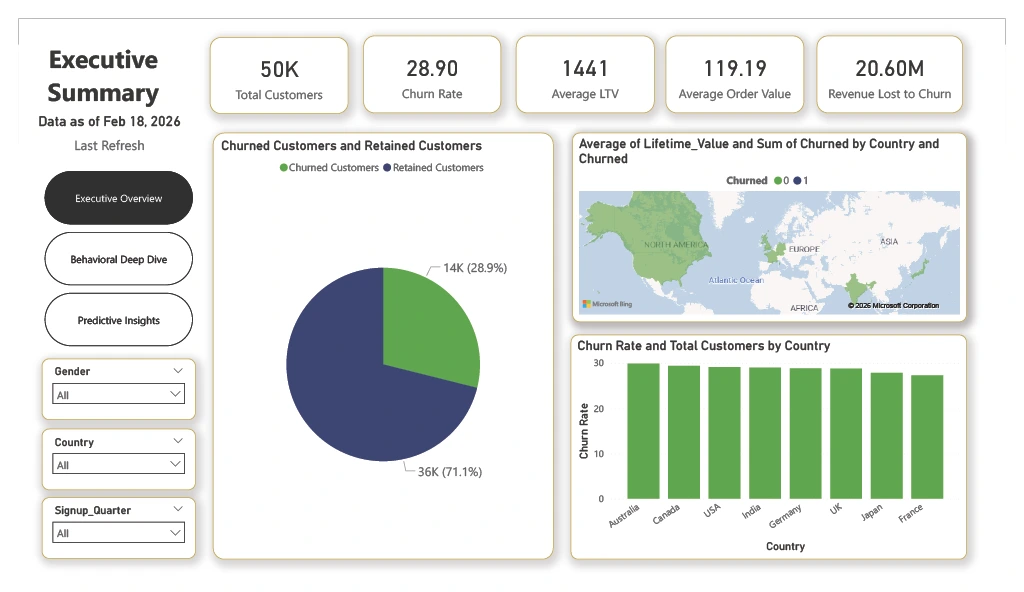
📊 Dashboard (Power BI)
The project includes an interactive dashboard that enables stakeholders to:
Monitor churn KPIs
Explore customer segments
Identify high-risk groups
Track retention performance
📊 Dashboard Screenshots
1️⃣ Executive Summary
2️⃣ Churn Analysis
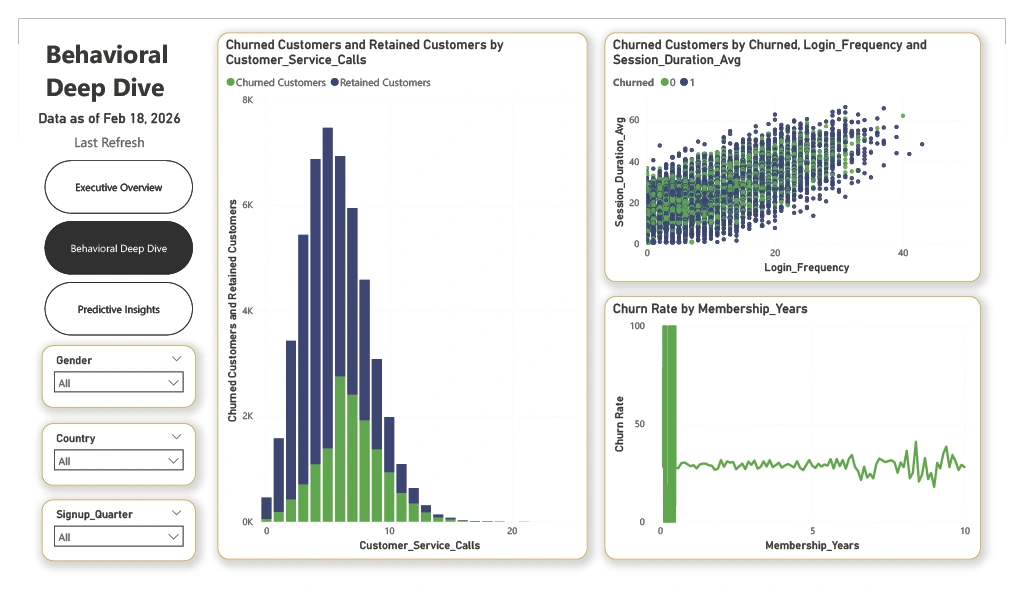
3️⃣ Customer Segmentation
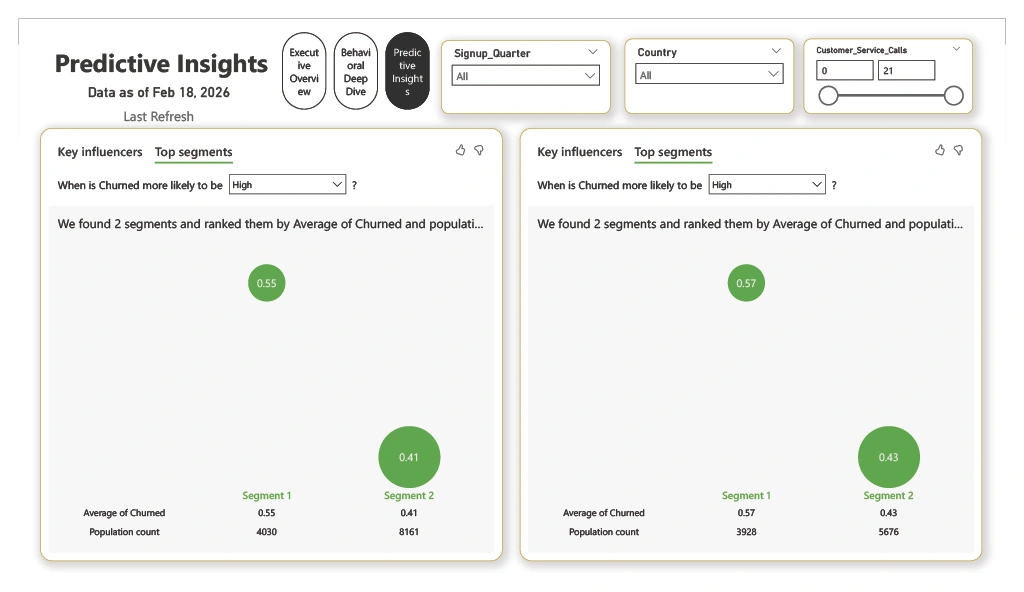
The dashboard allows stakeholders to explore churn rates, segment high-risk customers, and monitor retention KPIs in an interactive, visual format.
🧰 Tech Stack
SQL
Power BI
Excel
🚀 Future Improvements
Deploy churn prediction app
Add real-time scoring pipeline
Perform cohort retention analysis
Build customer lifetime value (CLV) model
Run retention strategy simulation
👤 Author
Aaron Tawiah Data Analyst Portfolio Project
Like this project
Posted Jun 22, 2026
Analyzed churn patterns to boost e-commerce retention.
Likes
0
Views
7