CONDITION TRACE: Evidence in Motion

Faadil Boussari


The problem
Condition reports capture what was visible during an examination, but they cannot always establish when a physical change actually occurred.
In this fictional museum-loan case, the obvious question, “Where did the damage happen?”, asks more of the evidence than the records can support.
So I reframed the problem:
Do not trace where the damage occurred. Trace when the feature first appears in the documentation record.
The product
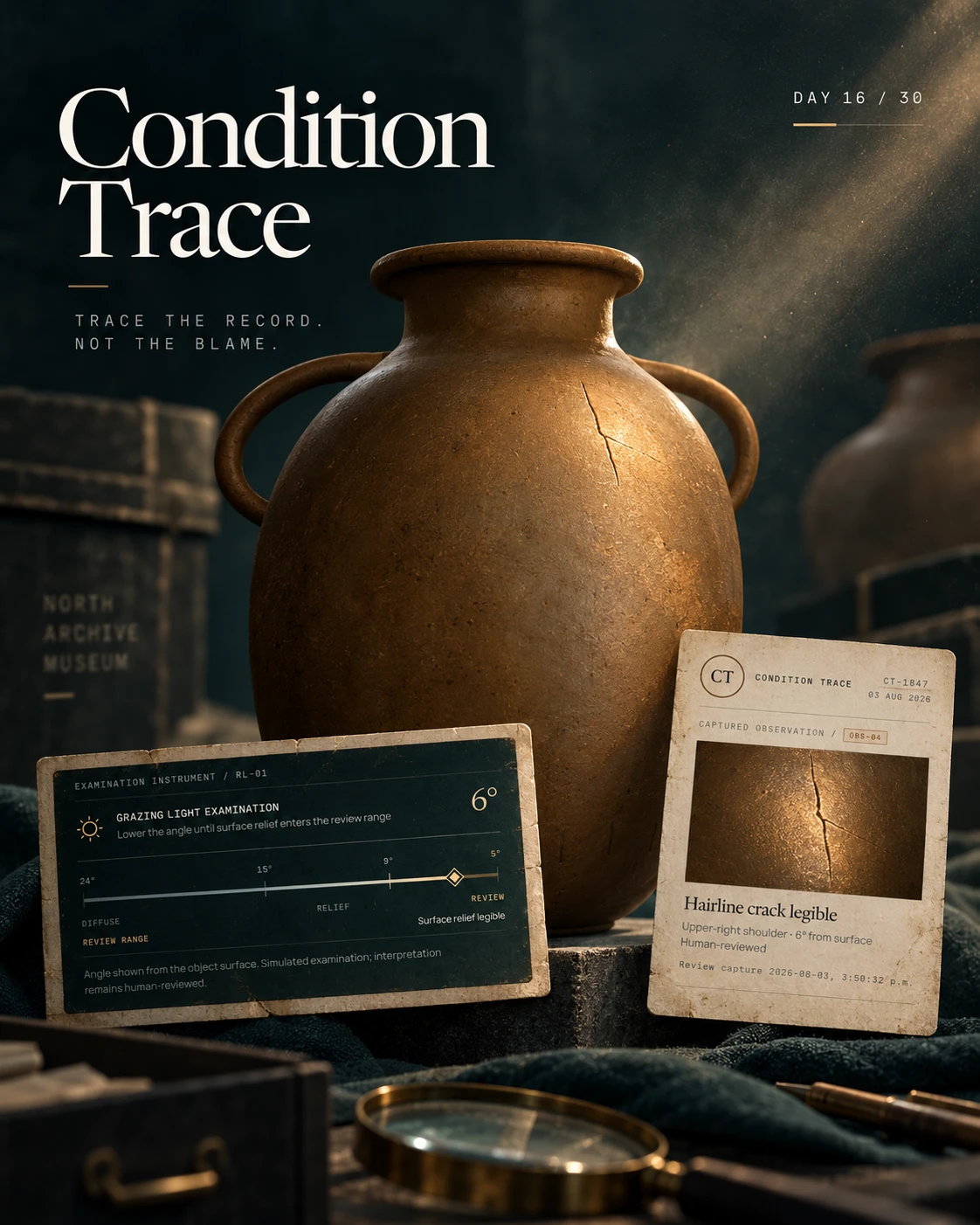
Condition Trace is an interactive conservation-evidence workflow that lets a reviewer inspect 4 condition records, examine the object under raking light, preserve a human-reviewed observation, compare non-equivalent documentation, and resolve the evidence into a qualified archival finding.
The key interaction
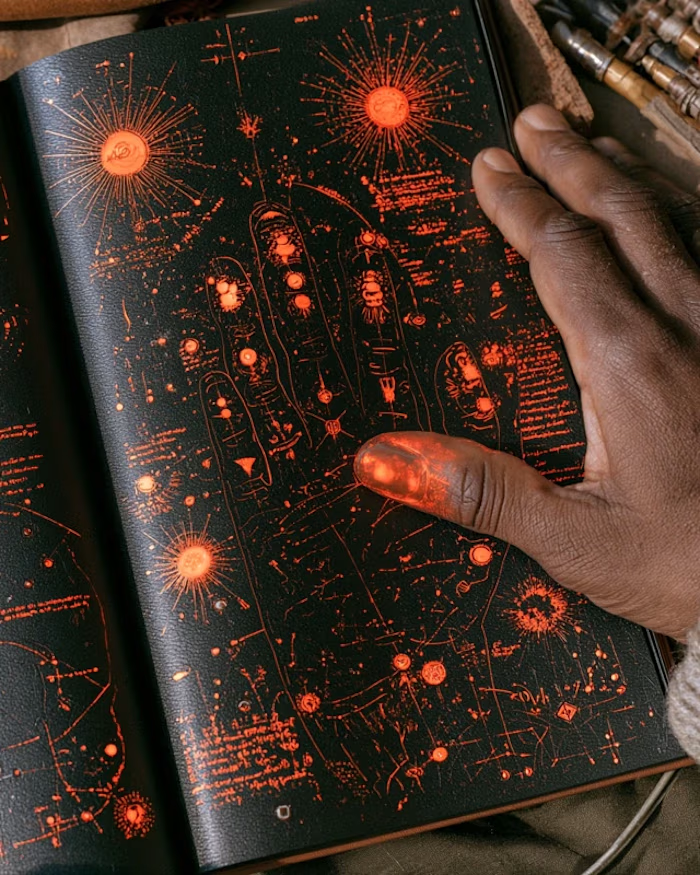
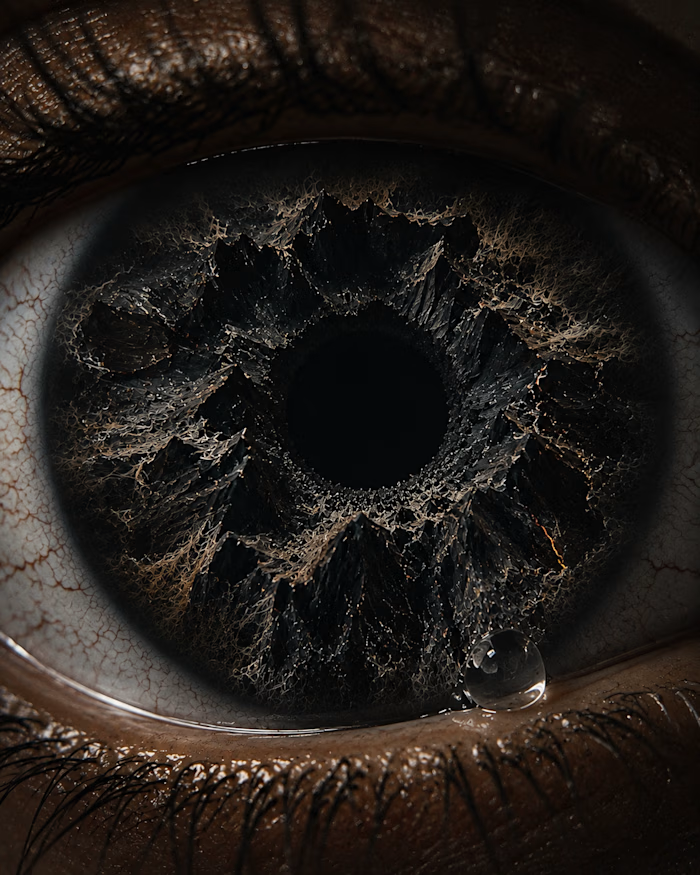
The return-arrival examination introduces raking light. As the grazing angle changes, a hairline crack on the upper-right shoulder becomes legible.
That examination state is preserved as
OBS-04 and remains visually continuous through the rest of the workflow.Evidence in Motion
V4 was designed around 4 interaction laws:
Evidence has continuity. The captured observation persists through comparison, finding, and final record.
Light is the instrument. Raking light performs an actual examination job rather than acting as a visual effect.
Evidence has resistance. The final record requires a deliberate hold-to-seal interaction before closure.
Archive closes the loop. The workflow resolves into a durable Evidence Record instead of a generic success state.
The evidence chain
SRC-03 → OBS-04 → CMP-01 → LIM-01 → FND-01The system reaches one deliberately narrow conclusion:
First documented appearance, Aug 3, 2026.
Earlier records were captured under different examination conditions, so prior physical absence cannot be confirmed.
What the system refuses to claim
Condition Trace does not automatically detect damage, assign a confidence score, determine physical cause, identify the exact moment of damage, or assign responsibility or liability.
The goal is not to make uncertainty disappear. It is to make the boundary of the evidence visible and traceable.
Trace the record. Not the blame.
All museums, institutions, objects, and condition records in this prototype are fictional demonstration data.
Live prototype: https://day16-condition-trace.vercel.app
Source code: https://github.com/Faadil1/day16-condition-trace
Like this project
Posted Sep 25, 2026
Interactive conservation-evidence system tracing the first documented appearance of a surface feature across non-equivalent museum records.
Likes
0
Views
2
Timeline
Sep 23, 2026 - Sep 24, 2026