Scalable Design System for Enterprise B2B Platform

Filip Vuković

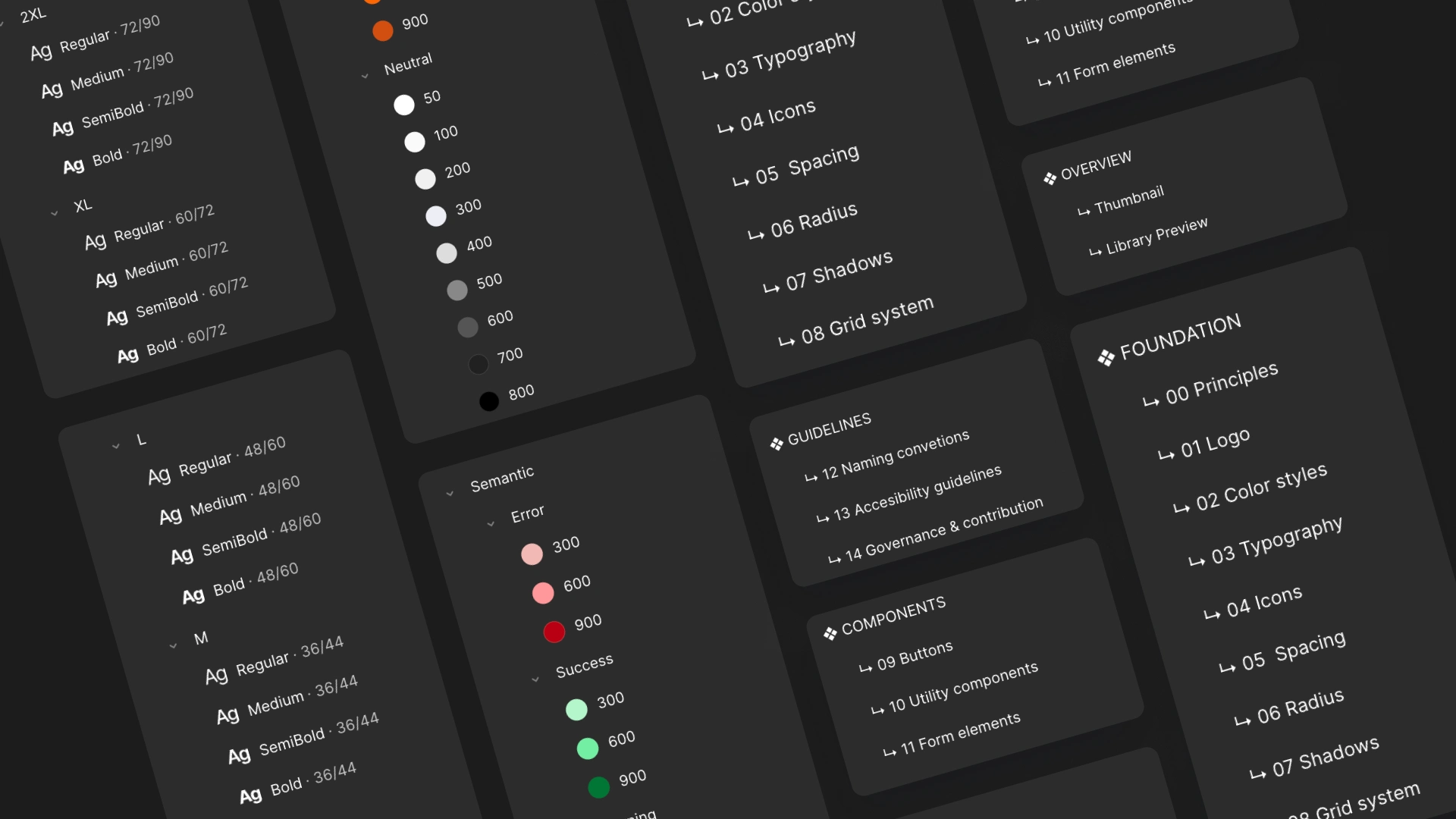
A large-scale enterprise B2B platform used daily by long-term professional users.
I designed and own the design system, standardizing UI patterns, tokens, and components across multiple legacy products while supporting ongoing feature development.
Index
Context & Core Challenge
My Role & Ownership
Design System Structure
Adoption & Impact
Governance & Scalability
01. Context & Core Challenge
Before my involvement, the product relied on a basic UI kit that lacked structure, scalability, and coverage for a large, enterprise-grade platform.
As the product ecosystem grew, this led to inconsistencies, duplicated patterns, rising design debt, and slower decision-making across teams.
The existing setup was not designed to support multiple products, long-term scalability, or consistent collaboration between design and development.
02. My Role & Ownership
I identified the gap between the existing UI kit and the actual needs of the product ecosystem. I fully designed, structured, and documented a scalable design system to replace the legacy setup and unify all current and future products under a single system.
I own the system end to end, structure, tokens, components, documentation, and ongoing evolution.
03. Design System Structure
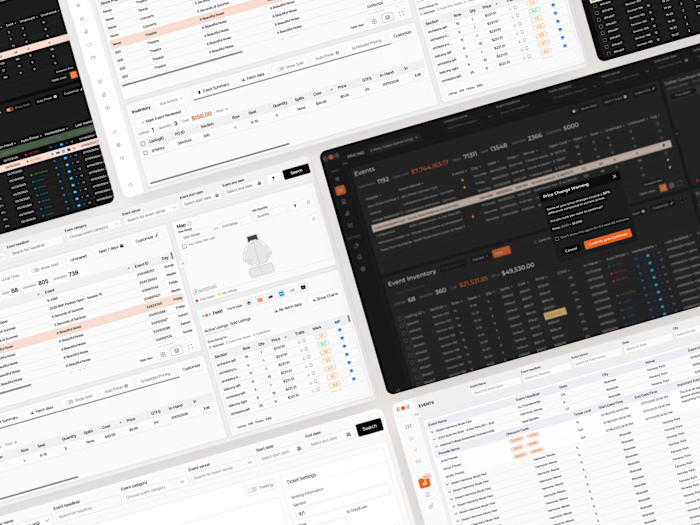
The design system is built as a modular, token-driven foundation covering visual standards, layout rules, components, and usage guidelines. Each section is clearly documented to ensure consistency, speed, and predictability across product teams.
The system is structured to be usable not only by me, but by any future designer or developer joining the product.
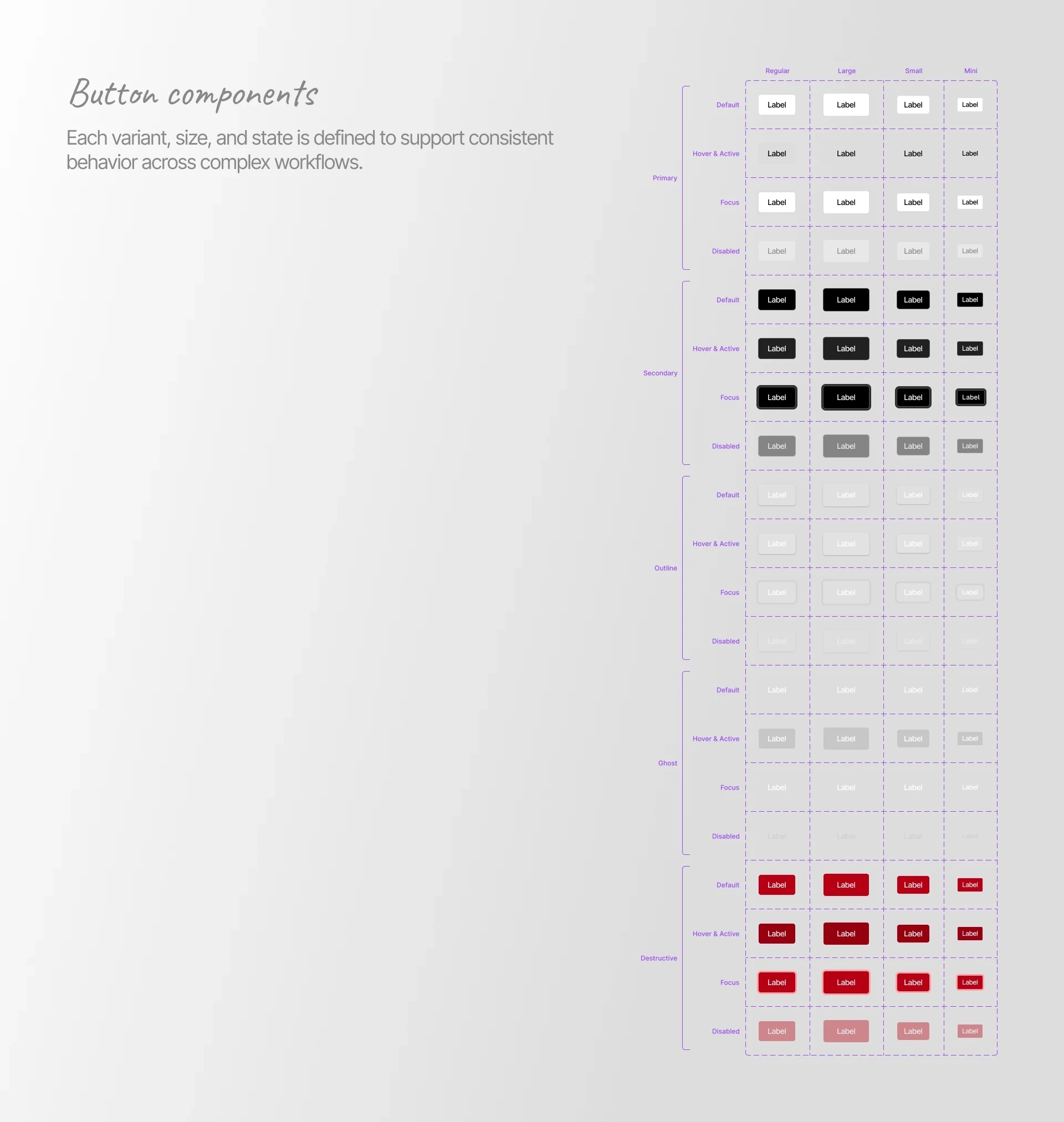
04. Adoption & Impact
The design system is actively used in production and has replaced the legacy UI kit.
All new work is built exclusively on top of this system, reducing inconsistency and eliminating ad-hoc design decisions.
This significantly reduced design debt, improved development handoff, and enabled faster, more confident shipping without rethinking basic UI decisions.
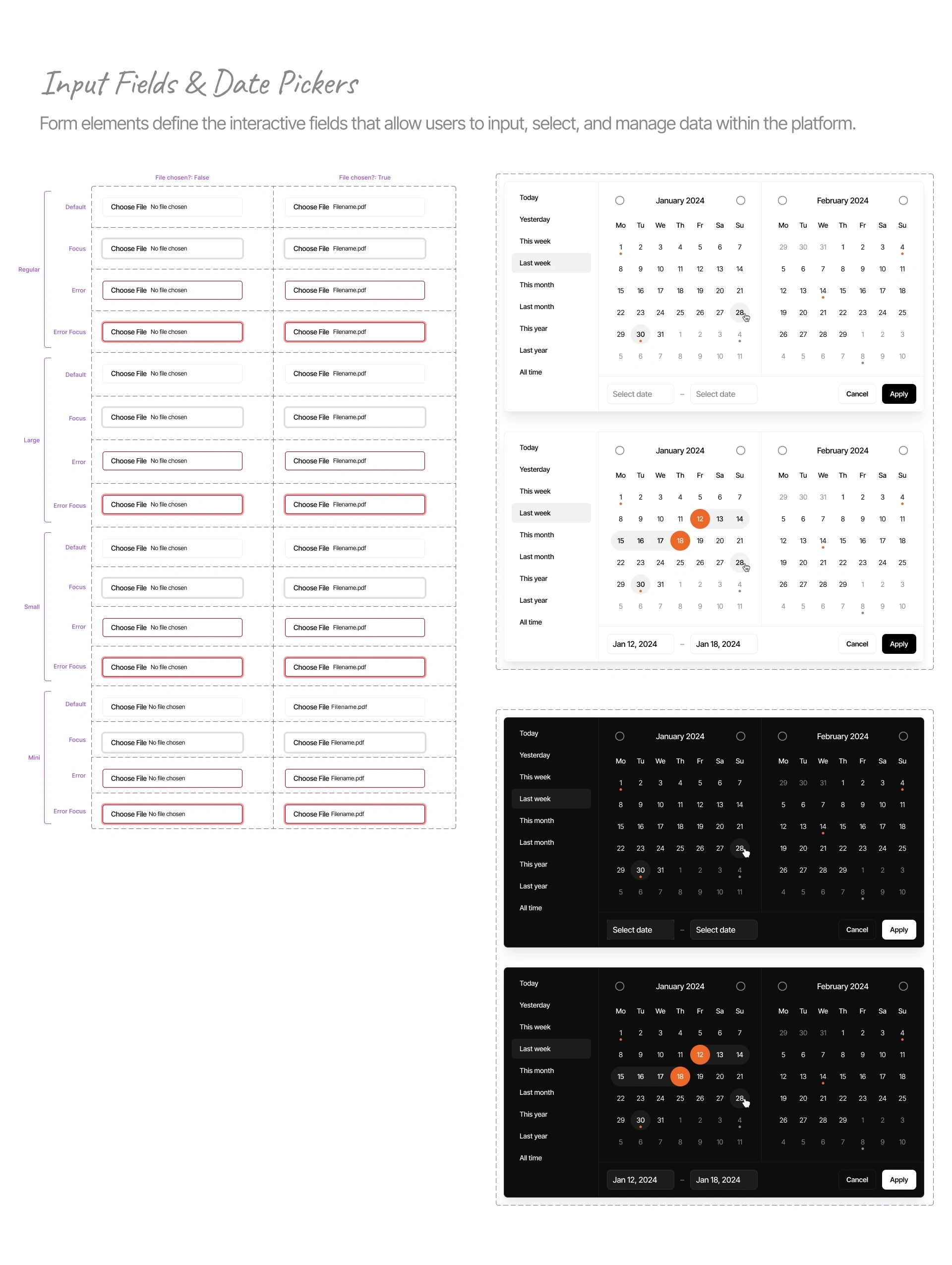
05. Governance & Scalability
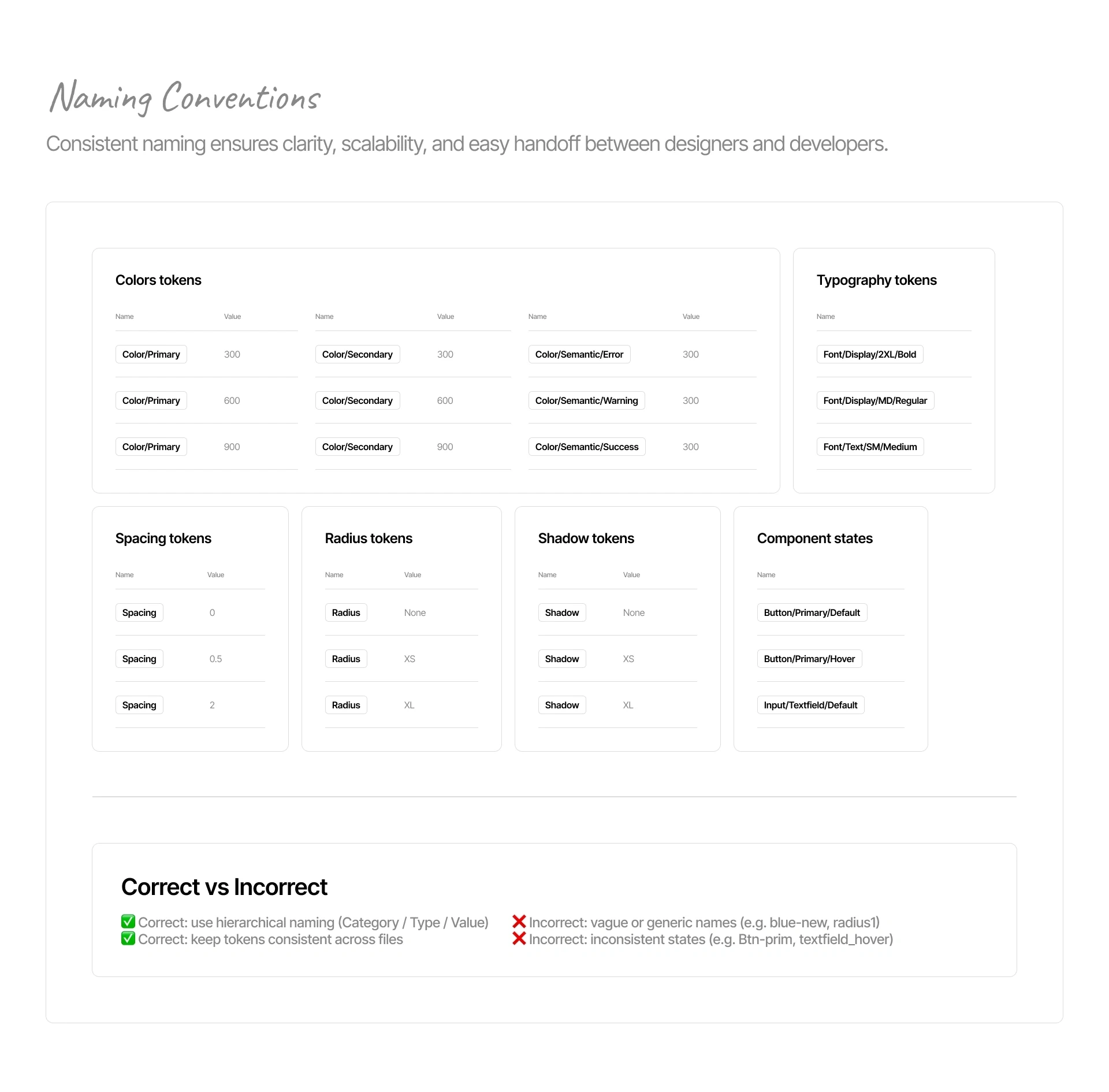
The system is documented with clear naming conventions, accessibility guidelines, and contribution rules. It is designed to scale across multiple products while remaining consistent, predictable, and easy to extend over time.
This foundation enables faster onboarding, shared ownership in the future, and long-term product scalability without accumulating new design debt.
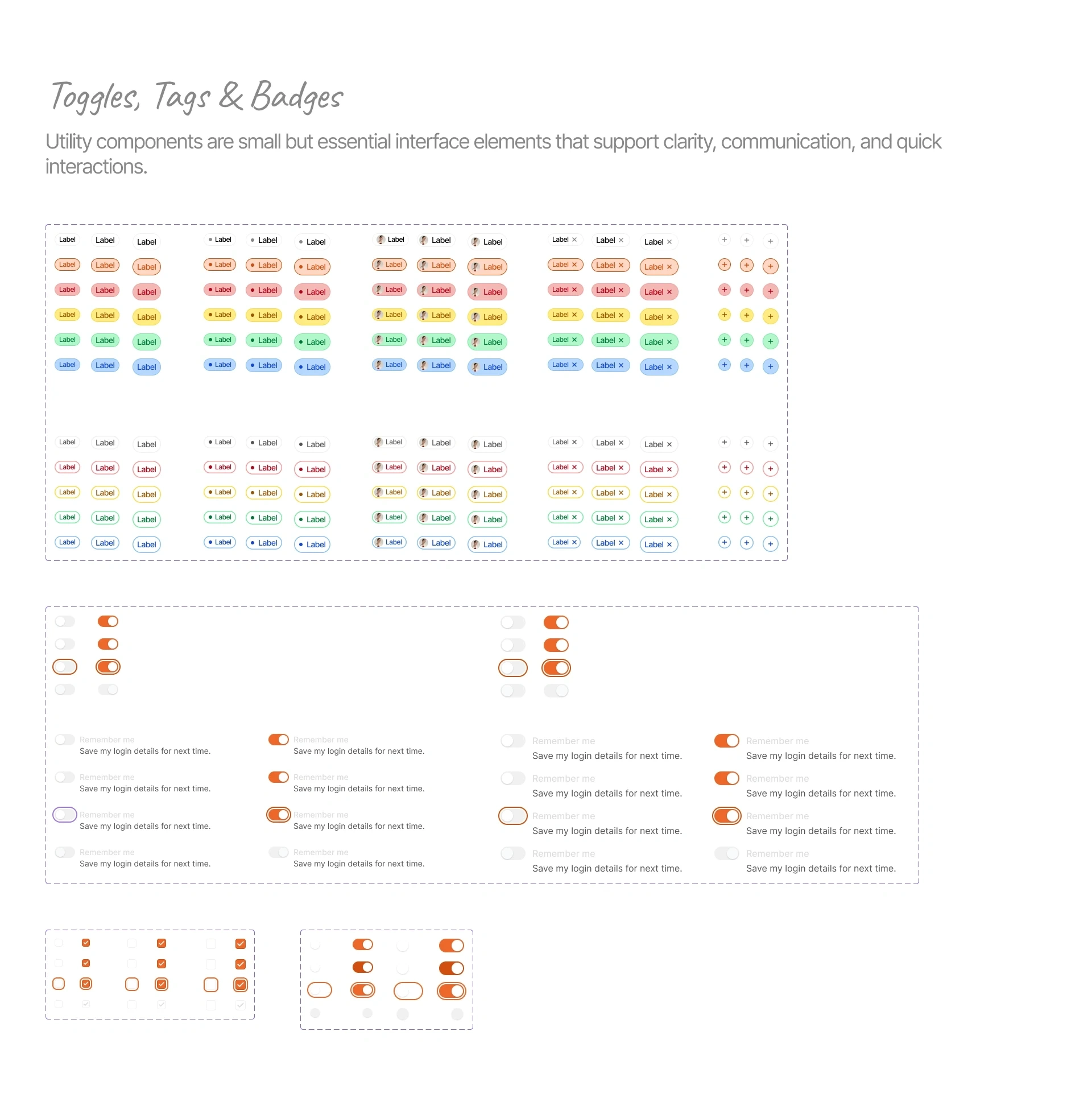
07. Key Takeaways
A design system only works when it is treated as a product, not a document — it requires ownership, iteration, and governance over time.
Structure before screens is the core principle. Tokens, naming conventions, and component rules have to be established before individual UI work scales.
A modular, token-driven foundation reduces decision fatigue across teams and eliminates the need to rethink basic UI patterns on every new feature.
Clear contribution rules and documentation are what separate a scalable system from a personal library that breaks when someone else touches it.
08. Next Steps
Expand component coverage to fully support advanced data-heavy scenarios, edge cases, and high-density table interactions specific to broker workflows.
Introduce motion and interaction guidelines to standardize transitions and feedback patterns across the platform.
Build a contribution model so future designers or developers can extend the system without breaking existing patterns.
Strengthen design-to-development handoff documentation to reduce implementation ambiguity and speed up shipping cycles.
Continue evolving the system in parallel with new product features to prevent design debt from re-accumulating as the platform scales.
Like this project
Posted Mar 16, 2026
Designed and own a token-driven design system for a large-scale enterprise B2B platform. Replaced legacy UI kit with a foundation used across multiple products.
Likes
1
Views
7
Timeline
Oct 1, 2025 - Jan 15, 2026