UX Overhaul for Enterprise B2B Ticketing Platform

Filip Vuković

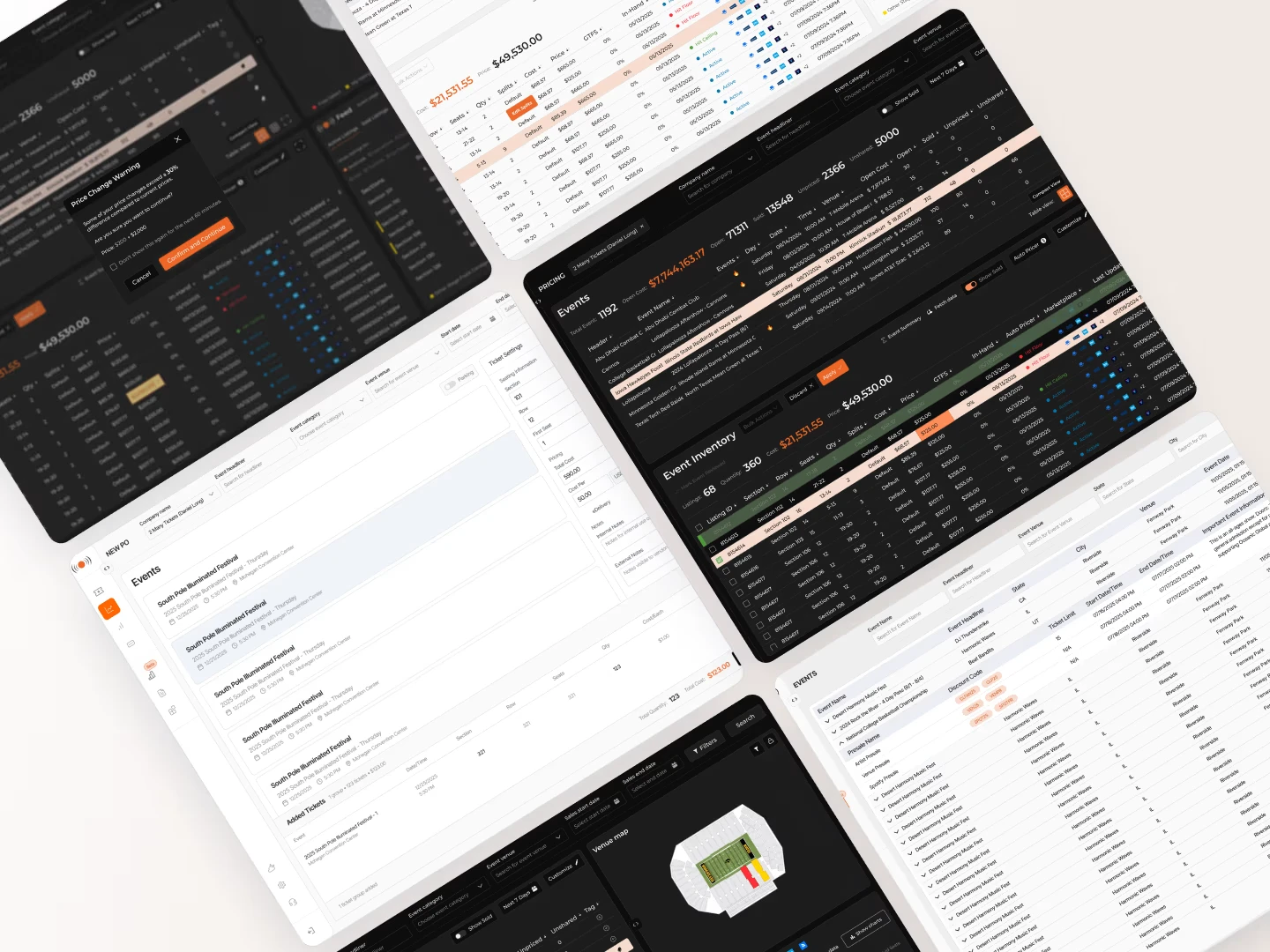
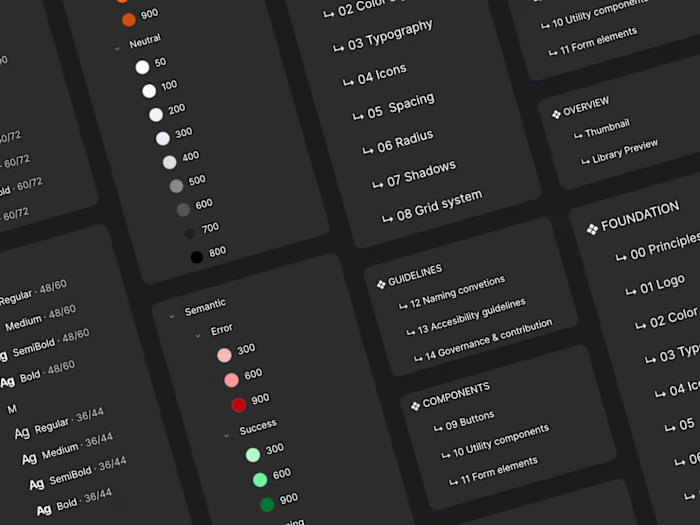
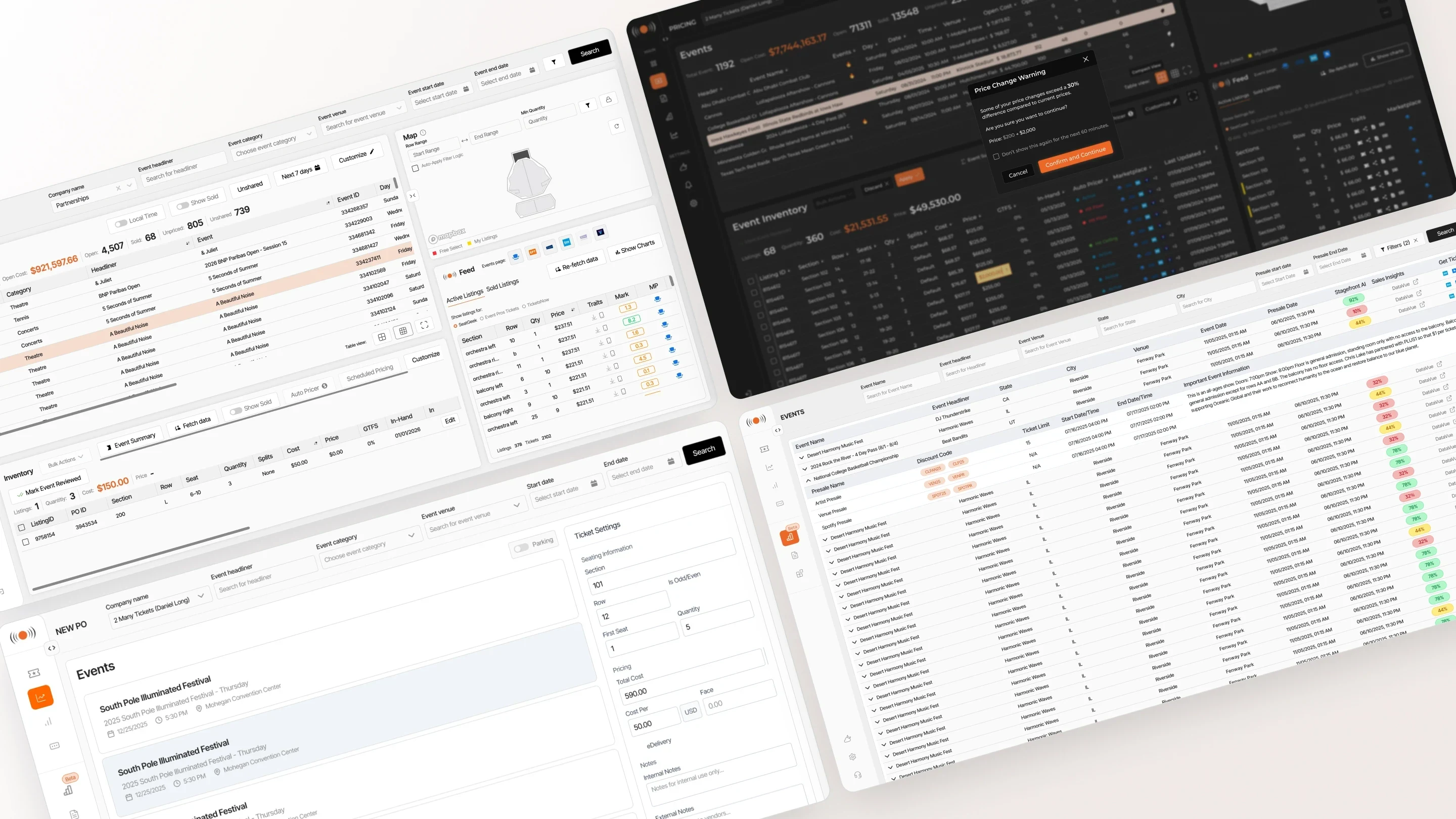
[NDA protected] A large-scale enterprise B2B platform used by professional brokers to manage ticket inventory, pricing, and distribution across multiple US marketplaces. I act as the sole UX Owner, responsible for modernizing legacy workflows, standardizing UI through a shared design system, and aligning multiple products under a consistent UX direction.
Context
Users & Core Challenge
My Role
Transition from Legacy
Execution
Outcomes
Key Takeaways
Next Steps
01. Context
This project focused on a large-scale, data-heavy enterprise B2B platform operating in the ticketing industry.
I took ownership of the UX direction during an active transition from a legacy interface to a new design direction, within a product that supports revenue-critical workflows used daily. Any disruption carried direct operational and financial risk.
Rather than approaching the work as a visual redesign, the priority was to stabilize the product UX, introduce structure, and create a foundation that would allow the platform to evolve without breaking day-to-day operations.
02. Users & Core Challenge
The platform serves two primary user groups with overlapping but fundamentally different needs.
Brokers rely on the system daily to manage large inventories, pricing, and time-sensitive decisions under constant pressure. Their workflows are highly data-dense, where clarity and speed directly affect revenue.
Internal employees use the same platform for operational oversight, support workflows, and system-level tasks that require precision, consistency, and predictability across tools.
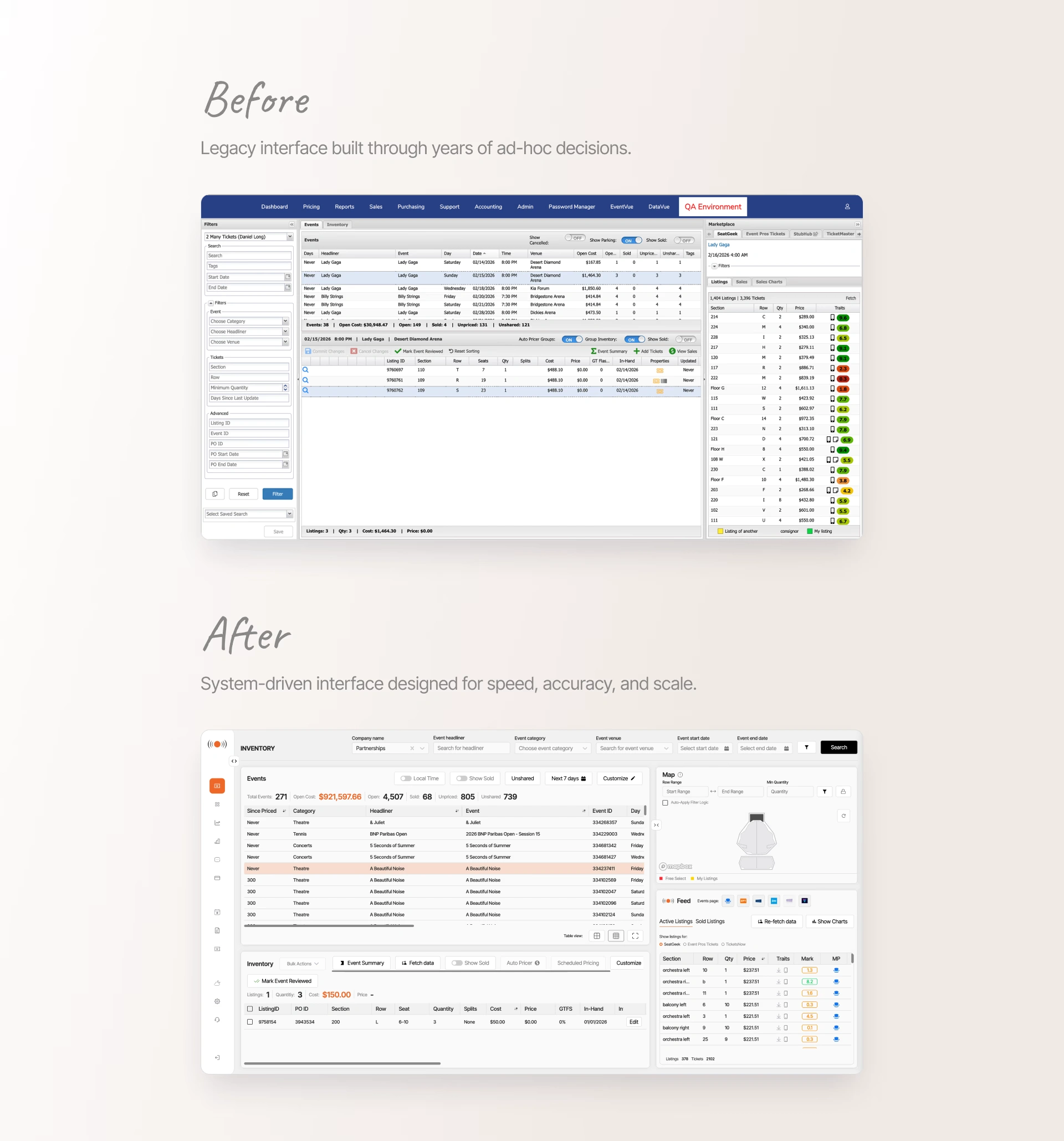
Both groups operated within a shared interface shaped by legacy patterns. Over time, inconsistent layouts, fragmented interactions, and unclear hierarchies increased cognitive load, slowed decision-making, and raised the risk of costly errors.
03. My Role & Ownership
I owned the UX structure and standards end-to-end throughout the platform’s transition away from legacy UI.
My responsibility was not limited to individual screens. I took ownership of:
how workflows were structured
how data-heavy interactions behaved
and how consistency was enforced across tools and teams
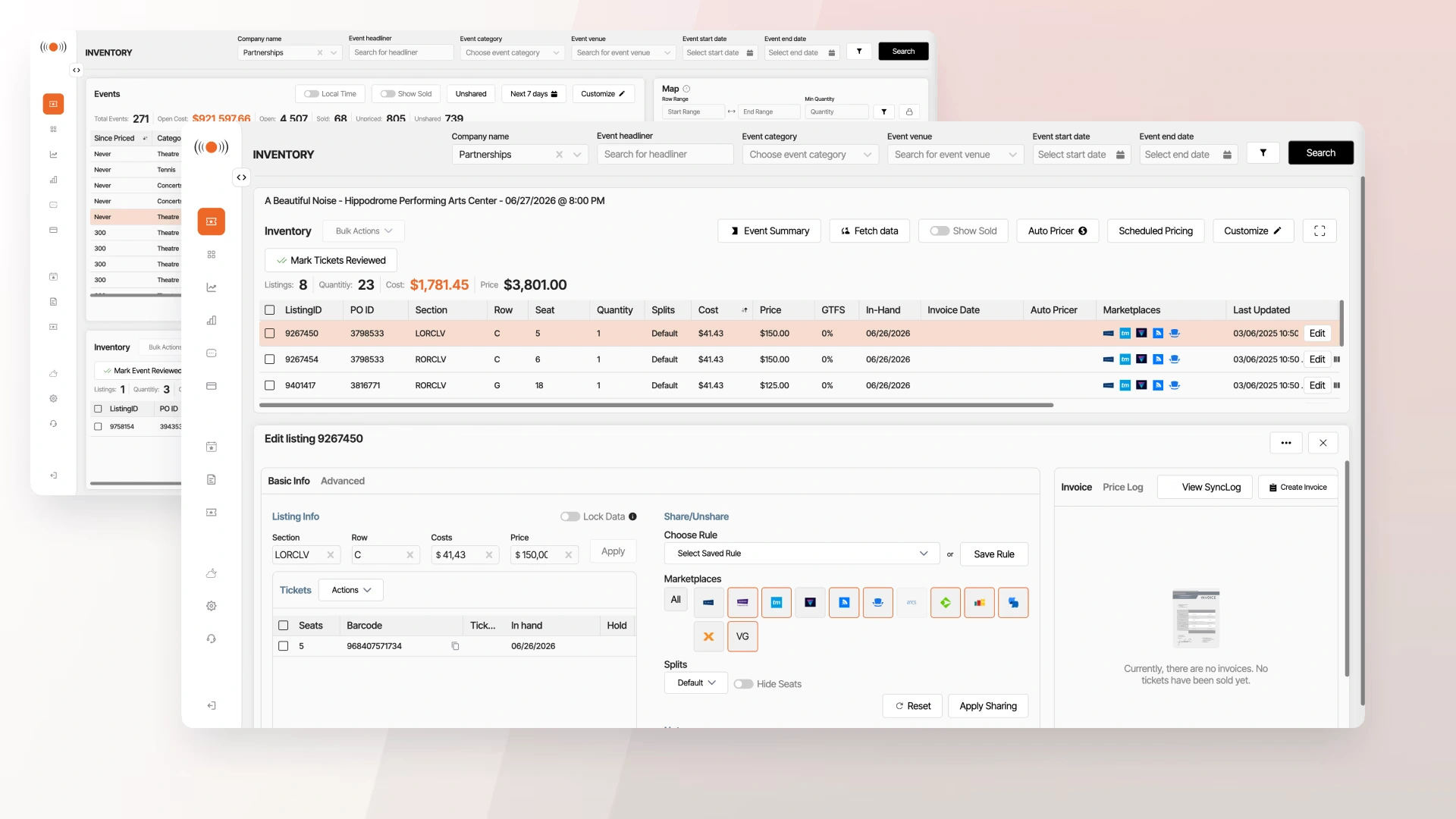
This meant defining UX rules, layout logic, and interaction patterns that others could reliably build on. The goal was to ensure that new work added clarity instead of complexity, and that UX decisions scaled with the product.
04. Transition from Legacy
Instead of iterating on isolated redesigned pages, I led a system-first transition approach.
The focus was on establishing a shared UX foundation that could gradually replace fragmented legacy patterns. This allowed teams to migrate workflows incrementally, without forcing a major redesign or disrupting active users.
Only once this foundation was in place did individual screens and workflows get revisited, ensuring that every improvement aligned with a broader, consistent system rather than introducing new exceptions.
05. Execution
With clear structure in place, execution centered on controlled, incremental progress.
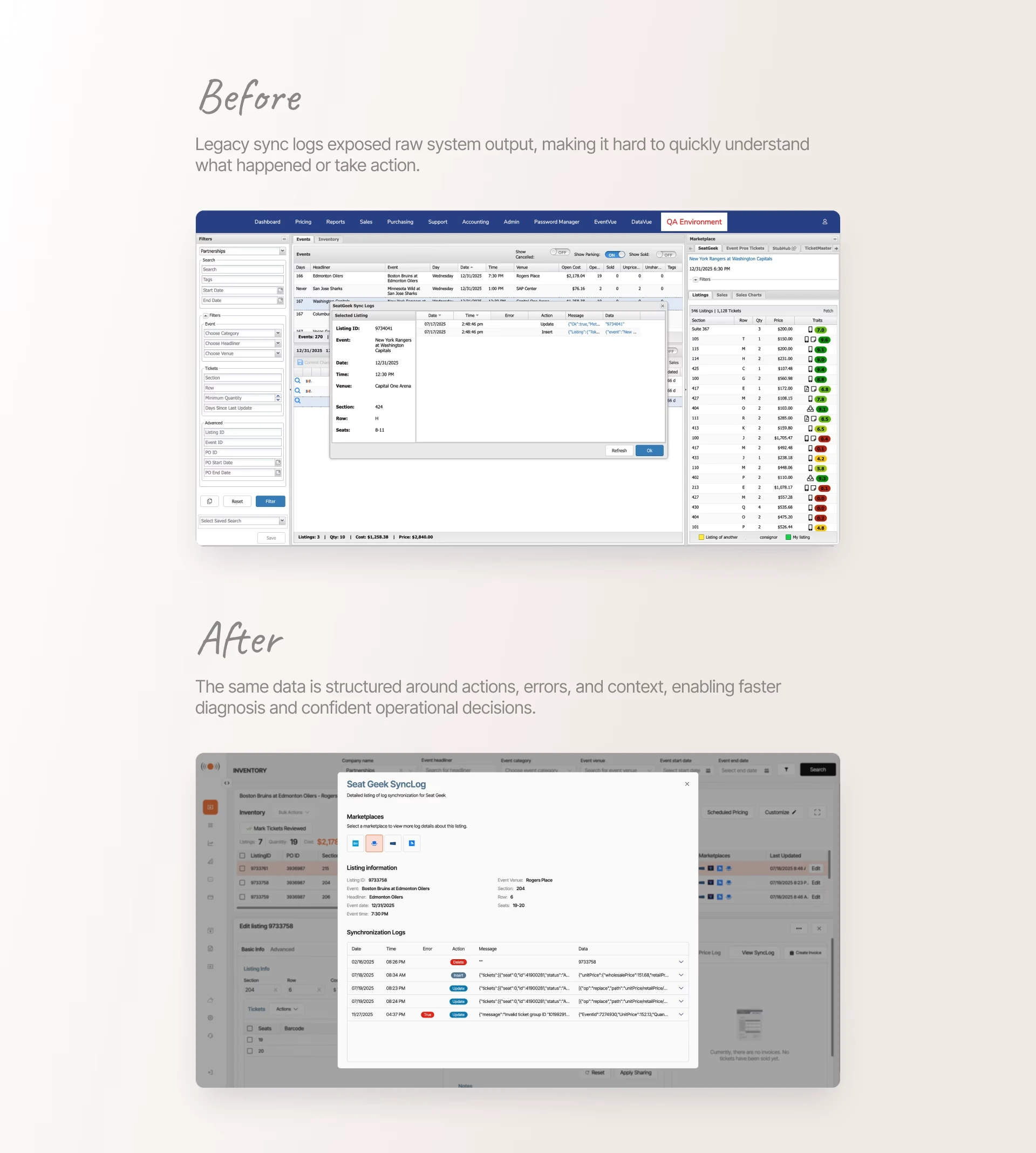
Core workflows were migrated step by step, prioritizing areas with the highest operational impact. Complex data interactions were simplified without altering underlying logic, allowing users to transition naturally while continuing their daily work uninterrupted.
This approach supported multiple teams shipping in parallel, all working within the same UX ruleset, while the platform remained fully operational throughout the transition.
06. Outcomes
The platform is used daily by 1,000+ brokers and internal users, supporting high-volume, revenue-critical workflows.
Beyond immediate improvements, the most significant outcome was the shift in direction: the redesign moved from isolated fixes to a structured, long-term UX strategy. Inconsistency and decision friction were reduced, and future work could build forward without reintroducing legacy complexity.
07. Key Takeaways
Large-scale enterprise products benefit most when systems are established before screens.
Incremental legacy migration reduces risk, preserves trust with users, and allows teams to improve continuously without operational downtime.
Clear UX ownership is essential when products evolve over years rather than releases.
08. Next Steps
Continue migrating remaining legacy screens under shared UX standards to eliminate fragmentation and prevent new UX debt.
Further separate broker and internal workflows to reduce cognitive load and align interfaces with role-specific decision-making.
Expand the design system to fully support advanced data-heavy scenarios, edge cases, and high-density interactions.
Strengthen cross-team adoption of UX standards to enable parallel development without consistency or quality loss.
Support long-term platform scalability by keeping system ownership centralized as the product continues to evolve.
Like this project
Posted Mar 16, 2026
Led end-to-end UX redesign of a legacy enterprise B2B platform used daily by 1,000+ ticket brokers. Owned UI standardization across multiple products.
Likes
1
Views
10
Timeline
Mar 17, 2025 - Ongoing