E-newsletter Campaign Boosts Subscriber Retention

Antonio Matta

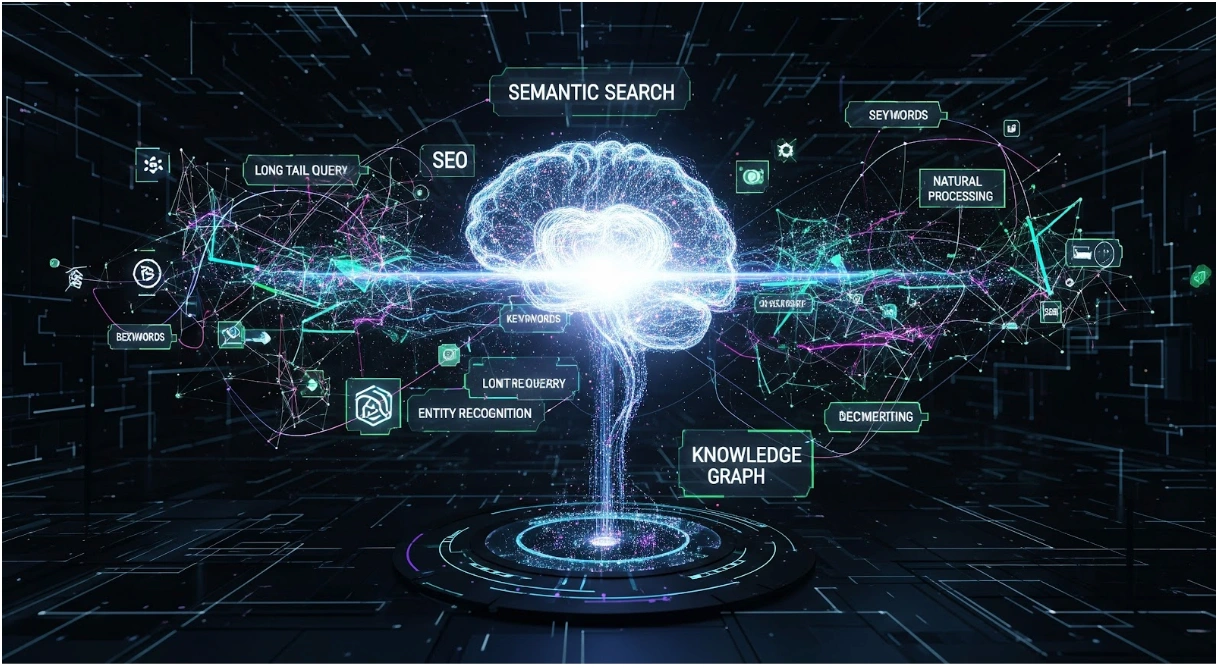
From Keywords to Context: How NLP and Semantic Search Are Reshaping SEO
Ask anyone who’s written for the web long enough, and they’ll tell you: SEO used to be a game of checkboxes. Mention the right keyword five times, bold it once, add a header—and boom, traffic.
But the web has grown up. So have we.
Today, search engines don’t just parse keywords—they parse meaning. Thanks to advances in natural language processing (NLP), Google understands intent, context, and even nuance like never before. It’s not just about “ranking”; it’s about resonance.
As someone who straddles both the technical and human side of content strategy, I’ve seen firsthand how NLP has reshaped the SEO landscape. In this piece, I’ll break down the shift from keywords to context, show you how I use semantic tools in my workflow, and explore what it really means to optimize for search engines that speak our language.
The Death of the Old-School Keyword Strategy
There was a time when SEO was less about understanding people and more about speaking fluent “search engine.” If you wanted to rank, you didn’t need to tell a compelling story, answer nuanced questions, or even write something pleasant to read. You just needed the right words, repeated often enough to make a bot happy. It worked… until it didn’t.
The Keyword Stuffing Problem
Keyword stuffing was the SEO equivalent of a nervous tic—you just kept saying the same thing over and over, hoping the algorithm would notice.
If you sold blue widgets, your page might open like this:
“Welcome to our blue widgets store! We sell the best blue widgets. Our blue widgets are the highest quality blue widgets. Buy your blue widgets today!”
To early search engines, this repetition was a neon sign flashing “RELEVANT!”. To human readers, it was robotic, clumsy, and—let’s be honest—borderline insulting.
The fallout?
Unreadable pages that chased clicks but sent real people running.
Lost trust as sites looked spammy and unserious.
Algorithmic karma—when Google’s Panda update arrived in 2011, keyword-stuffed pages plummeted in rankings overnight.
Exact Match Obsession
If keyword stuffing was about quantity, exact match obsession was about rigidity. Writers believed you had to use the exact phrase someone typed—word for word—or risk never showing up. If a user searched “best running shoes,” you made sure that exact phrase appeared… repeatedly. Synonyms? Related phrases? Not in this playbook.
The result?
Awkward phrasing that sounded like a bad translation.
Missed traffic from related queries (“top sneakers for marathon training” never stood a chance).
Zero understanding of intent—focusing on the words instead of the why.
When Google rolled out updates like Hummingbird (2013), BERT (2019), and MUM (2021), it stopped thinking like a literal keyword matcher and started thinking like a language model. Suddenly, “purchase crimson footwear” could match “buy red shoes,” and sites still stuck in the exact-match era were left in the dust.
Why It All Died Out
Legacy SEO tactics like these were built on a flawed assumption: that search engines were dumb. That you could trick them with repetition and precision without actually delivering value. But search engines had other plans. They evolved to reward meaning, context, and intent—things machines used to struggle with but now, thanks to NLP, understand better than ever.
Old SEO was a sprint. Modern SEO is a marathon.
And the winners today aren’t the ones who shout the loudest—they’re the ones who speak the clearest to both humans and algorithms.
What NLP Really Brings to SEO
Natural Language Processing (NLP) is how we teach computers to “read” between the lines—to interpret, analyze, and even generate human language. While NLP powers everything from real-time translation apps to voice assistants, it’s also quietly transforming search engines. Today’s features like featured snippets, People Also Ask (PAA) boxes, and entity-based indexing all depend on it.
Here’s the heart of it: NLP gives search engines the ability to move beyond matching words to actually grasp meaning. Three key techniques—named entity recognition, sentiment analysis, and topic modeling—are at the core of this shift, and they’re directly shaping how your content is discovered.
Named Entity Recognition (NER): Pinpointing the “Who,” “What,” and “Where”
Named Entity Recognition, or NER, identifies and classifies key elements in text—people, organizations, locations, brands—so they can be indexed and linked more effectively. Imagine taking a 1,000-word article and instantly tagging every relevant name or place so a search engine can connect it to the right queries.
This tagging transforms unstructured text into structured data, which makes retrieval faster and more accurate. Research has shown that NER is essential for extracting meaningful information at scale, particularly in semantic indexing and linking related content. In SEO terms, it’s the difference between Google vaguely knowing your article is “about coffee” and knowing it’s specifically about Ethiopian Yirgacheffe coffee beans harvested in Sidamo.
Sentiment Analysis: Reading the Room
Sentiment analysis detects the emotional tone of a piece of text—positive, negative, or neutral. While that’s obviously useful for analyzing tweets or product reviews, it’s also invaluable for search. By understanding sentiment, search engines can refine rankings to match the “mood” of the query. Someone searching “best budget smartphone” isn’t looking for scathing reviews—they’re looking for optimism and value. Sentiment analysis captures these nuances, helping algorithms deliver results that align with user expectations and intent. It also plays a role in disambiguating queries and surfacing the most relevant answers in context.
Topic Modeling: Connecting the Dots at Scale
Topic modeling uses algorithms like latent Dirichlet allocation (LDA) to detect recurring themes in large collections of documents. This matters because users rarely type in perfectly precise queries. By recognizing thematic patterns—say, grouping “injury prevention,” “training plans,” and “hydration tips” under the umbrella of “marathon preparation”—search engines can surface richer, more relevant results. Topic modeling shines in scenarios where manual classification is impossible due to scale, and it complements NER and sentiment analysis by adding a thematic layer to the search engine’s understanding.
How These Work Together in Search
In practice, NER identifies the entities in your content, sentiment analysis adds emotional context, and topic modeling organizes it into meaningful clusters. Together, they let search engines parse semantic nuance instead of blindly matching strings of text. This is why modern search feels smarter—it’s context-aware. When you type “best cities to visit after retiring,” the results aren’t just keyword matches; they’re curated around relevant entities (cities), adjusted for sentiment (positive lifestyle coverage), and organized into coherent topic clusters (retirement travel, cost of living, healthcare access).
Where You See It in Action
Featured Snippets: NLP extracts the most relevant, concise answer from a much larger text.
People Also Ask (PAA): Topic modeling clusters related questions based on patterns in user behavior.
Entity-Based Indexing: NER powers this by organizing content around recognized entities, improving the accuracy and relevance of results.
Bottom line? NLP equips search engines to understand, not just retrieve. And in SEO, the brands that align their content with that level of understanding are the ones that win—because they’re not just talking to algorithms anymore; they’re talking to algorithms that speak human.
Real-World Workflow — Using NLP for SEO
NLP might sound like something reserved for PhDs and AI labs, but the truth is, you can start using it in your SEO today—without needing to code a single model yourself. The key is knowing the steps, the tools, and the common thread they all share.
Here’s a straightforward process you can apply to almost any site or niche:
Step 1: Run a Content Audit with NLP-Powered Tools
Before you optimize, you need to know where you stand. Modern SEO tools like NeuronWriter (my go-to), SurferSEO, SEMrush, Clearscope, or Outranking can analyze your existing content through an NLP lens.
What to look for:
Which topics and entities does your content already cover well?
Which semantically related terms are your competitors using that you’re not?
How does your topical coverage compare to the top-ranking pages?
💡 Tip: Many tools offer lifetime deals or trial subscriptions—worth exploring if you want to test without committing long-term.
Step 2: Use NER & Topic Modeling to Identify Gaps
Named Entity Recognition (NER) and topic modeling aren’t just buzzwords—they’re your gap detectors.
NER helps you see which people, places, brands, and concepts your competitors’ content mentions (and ranks for) that you’ve missed.
Topic modeling reveals the thematic clusters search engines associate with your target keyword.
Most modern NLP tools will automatically highlight these gaps, so you can build a list of “must-have” entities and topics for your content refresh.
Step 3: Build Semantic Content Clusters
Now that you know the gaps, you can organize your efforts into semantic clusters—groups of related pages that cover a topic from multiple angles.
Example:
If your main page is “Beginner’s Guide to Marathon Training,” your cluster might include:
Injury prevention tips (entity: “shin splints,” “foam rolling”)
Nutrition plans (entity: “carb loading,” “electrolyte balance”)
Gear reviews (entity: “running shoes,” “GPS watches”)
Why it works: Search engines see these clusters as signs you’re an authority on the topic, not just a one-off content producer.
Step 4: Optimize and Interlink
Use your chosen tool to weave the missing entities and related terms naturally into your content. Avoid stuffing—write like a human, for humans.
Then, link your cluster pages together so both users and search engines can navigate the topical map you’ve built.
Step 5: Monitor, Measure, and Iterate
SEO is a moving target. Re-run your audits every few months to:
Catch new entities emerging in your niche.
Adjust clusters as trends shift.
Spot competitors trying to outrank you with fresh semantic coverage.
The Common Thread:
Regardless of which tool you choose, the essentials are the same:
Identify what’s there.
Spot what’s missing.
Build clusters that cover the topic holistically.
Optimize for both meaning and usability.
That’s the formula that works—whether you’re using NeuronWriter, SurferSEO, or the next great NLP tool that hasn’t even launched yet.
The ROI of Going Semantic
In SEO, visibility alone isn’t enough—you want visibility that converts. That’s where semantic strategies deliver real return on investment (ROI). By aligning your content with how people actually think and understand concepts, you’re not just chasing rankings—you’re building relevance, engagement, and trust. The payoff is tangible: better rankings, more qualified traffic, higher engagement, and ultimately, stronger conversion rates. And the data backs it up.
Why Semantic Approaches Outperform Legacy Keyword Models
Researchers show how Probabilistic Latent Semantic Indexing (PLSI) can cluster web content into meaningful thematic groups. Unlike traditional keyword matching, PLSI identifies the relationships between terms and the intent behind them. This transforms search engines from “word finders” into “meaning matchers,” allowing them to retrieve content that reflects the full scope of a user’s query. The business value? When your content is semantically structured, it resonates with both the algorithm and the human on the other end—making it more likely to rank higher, attract organic traffic, and keep readers engaged.
The Human Factor in Semantic Content
Other experts emphasize that incorporating human intelligence into semantic content creation makes it not just technically accurate, but contextually rich. This fusion helps search engines interpret content with greater precision, boosting click-through rates and engagement while reducing bounce rates. In other words, when search results align with a user’s true intent, they’re more likely to stick around and take action.
Semantic Understanding Reduces Friction
Combining machine-understandable data with human-oriented information may reduce information overload—one of the biggest frustrations in search. Their findings show that semantic techniques improve query responses, elevate user satisfaction, and encourage repeat visits. Those satisfied users aren’t just numbers on an analytics dashboard; they’re returning customers, brand advocates, and loyal community members—each contributing to ROI.
Tailoring to the Domain Pays Off
Domain-specific semantic search, integrating structured knowledge that’s specific to your industry or niche, can help you tailor search results to meet highly specific user needs. This precision increases user satisfaction and interaction, driving both traffic growth and conversion metrics. And that’s the competitive edge: when your content dynamically adapts to nuanced queries—because your semantic structure makes those connections—you don’t just compete; you dominate.
Bottom line: Going semantic isn’t an “SEO trick.” It’s a long-term investment in clarity, context, and connection. The ROI comes from being the site that search engines trust to deliver answers people actually want—and the one users come back to because you consistently do.
From Ranks to Relationships
When we write for algorithms that understand meaning, we’re ultimately writing for people—people with questions, goals, and stories. Tools and techniques matter, but empathy is what turns optimization into connection. Semantic SEO isn’t just about outranking competitors; it’s about aligning with human intent, delivering value, and building trust. Because in the end, the best SEO doesn’t just win clicks—it wins relationships that last.
Like this project
Posted Oct 31, 2025
Through compelling copywriting and strategic content planning, Ramon helped a client retain 40% more subscribers in their e-newsletter campaign.
Likes
0
Views
0