HANGUT — Social Platform for Real-World Connections

SanganakHQ
Verified



HANGUT: Engineering a Social Platform Built for Real-World Meetups
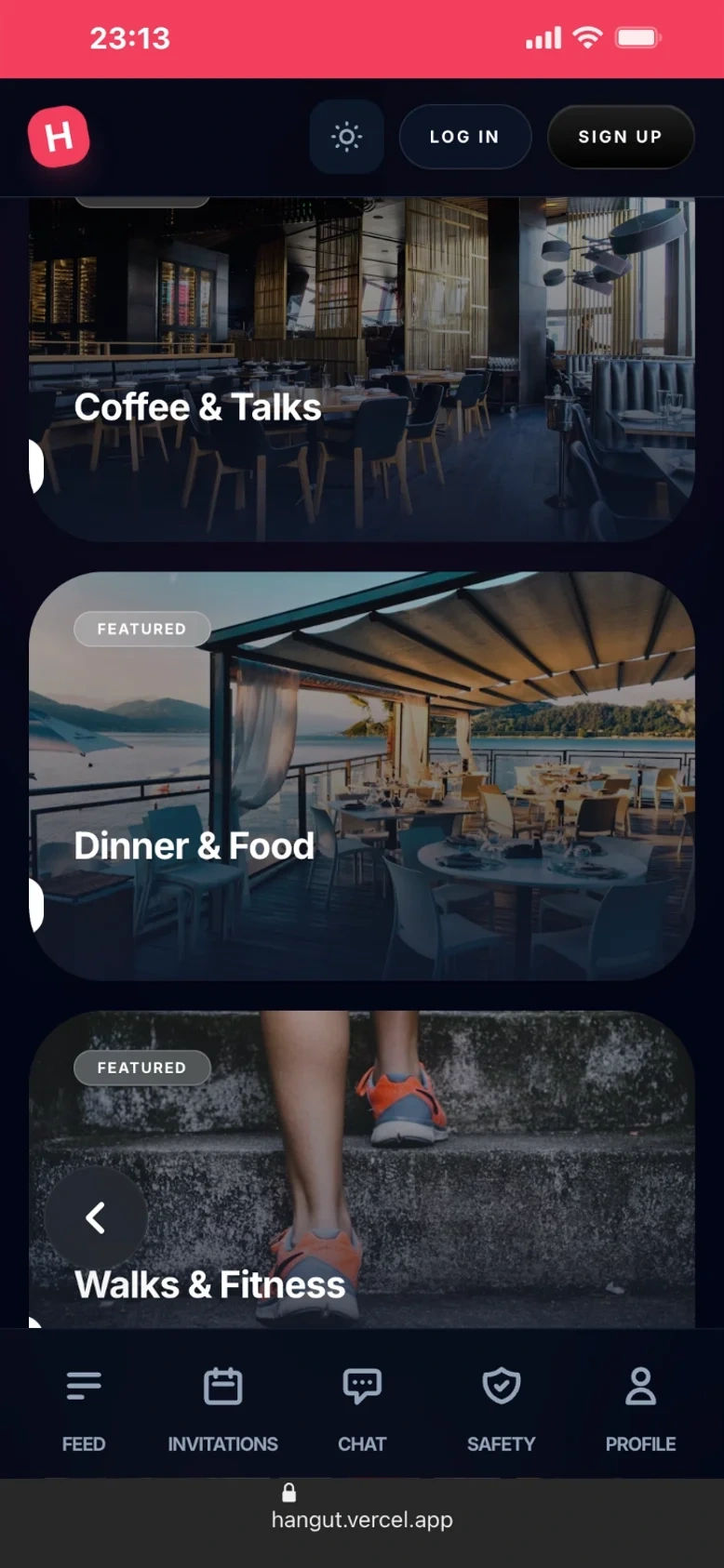
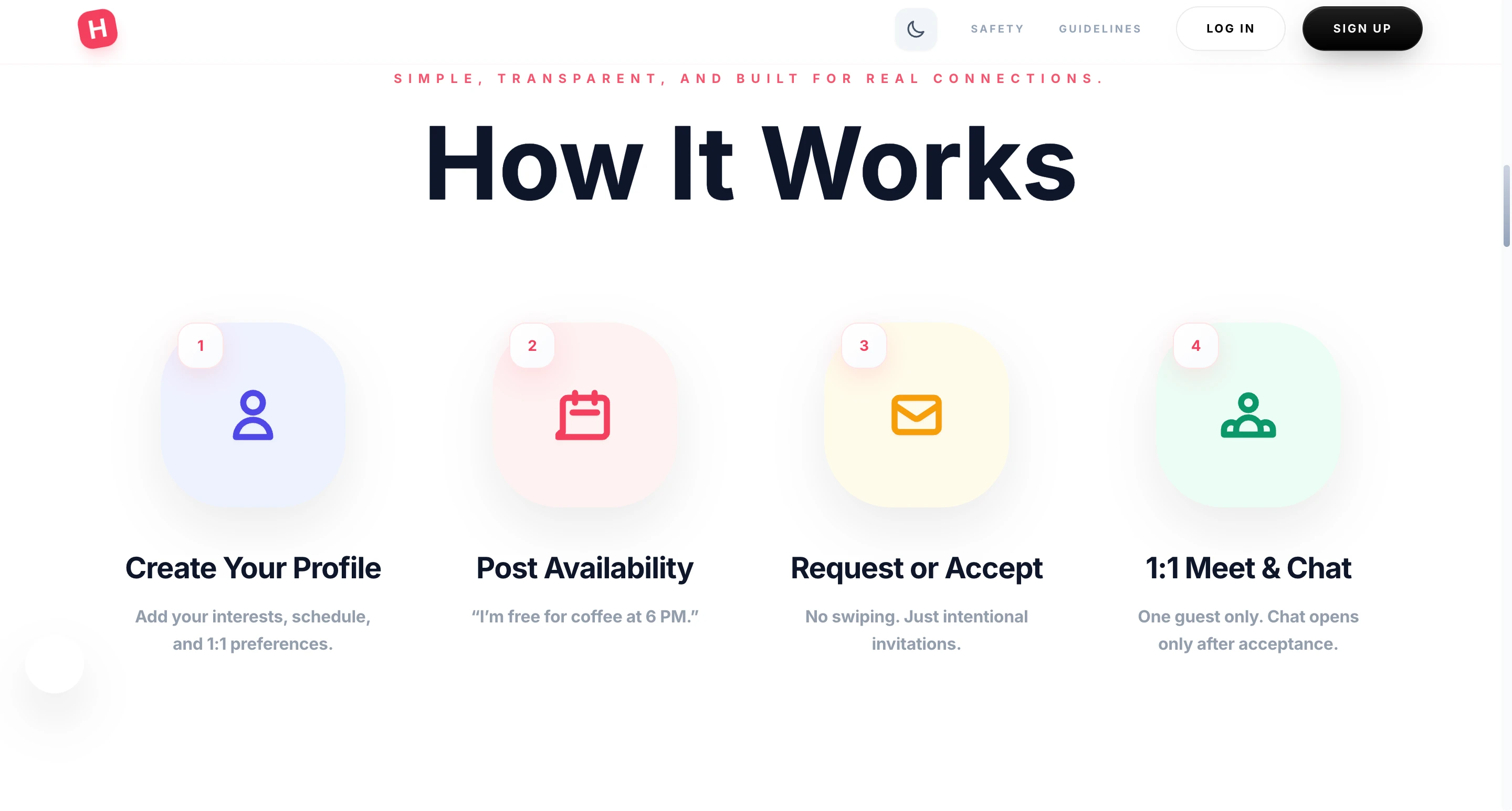
Most social platforms optimize for screen time. HANGUT wanted the opposite: a platform that gets people off their phones and into real-world, 1-to-1 meetups based on shared activities. The technical challenge was building something that feels as effortless as swiping through a feed but actually results in people meeting face to face.
The Approach
I engineered the full-stack platform on React, Node.js, and AWS, designing the architecture around real-time matching and activity coordination.
Activity-based matching engine: Built a system that pairs users based on shared interests and activity preferences rather than profiles. The algorithm prioritizes proximity, availability, and activity compatibility to generate meetup suggestions that actually happen.
Real-time coordination layer: Implemented WebSocket-based real-time messaging and meetup confirmation flows. When two users match on an activity, the platform handles scheduling, location suggestions, and mutual confirmation without friction.
Scalable infrastructure on AWS: Designed the backend to handle concurrent users across multiple cities. Auto-scaling compute, managed databases, and CDN-delivered assets keep the experience fast as the user base grows.
Trust and safety architecture: Built verification systems, meetup check-ins, and reporting mechanisms. When you're facilitating real-world meetings between strangers, trust infrastructure isn't optional.

AI-Powered Matching & Recommendation System
The core intelligence behind HANGUT isn't a simple filter. It's a multi-signal matching engine that learns and adapts:
Weighted compatibility scoring: The matching algorithm processes multiple signals simultaneously: activity preferences, geographic proximity, schedule availability, past meetup completion rates, and user-reported compatibility scores. Each signal carries a dynamic weight that adjusts based on what actually leads to successful meetups in each city.
Activity recommendation engine: The platform doesn't just match people who want to do the same thing. It suggests activities based on user behavior patterns, trending activities in their area, time-of-day preferences, and what similar users have enjoyed. If someone consistently does coffee meetups on Saturday mornings, the system surfaces relevant matches before they search.
Location intelligence: Integrated geospatial processing to suggest optimal meetup locations based on midpoint calculations between matched users, venue type preferences, time of day, and real-time availability data. The system factors in transit accessibility and neighborhood safety signals.
Smart scheduling optimization: The coordination engine analyzes both users' availability patterns and suggests time slots with the highest probability of mutual acceptance. It learns from declined and accepted suggestions to improve future recommendations.
Engagement prediction model: Before surfacing a match, the system estimates the likelihood of the meetup actually happening based on historical patterns: response time tendencies, confirmation-to-completion ratios, and activity-specific engagement rates. Low-probability matches get deprioritized to keep the feed high-signal.
Intelligent Platform Operations
Beyond user-facing features, the platform runs on automated operational intelligence:
Automated moderation pipeline: Content and behavior flagging system that combines rule-based triggers with pattern detection. Suspicious activity patterns (rapid location changes, message spam, fake check-ins) are flagged automatically and escalated based on severity scoring.
Dynamic capacity management: AWS auto-scaling configured with predictive triggers based on usage patterns. The system pre-scales before peak hours (Friday evenings, weekend mornings) rather than reacting to load spikes after they hit.
Meetup quality feedback loop: Post-meetup ratings feed back into the matching algorithm. Users who consistently receive positive ratings get prioritized in match suggestions. Users with declining ratings trigger automated review workflows.
City-level analytics engine: Each city operates as its own data environment with localized trending activities, popular venues, peak usage times, and growth metrics. This powers both the recommendation engine and business intelligence for expansion decisions.
The Result
HANGUT launched as a fully functional social platform that facilitates meaningful 1-to-1 real-world connections. The AI matching engine processes multiple behavioral and contextual signals to surface high-probability meetups, while the automated operations layer keeps the platform safe and performant as it scales across cities and activity types.
Like this project
Posted Apr 15, 2026
Designed & Engineered a scalable activity-based social platform enabling meaningful 1-to-1 real-world meetups.
Likes
13
Views
27
Timeline
Feb 9, 2026 - Jun 5, 2026