Marketing Plan: HealthTech Decision-Makers

Tamar Peterson


Marketing Plan:
Targeting HealthTech Decision-Makers
*The deep analysis and insights from my content/SEO audits are the foundation for building a targeted marketing strategy. This marketing plan is an example of the kind of roadmap you can develop, using my recommendations as a guide.*
Project Overview
I developed this comprehensive quarterly content marketing plan, on behalf of a tech staffing firm, to target technology leaders within the HealthTech industry. The plan details funnel-aligned objectives (MQL/SQL focus), persona insights, content strategy (themes/formats), execution tactics, integrated promotion strategy, SEO approach, budget allocation, timeline, and KPIs.
Goals
Define a clear, actionable roadmap for a targeted lead generation campaign; align marketing activities with sales objectives; justify resource allocation; establish measurable goals for a key vertical.
Skills Used
Marketing strategy, content strategy, campaign planning, persona analysis, budget management, KPI development, SEO strategy, channel planning, B2B marketing.
Impact
Served as the guiding document for the HealthTech marketing campaign; aligned cross-functional marketing efforts; provided clear metrics for success evaluation.
Content Marketing Plan Targeting “Tech Tim” in Healthcare (Q3)
Objectives
The main objective of this content campaign is lead generation, specifically focusing on generating Marketing Qualified Leads (MQLs) and Sales Qualified Leads (SQLs). Increasing brand awareness within the target segment is a supporting objective. The audience for this campaign is “Tech Tim” in the healthcare/ HealthTech industry.
Our ideal prospect, Tech Tim, is looking for:
Tech experts whose skill sets perfectly align with Tech Tim’s goals
Temporary staff/contractors who can collaborate easily with Tim’s in-house team
Top performers who will create excellent deliverables in a timely manner
Hires whose rates are within Tech Tim’s budget
1. Generate MQLs
Goal: Move top-of-funnel contacts aware of general staffing challenges into the Consideration phase by capturing their interest with high-value, problem-focused content.
Execution: Offer valuable, downloadable assets (e.g. eBook, potentially gated case studies or reports) promoted via targeted ads, email, social media, and blog CTAs to capture contact information in exchange for insightful content.
KPIs: Hero asset landing page conversion rates; hero asset downloads; webinar registrations (new + existing contacts); Blog CTA click-throughs, and email open and click-through rates.
2. Generate SQLs
Goal: Move mid-funnel contacts actively considering staffing solutions into the Conversion phase by demonstrating Jobsity's clear value proposition and prompting direct sales engagement.
Execution: Drive qualified traffic from ads, email, and content CTAs to targeted landing pages featuring clear calls-to-action (e.g., "Book a Consultation," "Get Custom Quote"). Leverage high-intent events like the webinar to identify and nurture prospects ready for sales outreach.
KPIs: Submissions to Jobsity’s interest/contact form, booked sales calls, sales-ready contacts from webinar, and ad click-throughs converting on campaign-specific landing pages.
3. Increase Brand Awareness
Goal: Increase awareness and positive perception of Jobsity specifically as a nearshore staffing solution for HealthTech organizations looking to quickly and effectively scale their software capabilities, with long term ROI. Attract "Tech Tims" in healthcare and educate them on Jobsity's unique benefits for their industry.
Execution: Publish consistent, high-quality content that resonates with and informs HealthTech professionals (via SEO articles, social media, interview videos), consistently pointing them to Jobsity's resources and expertise across relevant channels.
KPIs: Growth in relevant blog/content hub traffic, social media engagement with HealthTech content, video view counts, topical newsletter signups, and registrations for the webinar (new contacts only).
Audience
Persona #1: Growth-Focused Tech Leader ("Tech Tim")
“Jobsity will help me find the right hires for my team and can provide software developers and a scalable technology team to help complete projects during various stages of development.”
Profile Summary: Typically holds senior technology leadership roles (CTO, VP Eng, IT Director/Sr. Mgr) in SMB or Mid-Market companies in North America. Age 35-50, holds a relevant technical degree (BS/MS), and values quality, efficiency, innovation, and reliable partners.
Key Professional Goals: Successfully staffing and scaling development teams with top-tier talent; delivering high-quality software projects efficiently and within budget; driving technical innovation relevant to business needs.
Major Challenges & Pain Points: Facing significant challenges with tech talent scarcity, the high cost and retention difficulties of domestic hires, and the complexities of managing remote/nearshore teams effectively (communication, time zones, quality assurance). Often under budget pressure while needing to keep pace with rapid technological change (like AI). Key trigger moments for seeking solutions include new leadership, cost-cutting mandates, or urgent project staffing needs.
Information & Decision Making: Researches solutions online but heavily values peer recommendations, industry expert insights (events/webinars), and trusted industry publications. Makes decisions based on robust information like case studies, detailed reports, and clear ROI. Needs answers quickly regarding process ease, hiring speed, talent quality/vetting, and cost-effectiveness.
Purchasing Influences: Prefers information via industry publications, events (conferences/trade shows), recommendations from trusted peers. Conducts online research and compares options. Values robust research, case studies, testimonials.
Content Types Preferred: Whitepapers, case studies, video testimonials, personalized proposals/demos. Webinars with industry leaders, robust reports/articles.
Our Approach: This plan targets the Tech Tims of healthcare and HealthTech. This informs the persona by adding industry-specific challenges like HIPAA compliance, legacy systems integration, data security when sourcing talent, especially remote hires.
Our content will emphasize Jobsity's expertise in providing vetted nearshore talent familiar with healthcare regulations and secure development practices. Based on Tech Tim's preference for robust information and peer insights, particularly in the high-stakes HealthTech field, this content plan focuses on demonstrating deep expertise and ROI through data-rich formats like detailed eBooks/reports, expert-led webinars, and client case studies. We will prioritize distribution via LinkedIn and potentially relevant HealthTech publications/forums where Tech Tim seeks reliable industry information and solutions.
Scope
The core team running this campaign includes: the VP of Marketing, Content Marketing Manager, Creative Director, Senior Copywriter, Ad Specialist, Social Media Manager, and Content Creator.
The work will encompass:
Content ideation, creation, and activation
Webinar/virtual event hosting
Content writing
Video editing & production
Graphic design
Email segmentation & outreach
Social media posts & community engagement
Industry research via polls, surveys, & interviews
Content analytics & reporting
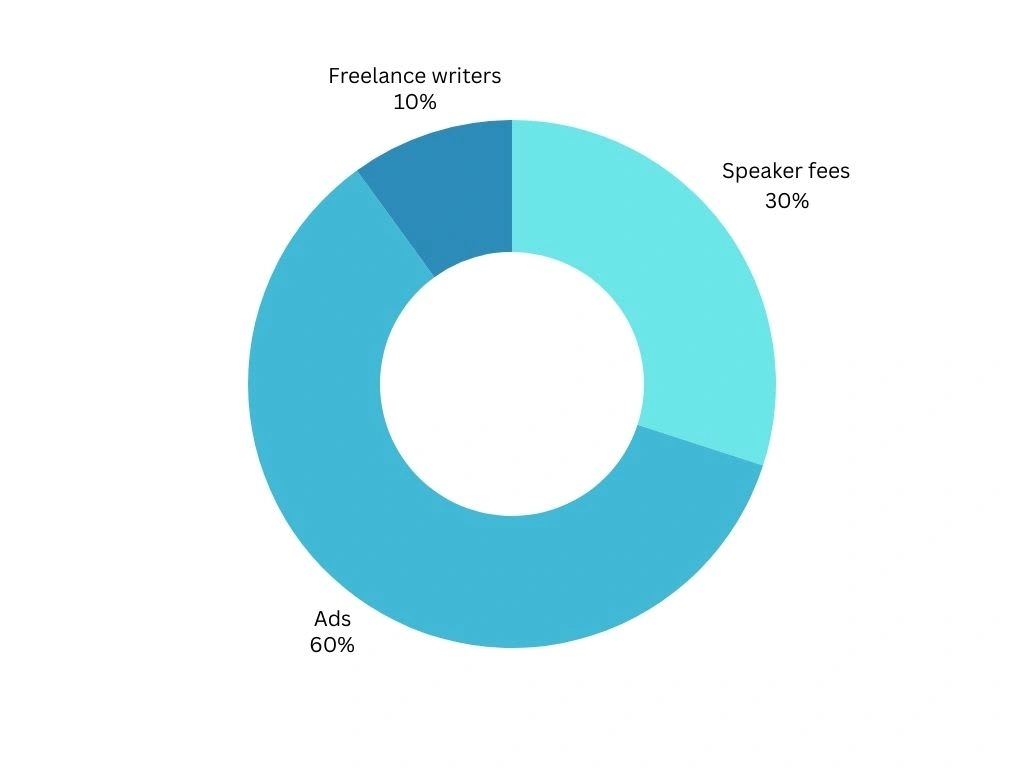
The budget for this campaign is $[redacted] and will cover one fiscal quarter (Q3).
Budget Allocation:
$[redacted] — Webinar speakers’ fees
$[redacted] — Ads on LinkedIn, Google search
$[redacted] — Freelance writers (~2–3 articles; SEO can be implemented in-house)
Content Strategy
We plan to build content around these themes, connecting industry challenges to Jobsity's nearshore staffing solutions:
Overworked staff → Showcase efficiency gains via staff augmentation & automation enablement.
Dissatisfied/frustrated patients → Highlight improved CX via faster development of user-friendly apps/interfaces.
Care delays → Discuss how augmented teams can swiftly build automation/AI solutions for scheduling.
Care delays → Discuss how augmented teams can accelerate AI/scheduling tool development.
Confusing insurance/billing → Position efficient BPO or specialized dev teams as solutions.
Consumer health interest → Focus on rapid app/wearable development capabilities.
Pharmaceutical delays → Highlight potential of nearshore staffing teams for delivery logistics and Rx management.
Each theme allows us to showcase how Tech Tim can benefit from going nearshore; his org will be able to address staffing gaps effectively, innovate new products faster, and improve team performance, collaboration, and retention.
Content Formats
Based on Tech Tim's preference for robust, credible information and peer insights, especially when making high-stakes decisions, this campaign will prioritize the following:
Webinar: Featuring industry leaders to provide valuable peer-level discussion and insights.
eBook (report): A comprehensive, data-rich resource on HealthTech trends and staffing solutions to build authority and capture leads.
Interview video series: Client and staff interviews offering relatable social proof and insights into working with Jobsity.
Case study: In-depth, results-oriented proof of Jobsity's success specifically within the healthcare/HealthTech sector.
Blog series: Consistent SEO articles addressing specific pain points and trends, driving traffic to the content hub and key assets.
Ads: Targeted digital ads focused on attracting relevant traffic and leads for key offers.
Social media: Engaging posts (infographics, video clips, article shares) tailored for a professional, tech-savvy audience.
Email campaign: Segmented emails delivering relevant content and promoting key conversion points (webinar, eBook, contact form).
Tactics
To reach Tech Tims working in HealthTech, the marketing team will use these tactics:
Webinar: A digital event featuring a panel of 1-3 guest speakers (TA expert, tech manager, academic) discussing talent acquisition, team management, and emerging AI/automation trends in HealthTech.
eBook: A comprehensive report (~15-20 pages) showcasing insights on HealthTech trends and hiring needs, featuring interviews, leadership surveys, staffing data, and detailed information on how to leverage automation and AI in the healthcare industry. Delivered as a high-quality PDF via a gated landing page.
Interviews: a video series showcasing Jobsity’s success in developing HealthTech products/services. Interviewees would include current staff (2–4) and clients (1–2) to discuss successful projects, collaboration, and nearshoring benefits.
Case study: a detailed evaluation of one of Jobsity’s successful partnerships with a healthcare client (probably Gestalt, maybe Zebra), highlighting specific client challenges, Jobsity’s provided solutions, and quantifiable results (e.g. team growth, retention, MVP launch, cost savings).
Blog series: Search engine optimized articles exploring HealthTech industry trends, how to leverage automation and AI for healthcare, and how to scale your HealthTech team effectively. 6–8 articles will be published throughout the quarter, with about half being long-form (~1000 words) and half short-form (~500). Includes internally written and 2–3 externally commissioned posts.
Ads: Focused campaigns on LinkedIn (targeting specific job titles, industries, skills within HealthTech) and Google Search (targeting high-intent keywords related to HealthTech staffing, nearshoring, big data engineers, etc., plus branded terms). Ads will primarily drive traffic to the webinar registration, eBook download, and case study landing pages, as well as the main contact form. Utilize RSAs on Google and sponsored content/lead gen forms on LinkedIn.
Social media posts: Regular updates on LinkedIn featuring infographics derived from the eBook/report, short video clips from interviews, links to new blog posts, promotion of the webinar/eBook/case study, and relevant curated content. Focus on starting conversations and driving traffic.
Email campaign: A mix of dedicated email blasts promoting the webinar, eBook, and case study to segmented lists, interspersed with topical newsletter-style emails sharing recent blog posts and video interviews.
Content hub: a section of Jobsity’s website dedicated to all HealthTech content (blogs, webinar recording, eBook, case study, videos) for easy access.
SEO Optimization
Keyword Selection: Use Google Ads’ Keyword Planner, SEMRush’s Keyword Magic Tool, and Google Trends to identify relevant short-tail and long-tail keywords based on Tech Tim's goals and HealthTech industry terms (e.g., "hire healthtech developers," "nearshore AI engineers healthcare," "HIPAA compliant software staffing," "telemedicine app development team"). Prioritize keywords with appropriate search volume, ranking difficulty, and intent.
Keyword Use: Integrate keywords naturally into webpage URLs, meta descriptions, H1/H2 headers, image alt text, and body copy for blog posts, content hub pages, and asset landing pages. Ensure content structure (short paragraphs, lists, headings) enhances readability for users and search engines. Implement internal linking between related content pieces and link externally to authoritative sources where appropriate. Use SEMrush On-Page SEO Checker (or similar) to review key assets before publication.
Promotion & Distribution Strategy
Approach
An integrated multi-channel strategy will maximize reach for top-funnel content (blogs, videos) driving traffic to the HealthTech content hub and hero assets via CTAs. Targeted promotions will generate leads from hero assets (webinar, eBook, case Study). Promotion will rely on owned channels (email, organic social, blog) and paid media (LinkedIn Ads, Google Ads).
Channel strategy
Email marketing: Dedicated promotional sequences (approx. 4-6 weeks) will announce and drive registrations/downloads for the webinar, eBook, and case study. Relevant blog posts and videos will be featured in topical HealthTech newsletters sent to segmented lists.
Social media (LinkedIn): Consistent organic posts will share blog content, video snippets, infographics, and promote major assets. Paid LinkedIn campaigns will target "Tech Tim" persona demographics/interests to drive webinar registrations and eBook downloads.
Paid ads (Google/LinkedIn): Google Search Ads will target high-intent keywords and branded terms. LinkedIn will target persona demographics and interests. Both will drive traffic to asset landing pages/contact forms. Budget Allocation: ~$[redacted] LinkedIn / ~$[redacted] Google.
Blog/Website: The HealthTech hub will host all campaign content. Blog posts will include clear Calls-to-Action (CTAs) promoting gated hero assets.
SEO: All relevant website content (content hub page, blog posts, landing pages) will follow the SEO strategy outlined above, to maximize our content’s discoverability.
Schedule
Q3: July–September
July: Deploy surveys/polls (for eBook insights); start blog series (post 1–2); identify and interview client for case study; share curated HealthTech content on socials; source webinar speakers; schedule client/developer interviews
August: Continue blog series; begin email cadence (newsletters + initial promo); begin running interview series; launch HealthTech hub; promote webinar registration heavily; test-run webinar.
September: Host webinar (early month); promote webinar recording (ICYMI emails, social, blog); publish eBook feat. poll responses (mid-month); publish case study (late month); final push promoting all assets; ensure content hub is fully updated.
Key Dependencies & Potential Risks
Our success is contingent on:
Securing 1-3 high-quality, relevant webinar speakers within the $[redacted] budget. The best way to balance value with topic expertise and our lead generation needs is to have: a talent acquisition / nearshore staffing expert, a mid-level tech manager (preferably in HealthTech), and an academic / researcher in emerging healthcare technologies. This allows for a breadth of knowledge while balancing financial constraints.
Developing compelling hero assets that deeply resonates with Tech Tim and directly addresses his greatest staffing challenges.
Effectively leveraging the $[redacted] ad budget to generate sufficient qualified traffic and leads. Will require careful monitoring, (re)targeting, and optimization.
Internal team capacity (design, video editing, email segmentation, social media management) to support the content production schedule, with assistance from freelance writers.
Metrics and Measurement
Below are the campaign’s objectives and their corresponding Key Performance Indicators.
Generate MQLs
Hero asset landing page conversion rate: Target: [redacted]%
Downloads: ebook, case study. Target: [redacted] downloads each
Webinar registrations: existing/all/combined contacts. Target: [redacted].
Blog CTA click-throughs (to relevant offers): Target: >[redacted]% CTR
Email open rates (content offers): Target: [redacted]%
Email CTRs (content offers): Target: [redacted]%
Generate Sales Qualified Leads
Sales contact form submissions (campaign sourced): Target: [redacted] submissions
Booked sales calls (from campaign leads): Target: [redacted] booked calls
Sales-ready contacts from webinar: [redacted]
Ad CTRs (to landing page): Target: > [redacted]% (Search); > [redacted]% (LinkedIn)
Increase Brand Awareness
Webinar registrations (new contacts only): Target: [redacted] new contacts
Newsletter signups (campaign sourced): Target: [redacted] new subscribers
Website traffic (HealthTech Hub & Blogs): Target: +[redacted]% traffic vs. prev. quarter
Social media engagement (LinkedIn avg. per post): Target: [redacted] likes/comments/shares
Video view counts (per interview video): Target: [redacted] views
These KPIs will be tracked and analyzed with Google Analytics, HubSpot, SEMrush, LinkedIn/Google Ads platforms, and internal sales reporting.
Summary
By delivering authoritative, high-value content through strategic channels and carefully measuring performance against defined KPIs, we anticipate building a strong pipeline of MQLs and SQLs among “Tech Tims” in HealthTech. Our successful execution depends on securing quality webinar speakers, creating resonant content, and optimizing our ad spend.
Like this project
Posted Jun 10, 2025
Full-funnel content plan for a B2B firm targeting HealthTech. Details strategy to generate MQLs/SQLs, content production/distribution, KPIs to demonstrate ROI.
Likes
0
Views
37
Clients
Jobsity