Dnakramas's Portfolio Website — Tattoo Artist & Illustrator

Quentin Brohan


Dnakramas Portfolio Website — Tattoo Artist & Illustrator
Role: Art Director, Web Designer, Front-End Developer
Client: Chloé "Dnakramas" Samarkand — Tatoueuse & Illustratrice, Chardon Noir Tattoo, Strasbourg
Year: 2024-2025
Overview
Chloé “Dnakramas” Samarkand is a French tattoo artist and illustrator from Strasbourg, France, she needed a website that felt as creative and immersive as the work she deliver, which delves into the realms of dark fantasy and cosmic horror.
The goal wasn’t just to “have a website”, but to create a digital experience that communicates innovation, confidence, and high-end creative execution from the first scroll. Transitioning her professional workflow from social media to a self-managed ecosystem, building an identity system that generates leads, supports SEO, and gives the artist full editorial control.
The project was handled from concept to launch, from the market research to actively shaping art direction and the design decisions and animation language before developing the website.
1. Art Direction
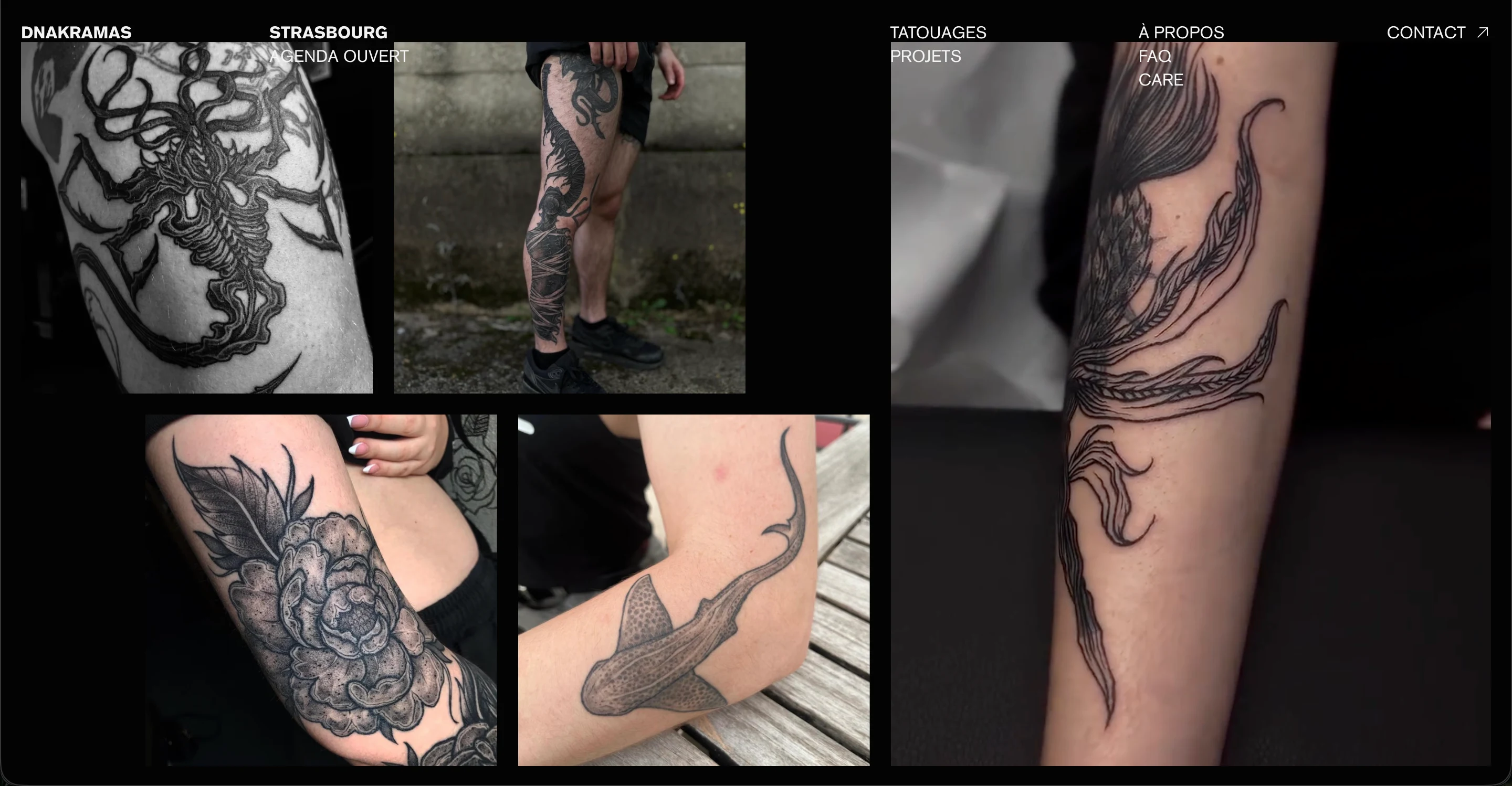
The visual language was derived entirely from the work, not imposed on it.
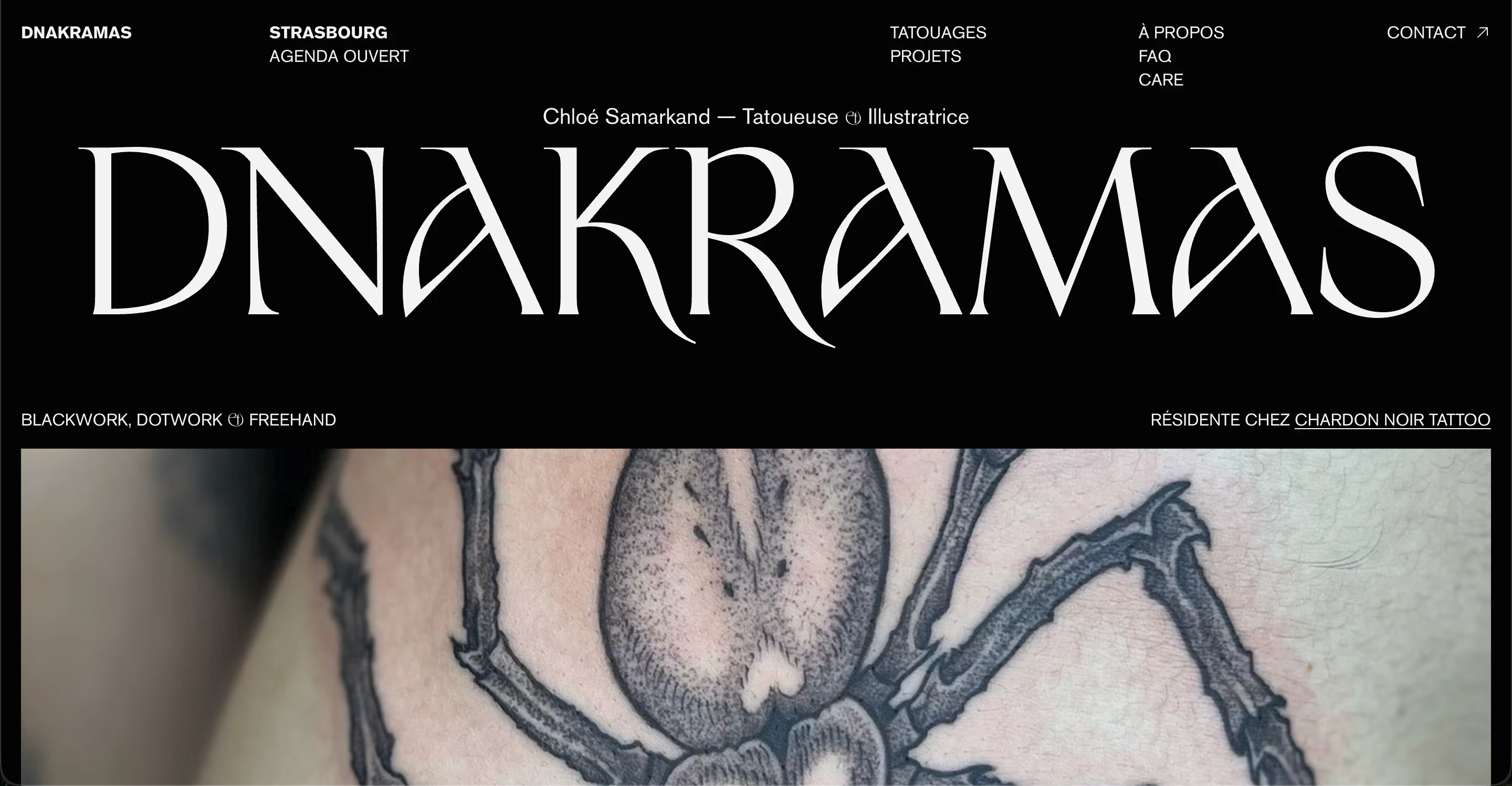
The governing concept is editorial/archive aesthetics — the quality of something preserved, deliberate, slightly austere. Every motion decision follows from this: entry animations use blur-to-focus only. Images don't slide in, they emerge from shadow.
Typography:
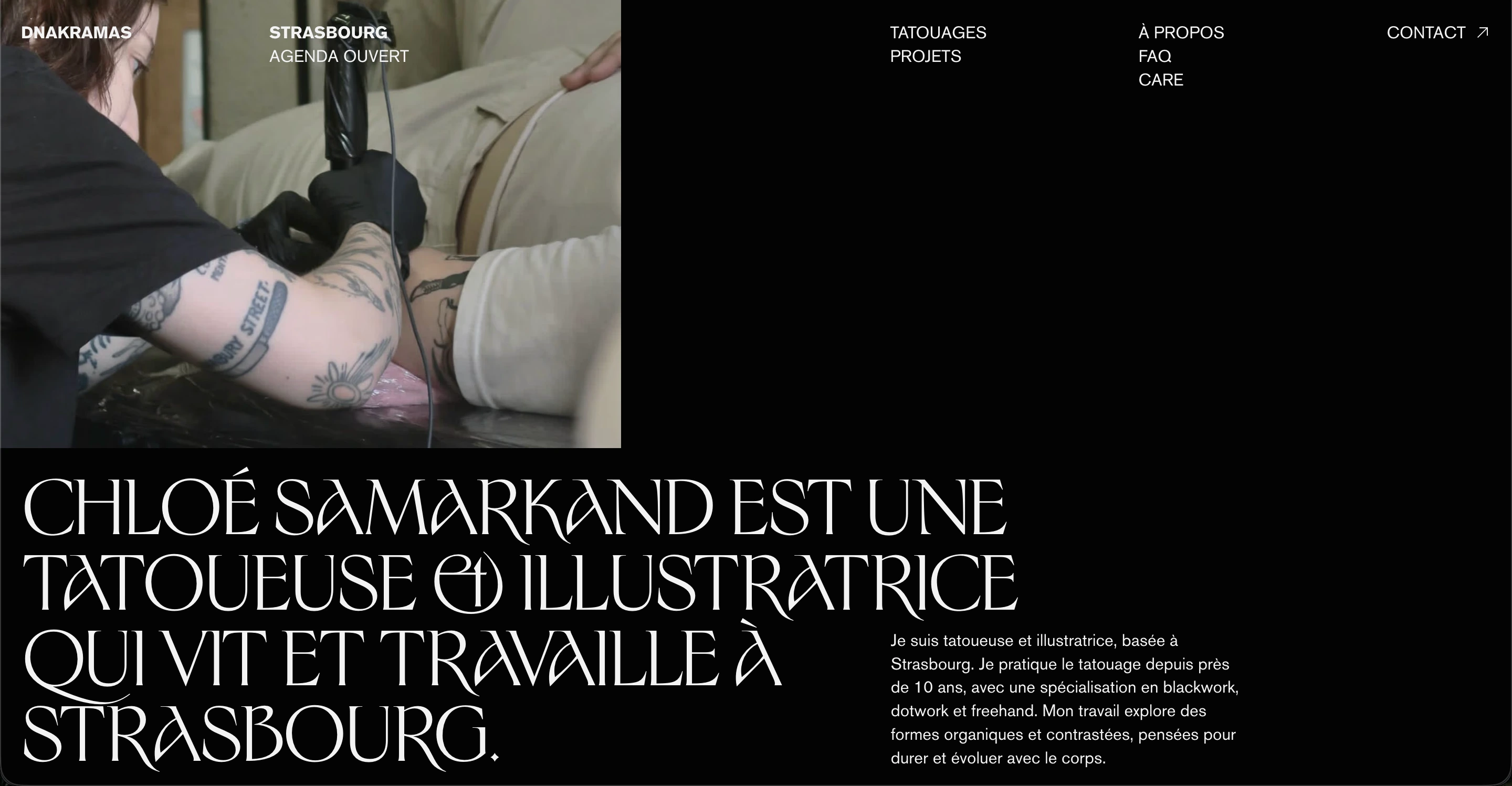
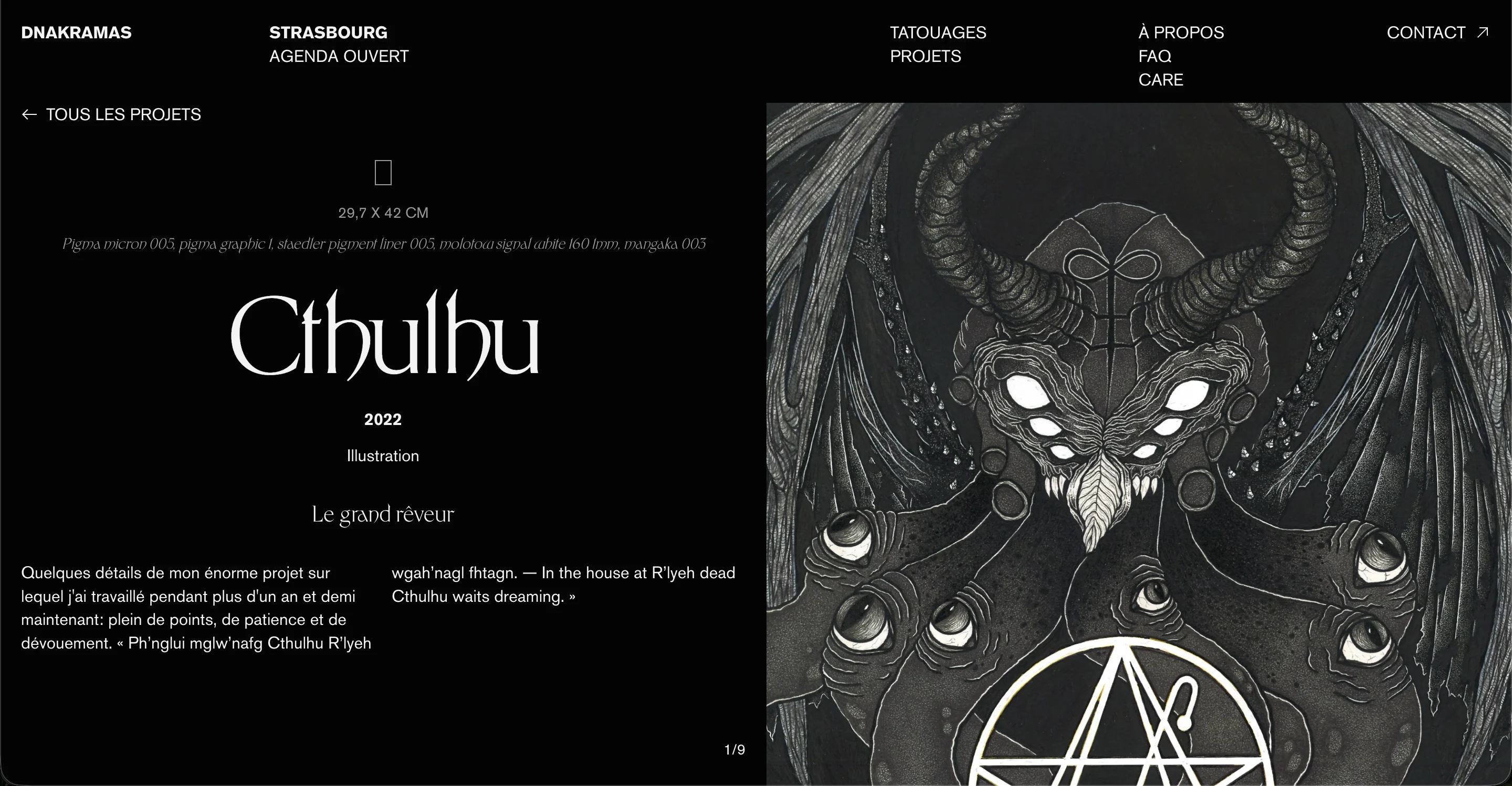
Sinistre (Jules Durand) for all display and heading text — a medieval-inflected serif that mirrors the hand-engraving quality of the tattoos.
Akzidenz-Grotesk BQ for all body and UI copy. The contrast is editorial: dense, archival, zero decoration for decoration's sake
Color system: Dark theme only, with a monochrome color palette using near-black, off-white and grey, allowing the art of the artist to be captivating without distraction.
Grid: 12-column desktop / 4-column mobile, classic.
2. Front-End Development & Animation
Stack:
Next.js 16 (App Router)/React 19
Tailwind CSS v4/CSS Modules
GSAP
Lenis
Sanity
Zustand
Vercel
Animation system:
Motion played a key role in defining the experience.
I designed and implemented:
Scroll-based animations to create narrative progression
Subtle parallax and reveal animations to add depth
Custom hover states and micro-interactions
Smooth transitions between sections to maintain immersion
All animations were designed to support the content, not distract from it.
3. CMS Architecture
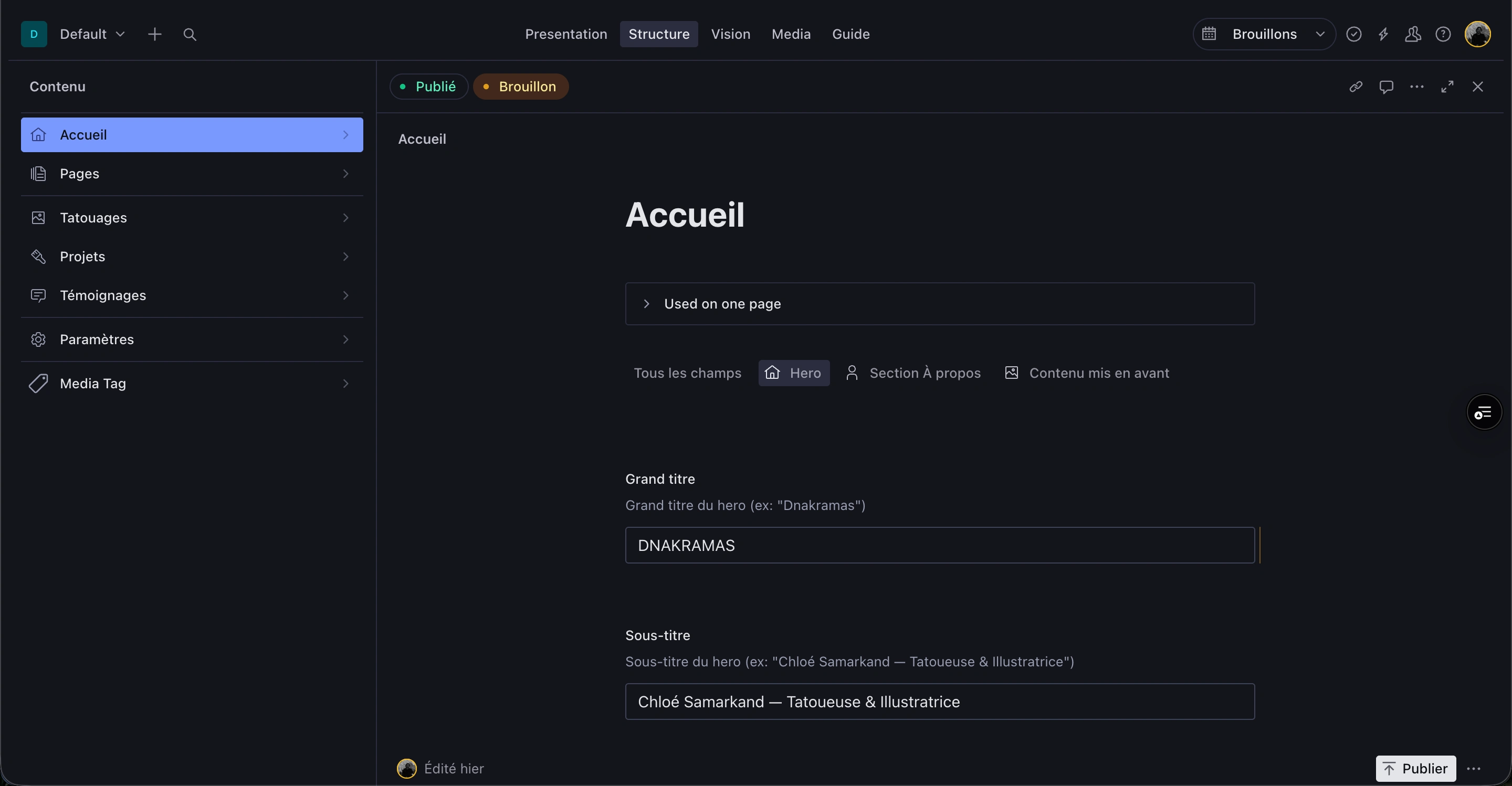
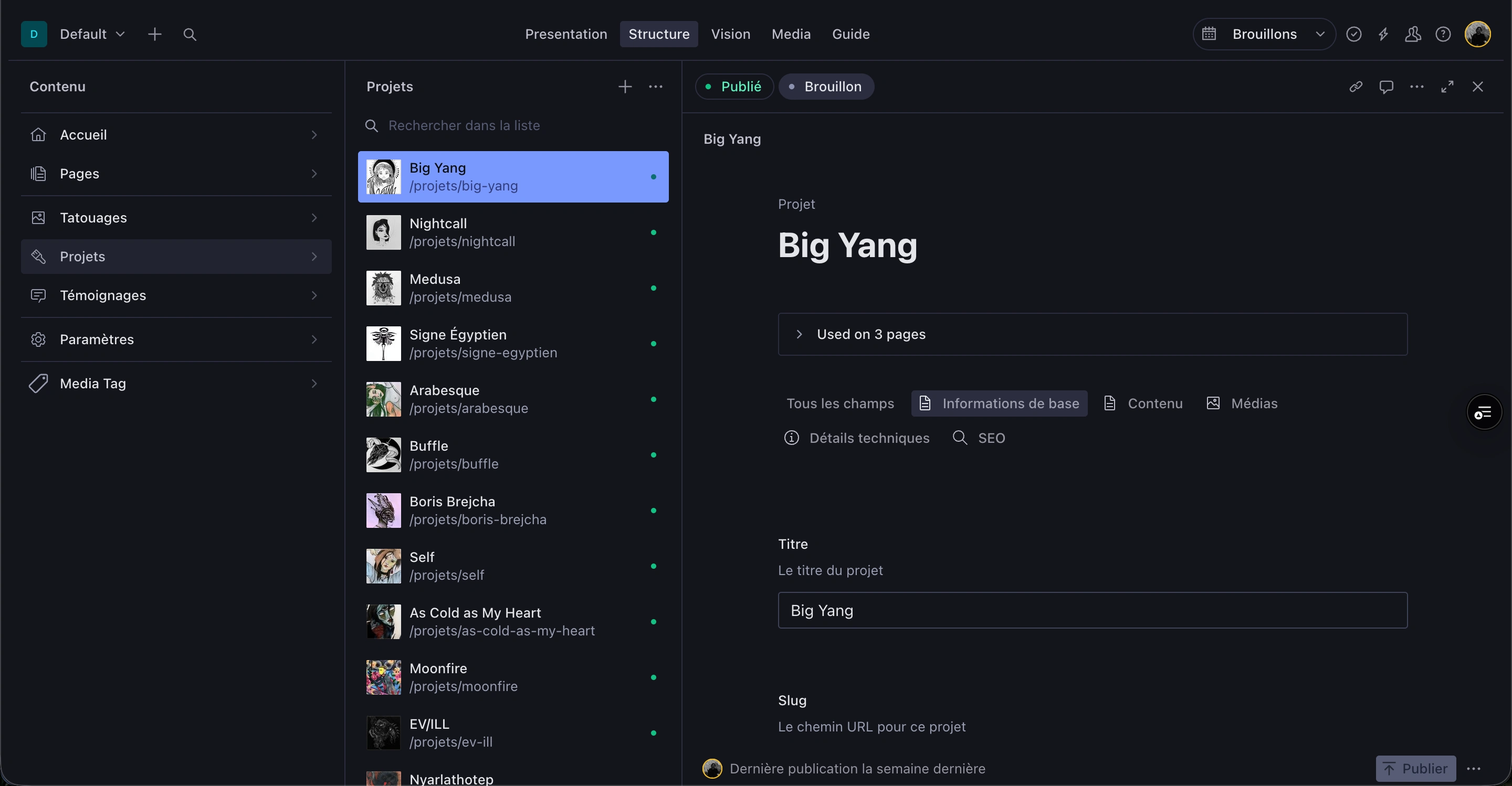
Chloé manages all her own content: tattoo galleries, illustration case studies, studio info, FAQ, aftercare, legal pages, booking URL, footer Instagram feed, and global SEO defaults — without any developer dependency after handoff.
The CMS is Sanity v5, with the Studio embedded directly on the website through a dedicated URL. Crucially, all schemas are code-written — no visual schema builder, no configuration drift. The client UI in Sanity is clean and scoped precisely to what she publishes: nothing she doesn't need is visible.
Content types are split between repeatable documents (tattoo, project, testimonial) and page singletons (home, about, contact, faq, site settings...). Global settings like booking form URL, social links, and schema markup data live in the site settings, one place to update, everywhere it propagates.
The website takes leverage of Incremental Static Regeneration (ISR), to use static-generation on a per-page basis, without needing to rebuild the entire site. ISR cache invalidation is webhook-driven: Sanity Detail pages (/projets/[slug]) for example are statically generated at build via generateStaticParams. Content updates are live in near-real-time without a redeploy.
SEO is CMS-managed per page: title, description, OG image, JSON-LD structured data (WebSite, TattooParlor, Person, VisualArtwork, FAQPage, BreadcrumbList, and more) — all populated from Sanity fields, not hardcoded.
The Result
Core Web Vitals: passes all three thresholds
LCP 2.0s
CLS 0
TBT 20ms (Lighthouse lab)
TTFB 30ms — root document served in under a frame
FCP 0.3s — first meaningful paint in under 300ms
Top 5 search results when looking for blackwork artists in Strasbourg
+1800 visitors since launch that leads to new clients for tattoos — the experience holds attention
CLS 0 across all production pages — zero layout shift despite the animation-heavy entry sequence
Full editorial autonomy for the client: every text, image, and setting managed without a developer.
The site works as both a client acquisition surface and a gallery — two things that usually fight each other. The preloader, animation language, and typographic system are one continuous argument for the quality of the work before a single tattoo image loads.
Key Takeaway
This project is a case for design and development as a single discipline. The typography pairing, the motion reveal timing, the CMS schema structure — they're all the same decision, made from the same place: the work itself.
Website: https://dnakramas.fr/
Artist's work: https://www.instagram.com/dnakramas/
Like this project
Posted Aug 27, 2025
Portfolio website for Chloé “Dnakramas” Samarkand, a French tattoo artist and illustrator. Art direction, web design, development + CMS integration.
Likes
0
Views
17
Timeline
Aug 1, 2024 - Jan 15, 2025