Celium — GPU Rental Marketplace

Savva Sicevs


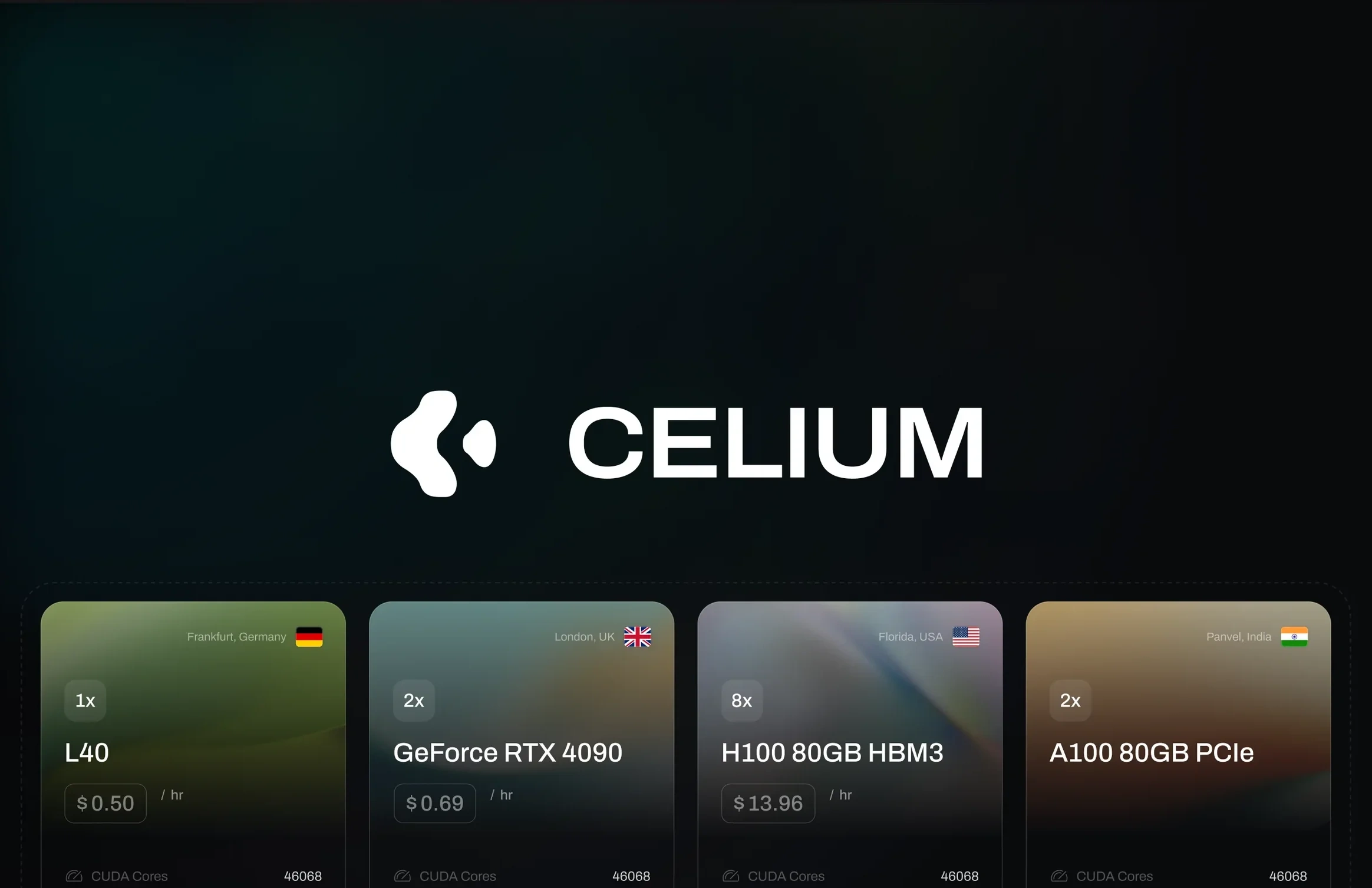
A GPU rental marketplace turned into one legible console — compare nodes on a map or a spec grid, rent in a single screen, then monitor utilization, billing and spend without leaving the product.
Role: Product design · IA · UX/UI
Team: 2 founders · 5–8 engineers · 2 designers
Timeline: ≈1.5 years · iterative engagements
Scope: Landing · browse · rent · monitor · billing
The problem
Renting cloud GPUs for training or rendering is mostly friction. The consoles that broker them bury the actual decision — which card, at what price, in which region, with how much VRAM and bandwidth — under cluttered spec tables, opaque pricing, and setup that spills across separate admin pages. Before a single model runs, a developer has to compare hardware they can't easily line up, guess at hourly cost, wire SSH keys, then go hunting for where utilization and billing even live.
The approach
I designed Celium end to end — information architecture, UX and UI — from the marketing landing page through the marketplace itself. The through-line: treat a GPU broker not as a flat list but as a decision surface. One consistent spec grammar reads the same wherever a node appears — browse card, map node, checkout summary, running pod — and browsing always sits one step from acting.
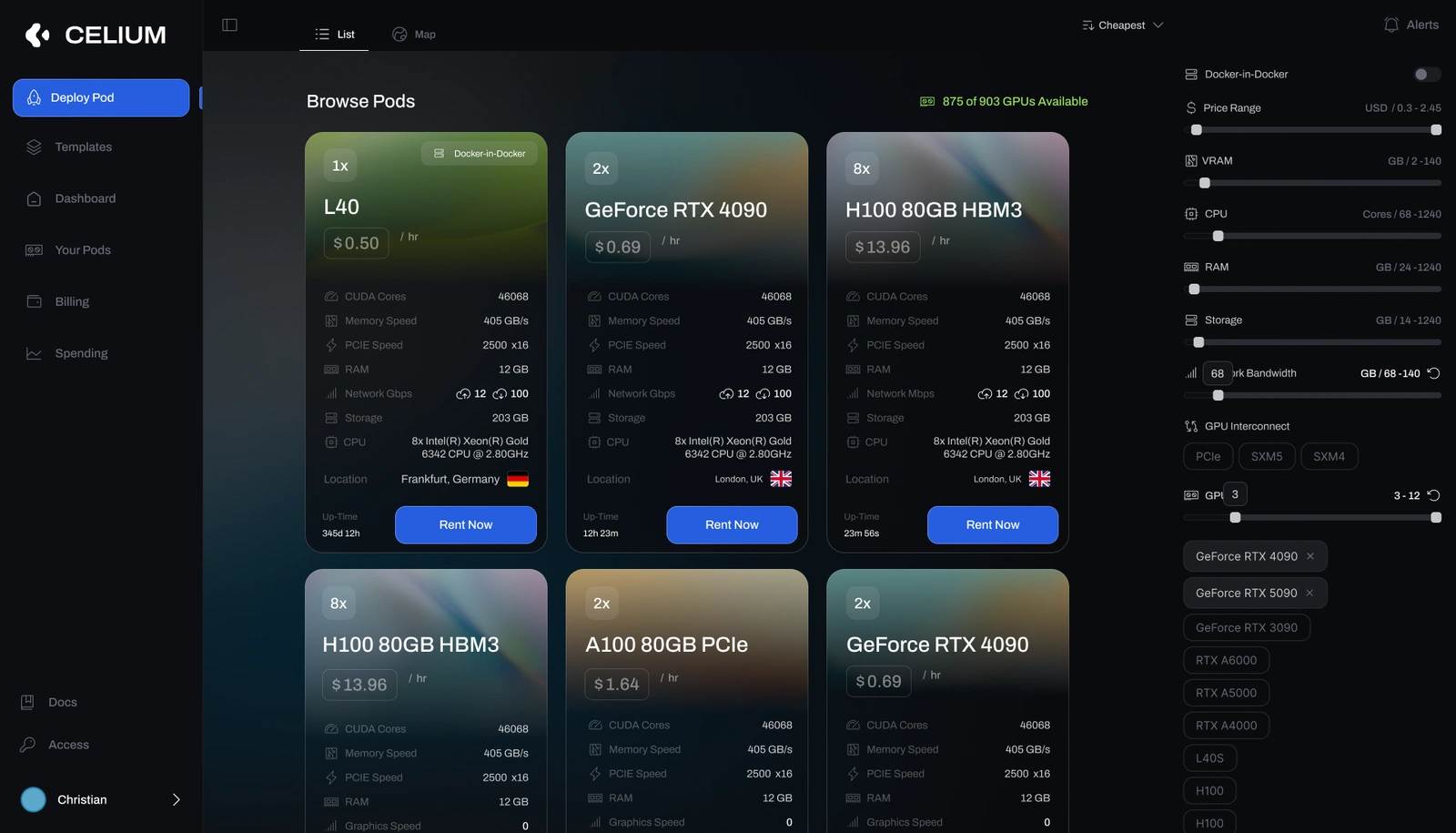
Browse — every spec lined up to compare
Cards lead with the three inputs that decide a rental — count, model, and $/hr — then disclose the full spec sheet beneath.
One filter rail re-cuts the set in place: price, VRAM, CPU, RAM, storage, bandwidth, interconnect, GPU model.
Rent Now rides every card, so comparing and committing are one motion.
A world map view serves teams that pick by region and latency — same spec grammar, same one-tap rent.
Operate: a running pod you can actually read
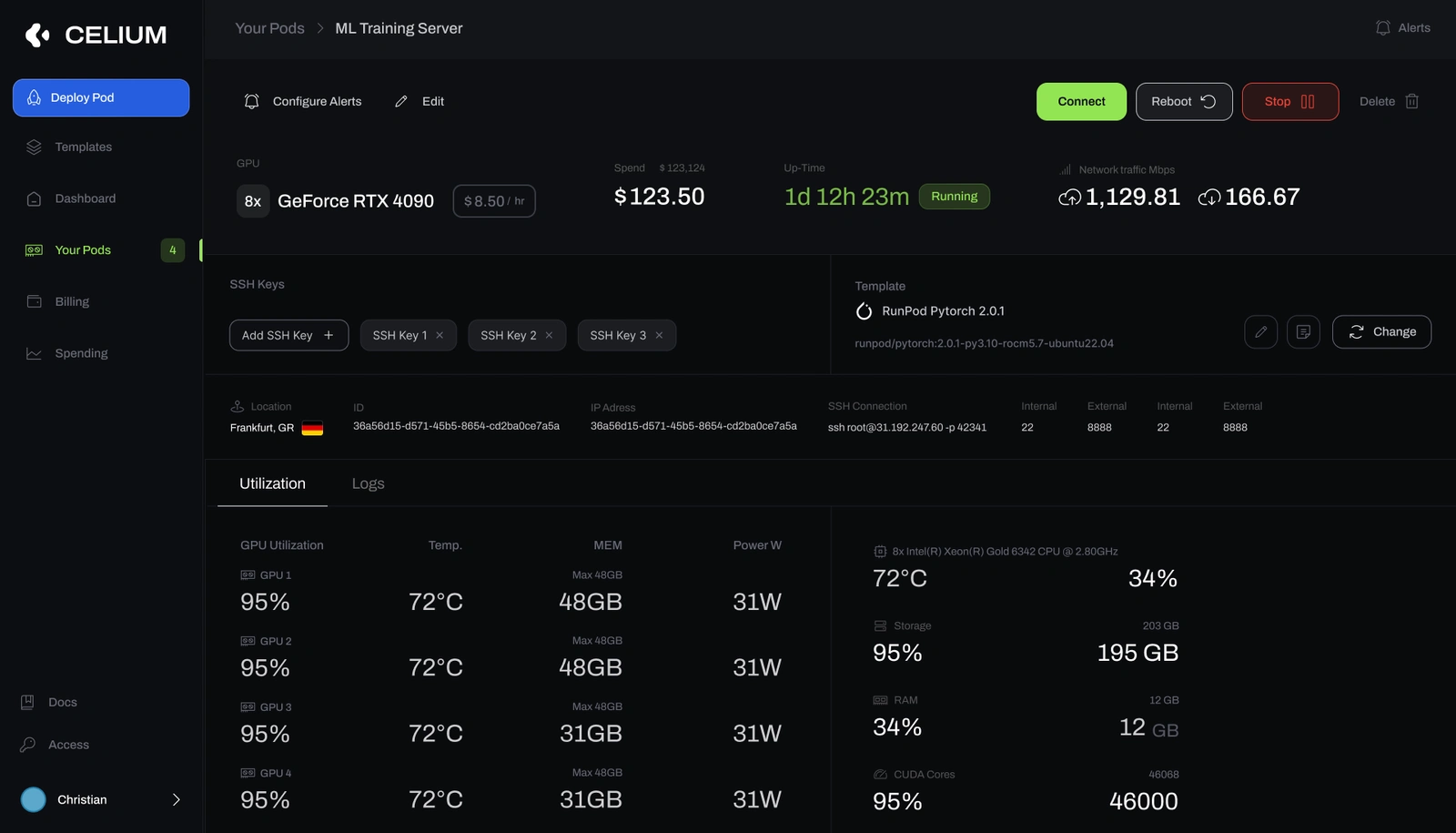
Pod telemetry — health, spend and controls on one screen
A vitals strip — spend, uptime, network up/down — rides the top with a live Running status.
Per-GPU utilization, temperature, memory and power read at a glance across the whole node.
SSH connection string, ports and template sit on the same screen as Connect / Reboot / Stop.
Billing is a fundable balance with auto top-up — so a multi-day training run never dies because the wallet hit zero.
The honest outcome
I designed a more capable marketplace than the simpler listing interface that ultimately shipped. That gap is exactly why I now stay close to implementation and QA whenever the final quality lives in the interaction details — the work stands as a complete, coherent design for a marketplace that has to stay legible while price and availability keep moving underneath it.
Full case study → https://www.ssicevs.com/work/celium
Like this project
Posted Jul 17, 2026
A GPU rental marketplace turned into one legible console — compare nodes on a map or spec grid, rent in a single screen, then monitor utilization, billing and spend without leaving the product.
Likes
0
Views
7