Ms. Saba: The AI Tutor for Ethiopia's Exit Exam Crisis..

Adem Awol
1 collaborator

Category: EdTech / AI-Powered Learning
TL;DR: The Friendly Mutiny: How We Built the Right Product and Still Lost …
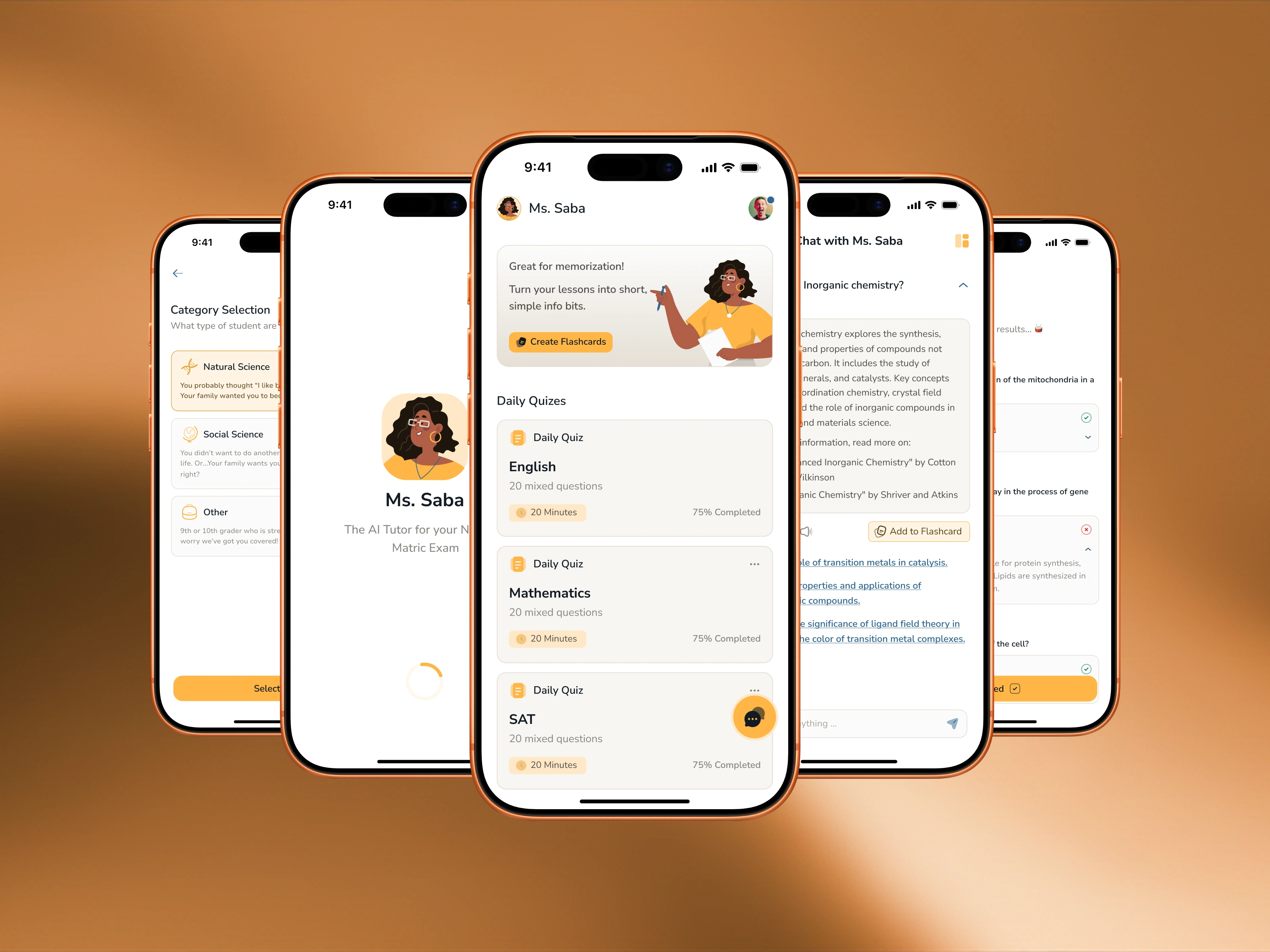
An AI exam-prep platform built for a national failure crisis where "study harder" was doing Olympic-level emotional damage as an education strategy.
Ethiopia's exit exam had a 3.3% pass rate. Not a typo. A government-certified academic catastrophe where prayer was doing more structural load-bearing than the curriculum.
So I co-founded and designed Ms. Saba, an AI tutor built for the 91% of students the system had quietly given up on. Week one: 40 signups, 23% conversion. The market was begging. What could go wrong?
Everything. Specifically, beautifully, everything. A platform that crashed when 23 users showed up. OAuth has been broken for three weeks. A student was so determined that they opened four tabs just to hit a locked door.
And a dev team that vanished with the quiet devastation of a Friendly Mutiny. The full case study has the receipts, the PostHog session replays, and the exact moment my optimism filed for early retirement.
Figma Link (From Shawarma Theory to Actual Screens)
Lesson: What Ms. Saba Taught Me, Besides Emotional Damage
Execution is where beautiful ideas go to prove they are not hallucinations. Research, design, and traction matter. But if the platform crashes when 23 real users show up, the product is basically a motivational poster with backend issues.
QA is not a rumor. Saying "QA is done" and shipping broken OAuth is not testing. That is performance art with consequences.
Availability is a product decision. If key builders are missing when real users are trying to log in, the roadmap becomes decorative wallpaper.
Traction is not delivery. Waitlist signups prove interest. A working login proves whether the product deserves that interest.
Being early is cute. Finishing is better. Ms. Saba proved the opportunity was real. Proof alone does not help the students still sitting on the waitlist.
Ms. Saba did not end as the heroic launch story anyone pictures when they start something over shawarma with that specific brand of dangerous optimism. It ended as a product tragedy wearing a startup hoodie.
The idea had legs. The market had a need. The students had urgency. The committed people cared. But the platform needed reliable execution, and instead it got crashes, disappearing devs, and a Friendly Mutiny so polite it almost felt rude to call it betrayal. Almost.
Like this project
Posted May 29, 2026
AI exam-prep platform for Ethiopia’s exit exam crisis, designed to turn study chaos into structured practice before execution staged a mutiny.